Boostlingo Report Shows Three in Four Healthcare Leaders Would Turn to AI When Interpreter Waits Hit 5 Minutes

0
Boostlingo

When a human interpreter is not available within five minutes, most healthcare leaders say they would consider AI instead. That is the central finding of AI Interpreting in Healthcare 2026, a new report from Boostlingo produced in partnership with Fierce Healthcare, based on a survey of 123 healthcare leaders.

Only 1 in 5 respondents said they would use AI immediately, even with the right safeguards in place. Once a wait passes five minutes, that number rises to roughly 3 in 4. More than 8 in 10 leaders said longer waits would make them more likely to evaluate AI at all.

The shift reflects where the pressure is coming from. Delays in care were the top consequence named when an interpreter is not available, cited by 60% of respondents, ahead of patient dissatisfaction and communication errors. Managing cost ranked as a top challenge for 54%.

“Organizations want high-quality interpreting services, but often select the lowest-cost provider,” said Merrie Wallace, MN BSN, Chief Revenue Officer at Boostlingo. “There is a trade-off point between cost and quality that needs to be explored.”

Trust, not cost, is the bigger barrier to using AI. Doubt that it will hold up in real conversations was the top concern, named by 59% of respondents, ahead of accuracy, compliance, and liability concerns.

Comfort with AI depends heavily on the interaction. Scheduling and billing conversations, with a human interpreter available as backup, were acceptable to 85% of respondents. Comfort drops sharply for emergency and sensitive care, where most leaders still prefer a human interpreter by default.

“Instead of asking questions like, ‘Should we use AI or human interpreters?’ the better question becomes ‘What is the right modality with the right safeguards for this specific interaction?’” said Dr. Julie Mills, CNE at Boostlingo.

Taken together, the findings point to a hybrid approach. AI interpreting has a role in healthcare, according to 95% of respondents, and 61% say they are open to piloting it within the next 12 months.

The full report, AI Interpreting in Healthcare 2026, includes use-case risk and pilot design checklists for teams evaluating AI interpreting. It is now available for download here.

Methodology

The findings come from a survey of 123 healthcare respondents, fielded with Fierce Healthcare from April 6 to May 6, 2026. Results are directional and are not intended as a statistically representative benchmark of the healthcare market.

About Boostlingo

Boostlingo is a U.S.-based language‑technology company headquartered in Austin, Texas. It provides interpreting and AI‑driven translation services through a unified platform that supports 300+ languages, offering on‑demand interpreting, remote simultaneous interpretation, and interpreter management tools for healthcare, legal, government, and enterprise organizations.
Park IP and NLPatent Partner to Connect Patent Intelligence and Global IP Support

0
Park IP and NLPatent

Park IP, a global IP solutions partner built for modern intellectual property work, and NLPatent, an AI-driven patent research and intelligence platform, have joined forces to deliver a more connected experience for their clients. Through a preferred provider agreement, the two companies are unifying specialized expertise across the patent lifecycle, from prior art research and intelligence to foreign filing, translation, and global portfolio management.

NLPatent combined patent-domain expertise, proprietary AI, and directed workflows to help patent professionals move from question to answer to defensible work product faster, with more confidence, and without giving up control. Through the agreement, NLPatent’s search, monitor, and visualize capabilities will be accessible through Legal Studio, Park IP’s platform for managing patent translation and global intellectual property workflows. Park IP will serve as NLPatent’s preferred provider for patent translation and foreign filing services, creating a streamlined experience for clients seeking both patent intelligence and global IP support.

The partnership provides clients with access to trusted expertise and connected services designed to reduce complexity, improve efficiency, and support innovation.

“Innovation is increasingly global, but the processes required to protect it often remain fragmented,” comments Erin Wynn, GM at Park IP. “Our partnership with NLPatent brings patent intelligence, multilingual expertise, and global IP support together in a more connected experience, helping organizations move more efficiently from patent discovery and analysis to protection and commercialization.”

As organizations expand internationally, patent portfolios increasingly require collaboration between technical, legal, and language experts. The partnership helps clients access those capabilities through a coordinated ecosystem of services designed to reduce complexity and improve efficiency.

“Patent research and analysis are critical first steps in building a successful intellectual property strategy,” notes Stephanie Curcio, CEO at NLPatent. “Through our partnership with Park IP, clients can move seamlessly from patent intelligence that understands claims, prior art, technical language, and context to the specialized translation and language services required to protect innovations in global markets.”

About Park IP

Park IP, a Welo Global brand, is a global IP solutions partner built for modern intellectual property work. The company enables legal teams to protect intellectual assets with accuracy, clarity, and confidence across jurisdictions. Trusted by Am Law 200 firms and Fortune 500 corporate legal departments, Park IP combines deep IP expertise with AI-powered workflows that reduce risk, improve predictability, and deliver greater visibility and control across the IP lifecycle, from prosecution to litigation and compliance. Its Legal Studio platform strengthens portfolio management through jurisdiction-specific coordination and real-time oversight, while experienced IP professionals remain accountable for quality and judgment. Operating under ISO-aligned quality and security standards, Park IP advances a disciplined and transparent approach to managing intellectual property worldwide.

About NLPatent

NLPatent is an AI-driven patent research and intelligence platform purpose-built for the way IP professionals work. Its patent-specific AI helps law firms, corporate IP teams, and innovators conduct prior art search, monitor competitive activity, and analyze patent portfolios with greater speed, accuracy, and confidence. By pairing deep patent-domain knowledge with proprietary technology, NLPatent surfaces valuable patent and non-patent literature insights while keeping expert judgment at the center of every decision. Trusted by Am Law 200 firms and Fortune 500 corporations across North America and Europe, NLPatent maintains SOC 2 Type II compliance and aligns its practices with ISO 27001 standards.

Mars Translation Expands Gaming Localization Services to Support Global Game Studios

0
Marstranslation by marshub

Mars Translation has announced the expansion of its gaming localization services, reinforcing its commitment to helping game developers and publishers deliver culturally authentic gaming experiences to players worldwide.

As the global gaming industry continues to reach new audiences across languages and regions, localization has become a key part of successful game launches. The expanded service offering is designed to support developers throughout the entire localization lifecycle, from in-game text and UI translation to audio localization, linguistic quality assurance (LQA), and post-launch content updates.

The expanded gaming localization services cover PC, console, mobile, VR, and live-service games. Mars Translation works with native-speaking linguists who understand gaming terminology and regional player expectations, helping ensure that dialogue, quests, tutorials, achievements, and marketing materials resonate naturally in each target market.

“Our goal is to help developers create experiences that feel native to every player, regardless of language,” said a spokesperson for Mars Translation. “Gaming localization is more than translation — it requires cultural adaptation, consistency, and rigorous quality assurance to preserve gameplay and player immersion.”

The company’s localization workflow combines experienced native linguists, localization engineers, and dedicated QA specialists to support multilingual releases across more than 380 languages. Services include:

  • Game UI and in-game content localization
  • Dialogue and subtitle translation
  • Linguistic Quality Assurance (LQA)
  • Cultural adaptation and terminology management
  • Store listing and game marketing localization
  • Live operations and ongoing content localization

The expansion reflects growing demand from independent studios and global publishers seeking scalable localization partners capable of supporting simultaneous international releases and continuous content updates.

Mars Translation continues to invest in localization technologies and human linguistic expertise to help gaming companies improve player engagement, increase global reach, and deliver high-quality multilingual experiences.

About Mars Translation

Mars Translation is a global language service provider specializing in translation, localization, interpretation, multimedia localization, and industry-specific language solutions. Serving businesses across technology, gaming, healthcare, legal, finance, e-commerce, and manufacturing, the company helps organizations communicate effectively with international audiences through professional language services delivered by native-speaking experts.

National Translation Forum 2026: A Must Attend Virtual Gathering

0
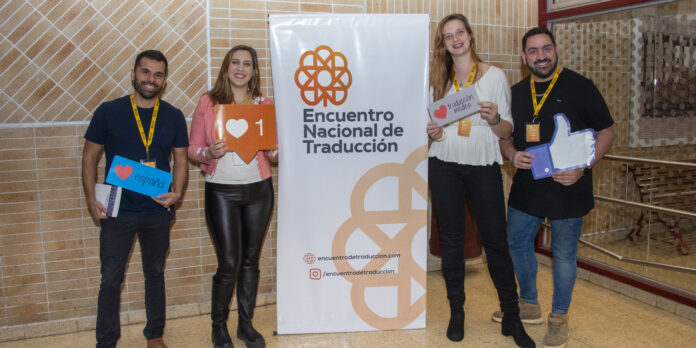
National Translation Forum team members at a conference

Since its first edition in 2016, the National Translation Forum (Encuentro Nacional de Traducción, ENT) has become a leading forum for translators, interpreters, and linguists across Argentina and around the world, thanks to the addition of the on-line format in 2020. With more than a decade of history, the conference brings together over 200 professionals each year to discuss the challenges, trends, and opportunities shaping the language services industry.

The 2026 edition will take place on September 11–12, entirely online, with recordings available for later viewing. This format allows attendees to access high‑level content from anywhere, at any time. The program features 16 one‑hour sessions (delivered in Spanish), each designed to address the most relevant and current topics in the field.

Topics on the agenda

This year’s program reflects the diversity of challenges and advances facing language professionals, spanning everyday practice, technological innovation, and market positioning:

  • Translation in UX environments
  • Digital work and eye health
  • The translator’s role in real client procedures
  • The new paradigm of human–LLM collaboration
  • Translators as active agents of cultural heritage
  • Spanish verbs: from morphology to semantics and syntax, and from syntax to translation and editing
  • Interpretation in specialized settings
  • Differentiation and positioning strategies in the professional translation market
  • Digital marketing strategies
  • New opportunities in the translation industry
  • Translating musical theater songs
  • U.S. Spanish
  • The true value of feedback in professional practice
  • Preparing for a first interpretation assignment
  • Female leadership in an invisible industry: building authority and developing middle management in language services
  • Spanish and AI: discursive errors and markers of artificiality in generated texts

A space for community and growth

Beyond the sessions, the National Translation Forum has become a hub for exchange, where professionals from diverse areas share experiences and explore new opportunities. Its comprehensive approach and commitment to innovation make it a must-attend event for those looking to stay up to date and advance their careers in an increasingly technological and competitive market.

Information and registration details

The full program and registration details are available at www.encuentrodetraduccion.com.

Interpreter Badges: A Rare Platform Practice in Modern LSPs

0
A person looking at interpreter profiles online

Interpreter badges are quietly appearing inside a handful of interpreting platforms — not as industry credentials, but as internal governance tools. Their rise is small, rare, and largely unstudied. 

Interpreter Badges: A Rare but Emerging Platform Practice 

Interpreter badges are not an industry standard. In fact, among the 2026 Nimdzi 100, only one company, Propio Language Services, publicly acknowledges using a badge or tier system for interpreters. Interactio, a remote interpreting platform rather than a traditional language service provider (LSP), is the only other known entity to implement a structured badge framework. 

This rarity is itself noteworthy. In a sector defined by certifications, compliance requirements, and regulated quality expectations, the emergence of platform‑specific badges represents a new, underexamined layer of interpreter governance. Badges are not certifications, licenses, or credentials governed by a professional body. They are internal tools created by individual companies to organize, sort, and signal interpreter attributes within proprietary systems.

What Interpreting Badges Actually Do

Across Propio and Interactio, badges function as visible indicators of specific interpreter attributes. These may include language proficiency tiers, specialization areas (such as medical or legal for example), completion of compliance requirements, or platform‑tracked behavioral metrics like reliability or attendance. 

In practice, badges serve as classification markers inside scheduling portals and interpreter dashboards. They help platforms distinguish between interpreters who have completed onboarding, those who hold certain specializations, or those who meet internal performance expectations. While the exact routing logic behind these systems is not publicly documented, badges clearly operate as governance tools that shape how interpreters are organized and presented within platform environments.

Why LSPs Use Badges 

Although interpreter‑specific research is limited, adjacent studies on multilingual identifiers, credential visibility, and workflow optimization offer insight into why badges may be operationally attractive. Structured indicators have been shown to reduce routing friction, improve matching accuracy, and streamline compliance verification in multilingual service environments.

For LSPs, badges can simplify internal workflows by making specialization and compliance instantly visible. They may reduce manual scheduling labor, help clients identify interpreters with relevant expertise, and create clearer pathways for interpreter advancement within platform ecosystems. These benefits align with the needs of high‑volume, on‑demand interpreting models, where rapid assignment matching is essential.

The Research Gap: What the Industry Still Doesn’t Know 

Despite their operational appeal, interpreter badges remain largely unstudied. No independent research has yet examined whether badges improve interpreter performance, influence routing priority, affect compensation structures, or enhance client outcomes. The relationship between badges and quality — linguistic, cultural, or ethical — remains largely undocumented.

Equally unclear is why badge systems have not been adopted more widely. Traditional LSPs may rely on human schedulers, established credentialing norms, or interpreter familiarity rather than platform‑driven classification. Without transparent documentation from companies using badges, the industry lacks a shared understanding of how these systems function or what long‑term effects they may have on interpreter labor. Interpreter badges currently represent a small but significant phenomenon — one that warrants deeper study as platform‑based interpreting continues to expand.

KU Becomes First Regional NAT‑TEST Site, Boosting Japanese Language Pathways for Students and Job Seekers

0
Khulna University (KU) NAT-TEST partnership

Khulna University (KU) has become the first institution outside Dhaka, Bangladesh to host the Japanese‑language NAT‑TEST, following the successful administration of its first exam sitting on July 11 — a milestone that marks a significant expansion of Japanese‑language testing access in the country. The university received its formal approval as an authorized NAT‑TEST center in May 2026, after months of coordination with Senmon Kyouiku Publishing and a site visit from its president, Satoshi Kamata. KU now operates as Center No. 476, according to its official NAT‑TEST Center page.

The milestone carries substantial implications for language‑access equity, workforce mobility, and higher‑education internationalization. Until now, all NAT‑TEST sittings in Bangladesh were concentrated in Dhaka, forcing candidates from other regions to travel long distances at considerable cost. With KU’s new center, students, trainees, and job seekers in the southwestern region gain local access to one of the country’s most important Japanese‑language proficiency pathways.

The NAT‑TEST plays a critical role in Japan‑bound academic and employment mobility. As Japan continues to expand recruitment of foreign workers across technical and specialized sectors, proficiency certification has become a prerequisite for scholarships, training programs, and employment visas. KU’s center directly supports this pipeline by reducing geographic barriers and enabling more equitable participation in Japanese‑language education.

The university hosted its first NAT‑TEST exam shortly after receiving approval, with leadership emphasizing the broader national significance of the development. Vice‑Chancellor Dr. Md Rezaul Karim described the recognition as “an important milestone in higher education, skill development, and international employment in Bangladesh,” noting that KU aims to strengthen global engagement and create new opportunities for youth pursuing education and work in Japan.

The initiative also aligns with Bangladesh’s long‑term strategy to cultivate globally skilled human resources. By decentralizing language‑testing infrastructure, KU’s center supports regional learners who previously faced logistical and financial barriers to certification. It further enhances the university’s international profile, positioning KU as a growing hub for global‑skills development and cross‑border academic collaboration.

Operationally, the new center expands access to Japanese‑language proficiency testing at a moment when demand is rising sharply. It strengthens Bangladesh’s capacity to prepare candidates for overseas study and employment, supports the country’s Japan‑focused mobility programs, and contributes to a more distributed, accessible language‑education ecosystem.

With its official status secured and operations underway, KU’s NAT‑TEST center represents a meaningful step toward broader language‑access infrastructure in Bangladesh that connects regional learners to international pathways and reinforces the country’s evolving role in global workforce mobility.

The Week in Review: Language Industry News July 7-13

0
Week in Review July 7-13

This week highlights how governments, associations, and technology providers are strengthening the infrastructure of language access, while major innovators push the boundaries of real‑time multilingual communication. From statewide procurement to AI‑powered collaboration platforms, the sector continues to evolve toward more accessible, data‑driven, and globally fluent systems. 

Expansion

Alpha CRC has acquired PureFluent, adding its language consultancy operations, team, and client portfolio to strengthen Alpha’s global localization and content adaptation offering. The move expands Alpha’s reach across technology, e‑commerce, and life sciences while giving PureFluent clients access to Alpha’s proprietary technologies, including securely operated Bespoke Language Models. With integration already underway, the acquisition creates a broader, end‑to‑end multilingual content ecosystem built on shared commitments to linguistic quality and scalable global content strategy. 

GALA and Welocalize are expanding global access to professional development by subtitling GALA’s webinars, SIG recordings, and Academy courses. Available through the association’s resource center, the partnership strengthens education accessibility for deaf and hard‑of‑hearing audiences, multilingual learners, and professionals, reflecting growing demand for inclusive digital education. With additional subtitled programming and a joint accessibility webinar planned, the collaboration underscores both organizations’ commitment to language access, community participation, and equitable professional learning. 

Qorden AI has introduced Qordenate, a fully multilingual video conferencing platform that delivers simultaneous speech‑to‑speech translation across up to six languages with ultra‑low latency and up to 97% accuracy. The platform combines real‑time audio translation, live captions, chat translation, accessibility features like VoiceBridge, and customizable voice output for up to 300 participants by utilizing foundation‑level multilingual AI models that support 33 languages. Powered by AWS and aligned with real‑world code‑switching patterns, Qordenate helps position Qorden AI as a frontrunner in enterprise‑grade multilingual communication and collaboration. 

Community

Language Connections has secured PRF088, the Commonwealth of Massachusetts’ statewide contract for government translation and interpretation services. The partnership extends a 25‑year relationship and reaffirms Language Connections’ status as a top‑ranked vendor through COMMBUYS. Scoring 96.65/100 in the latest evaluation, the company will provide in‑person, telephone, and video remote interpreting, along with certified translation, supporting language access across agencies, municipalities, schools, hospitals, and public institutions. The six‑year award strengthens statewide compliance with Executive Order 526, Administrative Bulletin #16, and federal Title VI obligations by streamlining procurement and ensuring reliable access to qualified language services. 

New York City has released NYC Language Explorer, an interactive tool that visualizes American Community Survey (ACS) language data through maps, charts, and tables. Designed to help agencies, service providers, and community organizations understand local language needs across boroughs and community districts, the platform highlights key insights, including limited English proficient (LEP) residents citywide, borough‑level language trends, and neighborhood‑specific concentrations, helping to support evidence‑based planning and stronger language access compliance. As part of DCP’s broader open‑data ecosystem, the tool reinforces the city’s commitment to language justice and equips stakeholders with actionable demographic intelligence for more responsive public services.

_____________________________________________________________________________________________________________________________________________

Across awards, acquisitions, and structural diagnostics, this week’s stories highlight a sector simultaneously raising its standards and rebuilding its foundations. AI continues to accelerate capability while simultaneously revealing where infrastructure, workflows, and governance must evolve to support the next decade of multilingual communication.

For more stories like these, visit our News section.

$4.5M to Expand English‑Language Access to Mental Health Services in Québec

0
Québec

Christopher Skeete, Minister of International Relations and La Francophonie, Minister Responsible for Relations with English-Speaking Quebecers, and Minister Responsible for the Fight Against Racism, has announced support of $4.5M over three years to finance 22 projects aimed at improving access to English-language mental health services.

The supported projects will facilitate increased capacity of non-profit organizations (NPOs) working in the mental health sector to improve existing services or to create new services for English-speaking Quebecers. The projects will also promote better complementarity with public services and a more integrated network. Additionally, these projects will contribute to expanding service offerings, improving quality, and reaching a larger number of English-speaking Quebecers. These services will help strengthen the vitality of these communities over the longer term.

“Our government is committed to ensuring the availability and the continuity of mental health care for all Quebecers. This is an important step toward better access to services, as these projects provide long-term solutions to ensure mental health support for English-language communities in many regions of Québec,” said Christopher Skeete, Minister of International Relations and La Francophonie, Minister Responsible for Relations with English-Speaking Quebecers, and Minister Responsible for the Fight Against Racism.

“Access to linguistically adapted mental health services, close to home, makes all the difference when it’s time to look for help. By supporting organizations that understand their communities, we are bringing these services closer to the people who need them and we are strengthening a vital safety net in complementarity with our public network,” said Lionel Carmant, Minister Responsible for Social Services and the Fight Against Homelessness

“Everyone in Canada should be able to access quality mental health services that are suited to their reality and needs. With this investment, we are taking concrete action to ensure that all Canadians can access quality mental health care and services in their language,” said the Honorable Marc Miller, Minister of Canadian Identity and Culture and Minister responsible for Official Languages.

Quick facts:

  • A total of 22 NPOs were selected in this call for proposals. They will share $1.5M in financial support annually for three years.
  • Out of the 22 selected NPOs, 16 had already been subsidized by the Secrétariat aux relations avec les Québécois d’expression anglaise (SRQEA), thus ensuring the continuity of service offerings. Five new organizations have been added to the list.
  • In addition to the 21 organizations offering outreach services, the financial support will enable the Community Health and Social Services Network (CHSSN) to follow up with the selected NPOs to ensure the deployment of the service network, in collaboration with the SRQEA.
  • This call for proposals is part of the Support Program for Organizations Serving the English-Speaking Communities.
  • The Canada–Québec Agreement on the Implementation of the Action Plan for Official Languages – 2024–25 to 2027–28 enables funding for part of this call for proposals supported by SRQEA transfer credits.

To see the list of selected projects, please visit Québec.ca.

Australian Museum Announces $2.5M First Nations Language‑Access Project

0
Australian Museum (AM)

The Australian Museum (AM) and the Aboriginal Languages Trust (ALT) have been awarded $2.5 million in funding to deliver a landmark discovery project that will transform First Nations communities’ access to one of Australia’s most significant cultural archives.

The First Nations Community Access to Archives (FNCAA) project will draw on around one million pages of archival material to reconnect First Nations peoples of NSW with archival materials relating to Kinship, Stories, Cultures and Languages. The project directly supports the National Agreement on Closing the Gap and the ALT’s Strategic Plan commitments and will enable the employment of five First Nations staff to enable access for First Nations peoples to archive material.

Brendan Moyle, Executive Director, Aboriginal Languages Trust said the funding marked a significant step in accessing important resources for the revitalization of NSW Aboriginal Languages and Cultures. “Aboriginal Languages carry our knowledge, identity and connection to Country. Communities across NSW have called for greater access to their archived records and are leading the important work of reclaiming and reawakening Language knowledge. This project will help communities access significant archival materials that support Language revitalization and cultural renewal, ensuring valuable knowledge held in archives can be returned to the people and communities it belongs to.”

Australian Museum Director of First Nations, Laura McBride, said the project reflected the AM’s deep commitment to ensuring First Nations peoples can access, engage and interpret their cultural heritage materials within the AM archive.

“The Australian Museum stores materials of profound significance to First Nations communities across NSW and by partnering with the ALT we will be able to apply deeper cultural interrogation, enhance collection records, and offer greater accessibility of records via digitization. This partnership increases the capacity to share this important resource with Aboriginal communities. The partnership ensures the project is First Nations led and meets the language needs of NSW communities,” Laura McBride said.

The FNCAA project will pursue three core objectives: improving First Nations communities’ access to archival materials for Language revitalization; building a culturally safe pathway for communities to engage with archival collections; and developing the First Nations archivist and museum workforce through the employment and training of First Nations professionals within the sector.

The AM’s cultural collections include Aboriginal and Torres Strait Islander Cultural Collections, Aboriginal Archaeology, Pasifika Cultural Collections, World Cultures, Rare Books Library and Archives, which collectively represents an invaluable record of First Nations peoples, their cultures and their languages.

About the Australian Museum

The Australian Museum (AM), based in Sydney, was founded in 1827 and is the nation’s first museum. It is internationally recognized as a natural science and culture institution focused on Australia and the Pacific. The AM’s mission is to ignite wonder, inspire debate and drive change. Its vision is to be a leading voice for the richness of life, the Earth and culture in Australia and the Pacific. It commits to transforming the conversation around climate change, the environment and wildlife conservation; to being a strong advocate for First Nations cultures; and to continuing to develop world-leading science, collections, exhibitions and education programs.