Can You Trust AI Translation? Industry Leaders Reframe Quality for the AI Era

0
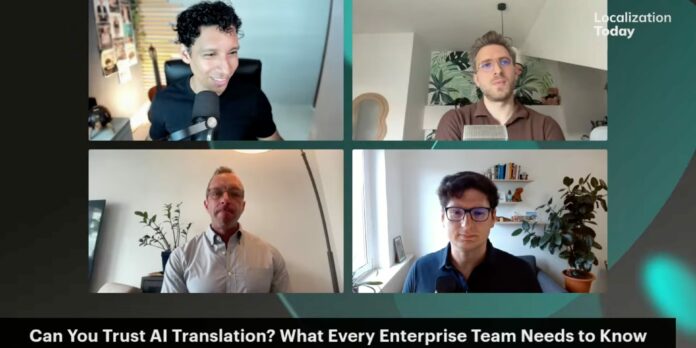
Localization Today photo of speakers and panelists

On July 16, Localization Today Live convened a panel of industry leaders to examine whether enterprises can reliably trust AI‑generated translation at scale. Supported by Smartling, the session brought together Konstantin Dranch (Custom.MT), Marcin Pajak (Miro), and Andrew Saxe (Smartling), moderated by Multilingual’s very own Eddie Arrieta.

Eddie opened by noting that the challenge is now “understanding when AI output is accurate” and how organizations can build systems stakeholders trust.

Konstantin traced the evolution of quality evaluation, explaining that MQM “has not been very practical for an enterprise” and that modern pipelines rely on simpler guardrails such as language correctness, terminology, and units of measure. With these in place, he argued that AI can be trusted “if you’re not looking for human voice.

From the engineering perspective, Marcin described Miro’s shift to an AI‑first pipeline. His core belief is that “trust comes from the system that you build around it.” Miro’s “optimistic localization” approach delivers AI translations instantly, with human review happening asynchronously. Incorrect strings may briefly appear in production, but “fix goes out of the next series,” making errors short‑lived. Linguists now shape model behavior, as “language managers… own the behavioral rules of the AI.

Andrew emphasized that trust depends on frameworks combining style rules, terminology, assessment, and routing. At large scale, organizations need “some good indication that something is good enough quality to ship and publish,” especially when translating tens of millions of words. He noted that quality is inseparable from business impact, whether content appears on a homepage, a help center, or a legal disclaimer.

The panel also explored high‑stakes content, where errors carry regulatory or cultural consequences. Konstantin pointed to legal, political, and creative material as areas requiring heightened scrutiny, noting that audiences can be “allergic to AI content” in entertainment. He also highlighted emerging regulations requiring AI‑generated text to be labeled.

Audience questions focused on hallucinations, compliance checks, and hybrid workflows. Konstantin was direct: hallucinations cannot be eliminated, but teams can build “multiple levels of checks” and “multiple AI judges.” Marcin added that hybrid systems often outperform either humans or AI alone.

As the session concluded, Andrew reflected on the pace of change, noting that the conversation will be completely different in six months, while Konstantin offered a final takeaway: “Trust but check.

Supported by Smartling, the event underscored that AI translation is no longer just a technology question — it is a governance question. Trust must be built through measurement, oversight, and a clear understanding of risk.

The Week in Review: Language Industry News July 14-20

0
Week in Review July 14-20

This week’s stories trace how the language industry continues to strengthen its professional foundations while pushing technical capabilities forward — from community‑driven conferences and gaming localization expansion to IP workflow integration, neural audio cleanup, and multilingual UX at global scale. 

Expansion

Mars Translation has expanded its gaming localization offering to support developers across different gaming platforms, reinforcing its focus on culturally authentic player experiences. The enhanced workflow combines native‑speaking linguists, localization engineers, and QA specialists to deliver UI translation, dialogue and subtitle work, LQA, cultural adaptation, marketing localization, and continuous live‑ops support across more than 380 languages. With demand rising for scalable partners capable of handling simultaneous global releases, the expansion positions Mars Translation as a broader end‑to‑end provider for studios seeking high‑quality multilingual game experiences. 

LALAL.AI has released Lynx, its first purpose‑built speech‑denoising neural network, designed to isolate clean dialogue from real‑world audio environments for transcription, localization, text-to-speech input, and voice replacement. Six times smaller than the company’s flagship Andromeda model and trained on a manually curated dataset, Lynx reduces computational load while improving output quality for SaaS platforms and localization pipelines processing high‑volume content. Now powering LALAL.AI’s Voice Cleaner and Voice & Noise stem, Lynx strengthens audio‑prep infrastructure for dubbing providers, multilingual media platforms, and enterprise content teams. 

Disney+ has rolled out a major accessibility update, adding 17 new languages across audio, subtitles, closed captioning, and UI, plus a fully engineered right‑to‑left (RTL) interface for Arabic and Hebrew. With support now spanning 58 audio languages, 42 subtitle/CC languages, and 30+ UI languages, the platform strengthens its position as one of the most linguistically expansive global streamers. The launch reflects a broader industry shift toward multilingual UX as a core product feature, making Disney+ genuinely accessible for millions of viewers and reinforcing its international growth strategy.

Community

The National Translation Forum (ENT) returns Sept. 11–12 with a fully online program featuring 16 one‑hour sessions in Spanish. Continuing its role as a major gathering point for translators, interpreters, and linguists across Argentina and beyond, ENT’s latest agenda spans UX translation, human–LLM collaboration, cultural heritage, specialized interpreting, digital marketing, US8 Spanish, musical theater translation, and leadership in language services. With recordings available on demand, ENT 2026 reinforces its position as a community hub for learning, exchange, and career development in an increasingly technological and competitive market. 

Park IP and NLPatent have formed a preferred provider partnership that unifies patent intelligence, prior art research, monitoring, and visualization with Park IP’s foreign filing, translation, and global IP workflow capabilities through Legal Studio. The integration allows clients to move seamlessly from AI‑driven patent insights to jurisdiction‑specific translation and filing support, reducing fragmentation across the patent lifecycle and strengthening efficiency. By pairing NLPatent’s domain‑specific AI with Park IP’s multilingual expertise and global coordination, the partnership creates a more connected ecosystem for protecting innovations in international markets. 

___________________________________________________________________________________________________________________________________________

Across government, industry associations, and AI innovators, this week’s stories reveal a sector investing in the practical scaffolding of language access. The work isn’t flashy, but it’s exactly what enables the breakthroughs that follow. As multilingual communication becomes more real‑time and more global, these foundational moves are what keep the ecosystem stable enough to evolve. 

For more stories like these, visit our News section.

RWS Launches New Linguistic Validation Service to Significantly Reduce Clinical Trial Timelines

0
RWS

RWS (AIM: RWS.L), a global AI solutions company, has launched a new tech-enabled eCOA translation and linguistic validation service designed to help pharmaceutical companies, clinical research organizations (CROs) and eCOA providers reduce delays in global clinical trials. 

The service brings together COA licensing, source validation, multilingual translation, Trados-enabled eCOA migration, intelligent workflows, rater training and dedicated program management under a single, integrated operating model – delivered by one program team with end-to-end governance and a single point of accountability across the entire COA lifecycle.

Global clinical trials depend on precise timing, and language is often one of the greatest pressure points. In a global study, every week counts: sponsors need to move from instrument access to eCOA go-live without putting study start-up, site activation or regulatory submissions at risk. Yet many organizations still manage licensing, translation, eCOA migration and rater training across multiple vendors, systems and disconnected workstreams. The result is familiar – handoffs multiply, accountability blurs, visibility narrows, and small delays compound into significant operational and regulatory risk. 

RWS’s service addresses this by redesigning the delivery model around dedicated program management and intelligent workflows. A single leadership team owns planning, execution, communication, risk management and delivery at every stage, from licensing through to global deployment.

“Bringing eCOA translation, linguistic validation and rater training together under one program team is exactly the kind of service model global clinical trials need. Across many studies and therapeutic areas, we’ve come to rely on RWS as a trusted partner because they understand both the operational pressure sponsors face and the quality standards regulated research demands. An integrated approach like this can simplify global study execution, reduce handoffs and help sponsors move faster without compromising endpoint quality, compliance or the patient experience,” said Martial Marcotti, EVP & Chief Product Officer at Kayentis (a leading eCOA vendor).

As part of this transformation, RWS has expanded its digital health portfolio to include rater training, bringing together COA licensing, source validation, linguistic validation, eCOA migration, and rater training into one integrated delivery program. By removing traditional service silos, sponsors benefit from streamlined communication, consistent governance, simplified vendor management, and improved coordination from instrument acquisition through study execution.

“Clinical teams shouldn’t have to choose between speed and scientific standards. For more than a decade, the industry has relied on fragmented delivery models for licensing, source validation, linguistic validation, eCOA migration and rater training. We’ve reimagined that approach by bringing every service together under a single program – creating a faster, more connected and more scalable model that helps sponsors reduce complexity, protect endpoint quality and accelerate global study execution,” said Dan Herron, Global Vice President, Digital Health at RWS.

RWS is also investing in AI-powered tools and smart automation to augment subject matter experts – automating repetitive tasks, strengthening quality oversight and accelerating delivery while preserving the scientific rigor and regulatory compliance global research demands.

About RWS

RWS, headquartered in the UK, is a global AI solutions company empowering one of the world’s most trusted enterprise AI. It’s proprietary Cultural Intelligence Layer, powered by 250,000 data specialists, cultural and language experts and deep domain professionals, backed by 45+ patents, makes enterprise AI culturally fluent, contextually accurate and secure, ensuring every interaction reflects a brand’s tone, context and customer values. Through its Generate, Transform and Protect segments, it delivers intelligent content, enterprise knowledge, large-scale localization and IP protection for global growth. RWS provides the confidence, governance and expertise organizations need to deploy AI safely, responsibly and at scale. 

 Building Bridges Across Cultures: Joanna Pawulska Saunders’ Career Journey

0
Joanna Pawulska Saunders

From teaching herself Latin to fostering global communication, Joanna Pawulska Saunders of Lifestyle Translations reflects on the dramatic evolution of translation tools and her enduring passion for connecting people and organizations across international borders. 

What is your favorite thing about Multilingual magazine?
What I enjoy most are the personal stories, which bring a certain warmth to an industry that can sometimes feel fragmented and a little isolated. I especially liked the article about the Vargas sisters [in the October 2025 issue]. Even their mum got a mention, which made it feel so joyful. 

I also appreciate how the magazine approaches potentially controversial topics such as artificial intelligence (AI), environmental issues, diversity, and accessibility with a balanced and positive tone. Now that I’ve discovered the archives, I find myself dipping in whenever I have a spare moment.

How did you get involved in the translation/interpreting business?
As a child, I tried to teach myself Latin from a prayer book written in parallel text, with English on one side and Latin on the other. It was a fascinating exercise, and, for a seven-year-old, far more interesting than listening to the sermon! Getting a phrase right gave me both a thrill and a sense of satisfaction. That, I think, is when I realized I wanted to work with languages — before I even knew what translation or interpreting were. Over time, I narrowed down the possibilities until I realized I wanted to work in business,  helping people and organizations understand one another more clearly. Even then I was drawn to the idea of globalization, of building bridges across cultures and borders, long before it became a major topic of public debate.

Since you entered the business, how has the landscape changed?
In terms of tools and technology, it’s almost unrecognizable. When I started out, research meant dictionaries, encyclopedias, and long afternoons in public libraries. Work was done on a typewriter; mine even had a tiny screen, which felt remarkably advanced at the time because it let me correct the last few words before they were actually typed. Deliveries went by post, of course. What hasn’t changed, though, is the intellectual challenge and the importance of cultural nuance — and the fact that I still use a fountain pen!

Could you share your experience working with your first client or on your first project?|
Toward the end of my postgraduate course, I chose civil engineering as my niche, mainly because I had access to some good textbooks. My first client came through word of mouth, although I’m still not sure who recommended me! The project was an article on restoring a masonry arch bridge. I did plenty of library research, visited a few comparable structures in the United Kingdom, and even had the chutzpah to take the finished document to a local civil engineering company to check terminology. The finished translation was sent by airmail. All discussions with the client were by phone, which felt daunting at the time but helped me build close working relationships.

Freelancing, though, felt isolated, so I joined an established business as an in-house linguist, first in the travel trade, then with an international training company, and finally at a management consultancy. Then I went on maternity leave. When I came back everything had changed: Computers were everywhere, the Internet was widespread, and the industry was evolving fast. So I found a new niche, acquired a computer and a computer-assisted translation (CAT) tool — and the rest is history! I thoroughly enjoy freelancing now, but those early years in an office environment taught me invaluable soft skills that every freelancer should have a chance to learn.

Do you believe it’s a good time to enter the translation/interpreting business?
I see the landscape changing very quickly, and there’s a lot of doom and gloom out there. But as long as we stay alert and aware of these changes, there’s no reason not to enter the profession. It’s important to recognize that translation and interpreting are skills in their own right, distinct from simply speaking two or more languages, and that there’s still room for talented practitioners as long as they can add value, differentiate themselves from the crowd, and make their skills visible.

At the same time, life as a freelancer can be challenging. A good sense of financial responsibility is just one of the skills needed to navigate the realities of self-employment. For example, I recently recovered from a case of Bell’s palsy. I wasn’t sick enough to claim insurance, but my pace of work slowed considerably, so I was grateful for the financial contingency that carried me through those couple of months.

Ultimately, for those who are adaptable and diligent (as well as skilled at their job!) the profession continues to offer opportunities to grow, connect, and make a meaningful impact.

Where do you see yourself professionally in the next 10 years?
The creative side of translation, including literary translation and transcreation, has always been my first love, so I hope to continue working at the coal face, focusing on what I truly enjoy. There will always be new things to explore and learn, and those challenges are what keep me motivated and inspired. I also hope to find new opportunities for collaboration and mentoring while continuing to grow and deepen my own skills.

What predictions do you have for the future of the translation/interpreting business?
I see change ahead, and the perceived bogeyman is, of course, AI. Right now, it feels all-powerful, poised to change our world. And it will certainly change workflows, but not necessarily to the detriment of skilled translators and interpreters who specialize, demonstrate measurable quality, and offer services beyond the raw rendering of text . As the landscape settles, we’ll gain a clearer picture of where AI helps and where it hinders. And if we stay alert to new opportunities and don’t cling to old practices for the sake of tradition, we can — and will — adapt.

Senators Kim and Hirono Introduce Legislation to Permanently Make Federal Services Language Accessible

0
Senator Andy Kim

U.S. Senators Andy Kim (D-NJ) and Mazie Hirono (D-HI), Executive Board Members of the Congressional Asian Pacific American Caucus, have introduced the Language Access for All Act to codify language access requirements for federal agencies and protect language access for the 25 million individuals in the United States with limited English proficiency. The legislation would prioritize customer service governance by reducing barriers to federal services and making sure federal agencies are equipped to meet diverse language needs. 

“There’s nothing more basic to the purpose of government than to help people,” said Senator Kim. “From accessing veteran benefits to help filing taxes, no one in our country should be barred from accessing critical assistance or resources because of language barriers. As the Trump administration goes after long-standing translation and language accessibility services, this legislation would make sure no president can stand between the American people and the agencies there to serve them.” 

“In limiting multilingual access to federal resources, the Trump regime’s extreme anti-diversity ideology is preventing millions of American citizens from accessing critical services including small business loans, Social Security benefits, and Medicare coverage,” said Senator Hirono. “By protecting interpreter and translation services, this legislation ensures that all Americans — no matter what language they speak — can get the services they need.” 

The Language Access for All Act is being introduced as services come under threat from the Trump Administration. In March 2025, President Trump signed Executive Order (EO) 14224 that declared English as the official language of the United States and revoked EO 13166, a 25-year-old mandate that required agencies to provide critical language access to individuals with limited English proficiency (LEP). The Trump administration’s Department of Justice issued new guidance that minimizes multilingual services and redirects resources towards English language assimilation.  

These policy changes threaten language access for the over 25 million people in the United States — eight percent of the U.S. population — with limited English proficiency. Asian Americans have among the highest language access needs of any racial group, with 32 percent having LEP. 12 percent of Native Hawaiians and Pacific Islanders also have significant language access needs. And while Spanish language speakers make up the majority of those who speak another language in the United States, nearly 40 percent report speaking English “less than very well” in the most recent U.S. Census.  

The Language Access for All Act of 2026 would modernize and strengthen the federal government’s language access services by formalizing EO 13166 and establishing a coordinated, accountable framework to ensure meaningful access to government services for individuals with limited English proficiency. Specifically, the legislation would: 

  • Requires federal agencies to ensure that individuals with LEP can meaningfully access the federally conducted programs and activities of the agency, including through translation and interpretation. 
  • Creates a public complaint system to track complaints regarding barriers to meaningful access at agencies. 
  • Requires agencies to develop and maintain language access plans consistent with EO 13166, with public notice and comment, and to submit plans to Congress and publish them on LEP.gov. 
  • Establishes language access technical standards that allow individuals with LEP to access agency content. This applies to all agency communications, including AI and automated language assistance services. 
  • Ensures AI-assisted language services do not replace qualified translators and interpreters, comply with federal privacy requirements, and are continuously tested for bias, discrimination, and errors. 
  • Creates an interagency language access working group to provide guidance, coordination, and technical assistance. 
  • Requires each agency to designate a language access coordinator to lead implementation and serve as a point of contact. 

The legislation is co-sponsored by Senator Kirsten Gillibrand (D-NY) and was introduced in January 2026 in the House of Representatives by fellow members of the Congressional Asian Pacific American Caucus: Representatives Judy Chu (CA-28), Grace Meng (NY-06), Juan Vargas (CA-51), and Dan Goldman (NY-10). 

“For more than 25 years, both Democratic and Republican presidents have supported language accessibility across the federal government. Trump’s roll back of these protections is simply wrong. In my district, translation services are essential for parents applying for a home loan, seniors accessing Medicare, immigrants starting a small business, and disaster survivors accessing the FEMA’s resources. That is why I’m proud to co-lead the Language Access for All Act to ensure no one is denied health care, housing, or disaster assistance because English is not their first language. Language access is a civil right and rolling back these services is an attack on our immigrant communities,” said Representative Chu. 

“Every American deserves equal access to federal services and programs in a language they can understand. Language access is essential to ensure individuals are able to access small business loans or receive the right medical care,” said Representative Meng, Chair of the Congressional Asian Pacific American Caucus. “I am proud to lead the Language Access for All Act in the House to safeguard translation services for individuals with limited English proficiency, including millions in the Asian American, Native Hawaiian, and Pacific Islander community. We will continue to fight against the Trump administration’s attacks on immigrants and the essential services that our communities rely on and deserve.” 

NitroTranslate Becomes the First Human Translation Service to Accept Payments From AI Agents

0
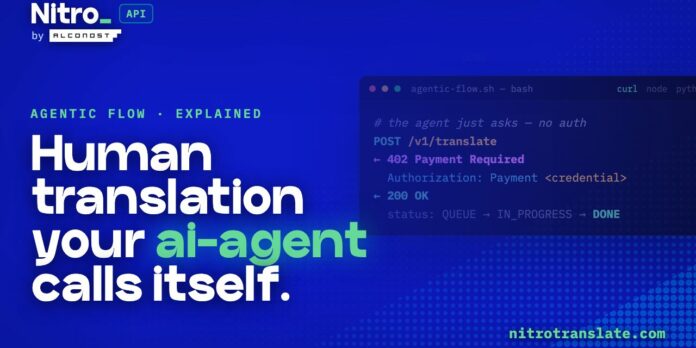
Nitro API by Alconost example payment platform

NitroTranslate, the human translation service by Alconost, has become the first professional human translation service to accept agent-initiated payments through the Machine Payments Protocol (MPP). This new open standard lets autonomous AI agents pay for services per request, without traditional account setup.

A 1-minute explainer of how it works: https://youtu.be/wyipEcXdkBs

Why it matters

AI made people faster. Then people started building agents to work on their behalf — a second pair of hands that reads, writes, and researches. The next step is agents that can also buy services on their own.

Until now, that step hit a wall: to order professional translation services, an agent had to hand the task back to a human to create an account, generate an API key, and load a balance. With MPP support, an agent completes the entire purchase itself, all while the translation is still done by professional native-speaking linguists.

“Agents are becoming the next layer of how people work. It felt natural to open NitroTranslate up to them first, while keeping the quality of human translation exactly where it is,” said Diana Ivanenko, Product Manager at Alconost.

How it works

  1. The agent sends a translation request to the NitroTranslate API with no authentication needed.
  2. The API responds with HTTP 402 Payment Required and a payment challenge. In this flow, 402 is not an error, it is the payment step.
  3. The agent obtains a payment credential from any MPP-compatible provider and retries the same request. One credential pays for exactly one request, so there are no stored keys to leak, rotate, or overcharge.
  4. The order goes straight into production. The agent polls the order status and receives a reviewed, publication-ready translation — typically within 2–24 hours.

Translations are performed by native-speaking professionals in over 80 languages, with markup — HTML, JSON, XML, iOS strings — preserved. There are no plans, minimums, or pre-funding: agents pay per request.

The full flow is documented at docs.nitrotranslate.com/agentic-flow. MPP payments currently support US-issued cards only; the standard API-key flow remains available worldwide.

About NitroTranslate

NitroTranslate is a human-powered online translation service offering fast turnaround, native-speaking linguists, and support for 80+ languages. With no minimum order, API integration, extensive file-format compatibility, and tools like glossaries and Translation Memory, Nitro delivers scalable, high‑quality localization for businesses, creators, and global teams.

About Alconost

Founded in 2004, Alconost is a leading provider of localization services, offering professional translation, localization testing, and language quality assurance. The company serves clients across the gaming, software, mobile app, and digital content industries worldwide, with headquarters in Virginia and offices in multiple countries, along with a network of over 1,000 linguists. Alconost also builds QACat (translation quality visibility) and alconostmt (AI translation stack).

Disney+ Boosts Accessibility With New Languages and RTL Support

0
Disney+ Streaming Logo

Disney+ has announced a significant multilingual expansion this week, adding support for 17 new languages across audio, subtitles, closed captioning, and the user interface to their streaming service platform. The update includes a notable accessibility milestone: a right‑to‑left (RTL) interface for Arabic and Hebrew, marking one of the most substantial UX adaptations the platform has made since its 2019 launch.

With the new update, Disney+ now supports 58 audio languages, 42 subtitle and closed‑caption languages, and more than 30 UI languages, placing it among the most linguistically expansive major streaming platforms. Newly added languages include Arabic, Croatian, Hebrew, Thai, Indonesian, Malay, Hindi, Tamil, and Telugu — a mix that reflects both regional growth priorities and the increasing global circulation of Disney+ originals.

The introduction of RTL functionality represents a notable shift in how Disney+ approaches multilingual UX. While language additions are common across streaming platforms, full RTL UI adaptation requires deeper engineering changes such as mirrored layouts, reversed navigation patterns, and culturally intuitive interface behavior. For millions of Arabic and Hebrew speakers, this update moves Disney+ from “linguistically available” to genuinely accessible — a distinction that often goes overlooked in global product rollouts.

The platform’s linguistic expansion also underscores Disney’s broader international strategy. Since its debut, Disney+ has positioned itself as a global service rather than a U.S.‑centric platform, and its language footprint has grown accordingly. The company’s official announcement emphasizes how multilingual support helps content travel beyond its country of origin, a trend already visible in the cross‑market success of regional originals.

For the localization industry, this update reflects a familiar pattern: major streamers are increasingly treating language coverage and accessibility as core product features rather than post‑launch enhancements. As competition intensifies, multilingual UX — not just translated content — is becoming a large differentiator.

Disney+’s latest expansion helps to reinforce that global audiences expect more than subtitles. They expect interfaces that meet them where they are — linguistically, culturally, and accessibly. The expansion underscores Disney+’s continued focus on accessibility and international audiences. 

New Research From Phrase Reveals Half of Enterprises Lost Revenue From Disconnected Customer Experiences

0
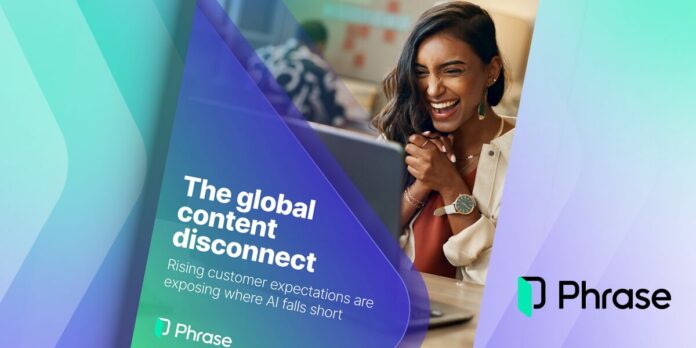
The Global Content Disconnect by Phrase digital cover page

Half of enterprises report losing revenue due to disconnected customer experiences across regions, despite significant investment in artificial intelligence and content operations, according to new research commissioned by Phrase, one of the world’s leading Language Intelligence Platforms.

The report, The Global Content Disconnect: Rising Customer Expectations Are Exposing Where AI Falls Short, is based on independent research among 550 senior business leaders across nine countries. The research examines how organizations are navigating global expansion, customer experience delivery, content operations, and AI adoption amid growing pressure to serve customers consistently across markets.

The findings suggest that while AI has dramatically accelerated content creation, many organizations continue to struggle to deliver the consistent, relevant customer experiences required to support international growth.

The research points to a widening disconnect between what customers increasingly expect and what organizations are currently able to deliver. While 89% of organizations plan to expand into new markets within the next five years, 95% say personalized customer experiences are critical to growth, yet only 28% can deliver personalization consistently across markets.

The challenge is compounded by the speed of expansion. Despite ambitious growth plans, 91% of organizations report that entering a new market can take up to two years, highlighting the operational barriers many enterprises face as they attempt to scale globally.

“The research shows that organizations have become very effective at scaling content, particularly with AI, but far fewer have figured out how to scale customer experience across markets,” said Pamela Ghosal, Director, Global Communications at Phrase. “Customers don’t evaluate how much content a company produces. They evaluate whether every interaction feels relevant, consistent, and trustworthy. That is becoming increasingly difficult for organizations to deliver as content volumes, channels, and markets continue to grow.”

Many enterprises are struggling to align their content operations, customer experience strategies, and expansion ambitions. As customer expectations continue to rise, organizations are increasingly challenged to balance speed, personalization, governance, and consistency at global scale.

The research introduces the concept of the “global content disconnect,” the growing gap between the volume of content enterprises can produce and their ability to deliver locally relevant customer experiences at scale.

“AI has dramatically increased the ability to generate content, but the research shows that content volume alone is no longer a competitive advantage,” said Ghosal. “The organizations seeing the strongest results are treating language as a strategic capability. They are connecting content creation, governance, customer insights, and market performance into systems that can continuously improve customer experiences over time.”

The full report, including findings on revenue impact, market entry barriers, and how the highest-performing organizations are operating differently, is available to download here

Methodology

Phrase commissioned independent research among 550 senior business leaders across nine countries to better understand how organizations are approaching global expansion, content operations, customer experience, and AI adoption. Respondents represented organizations with more than 1,000 employees across North America, EMEA, and APAC and included C-suite executives, vice presidents, and senior management leaders across technology, financial services, manufacturing, and retail sectors.

About Phrase

Phrase is a leading AI‑powered localization platform built on a headless, API‑first architecture. It orchestrates translation, adaptation, multimedia localization, and quality evaluation at enterprise scale, combining automation, governance, and contextual language intelligence to help global teams deliver consistent, compliant, culturally‑nuanced content across markets.

LALAL.AI Launches Lynx: A Neural Network for Voice Cleanup in Dubbing & Localization Workflows

0
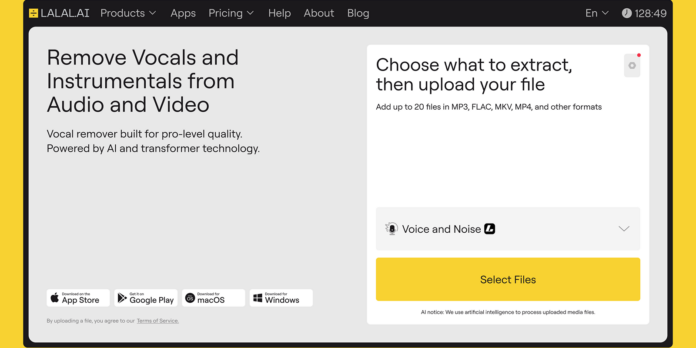
example of the Lynx platform dashboard

LALAL.AI has announced Lynx, its first neural network built from the ground up, exclusively for speech denoising. The model is now available through the LALAL.AI API, web, desktop (cloud mode), and mobile apps and powers the company’s Voice Cleaner and Voice & Noise stem, the tools most commonly used by localization companies, dubbing SaaS platforms, and post-production teams that need clean dialogue as the foundation of their workflows.

Lynx is trained to separate speech from everything else: background music, crowd noise, mechanical interference, environmental sounds, and the full range of acoustic artifacts present in content produced outside controlled studio conditions. The result is a clean voice track ready for transcription, localization, text-to-speech input, or human voice replacement, without the manual cleanup steps that slow batch production.

“In speech denoising, you’re not separating things that were recorded together by design. You’re trying to recover a voice from an environment that was never meant to be a recording studio,” says Nik Pogorsky, LALAL.AI Product Owner and Co-founder. “We spent a year building a model that treats that as the actual problem, not a side case of something else.”

Lynx runs on a proprietary architecture developed over one year by the LALAL.AI research team. The model is six times smaller than Andromeda, LALAL.AI’s flagship cloud stem separation model, which reduces computational load without compromising output quality.

This is a meaningful factor for SaaS providers and localization platforms processing high volumes of content through the API. The model was trained on a manually curated dataset: since no reliable automated pipeline exists for cleaning the full dynamic range of real-world speech from diverse noise sources, the team spent months hand-selecting, filtering, trimming down, and preparing audio tracks covering conditions from quiet interviews to noisy field recordings.

The demand for dedicated voice cleaning in localization workflows is reflected in LALAL.AI’s own usage data: the Voice & Noise stem, now powered by Lynx, is the platform’s second most-used separation track, with more than 11.5 million audio splits processed on it in 2025. Dubbing and localization providers are among its primary professional users, including multilingual platforms supporting enterprise clients across media, e-learning, and corporate communications, and AI-powered dubbing SaaS products that have integrated the LALAL.AI API directly into their processing pipelines as a core audio preparation step.

Lynx is available now through the LALAL.AI API for B2B integrations, SaaS platforms, and enterprise deployments, as well as through the Voice Cleaner product via browser, mobile app, and desktop app cloud mode. Planned near-term improvements to the Lynx architecture include enhanced separation of choral singing and lead vocals, and improved isolation of speech recorded at distance from the microphone, both relevant to content types commonly handled in localization pipelines.

About LALAL.AI

LALAL.AI is an AI‑powered audio processing platform offering vocal removal, stem separation, voice cleanup, noise and echo reduction, voice changing, and voice cloning. Originally a simple vocal remover, it has expanded into a full suite of tools for creators, studios, and enterprise audio workflows. The platform is accessible via web, mobile, desktop application, API, and VST plugin.