LangTalent 2026: Learning How to Learn

0
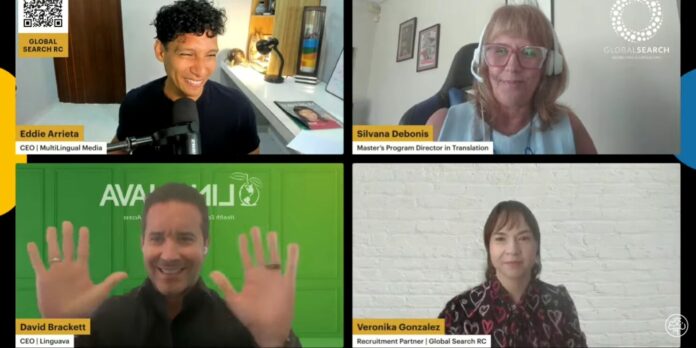
Live panel session of LangTalent 2026 with host Eddie Arrieta and featured guests

Lang Talent 2026 opened its virtual series on March 26 with a global audience and a clear purpose: to refocus attention on the human side of the language industry. Hosted by Eddie Arrieta of MultiLingual Media, the event was broadcasted live to attendees joining from across the globe and explored how professionals learn, adapt, and build meaningful careers in a field that continues to evolve rapidly.

This year’s theme centered on professional development and education — a topic that resonated strongly with students, early‑career linguists, and seasoned professionals alike. As Arrieta noted, “The field is broad, the paths are not always clearly defined… it’s easy to feel like you were supposed to have a plan.” The panel set out to challenge that assumption.

The conversation brought together three strong voices representing different corners of the industry:

  • Silvana Debonis – Translator and director of the Master’s in English Translation at Universidad de Belgrano
  • David Brackett – CEO of Linguava and host of The Invisible Profession podcast
  • Veronika Gonzalez – Specialist recruiter with more than 17 years of experience across localization operations and talent strategy

Across their stories, a shared thread emerged: Few people enter the language industry intentionally, and even fewer follow a linear path. Debonis described choosing translation simply because she was “curious and liked to study,” while Gonzalez recalled entering the field through project management before discovering recruitment. Brackett traced his start back to informal interpreting in Spain, long before he became a certified medical interpreter and later founded Linguava.

Together, the panelists explored what professionals think they need to learn versus what actually sustains a long‑term career in the language industry. While many newcomers focus on terminology, acronyms, and tools, the discussion highlighted deeper competencies: adaptability, communication, and the ability to understand the broader context of one’s work. “One of the most important things is to build resilience and the capacity to adapt,” Debonis said, reflecting on decades of technological change from CAT tools to integration of AI.

Audience engagement reinforced these themes, with participants sharing their own nonlinear paths and career pivots. Gonzalez spoke to the importance of clarity and connection, noting that success often depends on explaining complex processes in simple terms and building trust across teams. Brackett underscored the value of leveraging existing strengths and partnering with others to fill knowledge gaps — a reminder that no one enters the industry fully formed.

The session also addressed the role of AI, a topic raised by attendees. Rather than framing it as a threat, the panel emphasized thoughtful integration and critical engagement. “AI is here and it’s going to stay… but we are not being replaced,” Debonis said, encouraging professionals to focus on the uniquely human skills that technology cannot replicate.

As the first event in the LangTalent 2026 series, this session set the tone for a year of open, grounded conversations about careers, learning, and growth. Attendees left with a shared understanding that uncertainty is not a setback but a natural part of building a path in a dynamic, people‑driven industry. As this series continues throughout the year, we look forward to building on these conversations and exploring the many ways learning, growth, and curiosity shape the future of our field.
Intellezy Expands Global Learning with Audio-Dubbed Courses in Spanish, French, and German

0
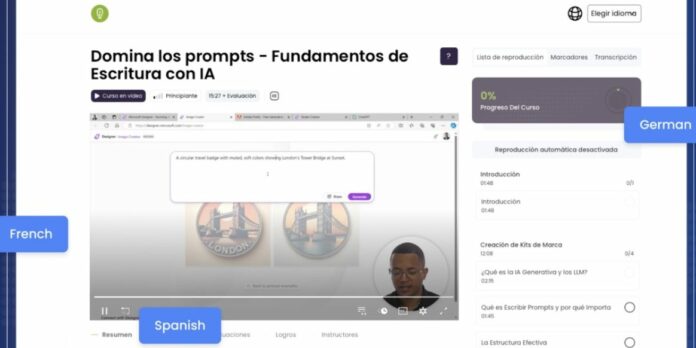
An online preview to Intellezey's fully dubbed video courses

Intellezy, an innovative learning solutions provider, has announced that 40 of its professional training courses are now available with audio dubbing in Spanish, French, and German. This new capability allows learners to switch the audio of select courses into their preferred language, marking an important step in Intellezy’s continued effort to make workplace learning more accessible, engaging, and scalable for global audiences.

This latest expansion builds on Intellezy’s broader multilingual learning capabilities. Intellezy already offers its full video library with transcripts and closed captions in 40 languages, helping organizations support learners across regions, roles, and learning environments. The addition of audio dubbing introduces a more immersive option for learners who benefit from hearing course instruction in their native or preferred language.

The first 40 dubbed courses span a range of in-demand workplace training topics, including leadership, communication, cybersecurity, customer service, emotional intelligence, compliance, remote work, team performance, and more. By expanding beyond subtitles and transcripts into dubbed audio, Intellezy is creating new opportunities for organizations to deliver a more inclusive learning experience to global and multilingual teams.

These 40 courses represent the beginning of a broader initiative to increase the number of courses available in multiple languages through audio dubbing. As organizations continue to prioritize workforce development across global and distributed teams, language accessibility is becoming an increasingly important part of a successful learning strategy.

“Organizations today need training solutions that can reach learners wherever they are, in ways that feel natural and engaging to them,” said Andrew Wight, CEO of Intellezy. “Adding audio dubbing in Spanish, French, and German to these courses is an exciting next step in our mission to make learning more accessible for global workforces. This is just the beginning, and we look forward to expanding these capabilities even further.”

About Intellezey

Intellezy is a revolutionary learning solutions company helping organizations train, reskill, and upskill their teams for the future of work. Its award-winning video library features thousands of lessons across 500+ professional training courses, including essential software training on desktop productivity, AI tools and AI skills training, and critical business skills training for learners around the world.

Beyond its video library, Intellezy delivers custom learning solutions tailored to each organization’s goals, systems, and workforce needs. Developed by its in-house team of instructional designers, eLearning developers, and video production specialists, these solutions are designed to create engaging, effective learning experiences at scale.

Intellezy also supports AI adoption and enablement through strategic guidance, training, and practical learning solutions that help organizations build confidence, capability, and responsible AI use across their teams. Backed by certified change management and L&D experts, Intellezy helps clients drive proficiency, maximize ROI, and prepare their workforce for continuous change.

GLOBO Language Solutions Welcomes Ryan Toohil as Chief Technology Officer

0
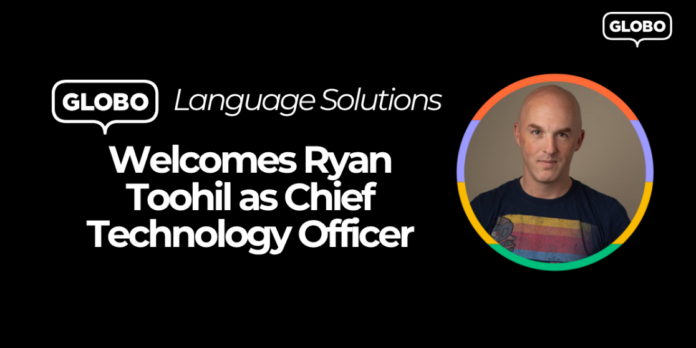
GLOBO Language Solutions Welcomes Ryan Toohil as new CTO

GLOBO Language Solutions, a leading B2B provider of interpreting and translation services, has announced the appointment of Ryan Toohil as Chief Technology Officer (CTO). The newly created role underscores the company’s commitment to building out its leadership positions and ensuring the right structure is in place to support sustained growth and success.

“We’re excited to welcome Ryan to GLOBO’s leadership team,” said Dipak Patel, CEO of GLOBO. “His excellent track record of scaling technology organizations will be instrumental as we continue to grow and invest in innovation, including our first-to-market artificial intelligence interpreting capabilities. Ryan’s expertise will help accelerate our technology vision and further our purpose to make it easier for limited-English-speaking people to communicate when and where it matters most.”

Toohil brings over two decades of experience building world-class technology organizations. Most recently, he served as CTO and technical co-founder of Aura, a Boston-based AI-powered online safety platform for families. There, he grew the research and development organization to more than 200 employees and helped scale the company to hundreds of millions in annual recurring revenue.

Toohil’s career is deeply rooted in high-growth environments, with expertise spanning platform development, strategic growth, and engineering leadership. He has led technology functions for AI-powered platforms serving millions of users and helped integrate technology and personnel following multiple strategic acquisitions. Earlier in his career, he spent more than a decade at Endurance International Group, now Newfold Digital, where he advanced from technical project manager to vice president of engineering, overseeing products generating more than $100 million in annual revenue. Toohil earned a bachelor’s degree in computer engineering from Virginia Tech.

“I’m honored to join GLOBO and help lead the company’s next phase of technology expansion,” said Toohil, GLOBO’s CTO. “GLOBO has built a strong reputation for helping organizations overcome language barriers and increase their reach, assisting underserved populations through high quality, innovative language access solutions. The opportunity to advance that mission and make a difference in people’s lives makes this opportunity especially meaningful.”

About GLOBO

GLOBO Language Solutions (“GLOBO”), headquartered in Philadelphia, Pa., is a leading healthcare language access company that helps healthcare providers communicate more effectively and equitably with patients by delivering on-demand interpreting and translation services through its technology platforms GLOBO HQ and GLOBO Connect, featuring AI-powered language access innovations GLOBO KAI and GLOBO Live Quality. The company manages an independent global network of 10,000+ linguists who speak over 430 languages and dialects. GLOBO supports diverse industries with 24/7 audio, video, on-site, and sign language interpreting and translation — all informed by actionable insights.

Elnino Launches Knoc, a Real-Time AI Subtitle Solution for Multilingual Communication

0
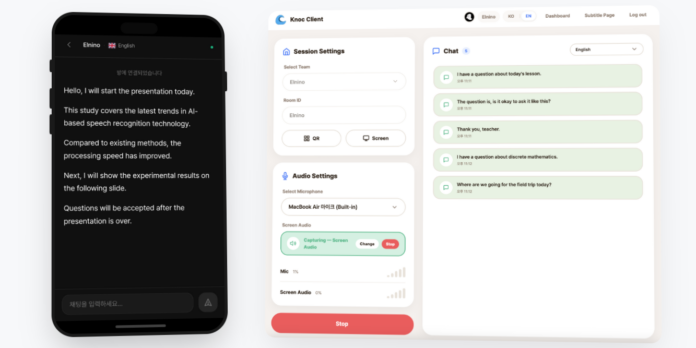
Knoc's ai subtitle user process

Elnino, a South Korean AI startup, has announced the official launch of Knoc, a real-time AI-powered translation subtitle service designed to make multilingual communication accessible to educational institutions, academic organizations, and international event organizers without the need for professional interpreters or costly equipment.

Conventional simultaneous interpretation typically requires trained interpreters, dedicated receiver hardware, and significant logistical coordination — often costing hundreds of dollars per hour and weeks of advance planning. For many universities, academic conferences, and mid-sized organizations, these costs put real-time multilingual support out of practical reach.

Elnino aims to change that equation. By replacing traditional interpretation infrastructure with a software-first, AI-driven platform, Knoc enables organizers to deliver multilingual experiences at a fraction of the cost and setup time. Starting from the Korean market — where international academic programs and cross-border conferences are rapidly growing — the company is expanding across Asia and beyond, targeting any environment where language barriers limit participation.

Stable subtitle output without retroactive corrections

Many existing real-time AI translation services process speech in short segments, displaying text immediately and then retroactively correcting it as more input arrives. This causes a “flickering” effect where on-screen text shifts repeatedly, increasing cognitive load for viewers.

Knoc takes a different approach. By leveraging a contextual memory window of up to 30 seconds, Knoc delivers subtitles that remain stable once displayed — producing output that flows naturally, similar to a live interpreter’s speech, without post-hoc corrections.

Flexible deployment across use cases

Knoc is designed to adapt to a range of environments:

  • Classrooms and lectures: Instructors can use a smartphone as a microphone to start a session instantly. Where institutions previously needed dedicated interpretation hardware such as transmitters and receivers, Knoc replaces that infrastructure with a smartphone, significantly lowering the barrier to entry.
  • Large-scale events: Organizers can connect Knoc to their existing audio systems (e.g., mixers). Elnino provides the software platform only; on-site operations run within the organizer’s existing staffing and logistics setup. Speakers require no additional technical configuration and can focus entirely on their presentations.
  • Online meetings: Through Knoc’s web client screen-sharing feature, users can capture audio from video conferencing platforms such as Zoom or Google Meet — no additional hardware required.

Participants join via QR code or link, enter a room name in their browser, and select their preferred language — no app installation needed. Speaker language is detected automatically, and Knoc handles code-switching mid-presentation. Depending on the setup, a real-time Q&A chat feature is also available. A desktop overlay app for Windows and macOS allows subtitles to remain visible even during full-screen presentations.

Language support and data security

Knoc currently supports 101 languages. Specialized domain-boosting models for medical, legal, and IT fields enhance translation accuracy for technical terminology. After each session ends, all audio and translation data is deleted and is not used for AI model training — a policy Elnino refers to as Data Zero Retention.

Pricing

Individual users can access Knoc on a pay-as-you-go basis at $4.99 per session, with no contract required. Institutional and enterprise users can opt for custom plans that include multiple concurrent sessions, team member management, and shared credit pools.

A free 10-minute trial is available immediately upon sign-up at elnino.kr. For inquiries, contact: contact@elnino.kr.

Pilot results

Prior to the official launch, Knoc was deployed in pilot programs at university international programs and academic conferences in South Korea. The pilots covered multilingual classrooms, field trips, and conference sessions conducted in Korean, English, Japanese, and Chinese (both Simplified and Traditional). Among participants surveyed, 83.2% responded that continued adoption of the service was necessary.

“The era of needing separate budgets, equipment, and personnel just to enable multilingual communication should be behind us,” said Gyeongmin Kim, Founder of Elnino. “Language support shouldn’t require special preparation — it should be part of the default environment.”

About Elnino

Founded in 2024 as a student venture at Hanyang University, Elnino is a two-person AI startup focused on real-time multilingual communication. From its earliest days, the team has worked directly with end users by visiting university international programs and academic conferences to validate its product in real-world settings. Through multiple rounds of complete architectural redesign informed by user feedback, the team arrived at the current version of Knoc.

VSL Global Expands Multilingual Video Localization Offering for Brands, Agencies and Media Teams

0
VSL Global brand logo

VSL Global has announced they have expanded its multilingual video localization offering to support a broader range of enterprise content workflows, helping brands, agencies, and media teams create and distribute multilingual content more efficiently.

The expanded offering is designed to support organisations producing video at scale, including training content, marketing assets, corporate communications, digital media, and creator-led campaigns. VSL Global combines AI-powered dubbing, voice adaptation, and lip-sync workflows to help teams produce localized content for multiple markets through a single platform.

The move comes as more companies look for ways to make existing content work more efficiently across regions, languages, and target audiences. Instead of recreating assets from scratch for every market, multilingual video workflows are increasingly being used to extend reach, improve accessibility, and accelerate international distribution.

“Companies already have valuable content libraries. The opportunity is not just to create more content, but to unlock more value from the content they already own,” said Jay Lohman, CEO of VSL Global. “Expanding multilingual distribution is one of the clearest ways to do that.”

The service expansion is aimed at helping teams that need speed, consistency, and a more operationally manageable way to localize content. By centralizing production into one workflow, enterprises can reduce complexity while improving how content is prepared for international release.

Continued demand is expected from organizations looking to scale multilingual content without adding heavy production overhead.

About VSL Global

VSL Global is an AI‑powered voice and dubbing platform enabling creators and brands to produce studio‑quality multilingual audio and video at scale. Offering 60+ languages, voice cloning, natural‑sounding voices, and seamless dubbing with lip‑sync, VSL streamlines global content production for businesses of all sizes.

2026 World Language Advancement and Readiness Program Grant Opens for Applications

0
World Language Advancement and Readiness Program grants by DoDEA

The Department of Defense Education Activity (DoDEA) has recently announced the opening of FY26 World Language Advancement and Readiness Program Grants (WLARP). The FY 2026 WLARP grants will range from $500,000 to $2,000,000 per award to eligible school districts for up to 5 years, depending on the size of the eligible student population. Applications are now open and must be submitted by April 24, 2026, at 11:59 PM ET.

WLARP grants are intended to support the expansion of K-12 world language education programs in Local Education Agencies (LEAs) that, as defined by state law, serve military-connected schools. Eligible schools have military-connected enrollment of 10% or more in the past academic year and have a current or pending JROTC unit. In addition, the grants “must establish, improve, and/or expand one of the Strategic Languages” (see below).  

Funded projects may include early language learning initiatives, dual-language or immersion programs, expanded course offerings, and the integration of language instruction across academic subjects. Programs that leverage technology to broaden access to language learning are also encouraged. DoDEA places particular emphasis on the use of language as a national defense mechanism. DoDEA states that “introducing elementary and secondary students to world languages is critical to developing and sustaining the pipeline of individuals with skills needed to address national security and economic competitiveness needs.” 

This grant represents a strategic and critical investment in K-12 language education, particularly in its connection to national defense. The Joint National Committee for Languages, National Council for Languages and International Studies (JNCL-NCLIS) strongly encourages eligible districts to apply!

Interested in applying? Stay tuned at https://dodeagrants.org/ for a pre-recorded assistance webinar. 

For more information regarding WLARP grants, the application process, and sample submissions, please review this Notice of Funding Opportunity:  https://drive.google.com/file/d/1KARC_HxuUgU0bO7G0UAbes0i7TgSfR-1/view?usp=sharing

To apply, please visit: https://www.grants.gov

Funding Opportunity Number: HE125426R5000

Assistance Listing Number: 12.556 Competitive Grants: Promoting K-12 Student Achievement at Military-Connected Schools:

Deadline: Friday, April 24th @ 11:59 pm ET

April in Focus: Celebrating Language Access Month

0
A word graph of

For years, April was treated as a month dedicated to language access long before Congress ever took notice. In many ways, House Resolution 1148 is the capstone to a movement that has steadily expanded across states, community networks, and industry organizations.

A New Federal Push

In April 2026, lawmakers introduced a House resolution to designate April as National Language Access Month. While it doesn’t create new mandates or funding, it nevertheless centers language access on the national stage and signals that multilingual equity is a public priority, not a niche concern. What’s more, it gives agencies, advocates, and organizations a shared moment to highlight their much-needed work.

The resolution’s introduction also marks a notable shift in federal attention. For years, state policy, civil‑rights enforcement, and community‑driven advocacy — not congressional action — shaped language access. By dedicating April to language access, lawmakers join an ongoing conversation started from the ground up by professionals. And even without regulatory force, the resolution offers a national foundation for work that has historically been fragmented across jurisdictions and recognizes that language access is not just a local service issue but a matter of national equity.

Early Adopters: States and Industry Leaders

Long before the resolution’s introduction, several states already embraced April’s connection with language access awareness. New York is the clearest example. In 2025, Governor Kathy Hochul issued a formal proclamation declaring April as Language Access Month, citing the state’s extraordinary linguistic diversity and its expanded statewide language access law. The proclamation underscores New York’s commitment to public-service access and civil-rights guarantees regardless of English proficiency.

Hawaii, while not publishing a widely archived proclamation, is also a recognized early adopter. Its Office of Language Access, established by statute in 2006, has been a national model for state‑level language access policy. Its inclusion in federal discussions reflects its longstanding administrative observance of April as a month dedicated to language access.

Industry organizations also played a major role in forging April’s connection to language. Groups such as PIVOT, Welcoming America, the Municipal Language Access Network, and the Language Access Collaborative, for example, have consistently used April to publish campaigns, resources, and multilingual‑equity guidance. Their annual participation has helped normalize April as a moment for collective attention long before any federal action.

Why Language Access Matters

Language access is fundamentally a civil‑rights issue. For millions of residents with limited English proficiency, the ability to understand a medical diagnosis, apply for public benefits, communicate with a child’s school, or respond to an emergency alert depends on whether interpretation and translation services are available. The stakes are not abstract; they shape health outcomes, civic participation, and economic mobility.

The choice of April emerged not through a single founding moment but through accumulated practice, building upon its common use for multilingual outreach, interpreter advocacy, and public education. It reflects a pattern demonstrated by other equity‑focused months, from National Minority Health Month to Deaf History Month. 

Community Momentum and the Federal Decision Ahead

National Language Access Month is the culmination of hard work and advocacy by linguists over decades. While the House resolution would not alter existing law, it would give national visibility to the work these groups tirelessly sustained. As Congress considers the measure, the question is no longer whether April deserves recognition, but whether federal leadership is willing to stand behind the communities that established it.

Kū‑A‑Kanaka Secures Grant to Develop Hawaiian Language Program

0
Kū-A-Kanaka

Kū‑A‑Kanaka, a Native Hawaiian nonprofit organization, has announced they are designing, testing, and launching a culture-based program to help 21st-century learners reconnect with Hawaiʻi’s native language.

EA Ecoversity, its Hawaiian culture-based program that blends online and offline learning for Native Hawaiian youth and young adults, ages 15–30, was awarded a three-year grant from the Administration for Native Americans to create the Hawaiian language project, LEO, which means “voice,” “advice,” or “verbal expression” in ʻōlelo Hawaiʻi (Hawaiian language).

The project builds on decades of research and responds directly to ongoing Native Hawaiian community requests seeking accessible, flexible, culturally grounded, non-grammatical approaches to reconnect with ʻōlelo Hawaiʻi.

The aim of LEO is to create a mobile-friendly Hawaiian language program that builds real-world, basic conversational fluency in ʻōlelo Hawaiʻi by providing learners with dynamic, highly interactive, game-like learning experiences that maintain cultural integrity and emphasize ʻike Hawaiʻi.

“We are designing much more than just another Hawaiian language app — we are creating a pathway to reclaim Hawaiian language, identity, and connection in an organic, culturally congruent way,” said Pōlani Kahakalau, executive director of EA Ecoversity. “By using asynchronous, highly interactive, mobile-friendly technology to teach Hawaiian language, culture, and traditions, we accommodate the realities of today’s busy learners.”

By visiting four avatars, ʻAnakē Aloha, ʻAnakala Ikaika, Papa Pono, and Tūtū Mālama, in any order, beta testers learn diverse cultural ʻike as they are immersed in the Hawaiian language through interactive games, videos, activities, and assignments, totaling approximately 125 hours of engagement.

According to current estimates, only about 5% of Native Hawaiians can hold a simple conversation in ʻōlelo Hawaiʻi. However, community data shows that over 90% of Native Hawaiians want to deepen their knowledge of Hawaiian language and culture, regardless of their current proficiency. This highlights a critical need for learning tools that are accessible, culturally relevant, and adaptable to modern lifestyles.

“This grant affirms the recognition of the importance of our work,” Kahakalau added. “Our founder has been involved in creating innovative, culture-based approaches to learning for over three decades, and we are honored to continue to move this vision forward and contribute to the revitalization and normalization of ʻōlelo Hawaiʻi for generations to come.”

EA Ecoversity is currently seeking pilot testers from Hawaiʻi, ages 10 to 60 and over, to use the Hawaiian language program. Testers must be residents of Hawaiʻi and have access to dependable Wi-Fi and a digital device, such as a computer, laptop, tablet, or smartphone. Learners who successfully complete all four courses will earn a micro-credential, which can be used for job applications or promotions.

To inquire about becoming a pilot tester, complete the interest form on the EA Ecoversity website.

About Kū‑A‑Kanaka

Kū‑A‑Kanaka is a Native Hawaiian, family‑run nonprofit organization dedicated to revitalizing Hawaiian language, culture, and ancestral practices. Through culturally grounded education, consulting, and community programs, they empower kanaka worldwide to reconnect with tradition, strengthen local and global communities, and help build a thriving, values‑driven Hawaiian future.

Blackbird Announces Strategic Cooperation with Erik Vogt to Advance AI-Driven Language Technology Initiatives

0
Blackbird.io

Blackbird.io, a leading workflow orchestration platform for language and content operations, has announced a strategic cooperation with Erik Vogt, an independent advisor specializing in AI-enabled transformation, value framing, and organizational design.

This collaboration will focus on advancing strategic and transformational initiatives in language technology, with particular emphasis on structured A/B testing frameworks and next-generation architectures for multilingual content operations. Central to this effort is Blacklake — Blackbird’s emerging vision for an AI-native content operations layer designed to unify data, workflows, and models into a continuously learning system.

Blacklake represents a shift from fragmented localization pipelines toward a cohesive, feedback-driven architecture where content, context, and performance signals are captured, connected, and optimized at scale. By combining orchestration, experimentation, and data infrastructure, Blacklake enables organizations to move beyond static TM-centric workflows and toward adaptive systems that improve quality, speed, and cost-efficiency over time.

Erik Vogt brings more than 25 years of experience designing, selling, and operationalizing complex technology-enabled services across localization, testing, and data for AI. His career spans leadership roles at Appen, TELUS International, RWS/Moravia, Lionbridge, and Argos Multilingual, where he has driven growth, improved profitability, and led global teams across Europe, Latin America, and Asia-Pacific.

“Erik’s ability to connect strategy, execution, and real-world operational constraints is rare,” said Bruno Bitter, CEO of Blackbird.io. “As we develop Blacklake and push toward a new generation of language technology platforms, his experience will help us ground our vision in practical, scalable systems — especially when it comes to structuring experimentation and making AI accountable to real business outcomes.”

Through this cooperation, Blackbird and Vogt will work together to:

  • Design and validate A/B testing frameworks as a core capability of AI-driven language operations.
  • Advance the Blacklake architecture as a unified layer for multilingual content, data, and model orchestration.
  • Define best practices for integrating feedback loops, evaluation metrics, and governance into production workflows.
  • Support organizations in adopting AI and automation with a strong focus on risk management, transparency, and long-term value creation.

Vogt’s expertise lies in translating ambiguous business challenges into scalable, production-ready solutions, while bridging the gap between sales, engineering, and operations. In addition to his corporate leadership experience, he advises LSPs, startups, and nonprofits on growth strategy and AI deployment, and contributes to industry thought leadership, including work with the World Economic Forum on responsible AI procurement.

“What’s compelling about Blackbird is that it addresses a structural problem most organizations haven’t fully articulated yet: their content systems don’t learn,” said Vogt. “Blacklake has the potential to change that by turning fragmented workflows into connected feedback-driven systems that improve over time. If executed well, this isn’t just about efficiency — it’s about fundamentally increasing the return on every piece of content an organization produces.”

This cooperation reflects Blackbird’s continued investment in building the next generation of Language Technology Platforms which are focused on orchestration, interoperability, and AI-native workflows that evolve through data and experimentation.

About Blackbird.io

Blackbird, headquartered in Ontario, transforms multilingual content operations by unifying apps, data, workflows, and teams into one intelligent ecosystem. Built on iPaaS infrastructure with a data fabric and persistent memory layer, the platform adapts, transforms, and governs enterprise content at scale. Its low‑code environment powers seamless automation, smarter decision‑making, and meaningful human oversight—freeing organizations to focus on high‑value work. With a global, remote‑first team, Blackbird’s mission is to build the automation backbone for the future of content operations.

About Erik Vogt

Erik Vogt is an independent advisor based in Denver, Colorado specializing in AI-enabled change, value framing, and organizational reality. He has over 25 years of experience across localization, testing, and data for AI, and has held senior leadership roles at Appen, TELUS International, RWS/Moravia, Lionbridge, and Argos Multilingual. He works with enterprises, LSPs, and startups to design scalable solutions and implement responsible AI strategies.