

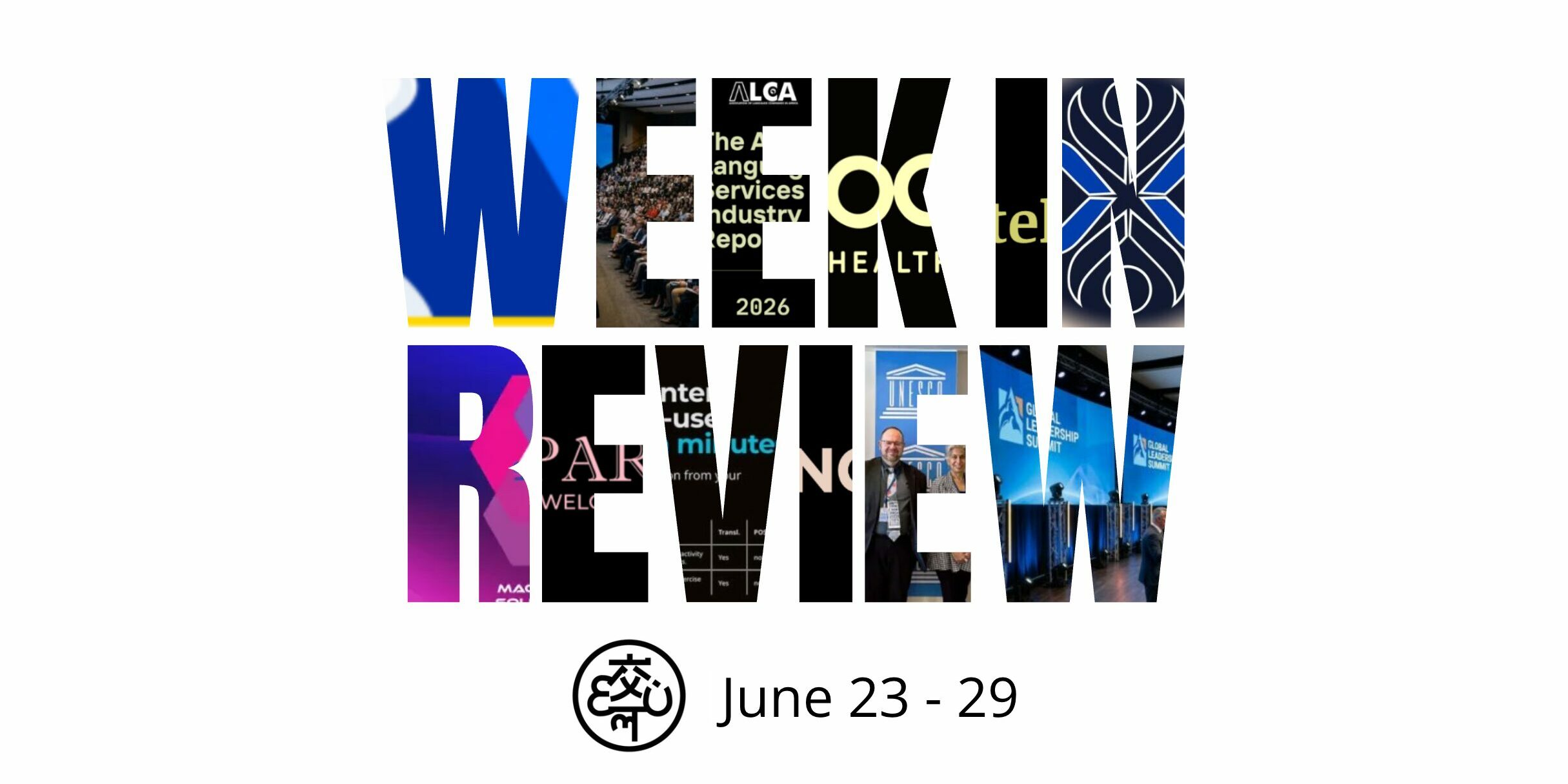
This week’s stories reveal a sector in the middle of a structural recalibration — not just adopting AI, but redefining benchmarks, rebalancing authority, and building the governance layers that will determine who gets to participate, who gets represented, and what “quality” even means in a multilingual world.
Benchmarks
Wordly’s new 2026 State of AI Translation & Captions Report shows a dramatic shift in enterprise sentiment: 66% of event planners now say AI translation and captions deliver higher quality than human interpreters, increasing to 79% among regular users. The study highlights rapid improvements in AI quality, strong economic incentives, and surging multilingual demand, with 96% of organizations now treating comprehensive language access as a formal priority. Despite near‑universal adoption of live AI translation and captioning, enterprises are already looking beyond real‑time output toward full multilingual implementations that extend language access across the entire event lifecycle.
The Association of Language Companies in Africa (ALCA) has published its first African Language Services Industry Report, offering the most comprehensive data to date on a sector underrepresented in global research. The findings reveal a rapidly evolving, highly entrepreneurial market: 85% of providers already use AI, 70% report positive business impact, half entered the industry within the past five years, and 96% plan geographic expansion despite persistent challenges. The report highlights rising demand for African languages across many industries, positioning the continent’s language sector as both a growth engine and a critical frontier for AI‑enabled multilingual communication.
Community
UNESCO and the Unicode Consortium have announced a strengthened collaboration to advance digital inclusion for Indigenous and digitally disadvantaged communities. Aligning their efforts with the Global Action Plan of the International Decade of Indigenous Languages (IDIL 2022–2032), the partnership will focus on joint activities aimed at ensuring that Indigenous writing systems are accurately represented and usable across devices that rely on Unicode. By pairing UNESCO’s global networks with Unicode’s technical expertise, the collaboration lays groundwork for a more multilingual and equitable internet where Indigenous communities can create, communicate, and participate online in their own languages.
RWS has won “Machine Translation Solution of the Year” at the 9th annual AI Breakthrough Awards, marking its third consecutive win. The honor underscores the momentum behind Language Weaver Pro, the company’s 100+ billion‑parameter, Cohere‑built enterprise translation model purpose‑trained for high‑stakes, context‑heavy content. Language Weaver Pro outperformed competitors in both human and automated benchmarking and is fully integrated across the Trados portfolio for scalable, secure enterprise deployment. Positioned at the core of RWS’s Language Intelligence capability, the model reflects the company’s push to deliver culturally fluent, governance‑ready AI translation for regulated, brand‑sensitive environments.
Park IP, a Welo Global brand, has received the IDP Innovation Award at the 2026 AI Breakthrough Awards for Legal Studio, its AI‑enabled platform. Designed to manage patent and IP workflows across global portfolios with jurisdiction‑specific automation, real‑time analytics, and review by credentialed IP specialists, the platform provides end‑to‑end patent prosecution orchestration, standardizing global filings through automated formatting, jurisdiction‑specific deadlines, and real‑time risk and cost visibility.
_____________________________________________________________________________________________________________________________________________
Across reports, awards, and global collaborations, this week’s stories point to a deeper shift of who sets the standards, who benefits from them, and how those standards get enforced across markets, jurisdictions, and communities. From Indigenous language inclusion to African market data to enterprise‑grade translation and IP governance, the real story is the emergence of new centers of authority shaping how multilingual communication will function in the next decade.
For more stories like these, visit our News section.


