

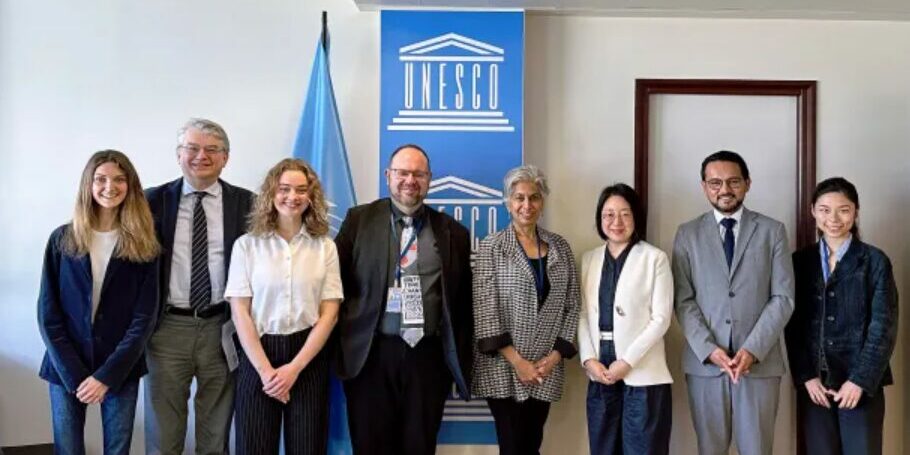
UNESCO and Unicode have announced that they are collaborating to highlight their shared commitment to ensuring that digitally disadvantaged communities, and especially Indigenous Peoples, can access digital environments and technologies to create, communicate, learn, and participate online in their own languages.
The collaboration reflects the multistakeholder spirit of the Global Action Plan of IDIL2022-2032, which recognizes the growing importance of private organizations and civil society in advancing language preservation and revitalization efforts worldwide.
The Unicode Consortium, founded in 1988 as a public-benefit, nonprofit organization, develops open standards for software internationalization and digital services. Its work plays a key role in advancing digital inclusion, particularly by ensuring that the writing systems of the world’s languages are accurately represented across digital devices and platforms. Since its inception, Unicode has been integrated into all major operating systems and is now used on more than 20 billion devices worldwide. This enables billions of users to participate seamlessly in the digital environment, regardless of language, geography, or device.
“We at Unicode recognize that the ability for Indigenous communities to communicate, participate, and thrive online in their own languages is foundational to language preservation, revitalization, and community strength,” said Toral Cowieson, CEO of Unicode.
In the context of this collaboration, a set of activities will reflect the shared vision that both entities would like to implement. This effort will potentially result in the organization of webinars, fora, training and mentoring for Indigenous researchers, community-led cooperation with universities and institutions, and the development of knowledge products.
This collaboration will deliver mutual benefits by raising global awareness of Unicode Consortium’s work for low-resourced languages through UNESCO’s extensive partner networks, while creating new opportunities for collaboration. In turn, Unicode will support UNESCO’s inclusive digital initiatives with strategic expertise and policy guidance, advancing a more multilingual and equitable internet.
“We highly value the important work carried out by Unicode to ensure that all languages, including Indigenous languages, are represented and accessible in the digital world,” said Mariya Gabriel, Assistant Director-General for Communication and Information, UNESCO.
Unicode’s commitment to enable “everyone in the world to use their own language on phones and computers”, particularly Indigenous Peoples, whilst recognizing the importance of bridging the digital divide, aligns with UNESCO’s 2003 Recommendation concerning the Promotion and Use of Multilingualism and Universal Access to Cyberspace and the Global Roadmap on Multilingualism in the Digital Era. With this common ambition, UNESCO and Unicode are laying the foundation for transformative advances.
About Unicode
The Unicode Consortium is a nonprofit organization that develops and maintains the Unicode Standard, enabling consistent text representation across digital platforms worldwide. Its work includes character encoding, emoji standards, and internationalization data. Based in South San Francisco, it supports global language use through technical specifications, public reviews, and collaborative member-driven governance.


