Multiple Mayan languages broke historic records at the United Nations during the annual World Water Day event in March, gradually expanding linguistic accessibility outside the institution’s six official languages. The first‑of‑its‑kind Mayan Language Pilot has opened the door for Indigenous and endangered languages to be represented at an international level where they have long been absent.
A Historic First at the UN’s World Water Day Event
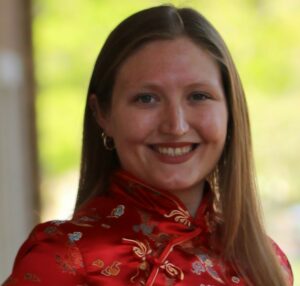
On March 19, the UN heard a Mayan language spoken in its halls for the first time. During the World Water Day event, Alicia López, a Maya Awakateka representative, delivered an address on water, gender equality, and the lived realities of Indigenous women. According to the Mayan Languages Preservation Project, López spoke about the Awakateko understanding of water as a subject of rights — something to be protected, conserved, and respected.
Far from a ceremonial greeting or cultural aside, the speech was delivered in an Indigenous Mayan language and marked a quiet but historic and substantive shift in their governmental representation.
The First UN Document Translated into Mayan Languages
The same project also announced another unprecedented milestone: the UN World Water Development Report 2026 was translated into three Mayan languages — Kaqchikel, Q’anjob’al, and K’iche’ — with support from Editorial Cholsamaj.
It’s the first time a UN document has been translated into Mayan languages. Translation represents a deeper form of accessibility than symbolic recognition. It signals that Indigenous-language speakers are being considered legitimate audiences for UN knowledge production and that Mayan-language institutions are increasingly capable of collaborating on technical, policy‑relevant material.
From Commitments to Implementation for IDIL
Both breakthroughs align directly with the goals of the International Decade of Indigenous Languages (IDIL 2022–2032), led by UNESCO. The Mayan Languages Preservation Project is an IDIL‑affiliated initiative along with 4,246 other organizations and individuals, whose work, which ranges from terminology development to translation, reflects IDIL’s emphasis on strengthening Indigenous-language infrastructure.
The IDIL was established to address the global crisis facing Indigenous languages, many of which are endangered or lack institutional support. Its framework calls for governments, international organizations, and community-led initiatives to expand the visibility, usability, and vitality of Indigenous languages across public life. While much of IDIL’s progress has been conceptual or policy‑oriented, the Mayan-language pilot represents the kind of concrete, on‑the‑ground implementation the decade was designed to encourage.
The Future of Indigenous Interpreting at the UN
The United Nations’ interpretation services remain limited to its six official languages — Arabic, Chinese, English, French, Russian, and Spanish — as outlined by the UN Department for General Assembly and Conference Management.
Indigenous languages are not part of this system, and the UN does not provide interpretation into or out of them. Against this backdrop, the Awakateko-language address on March 19 was not part of a new interpretation program but a rare, one-off moment made possible by the speaker and the Mayan Languages Preservation Project. Its significance lies precisely in its exceptionality: it demonstrates what Indigenous-language presence at the UN can look like, even though it remains outside the institution’s formal linguistic architecture.
No additional Indigenous-language interpretation pilots have been announced, underscoring how rare these developments remain. Yet the Awakateko address and the translation of a major UN report into Mayan languages mark early breakthroughs — small but meaningful steps toward broader Indigenous-language accessibility in international governance.