Guildhawk Launches New AI‑Assisted Book Translation Service for Independent Authors and Scholars

0
Guildhawk

Guildhawk, a leading hybrid language‑technology and AI‑enabled services company, has announced a new secure, AI-assisted book translation service that empowers independent authors, academics, and thought leaders to publish their work in multiple languages quickly, securely, and without the high costs and delays traditionally associated with global publishing.

The service, delivered through Guildhawk’s GAI Translate platform and supported by expert human linguists, addresses a growing challenge faced by authors: how to respond to international interest in specialist books without compromising accuracy, intellectual integrity, or authorial voice.

The problem: global interest, limited access

As global readerships expand, many authors find their work attracting attention beyond English‑speaking markets. However, translating a complex, non‑fiction book into multiple languages typically requires engaging several specialist translators, coordinating lengthy workflows, and absorbing extravagant costs. For independent authors and scholars, these barriers often prevent international publication altogether.

In addition, authors working on historically, politically, or academically sensitive material must ensure that terminology, argumentation, and tone are preserved – something generic AI tools alone are not designed to guarantee because large language models were not designed for translation.

A new service for responsible, scalable book localisation

Guildhawk’s new service combines secure AI‑powered translation with professional human review, allowing authors to generate multiple language editions of a manuscript simultaneously while maintaining scholarly and stylistic accuracy.

Using the platform, authors upload their original manuscript and produce translations across several language pairs in parallel. Each output is then reviewed and refined by Guildhawk linguists specially selected to ensure complex subject matter, domain‑specific terminology, and the author’s voice are faithfully carried through for each target audience.

This new methodology significantly reduces time to market while giving authors confidence that their work remains accurate, consistent, and protected.

Proven through real‑world publication

The service’s success has been demonstrated through the multilingual publication of ‘Lithuania Transforms the West’, a book by Dr. Darius Furmonavicius, a Chatham House associate member and academic author. Following growing international interest in his work, the book was published in five languages: Lithuanian, Italian, French, German, and Japanese.

Reflecting on the experience, Dr. Furmonavicius said, “GAI Translate has completely changed the game for me. It is a remarkable tool that has enabled me to access multiple international markets with my book at one click of a button.”

What hybrid-AI translation means for authors and publishers

The Guildhawk AI-assisted book translation service is positioned for authors who need speed, accuracy, and cost control without sacrificing quality. While traditional human‑only translation remains appropriate for certain literary contexts, and generic AI tools like ChatGPT may suffice for low-volume, low‑risk content, the new Guildhawk service is best suited for:

  • Independent authors and researchers
  • Academic and policy institutions
  • Think tanks and specialist publishers
  • Thought leaders responding to international demand

Increasing global reach for authors and protecting IP

Highlighting what this breakthrough approach means, Rita Hinterleithner, Global Strategy Director at Guildhawk says, “The new hybrid machine translation offering reflects a broader shift toward responsible AI in publishing, where automation supports, rather than replaces, human expertise.”

“Many authors want to make their works accessible to audiences in other languages and like the idea of using machine translation but are concerned about quality and protection of their intellectual property if they use machine translation (MT). The new GAI solution solves this by combining specialist language models trained on verified domain-specific data to give quality outputs, with human post-editing, in a secure platform that protects your IP.”

Authors wishing to publish their books, research, or specialist content securely in multiple languages can learn more about Guildhawk’s book localisation service visiting the GAI Translate website.

About the Author

Dr. Darius Furmonavicius studied International Relations and European History in Nottingham and Bradford. He was a Bernadotte E. Schmidt Fellow of the American Historical Association, Book Review Editor of Lituanus (USA), and member of the editorial board of Istorija (Lithuania). Dr Darius Furmonavicius is an associate member of Chatham House (the Royal Institute of International Affairs). He is the author of Lithuania Rejoins Europe (Lithuanian Research Centre 2015). His papers have been published by, among other outlets, Lituanus, International Affairs, Encyclopaedia Britannica, Draugas, Europos Lietuvis, Lietuvos Aidas, and Britanijos Lietuvis.

About Guildhawk

Guildhawk was established in 2001 by the female tech entrepreneur, coder, linguist and art producer Jurga Zillinskiene MBE. Trusted by global brands including AMGEN, Mitsubishi Heavy Industries and Barclays, the company is a pioneer in custom AI software development, multimedia production and localisation.

WEBTOON Entertainment Announces Unified International CANVAS Platform with an AI-Powered Translation Program

0
WEBTOON

WEBTOON Entertainment Inc. (Nasdaq: WBTN), a global entertainment company and home to some of the world’s largest storytelling platforms, has announced a unified international CANVAS platform, bringing together WEBTOON’s regional UGC services into a single global experience for the first time.

Launching in spring 2026, and with new features rolling out throughout the year, CANVAS will support global distribution across seven languages — English, Spanish, French, Indonesian, Thai, Traditional Chinese, and German — making it easier than ever for Creators to share their stories, grow their fandoms, and monetize their work all over the world.

Alongside global distribution, CANVAS will introduce a powerful set of new Creator tools, including access to expanded monetization opportunities and deeper performance insights. The unified CANVAS platform will include a new Creator Dashboard with improved insights into series performance, deeper analytics to understand readership, and new tools to manage community engagement in one place.

WEBTOON will also expand its Ad Revenue Share to all supported CANVAS languages. Readers will also benefit from a revamped CANVAS homepage experience, with improved discovery and personalized recommendations tailored to reading history and preferred languages — making it easier to find new stories to fall in love with.

Creators will gain more control over their international distribution and localization with a new opt-in Translation Program that allows Creators to translate and distribute their series to readers in English, Spanish, French, Indonesian, Thai, Traditional Chinese, and German. The Translation Program will begin rolling out in beta in Spring 2026 to eligible English-language CANVAS Creators before expanding to additional markets later this year.

Powered by AI technology, the Translation Program is designed to help CANVAS Creators scale their stories across languages and reach new audiences worldwide, while maintaining full control over their creative and how their work is distributed. By removing language barriers, CANVAS will make it easier for Creators to build global fandoms while preserving what matters most: creative freedom, full ownership and control of their work, and a direct connection to fans.

“WEBTOON CANVAS has always been a place where ideas become stories, fandoms, and careers,” said Yongsoo Kim, President of WEBTOON Entertainment.

“Great stories can come from anywhere, and with the new CANVAS, we’re making it easier than ever for Creators to share stories with fans everywhere. Our unified international CANVAS platform lets Creators reach a wider audience and nurture fan communities on a global stage. By unifying CANVAS services and giving Creators more control of where they localize, distribute, and monetize their content, we’re creating more ways for WEBTOON Creators to build a global audience and make money.”

WEBTOON’s upcoming CANVAS enhancements follow a number of recently announced Creator-focused initiatives rolling out in 2026, including improved monetization with a lower minimum payout threshold, expanded access to Reward Ads for CANVAS Creators, and a new Creator Residency Program.

The unified CANVAS platform will launch in 2026, with new features rolling out starting this spring. More information about upcoming CANVAS updates will be shared in the coming months.

About Webtoon

WEBTOON Entertainment, headquartered in California, is a global storytelling and entertainment company powering one of the world’s largest creator platforms. Through its CANVAS ecosystem, WEBTOON helps independent artists reach international audiences with multilingual distribution, monetization tools, analytics, and programs designed to grow fandoms and support sustainable creative careers.

Think Global Awards Announces 2026 Honorees in Leadership, Language, and AI Impact

0
Think Global Awards 2026 award announcement

The Think Global Awards has announced the 2026 honorees, recognizing outstanding global achievement across leadership, language, and artificial intelligence.

Every year, the awards highlight individuals and organizations whose work demonstrates measurable impact across industries, markets, and communities worldwide.

The 2026 honorees were selected for their ability to turn global ambition into practical results. Their work highlights the importance of international collaboration, cultural understanding, and responsible innovation that underpins the future of a connected world.

Think Global Leadership Award

Damilola Ogunbiyi

Damilola Ogunbiyi receives the 2026 Think Global Leadership Award in recognition of her outstanding leadership advancing equitable access to sustainable energy worldwide.

As Chief Executive Officer of Sustainable Energy for All and Special Representative of the United Nations Secretary-General, Ogunbiyi has led global initiatives that bring together governments, financial institutions, and private partners to address one of the most urgent development challenges of our time. Her work focuses on expanding access to reliable, affordable, and clean energy while supporting long-term economic growth in emerging markets.

Under her leadership, Sustainable Energy for All has expanded its global reach to support more than ninety countries and mobilize over $1.6 trillion in energy finance commitments. Through initiatives such as Mission 300, which aims to deliver electricity to 300 million people across Africa by 2030, she has demonstrated how coordinated international leadership can translate global climate and development goals into real progress.

Her work has strengthened cooperation across global institutions and positioned energy access as a foundation for achieving broader sustainable development goals.

Think Global Language Award

Katherine Melchior Ray

Katherine Melchior Ray receives the 2026 Think Global Language Award in recognition of her leadership in advancing the role of language and cultural intelligence in global business.

Throughout her career, Melchior Ray has helped organizations understand that successful international growth depends not only on translation but on the ability to communicate meaning across cultures. She has led global marketing and brand transformation for companies including Nike, Louis Vuitton, Gucci, Hyatt, Shiseido, and Babbel, demonstrating how culturally informed communication can unlock new markets and strengthen global brand identity.

In addition to her industry leadership, she continues to advance the field through education and public engagement. As a lecturer at the University of California, Haas School of Business, Katherine prepares future leaders to navigate international markets with cultural awareness and strategic clarity.

In 2025, she co-authored the book Brand Global, Adapt Local, providing a practical framework for organizations seeking to balance global brand consistency with local cultural relevance. The book has become an important reference for leaders managing international expansion.

Her work reinforces the idea that language and culture are not supporting functions, but central drivers of global success.

Think Global AI Impact Award

Intel

Intel receives the 2026 Think Global AI Impact Award in recognition of its leadership in advancing practical and responsible artificial intelligence across global industries.

Over the past year, Intel has accelerated its vision of bringing AI capabilities closer to users, devices, and real-world environments. In 2025, the company introduced a new generation of AI-ready processors designed to support advanced workloads directly on personal computers and edge devices. These innovations improve performance, privacy, and accessibility for organizations adopting generative AI technologies.

Intel has also expanded its focus on industrial and edge AI through collaborations with global partners in manufacturing, robotics, and infrastructure. These deployments demonstrate how artificial intelligence can move beyond experimentation into large-scale operational use.

At the same time, the company continues to invest in ecosystem development and education. Programs such as the AI Global Impact Festival and global learning initiatives are helping to build the next generation of AI talent while expanding access to responsible technology worldwide.

Recognizing Global Progress

The Think Global Awards honors individuals and organizations whose work demonstrates real progress across borders, industries, and cultures.

The 2026 honorees showcase the role that leadership, language, and technology play in forging a more connected and sustainable global economy.

More information about the awards and the 2026 honorees is available at: www.thinkglobalawards.com

Translated Announces the 2026 Imminent Research Report, “The Age of Experience in AI”

0
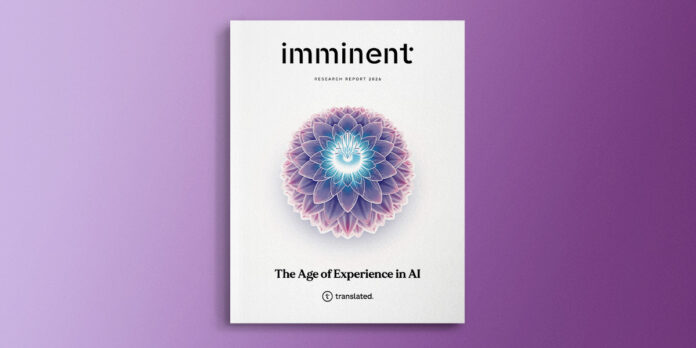
Imminent Research Report book

Translated has announced the release of the 2026 Research Report by Imminent, its research center dedicated to exploring the frontiers of language, technology, and human creativity. The report signals a fundamental paradigm shift in artificial intelligence: the transition from models trained on static, archived human knowledge to systems that learn through direct interaction with the physical world.

Titled “The Age of Experience in AI,” the report explores how the next generation of AI will move beyond the “internet-harvesting” phase to an era of artificial intelligence which learns by processing real-time data from sensors, cameras, and physical actions. These new machines are beginning to learn how to learn from the world around them.

A seismic shift in machine intelligence

The core thesis of the 2026 report is that we are moving past the limitations of large language models (LLMs) trained on historical data. 

As Marco Trombetti, CEO of Translated, writes in the report’s opening: “We are on the cusp of a seismic shift. With Experience in AI, artificial intelligence models learn not from knowledge recorded in the past, but directly from their own actions. We are not only giving machines intelligence, but also the ability to feel: giving them the senses to read reality.

Luca De Biase, Imminent Editorial Director, explains: “In recent years, we have observed a divergence in the development of artificial intelligence. On one side, improvements driven purely by scale appear to be slowing unless they incorporate additional capabilities such as web search and reasoning. On the other side, systems that interact with context in real time show great potential but require further scientific breakthroughs. This divergence is giving rise to different scenarios, creating opportunities for new players and new design processes.

Key findings and strategic pillars:

  • Scientific Breakthroughs vs. Computing Power: The report questions whether this “leap” requires raw processing power or new scientific foundations. Expert contributor Alex Waibel notes that while neural networks have laid the groundwork, new breakthroughs are essential to bridge the gap between perception and real-world action.
  • The Role of Human Imagination: Renowned designer Don Norman argues that the trajectory of AI is not inevitable. He stresses that the humanities and social sciences must guide AI development to avoid bias and ensure these “affordance spaces” improve quality of life rather than merely automating tasks.
  • Plurality Over Monopoly: A central theme of the 2026 report is the rejection of a “one-size-fits-all” AI. Trombetti argues that because language and culture are diverse, AI must be plural. By training models on decentralized, user-controlled information, the global community can guard against the monopolization of intelligence.

Cultural plurality: Japan, Chile, and the UAE

To test the impact of “Experience in AI” across different societies, Imminent conducted deep-dive studies into three distinct cultural models:

  • Japan: Intelligence is viewed as “layered,” where Physical AI gains legitimacy by supporting social harmony and “reading the air” in shared spaces.
  • Chile: AI is negotiated through a lens of relational and ecological accountability, where technology must align with communal and environmental stewardship.
  • United Arab Emirates: A clear distinction is made between “smartness” (technical solving) and “perceptiveness” (social intuition), with AI welcomed as highly capable infrastructure rather than a social actor.

Europe’s strategic crossroads

The report addresses a critical question for the “Old Continent”: Will Europe remain in a position of inferiority to the U.S. and China? Martin Hullin and Mariarosaria Taddeo argue that Europe’s path to competitiveness lies in “Innovation by Governance.” By treating ethics, security, and cultural sensitivity as a design layer rather than a regulatory brake, Europe can lead in the deployment of “trustworthy” and “context-sensitive” AI.

Practical applications

From hyper-accurate weather forecasting to real-time cardiovascular care and disaster management, the Imminent 2026 report showcases how “blended systems” — combining machine learning with human expertise — are already creating faster, smarter, and more equitable responses to global challenges.

“Experience in AI” concludes that the future of technology is not a single, global trajectory but a collection of culturally shaped paths. As the report states: “Experience in AI will be plural, because intelligence itself is plural.”

About Translated

Translated is a leading language services provider and a pioneer in using artificial intelligence (AI) to assist professional translators. Founded in 1999 by linguist Isabelle Andrieu and computer scientist Marco Trombetti with the mission to allow everyone to understand and be understood in their own language. In pursuit of its mission, Translated invented context-adaptive machine translation (MT) in 2012. Translated’s work is trusted by some of the largest translation buyers in the world and has been recognized as leading in AI-powered translation technology by IDC Marketscape, CSA Research, and Gartner.

In 2024, Translated launched Lara, a breakthrough translation AI that outperforms leading machine translation and approaches the quality of top-tier professional translators. With Lara, Translated combines the sensitivity of over 500,000 native-speaking professional translators with the speed and capability of machines, making it possible to tackle once unimaginable localization projects. Today, Translated delivers fast, consistent, high-quality translations to over 300,000 customers in 200 languages and over 40 subject areas.

OOONA Achieves TPN Gold Star Shield

0
OOONA TPN Gold Star Shield Award

OOONA, a global provider of professional management and production tools for the media localization industry, has announced that it has been awarded the TPN Gold Star Shield, the pinnacle of the Trusted Partner Network’s newly enhanced Shield framework.

TPN’s Shield framework operates across four tiers: Blue, Silver, Gold, and Gold Star. The Gold Star Shield sits at the very top, attainable only by those who have fully resolved every Best Practice and Additional Recommendation remediation item to TPN’s satisfaction. Alongside the Gold Star Shield, OOONA has also received the TPN Stella Security Award, which recognizes organizations that have fully closed all remediation items and demonstrated a sustained organization-wide commitment to content security excellence.

“Every architectural decision we make starts with security,” says Gal Pasternak Shamlikashvili, OOONA co-founder and CTO. “From our AWS infrastructure and ISO/IEC 27001:2022 certification to our continuous penetration testing and cybercrime defenses, security is embedded in every layer of what we build. Earning the Gold Star Shield confirms that our approach meets the most demanding standard the industry has to offer.”

“The TPN Gold Star Shield is the most rigorous content security benchmark in our industry,” adds Wayne Garb, OOONA co-founder and CEO. “Our clients trust us with highly sensitive content, and that trust demands nothing less than the highest standard of protection. This accreditation gives them, and their studio and streaming partners, the clearest possible assurance regarding the security of their assets.”

“OOONA’s achievement of a TPN Gold Star and Stella Award reflects a strong commitment to security preparedness through disciplined high-quality security practices,” comments Terri Davies, TPN President. “We are proud to recognize their leadership in raising the standard across the industry.”

OOONA Integrated brings together OOONA Manager and the complete suite of OOONA Tools as a unified platform built to handle the full spectrum of media localization workflows. Running on AWS infrastructure with continuous monitoring and testing, OOONA Integrated offers a robust and scalable environment suited to organizations of any size.

About the TPN

The Trusted Partner Network is a leading global film and television content security initiative, designed to assist companies in preventing leaks, breaches and hacks of movies and TV shows prior to their intended release. It unifies the media and entertainment industry around rigorous, standardized content‑security best practices, offering assessments, cloud‑ready frameworks, and shared accountability to protect high‑value content across global creative supply chains.

About OOONA

OOONA.NET Ltd. develops professional management and production tools for the media localization industry.  Headquartered in Israel, OOONA technology is trusted by major media localizers, broadcasters, and thousands of users in over 160 countries worldwide.

RWS launches Language Weaver Pro

0
RWS Language Weaver Pro

RWS (RWS.L), a global AI solutions company, has announced the launch of Language Weaver Pro, a powerful new enterprise-grade AI translation solution designed to deliver accurate, contextually fluent and secure translations at scale. Ranking first in 31 of 32 languages in benchmarking tests, Language Weaver Pro outperformed leading AI translation tools – setting a new standard in AI translation. 

Enterprises and governments have long faced an unacceptable reality: having to rely on consumer-grade AI translation that moves fast but falls short on accuracy, fluency and data security.

Language Weaver Pro eliminates that shortfall. Language Weaver Pro is RWS’s most advanced AI translation solution – a 100+ billion parameter model (the largest dedicated translation model currently in production) built for business-critical content in partnership with Cohere, a leading security-first enterprise AI company. Available today, Language Weaver Pro provides measurably higher quality than competitors, alongside the security and governance required for mission-critical deployments. 

Human-led and automated benchmarking tests confirm that Language Weaver Pro consistently delivers superior accuracy and fluency compared to industry-leading AI translation tools – including DeepL and Gemini – across both sentence- and paragraph-level datasets in factual and more challenging marketing-related content.

“Most AI translation speaks the language but misses the meaning. Language Weaver Pro closes that gap — it’s the first AI translation solution built to understand not just words, but culture, context and compliance,” said Ben Faes, CEO of RWS.

Introducing RWS’s Language Intelligence capability

Language Intelligence combines state-of-the-art multilingual AI models built in collaboration with leading machine translation experts at Cohere; decades of linguistic expertise from RWS and secure language technology, offering scalable, high-quality AI translations for regulated and complex global environments.

“RWS is pushing the boundaries of what’s possible in enterprise translation. By building on Cohere’s secure frontier AI technology, they can capture meaning, nuance, and context across languages in a way that reflects how people and businesses actually communicate. High-quality translation is essential infrastructure for global businesses operating across borders,” said Aidan Gomez, CEO and Co-founder of Cohere.

At the heart of Language Intelligence is Language Weaver Pro, an advanced AI translation solution that offers deeper understanding of enterprise content. Language Weaver Pro is also natively integrated across the Trados portfolio, giving linguists and organizations easy access to this powerful capability within the tools they already use – across the entire localization process

About RWS

RWS is a global AI solutions company headquartered in the UK who empowers the world’s most trusted enterprise AI. Its proprietary Cultural Intelligence Layer, powered by 250,000 data specialists, cultural and language experts and deep domain professionals, backed by 45+ patents, makes enterprise AI culturally fluent, contextually accurate and secure, ensuring every interaction reflects a brand’s tone, context and customer values.

Through its Generate, Transform and Protect segments, it delivers intelligent content, enterprise knowledge, large-scale localization and IP protection for global growth. Trusted by 80+ of the world’s top 100 brands, RWS provides the confidence, governance and expertise organizations need to deploy AI safely, responsibly and at scale.

Smartling Named to Fast Company’s Annual List of the World’s Most Innovative Companies of 2026

0
Smartling

Smartling, a LanguageAI™ translation company, has announced it has been named No. 3 in Business Services on Fast Company’s prestigious list of the World’s Most Innovative Companies of 2026. This year’s list shines a spotlight on businesses that are shaping industry and culture through their innovations. Alongside the World’s 50 Most Innovative Companies, Fast Company recognizes 720 honorees across 59 sectors and regions.

“We’re thrilled to be recognized by Fast Company and grateful for every customer and Smartling team member who made this possible,” said Bryan Murphy, CEO of Smartling. “In 2025, leading enterprises moved past the pilot phase and started running AI translation infrastructure at scale. As a result, they were able to scale faster globally, for a fraction of the cost. We’re building a platform that combines cutting-edge AI with translation you can trust, making global growth accessible to any company.”

In 2025, Smartling’s AI-driven translation grew 218% year over year as enterprises moved from experimentation to production deployment. Smartling expanded its platform significantly: new AI agents now autonomously handle routing, error-checking, hallucination detection, and quality review, removing the manual bottlenecks that made translation slow and expensive. On average, customers saw costs drop by 60% and turnaround time improve by 6x compared to traditional methods.

The results are clear. A Fortune 500 software company saved $3.4 million in a single year with Smartling while maintaining near-perfect quality scores across 50 million words, while Coinbase translated crypto content into 21 languages in under two months. Launching in early Q2, LQA (Linguistic Quality Assurance) Agent will help localization teams scale AI Translation by delivering instant evaluations across more content—integrated seamlessly with existing workflows. 

The World’s Most Innovative Companies is Fast Company’s hallmark franchise and one of its most anticipated editorial efforts of the year. To determine honorees, Fast Company’s editors and writers review companies driving progress around the world and across industries, evaluating thousands of submissions through a competitive application process. The result is a globe-spanning guide to innovation today, from early-stage startups to some of the most valuable companies in the world. On the 2026 list, Smartling joins the ranks of Google, Nvidia, Adidas, Walmart, and more.

“Our list of the Most Innovative Companies is about spotlighting organizations that don’t just adapt to change—they drive it,” said Brendan Vaughan, editor-in-chief of Fast Company. “The companies we honor this year are redefining what leadership looks like in 2026, pairing bold ideas with measurable impact and turning breakthrough innovation into real-world value. They are setting the pace for their industries and offering a blueprint for what sustained innovation can achieve.”

The full list of Fast Company’s Most Innovative Companies honorees can now be found at fastcompany.com. It will also be available on newsstands beginning March 31, 2026.

About Smartling

Smartling, headquartered in New York, is a cloud-based translation technology and language services company connecting brands with customers globally by providing tools to translate, automate, and manage content across platforms with real-time analytics. Smartling’s platform helps companies grow internationally by offering a comprehensive solution for translation needs.

Bureau Works is Now wxrks

0
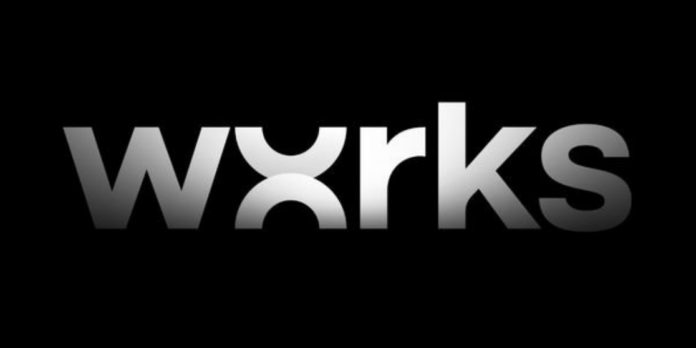
Bureau Works rebrands to Wxrks

Bureau Works, a translation‑technology company, has rebranded as ‘wxrks’ to better reflect its evolving vision and product philosophy. For 20 years, Bureau Works built technology to automate and manage the complexity of global translation, but as the product became increasingly more sophisticated and the culture became more defiant, the brand itself remained anchored to the past.

“There was nothing wrong with Bureau Works, but it no longer fully represented our identity,” says Rodrigo Demetrio, Director of Marketing. “Names matter, and we had to go on a soul-searching expedition over the course of an entire year to find our new name.”

That expedition led the company to a profound realization. It had to drop the bureaucracy. The company shed the word “Bureau” entirely. It dropped the vowels to strip away the excess. It shifted to lowercase letters as an intentional act of simplicity, accessibility, and humility, stepping away from the era of towering, ego-driven corporate monoliths to become the quiet, reliable framework underneath.

The company is now simply wxrks, pronounced works.

The visual identity is a physical representation of this journey. The letters w, r, k, and s are sharp and locked into a grid, providing the scalable infrastructure of the machine.

“Choosing lowercase letters and sharp consonants gives us our structural foundation,” notes Vanilson Burégio, Director of Software Engineering. “But the true meaning lives in the center. We refactored the original point of origin, the letter O, into an X hiding in the negative space. The X is the ultimate human mark. It is a choice and an act of ownership sitting safely inside the heavy boundaries of the code.”

Henrique Cabral, Chief Technology Officer notes: “That stark outlook and nonconformist attitude led us to unknowingly build a kind of Noah’s Ark for translation. We built a vessel that could keep human ownership alive after the generative AI deluge.”

The disappearance of manual tasks does not mean the end of the profession. In fact, the trade is about to become more critical than ever before.

“The manual tasks that defined our space are fading, but the trade itself is undergoing a rebirth,” explains Jamil Raide, Director of Product and Operations. “When a machine can generate endless volume in seconds, human ownership becomes the most valuable variable on the market. The human genius must be bold enough to truly defy the machine’s cold and predictable output.”

This philosophy of amplifying the human rather than replacing it is deeply rooted in the company’s 40-year lineage. Starting in the 1980s with the pure craftsmanship of a single translator, the company evolved from a process-focused agency into an industry-leading operating system.

Today, the core of the wxrks platform is the augmented translator experience. Knowledge, cost, security, quality, workflow, and automation all derive from that single focal point. This architecture drives globalization enablement for enterprise leaders like Coca-Cola Europacific Partners, Zendesk, Uber, and Harley-Davidson. This disruptive, human-centric approach has positioned the company as a High Performer and Leader on the G2 Grid. It proves that scaling a global business does not mean sacrificing the humans inside it.

“We built the rigid walls of this machine specifically to protect the fragile art of the writer,” concludes Gabriel Fairman, Founder and CEO. “We built the machine to scale the soul.”

To learn more about the new operating system, the story behind the brand, and how wxrks is engineering the future of translation, please visit: wxrks.com.

About Wxrks

wxrks is your AI Translation Operating System, built to help you translate faster while increasing your sense of authorship. With a context-first approach, it brings together costs, context, quality, and workflows in one place, enabling teams to scale global experiences with enterprise-grade security.

The Diaspora of Interpreter Ethics: Why the Industry’s Frameworks Don’t Match Its Claims

0
Man viewing documents on his desk

Interpreter ethics may sound standardized, but in reality, they’re scattered across a global patchwork that blurs the lines between ethical clarity and operational ambiguity. What looks like a unified professional foundation is, in practice, a diaspora of differing frameworks that often contradict one another. 

Many language service providers (LSPs) publicly assert that they “follow” the ethical codes of either their own or those of well-established associations, often based on geographic proximity or perceived prestige, but in most cases, these claims function as credibility signals rather than structural commitments.

What Are Interpreter Codes of Ethics?

At their core, interpreter codes of ethics are meant to establish shared principles of accuracy, impartiality, confidentiality, role boundaries, and professional conduct. These codes should function as a stable reference point, a common language for decision making across high‑stakes environments like healthcare, legal proceedings, and public services. 

The general assumption is that these principles are universal, consistently taught, and uniformly enforced. In practice, interpreters navigate a shifting mix of institutional policies, cultural norms, client expectations, and situational pressures, often making judgment calls that stretch, reinterpret, or even contradict the formal codes they were trained on.

Ethics Without Infrastructure

An LSP may cite a respected association without being a member, without requiring interpreters to be an affiliated member or trained in that system, and without participating in the association’s disciplinary processes. Ethical codes only have force when they are tied to training, certification, and enforcement. However, most LSPs lack all three.

Interpreters may enter assignments without standardized ethical instruction, and violations may have no clear reporting pathway. Platform workflows such as client rating systems or gig‑style scheduling can directly contradict ethical principles like impartiality or role boundaries. The industry’s ethical claims thus float free of the infrastructure required to uphold them.

There are also no published statistics on how often LSPs enforce interpreter ethics codes. Unlike professional associations, LSPs are not required to track violations, maintain disciplinary boards, or publish sanctions. No regulatory body collects enforcement data, and most LSPs handle ethical issues internally, if at all. The absence of enforcement statistics is not an oversight — it reflects the lack of infrastructure that gives ethical codes force.

A Global Diaspora of Frameworks

The interpreting codes of ethics used today did not emerge from a single governing body. They evolved in parallel across continents and industry domains. For example, the International Association of Conference Interpreters (AIIC) formalized conference‑interpreting ethics in the 1950s. However, other national associations across the globe developed their own codes. Medical and community interpreting bodies also created separate frameworks in the 1990s and early 2000s, and sign language interpreting added another layer. 

Today, dozens of associations maintain distinct ethical guidelines shaped by local professional histories. The result is a global profession governed by overlapping, sometimes incompatible ethical expectations. LSPs and remote‑interpreting platforms have also created their own proprietary codes, often simplified or selectively adapted from existing ones, but rarely tied to the obligations that give those codes meaning.

This diaspora carries real potential consequences. Clients operate under potentially false assurances of standardization whereas interpreters shoulder ethical burdens without support when LSPs market ethical claims that exceed their true practices. End users — patients, defendants, asylum seekers — face the most serious risks when ethical inconsistencies lead to miscommunication or harm.

The industry cannot afford to treat interpreting ethics as branding. Until ethical frameworks are aligned with training, enforcement, and transparent affiliation, the gap between claims and reality will remain a structural vulnerability, one that affects not only professional credibility but the safety and dignity of the people who rely on interpreters most.