Bloom Launches TranslateOS to Lower Cost and Improve Quality in Healthcare Connections

0
Bloom

Bloom, a leading provider of healthcare enrollment, member engagement, and innovative technology solutions, has announced the launch of TranslateOS, an AI-powered, real-time translation service. This new service delivers access, in seconds, to over 99% of translation requirements with Live Transcript capabilities, at 40% less than the cost of traditional human translation services.

TranslateOS is designed to address three critical pain points of legacy translation services: access, quality and cost. Activating a TranslateOS call connects users with a translator for over 70 languages, in just seconds. Delivering consistent, reliable translation across all languages, TranslateOS never leaves you guessing when a translator will join your call. As to quality, comprehension and accuracy are the foundation of meaningful customer engagement. TranslateOS Live Transcript enables real-time visibility into translated conversations, increasing comprehension and clarity. In today’s cost-conscious environment, getting more for 40% less is exactly what healthcare needs.

“The launch of TranslateOS is our next step in a series of technology solutions designed to deliver substantial cost savings and customer experience improvements to our customers,” said Sherman Rogers, CEO and Founder of Bloom.

“Leveraging next-generation AI opens doors to many opportunities, and it all begins with solving a fundamental problem: efficiently removing the language barriers of today, while creating auditability and compliance at scale. TranslateOS does exactly that.”

TranslateOS introduces an innovative Customer Portal and National Command Center that transforms translation service management. Built for HIPAA and SOC 2 compliance, they provide visibility and control not found in legacy services, including:

  • Automatic call recordings and searchable transcripts for every call
  • Real-time service level monitoring and agent utilization reports
  • Full data ownership, ensuring all records remain the property of the customer

“TranslateOS delivers market-leading AI translation capabilities without disrupting existing workflows,” said Craig Wigginton, CTO of Bloom. “Our National Command Center enables human-in-the-loop monitoring of translation performance, at a price point significantly lower than legacy translation services, while delivering superior performance and reliability.”

TranslateOS integrates seamlessly into existing service center workflows without costly installations or software needing to be installed on the agent desktop and enables deployment within minutes. The new launch ensures faster access, the highest standards of compliance and quality, in addition to significant cost savings.

About Bloom

Bloom, headquartered in Indiana, empowers human connections through technology-driven services and solutions, creating better outcomes and more effective connections for healthcare companies and customers. 

The Week in Review: Language Industry News March 17-23

0
Week in Review March 17-23

This week’s news captures a sector in full transformation mode. Across agencies, platforms, and partnerships, the industry is shifting from fragmented experimentation to integrated, AI‑native operating models — ones that elevate human expertise, strengthen governance, and scale multilingual communication with far more intention. Whether through award‑winning workflow orchestration, Olympic‑level translation partnerships, or new frameworks, AI is becoming infrastructure, and the organizations that thrive will be those that design systems — not just tools — for global growth.

Partnerships and Product Expansion

InAnyLanguage (IAL) and Bureau Works have announced a strategic partnership that will pair Bureau Works’ high‑performance localization platform with IAL’s architectural expertise, helping enterprises deploy AI at scale without sacrificing cultural nuance or operational coherence. The collaboration positions IAL as a Certified Enablement Partner and emphasizes a shared philosophy that AI should amplify, not replace, human authorship. By uniting technology and workflow engineering, the partnership reframes translation as an evolving craft rooted in both code and culture, offering enterprises a cohesive operating system for global content in the AI era.

Adapt, Welocalize’s multilingual digital marketing agency, has launched a new website and an AI‑integrated agency model that unifies international performance marketing, automation, and linguistic expertise to help global brands scale more intelligently across markets. The model shifts agencies away from task‑based execution toward system‑based growth design, using AI to automate repeatable processes while human strategists focus on architecture, creative direction, and market‑specific insight. With Adapt X AI and Adapt Studio powering continuous experimentation, performance‑driven localization, and data‑connected creative workflows, Adapt positions itself as an AI‑native agency built for the next era of global growth.

Recognition and Awards

The Academy of Interpretation (AOI) has been recognized as “Best Education Center” in Vienna, Virginia for both 2025 and 2026, a back‑to‑back distinction that underscores its leadership in interpreter education and professional development. AOI frames the award as validation of its industry‑aligned curriculum, expert instructors, and commitment to preparing interpreters for high‑stakes, real‑world environments across healthcare, legal, education, and public service sectors. With demand for qualified interpreters continuing to rise, the organization sees the recognition as reinforcement of its broader mission to strengthen the profession through structured training, career pathways, and ongoing professional development.

Welocalize’s Opal platform has received a Diamond Pinnacle Award for its adaptive AI workflow system, which integrates LLMs, neural MT, AI‑driven quality estimation, and validated human edits into a continuously learning multilingual content pipeline. By capturing human editorial decisions and applying them to future output, Opal improves brand alignment, reduces human editing effort, and accelerates time‑to‑market, supported by patented quality‑estimation and post‑editing models that prioritize high‑impact human intervention. With measurable gains across enterprise deployments and a secure, compliant infrastructure, the award underscores Welocalize’s push toward scalable, governed AI automation that preserves linguistic precision and editorial authority.

The Association of National Olympic Committees (ANOC) has named Wordly a Bronze Sponsor for 2026, selecting the platform to provide real‑time AI translation across all ANOC meetings, assemblies, and global events, including the General Assembly in Hong Kong. Building on a successful 2024 collaboration, the renewed partnership supports ANOC’s digital transformation strategy and aims to make the Olympic Movement more inclusive by ensuring language accessibility. Wordly’s leadership frames the agreement as a commitment to enhancing communication and accessibility for NOCs and stakeholders worldwide throughout the 2026 event cycle.

______________________________________________________________________________________________________________________________________________

This week’s stories show an industry moving decisively toward integrated, AI‑driven systems that still keep human judgment at the center. Education programs are strengthening the talent pipeline, enterprise platforms are earning recognition for adaptive automation, and new partnerships are redefining how global content is architected. The organizations leading the way aren’t just adopting AI — they’re redesigning their operating models around it, building the foundations for a multilingual future that is more scalable, more inclusive, and more strategically aligned than ever.

For more stories like these, visit our News section.

EasyTranslate Advances Nordic AI Roll-up with Second Danish Agency Acquisition

0
Company representatives making the acquisition of Translated By Us official

Following its transition into a new equity-led growth phase, EasyTranslate has announced the acquisition of the Danish translation agency Translated By Us. This milestone is the first executed under EasyTranslate’s institutional partnership with Pride Capital Partners (PCP), Danske Bank Growth, and Export and Investment Fund of Denmark (EIFO), and marks the second successful integration building on the September 2024 acquisition of World Translation.

A SaaS-enabled AI roll-up

EasyTranslate is pioneering a SaaS-enabled roll-up of the fragmented language services market. By migrating boutique agency operations onto its proprietary HumanAI platform, the company is proving that traditional service models can be successfully upgraded into a high-margin LangOps ecosystem.

The acquisition of Translated By Us integrates their long-standing public sector client base into the EasyTranslate network. This move secures Nordic leadership and serves as the operational blueprint for European expansion as the company accelerates growth within the public sector.  

Frederik R. Pedersen, CEO of EasyTranslate commented: “With this acquisition our Buy-and-Build engine is fully operational. Integrating Translated By Us’s specialized public sector expertise into our HumanAI platform converts high-touch service models into scalable tech revenue. We have a repeatable framework that solidifies our Nordic stronghold as we move toward a broader European rollout.”

Karsten Koustrup Petersen, Director, Tech & Venture Lending at EIFO noted: “At EIFO, our mission is to support Danish innovation and tech companies capable of making an international impact. EasyTranslate’s AI-driven platform is a prime example of scalable Danish tech, and we are proud to support their ambitious journey to expand their solution and grow across Europe.” 

Bas Welten, Head of Nordics, Pride Capital Partners stated: “This acquisition marks the transition from proof-of-concept to active market consolidation. Having proven the strategy with World Translation, we are now utilizing it to accelerate the HumanAI platform. We are proud to support this move and continue building a Nordic leader in AI-enabled language services.”

FAQ

What is an AI Roll-up? A strategy of acquiring traditional service providers and modernizing them via a centralized AI SaaS platform to drive efficiency and scale.

Does this signal European expansion? Yes. This acquisition strengthens the Danish core while providing the infrastructure for expansion into European markets.

About EasyTranslate

EasyTranslate is a Copenhagen-based LangOps platform that simplifies global translation workflows through its proprietary “HumanAI” model. It streamlines translation, content creation, and workflow management for global teams, offering scalable quality, centralized control, and seamless integrations designed to simplify multilingual communication across every stage of the content lifecycle.

About Translated By US

Translated By Us is a Danish translation agency known for boutique service and high-quality linguistic solutions for public and private sector organizations.

A Localization Pioneer’s Perspective: Teddy Bengtsson Shares Insights on an Ever-Changing Landscape

0
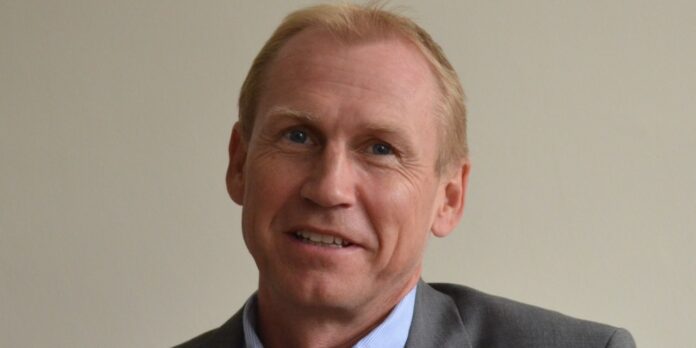
Teddy Bengtsson
Teddy Bengtsson

Teddy Bengtsson, polyglot and founder/director of RoundTable Studio, discusses his nearly 40-year-long career in the translation and localization business, beginning with his early work at Aldus (of PageMaker fame). He touches on the significant changes in the industry and his appreciation for the community.

Have you ever read Multilingual magazine? If yes, which is your favorite part?
I have been an avid reader of MultiLingual magazine since its early days, which I believe was some 30 years ago. It has always been the leading media outlet for the localization industry, filled with articles that are relevant to all actors within it, including clients, vendors, technology providers, and linguists. 

As for my favorite part, I enjoy the interviews and columns, but I’m happy to scroll my way through and always find something that grabs my attention. 

I have also had the pleasure of contributing some published content in previous issues, including an article on ethics in localization and a case study of a project involving indigenous languages.

How did you get involved in the translation business?
My secondary education was focused on languages: I studied Swedish (my native language), English, German, Spanish, and Latin, but these didn’t really feature in my early professional engagements, which included working as a sports shop assistant and selling knitwear — as well as being a bartender! 

After having moved from Sweden to Scotland and thereby having fine-tuned my English skills (with a Scottish accent, of course), I decided to try to take advantage of my background in languages by doing some freelance translations, including some assignments via the Swedish Consulate in Edinburgh — which I performed on a typewriter. 

I also signed up as a Swedish teacher with Berlitz Language School. There wasn’t exactly a high demand for this, but one day they phoned me to teach a week of intensive Swedish classes. It turned out to be a German guy who had recently been appointed localization manager for the US software company Aldus (known for its PageMaker desktop publishing program), which had set up its European headquarters in Edinburgh. He had studied Latin languages (French, Spanish, and Italian) and, being German, also had a good handle on Dutch. The only language in the company’s initial target markets that he didn’t know was Swedish. I’m not quite sure what he hoped to achieve with one week of Swedish classes, but we had a very good time, and the next week he asked if I would be interested in applying for an open position at Aldus: Swedish project lead. Although I had very limited knowledge about IT and software, I thought it sounded interesting and applied — and got the job! 

Since you entered the translation business, how has the business landscape changed?
I started with Aldus back in 1987, almost 40 years ago now, and of course, there have been plenty of changes. As I mentioned, working with computers and software was a new experience for me — and a real eye-opener. I recall when I first saw a fax machine being used: I was amazed by the technology that made it possible to instantly share the content of a paper document from one part of the world to another. We’ve come a long way since the days of floppy disks and project handoffs via courier and have experienced a translation tool evolution with translation memories, machine translations (MTs), and currently artificial intelligence (AI), of course. 

In my early days, the service supply chain also looked very different — heavily dominated by local and regional language service providers. I worked closely with many of them during my Aldus years as well as in subsequent appointments on the client side with Microsoft and Oracle. The emergence of large-scale multi-language vendors in the 90s really changed things, and since then, a co-existence of providers has developed. 

After more than 15 years on the client side of the localization business, my personal landscape certainly changed in 2003 when I decided to start a language services company focused on the Latin American market, initially as Idea-Factory Languages and then rebranded as RoundTable Studio in 2011. The concept was very simple; I wanted to build the kind of company that I would like to buy services from!

Could you share your experience working with your first client or on your first project?
Applying linguistic concepts in specialized industries can be quite a challenge. I remember engaging in a passionate discussion with our Swedish vendor partner about how to localize the concept of “kerning” (the adjustment of the space between two typed characters to improve readability and aesthetics), which was part of the PageMaker functionality. In the end, we decided to leave it as “kerning” in the Swedish version, and I’m happy to see that this is how it continues to be applied today. 

As for an early experience during my time on the vendor side of the business, one of our clients (a software security company) engaged us to collaborate in their implementation of MT all the way back in 2004. It gave us a unique experience to obtain early knowledge of this groundbreaking technology as we helped them train their engines and prepare the solution for Latin American Spanish and Brazilian Portuguese. They took a very sensible approach to implementation and did not rush to achieve any financial goals. The system was put into production some two years later, in 2006.

Do you believe it’s a good time to enter the translation business?
I consider myself very fortunate to be part of the translation business. It’s an industry full of smart, friendly, and culturally aware people, and connecting with them at work, meetings, events, etc., is always a great experience. I’m sure that those entering today will feel the same way.

Naturally, things evolve and opportunities in our current environment are different from what they were when I entered. The essential aspect of linguistic knowledge is still there, of course, but entrants who can bring in or develop complementary skills and qualities — technical, creative, or managerial, for example — will be better positioned to take advantage of these opportunities. 

Where do you see yourself professionally in the next 10 years?
Having been around for many years already and recently celebrating my 67th birthday, retirement planning is probably more of a priority than further professional career development. I’m very pleased that RoundTable Studio has a very highly skilled and experienced senior management team to look after all operational aspects, which means I can make decisions in this respect without any worries. Since I started the company and have an ownership stake in it, I will of course continue to be engaged for the foreseeable future but perhaps shift into more of an advisory board role and less involved in daily activities. Maybe I’ll even be able to play golf twice a week instead of just once! 

What predictions do you have for the future of the translation business?
The current AI revolution is certainly creating plenty of challenges, but with these come new opportunities. The amount of content generated continues to rise and so does the need for it to reach a bigger global audience. To meet cost and time-to-market objectives using MT/AI technology, there is a growing trend of producing “good enough” quality. Although this has a function — such as when simply intended to enable text to be understood in a different language — I believe we will see a reaction against its overuse, and people will not accept this level of quality for content they consider important. I think there will be a growing need to generate content that is not only correctly translated from the source language but also adapted to be culturally aligned with the target market to generate the desired global experiences. 

This shift will make localization more strategic and will require closer interaction between clients and their language content partners. Optimizing the potential of tools and technology will play a big part in this, and with AI facilitating the administrative aspects of managing multiple partners, I think we will see more clients looking to work with local and regional specialists.

InAnyLanguage and Bureau Works Announce Strategic Partnership to Deliver the “Engine and Architect” Solution for Enterprise AI

0
Bureau Works and InAnyLanguage

InAnyLanguage (IAL) has announced a landmark strategic partnership with Bureau Works, an industry-leading localization platform on its path to redefine how global enterprises deploy and scale Artificial Intelligence. This collaboration establishes InAnyLanguage as a premier Certified Enablement Partner, combining Bureau Works’ high-performance technology engine with IAL’s deep architectural expertise in corporate workflow engineering.

While the market has been flooded with “push-button” AI promises, many global enterprises have faced a different reality: fragmented tools, lost cultural nuance, and increased operational complexity. This partnership addresses those friction points by providing a structural paradigm shift e.g. moving away from generic software patches toward a cohesive, philosophically grounded operating system for global content.

The synergy of technology and human ownership

At the core of this partnership is a shared philosophy: AI should not eliminate human input but amplify it. Bureau Works has spent a decade architecting a platform designed to strip away administrative red tape while protecting the “fragile art of the writer.” By integrating Bureau Works’ cutting-edge technology into the InAnyLanguage service ecosystem, the partnership offers:

  • Scalable Human Genius: A framework that captures and amplifies human defiance against predictable AI outputs, ensuring brand voice remains authentic.
  • Operational Alignment: Expert integration of high-performance architecture into complex, legacy corporate environments.
  • Reduced Friction: The elimination of “legacy friction” in the localization supply chain through automated orchestration and rigid architectural safeguards.

“I have spent 25 years driving global product globalization and technology innovation,” said Youngmin Jeong, CEO of InAnyLanguage. “In today’s market, organizations are often paralyzed by the sheer volume of AI tools. They need integrated, state-of-the-art solutions that produce the highest quality work empowered by AI, yet perfected by human expertise. Bureau Works stands apart as a TMS providing the architectural foundation to make this vision a reality.”

Architecting the future of translation

The partnership acknowledges that the era of simply buying a software license is over. Success in the modern enterprise requires a masterful understanding of both code and culture.

“Translation is evolving from a heavy cognitive burden into a subtle art of authorship and ownership,” said Gabriel Fairman, CEO of Bureau Works. “We built this machine to scale that human soul. But to bring this dense, high-performance architecture to global enterprises, we needed a partner who deeply understands the DNA of corporate workflows. Under Youngmin’s leadership, InAnyLanguage possesses that rare depth of technical acumen and business strategy required to make our platform sing.”

Henrique Cabral, Architectural Leader at Bureau Works, added: “What InAnyLanguage brings to the table is the exact architectural vision required to dock our vessel within complex, global supply chains. They do not just implement software; they architect solutions.”

About InAnyLanguage

InAnyLanguage (IAL) is a global provider of language and technology solutions, built on a 25-year legacy of excellence. Headquartered in Wyoming, the organization operates as a modern enablement powerhouse, bridging the gap between cutting-edge innovation and the operational realities of Silicon Valley giants and global enterprises. With a focus on Global Brand, Agility, and Trust, IAL provides the expert navigation required for the AI era.

About Bureau Works

Bureau Works is a comprehensive localization platform that serves as an operating system for global content. Engineered with a mandate to scale human ownership, Bureau Works provides an undisputed technological engine for enterprises seeking to navigate the “AI flood.” Its high-performance architecture allows businesses to automate and orchestrate complex translation tasks while maintaining total control over quality and context.

Adapt Introduces Integrated Global Performance Marketing Model Combining AI, Automation, and Linguistic Expertise

0
Multilingual's Adapt logo

Adapt, Welocalize’s multilingual digital marketing agency, has announced the launch of its new website and an integrated agency model. The model brings together international performance marketing, AI-driven automation, and deep linguistic expertise to help global brands scale more intelligently across markets, languages, and channels.

The updated positioning reflects a structural shift in how modern agencies operate. Rather than centering on campaign execution alone, Adapt embeds artificial intelligence into the core of its operational workflows while elevating human expertise in strategy, architecture, and creative direction.

“AI is no longer a feature; it’s infrastructure,” says Paul Danter, General Manager of Welocalize. “Adapt brings together international performance marketing, AI-driven automation, and linguistic expertise in a single model designed to help global brands scale efficiently across markets and languages.”

Since late 2022, AI adoption has accelerated at unprecedented speed, transforming marketing, media, and content production. For performance agencies, this shift requires more than adding new tools; it requires redesigning the operating model itself.

In the traditional agency structure, teams are measured by execution volume: campaigns launched, bids optimized, creative delivered. In Adapt’s AI-focused model, automation handles repeatable processes, while agency teams focus on building the underlying systems that enable consistent performance across markets.

The result is a move from task-based delivery to system-based growth design. “We’re not simply running campaigns,” adds Emma Chun, Managing Director of Adapt. “We’re engineering the growth mechanism behind them.”

Integrated growth across markets

Adapt’s model replaces siloed channel management with an integrated performance framework that connects international paid media, organic search, analytics, data optimization, and localization into a unified system.

AI enables real-time performance visibility across markets and channels, allowing insights from acquisition to inform conversion, retention, and monetization strategies simultaneously. This approach aligns performance marketing with broader business objectives rather than isolated platform metrics.

The new model also redefines creative production. Rather than treating creative as a fixed production pipeline, Adapt operates a continuous experimentation engine powered by AI-enabled workflows. Modular assets, rapid variation, and systematic testing allow teams to evaluate hundreds of performance hypotheses across languages and regions.

Machine learning surfaces patterns and signals. Human strategists interpret them, refine direction, and ensure local relevance.

“AI allows us to industrialize experimentation while keeping human insight at the center,” Chun adds. “That balance is essential in global marketing.”

Adapt X AI and Adapt Studio

The new website introduces Adapt X AI, the agency’s framework for embedding artificial intelligence across marketing and content delivery. AI supports real-time optimization, scalable content workflows, and cross-market coordination, while human teams guide strategy and creative direction.

Adapt Studio, a core component of the agency’s offering, further strengthens this model. Built by marketers for marketers, Adapt Studio combines generative AI, performance-focused workflows, and in-market expertise to deliver marketing translation designed to drive measurable outcomes.

By integrating SEO intelligence, keyword research, and performance data into localization from the outset, Adapt Studio addresses one of the industry’s long-standing challenges – translation treated as a cost center rather than a growth driver.

“Localization should be connected directly to performance data,” Chun said. “When translation is integrated into experimentation and optimization frameworks, it becomes a scalable revenue lever.”

Built for the AI era

Industry momentum toward AI-native agency models reflects a broader market shift. As automation moves to the center of marketing operations, the role of the agency evolves from executor to architect.

With its updated positioning and AI-integrated operating structure, Adapt is aligning its model with the future of global performance marketing.

“AI doesn’t replace agencies,” Chun added. “It redefines what great agencies are responsible for. The agencies that will lead are those that design integrated systems for growth. That’s what we’ve built at Adapt.”

About Adapt

Adapt, a Welocalize division, is a multilingual performance-led digital marketing agency that turns localization into measurable growth. The agency helps global brands connect authentically and drive results across every language, region, and channel through integrated paid media, organic search, data optimization, and performance-driven localization.

Welocalize’s Opal Earns Pinnacle Award for AI Workflow Orchestration

0
Pinnacle Awards for Artificial Intelligence presented to Opal by Welocalize

Welocalize’s Opal platform has earned a Diamond Pinnacle Award in the AI Workflow Orchestration category at the 2026 Pinnacle Awards, recognizing its role in transforming how global enterprises operationalize AI inside multilingual content workflows.

Rather than treating automation as a layer applied to legacy processes, Opal embeds large language models, neural machine translation, AI-driven quality estimation, and expert human validation into a unified adaptive system. The result is a continuously learning workflow designed to improve performance, protect brand integrity, and accelerate global content deployment at scale.

The Pinnacle Awards recognize groundbreaking innovation across the global technology landscape, honoring companies whose platforms are shaping the future of enterprise systems and AI-enabled transformation.

Opal is Welocalize’s agentic AI platform designed to modernize enterprise content production by integrating large language models, neural machine translation, AI-driven quality estimation, and automated editing into a unified adaptive workflow. Unlike traditional automation models that treat human review as a final corrective step, Opal integrates validated human editorial decisions directly into the AI workflow. Each terminology choice, stylistic refinement, and quality correction is captured and applied to future output, allowing the system to align more precisely with customer-specific brand voice and domain nuance.

A key differentiator is Opal’s patented AI Quality Estimation engine, which predicts where human intervention will have the greatest impact. This allows linguists to focus on high-risk, high-value content while automation manages lower-risk segments. Complementing this, the platform’s patent-pending AI Post-Editing retrieval-augmented generation model applies previously validated human decisions to new content with increasing precision.

Across enterprise deployments, Opal has achieved a 26.3% reduction in required human editing effort, enabled up to 50 percent faster time-to-market for localized content, and supports multilingual deployment across more than 35 languages. As system learning compounds over time, human editing effort is projected to decrease by 35 to 40%, enabling the workflow to handle significantly more content at the same cost.

“Opal represents a fundamental shift in how enterprises think about AI automation,” comments Paul Danter, General Manager, Welocalize. “Automation should not replace human expertise. It should amplify it. By embedding expert validation directly into adaptive workflows, Opal creates a continuous learning system that improves performance, protects brand integrity, and accelerates global content deployment at scale.”

The Pinnacle Award recognition underscores Welocalize’s commitment to building enterprise-grade AI infrastructure that balances scalability, governance, and human oversight. Through Opal, the company continues to advance a model of automation that strengthens productivity while preserving editorial authority and linguistic precision.

About Welocalize

Welocalize, headquartered in New York with additional offices worldwide, serves localization teams through AI-enabled multilingual content solutions that enable enterprises to operate and scale globally. It combines AI, automation, and human expertise to support enterprises in more than 300 languages, enabling accurate, culturally aligned, and compliant multilingual content at scale.

Welocalize’s Opal platform comprises patented technology designed to automate multilingual content and improve workflow performance for enterprises. Opal functions as an agentic system that orchestrates AI, automation, and human expertise to coordinate content workflows across the lifecycle, improving speed, scalability, and operational control for global enterprises. These solutions operate within a secure and compliant environment supported by seven ISO certifications.

Inside the AI Interpreting Solutions Evaluation Toolkit

0
Screenshot

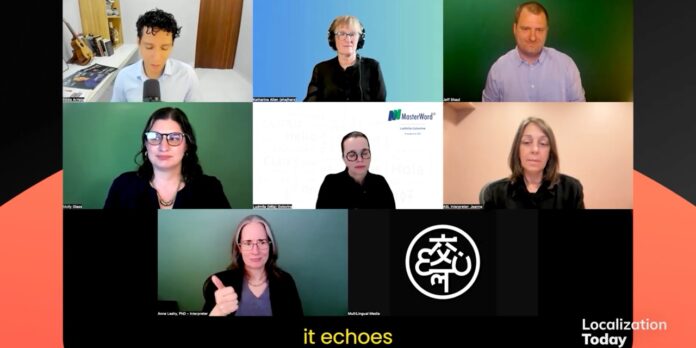
As AI interpreting tools rapidly enter the market, organizations are being asked to make decisions without clear standards to guide them. A recent episode of Localization Today introduces the AI Interpreting Solutions Evaluation Toolkit Part A: Organization, Implementation, and Management, offering a structured approach to that challenge.

In the conversation, Eddie Arrieta speaks with Katherine Allen and Ludmila Golovine (SAFE AI), alongside Molly Glass and Jeff Shaul (CoSET), to discuss why the toolkit was created and how it can be used. Part A is designed as a practical resource for organizations evaluating AI interpreting solutions, moving beyond technical claims to consider context, risk, and real-world use.

The toolkit is organized around five areas: organizational readiness, setting-specific guidance, risk assessment, vendor evaluation, and RFP development. Together, these provide a starting point for assessing whether an organization is prepared to adopt AI tools and how to evaluate them responsibly.

A key takeaway from the discussion is that interpreting cannot be reduced to word-for-word output. Communication depends on context, modality, and user needs—factors that become critical in high-stakes environments like healthcare, education, and legal settings. While AI can expand access in lower-risk or routine situations, the panelists emphasize the continued need for human involvement in more complex cases.

Part B and Part C of the toolkit, covering technical and legal considerations, are expected later this year.

Watch the full episode to explore how organizations can approach AI interpreting with greater clarity and accountability.

YouTube (ASL): https://www.youtube.com/watch?v=vFW6vVswSxU
Spotify: https://open.spotify.com/episode/1hS5IcDSOU3RAc8ZAZe36u?si=d37c4dc61db14378
Apple Podcasts: https://podcasts.apple.com/co/podcast/localization-today/id1606037018?i=1000755825572

Wordly Named Bronze Sponsor of the Association of National Olympic Committees (ANOC) to Power AI Translation for All 2026 Events

0
ANOC & Wordly partnership

The Association of National Olympic Committees (ANOC) has announced a sponsorship agreement with Wordly, naming the AI translation platform a Bronze Sponsor for 2026 and provider of real-time AI translation for ANOC events worldwide.

As part of the agreement, Wordly’s technology will support ANOC meetings, assemblies, and activities throughout 2026, including the ANOC General Assembly in Hong Kong. The partnership will enhance accessibility and engagement for National Olympic Committees (NOCs) and stakeholders worldwide and align with ANOC’s broader digital transformation strategy.

“Following the success of our previous partnership during the ANOC General Assembly in Cascais in 2024, we are pleased to renew our collaboration with Wordly as a Bronze Level Sponsor for 2026,” said ANOC Secretary General Gunilla Lindberg.

“This renewed partnership means that all ANOC in-person and online events throughout 2026, including the ANOC General Assembly in Hong Kong, will be supported by Wordly’s AI interpretation solutions. This is an important step in making ANOC, and the Olympic Movement as a whole, more inclusive, ensuring that language is never a barrier to participation, dialogue, and representation.”

“We are honored and excited to continue our relationship with ANOC to enhance inclusivity and engagement at their events in 2026,” said Wordly CMO Dave Deasy. “The Olympic Movement is a very important global program and Wordly will help ensure everyone involved will be able to consistently and accurately communicate their message and understand the presentations and discussions.”

About ANOC

The Association of National Olympic Committees (ANOC) represents and supports the world’s National Olympic Committees (NOCs), promoting collaboration across the Olympic Movement. It coordinates meetings, competitions, and athlete‑focused initiatives, highlights global NOC achievements, and strengthens international cooperation. ANOC also partners with key organizations to advance sport development, visibility, and unity across all member nations.

About Wordly

Wordly is a pioneer and leader in AI translation, providing real-time translation, live captions, transcripts, and AI-generated summaries for meetings and enterprise events. A 2025 Inc. 5000 company, Wordly is trusted by thousands of organizations across corporate, nonprofit, government, education, and association sectors. Its solutions help global teams communicate more efficiently, inclusively, and securely.