Blackbird Introduces “Strategies” in Blacklake to Govern AI-Era Linguistic Reuse

0
Blackbird.io

Blacklake, Blackbird’s linguistic data platform powering modern AI-first content operations, introduced Strategies, a new feature that brings explicit governance to how multilingual content is reused across workflows.

Strategies allow organizations to define reusable leveraging policies that determine which content in Blacklake is trustworthy enough to reuse in a specific workflow. This capability directly addresses one of the most persistent problems in localization technology known as “dirty translation memory.”

Traditional translation memory systems typically ask a simple question: Is there a match?, whereas Strategies enable Blacklake to ask a far more meaningful one: Is this the right match for this workflow?

“A single content lake can contain data from multiple content management systems, code and design repositories, vendors, translators, and AI engines,” said Bruno Bitter, CEO of Blackbird. “Strategies allow organizations to control exactly which of those sources are trusted for reuse. That turns linguistic data from an unmanaged archive into a governed operational asset.”

From generic matching to governed reuse

A Strategy defines which units in Blacklake are eligible to participate in matching and reuse. This allows different workflows to apply different policies depending on their quality, cost, and speed requirements.

For example:

󠁯•󠁏󠁏 A high-precision publishing workflow can restrict reuse to human-reviewed translations only
󠁯•󠁏󠁏 A cost-sensitive operational workflow can allow AI-assisted content above a defined quality score
󠁯•󠁏󠁏 A fast AI-first workflow can prioritize recent machine-generated content with guardrails

These policies can be defined using a wide range of controls, including:

󠁯•󠁏󠁏 Human-translated or human-reviewed status
󠁯•󠁏󠁏 Minimum quality scores
󠁯•󠁏󠁏 Content creation dates
󠁯•󠁏󠁏 Active versus inactive content
󠁯•󠁏󠁏 Trusted or excluded systems, tools, and translators
󠁯•󠁏󠁏 Custom metadata such as product lines, campaigns, or markets

Because Blacklake stores linguistic assets alongside rich metadata, organizations can apply highly targeted reuse rules instead of generic match logic.

Applied during content preparation

Strategies are applied during Blacklake’s “Prepare Content” stage. When new content enters the platform, Blacklake can first differentiate the incoming material against existing content in the lake. Unchanged segments are finalized immediately, while changed content is evaluated for reuse.

The selected Strategy determines which stored units are allowed to participate in the matching process, ensuring that only trusted content is considered for leverage. This means Strategies do not simply filter results after matching — they define the candidate pool itself.

Designed for multi-system content environments

Modern enterprises generate content across Content Management System (CMS) platforms, product systems, marketing tools, and code repositories. As a result, a single linguistic lake often contains content created by many tools, workflows, and quality levels. Strategies allow teams to apply different governance models without fragmenting their linguistic data.

Common patterns include:

󠁯•󠁏󠁏 Human-first strategies for marketing and legal content
󠁯•󠁏󠁏 AI-assisted strategies with quality thresholds
󠁯•󠁏󠁏 Cost-optimized strategies focused on maximizing reuse
󠁯•󠁏󠁏 Historical or rollback strategies designed to leverage legacy content

Governance for AI-first content operations

Blacklake operates as the memory and governance layer for Blackbird, the company’s orchestration platform for content operations.

Within Blackbird workflows — called Birds — different processes can invoke Blacklake using different Strategies depending on the content source, market, workflow stage, or quality requirements. The result is a system where linguistic reuse becomes programmable, auditable, and workflow aware.

With Strategies, Blacklake moves beyond the traditional concept of translation memory and introduces governed linguistic reuse for the AI era.

Learn more about Blacklake Strategies by booking a free discovery call or browse our technical documentation!

About Blackbird

Blackbird, headquartered in Ontario, transforms multilingual content operations by unifying apps, data, workflows, and teams into one intelligent ecosystem. Built on iPaaS infrastructure with a data fabric and persistent memory layer, the platform adapts, transforms, and governs enterprise content at scale. Its low‑code environment powers seamless automation, smarter decision‑making, and meaningful human oversight—freeing organizations to focus on high‑value work. With a global, remote‑first team, Blackbird’s mission is to build the automation backbone for the future of content operations.

Academy of Interpretation Named “Best Education Center” Two Years in a Row

0
Academy of Interpretation Best Education Center 2026 award certificate

The Academy of Interpretation (AOI) has been recognized as “Best Education Center” in Vienna, Virginia by BusinessRate for both 2025 and 2026, marking a back-to-back achievement that reflects the organization’s sustained leadership in interpreter education and professional development.

While the award highlights local recognition, the AOI views the achievement as a broader reflection of growing expectations for quality, structured training within the interpreting profession, and the critical role education plays in preparing interpreters for real-world impact. Receiving this distinction for two consecutive years highlights AOI’s continued commitment to delivering high-quality, career-focused training programs that support interpreters and advance standards across the language services profession.

“At the Academy of Interpretation, our focus has always been on elevating the profession through education,” said Sameh Abdelkader, Director of Education. “Being recognized two years in a row validates the work of our instructors, staff, and students who are committed to excellence, professionalism, and meaningful language access.”

As demand for qualified interpreters continues to grow across healthcare, education, legal, and public service sectors, structured training programs have become increasingly important in supporting accurate communication and equitable access for multilingual communities. The AOI’s programs focus on practical skills, ethical decision-making, and real-world application, equipping interpreters to perform confidently and responsibly in high-stakes environments.

The back-to-back recognition reflects the AOI’s ongoing efforts to strengthen interpreter education through:

  • Industry-aligned curriculum designed to meet evolving professional demands
  • Expert instructors with real-world interpreting and training experience
  • Career-focused pathways that support long-term professional growth
  • A commitment to quality standards and lifelong professional development

Rather than viewing these awards as milestones alone, the AOI sees them as confirmation of a larger mission: helping shape the future of interpreter training and supporting a stronger, more prepared workforce.

“Our goal is not simply to train interpreters,” added Maria Teresa Buendia, Assistant Director of Education, “It is to help build a stronger, more prepared workforce that supports meaningful communication and access for everyone. These recognitions reflect the trust our community places in us and motivate us to continue raising the bar.”

As the AOI looks ahead, the organization plans to continue expanding educational opportunities, supporting partnerships within the language services industry, and developing programs that help interpreters meet the increasing demands of an evolving field.

About the Academy of Interpretation

The Academy of Interpretation (AOI), headquartered in Virginia, is a leading organization in the language services industry, dedicated to professionalizing the field and maintaining high-quality standards. AOI offers education, training, and credentialing to interpreters, translators, and language professionals to ensure effective communication across linguistic and cultural divides.

Ciklopea Achieves ISO 13485 Certification

0
ISO 13485 Certification with an official label and opaque medical equipment in the background

Ciklopea, a distinguished European provider of translation and localization services, has announced they have successfully achieved ISO 13485 certification – a globally recognized quality standard for the medical device industry.

The certification comes as Ciklopea has recently earned ISO 27001:2022, an upgrade from ISO 27001:2013 expanding its Information Security Management System to include software development. The company has also passed expert audits for ISO 9001, ISO 17100, and ISO 18587, having proved the continued advancement of its integrated management systems.

These recent certifications confirm that Ciklopea is a trusted language solutions partner for highly regulated industries such as life sciences, technology, and manufacturing.

Strengthening compliance, risk management, and trust

Obtaining ISO 13485 certification demonstrates Ciklopea’s readiness to support medical device manufacturers and pharmaceutical companies. Language is an important subject in regulatory documents, clinical processes, and patient information and guidance. Apart from that, quality, traceability, and risk management are vital features for full compliance and utmost security in these areas.

The shift to ISO 27001:2022, which encompasses the necessary software development standards, as well covers security requirements for both service delivery and technology development. It also includes Orchestrum TBMS, Ciklopea’s translation business management system that ensures secure data management in the entire content lifecycle.

Together with ISO 9001, ISO 17100, and ISO 18587, these standards build an integrated framework that delivers superior quality, robust data protection, clear process transparency, and continuous improvement.

Long-term commitment to operational excellence

Ciklopea has been at the forefront of premium translation, localization, and language technology solutions for more than 20 years. The successful implementation and maintenance of the five ISO standards above is a token of long-term commitment to strong practices and international compliance.

The result of these procedures is the integration of quality control, information security, linguistic standards, and legal provisions into a single operational system. Ciklopea has always delivered scalable, audit-ready language solutions to clients operating in complex regulatory environments. The recent ISO certifications represent the official confirmation of Ciklopea’s professional excellence. 

About Ciklopea

Ciklopea, established in 2003, is a Southern Europe–based language solutions provider specializing in high‑quality translation and localization for regulated industries. With ISO‑certified processes, advanced technology, and expert in‑country linguists, Ciklopea delivers tailored multilingual solutions across life sciences, technology, manufacturing, corporate communications, and more — helping global companies expand, comply, and communicate with clarity.

To Translate or Not to Translate? When to Leave a Word in the Source Language

0
Translate spelled in block letters

In localization, there are situations in which it’s appropriate not to translate — to leave certain words in the source language. To illustrate this conundrum, I like to use an example faced by one of my clients.

The client, a business-to-business company serving marketers, was grappling with the decision whether to translate key words into French or to leave them in English. These words were not your typical Anglicisms, such as “le week-end” instead of “fin de semaine.” Nor were they company jargon. They were technical terms — “data,” “template,” and “tech stack,” for example — for which widely accepted French words do exist — “données,” “modèle,” and “pile technologique,” respectively.

The Stakeholders: What to Expect

Starting with a good-old stakeholder analysis will help you not only identify all the stakeholders, but also map out their likely position so you can prepare your case. 

Your team of linguists probably considers championing their target language to be a critical part of their role, so they are likely to be on what I’d call “Team Translate.” The risk, therefore, if you decide to not translate all words, is that they will “vote with their keyboards” — subtly refusing to use English.

The sales team for a foreign market will often be natives of that country. If they live in an English-speaking context, they will be used to constantly mixing up English and mother tongue words in their everyday communication. Consequently, they are likely to be on “Team Don’t Translate.” Crucially, because they are not linguists, their constant code-switching can make it hard for them to tell which words should be translated and which ones should not when addressing a non-bilingual audience. It will be your job to make that case to them.

The marketing team’s job is to contribute to the overall company goal of maximizing revenue, from driving awareness all the way to boosting purchase intent. So, to them, the choice of using only French words or occasional English words doesn’t matter in itself, provided you ensure the brand speaks the language of its customers. They are on “Team Neutral” and are likely to support whatever works for your customers.

For the C-suite, typically, localization equals translation, period. So, using English words instead of local terms may be completely misunderstood, coming across as sloppiness or a lack of professionalism. Typically, they are on “Team Translate.” They can be persuaded, but the topic has to be handled sensitively, to avoid damaging top management’s perception of the localization department. You need to tread carefully.

Decision Factors: Proficiency and Perception

The main factor to bear in mind when deciding whether or not to keep certain words in English has to be how well your target audience understands English. Within the French population, mastery of the English language is only “moderate” and lags behind other European countries, according to the Education First English Proficiency Index

Another factor to consider is the perception of English by your audience. French people as a whole oscillate between viewing English as cultural imperialism and as a status symbol, depending on context and audience.

Some among the French can resent the use of English as English culture imposed through its language. The “Toubon Law” (a French law requiring the use of French in official and commercial communications) is an illustration of this reluctance towards English.

At the same time, English fluency is a status symbol in France. Speaking good English signals a high level of education, a senior role, perhaps international experience and potentially a well-paid job and high social position. Peppering one’s conversation with English words is a very typical way for French speakers to bolster their social image by implying these elements. 

In the context of my client, the target market was marketers and business owners. In the business sector, English is ubiquitous. The main thinkers — such as Philip Kotler, Michael Porter, Seth Godin — and some of the most prestigious programs (e.g. Harvard Business School’s MBA) originate from the United States. So English words are everywhere in marketing and business discourse. The situation is probably similar in other sectors, such as data and IT, and in other countries beyond France.

This leads to what can seem like a contradiction: In a French text, written by French marketers, for French marketers, the target audience expects at least some English words. If your brand used only French terms, the copy would sound unnatural, not written by a native speaker. In other words, and paradoxically, the (over-)zealous use of French signals a copy as a translation, and a company as foreign. This, of course, defeats the very purpose of localization. 

The Process for Success: Who Are Your Target Customers and How Do You Speak With Them?

Based on the above, it is crucial to clarify who your target customers are. Ultimately this is the most important criterion, scaffolding the whole localization strategy. Identifying your target customers will help determine whether they understand English and how they perceive it, and consequently if using some English at all in your French copy is right or not. 

It is not unusual that, upon prodding a bit, you discover that your company is not crystal clear on who their target customers are, or maybe the buyer personas are not detailed or specific enough. For marketing to go through this process with you, the localization expert on your market can be hugely beneficial to everyone.

It may also be that you have several clusters of target customers, with widely varying levels of English mastery. That’s exactly what happened for my client, who serves two types of customers: marketers within large companies (who speak fluent English) and small to medium businesses (whose command of English can be less advanced). They were effectively faced with a choice between college-educated marketers who freely use anglicisms, or small-business owners with potentially limited English proficiency. 

Choosing between English and your target language might mean deciding which audience you’re most willing to risk alienating. It might not be easy, but the decision you take could ultimately benefit your bottom line because usually, one customer segment is more profitable than the other. Choosing deliberately — rather than trying to please everyone — often improves margins substantially.

Once you have internally aligned on who your target customers are, you should look at how your competitors communicate. Their copy will be a good indication of how your target market speaks, writes, and thinks. For this exercise, the competitors to benchmark are not necessarily those with the best financial and sales performance but rather the ones you’ve identified as having strong copy, meaning strong brand identity and brand positioning, unique tone of voice, clear and impactful language and compelling call to action.

To assess the industry codes, you can turn to industry publications, industry events, etc., on your target market. In my client’s case, this was especially enlightening. At the industry events I attend in Paris, when talking about data, marketers use interchangeably the French phrase “les données”, the English “data”, and a blend (“la data” or even “la donnée”). For written texts mixing English and French, my personal favorite of all time is this ad copy from Marketing magazine — written by French marketers for French marketers:

« L’utilisation […] de l’outil sur mesure de notre partenaire d’ad-verification […] en pre-bid nous permet d’intégrer le cahier des charges de l’annonceur en matière de brand safety et de brand suitability au moment du set-up de la campagne, et d’atteindre des scores de compliance de l’ordre de 99 % sur ces critères de qualité. »

Excerpt from Marketing magazine (issue 245, p. 25), with English terms emphasized.

In a single paragraph promoting ad verification tools, the author blends French with English terms: “ad-verification,” “pre-bid,” “brand safety,” “brand suitability,” “set-up,” and “compliance.” These aren’t borrowed for lack of French equivalents — “vérification publicitaire,” “pré-enchère,” “sécurité de marque,” “mise en place” and “conformité” all exist. They’re chosen because in this context, English signals expertise.

At the very end of your process comes your recommendation. As much as possible, it needs to be easy to explain and simple to implement. The entire language team, including translators who are only hired for holiday cover, should find it easy to adhere to. I would try to avoid “hybrid” decisions, where the language used depends on context or audience. You might get away with, for instance, English in verbal presentations versus French in written documents, as it is fairly obvious. But if the choice of language depends on the type of target audience (e.g., English for big companies versus French for SMBs), it risks increasing the likelihood of errors and inconsistencies, even if you always include a mention of the target audience in your briefing notes.

An Opportunity Not to Be Missed

Initially, my client and I faced what seemed like a conundrum, with different stakeholders holding different opinions (“Team Translate” versus “Team Don’t Translate”). We had to strike the right balance between being understood by French speakers and coming across as an expert in our field. But this type of predicament can be turned into an opportunity to shine a light on localization as a strategic function. Through its unique expertise, at the intersection of language, marketing and business, localization is strategically positioned to help companies develop internationally.

Why Professional AI Dubbing Requires a Managed AI Pipeline

0
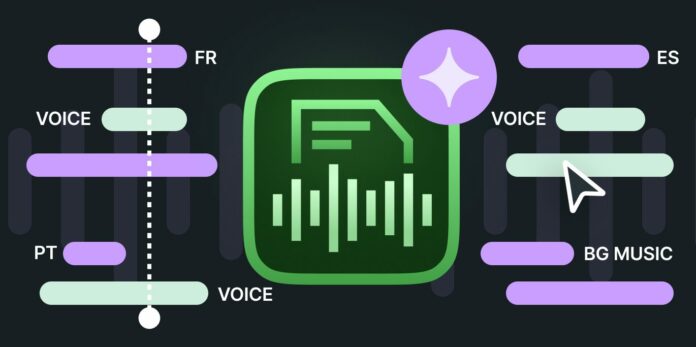
A visual of the AI dubbing pipeline

For years, video was the final frontier of localization — the expensive asset that stayed monolingual while text and UI moved into dozens of languages. Traditional dubbing was expensive, involving dozens of voice actors, studio bookings, and disconnected workflows.

AI has solved the speed and cost problems of video localization, but the industry is still struggling with translation quality. While the tech can now translate a video in seconds for pennies, raw automated output frequently misses the context, tone, and technical terminology that define your brand.

Crowdin Dubbing Studio was built to solve the one thing raw AI still can’t: the context gap.

Context-Aware Transcript Translation

Unlike standalone AI dubbing tools that prioritize a “fast-and-dirty” output, Crowdin begins by generating a high-accuracy transcription that is treated with the same rigor as any other localization asset.

Why Context Matters for AI Dubbing

The real power of the Dubbing Studio lies in its connection to the Crowdin ecosystem. When you translate video content here, you are not starting from scratch – you can leverage your existing linguistic capital with our embedded tools:

  • Translation Memory (TM) & Cost Efficiency: Every sentence translated in the past is stored in your TM. When localizing a new video, the system identifies matching segments, allowing you to reuse approved translations. You only pay to translate (and proofread) what is truly new.
  • Glossary Adherence: Consider a fintech app where the word “balance” appears. In a lifestyle context, it might mean “work-life balance”, but in your app, it must always mean “account balance”. The Dubbing Studio enforces your glossary, preventing the AI from using synonyms that are linguistically correct but technically inaccurate for your product.
  • Human Proofreading Option: For projects requiring flawless accuracy, Crowdin invites professional linguists into the process before the first audio file is generated. Here, linguists aren’t just checking grammar; they are optimizing the script for prosody and timing, ensuring the translated text fits the visual window without losing the speaker’s intent.
  • Style Guide Enforcement: A single “translate this” prompt can miss important brand constraints. Crowdin allows you to apply style guides that define tone and specific terminology – such as a gaming studio’s requirement that certain character names or heritage concepts remain untranslated. The pipeline ensures the dubbed audio reflects your brand’s heritage and voice exactly as intended.

Moving Beyond Text-to-Speech

Once the text is verified and the information problem is solved, the Dubbing Studio provides a full-featured environment to turn that text into a high-fidelity soundtrack with:

  • Integrated Audio Editing: Instead of separate tools, managers use a professional-grade timeline within Crowdin. You can lay out audio strings, manage multiple tracks for voices, and even generate background music or sound effects (SFX) using AI prompts to match the mood of the original content.
  • AI-Powered Voice Generation & Cloning: Integrated with ElevenLabs, the studio offers natural-sounding voices in over 70 languages. For brands needing total consistency, the system can clone the original speaker’s voice, ensuring that a character or spokesperson sounds like themselves, whether they are speaking English, German, or Japanese.
  • Intelligent Background Preservation: A common failure of cheap AI dubbing is the “vacuum effect”, where the original ambient noise or music vanishes when a vocal track is replaced. Using AI-driven stem separation, the studio isolates the original vocals and replaces only the speech, remixing the new voiceover back into the original environment.
  • AI Lip Sync: AI Lip Sync feature, powered by LidDub.ai, re-animates the lower half of a speaker’s face to match the translated audio perfectly.

Wrapping Up

We’ve entered an era where you don’t have to sacrifice brand standards for speed. By connecting AI dubbing directly to your existing translation data, you automate the logistics while keeping your voice consistent in every language.

Since video is now the primary language of the internet, a managed AI pipeline ensures your brand doesn’t just sound translated — it feels native.

The Week in Review: Language Industry News March 10-16

0
Week in Review March 10-16

This week’s stories trace a clear arc of organizations across the language industry who are moving from experimentation to execution. AI is no longer a novelty or a side project — it’s becoming integrated infrastructure. Whether through platform overhauls, sovereign AI deployments, or hybrid human-AI models designed to accelerate innovation, the industry is aligning around building systems that can scale multilingual communication responsibly, securely, and sustainably.

Product Expansion

The Language Intelligence Corporation has officially launched as a Canadian Indigenous‑owned provider of sovereign AI language solutions. Designed for enterprise and government organizations with strict security, compliance, and regulatory requirements, its first product, Fluent, delivers customizable AI translation aligned to an organization’s tone, terminology, and industry standards. Deployment options support full data sovereignty for public sectors and regulated environments. Backed by NATIONS Translation Group and memoQ, the company positions itself as a responsible AI leader focused on strengthening Canada’s digital economy, expanding Indigenous participation, and enabling secure multilingual communication at scale.

Phrase has rolled out a major platform update aimed at helping enterprises operationalize generative AI across global content workflows, introducing new quality‑evaluation tools, centralized Style Guides, expanded integrations, and an MCP server for connecting internal AI systems. The release focuses on governance and production‑grade oversight, enabling organizations to define fit‑for‑purpose quality thresholds, unify brand guidance, and orchestrate third‑party and in‑house technologies within a single controlled environment. With enhancements spanning connectors, subtitle workflows, and intelligent guidance for AI usage, Phrase positions its platform as the infrastructure enterprises need to scale AI efficiently, consistently, and securely across markets.

Wordly has launched the Wordly Subtitles App, a production‑ready tool that lets AV teams overlay real‑time AI captions and subtitles directly onto presentations, livestreams, and stage screens, improving accessibility for both in‑room and remote audiences. Purpose‑built for professional production environments, the app supports broadcast‑grade formats, integrates with tools like OBS and video switchers, and offers reusable templates for consistent event delivery. As part of a broader suite of recent releases, the Subtitles App strengthens Wordly’s ecosystem for real‑time translation and captioning across meetings, hybrid events, and enterprise communications.

Community

In his article, Andrey Schukin explains that while neural MT and speech‑recognition models are improving, AI still struggles with nuance, cultural context, and real‑time complexity — making human interpreters essential for high‑stakes or sensitive events. He argues for a hybrid intelligence model in which AI handles standardized segments while humans manage complex discourse, supported by cloud‑based RSI platforms that blend automation, quality monitoring, and human expertise. This balanced approach expands multilingual access, reduces costs for smaller sessions, and helps organizations adapt as AI models mature, without compromising accuracy or reliability.

Youpret has named Mikko Koponen as its new CEO, signaling a strategic push toward commercial expansion, international scaling, and accelerated technology development, while former CEO Heikki Vepsäläinen transitions fully into the CTO role. Koponen brings a blend of commercial leadership and software‑industry experience, aligning with Youpret’s focus on responsible language services and the opportunities created by AI‑driven disruption. With over 1,000 daily interpreting assignments and recent expansion into Iceland and Estonia, Youpret positions the leadership shift as a catalyst for its next phase of growth across both human‑delivered and technology‑enhanced interpreting.

____________________________________________________________________________________________________________________________________________

Across platforms, providers, and event ecosystems, this week’s stories point to a shared momentum where multilingual communication is becoming more integrated, more intentional, and more strategically governed. AI is stepping into production environments, human expertise is being paired with automation in smarter ways, and organizations are rethinking leadership and infrastructure to meet global demand with clarity and control. The industry’s next chapter won’t be defined by AI alone, but by the systems — and people — capable of steering it responsibly.

For more stories like these, visit our News section.

Tarjimly Becomes Part of CLEAR Global’s Mission for Language Access

0
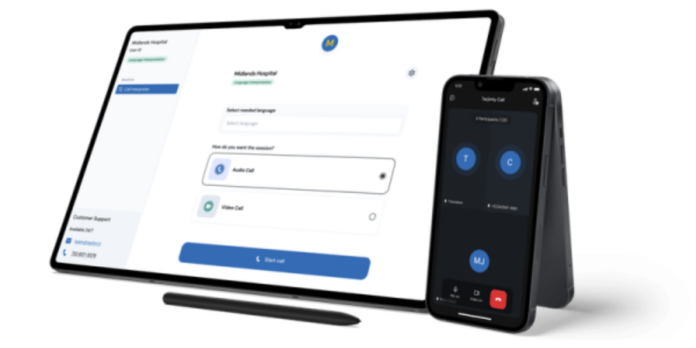
CLEAR Global's Tarjimly application on a mobile device and desktop

CLEAR Global, a nonprofit organization focused on language access, has announced that Tarjimly has joined the organization, becoming the newest addition to its suite of tools dedicated to promoting language access across the globe. This collaboration strengthens CLEAR Global’s ability to provide people with the information and support they need in their own language.

A shared vision for breaking language barriers

Since its founding, CLEAR Global has worked to ensure that all people can access information in their language. Through language services, innovative programs, technology tools, and research, the organization has partnered with social impact groups around the world to reach diverse communities.

Founded in 2017, Tarjimly shares this mission and has consistently advanced equity, access, and justice for immigrants, refugees, asylum seekers, and the organizations that serve them. Tarjimly’s work demonstrates how effective language support can build trust, improve compliance, and safeguard people’s health and legal status.

As technology continues to evolve rapidly, language innovation remains uneven, particularly for marginalized communities whose languages are often underrepresented in major language models. By integrating Tarjimly into CLEAR Global’s ecosystem, the two organizations will combine CLEAR Global’s extensive experience in language services and voice data with Tarjimly’s human-centered, on-demand interpretation capabilities, creating new opportunities for voice initiatives and innovation.

Tarjimly’s contribution

Tarjimly brings a robust suite of language access services to CLEAR Global, including:

  • On-demand interpretation: real-time language support within 30 seconds via hotline, web, or mobile app, with both audio and video functionality and short-form translation options.
  • Advanced technology infrastructure: developed by MIT alumni, Tarjimly’s platform efficiently connects users with qualified interpreters anytime, anywhere.
  • A global volunteer community: over 200,000 interpreters and translators dedicated to breaking down language barriers worldwide.

Tarjimly’s volunteer network will now become part of Translators without Borders, CLEAR Global’s community of linguists. This expanded network represents a shared global movement of professionals and volunteers committed to ensuring that language is never a barrier to accessing essential services. Many Tarjimly volunteers are trained in trauma-informed practices and have experience supporting displaced populations. This expertise will enrich CLEAR Global’s ongoing work across the social impact sector.

Looking forward

The integration of Tarjimly into CLEAR Global expands the organization’s collective impact and reinforces its commitment to language equity. Both nonprofits share a people-first mission, dedicating all resources directly to advancing their cause. Together, they aim to serve more communities, address urgent language needs, and continue building a world where everyone can receive information and support in their own language.

CLEAR Global welcomes Tarjimly to its community and looks forward to continuing their joint mission to break down language barriers and create a future of true language justice.

About CLEAR Global 

CLEAR Global is a nonprofit organization dedicated to helping people access vital information and be heard, no matter what language they speak. Through global research, language technology, humanitarian language services, and the Translators without Borders community of 200,000+ volunteer linguists, CLEAR Global supports crisis‑affected communities in more than 80 countries and 220 languages. Its mission is to close language gaps worldwide and ensure people receive information that’s accurate, timely, and truly accessible.

About Tarjimly

Tarjimly provides fast, affordable, purpose‑driven language services through scalable technology that connects users with professional interpreters in under 30 seconds. Offering 24/7 support in over 250 languages, Tarjimly serves businesses, nonprofits, and refugees, delivering interpretation, translation, and humanitarian language assistance while reinvesting all profits into expanding global language access.

Blackbird.io Welcomes Jaime Ochoa as Sales Executive

0
Blackbird.io

Blackbird.io, a leading orchestration platform for multilingual content operations, has announced the appointment of Jaime Ochoa as Sales Executive.

Jaime joins Blackbird.io as a seasoned veteran in the localization and language technology space. With over two decades of experience, Jaime has built a reputation for helping customers build scalable localization workflows at the intersection of technology and global business growth.

Prior to joining Blackbird, Jaime held key leadership roles at Wordbee and Transperfect, where he was instrumental in expanding market share across EMEA and APAC. His deep understanding of the challenges facing modern global enterprises makes him a natural fit for Blackbird’s mission to automate and simplify complex content workflows.

As Sales Executive at Blackbird.io, Jaime will focus on helping customers discover the next generation of orchestration software. His appointment marks another milestone in Blackbird’s rapid expansion as the industry’s go-to “Content iPaaS.”

Jaime expressed his enthusiasm for the new role, stating: “I’ve watched Blackbird redefine how the industry thinks about connectivity, content governance and automation. I am thrilled to join such a forward-thinking team and to help our clients build more agile, tech-forward content ecosystems.

For years, the industry has suffered from the isolation of disconnected systems, the struggle of delivering quality translations with limited context, and the noise of outdated translation memories. Blackbird is a light in the darkness to finally end these struggles. It also answers the question of how to make the most of AI that many companies still are trying to answer”

Beyond his sales expertise, Jaime is a highly social “community maker” and an active LocLunch ambassador, always looking for ways to connect and support his peers in the industry. Outside of his professional life, he enjoys the craft of cooking, the challenge of cycling, and the art of beer brewing.

About Blackbird

Blackbird, headquartered in Ontario, transforms multilingual content operations by unifying apps, data, workflows, and teams into one intelligent ecosystem. Built on iPaaS infrastructure with a data fabric and persistent memory layer, the platform adapts, transforms, and governs enterprise content at scale. Its low‑code environment powers seamless automation, smarter decision‑making, and meaningful human oversight—freeing organizations to focus on high‑value work. With a global, remote‑first team, Blackbird’s mission is to build the automation backbone for the future of content operations.

Wordly Enhances Live Subtitles and Captions to Meet Growing Global Demand for Better Conference Accessibility

0
Wordly

Wordly, a pioneer and leader in live AI translation and captions, has announced the launch of the Wordly Subtitles Application, a new tool that allows production teams to easily overlay live captions and subtitles directly onto presentations, video streams, and other content at conferences, hybrid events, and enterprise broadcasts.

“Captions have become a standard part of how audiences consume content today,” said Lakshman Rathnam, Founder and CEO of Wordly. “An estimated 85% of viewers worldwide use captions or subtitles at some point while watching content. Whether it’s a TV show, livestream, or a presentation on the main stage at a conference, audiences increasingly expect to be able to follow along visually.”

Purpose-built for AV professionals, the Wordly Subtitles App extends real-time AI captioning and translation directly into production environments. Instead of just displaying captions on a side monitor or browser window, the app generates high-quality overlays that can be projected on main stage screens or embedded into streams, helping audiences follow content clearly whether they are in the room or watching remotely.

The Wordly Subtitles App connects to an active Wordly session and renders real-time captions in multiple display formats optimized for production workflows.

Key features:

  •  Live caption overlays for content – Add real-time captions directly onto presentations, video streams, and other content.
  • Broadcast-ready output formats – Supports lower / upper thirds, high-contrast captions, text overlays, and green screen compositing.
  • Production workflow integration – Works seamlessly with tools such as OBS, video switchers, and streaming platforms.
  • Fast setup for production teams – Configure caption appearance and integrate into an existing workflow in seconds.
  • Reusable caption templates – Save caption styles and settings for consistent use across multiple events.
  • Professional display quality – Deliver clean captions suitable for main stage screens, livestreams, and recorded content.

“Organizations are presenting more live content than ever,” Rathnam added. “From conferences and hybrid events to enterprise town halls and product launches, the Wordly Subtitles App makes it easy for production teams to embed captions directly on-stage screens or into streams, creating accessible and professional experiences for all audiences.”

 How the Subtitles app supports enterprise communications

  • Improves accessibility by embedding real-time captions directly into presentations and broadcasts.
  • Ensures clarity for global teams during meetings, town halls, and corporate events.
  • Simplifies caption delivery for production teams by removing the need for side monitors or complex workflows.
  • Enhances hybrid events by helping both in-room and remote audiences follow presentations.
  • Delivers professional experiences with caption overlays designed for stage screens and livestreams.

The launch of the Wordly Subtitles App is part of four major products introduced by Wordly this quarter, including Wordly Workspaces, mobile app extensions, and enhanced integration with Microsoft Teams. Together, these updates create a seamless ecosystem for real-time translation, captioning, and collaboration across desktop, mobile, internal meetings, and live event stages.

For more information about the Wordly Subtitles App please visit: https://www.wordly.ai/ai-subtitle-generator.

About Wordly

Wordly is a pioneer and leader in AI translation, providing real-time translation, live captions, transcripts, and AI-generated summaries for meetings and enterprise events. A 2025 Inc. 5000 company, Wordly is trusted by thousands of organizations across corporate, nonprofit, government, education, and association sectors. Its solutions help global teams communicate more efficiently, inclusively, and securely.