ELIA Focus on Project Management 2025: Human Leadership, AI Fluency, and Community in Athens

0
ELIA Focus on Project Management 2025

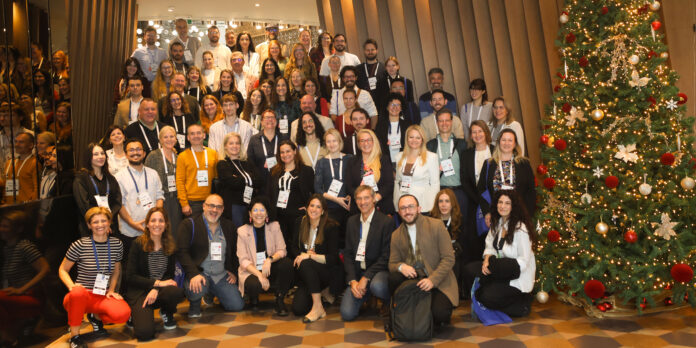
On December 3-5, the European Language Industry Association (ELIA) gathered project managers (PMs) from across the localization industry in Athens, Greece, for the tenth edition of its Focus on Project Management conference. Designed as a space specifically for PMs to learn, reflect, and connect, this year’s program centered on the theme “The Agora of Project Management: Where Process Meets Purpose,” encouraging participants to explore both the human and technological forces shaping their work. 

The event opened with a pre-conference “Technology Day,” where attendees explored practical workflows, artificial intelligence (AI)-powered tools, and emerging solutions — setting the stage for deeper discussions during the core program.

The opening keynote from Stavroula Sokoli provided an immediate anchor for the conversations that followed. She highlighted the risks of hidden overconfidence in both familiar processes and rapidly evolving technologies, especially in the context of AI. Her focus on asking smarter questions, surfacing assumptions, and approaching automation promises through low-risk experimentation resonated strongly with participants. Sokoli’s reminder that communication, creativity, curiosity and responsibility remain essential in project management set a thoughtful tone for the next two days.

Justin Murphy continued the exploration of the PM role by examining what it means to lead during periods of change. He offered practical tools for supporting teams through uncertainty and navigating transitions with clarity. His framing of resistance as confusion — rather than opposition — was widely cited by attendees as a useful lens for understanding team behavior. Murphy emphasised that leadership emerges in everyday moments, shaped by consistency, communication, and the behaviors PMs model themselves.

Participants rotated through two complementary sessions exploring the PM’s role in an AI-enabled environment. Tony D’Angelo encouraged PMs to “clarify chaos,” addressing the messy expectations and ambiguous situations often found in fast-paced localization workflows. His lively, practical approach pushed PMs to experiment, stay curious, and take ownership even as automation becomes more pervasive.

In parallel, Vasso Pouli explored why PMs remain essential in AI-intensive processes. She highlighted the importance of guided automation, where AI supports execution while decisions remain grounded in human judgement and experience. 

The discussions also addressed a common operational reality for many LSPs: the need to onboard new PMs quickly as workloads increase. Structured initiatives such as PM Training & Certification were referenced as a way to support faster, more consistent ramp-up, while reducing the burden on senior PMs who would otherwise need to train new colleagues alongside delivery work.

The sessions were highly interactive. One group, guided by Stavroula Sokoli, presented their thinking process live on stage, demonstrating how they prompted and challenged an AI tool in real time. The exercise made assumptions, uncertainties, and decision points visible — engaging the entire room and reinforcing the value of thoughtful questioning over quick answers.

Throughout the event, the atmosphere encouraged open, grounded exchange among peers who recognize the nuances and pressures of modern project management. Conversations during breaks and social moments explored AI implementation, workflow evolution, shifting client expectations, and the realities of leading teams through complexity. Many attendees highlighted the sense of connection as one of the most meaningful elements of the program.

Across the three days, a clear narrative emerged: The PM’s role is expanding, not contracting, in an AI-enabled world. PMs are being asked to not only manage processes, but also guide teams, interpret complexity, and support organizational adaptation. The discussions in Athens highlighted the continued importance of human judgement, contextual thinking, and collaborative leadership as the industry navigates rapid technological change.

The exchange of ideas does not end here. The next opportunity for the wider community to come together will be ELIA Together 2026 in Porto, Portugal, in February. Find out more about ELIA’s upcoming events here.
Acolad Secures Position on Key NHS Shared Business Services Framework

0
Acolad language services with in partnership with NHS

Acolad has been named for the new NHS Shared Business Services (NHS SBS) Interpretation and Translation Framework. The appointment gives NHS trusts and public bodies streamlined access to a partner with strong public-sector experience and a full range of interpreting, BSL, video and translation services.

NHS Shared Business Services (NHS SBS) was created in 2004 by the Department of Health and Social Care (DHSC) to deliver corporate services to the NHS. A unique joint venture with Sopra Steria, a European leader in digital services and software development, it makes life easier for NHS employees, patients and suppliers, and delivers value for money to the taxpayer.

Proud members of the NHS family, NHS SBS is the country’s leading supplier of corporate services to the NHS, they manage over 40 framework agreements covering a wide range of clinical and corporate goods and services.

Committed to being a force for good, NHS SBS is dedicated to acting responsibly and sustainably at organizational, team and individual level. Sharing common values and unity of purpose with the rest of the NHS family, its solutions are underpinned by cutting-edge technologies and the teams’ expertise, in-depth understanding of the NHS, and commitment to service excellence.

The 2+2 years framework covers Face-to-Face (Spoken Language), British Sign Language (BSL), Telephone Interpreting, Document Translation and Ancillary Services, Video Interpretation and a One-Stop-Shop (Managed Service) model for end-to-end language support. Acolad has been appointed to all six Lots – underscoring the breadth, quality, and reliability of its language solutions.

Securing a place on this framework strengthens Acolad’s position within the UK public sector, offering access to an estimated annual combined spend of €21 million across suppliers. It also builds on years of work with NHS organisations and government bodies, where accuracy, compliance and service continuity are critical.

This shows the confidence public-sector teams place in our work and in the people behind it,” said Chris Stypula, Head of Sales for the UK at Acolad. “The NHS is one of the most respected public institutions in the world. Helping its teams communicate clearly and inclusively is something we take pride in. This milestone strengthens our momentum in the UK public sector and reinforces our role in supporting essential services.

This latest success crowns a strong second half of 2025 for Acolad’s UK operations, following the group’s inclusion in multiple major public-sector frameworks and new contract wins with both the British Council and the Department for Science and Technology (DSIT). Together, these milestones reinforce Acolad’s growing role in supporting communication across the UK’s public institutions.

 About Acolad

Acolad a global leader in content and language solutions. Its mission is to support companies in every industry to scale across markets and enable growth through cutting-edge technology and localization expertise. Established in 1995, the group has offices in 22 countries across Europe, North America, and Asia, with over 1.600 employees supported by a network of +10.000 linguists around the world.

RWS Awarded US Patent for AI-Powered Translation Decision Assistant

0
RWS

RWS (RWS.L), a global AI solutions company, has been granted a US patent for its Translation Decision Assistant – an advanced AI engine that transforms how organizations manage global content and translation at scale, enabling faster decisions and greater control across international teams.

The patent describes methods to handle large volumes of multilingual content by automatically analyzing each project and recommending the smartest mix of linguists, machine translation engines, large language models, resources and workflows. It weighs content analysis, risk, value, complexity, deadlines and security – delivering a clear, data-backed path to the right outcome.

“Our latest patent reflects our long-term investment in optimized machine outcomes and intentional human-in-the-loop AI. Clients want speed and scale, but they also need trust and control. Our Translation Decision Assistant brings these important elements together, giving teams a smarter, more intuitive way to manage global content,” said Matthew Hardy, SVP of Linguistic AI at RWS.

Powered by AI historical performance data and rich context, Translation Decision Assistant predicts outcomes, clusters content and instantly routes translation tasks to the best linguistic resources – human and machine. It automatically flags sensitive information and enforces strict security controls, ensuring only authorized translators can access the right assets – making multilingual workflows more secure.

By formalizing how content value, insights, historical performance and security models are combined into an automated decision layer, the patent establishes a foundation for agent-based systems that can plan, decide and act without continuous human supervision. At the same time, it supports human review and feedback, which are continuously fed back into the learning loop to improve future outcomes.

The invention will underpin the next generation of content transformation and orchestration technology, enabling organizations to achieve defined quality standards at scale while focusing on human expertise – and cost – where it delivers the greatest impact.

About RWS

RWS is a global AI solutions company headquartered in the UK who empowers the world’s most trusted enterprise AI. Our proprietary Cultural Intelligence Layer, powered by 250,000 data specialists, cultural and language experts and deep domain professionals, backed by 45+ patents, makes enterprise AI culturally fluent, contextually accurate and secure, ensuring every interaction reflects a brand’s tone, context and customer values.

Through our Generate, Transform and Protect segments, we deliver intelligent content, enterprise knowledge, large-scale localization and IP protection for global growth. Trusted by 80+ of the world’s top 100 brands, RWS provides the confidence, governance and expertise organizations need to deploy AI safely, responsibly and at scale.

Xliff Editor v.3.3.1 for macOS Released

0
Xliff Editor for macOS14+

SweetP Productions Inc. has announced the release of Xliff Editor v3.3.1, the latest update to its popular macOS-based localization tool designed for working with XLIFF files. Widely used by translators, localization engineers, and software developers, Xliff Editor is known for its clean interface, small size, speedy rendering, and reliable handling of complex localization files.

Xliff Editor focuses on providing a practical, lightweight alternative to larger localization suites, while still supporting the features professionals rely on every day. The application offers native support for XLIFF 1.2, inside xliff, xlf, xlz and Xcode .xcloc files, along with compatibility for SDL Trados files, making it suitable for both software development and professional translation workflows.

Version 3.3.1 is a maintenance-focused release that delivers a number of refinements aimed at improving stability, performance, and overall usability. Users will notice faster file parsing, smoother navigation when working with large or deeply nested XLIFF files, and improved compatibility for macOS Tahoe.

Key features of Xliff Editor include segmentation and alt-trans support, inline tag protection, fuzzy and regular-expression search and replace, full undo/redo support, native spell checking, and native macOS tab based multiple file edit support. These capabilities make it well suited for agile development teams as well as independent translators who need precise control over localization files.

SweetP Productions continues to actively maintain Xliff Editor, incorporating user feedback and ensuring compatibility with evolving localization standards and Apple platforms. Xliff Editor v3.3.1 is available now, with upgrades accessible to existing users via the application or directly from the developer’s website.

More information, including download options and a full update history, can be found at xliffedit.com and sweetpproductions.com.

Xliff Editor can also be found and downloaded in the Mac App Store at apps.apple.com/app/id1054842874

About SweetP Productions

SweetP Productions Inc is an independent software development company who develops macOS and iOS utilities primarily focused on user privacy and device hygiene. Headquartered in Delaware, its mission focuses on empowering people to control digital tracking, protect their personal data, and maintain clean, secure devices through simple, effective tools like Cookie, WiFiSpoof, USBclean, and Privatus.

MachineTranslation.com Expands to 22 AIs, Setting a New Standard for Translation Accuracy

0
MachineTranslation.com

Trusting a single AI for translation is often a gamble; models can “hallucinate” facts or miss cultural nuances. MachineTranslation.com removes that risk by integrating five new AI models, now bringing its total roster to 22.

This enhancement positions the platform as one of the most comprehensive multi-AI translation tools on the market, offering users not just faster translations, but more accurate, data-validated outputs.

By shifting from single-model reliance to multi-model consensus, MachineTranslation.com strengthens its founding philosophy: accuracy comes not from one AI, but from the agreement of many. This update is particularly valuable for Small and Medium Businesses (SMBs) and global teams managing complex multilingual workflows, offering them a scalable, cost-effective way to achieve reliable draft translations without resorting to expensive human-only review.

Why trust one AI when you can consult 22?

In the translation industry, more data points mean higher reliability. The addition of five new engines does more than expand choice, it elevates the platform’s SMART feature, which uses algorithmic voting to select the best sentence-level translation based on consensus.

Instead of hoping one AI got it right, users can now cross-reference content against 22 distinct algorithms. This serves as a data-backed safety net that enables businesses to identify outliers instantly and deliver confident, high-quality multilingual content.

With every new AI added, the SMART feature becomes more precise. Each engine contributes to a system of checks and balances, filtering out hallucinations, refining tone, and enhancing contextual accuracy.

Internal evaluations reveal that SMART yields 18–22% fewer errors and stylistic mismatches than any single-model translation.

“The problem isn’t a lack of AI options; it is finding the one that truly understands your specific context,” says Ofer Tirosh, CEO of Tomedes, the language services provider behind MachineTranslation.com.

“That is the power of MachineTranslation.com’s SMART option. You don’t have to rely on a single opinion. SMART compares all AIs and automatically selects the translation that the majority agree on per sentence. It is about achieving accuracy through aggregation and consensus.”

What do these new models bring to the table?

Each of the five newly added AIs was selected for its unique strengths:

  • Meta’s LlamaThe “Human” Touch: Known for its natural fluency, ideal for detecting robotic-sounding translations.
  • Amazon’s NovaThe Speed Engine: Built for high-speed processing, perfect for large-scale projects.
  • Moonshot’s KimiThe Context King: Excels at maintaining narrative consistency across long texts.
  • Z.ai’s GLMThe Deep Thinker: Expert at handling dense or complex sentence structures.
  • AI21’s JambaThe Professional: Prioritizes formal tone and reliability—ideal for business documents.

Can you run 22 models without the lag?

Yes. The platform’s infrastructure has been fully optimized to ensure real-time comparisons, even with 22 models running in parallel.

“These models aren’t just copies of one another; they think differently,” says Shashank Jain, Tech Lead at MachineTranslation.com. “We’ve optimized the platform so that adding five more AIs doesn’t mean waiting five times as long. It is a seamless, instant experience.”

Why build a “glass box” for AI?

This release also underscores MachineTranslation.com’s commitment to transparency in AI translation.

“We are building a glass box, not a black box,” says Rachelle Garcia, AI Lead at MachineTranslation.com. “Users deserve to see exactly how different AIs interpret their words so they can move forward with total trust. By adding distinct AIs like Moonshot’s Kimi, AI21’s Jamba, Amazon’s Nova (and more), we give users a wider palette. If Meta’s Llama misses a cultural idiom, Z.ai’s GLM might catch it (and vice versa). It allows for nuance verification in seconds.”

Ready to stop guessing?

The update is live. Users can now experience the enhanced SMART functionality across all 22 AIs at MachineTranslation.com.

About MachineTranslation.com

Developed by Tomedes, a leading global translation company, MachineTranslation.com is a simple, powerful platform for AI-driven translation. It combines the world’s top AI and LLM models into a single, accessible tool for individuals and businesses. Users can compare outputs, customize translations, apply glossaries, and receive quality insights — all while translating over 270 languages.

Applying the Zero-Trust Principle in Localization Data Security

0
cybersecurity

For modern businesses, data security is the foundation of trust and compliance. Companies often enforce strict internal security policies such as mandatory use of company-owned devices, clear access permissions for systems like GitHub or content management systems (CMSs), and defined rules for modifying data. However, when a company goes multilingual, sensitive data inevitably enters the localization ecosystem, creating significant vulnerabilities. This article delves into the security risks that localization workflows often introduce and the technical safeguards that are needed to counter them.

The Risky Data Journey

A typical translation supply chain introduces security exposure in the following ways:

  1. Corporate data is transferred into a translation management system (TMS).
  2. The company hires a multi-language vendor (MLV).
  3. The MLV contracts a single-language vendor (SLV).
  4. The SLV hires a freelance translator.

This final link represents the largest area of risk. By purchasing translations, a company grants a person with an unknown security profile access and edit permissions to its content. This could be an individual who uses a personal computer for work, gaming, and installing various plugins and software. How significant is the risk when someone with this profile gains access to core web content? The risk is substantial.

Cybercriminals often create general malware that is not targeted at a specific victim. They simply wait for any computer that has access to valuable data to become infected, perhaps via an outdated browser, a phishing attack, or pirated software. Once infected, data such as passwords and files is often published on the dark web. If this compromised device belongs to a freelancer with access to a company’s TMS, the company could become the next target of an attack without a direct security breach.

The Zero-Trust Principle

To counter these localization service security risks, we need reliable technical controls, not just policies or agreements. This is the essence of the zero-trust principle: rely on technical safeguards instead of inherent trust or promises.

People are fallible — they forget policies, succumb to phishing attacks, or may not prioritize security. Therefore, unless security is enforced, a secure setup cannot be guaranteed.

Essential TMS Security Controls

Let us look at five key zero-trust mechanisms and how they apply in a TMS environment.

1. Account Management and Authentication

Passwords alone are insufficient; multi-factor authentication is mandatory.

  • SAML for Managers: For users with elevated permissions (such as managers and administrators), enforcing single sign-on with Security Assertion Markup Language (SAML) via a corporate Identity Provider (IdP) is crucial. This allows the IdP to verify that the login is originating from a secure, corporate-owned device.
  • Strong 2FA for Linguists: For translators — who are generally non-employees — standard, email-based two-factor authentication (2FA) is weak. If the email is compromised, so is the 2FA layer. We recommend mandating biometric 2FA or Passkeys, which are available in modern TMS platforms.
  • Limiting Authentication Methods: Minimize the attack surface by disabling third-party login methods (such as “Login with Google/GitHub”), limiting access only to the most secure methods, such as SAML or Passkey.

2. API Protection and Least Privilege Access

Application programming interface (API) tokens are powerful automation tools, but their compromise is equivalent to handing a hacker full access.

  • Principle of Least Privilege (PoLP): Every token must be restricted to the bare minimum necessary permissions. Avoid tokens with “full access across all projects.” A better approach is “read-only access to Tasks in the Marketing Emails project.”
  • Mandatory Token Rotation: Implement a maximum token lifetime (for example, 30–90 days) to enforce rotation. This mitigates the risk that a forgotten, old token becomes a serious point of exposure.
  • Regular Auditing: Consistently audit existing tokens, checking the owner, last use, and expiry date.

3. Network and Session Restrictions

  • Internet Protocol (IP) Allowlist: This is a feature that restricts access to the TMS to specified IP networks. If managers and linguists work through a corporate Virtual Private Network (VPN), a hacker cannot log in to the account, even with correct credentials, as they are not on the approved network.
  • Idle Session Timeout: If a user forgets to log out on a shared computer, a protective mechanism is needed. We recommend setting a maximum idle session timeout of 20–30 minutes. While inconvenient — a translator may need to log in after lunch — the risk of leaving sensitive corporate data exposed is simply too high.
  • Panic Lock: In critical situations, a platform should offer an immediate “panic lock” option to block all users (except admins) and deactivate all API tokens simultaneously.

4. Workflow Controls

  • Permission Granularity: Set access restrictions at the project and team levels. This ensures that a compromised account in the development team cannot access marketing content, and vice versa. This limits the potential damage an attacker can inflict.
  • Disabling Offline Translation: The feature that allows downloading XLIFF files for translation in external computer-assisted translation (CAT) tools should be turned off. Linguist devices are often less secure than a cloud service. For both security and maintaining context (such as screenshots and glossary), translation should be enforced within the built-in TMS editor.
  • Task-Based Access: If a project is sensitive (for example, localizing an unannounced game or confidential technical documentation), linguists should only have access to the files specifically assigned to their task, not the entire project.

5. User Provisioning and Offboarding

  • Disabling Self-Signup: Turn off the ability for individuals to self-register. Invitations should be strictly admin-managed.
  • Automated Deactivation: It is essential to revoke freelancer access immediately upon contract termination. Forgotten, inactive accounts (“ghost accounts”) can still be compromised years later, providing a back door for hackers. Use features or apps to automatically lock inactive users.

Final Thoughts

In the world of TMS security, paranoia is simply good planning. Implementing the zero-trust mechanisms mentioned above significantly enhances the overall security posture, especially in a localization environment that involves numerous external partners.

For continuous security, leading TMS platforms invest in global standards, encouraging security researchers to responsibly disclose vulnerabilities and strengthen the platform’s resilience. Furthermore, advanced solutions are exploring workflow steps that use artificial intelligence (AI) to detect vandalism or insider threats — such as changes made by a disgruntled linguist — before they propagate.

Phrase and Welocalize Expand Partnership With Joint AI Development Agreement to Power Enterprise Multilingual Content

0
Welocalize & Phrase

Phrase, a world leader in AI-led language technology, and Welocalize, a global leader in AI-enabled translation and multilingual content solutions, announced a strategic partnership to embed Welocalize’s OPAL products natively within the Phrase Platform. The agreement involves co-development of technology integrations to deliver a seamless customer experience by combining best-in-class products.

Recently recognized as a leader in the first Forrester Wave™ for the language technology industry, Phrase is committed to driving hyper-automation and hyper-personalization through its platform, enabling clients to achieve greater efficiency and impact with industry-leading products.

A central element of the collaboration is the integration of agentic AI systems. These give customers more customizable and autonomous solutions, adaptable workflows, fast multilingual content creation and delivery, and the ability to scale without added complexity.

“We are partnered with Welocalize on joint clients and have seen the power of highly customizable agentic systems to deliver demonstrable value to customers. The OPAL Platform is one of the most advanced customer-ready applications of agentic AI we have seen so far. This collaboration reflects the strength of an open ecosystem approach, and we are excited to bring this new agentic capability to the Phrase Platform and see the impact it drives for our customers,” states Georg Ell, CEO of Phrase.

Welocalize’s OPAL Platform is a patented agentic system, which is trained for an individual enterprise and includes machine translation and LLMs to translate, assess quality, and auto-edit multilingual content. This approach enables OPAL to produce very high-quality multilingual content and dramatically increases the speed and efficiency of delivery. It has received numerous awards and has been tested in production with several clients in the past year. It comprises of two products: OPAL Enable, which involves linguist-in-the-loop, and OPAL Automate, which allows straight through processing of multilingual content.

“At Intuit, we’re focused on building trusted, intelligent content experiences for customers around the world. The collaboration between Welocalize’s OPAL AI Platform and Phrase represents the next step in that journey — combining highly customized AI post editing, patented AI quality estimation, and governance from Welocalize with Phrase’s best-in-class Localization Platform,” comments Zahid Hussain, Senior Software Engineering Manager at Intuit. “Together, they enable measurable cost savings, faster time to market, and a more efficient, transparent way to manage multilingual content within an open, extensible ecosystem.”

Key Highlights

  • Seamless integration: OPAL is embedded in the Phrase Platform, enabling faster workflows through Phrase Orchestrator with automatic edits and quality assessments.
  • Customer-tailored AI: OPAL is trained on an enterprise’s linguistic assets to ensure consistent, on-brand content.
  • Flexible options: Choose human-in-the-loop review (OPAL Enable) for critical content or full automation for high-volume needs (OPAL Automate).
  • Partner choice: Enterprises can work with Welocalize or another language service provider for human-in-the-loop services.

“Beyond being incredibly forward thinking and innovative, Phrase shares our philosophy that the future of multilingual content delivery is via an open architecture where best-in-class solutions can be combined for the benefit of the client,” notes Paul Carr, CEO of Welocalize. “We think the ‘walled garden’ approach, pursued by some in the industry, is not in the customer’s best interest.”

The solution will be rolled out to enterprises in phases. In the first phase, the solution will be delivered with Welocalize as the provider of linguist-in-the-loop services. In the second phase, enterprises will have full control and choice of their servicing partner.

This integration marks the first in a series of ecosystem partnerships for Phrase and Welocalize. By uniting advanced AI with an open, flexible approach, the partnership gives enterprises the tools to engage audiences worldwide, accelerate growth, and achieve higher quality.

About Phrase

Phrase is a world leader in AI-led language technology, helping organizations open the door to global business by reaching more people, making deeper connections and driving faster growth across languages and cultures. The cloud-based Phrase Platform comes equipped with all the key capabilities a business needs to drive a multilingual content strategy. The Phrase Platform is designed to connect, streamline and manage every possible translation task across the enterprise. Connect with Phrase: LinkedIn | YouTube

About Welocalize, Inc.

Welocalize is a leading language service provider. It bridges language and AI to power global success in complex and regulated environments. Welocalize’s expertise in translation, localization, and AI training data ensures precise, scalable, and compliant solutions for businesses worldwide. Whether high-quality multilingual content for regulated industries or structured datasets to train AI models, Welocalize helps clients communicate, innovate, and accelerate their businesses globally in over 300 languages. Welocalize’s investment in AI innovation has produced patented, award-winning products that deliver multilingual content with unmatched efficiency, speed, scale, and accuracy. These solutions are delivered within a framework of data security, compliance, and safety, underpinned by 7 ISO certifications. Welocalize is headquartered in New York with offices all over the globe. Connect with Welocalize: LinkedIn | Website

Interpreters Unlimited Helps NORAD Track Santa in More Languages Than Ever Before

0
Two interpreters sit at the NORAD tracking table interpreting Santa's moves.

Every December, while children around the world prepare their wish lists and count down the days until Christmas, Interpreters Unlimited prepares for something equally magical, helping NORAD bring Santa to life for millions of families in every corner of the globe. The NORAD Tracks Santa Program is entering another season of worldwide celebration, and this year, language access will reach more households than ever before.

Interpreters Unlimited has supported NORAD Tracks Santa for well over a decade, providing pro-bono language services that help children follow Santa’s journey across the world in their native language. What began years ago with translations in a select number of major languages has grown into a global communication effort that reflects the true diversity of the Christmas season.

This year marks one of the most significant expansions in the program’s accessibility. For the first time IU is expanding real time interpreter access from 8 major languages to more than 200 languages through IU’s virtual platform on December 24th, allowing more children and families than ever worldwide to speak directly with the NORAD team regardless of language barriers. At the same time, NORAD has enabled web-based calling so children who do not have access to international phone services will still be able to connect free of charge, opening the experience to communities historically unable to participate.

Website and video narration content will continue to be translated into eight major languages, ensuring that the experience is not limited to English speaking users. These enhancements are expected to significantly increase global engagement, particularly from countries and communities where Santa tracking has traditionally been limited by cost or language access.

“Every year we’re amazed by the number of families who join in from around the world,” said Shamus Sayed, CEO of Interpreters Unlimited. “This is one of our most meaningful partnerships because it’s not just about language, it’s about joy, imagination, being a part of something historic, and making sure every child has the same chance to experience the magic.”

The NORAD Tracks Santa story is part of military history and holiday tradition. What started in 1955 with a misdialed phone number that led children to call NORAD’s predecessor has evolved into a massive worldwide program supported by advanced tracking technology, satellites, radar, and now multilingual call centers and translated digital experiences.

In 2024 alone, there were over 32.5 million website page views from over 5.5 million different site visitors, spanning every continent. On December 24th, 2024, NORAD handled more than 381,000 phone calls from around the world as families checked in on Santa’s progress. Thanks to incredible volunteers, hundreds of thousands of kids around the world speak with a real person on Christmas Eve.

For Interpreters Unlimited, the partnership represents more than a seasonal project, it reflects the company’s mission of bridging cultures and ensuring no one is left out due to language. From hospitals to schools to government agencies, IU provides language access across the US year-round, but the annual NORAD initiative stands as one of its most far-reaching philanthropic contributions.

“Language shouldn’t be a barrier to joy,” said IU President Sayed Ali. “Whether someone is calling from Atlanta, Tokyo, Bogotá, or a military base overseas, we want them to feel connected to the same story.”

The NORAD Tracks Santa experience is live throughout December, with interactive features, games, and videos. On December 24th, families can speak with NORAD volunteers and interpreters live via online calling or by dialing 1-877-HiNORAD for Santa’s up to date location.

About Interpreters Unlimited, Inc.

The IU Group of companies include: Interpreters Unlimited, Accessible Communication for the Deaf, Albors & Alnet, Arkansas Spanish Interpreters and Translators, and IU GlobeLink, LLC, and are headquartered in San Diego, California as a minority-owned company. IU Group is committed to providing equal opportunity in the work environment with its diverse team to aid in supplying linguistic and cultural interpretation services to clients nationwide. A combined 70 years in the industry has demonstrated a surplus of leadership and best practices, which has helped establish its respected role in the language services community.

Kiwa Digital Commissioned by Cherokee Nation to Preserve the Cherokee Language

0
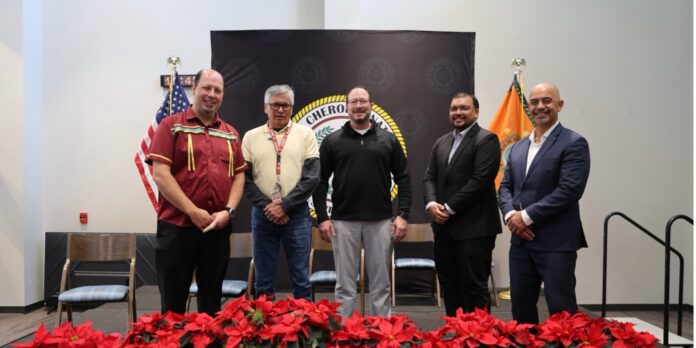
Cherokee Dictionary App event collaborators

Kiwa Digital, A New Zealand tech company promoting Māori language and culture, has been commissioned by the Cherokee Nation, the largest Native American tribe in North America to help revitalize the Cherokee language.

Auckland-based Kiwa Digital has developed, and will continue to expand, the official Cherokee Nation Dictionary App, which is available for download on the Google Play Store and the Apple App Store. It currently includes more than 6,000 Cherokee words, audio recordings, grammar notes, phonetics, syllabary, and biographical information on first-language speakers. Cherokee Nation translators and Kiwa staff plan to continually add new entries.

Cherokee Nation leaders and Cherokee language speakers joined representatives from Kiwa Digital on Tuesday, December 9th to launch the new Cherokee Language Dictionary app during an event at the Durbin Feeling Language Center.

Speaking at the unveiling of the App in Tahlequah, Oklahoma, Cherokee Nation Principal Chief Chuck Hoskin Jr. said, “Every Cherokee family, no matter where they live, can now carry this resource in their pocket. This app represents our sovereignty, our knowledge, and our commitment to keeping the Cherokee language strong for generations to come.”

Cherokee Language Department Executive Director Howard Paden noted the app has already had a tangible impact, “In just a few months, Kiwa Digital took what we have documented of our language and made it accessible to our citizens. This work helps prevent further erosion and supports the revitalisation of Cherokee in our communities.”

Built on Kiwa Digital’s CultureQ platform, the App incorporates advanced digital features, including secure AI-assisted learning tools, while remaining firmly governed by the Cherokee Nation. All language data is hosted on the secure AWS platform, upholding Indigenous data sovereignty and community control.

The Cherokee Nation’s approach to language revitalisation is distinguished by its scale. Through immersion schooling, first-language speaker programmes, workplace incentives, legislative investment, community-led language planning, and digital innovation, the Nation has shown how Indigenous languages can move beyond preservation and back into everyday use.

Steven Renata, Managing Director of Kiwa Digital, said at the launch, “The Cherokee Nation’s language strategy is genuinely world-leading, and it is a privilege to work together to deliver technology that aligns with their vision, governance, and long-term aspirations.”

About Kiwa Digital

Initially established as a post-production software company in 2003, Kiwa Digital now specializes in Indigenous language preservation through digital tools. It’s unique cultural perspective and advanced technologies help it build more than apps, as its mission is to uplift and empower Indigenous voices, people and cultures around the world.