Are Multilingual LLMs Really Culturally Fluent? Appen’s New Study Says No

0
Appen Multilingual LLM cultural nuance

Large language models (LLMs) have made remarkable strides in producing fluent and accurate translations across dozens of languages, but when it comes to cultural nuance, they’re still missing the mark. A new study by Appen, a global leader in data for AI, reveals that even the most advanced multilingual models struggle to localize marketing content effectively, especially when subtle tone, humor, or idiomatic expression is involved.

The gap between translation and localization

The report, titled “Multilingual AI and Cultural Nuance: Evaluating Localization Performance of LLMs,” offers insights into how current models perform across 23 languages — from Spanish and Japanese to Gujarati and Igbo. While the models generally succeed at literal translation and grammar, they consistently fall short when assessed for localized relevance and emotional resonance.

Appen’s researchers focused on marketing copy that requires a high degree of cultural sensitivity, including wordplay, slogans, and figurative language. The team found that while most LLMs could technically render the content into another language, they often stripped away its original tone, failed to carry over humor, or produced messaging that sounded awkward or confusing in the target culture.

New metrics for a more nuanced AI

To address this shortfall, the study proposes a new framework for evaluating AI translations that goes beyond merely rewarding grammatical correctness also to assess tone fidelity, intent preservation, and cultural alignment. Human reviewers played a key role in identifying when LLM outputs sounded “off” — even when the grammar was flawless.

“Cultural nuance isn’t optional — it’s the difference between being understood and being ignored,” the report notes. “If we’re serious about global communication, we need models that adapt beyond words.”

Implications for global content creators

For companies relying on LLMs to scale content globally, the message is clear: these tools are powerful but incomplete without human insight. Appen recommends pairing AI workflows with human validation to ensure that localization retains both the message and the emotion behind it.

As generative AI continues to shape the future of multilingual communication, Appen’s findings serve as a timely reminder: translation is not localization, and cultural nuance still requires a human touch.

Rethinking Machine Translation: Customization, Control, and the New Frontier of Localization

0
machine translation

Organizations are under increasing pressure to communicate effectively across multiple languages and regions. The need to localize content quickly, accurately, and affordably has driven widespread adoption of machine translation (MT) tools. Yet, as MT becomes a default solution in many workflows, a new set of challenges has emerged: How do we ensure accuracy, preserve brand voice, and maintain control over the output in high-stakes, multilingual environments?

This article explores the evolving role of MT within modern localization workflows, identifies key limitations of one-size-fits-all approaches, and highlights a shift toward customizable, multi-engine systems that empower users with greater oversight.

The Promise and Perils of MT

MT has come a long way since the early rule-based systems of the mid-20th century. Today, neural MT (NMT) dominates the landscape, offering fast, scalable solutions for translating vast volumes of content. NMT systems learn from large datasets and produce more fluent, context-aware output than their predecessors.

However, while NMT provides a baseline level of accessibility and speed, it still falls short in areas that matter most to localization professionals:

  • Terminology consistency can vary significantly between engines.
  • Tone and register may not align with brand or audience expectations.
  • Language pairs with less training data often see lower-quality output.
  • Specialized content (such as legal, medical, or technical texts) frequently requires heavy post-editing.

These shortcomings can be critical in regulated industries or high-visibility content. As a result, translation tools are often viewed as a starting point rather than a solution—a tool that needs human intervention to truly meet localization standards.

The Limits of Single Translation Engines

Many organizations historically default to a single engine like Google Translate or DeepL, guided by convenience or perceived performance. But each engine has distinct strengths and weaknesses. For example:

  • Some engines handle European language pairs well but perform inconsistently with Asian or low-resource languages.
  • Some engines excel in technical domains but struggle with creative or emotionally resonant content.
  • Broad coverage may come at the cost of nuanced or context-sensitive output.

A single-engine approach may work for general-use cases, but it often fails to deliver consistent quality across diverse content types and language pairs.

To address the limitations of relying on a single MT engine, localization teams are increasingly turning to platforms that aggregate outputs from multiple MT sources. This approach allows users to compare results side by side, assess translation quality, and select the most suitable version for their specific context.

Human-in-the-Loop: Still Essential

Despite advances, MT alone doesn’t yet guarantee 100-percent accuracy — particularly for nuanced, regulated, or public-facing content. This is where human expertise remains indispensable. Linguists, localization managers, and subject matter experts play a vital role in:

  • Ensuring cultural appropriateness,
  • Validating tone and stylistic alignment,
  • Interpreting complex or ambiguous context, and
  • Adapting messaging to region-specific expectations.

Rather than treating human translation and MT as separate options, the most effective strategies combine both. Customizable translation platforms support this hybrid approach by making human intervention more targeted and efficient.

Language quality assurance (LQA) also benefits from this hybrid structure. When paired with tools like translation quality scores, segment-level editing, and translation memory, human reviewers can focus on the areas that matter most — leading to more consistent, reliable multilingual communication.

Real-World Applications and Challenges

Consider a global e-commerce company updating thousands of product descriptions weekly. Standard MT might translate these descriptions quickly, but it may use inconsistent terminology across regions or fail to maintain product-specific phrasing. The result? Confusing listings, customer mistrust, and increased return rates.

By using a multi-engine platform with integrated glossaries and memory, that same company can automate translation while ensuring accuracy and consistency. Editors can fine-tune language segment by segment, and the system learns preferred phrasing over time, reducing manual intervention and localization cost.

In another example, a legal services provider operating across multiple countries needs to translate compliance documents in over a dozen languages. Relying solely on one MT engine introduces risk, and misinterpretation of legal language can have severe consequences. By reviewing outputs from multiple engines and applying approved legal terminology via glossaries, the team can safeguard content integrity.

Similarly, marketing teams often need to translate emotionally nuanced content — campaign slogans, product taglines, or social media posts. One engine may interpret a phrase literally, while another may convey the intended emotion more clearly. Having the ability to choose the right translation based on audience, medium, and message is essential.

Looking Ahead: MT and Adaptability

The future of MT lies in adaptability. As large language models (LLMs) continue to evolve, we can expect even greater contextual awareness and semantic understanding. However, these models will still depend on:

  • User input to guide output preferences,
  • Domain-specific training to handle niche content, and
  • Workflow integration to align with business processes.

The best MT-driven platforms won’t just focus on speed. They’ll prioritize adaptability, control, and ongoing learning. Additionally, ethical considerations — such as language preservation, fairness across dialects, and minimizing bias — will increasingly shape how MT platforms are built and used. These are not just technological concerns, but cultural and human ones that will define the next chapter of language technology.

Conclusion

The question for localization teams is no longer whether to use MT, but how to use it effectively. One-size-fits-all approaches are giving way to customizable systems that offer greater control, higher quality, and better alignment with organizational goals. By enabling side-by-side engine comparisons, applying brand-specific glossaries, and integrating user preferences, modern MT platforms are evolving into collaborative, intelligent tools that empower human decision-making — not replace it.

As MT continues to mature, success will depend on thoughtful implementation. Platforms that support multi-engine output, glossary integration, quality scoring, and user feedback loops are helping redefine what translation tools can achieve — not as a substitute for human expertise, but as a vital component of modern localization strategy. By rethinking how we approach MT, the industry is not just translating faster — it’s translating smarter. And that shift is opening doors to deeper global engagement, stronger brand voice, and more inclusive communication.

ALCA Launches Excellence Awards to Celebrate Innovation and Impact in Africa’s Language Services Industry

0
ALCA African language services

CAPE TOWN, South Africa – June 18, 2025 — The Association of Language Companies in Africa (ALCA) has officially launched the ALCA Excellence Awards, a new initiative designed to recognize and celebrate exceptional contributions to the continent’s dynamic and fast-growing language services industry.

The awards aim to spotlight innovation, leadership, and social impact across Africa’s richly diverse linguistic landscape. Winners will be announced during the ALCA Annual Conference 2025, set to take place August 28–29 in Cape Town, South Africa.

“We launched the ALCA Excellence Awards to acknowledge and celebrate the exceptional work being done by language professionals, companies, and initiatives across Africa,” said Christiana Aboagye, ALCA Coordinator.
“These awards are about honouring those who are not just providing services, but actively driving meaningful change.”

Recognizing Excellence Across the Sector

The ALCA Excellence Awards will highlight individuals, organizations, and projects that are shaping the future of African language services—advancing language access, cultural preservation, and inclusion throughout the region.

Award Categories:

  • Most Remarkable African Localization Project

  • Language Access & Inclusion Award

  • Rising Star Award

  • Outstanding Contribution to African Languages

  • Best Corporate Social Responsibility (CSR) in Language Services

Who Can Apply

Nominations are open to language service providers, localization experts, translators, interpreters, and organizations based in Africa or making significant contributions to African languages.

Key Dates:

  • Nomination Deadline: June 25, 2025

  • Awards Ceremony: August 28–29, 2025
    (During the ALCA Annual Conference in Cape Town)

Submit Your Nomination

For more information and to submit your nomination, visit:
🔗 https://alca-association.org/alca-awards/

OnTheGoSystems Launches Private Translation Cloud, an AI-Powered Platform for Software Localization

0
ai-software-localization

HONG KONG – June 17, 2025 — OnTheGoSystems, the company behind the popular WPML plugin, has launched Private Translation Cloud (PTC), a new AI-powered SaaS platform aimed at automating software translation. The solution integrates directly with code repositories and delivers production-ready translations—no human post-editing required.

The release addresses a growing demand among development teams for efficient product localization without the delays and complexity of manual workflows.

“We built PTC after years of struggling with software localization,” said Amir Helzer, CEO of OnTheGoSystems.
“Every option came with tradeoffs—too much time, too much cost, or too little quality. PTC solved that for us, and it can do the same for others. If you’re building software, translation shouldn’t slow you down. It should run in the background, like any other part of your deployment process.”

Redefining Software Localization

PTC challenges a long-standing assumption in the localization industry: that human oversight is essential for quality translation. Instead, it leverages product-specific context, AI models trained on software content, and built-in translation memory to deliver accurate, consistent translations—without manual review.

The platform also supports the technical nuances of software strings, handling placeholders, HTML tags, and shortcodes while preserving formatting integrity.

Seamless Integration with Dev Workflows

Unlike traditional Translation Management Systems that facilitate human translation, PTC acts as the translator itself. It integrates with GitHub, GitLab, and Bitbucket, automatically detecting source string updates and returning translated files via merge requests.

This allows teams to ship fully localized products on time and at scale—without sacrificing consistency or accuracy.

Proven in Production

PTC has already been used internally across WPML and its related plugins for more than a year, and has been tested with other key WordPress products. These early applications helped refine the system ahead of its public launch and demonstrated its capacity to manage real-world software localization pipelines.

Predictable Pricing and Free Trial

The service follows a flat-rate pricing model—no per-word or per-language charges—making it ideal for projects that scale rapidly or frequently change. Teams can explore the platform with a free 30-day trial by translating their own software.

Availability

Private Translation Cloud is now available at https://ptc.wpml.org. Development teams can sign up, link their repositories, and begin translating immediately.


Connect with Us
🔗 OnTheGoSystems on LinkedIn
🌐 www.ptc.wpml.org


About OnTheGoSystems
OnTheGoSystems is a software company focused on building translation tools for global teams. Creator of WPML—the leading multilingual plugin for WordPress—OnTheGoSystems supports over 1 million websites worldwide and continues to innovate in localization and multilingual content management.

Proposed Wisconsin Bill Would Permit AI Translation and Interpreting in Courtrooms

0
Wisconsin Court Interpreters

A Growing Need for Language Access in Wisconsin Courts

Wisconsin lawmakers are considering a bill that could pave the way for the use of artificial intelligence in court interpreting and translation. Introduced in March 2025, the proposal is a response to the state’s persistent interpreter shortage, which has led to repeated delays in hearings and legal proceedings. While other U.S. states have used remote interpreting methods for over a decade, Wisconsin’s new bill goes a step further by potentially allowing AI to supplement or replace human interpreters in both criminal and civil cases.

According to Wisconsin Public Radio, supporters argue that the use of AI tools could improve access to justice for more than 167,000 residents with limited English proficiency (LEP). The bill would amend existing laws to permit courts to use “machine-assisted translation” and interpretation systems during proceedings, alongside or in place of certified interpreters.

Shortage of Qualified Interpreters and Rising Costs

Wisconsin currently lists 135 certified court interpreters, but many are based outside the state. Among the 71 certified Spanish interpreters, fewer than half reside in Wisconsin. Counties bear most of the costs of providing interpreters, while state reimbursements remain partial. The growing demand and limited supply have prompted legislators to explore cost-effective solutions, with AI positioned as a potential alternative.

Controversial Provisions and Ambiguity

Assembly Bill 292, introduced by Representative Dave Maxey and backed by 20 other lawmakers, outlines the legal foundation for using AI-driven tools in courtrooms. However, it has drawn criticism for its vague language and lack of implementation guidelines. Critics note that court interpreting is highly context-sensitive and that any reliance on AI must be carefully regulated to avoid misinterpretation, especially in criminal proceedings.

While Senator Kapenga has described the legislation as a pilot initiative, the bill currently lacks provisions for testing, oversight, or quality assurance. Legal experts warn that the use of untested AI systems in such high-stakes environments could pose risks to due process.

National Implications and Broader Trends

Wisconsin is not alone in exploring AI for courtroom use. The Ohio Supreme Court is considering a similar proposal, though with more restrictions. Their draft rule would allow GenAI tools for translation assistance, but not in substantive legal proceedings. As courts nationwide grapple with interpreter shortages and cost constraints, Wisconsin’s bill reflects a growing interest in integrating AI into the judicial process, raising questions about efficiency, equity, and accuracy.

Pacific AI Releases 2025 AI Governance Survey Results

0
Pacific AI

LEWES, Del., June 17, 2025Pacific AI, a company focused on AI governance in healthcare and regulated sectors, has released the findings of its 2025 AI Governance Survey. Conducted by Gradient Flow between April and May, the survey explores how organizations are managing the risks, responsibilities, and infrastructure surrounding generative AI. The results will be presented in a webinar scheduled for June 18 at 2:00 PM ET.

While AI adoption continues to accelerate across industries, the report shows a significant gap between policy and practice. Among the findings:

  • 75% of organizations report having AI usage policies in place, but only 59% have dedicated governance roles, and 54% maintain incident response playbooks specific to AI risks.

  • Fewer than half (48%) actively monitor AI systems for accuracy, misuse, or model drift—figures that drop further among small companies.

  • Speed-to-market remains the most cited barrier to effective governance, with 45% of all respondents—and 56% of technical leaders—highlighting this pressure as a key challenge.

Additional insights include:

  • Deployment Gaps: Only 30% of organizations have deployed generative AI to production; 13% manage multiple systems. Larger enterprises are five times more likely to scale.

  • Leadership Dynamics: Technical leaders show higher ambition, with 48% targeting 3–5 use cases compared to 25% among others.

  • Governance Disparity: Smaller firms lag behind, with only 36% employing governance officers and 41% offering annual AI training.

  • Regulatory Awareness: Familiarity with frameworks like the NIST AI RMF is limited outside large enterprises, raising compliance concerns.

  • Response Preparedness: Incident response protocols for AI-specific risks, such as prompt injection or biased outputs, remain underdeveloped.

In response to these findings, Pacific AI continues to offer its free AI Policy Suite, recently updated to include an AI Incident Reporting Policy. Designed to align with more than 100 U.S. laws and industry standards, the suite aims to help organizations—particularly small firms—manage compliance and operational risks more effectively.

The full report and registration for the June 18 webinar, “The State of AI Governance,” are available at pacific.ai.


About Pacific AI

Pacific AI supports organizations in deploying AI systems that align with regulatory and industry requirements. The company offers guidance, audit tools, and customizable governance solutions designed to evolve with legal and technical standards in the United States. More at: pacific.ai

Contact:
Gina Devine
Head of Communications, Pacific AI
gina@pacific.ai

Blackbird.io Welcomes Alex Terekhov as Senior Solutions Architect

0
Alex Terekhov

June 17, 2025 — Blackbird.io, a leading orchestration platform for multilingual content operations, has announced the appointment of Alex Terekhov as Senior Solutions Architect.

Terekhov brings over 15 years of experience across software engineering, product management, and localization operations. At Lokalise, he led the expansion of product offerings from software to marketing content localization and developed a real-time translation solution for customer support teams. His earlier work includes transforming an internal LSP management system at InText and introducing a global payments platform for remote interpreters at ProZ.com.

In his role at Blackbird.io, Terekhov will collaborate with customers to design and implement tailored, automated localization workflows aimed at accelerating time-to-publish, reducing costs, and scaling multilingual content operations. His work will leverage the capabilities of the Blackbird platform along with recent AI-driven innovations.

“What excites me most about Blackbird.io is how it empowers localization and content teams,” said Terekhov. “Instead of waiting months for custom development, they can tackle process challenges themselves.”

“Alex’s combination of technical depth and real-world localization experience makes him a valuable addition to our solutions team,” said Dan Milczarski, Vice President of Solutions at Blackbird.io. “His ability to connect business needs with technical solutions will be instrumental in helping our customers scale their global content strategies.”

Terekhov is a certified ISO 9001 internal auditor with a strong interest in research and business process re-engineering. Outside of work, he enjoys hiking, hands-on projects, and spending time with his two children.

About Blackbird.io

Blackbird.io is a cloud-native orchestration platform designed to automate and optimize multilingual content operations. The platform enables global brands, LSPs, and content teams to streamline localization workflows, connect tools and systems, and leverage AI safely and efficiently. Blackbird.io supports complex content supply chains across marketing, product, and support environments.

Contact

📨 bruno.bitter@blackbird.io
🔗 Blackbird.io on LinkedIn
🌐 www.blackbird.io

LocWorld53 Malmö Highlights the Future of AI-Driven, Human-Centered Localization

0
LocWorld53 Malmö

Malmö, Sweden | June 3–5, 2025

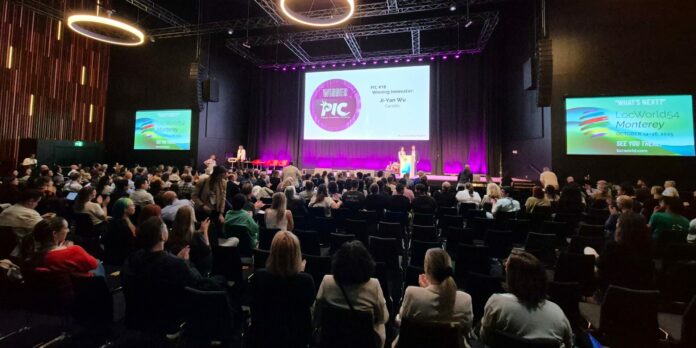
LocWorld53 Malmö brought together professionals in localization, content strategy, and language technology for three days of focused discussion on the evolving landscape of multilingual communication. The event featured over 40 sessions, hands-on workshops, and networking spaces where automation, quality, ethics, and human collaboration intersected.

Chaos, Complexity, and Localization

Political scientist Brian Klaas delivered a keynote exploring how organizations can navigate growing complexity through resilience and adaptability. Drawing from chaos theory and systems thinking, he introduced the concept of the Sandpile Effect, where even small disruptions in interconnected systems can trigger widespread breakdowns.

Applied to localization, this framework highlights the fragility of workflows dependent on multiple integrated tools and layers of automation. Klaas argued that rigid systems are more likely to fail in unpredictable environments, and emphasized that trying to control everything—particularly through technology—can amplify instability.

Instead, he advocated for flexible, human-aware design that allows systems to bend rather than break. His session positioned uncertainty not as a threat, but as a condition that, when acknowledged, can lead to more robust strategies.

Rethinking Quality in Localization

Sessions led by companies like Spotify, Peloton, and PayPal revealed a shift away from traditional linguistic metrics toward quality frameworks that prioritize user experience, emotional tone, brand consistency, and regulatory reliability.

Large language models (LLMs), quality estimation (QE) systems, and centralized workflows are helping teams focus more on outcomes and less on post-editing. This broader view of quality is emerging as a shared responsibility between localization, product, and UX teams.

Practical AI Integration with Human-in-the-Loop

Agentic AI — autonomous systems performing tasks like QA, terminology checks, and project management — featured prominently in workflow discussions. Presenters from Asana, Uber, and Microsoft described pragmatic, scalable uses of AI in live environments.

Many teams now rely on prompt engineering to tailor outputs without extensive retraining, balancing automation with direct human input. Across sessions, it was made clear that AI supports localization but doesn’t replace the need for human judgment.

Embedded Localization in Product and Content Operations

Notion and other teams presented examples of embedded localization, where translation workflows are built directly into content creation tools like Notion and Figma.

By integrating localization from the earliest stages—rather than after content is finalized—teams reduce friction, improve speed, and foster better alignment across design, marketing, and engineering. This reflects a broader move from siloed services to unified, strategic operations.

Experimentation and Inclusion in AI-Driven Systems

Speakers from companies like Skyscanner and Peloton emphasized a culture of testing over rigid optimization. New pilots included AI-generated subtitles, monolingual language testing, and AI-assisted quality scoring.

However, the discussions also addressed the lack of support for low-resource languages. Pashto was cited as an example of linguistic exclusion in training data, prompting calls for a more equitable approach to AI development and deployment.

Collaboration, Trust, and the Value of Informal Exchange

Beyond structured sessions, participants highlighted the importance of informal conversations in shaping real progress. Panels like the AI Localization Think Tank and Women in Localization emphasized collaboration, inclusion, and shared ownership of innovation.

Attendees noted that meaningful connections and problem-solving often happened in side conversations, demonstrating that community remains a key driver of innovation in the industry.

A Changing Role for Localization

LocWorld53 highlighted the evolution of localization from a tactical service to a strategic function. With AI integration accelerating and quality being redefined, the role of localization professionals is expanding into cross-functional areas, including product development, data, and customer experience.

The conference reinforced a shift in mindset—from automation as disruption to automation as partnership—anchored by human context, ethical awareness, and continuous learning.

Archipelagos Project Builds Pathways for Lesser-Used Languages in Europe

0
Europe’s Archipelagos Project:

Supporting discovery, not just production

A new EU-backed initiative is shifting how translation enters the European publishing ecosystem by supporting the earliest phase of the process: discovery. The Archipelagos Project, co-funded by Creative Europe and Bulgaria’s National Culture Fund, offers scouting residencies to literary translators working between 22 different languages, many of them underrepresented in global markets.

Rather than focusing on fully translated books, the program provides translators with resources and time to explore new works, write synopses, translate short samples, and prepare pitches. These scouting residencies aim to bridge the gap between cultural production and international publication, especially for works written in languages that rarely travel beyond their borders.

Translators at the frontlines of literary exchange

The project positions translators not only as mediators, but as active literary scouts. Over 100 translators are expected to participate by 2026, engaging with authors, publishers, and literary scenes in countries including Bulgaria, Turkey, Spain, and the Czech Republic.

Work produced during the residencies feeds into a network of workshops and events that connect translators with editors and agents. These sessions focus on identifying promising titles, refining sample translations, and understanding what publishers need to consider when acquiring new voices for international release.

Spotlight on lesser-used languages

While English remains dominant in global translation flows, Archipelagos emphasizes the value of works written in languages with lower export volumes—from Catalan and Basque to Czech, Turkish, and Arabic. By empowering translators to scout and promote such titles early in the process, the initiative hopes to diversify what reaches bookshelves in other countries.

The program also addresses structural gaps in the literary market: lesser-used languages often lack the visibility, funding, and publishing infrastructure to generate interest abroad. Archipelagos responds by putting investment into the earliest stages of circulation, well before foreign rights are sold or translation grants secured.

A decentralized cultural strategy

Led by France’s ATLAS association and coordinated with eleven partner organizations across Europe, the project reflects a broader move toward decentralized cultural policy. Instead of focusing only on major publishing hubs, Archipelagos supports local translators, smaller publishers, and regional languages through cross-border collaboration.

Whether the program will influence long-term publishing trends remains to be seen. But for now, Archipelagos marks a significant effort to rethink how translation networks function—and who gets a voice in shaping them.