Translating Across the Portuguese Landscape

0
Lusophone country flags

In the global language industry, Portuguese is often defined by its two largest and most commercially dominant variants: Brazilian Portuguese and European Portuguese. However, this surface-level view obscures the vast and intricate details of the Lusophone world, which spans four continents and multiple creole languages, post-colonial dialects, and culturally distinct speech communities that now make it the eighth most-spoken language in the world with over 260 million speakers.    

Where Portuguese Is Spoken and Used

Originating from Vulgar Latin in the Iberian Peninsula, the language evolved through centuries of linguistic influence and transformation, becoming the modern-day Portuguese we see today. Due to historical migration and colonization patterns from Portugal in the early 15th century and onwards, 18 countries across five continents now actively use the language, with 10 maintaining it as an official language. From South America, across Africa, and all the way to Southeast Asia, Portuguese has left a lasting impact on multidisciplinary domains and industries — affecting the ways in which we communicate with one another around the world. 

Some of the most surprising places we see Portuguese actively used in official settings are India, Macau, Cape Verde, and East Timor. For example, India’s Goa, Daman, and Diu regions have a uniform civil code rooted in Portuguese law. The Portuguese Civil Code of 1867 applies by virtue of Section 5(1) of the Goa, Daman, and Diu Administration Act of 1962, stating that all laws before the liberation of these territories by Portuguese colonies will remain in effect, ensuring the continued legal validity of their use of the language in these domains. 

In Macau, Macanese Portuguese remains a co-official language — alongside Cantonese — where it continues to be used within legal, administrative, and educational domains, which is strictly listed under multiple entities such as the UN Treaty Series, Vol. 1498, No. 25805. Additionally, Macanese Patois (Patuá) — a Portuguese creole that has formed with significant influence from over six Asian languages — still plays an important role among older generations and more remote populations within the area as a means of communication. The language is even listed as a critically endangered Portuguese-based creole by UNESCO and is protected under Article 121 of the Basic Law of the Macao Special Administrative Region of the People’s Republic of China, allowing the region to promote and preserve the fragile creole language.

Portuguese and the Language Industry

While India and Macau are just a couple of examples of how Portuguese plays an unexpected role within linguistic landscapes other than those of Brazil and Portugal, the current language industry unfortunately still functions with a structural blind spot towards the Lusophone world. This can be seen through restrictions on language accessibility or service inclusivity for both customers and professional translators alike. 

This limited perspective on the idea of Portuguese translation can have real-world implications: for example, underrepresentation of qualified translators and linguists from regions where Portuguese exists in dynamic contact with local languages, or the distortion of translation quality and authenticity when it needs to resonate with specific regional frameworks. Most importantly, it sidelines the demand for linguistic diversity within the language, which causes cultural omission in crucial industries. To better the industry’s current ecosystem, we must shift from a binary view of Portuguese to a Lusophone-centered approach that values the plurality of dialects and cultural identities that comes with it.

The Week in Review: Highlights from the Language Industry, June 16–20

0
multilingual industry news

This week, the language industry reported several developments tied to multilingual access, regulatory frameworks, and the evolution of language technologies. As tools and platforms advance, governments and institutions continue to shape how multilingual communication is deployed worldwide. Here’s a summary of the most notable updates.

Policy and Legal Developments

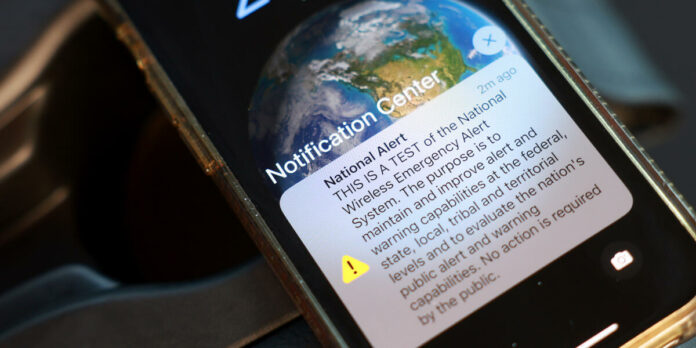
  • In the United States, the FCC approved a rule requiring emergency alerts in 13 spoken languages and American Sign Language. A federal regulatory freeze has delayed its official publication, keeping the rule from taking effect. As a result, access to critical alerts remains limited for residents with limited English proficiency.

  • In Turkey, a new law now requires state approval for any future translation of the Quran. Authorities describe the regulation as a safeguard for religious accuracy, though some observers have expressed concern about government oversight of linguistic content.

AI Tools and Platform Updates

  • Alibaba expanded its Tongyi chatbot to support real-time translation in 119 languages. This enhancement broadens its multilingual functionality and reflects the company’s continued investment in AI-powered communication tools.

  • KUDO released version 3.0 of its mobile app. The update features faster navigation, a streamlined interface, and improved scheduling tools designed to support multilingual meetings across time zones.

Recognition and Regional Growth

  • In Africa, the Association of Language Companies (ALCA) introduced the ALCA Excellence Awards. The initiative will recognize contributions to language access, inclusion, and localization. Winners will be announced during the upcoming conference in Cape Town.

Additional Highlights from the Week

Other updates included new EU language compliance guidance from Lionbridge, a proposal to introduce AI interpretation in Wisconsin courts, and findings from the 2025 AI Governance Survey. The industry also saw new perspectives on software localization strategies, key takeaways from LocWorld53 Malmö, gaming localization, and seasonal reading suggestions for language professionals.

These developments illustrate how language policy, technology, and cultural regulation continue to influence the direction of the language services sector. For more updates, visit our News section.

Cultural Competence: A Key to Thriving in Global Business

0
Cultural Competence

In today’s interconnected world, professional success increasingly depends on our ability to navigate cultural differences with humility, curiosity, and adaptability. Business isn’t just about numbers and strategy — it’s about people, and people come with diverse cultural backgrounds that shape how they communicate, work, and build relationships.

Many professionals find themselves puzzled when deals stall or partnerships falter without a clear explanation. Often, it’s not about competence or intent — it’s a mismatch in expectations, communication styles, or social norms. A seemingly harmless oversight, like responding to a meeting invitation too directly or skipping a social dinner, might unintentionally signal disrespect in another culture.

According to a 2012 survey by the Economist Intelligence Unit, the vast majority of executives cite cross-cultural communication as a top challenge in global business. Many reported that poor cultural understanding led to stalled projects, lost deals, and fractured relationships.

Examples of Cultural Differences in Business

Let’s say you’re working with a client in the Middle East or East Asia and you decline their invitation to dinner after a business meeting because your schedule is tight. To you, it’s practical. But to them, it might be perceived as a rejection of relationship-building, which is often more important than the transaction itself.

What may seem like inefficiency or idle small talk in one culture is actually the foundation of trust in another. As one executive shared after a failed negotiation in Southeast Asia, “We kept waiting for them to get to the point. They were waiting to see if they could trust us first.”

Listening, like speaking, varies across cultures in both form and meaning. In some cultures, silence is a sign of deep respect and thoughtful consideration; in others, it may be misinterpreted as uncertainty or disengagement. Cultural competence means being aware of these nuances and learning to listen beyond words — to tone, timing, body language, and what’s left unsaid. These subtle cues often carry more meaning than spoken language.

The Importance of Cultural Awareness

These differences aren’t about right or wrong — they’re about perspective. Misalignments like this stem from one-sided assumptions, often grounded in the idea that others should adapt to you. This mindset is a deal-breaker in global business.

Cultural awareness isn’t just about knowing not to bring pork to a halal meal or understanding time zones. It’s a mindset. It means recognizing that your norms are not universal and that when you enter a different cultural space — physically or virtually — you are the outsider. That doesn’t mean self-erasure. It means showing respect. It’s about saying, “I see you, and I’m willing to meet you halfway.”

Adaptability is rooted in self-awareness. You can’t adjust your behavior if you’re not even aware that it’s rooted in a specific, culturally shaped norm. Being culturally aware means noticing when your expectations are just that: your expectations, not universal standards. It helps you understand that others may operate from different cultural frameworks and that these differences are valid and valuable.

This isn’t just a soft skill — it’s a business imperative. True cultural awareness begins with acknowledging that your perspective is limited. You’re not the standard, and being in another culture means you’re the guest, not the host.

Working Across Cultures Successfully

It’s tempting to reduce cultural training to a checklist: handshakes vs. bows, eye contact vs. avoidance, formal vs. informal speech. But culture is nuanced, and the best way to pick up on those nuances is through exposure and curiosity, whether that’s direct or digital.

Success in working across cultures isn’t about perfect fluency — it’s about humility. It means being comfortable with not knowing, asking thoughtful questions, and listening more than speaking. Respect isn’t conveyed through rigid professionalism alone, but rather demonstrated through the effort to understand and adapt.

Initial trust can’t be assumed — it must be earned. Earning the kind of trust that opens the door to a fruitful business relationship doesn’t depend on the other person — it depends on your awareness of expectations shaped by your own cultural norms, and your willingness to step out of your comfort zone and learn.

When you approach business relationships from this place of humility, you show that you value the person, not just the potential profit. And that’s what builds trust, loyalty, and long-term success.

The Benefits of Cultural Competence

This mindset doesn’t just benefit cross-border transactions or international teams. It improves collaboration in diverse domestic workplaces, too — where colleagues may come from different cultural, linguistic, or generational backgrounds. The ability to empathize can make all the difference in how inclusive and effective your leadership becomes.

Embracing this role with a positive attitude and respectful curiosity not only benefits you professionally, but also enriches your life personally. Seeing the world through others’ lenses gives your work more meaning and your relationships more depth.

This mutual benefit is supported by research. A 2013 study from the Harvard Business Review found that teams with strong cross-cultural competence performed 35 percent better in international partnerships. Similarly, a 2024 mixed-methods study published in Frontiers in Psychology found a strong positive correlation between cultural intelligence (CQ), critical thinking, and psychological wellbeing.

Conclusion

In practice, cultural competence looks like small, consistent choices: making space for others’ communication styles, asking instead of assuming, and being willing to unlearn habits that don’t translate well across contexts. It’s being patient in silence, generous in misunderstanding, and open even when it’s uncomfortable. It also means giving trust first, without guarantees. It means choosing connection over convenience, and growth over control. That’s not weakness — it’s leadership. 

Ultimately, the most effective global leaders and collaborators aren’t those who demand understanding, but those who offer it first. True cultural competence isn’t just strategic — it’s transformative.

US Multilingual Emergency Alerts on Hold Amid Regulatory Delay

0
Emergency alert

FCC’s approved rule for translated wireless alerts awaits publication, halting implementation

A federal initiative to expand language access in emergency communications has stalled, leaving millions of US residents with limited English proficiency (LEP) without critical translated alerts. Although the US Federal Communications Commission (FCC) unanimously approved a rule in January 2025 requiring wireless emergency alerts (WEAs) to be translated into 13 spoken languages and American Sign Language, the final step—publication in the Federal Register—has yet to occur.

The delay has drawn scrutiny from nonprofits and lawmakers. Many attribute the holdup to an executive order signed by President Donald Trump on January 20, 2025. The order imposes a regulatory freeze requiring new rules to receive approval from a designated administration official before proceeding to publication.

This procedural bottleneck has stalled the countdown on a 30-month implementation window for wireless providers. Until the order is officially published, participation in multilingual WEAs remains voluntary.

An urgent public safety concern for multilingual communities

The translated alerts are designed to ensure that LEP populations receive timely warnings about life-threatening events such as wildfires, flash floods, and earthquakes. FCC Commissioner Anna Gomez acknowledged that the executive order may be behind the delay, though she noted that other FCC rules have been published since the order took effect.

The FCC initially proposed the rule in June 2023 and formally adopted it in October. According to its own estimates, implementation would cost participating providers around $39.9 million. The regulation mandates that devices support translation of alerts into the 13 most widely spoken non-English languages in the US, as well as American Sign Language.

A broader push for multilingual alerts remains uncertain

A parallel FCC proposal—requiring TV and radio broadcasters to offer template alerts in the same 13 languages—has also been approved but remains unenforced due to similar publication delays. The broadcast requirement is projected to cost broadcasters an additional $12 million.

Until the required reports appear in the Federal Register, these multilingual safety efforts remain on hold, and wireless alerts continue to be delivered primarily in English.

“Standing Still Isn’t an Option:” Career Advice From Technical Translator Ellen Singer

0
Ellen Singer

Ellen Singer isn’t afraid to take on new challenges. After cofounding a translation agency and expanding her skills to include copywriting and programming, she’s now most interested in sharing her knowledge through teaching and public speaking. Here, she shares her advice for how to thrive as a linguist in an ever-changing landscape.

How did you get involved in the translation business?

When I was two years old, my Dutch parents moved to Argentina and eventually Uruguay. Dutch was spoken at home, but outside our home we spoke English and Spanish. I grew up trilingual, but perhaps multilingual describes me better, as I believe that math and programming are also languages we can and should master.

In 1995, I was unimpressed by texts and translations around me and decided we could do better. Our agency was founded by four people; all of us had studied programming at some level, and we were at a career crossroad then. The idea was to not only translate and localize, but also program and provide high-quality combined services. One colleague created our first website, which was also the first website for translation services in the Netherlands. We started translating information technology (IT) and other technical documentation; we then moved to the marketing of technology as many marketing copywriters and translators did not understand computer jargon. With time, two co-owners decided to work elsewhere, leaving my husband and me in charge.

We have worked based on the four-eye principle from the start. We believe everyone makes mistakes, but a second pair of eyes — a second translator — can spot most issues. We also believe that the more diverse our team is, in each and every sense of the word, the better.

I have specializations, but I also need challenges, so at times, I take on projects that are outside my comfort zone. I learn something every day. Curiosity killed the cat, but it keeps me motivated. I love meeting multicultural people, because they know there’s more than one way to skin a cat. This idiom is not to be taken literally, especially not by a translator as we depend on our computer-assisted technology (CAT) tools.

Since you entered the translation industry, how has the business landscape changed?

Business is never static. What once worked stops working. What works now will no longer work sometime in the future. You need to constantly learn, change, and adapt. This means reinventing your processes, adjusting your niche, and building on your skills. Standing still isn’t an option.

When we founded AzTech Solutions, we would receive texts by fax or on floppy disks sent by post. It all took time and effort. Now, receipt is almost instantaneous, so clients tend to expect their translations faster. They increasingly expect the translation process to be as fast as lightning. It can be, but this decreases the quality of the work, which is where humans can make a difference.

In our early days, most translation work was assigned by agencies. We would receive the text and translate it into our native languages. We worked from English, Spanish, and Dutch into these same languages and often accepted the same texts into other European languages, which we outsourced to trusted colleagues. Nowadays, we mostly work for direct clients.

In the 90s, translators were often asked to interpret as well. These two tasks are now generally performed by specialists in translation or in interpretation. Another change relates to specialization. Linguists now specialize in niches, although I hear more about diversification since Covid-19. As I grow older, I think everything is sinusoidal, not progressive.

Could you share your experience working with your first client or on your first project?

My first project was in 1995. I can’t remember what it was about, but it was for an agency that provided translations of technical manuals in English. These translations were written by Japanese technicians. It was our job to check and edit them.

I remember that they sent us the same sentence for translation seven times. Each time, we delivered the same translation. They eventually called us because they didn’t believe we were translating accurately. We weren’t! From the first, we had understood what should have been written and translated instead of trying to reflect the actual sentence. The first version was “Pull cord to prevent phire of amplifier.” I don’t remember the final version, but it included the word not, so there was quite a big change. 

This same agency soon provided an early CAT tool, along with a two-day training course. They offered training because many translators were willing but unable to work with the tool. When they first sent the tool and a project, we noticed that the agency’s instructions lacked detail. When they called to ask if we had managed to install the program, we told them that we had not. As other language teams had not been able to do so, we installed the program, edited the instructions, and sent these to them. Our instructions worked and everyone could deliver the project on time. This ensured they respected us!

Providing added value has been a key service component from the very beginning. We point out mistakes in the source text, ask questions when the text isn’t clear, and make any other contributions we think are helpful. We still have clients today who have been entrusting their translations to us from the very beginning.

Do you believe it’s a good time to enter the translation business?

At any given time, there are translators who struggle and those who have enough work. The required skills change over time, and you need to be adaptable. With the advent of CAT tools, many translators decided to retire because they wanted to keep working on paper. I liked the CAT tools. They meant you didn’t have to find and copy previous translations and then make sure you made the appropriate changes.

Integrating useful tools into your work processes is paramount, but every translator has to decide for themselves what they find useful. I find that machine translation (MT) and artificial intelligence (AI) translations don’t yet provide a readable text. Their output seems to be reasonable until you read it closely. Human translators are probably some of the few people who read a complete manual. This puts them in a unique position to spot mistakes at a macro level and realize that a sentence can be interpreted in multiple ways.

The language services market is growing. Some translation work can be done by machines or AI. The output is improving, and we should keep an eye on developments. But to achieve quality output, the engine must be up to the job and trained on relevant data and the company’s existing translations. At TEF 2024, I learned that if AI translates based on a large language model (LLM) that includes a “smaller” language such as Swahili complemented by English data, the quality of the Swahili texts improves. According to the presenter, it is because AI was trained on the universal language aspects of the English. I will keep an eye out for more information.

Obsolete technology is put out to pasture. The same goes for translators who translate like machines and who let their skills become outdated. Translators who can write, who add value, and who make texts resonate with the target audience will always be in demand. But even then, you will only have enough work when you market yourself, when you network, and when people know you exist.

Where do you see yourself professionally in the next 10 years?

I never look that far ahead. I let opportunity knock and let it in. Years ago, I went to a conference and then another. I realized the speakers often had less experience on the topic than I did and that they left out relevant details. I took this opportunity to go to more conferences, but as a speaker. 

One day, the telephone rang and I was asked if I wanted to teach languages. I said yes, and I have been a teacher for many years now. I get bored easily. So, when someone knocks on the door with an opportunity to re-invent myself, I take it. This sometimes means I end up taking on projects that require different skills. For example, carrying out technical translations and teaching two languages to ensure the company employees understand each other. I teach based on company material, often writing or improving their material along the way. Teaching the required jargon is a challenge I gladly take on.

I am getting on in years. I might work fewer hours in 10 years’ time. My children are adults now. They don’t need me much and aren’t as financially dependent on my partner and me.

What predictions do you have for the future of the translation industry?

I don’t call it an industry. Industries produce commodities. We can’t produce texts on a conveyor belt. No two translators would ever produce the same “product.” Writing is an art, a skill. As long as you create quality texts, you will have work. Linguists will also be asked to play roles that don’t exist yet.

When Google Translate (GT) was launched, Google took all the content on multilingual websites on the web and added that content to its data corpus. Many of these sites had been produced by GT. This meant that any mistakes in these texts compounded the issues in GT texts and so its quality decreased. Google then hired linguists to assess the quality of its translations. Nobody could have foreseen this. Just like nobody realized that the advent of the mobile phone would decrease chewing gum sales. Predicting the future is a hit-and-miss activity. I prefer to adapt to actual changes and am always ready for the next challenge.

Going Global in Gaming: Two Vastly Different Paths to Success

0
Global gaming strategies

The global gaming industry stands as one of the most dynamic, fast-paced, and fiercely competitive sectors in entertainment. It is an ecosystem that spans cultures, geographies, platforms, and play styles. Whether it’s a casual mobile app played during a commute or a deeply immersive AAA console title, the battle for player attention is constant. However, winning that battle isn’t just about compelling graphics or intuitive gameplay. True global success hinges on the ability to scale efficiently, connect with diverse player communities, and adapt to cultural nuances without losing sight of core product goals.

While the overarching objective of international growth may be consistent, the strategies for achieving it diverge significantly depending on the type of game being developed and launched. Specifically, the expansion blueprints for casual or mobile games versus AAA (Triple-A) titles follow vastly different paths. Understanding these differences is critical for gaming companies aiming to optimize speed, cost-efficiency, and player engagement without compromising quality or long-term viability.

Let’s explore these two distinct global strategies in detail and consider what business leaders and product teams should keep in mind when navigating global gaming markets.

Casual Games: Speed, Simplicity, and Smart Scaling

Casual games—often mobile-first and designed for bite-sized entertainment—thrive on accessibility. Games like Candy Crush, Clash of Clans, and Among Us exemplify this category. They are easy to pick up, easy to put down, and endlessly replayable. These games typically have shorter development cycles and operate within tighter budgets. Given the high volume of competition in app stores, getting to market quickly can mean the difference between virality and invisibility.

In this environment, speed and scalability are paramount. Many successful mobile games launch globally with minimal content adaptation, relying heavily on automation to translate menus, messages, and basic UI components. This approach allows developers to test multiple markets without overcommitting resources. Early feedback—via analytics, downloads, or retention data—then helps identify where deeper investment in localization is justified.

A smart initial approach might involve basic machine translation with light review for high-priority languages. If a title gains momentum in key regions, further enhancements—such as culturally appropriate tone, reworked jokes or idioms, and region-specific incentives—can follow. These lightweight adaptations can dramatically improve the player experience without slowing down time to market.

For instance, a simple “Well done!” message after completing a level in Candy Crush might seem universally positive. But the emotional triggers behind such praise vary by region. In some cultures, personal achievement is emphasized; in others, community or teamwork is more valued. Slightly tweaking celebratory language or reward structures can resonate more deeply, making players feel seen and valued in their context.

This phased approach not only preserves budget and agility but also sets up casual games to iterate based on real-world player behavior rather than assumptions.

AAA Games: Craftsmanship, Immersion, and Front-Loaded Investment

AAA games operate at the opposite end of the gaming spectrum. Titles such as Assassin’s Creed, The Last of Us, Call of Duty, and The Witcher 3 are cinematic in scope, narrative-rich, and often years in the making. Development budgets frequently run into the hundreds of millions, and teams include writers, animators, voice actors, and engineers across the globe.

In these titles, success is not about fast deployment. It is about emotional depth, immersion, and authenticity. Players expect rich character development, coherent world-building, and seamless dialogue that feels natural in their own language. To meet these expectations, AAA studios must treat localization not as an afterthought but as an integral part of the development cycle.

That means high-quality voiceover (VO), culturally adapted scripts, and even region-specific changes in gameplay or character design. In The Witcher 3, for example, humor and sarcasm are subtly woven into dialogue. Translating these elements literally would fall flat—or worse, break immersion. Instead, localized scripts are rewritten to evoke the same feeling or intent, using idioms, cultural references, and emotional cues familiar to the target audience.

In this context, full linguistic and cultural adaptation is not optional—it is a competitive advantage. Studios that invest in high-quality multilingual storytelling build stronger global communities, foster deeper brand loyalty, and open the door to extended monetization through expansions, merchandise, and sequels.

Strategic Resource Allocation: Choose Your Battles Wisely

While casual and AAA games differ vastly in scope and investment, they share a common truth: resources are finite. Deciding where to invest—in both markets and content—can make or break a game’s global rollout.

For casual titles, the best practice is often to launch lean. Translate only what is essential to test a market: app store descriptions, onboarding flows, and basic UI. Then, watch the data. If players in Brazil engage far more than those in Germany, you know where to focus next. Invest in improved content quality for Brazil—perhaps humor tweaks, localized in-game events, or culturally aligned visual design—and monitor whether those changes boost retention or in-app spend.

For AAA studios, content prioritization takes a different shape. Here, the core of the game—dialogue, cutscenes, quests—needs top-tier localization from the start. Supporting content like menus, help screens, or settings can be streamlined using automation or templated workflows. But the emotional engine of the game must resonate everywhere.

The key is strategic differentiation. Casual games should expand breadth first and then refine. AAA games must go deep from day one in a select number of high-potential markets.

Tips for Global Expansion in Gaming

Whether you’re building a puzzle app or an epic open-world adventure, a few guiding principles can help ensure global success:

  1. Prioritize High-Impact Content
    For casual games, focus on UI strings, tutorials, and reward messages. For AAA games, allocate resources to narrative elements, voiceover scripts, and character interactions—these are the areas that shape emotional resonance.

  2. Use Data to Guide Investment
    Test minimal viable versions in new regions and track performance. Casual games can scale investment based on user behavior. AAA games should use engagement data to guide post-launch refinements or expansions.

  3. Balance Speed and Depth
    Understand the trade-offs between fast deployment and cultural fidelity. Speed wins early engagement for casual titles; depth ensures longevity for AAA games.

  4. Plan for Iteration
    Do not treat localization as a one-off task. Build feedback loops with regional teams, community managers, and players to continuously improve. This applies to both game types, albeit on different timelines.

Conclusion: One Industry, Two Playbooks

Global expansion in gaming is not a one-size-fits-all endeavor. Casual and AAA games each follow unique paths to success. One is defined by speed and iteration; the other is driven by depth and immersion. But both paths require a clear strategy, deliberate resource allocation, and a deep understanding of player expectations across regions.

For gaming companies and business leaders, recognizing these differences is the first step toward global success. The second is execution: aligning your product and multilingual content strategies with the realities of your game’s format, audience, and market ambition.

Whether you’re aiming for quick downloads or critical acclaim, the ability to connect with players in their language and cultural context remains a powerful lever for sustainable growth. In an industry defined by competition, that edge can be the difference between a fleeting trend and a global franchise.

Lionbridge Launches Comprehensive “EU MDR and IVDR Language Guidance”

0
Lionbridge

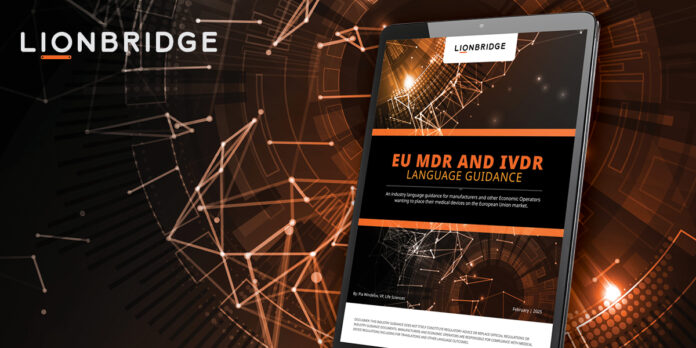
Waltham, MA – June 19, 2025 – Lionbridge has released a new resource titled “EU MDR and IVDR Language Guidance”, designed to help medical device manufacturers and Economic Operators (EOs) understand and manage the language requirements under the EU’s Medical Device Regulation (MDR, 2017/745) and In Vitro Diagnostic Medical Device Regulation (IVDR, 2017/746).

These regulations, which replaced earlier EU directives, mark a shift from pre-market controls to full life cycle compliance, significantly increasing the demand for precise multilingual documentation across Member States.

Pia Windelov, Vice President of Life Sciences Strategy at Lionbridge, led the development of the guide, emphasizing the role of language in both regulatory compliance and effective communication. “Our goal is to help manufacturers approach language strategically throughout the life of the device,” said Windelov.

Key Components of the Guidance

The document is divided into three main sections:

  • Multilingualism in the EU Regulatory System: Contextualizes how language requirements function within the EU and their implementation across national authorities.

  • Language Requirements Under MDR and IVDR: Offers a structured presentation of official language expectations and practical recommendations for device-related content.

  • AI Life Cycle Language Strategy: Introduces approaches to using AI and large language models (LLMs) as part of a risk-based language strategy that meets regulatory and market demands.

The guide also highlights the need for plain language in light of new EU transparency and disclosure rules, presenting AI as a potential tool to support clarity and compliance.

Download and Access

EU MDR and IVDR Language Guidance is available now. For more information, visit Lionbridge Life Sciences.

About Lionbridge

Lionbridge partners with customers to break barriers and build bridges all over the world. For over 25 years, we have helped companies connect with their global customers and employees by delivering translation and localization solutions in 350+ languages. Through our world-class platform, we orchestrate a network of passionate experts across the globe who partner with brands to create culturally rich experiences. Relentless in our love of linguistics, we use the best of human and machine intelligence to forge connections with our customers’ clients. Based in Waltham, Massachusetts, Lionbridge maintains solution centers in 24 countries. Learn more at www.lionbridge.com.

Contact

KUDO Releases Mobile App v3.0 With Expanded Multilingual Capabilities

0
KUDO Mobile App v3.0

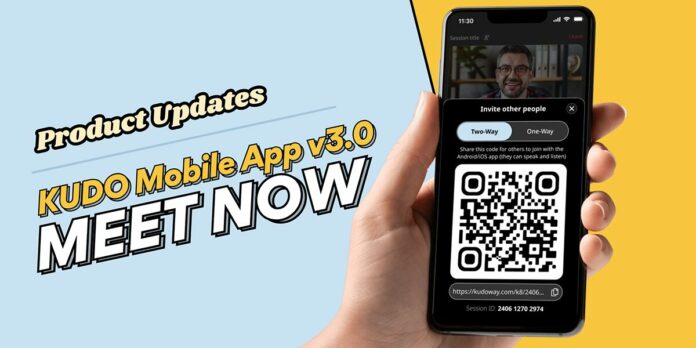
June 19, 2025, New York City, NY – KUDO has announced the release of version 3.0 of its mobile application, delivering updates aimed at improving accuracy, expanding language support, and simplifying user experience. The new version introduces a feature called “Meet Now,” enabling AI-powered speech translation directly from smartphones and tablets.

Now available on both iOS and Android, KUDO Mobile App v3.0 allows users to initiate and share real-time multilingual sessions in a mobile environment. With this release, mobile devices can serve as standalone tools for multilingual communication across work, travel, and field contexts.

According to KUDO CEO Fardad Zabetian, “mobile-first communication is increasingly central to global business,” and the new version is intended to support more accessible multilingual interaction through everyday devices.

Features Designed for Flexibility

The app’s “Meet Now” feature supports over 60 languages and approximately 3,000 language pairs. A redesigned language selector highlights recently used languages for quicker access.

KUDO Mobile App v3.0 introduces three participation modes:

  • Two-Way Mode: Enables fully interactive multilingual conversations with real-time AI speech translation. Participants can join via meeting ID or QR code.

  • One-Way Mode: Designed for passive listening. Users can access translated content via QR code, without installing the app or creating an account.

  • Only-Captions Mode: Offers real-time text-only translation, useful in quiet environments or for users preferring a non-audio option.

Focused on Enterprise and On-the-Go Use

This update addresses increasing demand for mobile multilingual tools across sectors such as government, corporate, and international organizations. By integrating speech translation into mobile devices, KUDO aims to support multilingual access beyond traditional meeting rooms.

The app maintains enterprise-grade security, with performance optimization across devices. Cross-device session sharing and flexible setup are included as part of the updated architecture.

Availability

KUDO Mobile App v3.0 is available now on the Apple App Store and Google Play Store. It is accessible to all existing KUDO clients as well as new users seeking mobile-first multilingual communication tools.

For more details, visit www.kudo.ai.

About KUDO

KUDO is the world leader in providing real-time multilingual solutions that enable people to communicate effortlessly in any language⁠, on any platform. Their network of 12,000 professional language interpreters, combined with their ground-breaking Speech Translator, empowers organizations of all sizes to collaborate more efficiently, with greater inclusivity, and on an international scale. KUDO Inc. is a New York-based technology start-up founded and managed by language and conferencing industry insiders seeking to create a world in which everyone has the power to understand and be understood in their language.

Contact

Chloë Walford-Delahaye
marketing@kudo.ai


Alibaba AI Real-Time Translation Expands to 119 Languages

0
Alibaba AI real-time translation

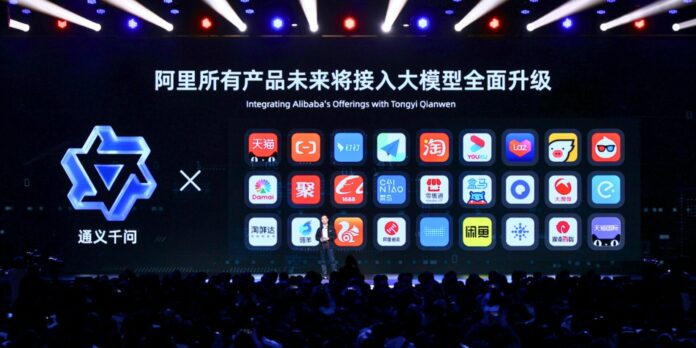
Alibaba has recently announced a functional upgrade to its Tongyi AI assistant, introducing it into the competitive landscape of global AI translation tools. The update includes Alibaba AI real-time translation across 119 languages, spanning Indo-European, Afro-Asiatic, and South Asian language families.

The release adds support for live interpretation, document translation, image-based translation, and standard text translation, combining four use cases into a single platform. The simultaneous interpretation feature now supports 10 commonly used languages, including English, Japanese, Korean, and Cantonese. Alibaba’s move reflects a broader industry focus on multilingual productivity and enterprise-ready AI tools.

A New Step in Machine Translation Development

Alibaba’s rollout forms part of a longer technological evolution that began in the 1950s with rule-based translation systems and continued through statistical approaches to today’s neural machine translation. The current model behind Tongyi—Qwen3 was trained on 36 trillion tokens and supports multilingual reasoning with a 128K-token context window.

The integration of Alibaba AI real-time translation represents an advancement beyond conventional text translation. By enabling real-time mutual speech interpretation, Tongyi joins a field that includes tools like Google Translate, DeepL, and enterprise-focused solutions such as Interactio and KUDO.

Functional Scope and Market Context

Tongyi’s new interpretation capabilities respond to increasing demand for real-time multilingual communication in areas like business, education, and customer service. While many competitors focus on specific translation formats, Tongyi combines four key functions—text, speech, documents, and images—within one environment.

This shift reflects a broader trend toward integrated AI translation workflows. Platforms such as Smartcat and Language I/O pursue similar goals, though Tongyi’s scale and infrastructure support through Alibaba Cloud may offer operational advantages for developers and enterprise teams.

Through Alibaba AI real-time translation, users working with less-resourced languages gain additional access to multilingual tools, contributing to wider availability across global platforms.

Considerations and Ongoing Challenges

Despite the expanded functionality, several issues remain. Tongyi must maintain consistent translation quality across all supported languages, especially for low-resource or niche dialects. Additionally, content moderation and regulatory compliance remain active concerns as Alibaba extends its services across global markets.

The update reflects Alibaba’s investment in multilingual AI, contributing to ongoing efforts to improve access to real-time language technology. By embedding these features within a general-purpose assistant, the company adds to the broader landscape of scalable, on-demand multilingual communication.