New Poetry in Translation Prize Aims to Expand Global Voices

0
Poetry in Translation Prize

A new biennial prize dedicated to poetry in translation is set to open submissions in July, reflecting the growing momentum around international literature in English. Jointly launched by Fitzcarraldo Editions (UK), Giramondo Publishing (Australia), and New Directions (US), the Poetry in Translation Prize will award a $5,000 advance — split equally between poet and translator — for an unpublished poetry collection originally written in a language other than English.

The winning collection will be published across multiple regions: by Fitzcarraldo in the UK and Ireland, by Giramondo in Australia and New Zealand, and by New Directions in North America. The initiative aims to spotlight formally ambitious and distinctive poetic voices while emphasizing the central role of translators in making global literature accessible.

A Push for Translated Poetry

According to Fitzcarraldo poetry editor Rachael Allen, the prize was designed to create more space for poetry in translation, a field often overshadowed by fiction. “There is no other prize like this that we know,” she said. Co-editor Joely Day noted that the success of translated fiction in the English-speaking world has laid the groundwork for increased interest in translated poetry.

The prize is open to living poets from any country writing in languages other than English. Submissions will be accepted from July 15 to August 15, 2025, with the winner announced in January 2026. Publication of the selected collection is expected in 2027.

Elevating the Role of the Translator

For language professionals, the prize offers both recognition and opportunity. It highlights the role of translators not as intermediaries, but as co-authors in the creative process. “My personal hope is that the prize reaches fledgling or aspiring translators,” Day added, “and encourages those who want to work with poetry to do so.”

The initiative reflects a broader effort to bring underrepresented literary voices—and the translators who carry them — into the spotlight.

Boostlingo Releases Healthcare Interpreting Report 2025

0
Boostlingo Healthcare Interpreting Report 2025

Austin, TX – June 24, 2025Boostlingo has published its second annual Healthcare Interpreting Report 2025, pointing to a stubborn interpreter gap that has left nearly half of medical practices caring for limited-English-proficient (LEP) patients without a qualified interpreter at least once in the past year. The findings draw on a March 2025 survey of 277 U.S. clinicians and administrators and are intended as directional guidance rather than a nationally representative sample.

Among respondents, 56 percent say their electronic health records capture a patient’s language needs. Yet, only 59 percent of that group record the information every time, creating blind spots that can undermine compliance and care quality. Cost pressures, staffing shortages, and patchy technology integrations remain the key barriers, even as interest mounts in AI-enabled language solutions paired with human interpreters for complex interactions.

“Language access should never be an afterthought,” said Merrie Wallace, MN, BSN, Chief Revenue Officer at Boostlingo. “Our latest research indicates that when providers combine the right technology with trained interpreters, they shorten treatment delays, improve outcomes, and protect revenue. The knowledge is there—now it’s time to act.”

For language service providers, the data highlights concrete opportunities to partner with healthcare systems seeking scalable, compliant solutions. Platforms that deliver EHR integrations, flexible pricing, and AI-supported workflows can address the very obstacles the report surfaces. Healthcare leaders, meanwhile, can use the benchmarks to audit existing interpretation programs, justify budgets, and set measurable goals to close gaps within the next quarter.

The full 42-page report, including data breakdowns and practical recommendations, is available for free download at boostlingo.com/healthcare-report-2025.

Methodology: Boostlingo surveyed 277 U.S. healthcare professionals via an online questionnaire in March 2025; results are directional and not weighted to national benchmarks.

Media Contact  

Morgan Teller
Director of Marketing
morgan.teller@boostlingo.com  

About Boostlingo  

Boostlingo is an interpreting technology company based in Austin, TX, dedicated to building innovative solutions that help its customers communicate without barriers and increase language access for all. The Boostlingo platform offers video, phone, and on-demand interpreting, industry-leading interpreter management and scheduling tools, remote simultaneous interpretation, video conferencing capabilities, and advanced AI captioning and transcription.  

For more information, visit https://boostlingo.com/  

KUDO Delivers Enhanced Microsoft Teams Integration v2.0 with Enterprise-Grade Reliability

0
kudo-microsoft-teams-integration-update

(Tuesday, June 24, 2025, New York City, NY) – KUDO, the world’s leader in multilingual meetings and events solutions, today announced a significant enhancement to its Microsoft Teams native integration, delivering greater stability, improved reliability, and a more seamless experience for enterprise users.

This release introduces a new participant-based connection approach for KUDO within Microsoft Teams. The KUDO Translatornow joins meetings as a standard participant, requiring manual admission by the meeting organizer or internal attendee to ensure security and meeting control.

“Enterprise clients demand rock-solid reliability in their multilingual communication tools, and this enhancement delivers exactly that,” said Nitin Verma, VP of Engineering of KUDO. “We’ve rebuilt the integration architecture to improve stability while preserving the same low-latency, high-quality AI interpretation our clients depend on.”

Strengthening the Foundation of Global Communication

This enhanced integration replaces KUDO’s previous connection method with a robust participant-based approach designed for enterprise reliability. This change delivers improved technical stability while maintaining the seamless user experience that makes KUDO the preferred live speech translation solution for global organizations.

Key enhancements include:

  • Enhanced Security Protocol: “KUDO Translator” joins as a meeting participant, requiring manual admission for complete meeting security control.
  • Enterprise-Grade Stability: Redesigned connection architecture reduces meeting disruptions and connection failures.
  • Consistent performance: Maintains low-latency, high-quality live AI speech-to-speech translation and real-time captioning in 60+ languages.
  • Customizable translation: Clients can configure translation parameters to meet specific communication requirements.

Strategic Value for Global Enterprises

This release addresses the growing demand from enterprise clients for reliable multilingual communication solutions within their existing Microsoft Teams infrastructure. With 91% of large companies (5,000+ employees) using Microsoft Teams as part of their internal communications setup according to Microsoft reports, the improved stability enables organizations to confidently scale multilingual meetings across departments and regions without technical reliability concerns.KUDO’s patented solutions serves diverse multilingual communication scenarios across corporate boardrooms and global meetings, higher education lectures and conferences, houses of worship services and community events, and live events including conferences, webinars, and public gatherings. Whether supporting global corporations, government agencies, or international organizations, this enhanced integration ensures consistent multilingual communication at enterprise scale.

Engineered for Enterprise, Designed for Simplicity

KUDO’s Microsoft Teams integration maintains its signature ease of use while delivering enterprise-grade security standards through a comprehensive data protection infrastructure. The platform complies with GDPR regulations and maintains SOC 2 Type 2 attestation (held since 2021) and ISO/IEC 27001:2022 certification covering all aspects of its language accessibility solutions. The enhanced integration is available immediately to all KUDO clients using Microsoft Teams, with no additional configuration required. To learn more or explore how live speech translation technology can transform your organization’s global communication strategy, visit www.kudo.ai.

About KUDO

KUDO is the world leader in providing real-time multilingual solutions that enable people to communicate effortlessly in any language, on any platform. Their network of 12,000 professional interpreters, combined with their ground-breaking AI Speech Translator, empowers organizations of all sizes to collaborate more efficiently, with greater inclusivity, and on an international scale. KUDO is a technology start-up founded and managed by language and conferencing industry insiders seeking to create a world in which everyone has the power to understand and be understood in their language.

Contact

Chloë Walford-Delahaye
marketing@kudo.ai

Secure Mode Now Live on MachineTranslation.com to Protect Sensitive Translations

0
MachineTranslation.com

MachineTranslation.com, the translation comparison tool developed by language service provider Tomedes, has announced the launch of Secure Mode—a new feature designed to support users who prioritize data privacy when using machine translation.

Secure Mode enables users to view and compare results from AI translation engines that meet SOC 2 compliance standards, excluding providers that do not adhere to strict privacy requirements. The feature is available as a toggle on the platform and can be used without registration.

Designed for sensitive and high-stakes content

MachineTranslation.com aggregates output from multiple machine translation engines and large language models (LLMs), helping users choose the best-performing system for their needs. Secure Mode builds on this by allowing users to restrict engine selection to those suitable for confidential or regulated content.

This includes documents in areas such as:

  • Legal (e.g., contracts, compliance materials)

  • Healthcare (e.g., patient records, HIPAA-related files)

  • Finance (e.g., transactions, audits)

  • Government and NGOs (e.g., policy documents, internal reports)

  • Technology and retail (e.g., proprietary product data)

The feature can also be useful for individuals working with academic transcripts, resumes, or other personal records.

Additional controls and privacy safeguards

In addition to engine filtering, MachineTranslation.com includes several features aimed at improving translation quality and protecting user data:

  • Anonymization of sensitive terms

  • Expiring session-based translation URLs

  • Bilingual segmented view for reviewing AI output

  • Optional human-in-the-loop editing

  • Private API access for enterprise integration

Secure Mode is part of a broader strategy to give users more transparency and control when engaging with AI-generated translations. According to Tomedes, the platform aims to reduce uncertainty about where and how user data is processed, especially in privacy-sensitive contexts.

Open access and usage limits

MachineTranslation.com does not require account creation. Users can access Secure Mode and other features directly on the site and translate up to 100,000 words at no cost. The feature is now available to all users globally. 

About MachineTranslation.com

MachineTranslation.com is an AI-powered translation platform that supports over 270 languages. Developed by Tomedes, it aggregates outputs from leading large language models (LLMs) and AI engines, allowing users to compare results, adjust tone and terminology, and manage translation quality. The platform is used by more than one million users worldwide and includes features such as Key Term Translations, an AI Translation Agent, Segmented Bilingual View, and built-in anonymization for data privacy. Designed to support a range of content types—including legal, medical, marketing, and internal documents—MachineTranslation.com offers an alternative to traditional localization tools by focusing on control, flexibility, and speed.

DeepL Translation Platform Inaccessible in Russia and Belarus

0
DeepL Translation

The Moscow Times reports that the AI-powered translation platform DeepL is no longer available in Russia and Belarus. When users in either country try to access the service through web or mobile, they see the message: “This service is not available in your region.” The company has not released a public statement explaining the restriction.

Service disruption and uncertainty

Both the desktop site and mobile app have ceased to function for users in the affected regions. There is no official information available about the cause or the duration of the disruption. It is also unclear whether the move was initiated by DeepL, mandated by local regulations, or influenced by third-party factors.

The lack of detail has led to speculation, but no direct link has been confirmed between the restriction and any specific event or policy. As of now, the platform remains inaccessible in both countries.

Language expansion during the earlier conflict

In 2022, after the conflict between Russia and Ukraine escalated, DeepL added Ukrainian to its list of supported languages. It became the 29th language available on the platform. According to the company, strong user demand prompted the team to accelerate the release of the Ukrainian model.

There is currently no evidence that this earlier decision is related to the current block.

Effects on users and language access

For users in Russia and Belarus, losing access to DeepL means fewer options for high-quality machine translation. This impacts professionals, students, and organizations that rely on such tools for multilingual tasks. While other platforms are still available, performance may vary, especially in legal, technical, or academic contexts.

The situation raises broader questions about access to global digital services. As language technology becomes more embedded in daily life, issues such as availability, regulation, and long-term reliability continue to shape how multilingual tools reach different regions.

DeepL accelerates global business connectivity and document translation with new languages

0
DeepL language expansion

Cologne, Germany – Tuesday, June 24, 2025: DeepL, a leading global Language AI company, today announced the addition of three new languages to its platform: Vietnamese, Hebrew, and an early access version of Thai, currently available on the DeepL API. These updates bring the total number of languages supported by DeepL Translator to 36, further empowering businesses worldwide to overcome communication barriers and drive global growth and connectivity.

Additionally, DeepL has enhanced its document translation functionality by adding support for Arabic and Traditional Chinese. The addition of the two languages ensures users can translate entire documents in seconds, while maintaining the original formatting.

 “The introduction of these languages is a direct response to demand we’re hearing from our customers and will significantly enhance their daily operations,” said David Parry-Jones, CRO at DeepL. “Vietnamese and Thai, in particular, are crucial for our manufacturing clients, enabling their teams to communicate swiftly and effectively with colleagues and partners across the Asia-Pacific region.”

The expansion of DeepL’s language support underscores the company’s ongoing commitment to delivering precise, enterprise-grade translations tailored to real business needs. By adding these highly requested languages, DeepL is enhancing support for organizations operating across diverse linguistic and cultural contexts.

Key announcement highlights include:

  • Three new languages —Vietnamese, Hebrew, and an early access version of Thai — are now available on DeepL Translator and the DeepL API, bringing the total number of supported languages to 36. Thai is currently only available on the DeepL API, and will become available on web, mobile, and desktop apps in the near future.

  • All languages in next-generation LLM: All languages are now live on DeepL’s next-generation LLM, giving users enhanced precision and parity across the platform.

  • Enhanced document translation: The addition of Arabic and Traditional Chinese within DeepL’s document translation functionality offers users broader compatibility for handling complex multilingual documents.

Jarek Kutylowski, CEO and Founder of DeepL, emphasized the vital role of Language AI in reshaping global communication. “More than 200,000 global business customers rely on the DeepL platform to operate and grow across borders. With every new language we add, we build a bridge between people and markets, expanding businesses’ reach and accelerating their ability to compete globally.”

Learn more about DeepL and experience the new languages today at www.deepl.com.

About DeepL

DeepL is on a mission to break down language barriers for businesses everywhere. Over 200,000 customers and millions of individuals across 228 global markets trust DeepL’s Language AI platform for human-like translation in both written and spoken formats, as well as natural, improved writing. Designed with enterprise security in mind, companies around the world leverage DeepL’s AI solutions, specifically tuned for language, to transform business communication, expand markets, and improve productivity. Founded in 2017 by CEO Jaroslaw “Jarek” Kutylowski, DeepL now has over 1,000 passionate employees and is supported by world-renowned investors including Benchmark, IVP, and Index Ventures.

The International Decade of Indigenous Languages: Background and Importance

0
Speakers of indigenous languages

Defined as a language originating in a specific place without having been brought there from anywhere else, the term “indigenous language” was unofficially coined by linguists and anthropologists when they began systematically studying and classifying them in the 19th and 20th centuries. While still not an official dictionary term even today, indigenous languages are now overwhelmingly recognized as an integral part of a nation’s historical and cultural value.

Amnesty International estimates that there are more than 4,000 indigenous languages spoken in over 90 countries around the world, with speakers making up around 6.2 percent of the global population. But research published by the United Nations (UN) Department of Public Information recently found that over half of the world’s languages are expected to go extinct by 2100, with the majority of those in danger being indigenous languages. Not only are most languages expected to go extinct within the next 75 years, but also the current rate at which indigenous languages are disappearing is estimated to be one language every two weeks.

Because of these alarming statistics, the UN General Assembly first labeled 2019 as the International Year of Indigenous Languages to help raise awareness and promote solutions on a global scale. Next, the assembly adopted a resolution — based on a recommendation by the Permanent Forum on Indigenous Issues — that the decade of 2022-2032 would be known as the International Decade of Indigenous Languages (IDIL). 

The UN Educational, Scientific, and Cultural Organization (UNESCO) is the lead agency implementing IDIL. It has partnered with the UN Department of Economic and Social Affairs (UNDESA) to help implement what is known as the Global Task Force to ensure that all project goals and objectives of the Global Action Plan are met. The agency states that IDIL currently has 235 activities in over 25 countries, 3,200+ events in 60 countries, and a collective project community of over 4,000 organizations and individuals who are helping to bring the project to life. 

This truly unique time dedicated to indigenous languages helps to draw needed attention to the loss of these languages and the dire need to preserve, revitalize, and promote them all around the world. The decade-long project seeks to protect and improve the lives of those who speak and sign indigenous languages, as they are at the forefront of what adds to the richness of global diversity. If we do not come together now to help slow the rate of extinction of indigenous languages by means of collective action, the consequences would be losing much of the world’s linguistic and cultural diversity and an important piece of humanity’s past, present, and future.

BeLazy and iLangL Announce Seamless CMS-to-BMS Integration for Website Localization

0
BeLazy and iLangL: CMS Localization Integration

Barcelona, Spain, June 2025BeLazy, a provider of production-scale translation workflow automation, and iLangL, a platform specialized in CMS-to-TMS integrations, have launched a joint solution to streamline web content localization. The new integration enables fully automated workflows from leading content management systems—Contentful, Contentstack, Sitecore, Optimizely, and Drupal—to project management platforms such as Plunet, XTRF, and Protemos, regardless of the TMS or CAT tools used.

This collaboration bridges the gap between content management and business systems, removing the traditional reliance on a limited set of translation management systems. It expands compatibility across platforms and gives localization teams greater flexibility in how they manage and deliver multilingual web content.

Built for translation buyers and service providers working with traditional or headless CMSs, the integration supports end-to-end automation—from content request to invoicing—and accommodates both human and AI translation. It simplifies content ingestion, reduces turnaround times, and allows users to tailor workflows to their operational needs.

About the Companies

BeLazy focuses on automating translation workflows by connecting content sources with business and translation management systems. The platform supports metadata-based configurations and cross-system automation designed to optimize scalability and reduce manual effort.

iLangL facilitates content exchange between CMSs and TMSs, offering custom connectors and adaptable workflows. The system supports a range of user preferences, from hands-off automation to detailed workflow reviews, and is suitable for both enterprises and language service providers managing multiple clients.

Availability

The integration is now available for existing customers of BeLazy and iLangL.

More Information

Translating Across the Portuguese Landscape

0
Lusophone country flags

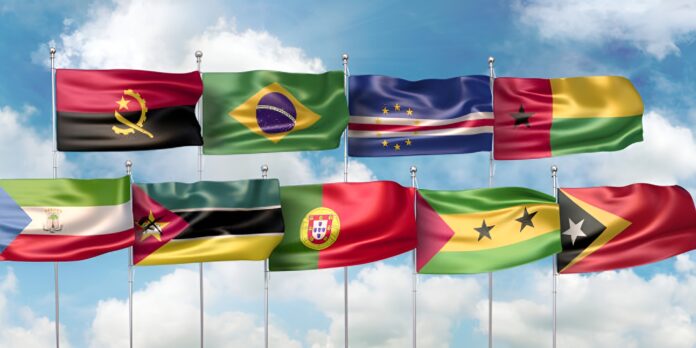
In the global language industry, Portuguese is often defined by its two largest and most commercially dominant variants: Brazilian Portuguese and European Portuguese. However, this surface-level view obscures the vast and intricate details of the Lusophone world, which spans four continents and multiple creole languages, post-colonial dialects, and culturally distinct speech communities that now make it the eighth most-spoken language in the world with over 260 million speakers.    

Where Portuguese Is Spoken and Used

Originating from Vulgar Latin in the Iberian Peninsula, the language evolved through centuries of linguistic influence and transformation, becoming the modern-day Portuguese we see today. Due to historical migration and colonization patterns from Portugal in the early 15th century and onwards, 18 countries across five continents now actively use the language, with 10 maintaining it as an official language. From South America, across Africa, and all the way to Southeast Asia, Portuguese has left a lasting impact on multidisciplinary domains and industries — affecting the ways in which we communicate with one another around the world. 

Some of the most surprising places we see Portuguese actively used in official settings are India, Macau, Cape Verde, and East Timor. For example, India’s Goa, Daman, and Diu regions have a uniform civil code rooted in Portuguese law. The Portuguese Civil Code of 1867 applies by virtue of Section 5(1) of the Goa, Daman, and Diu Administration Act of 1962, stating that all laws before the liberation of these territories by Portuguese colonies will remain in effect, ensuring the continued legal validity of their use of the language in these domains. 

In Macau, Macanese Portuguese remains a co-official language — alongside Cantonese — where it continues to be used within legal, administrative, and educational domains, which is strictly listed under multiple entities such as the UN Treaty Series, Vol. 1498, No. 25805. Additionally, Macanese Patois (Patuá) — a Portuguese creole that has formed with significant influence from over six Asian languages — still plays an important role among older generations and more remote populations within the area as a means of communication. The language is even listed as a critically endangered Portuguese-based creole by UNESCO and is protected under Article 121 of the Basic Law of the Macao Special Administrative Region of the People’s Republic of China, allowing the region to promote and preserve the fragile creole language.

Portuguese and the Language Industry

While India and Macau are just a couple of examples of how Portuguese plays an unexpected role within linguistic landscapes other than those of Brazil and Portugal, the current language industry unfortunately still functions with a structural blind spot towards the Lusophone world. This can be seen through restrictions on language accessibility or service inclusivity for both customers and professional translators alike. 

This limited perspective on the idea of Portuguese translation can have real-world implications: for example, underrepresentation of qualified translators and linguists from regions where Portuguese exists in dynamic contact with local languages, or the distortion of translation quality and authenticity when it needs to resonate with specific regional frameworks. Most importantly, it sidelines the demand for linguistic diversity within the language, which causes cultural omission in crucial industries. To better the industry’s current ecosystem, we must shift from a binary view of Portuguese to a Lusophone-centered approach that values the plurality of dialects and cultural identities that comes with it.