Centific Secures $60M Series A to Scale Global AI Data Operations

0
Venkat Rangapuram: Centific Raises $60M in Serie A Led by Granite Asia

Granite Asia Leads Investment in Enterprise AI

Centific, a U.S.-based AI data platform, has raised $60 million in Series A funding. The round was led by Singapore’s Granite Asia and joined by Stellar Ventures, Jenny Lee, and Venkat Rangapuram. Rather than a lifeline, this investment reflects a strategic ambition to expand globally, especially in Asia. CEO Venkat Rangapuram described the round as “an investment in ambition.” He emphasized that Centific wants to empower enterprises with AI systems that are resilient, localized, and ready for real-world use.

From Data Foundry to Regional Expansion

Centific calls itself an “AI data foundry.” It helps companies train AI systems using tailored datasets. The platform addresses common issues such as bias, hallucinations, and poor generalization. Its clients include Nvidia, Microsoft, and Lenovo. Now, Centific plans to strengthen its footprint in Southeast Asia, with a focus on Singapore and India. In addition, the company will expand its R&D and explore “physical AI”—models designed to work with real-world machinery. Rangapuram noted that many AI models lack grounding in specific scenarios. Without that, they cannot meet enterprise-level expectations. The company aims to fill that gap by offering precise, high-quality datasets that reflect operational realities.

A Regional AI Ecosystem in the Making

Granite Asia emerged from the 2023 split of GGV Capital. The fund sees Centific as part of its long-term vision to build tech infrastructure across Asia. Jenny Lee, a senior managing partner, said the company is uniquely positioned to become a foundational partner in the enterprise AI stack. Granite Asia has also formed investment alliances across the region, including with Indonesia’s sovereign wealth fund and Japan’s Integral. As Asia becomes increasingly central to the future of AI development, Centific’s hybrid approach—combining automation with human oversight—may offer a model for building scalable, multilingual AI systems grounded in real-world use cases.

RWS acquires Papercup’s IP to power next-gen AI dubbing for enterprises

0
RWS acquires Papercup's

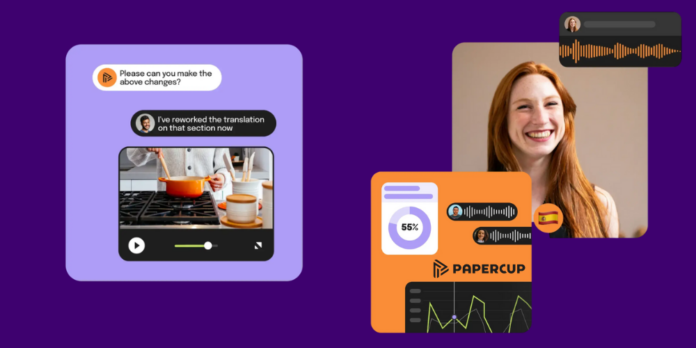
RWS, a content solutions company powered by technology and human expertise, has acquired the intellectual property behind Papercup’s breakthrough AI dubbing technology, known for its unique ability to reproduce a speaker’s tone, pace, and emotion faithfully.

The acquisition is a strategic step in RWS’s wider plan to embed advanced AI across its technology stack, accelerating its ability to support clients with multilingual video, voice, and content localization across multiple formats and channels.

Papercup’s technology combines state-of-the-art voice synthesis, thousands of unique AI voices, and editorial tools for human language specialists to fine-tune the output, offering control and quality output comparable to human dubbing by actors and artists, at a fraction of the cost and turnaround time.

“The acquisition of Papercup’s market-leading technology marks our intention to transform all forms of enterprise content, making it easier for businesses to connect to global audiences,” said Ben Faes, CEO of RWS. “Integrating this hybrid AI capability into our own solutions perfectly aligns with the demand for scale and quality in this exploding multimedia space.”

While AI-only dubbing tools often fall short on critical elements like timing, voice consistency, and speaker identification, RWS’s hybrid approach puts humans in the loop to optimize tone, pacing, and accuracy, enabling video dubbing that’s both scalable and brand-consistent.

With access to RWS’s 1,800 in-house linguists and a global network of over 40,000 language experts, enterprise clients can expect to unlock new value from video content that was once too expensive or complex to localize — from corporate communications and training to marketing and social media-related content. Papercup’s technology will now sit alongside RWS’s existing suite of language technologies, including Language Weaver for neural machine translation and the Trados platform.

About us

RWS is a content solutions company, powered by technology and human expertise. We grow the value of ideas, data, and content by making sure organizations are understood. Everywhere.

Our proprietary technology, 45+ AI patents, and human experts help organizations bring ideas to market faster, build deeper relationships across borders and cultures, and enter new markets with confidence, growing their business and connecting them to a world of opportunities.

It’s why over 80 of the world’s top 100 brands trust RWS to drive innovation, inform decisions, and shape brand experiences.

With 60+ global locations across five continents, our teams work with businesses across almost all industries. Innovating since 1958, RWS is headquartered in the UK and publicly listed on AIM, the London Stock Exchange regulated market (RWS.L).

More information: rws.com

Can LLMs Assess Translation Quality? Yes, and Alconost Built a Tool to Make It Easy

0
LLMs Translation Quality

A new experimental tool puts advanced language models to service for professional translation quality evaluation and improvement – available for free.

Alconost, a leading localization services provider, invites language industry professionals to test Alconost.MT/Evaluate, an experimental web-based tool that enables language professionals to assess translation quality using top-tier LLMs.

The tool emerged from a practical question: while it’s straightforward to ask an LLM to evaluate a single translation segment, the process becomes complex when dealing with entire files, multiple models, and specific assessment criteria, context, glossaries, and guidelines. Evaluate addresses this by providing a streamlined interface for batch translation evaluation.

Key Features and Capabilities

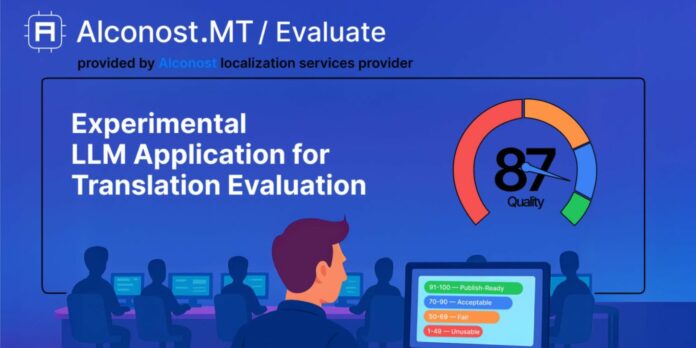
Quality Assessment: The platform evaluates translation segments on a comprehensive scale from 1-100, analyzing accuracy, fluency, terminology consistency, and stylistic appropriateness. The system weights different error types by severity and provides detailed scores across four quality levels: Publish-Ready (91-100), Acceptable (70-90), Fair (50-69), and Unusable (1-49).

Translation Correction: Beyond assessment, the tool provides corrected versions of problematic translations, along with detailed explanations of identified errors, making it both an evaluation and an active translation improvement solution.

File Format Support: Users can upload XLIFF 1.2/2.0 files or CSV files with source and target columns, or input segments manually through a web interface.

Supported LLMs: Currently supports OpenAI GPT-4 and Anthropic Claude 3, with additional models to be added soon.

Customizable Context: Beyond the core evaluation prompt, users can add custom guidelines, style guides, or glossary fragments to tailor assessments to specific projects or clients.

Professional Reporting: Results are available as downloadable PDF reports, suitable for sharing with linguists or vendors. Evaluated segments with corrections can also be exported for further use. The standardized scoring system also enables organizations to benchmark and compare translation quality across different freelance translators or agencies during vendor selection processes.

Availability and Testing

Alconost.MT/Evaluate is currently available as a free experimental tool with a limit of 100 segments per evaluation. The platform is accessible at alconost.mt and requires no registration for basic use.

“We are language engineers first and foremost, constantly exploring how AI can enhance translation workflows while keeping humans in the loop,” said Alexander Murauski, CEO of Alconost. “This tool came from our own need – while it’s simple to ask an LLM to evaluate one segment, scaling that across hundreds of segments with different models and specific criteria becomes complex and requires proper tooling. We’ve built many experimental AI tools like this internally, and we wanted to make this one available to everyone.”

The tool represents Alconost’s continued exploration of AI applications in localization workflows, complementing rather than replacing the company’s established human translation and review services.

About Alconost

Founded in 2004, Alconost is a leading provider of localization services, offering professional translation, localization testing, and language quality assurance services. The company serves clients across gaming, software, mobile apps, and digital content industries worldwide, with offices in multiple countries and a network of over 3,000 linguists.

For more information about Alconost.MT/Evaluate or Alconost’s localization services, visit https://alconost.com.


UK Screen Sector Embraces AI for Subtitling, Dubbing, and Dialogue

0
UK Screen Sector

BFI report outlines rising use of generative tools across film, TV, and gaming

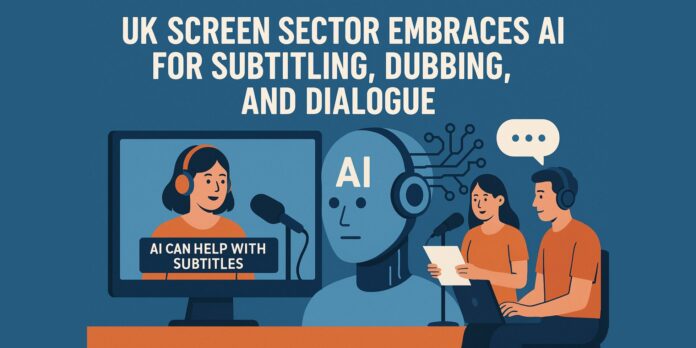
The UK’s film, television, and gaming industries are rapidly adopting generative AI to automate and enhance language-related tasks, according to a new report published this month by the British Film Institute (BFI) and the CoSTAR Foresight Lab.

Based on surveys, expert interviews, and public consultations, the report identifies a surge in applications ranging from subtitling and dubbing to dialogue generation, accent refinement, and accessibility enhancements.

Speech-to-text and AI-enhanced subtitling

At the BFI National Archive, teams are experimenting with automatic transcription of legacy media using speech-to-text models such as Whisper, WhisperX, and Nvidia Parakeet. These transcriptions are converted into subtitle files (WebVTT) and linked to downstream AI services for content tagging and semantic metadata generation.

Entity recognition tools like spaCy, EntityFishing, and ReFinED are also being used to link named entities in subtitles to Wikipedia and Wikidata entries — a move designed to build smarter search and discovery tools for the UK’s national television collection.

Dubbing with lip-sync accuracy

AI-driven dubbing — or “vubbing” — is another growing use case. London-based startup Flawless uses 3D facial tracking and generative models to synchronize actors’ mouth movements with dubbed dialogue in multiple languages. This enables more realistic multilingual adaptations without requiring full reshoots.

Tools like Respeecher are being employed to refine accents in scripted performances, allowing for more authentic voice work across regions and languages.

Games and interactive storytelling

Beyond traditional media, AI is being used to support unscripted, player-driven dialogue in interactive content. Video games such as Dead Meat and 1001 Nights incorporate large language models (LLMs) to allow players to shape conversations and storylines dynamically — a format gaining traction across UK studios.

The report notes rising interest in using generative AI to script branching narratives and create more immersive multilingual game environments.

Accessibility and classification

The BFI is also testing vision-language models such as Google Gemini 1.5 Pro, Qwen2-VL, and LLaVA-Video to automatically generate video descriptions for accessibility. The long-term goal is to connect transcription, tagging, and visual description tools into a single AI pipeline running on in-house hardware.

Separately, the British Board of Film Classification is exploring generative AI to assist in flagging sensitive content — including profanity, sexual references, and violence — to support age rating and compliance efforts.

Cultural and workforce implications

While the report acknowledges efficiency gains, it raises concerns over cultural and labor impacts. Many generative models are trained predominantly on American English, prompting fears that British linguistic identity could be diluted. Contributors urge greater investment in UK-specific data and direct creative oversight in model development.

The shift toward automation is also reshaping the workforce. Entry-level roles in writing and translation are among those most affected, while demand grows for professionals with expertise in AI, prompt design, and machine learning.

Lionbridge Launches the Content Remix App to Enhance the Speed, Ease, and Cost-Effectiveness of Content Creation

0
Lionbridge Content Remix App

The AI-powered solution enables companies to generate personalized, original content in 70+ languages for multiple channels simultaneously

Lionbridge, a global leader in content creation and language services, today introduced the Lionbridge Content Remix App. The Content Remix App leverages AI to scale the creation of original, multilingual content for all marketing and distribution channels, helping enterprises efficiently and cost-effectively reach global audiences.

The AI-powered solution centralizes content requirements and ingests source data, such as product specifications, content briefs, or other marketing materials. Then, task-specific generative prompts create new derivative, personalized content in the desired languages. Output may include social media posts, market-ready e-commerce assets, customer-facing emails, website content assets, or other required materials. An array of editing capabilities and an optional human-in-the-loop review by Lionbridge experts ensure the output is accurate, preserves brand voice, and will resonate with the intended audience.

“The Lionbridge Content Remix App accelerates content creation, producing high-quality content for all global markets at unprecedented speed and scale,” said Simone Lamont, Vice President of Global Solutions at Lionbridge. “By incorporating personalized content requirements and leveraging our subject and prompt engineering expertise, our customers can now scale their content efforts without sacrificing quality or localized accuracy, an essential advantage in the global market.”

Watch Lionbridge’s on-demand webinar, Break Through Multilingual Content Barriers With AI Innovation, to hear first-hand perspectives on how AI and the Content Remix App help marketers create content for global, multilingual audiences at scale.

“Leveraging Generative AI across our business offerings reflects our commitment to embrace pioneering technology to produce valuable outcomes for our customers,” said John Fennelly, Chief Executive Officer of Lionbridge. “We are building toward a future where content creation is not only faster and more efficient, but also highly personalized and accessible in any language.”

For more information about Lionbridge’s Content Remix App, click here.

About Lionbridge

Lionbridge partners with customers to break barriers and build bridges all over the world. For over 25 years, we have helped companies connect with their global customers and employees by delivering translation and localization solutions in 350+ languages. Through our world-class platform, we orchestrate a network of passionate experts across the globe who partner with brands to create culturally rich experiences. Relentless in our love of linguistics, we use the best of human and machine intelligence to forge connections with our customers’ clients. Based in Waltham, Massachusetts, Lionbridge maintains solution centers in 24 countries. Learn more at www.lionbridge.com.

Lingoport Adds Powerful Context Capabilities for UI String Translation in Localyzer

0
Localyzer context enhancements

Boulder, CO – June 25, 2025 – Lingoport has released new context-related enhancements to its software localization tool, Localyzer, simplifying how teams provide visual context for UI string translations. These improvements are designed to reduce translation errors, speed up workflows, and improve translator clarity—without adding work for developers.

The Problem with UI Translation

UI strings are often short, ambiguous, and disconnected from the design or user experience they support. Translators working in TMS environments typically only see raw resource files—without knowing where or how strings appear in the interface.

This disconnect leads to:

  • Incorrect translations due to missing context
  • Extra back-and-forth with developers
  • Delays in release cycles

Solving Context at Scale

Lingoport’s updated context automation features make it easy to capture and deliver visual references for each UI string—no manual screenshots or dev time required.

What’s New

  • Figma Context Capture for Design
    With Figma plugin v14+, strings can be directly linked to design components—automatically mapping text to visuals from the design stage. See how it works. 
  • InContext Chrome Extension for Web
    Capture UI context during actual web app usage and connect screenshots to specific strings in Localyzer—ideal for dynamic, interactive content. See how it works.
  • Manual Screenshot Upload
    Upload screenshots directly into String Manager and manually associate them with the appropriate strings. A flexible option for QA and content teams. See how it works.
  • Trados Studio + TMS Integration
    Captured context is fully integrated with Trados Enterprise, Team, Accelerate, and Studio, allowing translators to see the UI directly in Trados Studio or their TMSs online translation environment as they work. Here is a detailed video on how its works within Trados environment.

Localyzer also supports connections with other major TMS platforms, including XTM, Phrase, and Smartling.

Designed for Real-World Workflows

These updates ensure that translators can work with reliable context—whether they’re localizing from a design tool, a running application, or a QA environment. The result: faster turnarounds, higher translation quality, and fewer late-stage fixes.

Learn More

Explore how to enhance your software localization workflow:
https://lingoport.com

Smartling Wins “Machine Translation Innovation Award” in 8th Annual AI Breakthrough Awards Program

0
Smartling wins the Machine Translation Innovation Award 2025

Smartling, the LanguageAITM translation company, today announced that it has been selected as the winner of the “Machine Translation Innovation Award” in the 8th annual AI Breakthrough Awards program. Smartling’s AI-powered translation solutions help companies translate 8x more content for the same budget, by ensuring on-brand, high-quality translations at a fraction of the traditional cost and time.

NEW YORK, June 25, 2025 — Smartling, Inc, the LanguageAITM translation company, today announced that it has been selected as winner of the “Machine Translation Innovation Award” in the 8th annual AI Breakthrough Awards program conducted by AI Breakthrough, a leading market intelligence organization that recognizes the top companies, technologies, and products in the global Artificial Intelligence (AI) market today.

Smartling’s AI-powered translation solutions help companies translate 8x more content for the same budget, by ensuring on-brand, high-quality translations at a fraction of the traditional cost and time. Smartling provides access to the most powerful LLMs, all major MT engines, and AI tools in one platform. Businesses can translate into over 450 languages, create custom prompts, and more, backed by strong security and data protection.

The AI Hub leverages pre-processing algorithms to optimize content for MT, rather than relying on a standalone engine. Content can also be sent to translation memory to avoid sending existing translations through MT. Customers select their desired MT engine or utilize Smartling’s AutoSelect tool that evaluates content and routes it to the best-suited engine based on type, target languages, and linguistic and non-linguistic content. Engines include GPT, Google Translate, and more. Post-processing algorithms then improve final outputs.

Additionally, the launch of AI Translation (AIT) enables automated, near-instant translations at the same quality as Machine Translation Post-Editing (MTPE), eliminating human translators to edit and improve machine-generated translations. With no quality degradation, AIT is a hybrid of MT and AI that incorporates LLMs to provide MTPE-quality outputs.

“Our mission is to help our customers grow faster globally by making it fast and easy to create multilingual experiences their customers will love,” said Bryan Murphy, CEO of Smartling. “This award recognizes the impact our team is making for global businesses.”

The AI Breakthrough Awards shine a spotlight on the boldest innovators and most impactful technologies leading the charge in AI across a comprehensive set of categories, including Generative AI, Computer Vision, AIOps, Agentic AI, Robotics, Natural Language Processing, industry-specific AI applications, and many more. This year’s program attracted more than 5,000 nominations from over 20 different countries throughout the world, underscoring the explosive growth and global importance of AI as a defining technology of the 21st century.

“Smartling’s fully integrated AI-powered platform provides high-quality translations faster, more reliably, and at a fraction of the cost,” said Steve Johansson, managing director, AI Breakthrough. “Smartling’s AI-enhanced MT solutions enable any business to reach customers in their native languages, with cultural context, across any channel. The AI Hub and the new AIT offering let companies translate more with their existing budgets, ensuring they stay ahead in global markets with faster, cost-effective localization.”

About Smartling

Smartling’s LanguageAI™ platform is revolutionizing digital content translation and localization. Recognized as the top translation management system by CSA Research and G2 users, Smartling uses AI and machine learning to eliminate manual tasks, integrate with existing techstacks, and deliver translation quality at scale— all at a fraction of the cost and turnaround time of traditional translation.

Smartling is the platform of choice for hundreds of B2B and B2C brands, including IHG Hotels & Resorts, Shopify, Pinterest, State Farm, British Airways, and Lyft. Smartling is a global team headquartered in New York City with an office in Dublin.

About AI Breakthrough

Part of Tech Breakthrough, a leading market intelligence and recognition platform for global technology innovation and leadership, the AI Breakthrough Awards program is devoted to honoring excellence in Artificial Intelligence technologies, services, companies, and products. The AI Breakthrough Awards provide public recognition for the achievements of AI companies and products in categories including Generative AI, Machine Learning, AI Platforms, Robotics, Business Intelligence, AI Hardware, Computer Vision, and more. For more information, visit AIBreakthroughAwards.com.

Tech Breakthrough LLC does not endorse any vendor, product, or service depicted in our recognition programs, and does not advise technology users to select only those vendors with award designations. Tech Breakthrough LLC recognition consists of the opinions of the Tech Breakthrough LLC organization and should not be construed as statements of fact. Tech Breakthrough LLC disclaims all warranties, expressed or implied, for this recognition program, including any warranties of merchantability or fitness for a particular purpose.

Media Contact

Sarah Lehman, Smartling, 1 6504644379, sarah@sixeastern.com, https://www.smartling.com/

Belgium’s Court Interpreters Join Nationwide Justice Protests

0
Belgium’s Court Interpreters

CBTI denounces payment delays, low fees, and “unsustainable” working conditions

Belgium’s judicial translators and interpreters are joining growing protests across the country’s justice sector, calling for urgent reforms to pay structures, working conditions, and infrastructure. The Belgian Chamber of Translators and Interpreters (CBTI/BKVT) issued a statement on June 17 supporting ongoing demands from magistrates and public prosecutors.

The protest highlights how deep-rooted systemic issues—long payment delays, outdated fee schedules, and worsening working environments—are putting pressure on legal professionals across all levels of the justice system.

Rates still lag behind the private sector

CBTI’s statement emphasized that the country’s official translation and interpreting rates, updated in January 2025, remain insufficient to cover the demands of the job. Interpreters are often called upon during nights, weekends, and urgent hearings—yet their fees do not reflect the intensity or irregularity of the work.

“Sworn translators and interpreters are demanding not only reliable and prompt payments but also a significant increase in their fee schedules,” the chamber noted. Despite past promises from the Ministry of Justice, many court linguists are still waiting to be paid for assignments dating back several months.

Mounting frustration and walkouts

This is not the first time judicial linguists have taken action. In October 2024, a spontaneous interpreter walkout caused delays during a high-profile criminal trial. More recently, protests in Ghent prompted government officials to pledge back payments, but little has changed systemically.

CBTI argues that the situation is deteriorating, not improving. The ongoing lack of investment is driving professionals away from the sector, leading to interpreter shortages and, in some cases, postponed hearings or mistrials.

Implications for judicial processes

The issue goes beyond wages. Court interpreters warn that the quality of justice itself is being undermined. A lack of qualified linguistic support has led to procedural errors, delayed verdicts, and even acquittals due to the absence of proper interpretation.

Public prosecutors have echoed these concerns in an open letter, criticizing severe staff shortages and dangerous conditions in judicial buildings. In Brussels, the Justice Palace has been cited as emblematic of the problem, plagued by mold, structural decay, and vermin.

“How will we continue to find enough police officers, translators, interpreters, legal experts, or recovery services?” the letter asked.

A multilingual system under strain

Belgium’s courts operate in Dutch, French, and German, and routinely require interpretation into dozens of other languages. Despite this, interpreters say they feel undervalued and excluded from policy discussions.

CBTI is calling on the government to engage directly with language professionals to develop fairer, more sustainable practices.

Until then, Belgium’s multilingual justice system remains on uncertain footing—undermined by the very conditions meant to uphold it.

ELIA Announces Its New 2025 Board of Directors

0
ELIA

Brussels, June 25, 2025The European Language Industry Association (ELIA) has officially announced the results of its 2025 Board of Directors election. Following a weekend of voting by full members, the new board is poised to lead the organization into its next chapter, with a renewed focus on collaboration, innovation, and industry advocacy.

Voting closed on June 23, and today, ELIA revealed the four elected directors who will guide the association’s activities for the coming term.

The newly elected board members are: Maii Abdel-Wahab, Tony D’Angelo, Aleksandrina Karabasheva, and Nenad Andricsek (re-elected).

Together, they bring decades of combined expertise in localization, business development, operations, and industry leadership. Their vision is centered on strengthening ELIA’s value to members, fostering inclusive growth, and addressing the evolving needs of the language services community.

The elected Directors will officially take their seats on the ELIA Board on 21 September 2025, during ELIAND 2025 in Budapest, joining continuing Board Members Anu Carnegie-Brown, Alina Birsan and Milena Spelta Parenti.

The election process began with a call for votes on June 21, shared via email with all full members of ELIA. As a member-driven association, ELIA emphasizes transparent governance and active participation from its community of language service providers across Europe and beyond.

ELIA also extends its thanks to Nuria Castro Gay, Alp Dilgen and Daniel Sebesta for stepping up and running for the Board. Their dedication and willingness to contribute reflect the spirit of the community and help shape the future of the association.

The organization also expresses its appreciation to outgoing Board Members Dorothy Scerri, Indrė Lelevičienė and Diego Cresceri for their years of service and commitment to ELIA.


About ELIA

Founded in 2005 and headquartered in Brussels, ELIA (European Language Industry Association) is the premier European non-profit organization for companies in the language services industry. Through events, training, and collaborative initiatives, ELIA empowers its members to grow, connect, and succeed.