XTM Names Rob Finney Chief Marketing Officer to Scale Adoption of Its Market-Leading AI Globalization Platform

0
XTM Chief Marketing Officer Rob Finney Joins to Drive Growth

XTM International, the leading provider of enterprise-grade translation management technology, today announced the appointment of Rob Finney as Chief Marketing Officer. Rob joins XTM at a pivotal time as the company continues to redefine the future of localization through ground-breaking innovations in artificial intelligence.

Rob brings almost 20 years of experience in SaaS, with a proven track record of driving rapid customer adoption and scaling global growth. At XTM, he will lead the global marketing strategy, with a focus on accelerating growth and ensuring more organizations around the world discover the measurable business value XTM delivers by helping them bring products to market faster, reduce localization costs, and increase global revenue potential.

“XTM is innovating at a pace the industry has never seen,” said Ian Evans, CEO of XTM International. “With the launch of our Agentic AI suite, we are fundamentally transforming how organizations manage and scale localization. Rob’s expertise will help our current and future customers understand and adopt these innovations, enabling them to remove bottlenecks, drive efficiency, and create real commercial impact.”

Localization is often a bottleneck that slows companies down, delays global launches, and increases costs, ultimately impacting revenue. XTM’s recent release of its Agentic AI suite represents a major leap forward in solving this challenge. Combining context-aware automation, intelligent assistance, and workflow orchestration, Agentic AI delivers productivity and quality at scale, helping organizations get to market faster, at lower cost, and with greater consistency.

“With Rob’s appointment, XTM reinforces its commitment to helping customers unlock growth by transforming localization from a blocker into a strategic enabler,” Evans added.

“XTM has always led the industry through customer-first innovation,” said Rob Finney, CMO of XTM International. “I’m excited to join a company that is not only shaping the future of localization, but also delivering real, measurable value to organizations. Our technology doesn’t just help teams work smarter; it helps businesses move faster, reduce overhead, and reach global customers more effectively. That’s the kind of impact every organization needs right now.”

This appointment underscores XTM’s broader mission: to help enterprises globalize their operations with speed, consistency, and quality, using the most advanced technology available.

For all media enquiries, contact press@xtm.cloud

Women in Localization: 2025 Mid-Year State of the Union

0
Women in Localization: 2025 Mid-Year Update

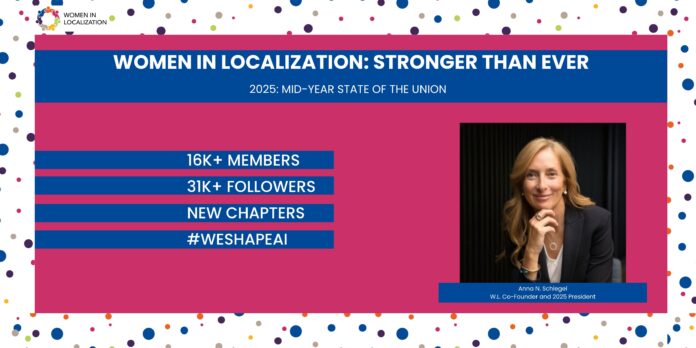
As we reach the halfway point of 2025, it remains a challenging year for women around the world. And yet, our mission is constant, urgent, and unwavering. Our Women in Localization community is not only growing: it’s accelerating, evolving, and deepening its global impact. I think that the harder it gets for females around the world, the more our community is needed. And the bigger our community, the stronger we grow, and that is where I see a ton of hope!

Why? Because we continue to be incredibly present for our members, we advocate for them, and amid the many global geopolitical movements we’re currently witnessing or experiencing first-hand, here we are, growing stronger together.

We have more than 15,813 members worldwide, supported by 30 active chapters and over 300 volunteers. We have over 31,682 LinkedIn followers, and engagement with our Instagram account has more than doubled this year. Likewise, we are seeing a 30% YoY growth. This momentum is only growing stronger, and we love it. For nearly two decades, our goal has always been to steadily and methodically reach as many corners of the world where we can empower women to achieve their professional and personal goals.

Thanks to this relentless, lengthened focus, Women in Localization has become the strongest globalization platform in the industry. We are recognized globally as the go-to organization for innovation, mentoring, networking, upskilling, and reskilling programs in the space of globalization; in a safe community—one that is needed to feel at ease, to be able to innovate, learn, mentor, or be mentored. We want you to grow and shine, and we work hard to offer that space.

Mental Health & Wellness: For a More Sustainable Community

We recently introduced our Mental Health & Wellness initiative to support the emotional well-being of our global community. It’s designed to reduce stigma, build awareness, and create a safe space across our chapters for real, deep conversations about our lives and careers.

Voices like Lamiaa Laurene Daif, a worldwide growth leader at Apple and award-winning keynote speaker, and Lisa Dion, international teacher and creator of Synergetic Play Therapy, have shared their stories on resilience and mental health.

As of September, we will offer monthly themes around mental health and wellness, as well as opportunities for members to ask for help or check in on others. We recognize that wellness and leadership go hand in hand. And we’re building a culture that reflects that. If you are healthy, you grow faster!

Chapters: Community Expansion & Inclusion in Action

September will mark the launch of our Eastern Africa Chapter, our first on the African continent, aligning with Translator Appreciation Month. It’s a powerful moment for Women in Localization and a major step forward in our mission of community expansion and inclusion. A new continent to serve!

Additional chapters are in development, including South Africa, Western Africa, Western Canada, Vietnam, and Thailand. We’re also building more student-led chapters through targeted university outreach led by Sarah Farhan. The success of the Middlebury Institute of International Studies (MIIS) chapter launch has inspired other universities, such as Kent State in Ohio, to take notice. Starting in the United States, we plan a global outreach shortly after.

This global growth is matched by global visibility. Our Global Growth & Development (GG&D) Ambassador, Dana Szabados, recently represented W.L. at events in Bangkok and is engaging with new audiences, including an invitation to participate in the Most Traveled People (MTP) Summit 2025 in Ethiopia. MTP brings those with a passion for travel, learning, and understanding other cultures together to share their experiences so others can learn. Again, we want to spread the word about Women in Localization to everyone around the world!

WeShape AI, by Women in Localization: Powering Progress and Women’s Contributions at the Intersection of Tech and Linguistics

At Women in Localization, we have always seen where technology is heading, and with thousands of members and followers from all over the globe, we have a front-row seat. We see innovation firsthand—we have seen it for years, constantly learning. But we are also in it: we build it and support it all day long, so we are doubling down here. We will formalize our roles now and be part of the solution to close AI biases. We will share what we are building, and we will measure if the number of women creating technology is changing with this new opportunity.

We are building an initiative to position women as leaders in tech creation called WeShape AI, by W.L. This initiative will focus on:

  • Showcasing technology made, led, and driven by women

  • Connecting W.L. members with innovation opportunities

  • Rewarding intelligent and globally-aware solutions

With 16K members worldwide and 31K followers, we’re uniquely positioned to lead at the crossroads of AI, language, and global design. WeShape AI, by W.L. supports our three pillars to a T: it creates community, empowers women, and advances our profession.

Advocacy: Campaigns That Create Change

W.L.’s new Advocacy Program brings our community into the conversations that are shaping the future of technology, localization, and the workplace. By connecting thought leadership with real-world action, W.L. is helping our members influence policy, shift industry standards, and create meaningful change.

W.L.’s Advocacy Program will focus on:

  • Building partnerships with tech companies, NGOs, and academic institutions to support women’s empowerment and leadership opportunities

  • Sharing insights and research in high-visibility forums to influence industry norms and policy decisions

  • Shaping industry norms by embedding gender equity best practices into localization standards and DEI policies

  • Mobilizing community action by empowering members to lead campaigns and engage decision-makers

By bringing our expertise to new influential audiences and aligning with them, we are making space for a more inclusive future.

Looking Ahead: Intentional and Results Are My Two Favorite Keywords

As we move into the second half of the year, our direction is clear.

2025 continues our intentional growth and impact. Nothing we do—nothing—is not by design. We are incredibly focused and intentional. With enhanced metrics and reporting, new wellness initiatives, resilience, and expansion across Asia and Africa, we are well-positioned to broaden our global reach and empower more and more women to thrive in their careers while supporting each other.

The launch of WeShape AI, by W.L., positions women to lead at the forefront of tech and innovation, while our Advocacy program is set to elevate our organization into an even more influential voice, driving systemic change within and beyond the localization industry.

Our goal for the last 17 years has not changed. We keep growing across continents, one region at a time, building communities with intention so we can help women. That is all we want to do—we want to help women grow and feel supported. We think big, and we will not stop, because we still have so many women to help, support, and see shine.

About Women in Localization

Women in Localization (W.L.) was founded in 2008 by Silvia Avary-Silveira, Eva Klaudinyova, and Anna N. Schlegel. W.L. is the leading professional organization for women in the localization industry, with over 15,813 members registered globally and more than 31,682 followers on LinkedIn around the globe.

W.L.’s vision is to become the leading voice in technology and innovation within the localization industry, recognized as the premier organization for mentoring, upskilling, and reskilling programs that empower women to overcome barriers and advance their careers. Its mission is to foster a global community for the advancement of women and the localization industry through education. It aims to provide an open, collaborative forum where women can share expertise and experience and help each other move forward in their careers as agents of their own future. Since starting in the San Francisco Bay Area, W.L. has expanded its membership to include women across the globe, encouraging members to meet in other local geographies.

To learn more, visit www.womeninlocalization.com


Basque Language Finds a Digital Ally in Local AI Translation Tools

0
Basque language

In Bilbao, Spain, a regional push for language preservation is meeting the latest advancements in artificial intelligence. At the heart of this effort is Vicomtech, a nonprofit research center focused on applied AI for speech and language technology. With support from both private entities and multiple levels of government, the organization is working to develop translation tools tailored to the unique needs of the Basque language.

One of Vicomtech’s key contributions is Itzuli, an automated translation tool that facilitates translations between Basque, Spanish, English, and French. Integrated into the Basque government’s website, Itzuli also supports formal legal translation and is expanding to include the Bizkaian dialect. Although Itzuli has less visibility than global platforms like Google Translate, it is used for approximately 300,000 translations daily, underscoring its role as a local solution rooted in linguistic nuance.

Adapting AI to Local Needs

Public broadcaster EITB is advancing AI-based translation technologies with a context-specific approach. The network combines human transcription, automatic subtitling, and hybrid systems depending on the content’s sensitivity. News programming, for instance, receives closer supervision, while other platforms, such as the audio service Guau and the news portal Orain, incorporate automatic translation into multiple languages using Itzuli.

The organization emphasizes that quality and accuracy are particularly critical in minority languages. Automated transcription may be suitable for general or entertainment content, but sensitive or official programming often requires human oversight to avoid linguistic errors.

A Corpus Built on Collaboration

Supporting these efforts is Euskorpora, a nonprofit consortium curating the Basque Language Digital Corpus. The project includes a wide range of Basque audio, text, and video materials, collected with full legal permissions. Designed for both academic and commercial use, the corpus represents multiple dialects and speech styles.

Instead of maximizing quantity, Euskorpora focuses on data quality, addressing challenges such as noisy audio and limited availability of technical language. The project also explores the cautious use of synthetic data to fill content gaps in fields like engineering and law.

This collaborative and careful development model highlights how regional initiatives can support digital inclusion while strengthening local language infrastructure.

The Week in Review: Highlights from the Language Industry, June 23–27

0
The Week in Review: Language Industry News June 23–27

This week, the language industry saw significant advances across AI, multilingual policy, and localization workflows. From newly funded platforms to regulatory shifts and expanded tools for creative industries, the field continues to evolve in both scale and scope. Here’s a summary of the most notable developments.

Policy and Legal Developments

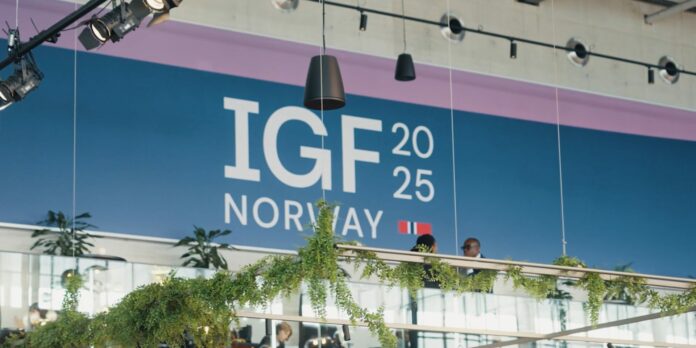
At the Internet Governance Forum (IGF) 2025, UNESCO and ICANN emphasized multilingualism as a fundamental right. The session highlighted Universal Acceptance and the need for digital infrastructures to reflect global linguistic diversity, especially for indigenous and underrepresented communities.

In Belgium, court interpreters joined a nationwide protest over pay delays and poor working conditions. The Belgian Chamber of Translators and Interpreters (CBTI) urged immediate reform to ensure fair compensation and recognition for linguistic professionals in the justice system.

AI Tools and Platform Updates

Centific secured $60 million in Series A funding to scale its AI data operations across Asia, bolstering its multilingual capabilities with backing from Granite Asia and Jenny Lee. Meanwhile, RWS announced the acquisition of Papercup’s intellectual property to enhance AI-powered dubbing and hybrid localization workflows.

Several tools also expanded functionality:

  • Alconost launched a web-based platform for large-scale translation quality evaluation using LLMs.

  • DeepL added support for five new languages, including Vietnamese, Hebrew, and Thai.

  • KUDO released a 2.0 version of its Microsoft Teams integration, offering enterprise-grade AI speech translation.

  • MachineTranslation.com debuted a secure mode to protect sensitive translation tasks.

Recognition and Regional Growth

Smartling won the Machine Translation Innovation Award at the 2025 AI Breakthrough Awards for its AI-powered translation platform. ELIA announced its new board of directors, with the incoming leadership set to take office in September.

In the UK, the British Film Institute (BFI) released a report showcasing how the screen sector is adopting AI tools for subtitling, dubbing, and interactive dialogue. These changes reflect broader cultural and operational shifts in multilingual media production.

Additional Highlights from the Week

Lionbridge introduced the Content Remix App to streamline multilingual content creation at scale. Lingoport updated Localyzer with new UI context features, while Crystal Hues launched full-spectrum AI data and linguistic manpower services. The Multilingual Fashion Dictionary by Karolina Petkuvienė was released with over 3,000 terms in four languages, and a new Poetry in Translation Prize was announced to support global literary collaboration.

Other updates included Boostlingo’s 2025 healthcare interpreting report, BeLazy and iLangL’s integration for CMS-to-BMS localization, and DeepL’s reported inaccessibility in Russia and Belarus. Perspectives from the week also explored Lusophone translation, multilingual diplomacy, and challenges in PM-vendor collaboration.

As language technologies grow more sophisticated and policies shift toward broader inclusion, the multilingual communication landscape continues to deepen in complexity and impact. For more updates, visit our News section.

UNESCO and ICANN Advocate for Multilingual, Inclusive Internet Governance at IGF 2025

0
IGF 2025 - Multilingual internet governance

Indigenous participation, practical tools, and Universal Acceptance take center stage in Lillestrøm

Language as a Foundation for Inclusion

At the 2025 Internet Governance Forum (IGF) in Lillestrøm, Norway, global experts came together to examine how internet governance can better reflect linguistic and cultural diversity. In particular, a session reviewing the WSIS+20 process highlighted long-standing gaps in participation, especially among African and indigenous communities.

Moderated by Anne Rachel Inne of Niger, the panel emphasized that meaningful inclusion must go beyond visibility. Instead, it requires long-term investment, structural reform, and platforms that adapt to the realities of local communities. Without these, internet governance will continue to exclude the very groups it aims to serve.

UNESCO’s Guilherme Canela de Souza stressed that multilingualism is not merely a desirable feature—it is a digital right. Similarly, ICANN’s Theresa Swinehart introduced the Universal Acceptance initiative as a practical path forward. This initiative ensures that domain names and email addresses function correctly in all scripts and languages, helping close fundamental gaps in digital infrastructure.

Global Advocacy, Local Impact

Throughout the session, panelists shared real-world examples of how language inclusion can create tangible change. In Bahrain, university-led hackathons bridged technical expertise with the needs of local communities. Meanwhile, in Latvia, Valts Ernstreits described how international collaboration helped raise the profile of the Livonian language, leading to positive shifts in national policy.

Despite such progress, many barriers remain. Bureaucratic processes often prevent indigenous communities from engaging in digital policymaking. Moreover, a disconnect persists between technical experts and policy actors. To address these issues, panelists proposed mentorship initiatives, community-based infrastructure, and tools that align with everyday communication practices, such as WhatsApp groups.

What Comes Next for a Multilingual Internet

Looking ahead, speakers identified two major opportunities to advance inclusion: UNESCO’s multilingualism roadmap and ICANN’s upcoming domain name support program. Both were framed as essential for building a digital future that is truly representative.

The closing remarks underscored a collective recognition that language equity is essential for a truly global internet. Achieving equitable internet governance requires more than global ambition. It demands that all voices—across languages, geographies, and technical backgrounds—are not only heard but actively empowered.

Crystal Hues Limited Launches Full-Spectrum AI Data Services and Linguistic Manpower Solutions

0
Crystal Hues offers AI data services

Crystal Hues Limited, a global leader in multilingual communication and localization services, announces its expansion into the domain of AI Data Services and Linguistic Manpower Supply 

This strategic move marks a significant milestone in the company’s evolution, aligning its core linguistic capabilities with the rapidly advancing landscape of AI, machine learning, and large language models (LLMs). 

As organizations across industries accelerate their adoption of AI, the need for high-quality, domain-relevant, and multilingual datasets has never been greater. Crystal Hues’ newly launched suite of AI data services is designed to meet this demand by offering scalable, accurate, and ethically managed solutions for training, testing, and improving intelligent systems. 

The comprehensive service suite includes the following: 

  1. Data Collection & Sourcing 
  2. Data Annotation & Labelling 
  3. Data Cleaning & Pre-processing 
  4. Text Translation & Localization 
  5. Data Augmentation 
  6. Semantic Annotation 
  7. Quality Assurance & Evaluation 
  8. Customized Linguistic Resources 
  9. Sentiment and Emotion Analysis 
  10. Domain Specific Expertise 
  11. Data Security & Privacy Support 
  12. Testing & Feedback for Model Iterations 

In addition to these services, Crystal Hues now offers linguistic manpower supply—providing expert linguists, annotators, and domain specialists to support enterprise-scale AI projects on-site or remotely. These resources are vetted for both language and domain proficiency, ensuring seamless integration into client workflows. 

By combining deep linguistic expertise with robust data processes, the company enables organizations to build intelligent systems that are globally adaptable, locally relevant, and ethically responsible. 

Here’s what the company director and VP, Anirud Mukola, had to say:

“The world is rapidly progressing towards the usage of AI/ML technologies to streamline processes and various execution functions. This endeavor of infusing AI technologies into their business is becoming the goal of every organization. The effectiveness and accuracy of any AI/ML technology depends on how well it is trained, and the localization industry seems to have become the convergence point for most AI/ML training endeavors.”

Since Crystal Hues Limited in its 36 years of existence, already built up a vast linguistic talent pool, its ability to solve linguistic training requirements like data sourcing, cleaning, ASR, NLP training becomes a perfect match for the market demands.

The need for a specialized department and workforce becomes imperative to cater to a market demand as big as the data services. Therefore, we have invested in a team of specialized technological personnel who, in collaboration with the localization expertise, help the AI/ML based companies in training their models from a multilingual standpoint.” 

About Crystal Hues:  

Crystal Hues Limited provides comprehensive communication life-cycle services through its five specialized verticals: CHL Localization, CHL Worldwide, CHL Digital, CHL SofTech, and CHLEAR. With ISO 17100, ISO 18587, ISO 9001, and ISO 27001 certifications, Crystal Hues serves over 5,000 clients globally, including multinational companies, small and medium enterprises, and government establishments. 

New Multilingual Fashion Dictionary Published in Four Languages

0
Fashion Dictionary

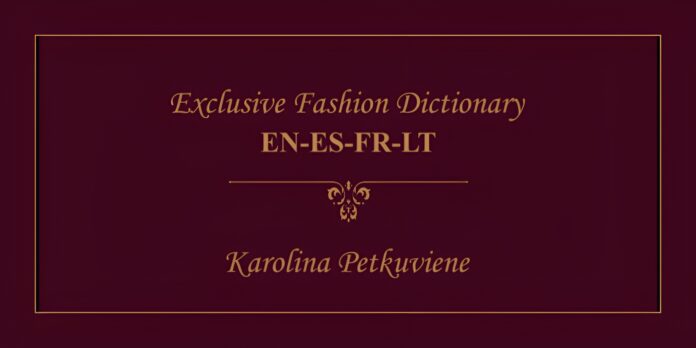
Fashion translator Karolina Petkuvienė has released a first-of-its-kind reference tool for multilingual communication in the fashion industry: the Exclusive Fashion Dictionary EN–ES–FR–LT. The 479-page dictionary includes more than 3,000 fashion-related terms — from garments and sewing techniques to materials and accessories — fully defined in English, Spanish, French, and Lithuanian.

Unlike most multilingual glossaries, which provide definitions in one language and direct translations into others, this dictionary offers original explanations for each term in all four languages. It was created to help professionals across fashion, translation, design, and education accurately interpret and apply terminology in a global context.

“This dictionary was born out of necessity,” said Petkuvienė. “As a translator working in fashion, I repeatedly encountered specific terms without reliable multilingual sources. What started as a personal project turned into a long-term commitment — one that I hope will be useful to many others.”

The dictionary was developed over several years, with Petkuvienė conducting extensive research through official terminology databases and linguistic institutions. The process included writing each definition from scratch to ensure clarity, accuracy, and cultural relevance. She completed the project independently, without the use of AI tools, citing the importance of human precision in specialized terminology.

The publication has already received national recognition:

  • Endorsed by the Fashion Design Department at the Vilnius Academy of Arts

  • Included in the collection of the National Library of Lithuania

  • Featured in Lithuanian media.

The Exclusive Fashion Dictionary EN–ES–FR–LT is available in PDF, hardcover, and Kindle editions, exclusively on Amazon and the author’s Stan Store.


About the Author

Karolina Petkuvienė is a professional translator with over 20 years of experience in fashion, lifestyle, and multilingual content. Based in Lithuania, she supports brands and institutions in communicating clearly across cultures.

Project Manager Versus Vendor: Two Voices, One Workflow

0
PM-vs-Vendor-Series

When we started our Project Manager (PM) vs. Vendor: Team Play for Success podcast series, we didn’t expect it to find its way into so many thoughtful conversations. What began as a simple idea — putting into words the things we’ve both experienced, often quietly, on opposite sides of the localization process — has turned into something surprisingly meaningful.

It’s also one of a kind. There’s no other podcast where a PM (Lucía) and a vendor (Gabriela) sit down, face to face, to have honest, unscripted conversations about how we really work together. And it turns out, that’s exactly what this industry needed. We thought we were sharing our stories, but after just four episodes, it’s clear: We’re sharing yours, too.

So, here’s a look back at our first four episodes, through both lenses — what’s been said, what’s usually left unsaid, and what it means when we say it out loud.

Episode 1: Things PMs and Vendors Never Write

Some emails sound polite but carry silent pressure. “Thanks!” can mean “do it now,” and “no problem” often hides a sigh. In our first episode, we unpack the quiet frustrations and invisible labor that build up when we’re not fully honest in our roles.

Vendor’s Voice (Gabriela):
I confessed to saying “happy to help” when I really meant, “This is out of scope, and I’m overwhelmed.” We vendors often say yes too quickly, fearing we’ll seem difficult or lose the client if we don’t. But that leads to burnout and resentment. I’ve learned to balance helpfulness with honesty. If I don’t perform quality assurance (QA) on every file, I explain why and show what I did instead. It builds trust and keeps the door open for future work.

PM’s Voice (Lucía):
I shared how I’ve rushed deliveries without briefs or forgotten to thank a vendor — not out of rudeness, but because I was juggling too much. Still, that’s no excuse. Vendors who ask smart questions or flag issues show they’re engaged, and that’s invaluable. What doesn’t work? Accepting jobs on platforms you don’t know.

Shared Message:
Being nice isn’t saying yes to everything. It’s being clear, respectful, and real. That’s how trust grows.

Episode 2: Big Brother Is Watching

Artificial intelligence (AI) is everywhere: in tools, workflows, briefs, and yes, every other LinkedIn post. But what does it really mean for our daily work?

Vendor’s Voice (Gabriela):
There’s a lot of pressure. Will AI replace us? Will clients expect more for less? Some post-editing jobs take more time than a good translation. That’s why I now ask for samples first; if the machine translation (MT) output is messy, I’ll say no. I also raised concerns about privacy and sustainability. I use AI selectively, maybe for checking style or brainstorming, but I don’t want to lose the human touch. I’m married to someone in information technology (IT), so I love tech, but not when it’s wasteful or dehumanizing.

PM’s Voice (Lucía):
To me, AI feels like the next big shift, like when we moved to digital tools. It’s not about replacing anyone, but about adapting. I do get client pressure for speed and lower costs, but when vendors flag poor MT quality, I listen. Alignment is key. I also use AI for administration, briefs, or scheduling. It saves time, but it’s still just a tool.

Shared Message:
You don’t need to love AI, but you need to understand it. Ask questions. Push back. Share feedback. AI doesn’t just watch us — we watch each other. And when we use it thoughtfully, it can actually help us all.

Episode 3: Less Is More

Let’s be honest, we’ve all wanted to vent about a client, deadline, or rate that made us blink twice. But is social media the place for it?

Vendor’s Voice (Gabriela):
As a freelancer, I’ve felt that pull. The moment something frustrating happens, it’s tempting to post. But I’ve learned to pause. Public rants might feel satisfying in the moment, but they can make clients wonder if they’ll be your next post. Long-term trust matters more. I try to ask, “Am I just adding noise or offering something helpful?” Social media is a business card now, and what we share shapes how people see us.

PM’s Voice (Lucía):
PMs are guilty, too. I’ve seen PMs post complaints about vendors or language service providers (LSPs), and it never looks good. It suggests poor leadership. Our job is to solve, not escalate. If you bring every frustration online, you risk breaking trust, not just with vendors, but with your team. It also adds to your own stress. Ranting is rarely the relief we think it is.

What We Agreed On:
Venting is human. But public negativity can cost you more than it helps. Think about tone, timing, and the readers on the other side. If you must share, aim to invite reflection, not a pile-on.

Episode 4: Balance Is an Art

This episode struck a personal chord for both of us. We explored balance not as a buzzword or productivity hack, but as a mindset — one that shapes how we work, live, and collaborate.

Vendor’s Voice (Gabriela):
Balance starts at home. If your personal life is chaos, it will eventually show in your work. One lesson I’ve learned the hard way is that saying “yes” to everything doesn’t make you reliable — it makes you exhausted. Saying “no” when you need to is a sign of professionalism, not failure. I also shared how keeping clear records, client-specific glossaries, and handover folders has helped me maintain consistency even when I need to step away. It’s part of being a team player, even as a freelancer.

PM’s Voice (Lucía):
PMs walk a tightrope, too. Every request is urgent, and every timeline is tight. Without clear communication and realistic planning, we burn out. Tools like the Eisenhower Matrix help, but so does hearing a vendor say, “I can’t take this on.” It shows they value quality. I also stressed that our role includes managing expectations from all sides: clients, vendors, and internal teams. And yes, sometimes that means pushing back on unrealistic demands.

What We Agreed On:
True balance is about being proactive, honest, and human. It’s not about doing more — it’s about doing what matters and doing it well, together.

How to Tune In

One thing is clear: Honest collaboration still matters. Whether you’re a PM juggling timelines or a vendor balancing ten clients, the challenges are real, and so are the people behind the roles.

If you’ve ever asked yourself the same questions, tune in. You’ll find plenty of honest insights and practical takeaways. Listen on:

YouTube: https://www.youtube.com/@PMvsVendorTeamPlayforSuccess 

Spotify: https://open.spotify.com/show/4hUIbwM6IEV8PhzMG0Vtlx?si=ZfP-f3xgTX2yOmSg7OohdA 

The Power of Language in Multilingual Diplomacy

0
Diplomatic talks

Navigating the global political landscape where language can make or break ties is almost never black and white. In multilingual diplomacy, attaining positive outcomes often depends on language — specifically clarity, tone, and context.

Clear communication is always key to proper understanding in all languages. Precise language use is essential for avoiding misunderstandings in important situations like diplomatic negotiations, which often requires speakers to use euphemisms and indirect language to avoid confrontation and discuss sensitive issues. Ambiguity can lead to misinterpretations, potentially escalating tensions where it otherwise wouldn’t have occurred. Concise language is also vital for treaties and agreements, as mutual understanding ensures compliance and prevents future disputes. 

Another important factor is the tone in which words are spoken, which plays a major role in how the speaker’s message is received by the listener. Language groups carry different traits related to intonation. Therefore, in conversations between two parties who speak languages from different language groups, it is critical that issues be verbally framed within a factual scope, rather than with tonal rhetoric formed from personal opinion or feelings on the issue. Rhetoric used incorrectly through the speaker’s voice can significantly influence political outcomes. 

Finally, context also plays a large role in successful political interactions. More specifically, because each language is deeply intertwined with one or more cultures, understanding cultural nuances is vital for effective communication and building trust between parties. The linguistic style that political leaders use, often based on deeply rooted cultural expectations, is also very important. For example, some political figures naturally negotiate with more direct language and eye contact, while others prefer more indirect and suggestive language styles to match the rules of their native language.

Keeping in mind these three aspects of language can aid in productive diplomatic negotiations and smooth international relations — something the world needs now more than ever.