Turkey Grants Religious Authority Power Over Quran Translations

0
CENSORED book

New Law Expands Diyanet’s Oversight

Earlier this month, Turkey enacted a law that gives the country’s Directorate of Religious Affairs, or Diyanet, the authority to inspect, ban, and confiscate Quran translations that do not align with its interpretation of Islamic principles. The law, passed by parliament on June 4, allows the Diyanet to determine whether any translation violates the “fundamental characteristics of Islam,” and grants it enforcement powers over print, audio, video, and digital formats.

Previously, a presidential decree had attempted to grant similar authority, but it was annulled by Turkey’s Constitutional Court on procedural grounds. The new legislation formalizes the power through a legal framework that permits direct action, with limited options for appeal.

Critics Raise Concerns Over Religious Freedom

Several scholars and theologians in Turkey have voiced concern about the implications of the new law. Critics argue that allowing a state institution to regulate interpretations of religious texts may lead to a form of centralized religious control that discourages scholarly debate and pluralistic thought.

Theologians like Sonmez Kutlu and Ihsan Eliacik have warned that the law could result in censorship of theological perspectives. Eliacik, whose own translation was previously banned and later reinstated by the Constitutional Court, says the law introduces a mechanism that could bypass judicial review. Both scholars see the law as limiting academic freedom and placing institutional authority between believers and religious texts.

Broader Social and Political Implications

The Diyanet is a major public institution in Turkey, employing over 140,000 people and managing religious services in more than 100 countries. Since 2018, it has reported directly to the presidency and holds a budget larger than several ministries combined. Its growing authority reflects a broader trend of state-backed religious influence in Turkish governance.

Observers have noted that some Quran translations by scholars critical of the government have already been labeled “problematic.” Reports suggest that at least a dozen versions may be subject to confiscation under the new provisions.

The Role of Translation in Faith Practice

Translation plays a key role in making the Quran accessible to millions of non-Arabic speakers in Turkey. Experts point out that interpreting sacred texts inherently involves decisions about meaning, context, and theology—factors that vary among translators. As public interest in direct engagement with scripture increases, the regulation of translations may influence not only religious access but also how faith is practiced in daily life.

While the law has entered into force, its long-term impact on religious scholarship and freedom of expression in Turkey remains to be seen.

5 Books That Change How We Understand the Translation Industry

0
translation industry books

Beyond its linguistic function, translation today serves as a critical infrastructure in the global economy. It plays a central role in platform localization, e-commerce flows, multilateral negotiations, and the large-scale production of multilingual content. Often invisible to the end user, professional translation involves strategic decisions that influence how information is delivered, how products are adapted, and how cultural identities are negotiated.

The five books below examine these dynamics from different perspectives, highlighting how translation operates as a business, a cultural interface, and a professional field in transformation.

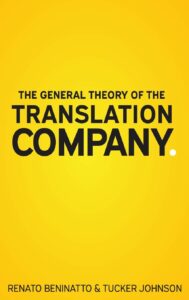
1. The General Theory of the Translation Company

Renato Beninatto & Tucker Johnson

The General Theory of the Translation Company. translation industry books

This book takes a business-first look at the inner workings of language service providers. Instead of focusing on linguistic theory or translation techniques, it outlines the organizational core of a translation company—client management, project operations, vendor coordination, and sales strategies. With a structure built around real industry challenges, it provides a grounded understanding of how translation companies scale, serve global clients, and adapt to market shifts. It’s particularly relevant for those working in operations, leadership, or sales within the localization space.

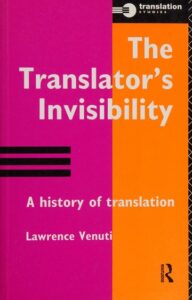
2. The Translator’s Invisibility

Lawrence Venuti

The Translator’s Invisibility. translation industry books

This title delves into how translation norms influence both reader expectations and the visibility of the translator’s role. It explores the tension between producing a fluent text and preserving cultural specificity. The book raises critical questions about how translations can unintentionally reshape the original work’s tone or message, and it invites reflection on whether fluency always serves the purpose of cross-cultural exchange. It’s a key reference for those interested in the ethical and cultural implications of translation choices.

3. After Babel: Aspects of Language and Translation

George Steiner

After Babel: Aspects of Language and Translation

Drawing on perspectives from literature, philosophy, and linguistics, this work presents a conceptual framework for understanding translation as a fundamental aspect of human communication. Steiner explores how people interpret meaning across linguistic divides, arguing that translation is not limited to professional practice but is embedded in daily life and interpersonal understanding. Though complex in scope and style, the book remains a foundational resource for those exploring translation as a humanistic discipline.

4. Translation Changes Everything

Lawrence Venuti

Translation Changes Everything

This collection of essays addresses translation as a socially embedded act, rather than a purely technical one. Each piece highlights how decisions made during the translation process can carry cultural, ideological, and political implications. The book brings together examples from various media and genres to explore how translation interacts with identity, power, and global circulation. It is beneficial for professionals or scholars interested in the broader impact of translation in institutional and public settings.

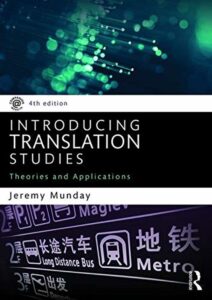
5. Introducing Translation Studies

Jeremy Munday

Introducing Translation Studies

Widely used in academic programs, this introductory book offers a structured overview of key theories in translation studies. It presents major approaches such as functionalism, Skopos theory, and discourse analysis, along with practical examples drawn from fields like audiovisual media, advertising, and institutional translation. The book is designed to support both newcomers to the field and professionals looking to update their knowledge of theoretical frameworks. Its clear organization and applied focus make it a go-to resource across educational and professional contexts.

A Broader Look at the Translation Industry

Together, these five titles offer a multidimensional look at the translation industry—one that goes beyond terminology and technique to address the systems, theories, and choices that shape how content moves across languages. As translation continues to evolve alongside global communication, these books provide valuable frameworks for understanding its business models, cultural impact, and professional challenges. Whether for academic exploration or practical application, they remain key resources for navigating the complexities of multilingual work today.

Antidote Pro: Generative AI in Support of Organizations

0
Antidote Pro

Montréal, June 13, 2025Druide informatique introduces Antidote Pro, a solution designed for organizations seeking to benefit from the latest innovations in its renowned writing assistance software. The offering includes sentence reformulation powered by generative artificial intelligence (AI) and shared writing conventions. A subscription to Antidote Pro combines Antidote 12, installed locally on Windows or Mac, with Antidote Web, accessible via any browser on computers, tablets, or smartphones—including Android and Chromebook devices. This enables organizations to equip all employees with the full capabilities of Antidote.

Reformulation with Generative AI

Antidote Pro allows Antidote 12 users to refine their writing using four modes: Rewrite, Retouch, Soften, and Shorten. Each activates Druide’s proprietary large language model (LLM), trained in-house and hosted on Druide’s servers. The software filters, corrects, and ranks the suggestions provided. This ensures that employees across an organization can harness generative AI to receive intelligent rewording suggestions while maintaining the integrity of their ideas.

Shared Writing Conventions

With Antidote Pro, organizations can define and share writing standards across teams. Designated managers can distribute custom dictionaries and rules, ensuring the corrector reflects a company’s style guide or communication policies. These shared settings are automatically updated for all users following any modification, streamlining consistency across written content.

Universal Access

Antidote Pro supports various computing environments. On-site employees can use Antidote 12 locally, while remote staff can access Antidote Web from any location. Additionally, users can sync personal dictionaries, preferences, and favorites across multiple devices, including desktops and laptops.

Centralized Management

A new Organization Deployment Manager simplifies Antidote installation and access control on Windows. The platform now supports Microsoft Intune for cloud-based endpoint management, along with authentication and provisioning via SAML and SCIM protocols. Administrators can manage user groups, assign roles, and oversee the sharing of writing conventions through the Organization Client Portal.

Antidote Pro is now available directly from Druide and will soon be offered by its European distributors.


About Druide
Founded in 1993, Druide informatique specializes in artificial intelligence and computational linguistics. The company develops and markets Antidote, a comprehensive writing assistance suite for English and French, and Typing Pal, its well-known typing tutorial software. Druide also publishes French-language literature and reference works through its subsidiary, Éditions Druide.

Source: Druide informatique inc. – www.druide.com
Information: Jacynthe Bruneau – media@druide.com – 514-484-4998, Ext. 896

Boostlingo Introduces the First Built-In AI Transcripts for Interpreted Calls

0
Boostlingo

Austin, Texas — June 13, 2025 — Boostlingo has become the first on-demand interpreting platform to launch a built-in AI feature, announcing the general availability of AI-powered transcripts and summaries. This paid add-on transforms every interpreted call on the Boostlingo On-Demand platform into a clear, shareable record in seconds—no extra apps or exports required.

The new feature automatically converts spoken dialogue into accurate text and provides a structured summary of who spoke, what was decided, and what happens next. During the beta phase, customers logged over 177,000 interpreted minutes and reported saving up to a minute of paperwork per call—freeing users, attorneys, and service agents to focus on people, not paperwork.

“Even sixty seconds regained at scale drives measurable savings and better service,” said Bryan Forrester, Boostlingo Co-Founder and CEO. “Our mission is to remove friction from language access. Automating documentation is the next leap toward that goal, and early feedback shows it can transform daily workflows across care, legal, and customer support teams.”

Transcripts and summaries are launching in English, Spanish, Mandarin, Cantonese, French, Vietnamese, Portuguese, Russian, Ukrainian, and Korean, with more than thirty additional languages on the roadmap. The experience is identical across web and mobile, preserving interpreter role metadata and timestamps for easy search and auditing.

Internal analysis shows that every minute of manual documentation avoided can save between $0.33 and $1.00, depending on the staff role. Across hundreds of daily calls, early adopters estimate thousands of dollars in savings—while audit-ready summaries strengthen compliance and quality programs.

The AI pipeline was designed with privacy from day one. Boostlingo is in the final stages of securing a Business Associate Agreement with its last AI vendor, with full HIPAA alignment expected shortly. Data never leaves Boostlingo’s encrypted environment except under direct customer instruction, meeting current GDPR and SOC 2 standards.

Current Boostlingo customers can contact their Account Manager to activate a trial. Prospective organizations are invited to book a live demo at boostlingo.com/demo. With no new hardware, training, or integrations required, the add-on delivers clarity, compliance, and cost savings in a friction-free upgrade.


Media Contact

Morgan Teller
Director of Marketing
morgan.teller@boostlingo.com


About Boostlingo

Boostlingo is an interpreting technology company based in Austin, TX, dedicated to building innovative solutions that help customers communicate without barriers and expand language access for all. The Boostlingo platform offers video, phone, and on-demand interpreting, industry-leading interpreter management and scheduling tools, remote simultaneous interpretation, video conferencing capabilities, and advanced AI captioning and transcription.

For more information, visit https://boostlingo.com

Google Relaxes Policy on AI-Translated Web Content

0
Google automated translation policy

New guidance may legitimize machine-translated pages—if they’re useful

Google has quietly updated its documentation on multilingual websites, signaling a shift in its stance on AI-generated translations. The change removes previous language discouraging the indexing of automatically translated pages, potentially opening the door for more expansive use of AI translation tools—provided the resulting content meets quality standards.

Until recently, Google explicitly recommended that site owners block AI-translated pages using robots.txt to avoid them being seen as low-quality or spammy. That warning has now disappeared from its developer guidance without fanfare or official announcement.

Translation quality over translation method

This subtle revision aligns with Google’s broader content policy changes introduced in March 2024. Under current guidelines, how content is created matters less than whether it is helpful to users. This applies to both AI-generated content and translated material. As long as machine-translated pages provide value, coherence, and fulfill user intent, they are no longer automatically considered problematic.

While Google has not issued a formal statement explaining the edit, search industry observers suggest the platform is adapting to widespread, responsible use of generative AI and neural machine translation.

Implications for site owners and SEO

The change is particularly relevant for international websites looking to scale content delivery. Businesses and organizations using tools like DeepL, Google Translate API, or custom LLM-based workflows may now consider making translated versions publicly indexable—if the quality holds up.

However, experts caution that low-quality or nonsensical translations can still trigger spam penalties. The burden remains on webmasters to ensure that translations are accurate, culturally appropriate, and contextually relevant.

Context in the evolving AI landscape

This policy softening coincides with broader discussions about AI ethics, quality, and transparency in content production. As translation technology improves, the lines between human and machine contributions continue to blur—especially when the end goal is effective communication rather than perfect linguistic fidelity.

Five Prominent Machine-Translation Mistakes in Advertising Campaigns

0
Robot looking down

The following advertising campaigns were localized using poor machine translation, which led to disastrous (and often humorous) results.

1. English to Spanish: KFC’s Finger-Licking Fail

When KFC expanded to China in the 1980s, its famous slogan, “Finger-Lickin’ Good,” was translated into “Eat Your Fingers Off” (吃掉你的手指) due to poor machine translation. But did you know that Spanish-speaking markets have faced similar mistranslations?

A major U.S. fast-food chain once relied on AI-generated translation for a Latin American marketing campaign. The phrase “Grill with Confidence” was translated into “Asa con confianza.” While grammatically correct, the phrase lacked the natural, engaging tone needed for marketing. Worse, in some Latin American countries, “Asa” (imperative of “asar,” meaning to grill) could sound like a command rather than an encouragement. Native Spanish speakers would likely phrase it as “Disfruta de la parrilla con confianza” to better match the brand’s intended tone.

2. English to German: Mercedes-Benz’s “Bite the Dust” Slogan

Mercedes-Benz once faced a branding nightmare when entering the Chinese market with “Bensi” (奔死), which sounded like “Rush to Death.” But German brands have also faced linguistic mishaps when relying on direct machine translation.

A German car manufacturer once ran an ad campaign with the English slogan “Experience the Drive.” AI-generated translation rendered it as “Erleben Sie die Fahrt,” which, while technically correct, sounded robotic and uninspiring. A human translator would have opted for something more natural, such as “Freude am Fahren erleben” (Experience the Joy of Driving). 

3. English to French: Pepsi’s Promise of Resurrection

Pepsi’s infamous slogan “Come Alive with Pepsi” was disastrously translated into Chinese as “Pepsi brings your ancestors back from the dead.” But did you know that French translations can also suffer from unnatural AI-generated results?

A tech company promoting “seamless integration” of its software used AI translation for a French campaign. The result? “Intégration sans couture,” which literally means “Integration without sewing” — a phrase that makes no sense in French. The correct phrase should have been “Intégration fluide” or “Intégration harmonieuse.”

4. English to Japanese: Powerade’s Misstep

Coca-Cola’s Powerade once ran an ad campaign emphasizing “Power Water.” When translated into Japanese using AI-generated translation, it became “Chikara Mizu” (力水), which could be interpreted as “Forceful Water” or even “Violent Water” — hardly the message a sports drink brand wants to convey. A more appropriate term would have been “エナジーウォーター” (Energy Water).

5. English to Arabic: Ford’s Unfortunate Promise

Ford once ran an English campaign with the slogan “Every Car Has a High-Quality Body.” When translated into Arabic using AI-generated translation, it came out as “كل سيارة لها جثة عالية الجودة” — which unfortunately means “Every car has a high-quality corpse.” Arabic is a highly context-dependent language where direct AI-generated translations often fail. Had this been translated by a human, the word “هيكل” (structure/body of a car) would likely have been used instead of “جثة” (human corpse).

AI-Generated Versus AI-Assisted: A Translator’s Perspective on Control and Quality

0
AI translation

As language professionals, we’re constantly adapting to new technologies, but we also face a crucial question: How much control should artificial intelligence (AI) have over our work?

Two terms are often thrown around — AI-generated and AI-assisted — but they aren’t interchangeable. From a translator’s perspective, the difference between these approaches isn’t just technical; it’s about the role we play in the process, the value we bring, and the mindset required to deliver high-quality translations.

AI-Generated

AI-generated translation is exactly what it sounds like: content produced entirely by AI, without direct human involvement in the initial translation process. This method relies on neural machine translation (NMT) systems like DeepL, Google Translate, or OpenAI’s large language models (LLMs) to convert text from one language to another automatically.

From a vendor’s point of view, AI-generated translation can feel like both an opportunity and a threat. It’s fast, cheap, and scalable, which makes it attractive to clients who need large volumes of text translated quickly. Some companies use AI-generated translations for e-commerce product descriptions, customer support chatbots, or user-generated content where perfection isn’t the priority — only basic comprehension.

But raw AI-generated translations aren’t flawless. Even the most advanced AI struggles with:

  • Context and intent – AI doesn’t always understand the subtle differences in meaning that depend on context. A single word can have multiple interpretations.
  • Tone and voice – AI might translate a text correctly but fail to capture the intended tone, whether formal, friendly, or persuasive.
  • Cultural adaptation – Localization goes beyond translation. AI can’t always adjust content to fit the cultural nuances of the target audience.
  • Industry-specific terminology – In specialized fields like legal, medical, or technical translation, AI often makes mistakes that can lead to misunderstandings or even legal issues.

As translators, we often see AI-generated translations land on our desks for machine translation post-editing (MTPE) — a task that involves correcting machine output while trying to salvage as much of the original AI translation as possible. This can be frustrating because bad AI translations often take longer to fix than starting from scratch.

Still, AI-generated translation has its place, especially for:

  • Bulk content where speed matters more than quality (e.g., product catalogs)
  • Internal company communications that don’t require a perfect polish
  • Large-scale projects where AI can handle the first draft, and human post-editors refine it

AI-Assisted

AI-assisted translation, on the other hand, keeps human translators at the center of the process. Instead of replacing us, AI acts as a co-pilot, helping us work faster and more efficiently. This approach typically involves:

  • Computer-Assisted Translation (CAT) tools – These tools, like Trados, memoQ, and Smartcat, provide translation memory, glossaries, and real-time AI suggestions that we can accept, modify, or ignore.
  • AI-powered quality checks – AI can flag inconsistencies, detect grammar errors, and suggest improvements while leaving the final decision to the translator.
  • Predictive typing and auto-suggestions – AI can suggest translations based on previous work, speeding up repetitive tasks without compromising accuracy.

For a translator, AI-assisted workflows feel like a natural evolution of our work rather than a disruption. We maintain creative and linguistic control while letting AI handle the more tedious parts of translation, like repetitive phrases or terminology consistency. Where AI-generated translation might lead to frustration (especially in post-editing), AI-assisted translation helps us work smarter while keeping our expertise at the core of the process.

The Trade-Offs

From a vendor’s perspective, we often see clients approach translation with three primary concerns:

  1. How much will it cost?
  2. How fast can it be done?
  3. What will the quality be like?

The answer depends on the method chosen, as seen in the following table.

Approach Cost to Client Speed Quality Human Involvement
AI-Generated Low Very Fast Inconsistent (varies by language and content type) None (unless post-editing is added)
AI-Assisted Moderate to High Fast High (human-controlled) Strong human involvement
Human-Only Highest Slower Best quality, culturally adapted Full human control

Clients often underestimate the importance of human involvement, assuming AI-generated translations are “good enough.” But when quality truly matters — marketing materials, legal contracts, creative content — AI-assisted workflows provide the best balance between efficiency and excellence.

Post-editing of AI-generated text can sometimes be a false economy — especially if the AI translation is poor and requires heavy rewriting. In such cases, AI-assisted translation (where the human remains in control from the start) can be faster and produce better results.

The Meaning of “Human Touch”

Does “assisted” mean human touch, and “generated” mean no human touch? Not necessarily. Many AI-generated translations still require human post-editing to be usable, meaning they aren’t entirely free from human touch. On the other hand, AI-assisted translation keeps humans actively involved throughout the process, guiding AI to enhance rather than replace our expertise.

As vendors, we know that clients don’t always understand this distinction. Some assume AI-assisted means the same thing as AI-generated, leading to unrealistic expectations about cost and turnaround time. Part of our role is to educate clients about the differences and help them choose the right approach based on their goals.

For example, if a client just wants a quick draft translation for internal use, AI-generated might work. But if they want a consumer-facing translation that represents their brand, AI-assisted (or fully human) translation is the only responsible choice.

Looking Ahead: A Hybrid Approach

As translators, we aren’t going anywhere — but our role is evolving. AI is here to stay, and the best way forward is to embrace hybrid workflows where technology enhances our capabilities rather than diminishing our value. Key points of this approach are:

  • AI-generated translation will keep improving, but it won’t eliminate the need for human expertise.
  • AI-assisted translation is the sweet spot — where professionals and technology work together to produce high-quality translations efficiently.
  • Clients need better education on the strengths and limitations of each approach, so they can make informed decisions.

At the end of the day, AI is a tool, not a replacement. The real magic of translation lies in the human ability to understand nuance, adapt content for culture, and make meaning resonate. AI can help, but it can’t replace the translator’s mind, intuition, or experience.

So, the next time someone asks whether AI-generated or AI-assisted translation is better, let’s remind them: It’s not about choosing between humans and AI — it’s about knowing when to let AI assist and when to take the lead.

DeepL’s New AI Infrastructure Could Translate the Entire Internet in Just 18 Days

0
Jarek Kutylowski

NVIDIA SuperPOD gives DeepL a massive speed boost

DeepL has upgraded its machine translation capabilities by deploying NVIDIA’s newest DGX SuperPOD system, allowing the company to dramatically accelerate the processing of language data. With the enhanced infrastructure, DeepL estimates it could now translate the entire contents of the internet in just over 18 days—a process that previously would have taken nearly 200.

A European-first deployment

The system, hosted in a data center in Sweden, is the first in Europe to incorporate NVIDIA’s Grace Blackwell GB200 chips. Designed for large-scale AI workloads, this infrastructure enables DeepL to train and run its language models more efficiently while keeping all data processing within European borders. The move aligns with ongoing EU efforts to promote “AI sovereignty.”

From faster translation to more context-aware results

According to the company, the new setup will not only increase translation speed but also enhance the platform’s ability to generate more accurate and contextually nuanced results. DeepL’s “Clarify” feature—allowing users to ask follow-up questions to refine translations—is expected to perform better with the increased computing power.

A step toward multimodal translation

DeepL also hinted at future multimodal translation features, combining text, audio, and image content in a single interface. While no release date has been announced, such functionality would expand the platform’s use cases, particularly in media and global content production.

Infrastructure as a competitive edge

This is DeepL’s third SuperPOD deployment, but the first using NVIDIA’s latest generation of hardware. As AI translation tools continue to evolve, this shift highlights how infrastructure, not just algorithms, is becoming a defining factor in the global race for quality, scale, and speed in multilingual communication.

Phi-Omni-ST: Microsoft Advances Speech-to-Speech Translation with Open-Source Model

0
Phi-Omni-ST

A unified approach to multilingual voice translation

Microsoft has introduced Phi-Omni-ST, a multimodal language model capable of performing direct speech-to-speech translation (S2ST). Built on the open-source Phi-4-MM, the model integrates speech understanding and generation into a single end-to-end system—eliminating the need for intermediate text conversion.

Phi-Omni-ST receives spoken input, generates both translated text and audio output, and synthesizes voice in real time using a streaming vocoder. This approach reduces latency and avoids error propagation common in cascaded systems that separate ASR, MT, and TTS components.

Key architecture: from audio tokens to streaming speech

The model extends Phi-4-MM by adding an audio transformer head. This component predicts audio tokens with a slight delay relative to text tokens, enabling better context modeling. The audio tokens are processed into mel-spectrograms and then converted into waveform speech using a pretrained HiFi-GAN vocoder.

Importantly, the system uses a joint decoding strategy, generating both text and audio outputs in a single pass. The audio decoder leverages the same hidden representations as the text decoder, maintaining alignment between written and spoken translations.

Benchmark results on open datasets

When trained on the CVSS-C dataset (940 hours), Phi-Omni-ST outperformed all baseline S2ST models using the same data. On French-to-English translation, for instance, the model improved ASR-BLEU scores from 28.45 (StreamSpeech baseline) to 35.93. Comparable gains were recorded for Spanish and German.

Further scaling with in-house data and a 7B model variant brought Phi-Omni-ST’s performance in line with SeamlessM4T v2, a leading commercial model. Microsoft reports that this result was achieved using roughly half the training data.

Designed for reproducibility and accessibility

Unlike many enterprise-grade systems, Phi-Omni-ST prioritizes open development. It builds on publicly released models, including the Phi4-MM and CosyVoice 2 toolkits, and applies LoRA-based fine-tuning to reduce training overhead. The speech tokenizer and streaming vocoder modules are also open source.

These choices make the system reproducible and accessible, even for institutions with limited compute resources. The researchers emphasize that the architecture and methodology can be adapted to other speech-to-speech tasks beyond translation.

Future directions and applications

While Phi-Omni-ST currently focuses on multilingual S2ST, the framework supports broader extensions. Microsoft’s team identifies potential in low-resource language support, pretraining of the audio decoder, and other conversational AI use cases.

The research highlights a path toward scalable, end-to-end speech models grounded in open tools and public data—encouraging wider experimentation and collaboration across the language technology community.