Phi-Omni-ST: Microsoft Advances Speech-to-Speech Translation with Open-Source Model

0
Phi-Omni-ST

A unified approach to multilingual voice translation

Microsoft has introduced Phi-Omni-ST, a multimodal language model capable of performing direct speech-to-speech translation (S2ST). Built on the open-source Phi-4-MM, the model integrates speech understanding and generation into a single end-to-end system—eliminating the need for intermediate text conversion.

Phi-Omni-ST receives spoken input, generates both translated text and audio output, and synthesizes voice in real time using a streaming vocoder. This approach reduces latency and avoids error propagation common in cascaded systems that separate ASR, MT, and TTS components.

Key architecture: from audio tokens to streaming speech

The model extends Phi-4-MM by adding an audio transformer head. This component predicts audio tokens with a slight delay relative to text tokens, enabling better context modeling. The audio tokens are processed into mel-spectrograms and then converted into waveform speech using a pretrained HiFi-GAN vocoder.

Importantly, the system uses a joint decoding strategy, generating both text and audio outputs in a single pass. The audio decoder leverages the same hidden representations as the text decoder, maintaining alignment between written and spoken translations.

Benchmark results on open datasets

When trained on the CVSS-C dataset (940 hours), Phi-Omni-ST outperformed all baseline S2ST models using the same data. On French-to-English translation, for instance, the model improved ASR-BLEU scores from 28.45 (StreamSpeech baseline) to 35.93. Comparable gains were recorded for Spanish and German.

Further scaling with in-house data and a 7B model variant brought Phi-Omni-ST’s performance in line with SeamlessM4T v2, a leading commercial model. Microsoft reports that this result was achieved using roughly half the training data.

Designed for reproducibility and accessibility

Unlike many enterprise-grade systems, Phi-Omni-ST prioritizes open development. It builds on publicly released models, including the Phi4-MM and CosyVoice 2 toolkits, and applies LoRA-based fine-tuning to reduce training overhead. The speech tokenizer and streaming vocoder modules are also open source.

These choices make the system reproducible and accessible, even for institutions with limited compute resources. The researchers emphasize that the architecture and methodology can be adapted to other speech-to-speech tasks beyond translation.

Future directions and applications

While Phi-Omni-ST currently focuses on multilingual S2ST, the framework supports broader extensions. Microsoft’s team identifies potential in low-resource language support, pretraining of the audio decoder, and other conversational AI use cases.

The research highlights a path toward scalable, end-to-end speech models grounded in open tools and public data—encouraging wider experimentation and collaboration across the language technology community.

Cavya.ai Introduces AI Tools to Automate Glossary and Style Guide Creation

0
Cavya AI tools

Cavya.ai launches specialized tools for linguists and project managers, extracting document-specific terminology and generating custom style guides in under 3 minutes.

London, 12th June, 2025Cavya.ai today announced the launch of its AI-powered platform designed specifically for translation professionals, featuring two breakthrough tools that automate the most time-consuming aspects of translation project setup. 

The platform’s Glossary Extractor and Style Guide Creator can reduce project preparation time by up to 95%, transforming workflows that traditionally take hours into processes completed in minutes.

The platform addresses a critical pain point in the localization industry where manual term extraction and style guide creation can consume 3-5 hours per project. Cavya’s AI analyzes document types—from medical device Instructions for Use (IFUs) to patent documents—and intelligently extracts relevant terminology including regulatory body names, technical terms, acronyms, and classification terminology specific to each document category.

“We’ve seen project managers spend entire afternoons creating glossaries that our AI completes in a few minutes,” said Nikita Agarwal, CEO of Cavya.ai. “The tool doesn’t just extract terms randomly—it understands document context. For a patent document, it knows to focus on legal terminology and international patent classifications. For medical IFUs, it prioritizes regulatory compliance terms and device-specific language.”

The Style Guide Creator complements the glossary tool by analyzing source documents and generating comprehensive translation guidelines tailored to target languages. The generated style guides include industry-specific tone recommendations, punctuation guidelines, handling of measurements and currencies, and brand name treatment protocols—all customized based on the company’s sector and target audience.

Key platform features include:

  • Document-type intelligence: Customized extraction based on 15+ document categories
  • Multi-language support: Translation and style guides for 120+ languages
  • Context preservation: Terms displayed with surrounding context for accurate translation
  • Secure processing: Documents are not stored, ensuring NDA compliance
  • Pay-per-use model: No subscriptions, with 10 free credits upon signup

Early beta users report average time savings of 3.5 hours per project. The platform has already processed over 300 documents across industries, including life science, legal services, and technical manufacturing.

The localization industry, valued at over $56 billion globally, has been seeking automation solutions that maintain the precision required for technical translation while reducing manual preparation time. Cavya’s specialized approach addresses this need by focusing exclusively on the pre-translation phase, where AI can deliver maximum impact without compromising translation quality.

Cavya.ai is available immediately with free trial credits. Translation professionals can access the platform at cavya.ai and begin creating glossaries and style guides within minutes of signing up.

About Cavya.ai Cavya.ai specializes in AI-powered tools for translation professionals, focusing on project preparation automation. Founded by localization industry veterans, the company is dedicated to reducing manual work while maintaining the precision standards required for professional translation services.

Media Contact: support@cavya.ai

Crystal Hues Clears 2025 Surveillance Audits for ISO 17100 and ISO 18587

0
Crystal Hues

Crystal Hues Limited (CHL) has completed the 2025 surveillance audits for ISO 17100 and ISO 18587, reaffirming its alignment with internationally recognized standards for translation and post-editing services.

The audit was conducted by Dr. Verónica Pérez Guarnieri, representing ATC Certifications (UK), a global certification body. The process confirmed CHL’s continued adherence to the operational and quality frameworks required by both standards.

About the Standards

  • ISO 17100 outlines the requirements for core translation processes, including qualifications of professionals involved, project management practices, and client feedback protocols.

  • ISO 18587 defines best practices for post-editing machine translation output, emphasizing the role of human editors in ensuring quality and accuracy.

According to Anirud Mukola, Vice President and Director at CHL, the audit findings support the company’s ongoing commitment to structured processes and quality management in language services. Mukola noted that the company plans to enhance its technological infrastructure further to improve localization, data, and staffing services in the coming year.

The certifications demonstrate CHL’s operational capability to integrate evolving technologies, such as AI and machine translation, while maintaining quality through human oversight.

Crystal Hues extends its thanks to the internal teams, clients, and audit partners who contributed to the successful completion of this process.

About Crystal Hues
Crystal Hues Limited is an India-based language services provider offering end-to-end solutions in translation, localization, content development, digital marketing, and staffing. With over three decades of industry experience, CHL supports global clients across sectors including healthcare, IT, legal, and manufacturing. The company combines human expertise with technology-driven workflows to deliver scalable, quality-assured services. Crystal Hues is certified under multiple international standards and operates through a network of offices across India.

Opptly Achieves Pacific AI Certification for its Proprietary AI for Candidate Matching, Demonstrating its Commitment to Responsible AI

0
Pacific AI

HOUSTON, June 11, 2025 — Opptly, an AI leader and Direct Sourcing pioneer, is proud to announce it has achieved Pacific AI Governance Certification for its proprietary AI platform. To intelligently remove the friction between talent and work, Opptly is armed with massive amounts of workforce data used to design purpose-built AI software that is accurate, robust, and non-biased. With Pacific AI Governance Certification, Opptly can attest that it has implemented a comprehensive AI Governance framework and has continuous testing of its AI models to ensure compliance with all current laws and regulatory standards.

“We built our company on the belief that AI has the power to accelerate meaningful connections, bringing together the right candidates and the right opportunities to create a more diverse and inclusive workforce,”said Lori Hock, CEO, Opptly. “But with that power comes a responsibility to operate legally and ethically. Our Pacific AI Governance Certification is proof of our commitment to consistent and fair AI-powered talent evaluation practices.” 

Pacific AI helps organizations establish AI governance policies, tools, and process to remain compliant with AI risk management, federal, and local regulatory standards from NIST and ISO to NYC Local Law 144, which prohibits employers from using automated employment decision tools (AEDT) without an independent auditor assessing the AEDT for bias. The implementation steps involve helping organizations to 1.) Adopt AI policies, 2.) Implement AI governance, and 3.) Pass a Pacific AI audit.

With AI playing a bigger role in recruitment, candidate-job matching models play a pivotal part in optimizing the hiring process. This necessitates rigorous evaluation to ensure fairness and equity: For example, to ensure that a candidate’s resume will not be ranked lower because their name sounds female, or of foreign origin. 

To address this, Opptly uses John Snow LabsLangTest, a sophisticated open-source testing framework that itself uses Generative AI to automatically create test cases for the AI that include different variations of candidates’ gender, race, ethnicity, and country of origin. This framework is used both when testing models and for regular monitoring in production to provide ongoing evidence that candidates are being treated fairly. 

“New legal and regulatory requirements for AI systems are emerging every week, and the risk of not being aware or not complying with them can cause significant reputational and financial damage,” said David Talby, CEO, Pacific AI. “With Pacific AI, Opptly can focus on delivering the hiring solutions its customers and partners rely on, while protecting them from legal liability. It’s good business—and it’s also the law.”

Tune in to learn more about how Opptly identifies and mitigates bias in its AI models for recruiting. To learn more about Pacific AI Governance Certification, visit https://pacific.ai/

About Opptly

Opptly has revolutionized the way talent and work connect. With our purpose-built AI, intuitive user experience, and expert curation partners, Opptly has created a single platform that powers our direct sourcing solution and accelerates optimal matches between job seekers and hiring companies. We’re changing the course of the workforce industry, using AI to effect positive change, and help companies win in an intensely competitive market for talent.

Opptly. Talent search meets talent found. Learn more at opptly.ai.

About Pacific AI

Pacific AI is dedicated to helping organizations deliver AI systems that comply with the rapidly evolving regulatory landscape in the US. Whatever your starting point, Pacific AI can help you reach the next level of AI governance, implement tools and controls for compliance, or audit and certify what you’ve already built. To learn more, visit: https://www.pacific.ai.

Contact

Gina Devine

Head of Communications

Pacific AI

gina@pacific.ai 

1-StopAsia Appoints New CEO and CRO in Strategic Leadership Transition

0
1-StopAsia Leadership Change

June 11, 2025 – Los Angeles, CA, US — 1-StopAsia, a global leader in Asian language solutions, has announced a strategic leadership transition as part of its long-term growth plan. Effective June 2025, Yana Dinchiyska has been appointed Chief Executive Officer (CEO), and Gergana Toleva steps into the newly created role of Chief Revenue Officer (CRO). Don Shin, the company’s founder and long-standing CEO, will now serve as Chairman.

The leadership transition signals a continued commitment to operational excellence, client-centric innovation, and sustainable growth across the company’s global operations.

A New Generation of Leadership

Yana Dinchiyska brings over a decade of hands-on experience at 1-StopAsia, having led various departments including operations, marketing, and regional management. Her new role as CEO reflects both a deep understanding of the company’s inner workings and a clear vision for its future. Known for her human-centered leadership style and strategic clarity, Dinchiyska will guide 1-StopAsia through its next phase of development and market expansion.

Gergana Toleva, who has been with the company for nearly seven years, assumes the role of CRO with a focus on building smart, scalable revenue strategies and strengthening market positioning. Her background in research, marketing, and strategic partnerships has made her a key player in the company’s international growth initiatives.

Founder Continues in Strategic Role

“This isn’t just a leadership change — it’s the next step in our story,” said Don Shin, Chairman and Founder of 1-StopAsia. “Yana and Gergana are thoughtful, capable leaders who truly understand the heart of this company. I have the confidence in their ability to carry our mission forward.”

As Chairman, Don Shin will continue to play a strategic role in shaping the company’s direction while supporting the new executive team in their operational leadership.

Commitment to Clients and Growth

With this new executive structure in place, 1-StopAsia aims to sharpen its focus on high-quality, tech-enabled translation services and expand its global reach, especially in high-growth sectors. The company’s client portfolio spans healthcare, legal, education, government, and enterprise, with services tailored to the nuanced needs of Asian languages and cultures.

About 1-StopAsia

1-StopAsia is a trusted global provider of Asian language solutions, offering a full range of services including translation, localization, transcreation, and multilingual desktop publishing. Founded in 1998, the company has over 27 years of experience helping clients navigate the linguistic and cultural complexities of Asia’s diverse markets.

Headquartered in Los Angeles, California, 1-StopAsia operates across multiple international offices in Asia, Europe, and North America. Its services are relied upon by language service providers, multinational enterprises, government institutions, and NGOs seeking high-quality, reliable Asian language expertise.

The company is ISO 17100 and ISO 9001 certified, underscoring its dedication to quality management, translator qualifications, and structured workflows. 1-StopAsia’s success is built on a people-first culture, deep regional knowledge, and a commitment to building long-term partnerships through transparency, collaboration, and service excellence.

For more information, visit www.1stopasia.com.

Phrase Unveils Its Most Powerful Release Yet with Multimedia Localization, Agentic AI, and Enhanced Developer Experience

0
Phrase Language Technology

Launch includes Phrase Studio, PACS, Language AI in Phrase Strings, and an enhanced Developer Hub for scalable, intelligent localization.

Boston, MA – June 11, 2025Phrase, a world leader in AI-driven translation technology, today announced the addition of significant new capabilities to its enterprise platform. This release marks a defining moment in the evolution of language technology, introducing a new wave of intelligent capabilities that transform how global content is created, adapted, and delivered at scale.

Phrase technology has long been the driving force behind some of the world’s most complex multilingual operations. With this release, the company continues its mission to raise the bar by redefining what is possible when AI, automation, and connectivity come together. With the launch of Phrase Studio for multimedia localization, the introduction of the Phrase Agentic Content System (PACS), the expansion of Phrase Language AI into Phrase Strings, and the new Developer Hub, Phrase continues to lead the way and extend its leadership in the language technology category. 

“This launch is a defining moment for Phrase and the customers and partners we serve. The industry is converging around the concept of the Language Technology Platform, a vision we’ve championed for years, and this sets a new benchmark,” said Georg Ell, CEO at Phrase. 

“What’s possible and expected with multilingual content across written, audio, and video has changed. As AI, ecosystems, and automation reshape expectations, fragmented tools, stitched-together point solutions, and old ways of working no longer meet demands. Customers and partners need innovation, scale, quality and extensibility in their Language Technology Platform. This release extends and deepens our platform to meet those needs, enabling smarter, faster, and more connected global content delivery.”

A Smarter Way to Deliver Global Content

As content teams work to meet growing expectations for personalized, real-time experiences, Phrase has expanded its platform to support the entire content lifecycle. This release introduces major new enhancements, including multimedia localization, AI agent orchestration, enhanced developer tools, and expanded workflow automation.

  • Phrase Agentic Content System (PACS): A new architecture that enables specialized AI agents to work together across the localization flow. PACS launches with a context-aware translation agent and a new automated post-editing agent powered by MT Optimize. Together, they enhance translation speed, accuracy, and quality without requiring any setup.
  • Phrase Studio: The new all-in-one solution for localizing audio and video content. Designed for both real-time and recorded use cases, it offers AI-driven captioning, subtitling, dubbing, summarization, and synthetic voice generation. Phrase Studio enables teams to quickly and effectively adapt multimedia content at scale with speed and precision.
  • Phrase Language AI in Phrase Strings: Phrase’s advanced machine translation capabilities are now integrated into Strings for software localization. Teams can leverage engine auto-selection, MT glossaries, Phrase QPS scoring, and more to ensure brand consistency and translation quality across the board.
  • Phrase Developer Hub: A redesigned experience for developers with streamlined documentation and intelligent search, and an all-new release of customizable connector APIs. The new hub simplifies integration and enables deeper automation with platforms like Contentful and Optimizely.

Additional updates include automation additions to Phrase Strings, such as trigger-based job creation from CMS and design tools, as well as a native integration with Tridion Docs for easier translation of technical content within existing workflows.

This latest release reinforces Phrase’s position as the most advanced and comprehensive Language Technology Platform on the market. By combining intelligence, automation, and connectivity, Phrase continues to help global businesses meet the growing demand for high-quality global content,  more efficiently, faster, and at a greater scale.

About Phrase

Phrase is a world leader in AI-led translation technology, helping organizations open the door to global business by reaching more people, making deeper connections, and driving faster growth across different languages and cultures.

The cloud-based Phrase Localization Platform has all the key capabilities a business needs to drive a comprehensive localization strategy. From AI-driven machine translation and world-leading translation management to software localization, best-in-class workflow automation, quality evaluation, and analytics, the Phrase Platform connects, streamlines, and manages every possible translation task across the enterprise.

That’s why brands like Uber, Shopify, Volkswagen, leading LSPs and global SI partners, and thousands of others choose Phrase to help them form meaningful connections with millions of people to accelerate their global growth. For more information, visit phrase.com.

Connect with Phrase: LinkedIn | YouTube 

MEDIA CONTACT

Pamela Ghosal
E: pr@phrase.com
T: +44 20 7150 6886

Five Lessons From a Life in Multilingual Diplomacy

0
interpreting

I have lived much of my life between languages by interpreting conversations that shaped policy, calmed tensions, and sometimes, in the quietest moments, changed lives. Yet, what has defined my journey most is not just the words I have translated, but the silences and subtleties between them — the pauses, glances, and cultural context that often speaks louder than the literal meaning.

I was born in Brazil, where language is expressive and communal, and raised in Europe, where it is precise and intentional. That juxtaposition shaped me early. I learned not only to speak multiple languages, but also to think in multiple cultural systems. Over time, this became more than a skill; it became almost like a philosophy of connection.

Today, as a cultural strategist, interpreter, and global diplomacy advisor based in California, I share the lessons that others can apply to their own multilingual journeys, whether in boardrooms, courtrooms, classrooms, or community centers.

1. Interpretation Is Not Translation; It Is Transformation.

Early in my career, I believed that mastery of vocabulary and grammar would make me an excellent interpreter. But in one of my first diplomatic assignments, that theory was tested. A delegate delivered a seemingly polite comment. But layered in his phrasing, tone, and body language was a sharp critique.

If I had translated his words literally, the message would have lost all impact. Instead, I interpreted meaning over language by delivering the message in a tone that preserved both the intent and the relationship.

This is where many aspiring linguists falter: They assume their role is to be invisible. But in truth, we are cultural transmitters, not just messengers. Our job is not to vanish, but to faithfully and respectfully carry meaning across human boundaries. This is especially true when we transmit humorous comments or jokes, which can’t always be translated literally.

2. Having an Accent Is an Asset.

Throughout my career, I’ve watched countless multilingual professionals hide their accents in fear of judgment. I used to do the same. But over time, I realized that an accent is not a flaw — it is a footprint of one’s story.

My Brazilian-French-inflected English has opened more doors than it has closed. It has invited curiosity, built rapport, and sparked conversations that sterile fluency never could. An accent reminds the world that you carry multiple cultures in your voice and path. In a globalized world, that is a strength, not a setback.

3. Don’t Just Learn Languages; Learn Cultures.

Fluency means nothing without cultural intelligence. When I interpret, I listen for more than words. I observe posture, pacing, protocol, and mood. I ask, “What does this mean here, for these people?”

For example, how silence is used in Swiss diplomacy differs greatly from how it’s used in Brazilian negotiation. One is a pause for reflection, the other a sign of discomfort. In Asia, it is a sign of respect. Cultures are different and as interpreters and multilingual professionals, our effectiveness depends on our ability to decode context, not just vocabulary.

4. Multilingualism Is a Tool for Justice.

Language is not just about expression; it is also about equity. Whether it is a family navigating immigration court, a patient in a hospital, or a student learning in their non-native tongue, language access can determine opportunity, or even oppression.

In my recent work with Sustainable Development Goal (SDG) initiatives in Southern California, I’ve focused on giving young people tools to track and advocate for equity in education, climate, and gender justice. Often, that begins by ensuring that language — any language — is not a barrier, but a bridge.

5. Between Every Language Lies a Choice.

Every interpreter, translator, teacher, and multilingual professional makes choices, not just of words, but of how to carry a certain meaning. We stand at the intersection of cultures, values, and identities. We don’t just interpret; we build understanding.

If there’s one message I leave with MultiLingual readers, it’s this: Your voice is powerful! Your multilingualism is not just a skill, it is a kind of diplomacy. In divided times, your work makes dialogue possible. Let that be your legacy.

Welocalize Highlights AI Strategies for Scalable E-Learning in Latest Issue of PATHFINDER

0
welocalize-ai-translation

New York, NY — Welocalize, a leader in AI-enabled multilingual content solutions, announces the release of the second edition of its digital magazine, PATHFINDER: The E-Learning Edition. Each issue explores evolving trends in global e-learning and localization.

In this latest edition, readers will find:

  • AI-Driven Video Localization: How one company reduced localization costs by 86% using AI-powered recap videos and avatars.

  • Enhanced Learning Retention: Insights into adaptive recall, content chunking, and personalized video strategies to boost engagement and memory.

  • Real-World Applications: A case study on a SaaS platform that localized over 300 hours of training videos.

  • E-Learning Localization Workflow: A practical overview of a four-step process that makes the business case for localization.

  • Multilingual E-Learning Guide: Key considerations for building effective learning content across cultures and platforms.

As global teams become more distributed and diverse, the demand for scalable, accessible training grows. This edition of PATHFINDER offers actionable strategies to meet that need.

“AI and video have opened up new possibilities in learning design, but they also raise new challenges around localization and accessibility. In this edition of PATHFINDER, we highlight practical ways to deliver e-learning content that works across languages, formats, and platforms—without compromising on quality or learner experience,” said Michael Anderson, E-learning and Multimedia Solutions Owner at Welocalize.

For more information about Welocalize’s multilingual e-learning solutions, visit welocalize.com.

About Welocalize, Inc

Welocalize is a global provider of technology-enabled translation, localization, and AI-driven content solutions. The company specializes in complex and highly regulated industries, delivering scalable and accurate multilingual content by combining advanced AI technologies with human expertise. At the core of its offering is the OPAL platform, which integrates machine translation (MT) and large language models (LLMs) to streamline workflows and produce culturally relevant content in over 300 languages. Headquartered in New York, Welocalize holds seven ISO certifications and operates offices worldwide.

ChatGPT’s o3‑pro and Real-Time Voice Translation Mark Major Leap in Multilingual AI

0
ChatGPT real-time translation

A New High-Precision Model: o3‑pro

On June 10, OpenAI launched o3‑pro, a more advanced version of its flagship language model, aimed at Pro users of ChatGPT and API clients. Designed for tasks that demand high accuracy, such as coding, scientific reasoning, and complex translation workflows, o3‑pro outperforms earlier models in both fluency and reliability. It supports advanced features like visual reasoning, file analysis, and memory customization, though it doesn’t yet generate images or support Canvas.

Human-Like Voice Mode and Live Translation

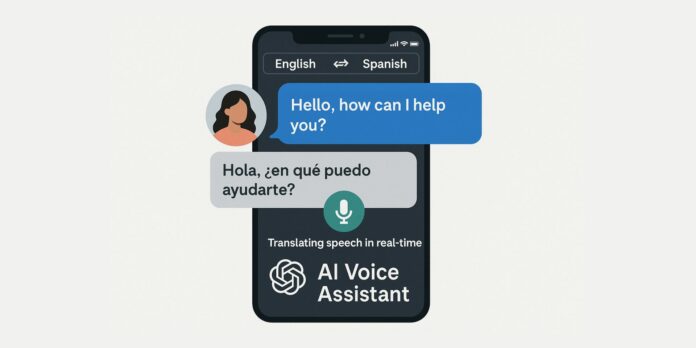
Just days earlier, OpenAI released a major update to ChatGPT’s voice mode. Now available to paid users, the feature delivers more natural speech patterns, with enhanced emotional nuance and responsiveness. Most notably, it introduces real-time voice translation, allowing users to speak in one language and receive continuous audio in another. This makes ChatGPT a potential travel companion or multilingual assistant in live settings, marking a key milestone in accessible, on-the-go translation.

From Chatbot to Assistant

Although the voice system is still under development—some users report pitch inconsistencies or audio artifacts—it positions OpenAI as a competitor to Apple’s live translation in iOS 26 and Google’s Interpreter mode. These updates also arrive alongside beta support for scheduled tasks and connectors, which enable users to integrate tools like Google Drive or Outlook into their chats, adding contextual depth and personalization.

What This Means for Multilingual AI

OpenAI’s latest releases indicate a clear shift from static chat models to dynamic, assistive agents. With o3‑pro powering smarter text and voice translation, now bridging real-time interactions, ChatGPT is becoming a more versatile tool for users navigating multilingual, multimodal environments across industries. These updates follow recent feature expansions, including scheduled tasks and third-party connectors, which continue to enhance ChatGPT’s role as a multilingual assistant.