Language Services Enable Africa’s Great Green Wall Project

0
Tree in desert

As the world learns to adapt to unpredictable and severe weather conditions caused by climate change, some areas are creating innovative solutions that rely on communication across borders. One such project is the African Union (AU)‘s Great Green Wall (GGW) initiative, which aims to stop the spread of the Sahara Desert by restoring 100 million hectares of degraded land spanning 11 nations. 

The massive continental project is primarily centered around the Sahel region due to its front-row seat to climate change. National Geographic reports show that at least 500 million people in the region are living on land that is undergoing desertification, threatening their survival as well as the environment’s. 

In 2007, the AU established a 23-year plan to reforest the Sahel, as well as capture 250 million tonnes of carbon dioxide and create 10 million local jobs. The 11 countries where greenery will be planted are known as core implementation countries; additionally, seven other nations known as associated countries provide broad resources and financial support.

Cross-cultural collaboration and multilingual communication are essential to the project. Among the 18 countries involved in GGW, there are seven official languages used between them: English, Arabic, French, Portuguese, Somali, Tigrinya, and Amharic. It is important to note that regional, tribal, and indigenous languages are equally spoken alongside every official language in different social settings. Sometimes, the geographic area where the project is taking place is so remote that communication with project managers and other officials in a common language is extremely difficult. 

Stakeholders, including financial backers such as the European Union and the United States, have all stressed that the only way to successfully finish the project by 2030 is through collaborative efforts to educate local populations about sustainable and effective horticultural practices. A key way that the AU has been able to make considerable progress across participating nations is through mutual understanding of its agroforestry and sustainable development programs, including techniques and long-term benefits.

Because there are many languages used across the project landscape, professional language services from non-governmental organizations (NGOs) and international organizations — like the United Nations Convention to Combat Desertification and the African Development Bank — are used to provide linguistic resources to better spread awareness and meet project goals. Ultimately, the GGW depends on millions of linguistically and culturally diverse people working together across borders to save their land. 

Embracing Localization as a Mindset in Scientific Research

0
Scientific research

Scientific research is a global endeavor, yet language and cultural barriers often prevent groundbreaking discoveries from reaching the international audience they deserve. While traditional translation and proofreading services focus on linguistic accuracy, they often fall short in helping researchers align their work with global publication standards. That’s why the research community would benefit from localization: the process of adapting content to meet cultural, contextual, and technical expectations to foster inclusivity and enhance accessibility.

Many promising studies are overlooked or rejected — not due to the quality of the research, but because of language inconsistencies, structural mismatches, or failure to align with international journal expectations. Issues related to clarity and argumentation are especially common among researchers from non-English-speaking backgrounds.

True inclusion in global academia requires understanding the cultural, editorial, and academic expectations of international audiences. By adopting localization as a mindset, researchers can proactively adapt their work to bridge the gap between local research traditions and global publication norms. By viewing localization as an integral part of research, rather than as a post-submission fix, researchers can ensure their work is optimized for global reach and influence.

Elements of a Localization Mindset

When researchers adopt localization as a mindset, they approach writing with a global perspective from the outset. This proactive adaptation reduces revision cycles, minimizes misunderstandings, and accelerates the publication process. It also allows researchers to present their findings in a way that is not just understood, but also appreciated by international peers.

A true localization mindset integrates the following key elements:

  1. Cultural Sensitivity and Relevance: Different academic communities have unique writing conventions, argument structures, and research methodologies. A localized linguistic approach respects these differences while ensuring alignment with global expectations.
  2. Academic and Editorial Standards: Journals follow specific formatting, referencing, and structural requirements. A localized writing approach incorporates these elements from the outset to prevent avoidable rejections.
  3. Scientific Terminology and Consistency: Precision in terminology is crucial for research credibility. Localization ensures that scientific terms are used accurately and consistently within a field’s global discourse.
  4. Logical Flow and Clarity: Clear and well-structured writing increases readability and impact. Localization professionals refine manuscripts to enhance coherence without distorting the researcher’s original intent.

A More Inclusive Scientific Community

If research is presented in ways that are inaccessible to international audiences, valuable contributions risk being overlooked. Localization helps dismantle these barriers, allowing diverse voices to be heard and recognized on a global scale.

When localization is embraced as a mindset, it fosters a more inclusive research ecosystem where knowledge flows freely across languages and cultures. This inclusivity strengthens scientific discourse by incorporating perspectives from diverse research traditions, ultimately leading to richer, more comprehensive global knowledge.

Conclusion

Localization is not just about making research understandable to an international audience; it is about making it accessible, relevant, and globally impactful. As interdisciplinary and cross-cultural collaboration continues to grow, the need for localization will become even more pronounced.

Localization as a mindset ensures that research is presented in a way that resonates with the target audience while maintaining scientific credibility and authenticity. By shifting the focus from mere translation to a holistic approach that integrates cultural, academic, and editorial adaptation, researchers can enhance their credibility, improve publication success, and contribute more effectively to global scientific discourse.

India’s Railways Go Multilingual with BHASHINI’s AI

0
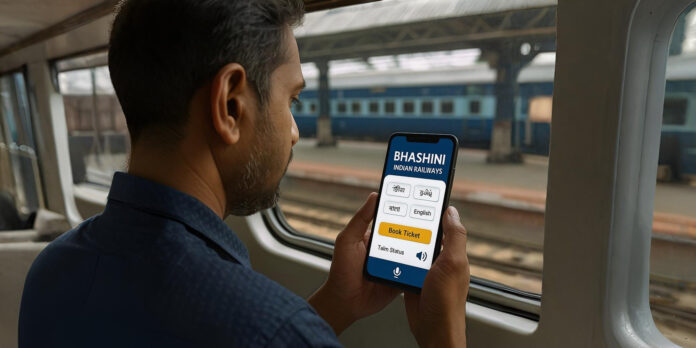
India's Railways BHASHINI

Twenty-three million daily passengers. Dozens of languages. One breakthrough.
India’s railway system is about to speak the language of its people—literally.

This week, the Centre for Development of Advanced Computing’s BHASHINI division and Indian Railways’ digital arm, CRIS, signed a landmark agreement. The goal: embed BHASHINI’s AI-powered language platform into ticketing systems, announcements, and service interfaces across the country.

From Fragmented Access to Frictionless Travel

BHASHINI is the flagship of India’s national language technology mission. It uses advanced natural language processing (NLP) models to support communication in over 22 Indian languages. Now, it’s heading to train stations.

With this integration, passengers will soon book tickets, hear live updates, and ask questions in their preferred tongue—whether it’s Marathi, Tamil, or Odia. The platform will also process anonymous voice and text inputs to train better models for underrepresented languages.

An Upgrade for 1.4 Billion People

India’s railway is one of the world’s busiest public systems. But for many, navigating it in English or Hindi has been a barrier. This partnership removes that friction. More than convenience, it delivers inclusion—particularly for rural users and non-native speakers.

By combining AI with public infrastructure, India is not just scaling services; it’s rethinking who those services are for. This shift aligns with the country’s broader Digital Public Infrastructure (DPI) strategy, focused on building scalable, secure, and inclusive tech ecosystems.

A Case Study for Public-Sector AI

The BHASHINI-CRIS deal signals a new chapter for AI in the public sector. Rather than centralizing information in dominant languages, the project decentralizes access—empowering India’s vast linguistic diversity.

In an industry often focused on enterprise solutions, India’s approach offers something different: multilingual AI as a public good. For localization experts and policymakers alike, it’s a moment worth watching.

Translated’s Lara Now Runs on Custom Hardware Co-Designed With Lenovo for Time-Critical AI Localization

0
Lara translation AI Lenovo

Lara now runs on new hardware co-designed by Lenovo and Translated for the translation task, outperforming generic LLMs in both quality and speed, and unlocking new use cases in localization.

ROME, Jun 10, 2025 — Translated, a leader in AI-powered language solutions, today announced a major milestone for its translation AI, Lara, made possible through close collaboration with Lenovo, a global leader in high-performance computing. Built for high-volume production environments, Lara now delivers what was once considered a tradeoff: the fluency and reasoning of an LLM, and the low hallucination of machine translation, both now delivered with near-instant responsiveness.

To achieve this result, Translated co-designed a new hardware solution with Lenovo, purpose-built for translation, and developed an innovative decoding system to fully leverage the latest chips. Optimized for latency-critical scenarios like live chats, trading, and news, Lara now achieves sub-second P99 latency across the 50 most widely spoken languages. This breakthrough sets a new standard for high-quality, low-latency translation and enables new cost-efficient applications, such as only translating the portion of content needed upfront, while processing the rest on demand. Lara is now 10 to 40 times faster than leading LLMs in translation tasks, while delivering higher quality, making it a perfect fit for modern business workflows.

To obtain this outcome, Lenovo provided ThinkSystem servers powered by NVIDIA’s GPUs, the world’s most advanced processors for AI workloads. Each server supports eight of the latest high-speed, interconnected GPUs, powering advancements in AI, including large language models, machine learning, model training, and high-performance computing. Through intense co-design work, Translated and Lenovo were able to optimize their architecture for the translation task. ThinkSystem servers were installed in two data centers in Washington and California, strategically positioned near major internet hubs to keep network latency between Lara and the main internet backbones under one millisecond.

To further enhance system responsiveness, Translated’s engineering team designed a new architecture, an industry first for translation AI. It combines the strengths of traditional machine translation and generative AI. This unique approach enables parallelized, context-aware generation of translations, significantly accelerating response time without compromising quality.

“AI only works when it solves problems in real scenarios, with the speed required to support business at scale. We reached this milestone thanks to a partner that worked with us in the same way we work with our clients, by sharing goals, committing fully, and building for long-term impact. This type of partnership makes innovation possible,” says Marco Trombetti, Translated’s CEO.

“Our advanced technology, combined with Translated’s vision, has allowed us to achieve unprecedented speed and quality in the language industry,” says Alessandro de Bartolo, GM, Italy, Infrastructure Solution Group, Lenovo. “Lenovo ThinkSystem solutions represent the ultimate in AI performance, delivering powerful, reliable infrastructure for mission-critical applications. This partnership is an example of how AI can transform the way people communicate globally, offering faster and more accurate translations for an increasingly connected world.”

As part of their long-term collaboration, the two companies have also signed an agreement to implement liquid-cooling systems across Translated’s infrastructure. This will reduce energy consumption and allow for greater machine density, supporting more sustainable and scalable AI operations.

About Translated

Translated is a leading language services provider and a pioneer in using artificial intelligence (AI) to assist professional translators. The company was founded in 1999 by linguist Isabelle Andrieu and computer scientist Marco Trombetti with the mission to allow everyone to understand and be understood in their own language. In pursuit of its mission, Translated invented context-adaptive machine translation (MT) in 2012. Translated’s work is trusted by the largest translation buyers in the world and has been recognised as leading in AI-powered translation technology by IDC Marketscape, CSA Research, and Gartner.

In 2024, Translated launched Lara, a breakthrough translation AI that outperforms leading machine translation and approaches the quality of top-tier professional translators. With Lara, Translated combines the sensitivity of over 500,000 native-speaking professional translators with the speed and capability of machines, making it possible to tackle once unimaginable localisation projects. Today, Translated delivers fast, consistent, high-quality translations to over 300,000 customers in 200 languages and over 40 subject areas.

About Lenovo

Lenovo is a global technology company with a turnover of 57 billion dollars, ranked 248th in the Fortune Global 500 and serving millions of customers every day in 180 markets. Focused on a bold vision to deliver smarter technology for all, Lenovo has built its success as the world’s largest PC company with a complete portfolio of artificial intelligence-enabled, artificial intelligence-ready and artificial intelligence-optimized devices (PCs, workstations, smartphones, tablets), infrastructure (servers, storage, edge, HPC and software-defined), software, solutions and services. Lenovo’s continued investment in world-changing innovation is building a more equitable, reliable and intelligent future for everyone, everywhere. Lenovo is listed on the Hong Kong Stock Exchange as Lenovo Group Limited (HKSE: 992) (ADR: LNVGY). To learn more, visit www.lenovo.com and follow the latest news on StoryHub.

PRESS CONTACT

Translated

Silvio Gulizia, Head of Content, silvio@translated.com

Lenovo

Pietro Parodi, PR & Communication Leader, Italy & Israel – pparodi1@lenovo.com

Live AI Translation in iOS 26: Apple’s Bold Move into Real-Time Multilingual UX

0
Apple Live AI Translation

Seamless, On-Device Translation in Your Everyday Apps

Apple’s WWDC 2025 introduced Live Translation, a deeply integrated feature arriving in iOS 26, iPadOS 26, and watchOS 26. No longer confined to a standalone Translate app or buried in Siri, real-time translation now lives in Messages, FaceTime, and Phone. By embedding compact AI models directly on your device, Apple aims to make cross-language conversations feel as natural as an ordinary chat—without your data ever leaving your hardware.

Two-Way Text and Voice, Effortlessly

In Messages, typing a message automatically renders it in your recipient’s language beneath the text field. When they reply in another language, your view instantly flips back into your own. There’s no need to switch modes or copy and paste—just type and send. And it works even if your friend is on Android, breaking the old Apple-only barrier.

During FaceTime calls, captions appear in your chosen language at the bottom of the screen. You still hear the speaker’s voice, but you also see translated subtitles rolling by in sync. For regular Phone calls, Apple adds a synthetic voice that reads translations aloud while captions scroll on-screen. It’s the equivalent of having a simultaneous interpreter but without the awkward pauses.

Privacy-First Multilingual AI

Unlike cloud-based translation services, Apple performs every step of the process on-device. These AI models—optimized for Apple Silicon—never upload your conversations to remote servers. For privacy-minded users and organizations handling sensitive information, this on-device approach offers peace of mind that data never leaves your phone, tablet, or watch.

Broad Language Coverage and Fast Expansion

At launch, Live Translation supports seventeen major languages, with eight available in Messages and five in Phone and FaceTime. Apple has already promised eight additional languages—Danish, Dutch, Norwegian, European Portuguese, Swedish, Turkish, Traditional Chinese, and Vietnamese—before the end of 2025. This roadmap ensures that content creators, journalists, and teams working across global markets can rely on native-grade translation without long waits for new language support.

A Unified Translation Ecosystem

Live Translation isn’t limited to one device. iPadOS 26 brings the same real-time capabilities to group chats, while watchOS 26 enables direct translation in Messages on Apple Watch Series 9, Series 10 and Ultra 2. Moreover, Apple’s newly opened Foundation Models Framework invites developers to build these on-device translation features into third-party apps and workflows, extending the reach of Live Translation across the entire ecosystem.

Implications for the Language Industry

For localization professionals and multilingual journalists, Apple’s shift represents a major redefinition of translation as infrastructure rather than an add-on. Interviewing sources without an interpreter, producing instant subtitles for video content, and handling multilingual customer support chats all become faster and more cost-effective. Even entertainment formats—like karaoke in Apple Music—stand to benefit from live lyrics translation, opening up global audiences.

Apple didn’t invent real-time translation, but by weaving it seamlessly into everyday apps and prioritizing user privacy, they are setting a new standard for multilingual user experience. As Live Translation rolls out across devices and languages, content creators, educators, and global teams must adapt to a world where language barriers dissolve with a single tap.

The Rise of AI and the Fall of the Gatekeeper

0
Lock on gate

For much of modern history, access to specialized knowledge has required one thing above all else: a professional. Whether it was legal advice, tax planning, language translation, or even medical consultation, the path to expertise ran through a narrow gate, guarded by individuals who possessed not just the relevant skills and knowledge, but also the credentials, prestige, and legal authority to deploy them. These services were expensive, and for many, prohibitively so.

What we are witnessing today is nothing short of a transformation. With the rise of increasingly capable artificial intelligence (AI), and the commercial drive to embed it in user-friendly applications, we are entering a new era in which access to expert-level support is being radically expanded, and in some cases democratized. The impact could be as profound as the printing press or the internet itself.

In the past, if you wanted to register a business, you would call an accountant. If you needed to publish a website in another language, you’d hire a translator. If you sought advice on writing a rental contract, you’d turn to a lawyer. The professionals were the custodians of knowledge, and their services came at a premium. Those who could not afford them were often left to navigate blindly or simply went without.

Today, however, an increasing number of people are turning to generalist AI systems like ChatGPT to help draft contracts, answer tax questions, translate documents, or even troubleshoot a health concern. This tendency will increase with the rise of more specialized AI systems. While current tools are still imperfect, and their limitations are real, they’re already proving remarkably useful to millions. Ask around, and you’ll hear story after story of individuals cutting out the middleman: doing their own legal research, crafting business plans, or getting personalized guidance in real time and often at no cost.

Critics, many of them professionals themselves, warn of the risks. A misfiled tax return, a mistranslated legal clause, a misunderstood health symptom — these are not trivial concerns. And they’re right: The stakes are often high, and the consequences of poor advice can be severe.

But what critics sometimes fail to appreciate is the sense of empowerment that comes from finally having access. For generations, the best advice was reserved for those who could afford it. Now, that advice, or a version of it, is becoming available to almost anyone with an internet connection. The dream of bypassing the gatekeeper isn’t new. What’s new is that the gate is actually starting to open.

This shift doesn’t spell the end of professionals, but it does herald a more competitive, pluralistic landscape. In the future, experts will compete not just with each other, but with AI systems that offer immediacy, affordability, and increasingly, accuracy. In domains where regulation demands human oversight — such as medicine, law, and engineering — human professionals will likely remain essential. But in many other areas, AI will become the default, much like the dishwasher or the Global Positioning System (GPS).

Of course, we will need rules. Automation, even intellectual automation, demands oversight. Just as we regulate pharmaceuticals, vehicles, and financial systems, we’ll need to regulate AI-powered services to ensure safety, accuracy, and accountability.

But one thing is clear: The monopoly on knowledge is ending. The prestige and power once concentrated in the hands of a few is beginning to spread more widely. And while the transition will be messy and uneven, the long-term result may be one of the most significant expansions of access and opportunity in recent memory.

The professionals may not like it. But for the rest of us — normal people, as well as innovators, creators, and entrepreneurs — it’s the future knocking.

FlowFit Now Integrates with RWS Trados Cloud for Unified Localization Management

0
FlowFit Trados integration

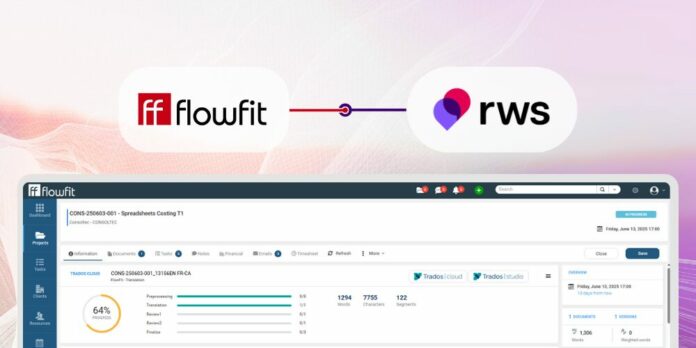
Montreal, Canada – Consoltec, developer of the FlowFit Translation Business Management System (TBMS), is proud to unveil its latest integration with RWS Trados Cloud, reinforcing its vision of end-to-end, connected localization workflows.

This integration enables FlowFit users to seamlessly manage projects that rely on RWS’s powerful translation and review tools. By reducing the friction between platforms, Consoltec is helping teams move faster, collaborate better, and scale operations without adding complexity.

Unlocking Cross-Platform Efficiency

The FlowFit–RWS Trados Cloud connection simplifies project management by:

  • Automatically syncing project details and files between systems

  • Enabling real-time monitoring and updates within FlowFit

  • Centralizing all business, linguistic, and financial information

This gives language service providers and enterprise localization teams a holistic view of operations while enabling linguists and reviewers to work within their preferred CAT environment.

“As localization processes become more complex, it’s our job to simplify them,” says Jean-François Mur, CEO of Consoltec. “This integration offers clients the reliability of FlowFit with the linguistic sophistication of RWS—delivered in one seamless experience.”

Designed for Real-World Demands

Whether serving regulated industries, fast-paced marketing teams, or large-scale multilingual projects, this integration ensures your team has the right tools—working together at the right time. It also strengthens compliance, quality control, and accountability across all project phases.

About Consoltec

Consoltec is a Montreal-based company dedicated to helping language service providers and enterprise localization teams manage the business of translation. Its flagship product, FlowFit, offers a flexible, secure, and customizable Translation Business Management System (TBMS) tailored to the needs of modern localization teams. With growing integrations and a client-first approach, Consoltec continues to shape the future of translation project management.

Reverso Releases First-of-Its-Kind, All-in-One Default Translator in Apple iOS

0
Reverso translation app

Latest app provides instant translation in iOS 18.4 and up along with an innovative dictionary and upgraded learning tools 

NEW YORK, June 9, 2025 — Reverso, the global leader in online language tools, has released a powerful new version of its mobile app, Reverso Translate and Learn 15.3, the first of its kind able to be set as a third-party default translation app on iPhones and iPads running iOS 18.4 and higher.  

“Our latest Reverso app is an all-in-one translation tool right there with you whatever, wherever, whenever you are reading, writing, and communicating on your phone or tablet,” said Théo Hoffenberg, founder and CEO of Reverso. “We’re extremely proud of our collaboration with Apple in making this game-changing integration happen.” 

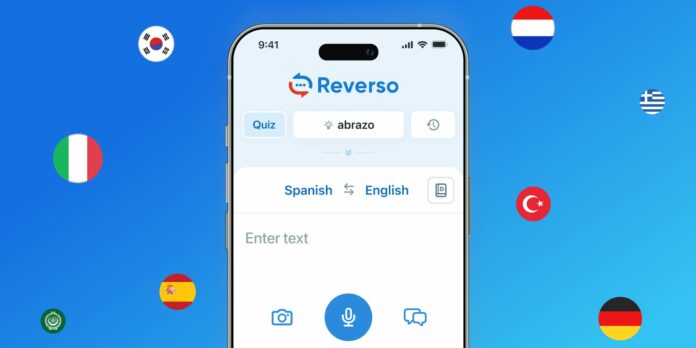
Providing one-tap AI translation for over 100 language combinations in texts, emails, instant messages, news articles, books, and more, the state-of-the-art app goes beyond translation to promote genuine mastery with a robust suite of learning capabilities: 

  • Translation by text, image, voice, or real-time conversation providing relevant, real-world results in context  
  • An autoplay mode with a pronunciation interface that reads target vocabulary aloud for studying as well as listening and speaking practice 
  • An English dictionary with over 500,000 clear and concise meanings and examples for words, expressions, idioms, acronyms, informal language, and inflected forms 
  • An enhanced learning dashboard that sets goals, shows streaks, and tracks progress 
  • Quizzes, flashcards, word lists, synonyms, conjugation guides, and other study aids 

For over the past 20 years, Reverso and its dedicated team of engineers, data scientists, and linguistic specialists have been driving innovation in translation and language learning with its proven AI-based models. 

“The more sophisticated our technology gets, the more human our mission at Reverso becomes,” said Hoffenberg. “We’re passionate about going beyond one-off, soon-forgotten lookups to lifelong learning so that people can understand what they read, chat with natives, work with foreigners, and meaningfully communicate with people across languages, across the globe.” 

Reverso’s app has 5 million active monthly users and over 30 million downloads. It recently won the 2025 People’s Voice Webby Award for Learning & Education Apps & Software and has been featured as the App of the Day in Apple’s App Store in over 50 countries.  

Download the latest version of the Reverso app for iOS: https://apps.apple.com/us/app/reverso-translate-and-learn/id919979642  

The app is also available for Android. Discover more: https://context.reverso.net/translation/mobile-app/  

About Reverso 

Reverso is a global leader in online translation and language tools, helping millions of people and professionals read, write, learn, and communicate across the world’s languages. For over 100 language combinations, Reverso provides AI-powered contextual voice, image, text, and document translation and an all-in-one learning ecosystem with a top grammar checker and user-first English dictionary. Each month, it serves over 50 million active users on the web, 5 million app users, and 5 million users in corporate environments.  

Press Contact

John Kelly
Boldsquare
john.kelly@boldsquare.com

Acolad Expands AI Data Services with Strategic Hires

0
Acolad AI Data Services

Acolad, the global leader in language and content solutions, has announced the expansion of its AI Data Services Solutions, marking a bold step in shaping the future of AI data excellence. This offering is a key milestone in the group’s innovation roadmap, rooted in three decades of language and content leadership.

As part of this strategic expansion, Acolad has appointed Sang-Do Lee as Business Development Director, to lead the company’s AI and data growth strategy in the North American market, and Melina Carullo as Head of Production for the AI Data division.

Acolad’s AI Data Services solutions address the increasing global demand for compliant and high-quality datasets – a critical need, as data quality remains key in successful AI implementation.  Acolad’s solution is built to close the gap in quality data needs and availability, leveraging a combination of human expertise and advanced technology.

The offering includes a comprehensive suite of services:

  • Data collection and annotation
  • Content evaluation, rating, and transcription
  • Multilingual generation, rewriting, and translation

 These services support the end-to-end training and scaling of AI and machine learning models, delivered with the precision and scale required by enterprise clients.

As it celebrates its 30th anniversary, Acolad capitalizes on its extensive know-how and hallmark combination of technological innovation with human expertise to offer secure, scalable, and customized AI data services. This strategic expansion reinforces the company’s commitment to helping organizations overcome complex data challenges and fully harness the competitive advantages of AI for faster, smarter, and more meaningful results.

At the same time, the appointments of Sang-Do Lee as Business Development Director for North America and Melina Carullo as Head of Production reflect the strategic importance of Acolad’s new AI Data Services division within the group’s broader growth agenda. With a strong track record in business development and strategic partnerships – particularly across AI, localization, and digital content – Lee will lead the expansion of the offering in the North American market. As for Carullo, her decade of experience in data services, along with her proactive mindset and dynamic leadership style, will be key to shaping the operational success of the new division and ensuring seamless project delivery at scale.

“AI Data Services is built on the strength of our people and the precision of our processes,” commented Jennifer Nacinelli, Program Manager leading the AI Data initiative at Acolad. “With these new additions to the team, we’re excited to scale what we’ve started and continue delivering data with impact.”

“The demand for high-quality, multilingual data has never been greater, and Acolad is uniquely positioned to meet it,” added Daniel Gray, Acolad US Sales Vice-President. “With the launch of our AI Data Services and Sang-Do and Melina joining the team, we reinforce our commitment to helping organizations accelerate their AI strategies with trusted, scalable solutions. It’s a pivotal moment for our growth in this market – and for our clients’ success.”

Both updates are part of the organization’s ongoing transformation and investment in innovation and strategic growth. This dual announcement reinforces Acolad’s commitment to combining technological advancement with human expertise to deliver solutions that meet the evolving needs of global enterprises.

For more information about Acolad’s AI Data Services, visit www.acolad.com/en/services/data-services.html.


About Acolad

Acolad is the global leader in content and language solutions. Its mission is to support companies in every industry to scale across markets and enable growth through cutting-edge technology and localization expertise. Established in 1995, the group is present in 22 countries across Europe, North America, and Asia, with over 1.600 employees supported by a network of +10.000 linguists around the world.  www.acolad.com