DigitalTolk Makes Second Acquisition in Less Than a Year With Hieronymus Ltd

0
Digitaltolk

DigitalTolk, a leading European language and technology company, has announced the acquisition of Hieronymus Ltd, Switzerland’s premier legal translation firm. The acquisition is DigitalTolk’s second acquisition in less than a year, following the purchase of German-Swiss translation company 24translate in July 2025, further strengthening the group’s position as a premium provider of language services across the DACH region and Europe.

Hieronymus, founded in 2007 and headquartered in Zurich, has built a distinguished reputation as a go-to translation partner for Switzerland’s most established legal and financial clients. The company is unique in the translation industry: projects are overseen by a Senior Lawyer-Linguist who is licensed to practice law in Switzerland. Its client base includes leading Swiss law firms, banks, insurance companies, and corporate legal departments.

“Hieronymus stands out for one reason above all: the unmatched quality of its lawyer-reviewed translations. That level of precision is critical for serving highly regulated sectors across Europe. By bringing Hieronymus together with 24translate and DigitalTolk’s technology platform, we now cover the full spectrum — from AI-assisted translation to the highest standard of certified legal work,” said Virpal Singh, CEO, DigitalTolk.

Hieronymus will continue to operate under its own brand. Its team, including all lawyer-linguists and project managers, will remain in place. Existing clients will experience no change in service quality or delivery, the same people, the same Swiss precision.

“Hieronymus was built on a clear premise: that legal translation requires the same level of rigour and accountability as legal advice itself. I am proud of how consistently these standards have been upheld over the years. Seeing the company continue to evolve and extend its reach internationally is a strong testament to the exceptional team that drives it today,” said Paula Reichenberg, Founder, Hieronymus Ltd.

A full-spectrum language services group

The acquisition brings together three complementary capabilities that, combined, cover the full spectrum of professional language needs including:

  • Hieronymus continues to do what it has always done: deliver premium legal translation for Switzerland’s most demanding clients, with every project overseen by a Senior Lawyer-Linguist licensed to practice law in Switzerland. That standard is unchanged.
  • 24translate handles professional translation for financial services, insurance, and regulated industries across Germany and Switzerland — drawing on a network of over 7,000 translators and AI-assisted workflows that enable faster turnaround on high-volume work.
  • DigitalTolk provides AI-powered interpretation and translation technology across 210+ languages, including PretPal, a real-time AI interpretation tool for live multilingual conversations, and Secure Translations, an enterprise suite built for organisations with sensitive multilingual content needs.

For clients who need certified legal precision, Hieronymus remains the answer. For everything else across the language spectrum, the group now offers a seamless path to the right solution.

“Hieronymus is exactly the kind of acquisition we look for: a market leader with an irreplaceable reputation, operating in a segment where quality is non-negotiable. We are systematically building a group that combines the speed of AI with the rigour of human expertise — and Hieronymus sits at the most demanding end of that spectrum,” said Anshul Tyagi, Head of Corporate Development, DigitalTolk.

Together, the group offers what few language service providers can: the speed and scalability of AI-powered translation where appropriate, and the precision of human expertise — including lawyer-reviewed certified translation — where the stakes demand it.

Data sovereignty by design

The acquisition further reinforces the group’s commitment to European data sovereignty. Hieronymus has always operated with strict confidentiality standards aligned with Swiss data protection legislation and adhering to the same professional confidentiality that lawyers are bound by. DigitalTolk processes data exclusively within Switzerland and the EU, with no exposure to US jurisdiction or the CLOUD Act. All data centres hosting information relating to Swiss clients are located in Switzerland, ensuring that data is processed, transferred, and handled exclusively within the country. For clients in banking, insurance, legal, and government sectors, this is not a technical detail — it is a requirement.

Continued growth across europe

DigitalTolk was founded in Stockholm in 2015 and has grown into one of Europe’s leading language technology companies, combining proprietary AI with a network of over 6,000 professional interpreters and — through 24translate and now Hieronymus — more than 7,000 professional translators. The company serves public sector agencies, healthcare providers, courts, banks, insurance companies, and corporations across Scandinavia, the DACH region, and the UK.

The transaction was financed with DigitalTolk’s own funds.

About DigitalTolk

DigitalTolk is a leading Swedish language service provider offering interpreting, translation, and messaging across 210+ languages. Its award‑winning booking system delivers rapid matching, emergency access in under 15 seconds, and transparent feedback loops. Trusted by 1,000+ clients, DigitalTolk combines technology and human expertise to streamline multilingual communication.
The Week in Review: Language Industry News June 2-8

0
Week in Review June 1-8

This week’s news shows the language industry continuing to expand in two powerful directions: enterprise AI systems becoming more accountable, contextual, and aligned with real‑world stakes, and community‑driven language work gaining new institutional and technological support. The field is redefining what responsible multilingual communication looks like. 

Expansion

Alexa Translations has reintroduced itself as Apertera, marking a shift from traditional language services to an AI‑driven enterprise communication platform. The new brand reflects rising expectations around enterprise AI’s transition from generic, secure tools into systems that accumulate context, adapt over time, and deliver precision for complex work. Drawing on more than two decades of domain expertise, Apertera frames its evolution as an expansion beyond translation into adaptive AI workflows that help organizations manage, scale, and refine enterprise communication with long‑term alignment and professional oversight.

Interpreters Unlimited has become the first language service provider (LSP) to add AI‑powered interpretation and translation services to GSA SIN 541930, enabling government agencies to procure AI‑supported language services with oversight. The move aligns with intensifying national scrutiny around AI in government. IU’s hybrid model, combining AI speed with human review by qualified linguists, promises faster turnaround and lower costs while reinforcing the industry’s shift toward responsible, human-supervised AI in regulated environments. 

ModelFront has launched outcome‑based pricing, a structure where customers pay only for “saved words,” segments the AI verifies as human‑quality. Aligning cost directly with measurable automation gains, the model bundles automatic post‑editing into the workflow and gives enterprise buyers real‑time visibility into ROI through a savings dashboard. Positioned alongside similar moves by vertical‑AI companies, the shift reflects ModelFront’s push to formalize AI‑driven automation as a predictable, accountable alternative to manual post‑editing for high‑volume enterprise translation. 

Community

The University of Alicante’s Transducens group and MasterWord’s Mayan Languages Preservation Project have partnered to add Q’anjob’al to the FLORES+ multilingual evaluation dataset. Directly funding and employing native linguists while providing the technical infrastructure needed for low‑resource AI development, the collaboration expands an ongoing effort that has already translated FLORES+ into four other Mayan languages. It ensures that Q’anjob’al can be incorporated into future AI and machine translation systems, positioning digital inclusion as both a linguistic‑rights issue and a practical pathway to improving access to health, education, and justice services for Q’anjob’al speakers. 

A new article by Sydnee Cooper traces how the Linguistic Justice Foundation (LJF) is shifting the field of linguistic justice from scattered advocacy to coordinated institutional infrastructure. She highlights LJF’s emergence as the first independent nonprofit dedicated exclusively to linguistic justice, its bilingual and research‑driven approach, and the rapid growth of its cross‑sector Language Rights Pledge. The piece argues that LJF is carving out a distinct role adjacent to the LSP industry, positioning itself as a future standards‑setter and a structural force capable of reshaping how institutions understand and uphold language rights.

____________________________________________________________________________________________________________________________________________

Across enterprise AI, government procurement, nonprofit infrastructure, and indigenous language preservation, this week shows an industry building systems that will not only last, but enable these multilingual systems to flourish. Whether the goal is regulatory alignment or cultural survival, multilingual communication is no longer a service layer — it’s becoming essential, structural, ethical, and deeply strategic. 

For more stories like these, visit our News section.

Celebrating Russian Language Day at the UN

0
Russian and United Nations flags waving in the air

Russian remains one of the world’s great infrastructure languages powering diplomacy, science, and cross‑border industry. Even as global politics shift, the demand for Russian expertise hasn’t vanished, but has become sharper, more technical, and more strategically defined. It’s a language that continues to anchor serious work across sectors, and that endurance is exactly why the UN reserves a day to recognize its cultural depth and operational weight as one of the six official languages of the UN.

Pushkin’s Legacy and the Birth of Modern Russian

Russian Language Day, observed annually on June 6, marks the birthday of Alexander Sergeyevich Pushkin, celebrated as “the greatest Russian poet” and the founder of modern Russian literature. In 2010, a UN Department of Global Communications initiative created the observance along with commemorative days for the UN’s five other official languages. The United Nations Educational, Scientific and Cultural Organization (UNESCO) later issued its own recognition and programming guidance, aligning the observance with its cultural and educational mandate to better promote multilingualism, cultural diversity, and equal linguistic visibility. 

Russian’s global reach is substantial: it is spoken by well over 200 million people worldwide, with a strong presence across Eastern Europe, Central Asia, and the Caucasus. Its historical role as a lingua franca in the region and its continued use in scientific and technical cooperation reinforce its status as a major world language. These demographic and institutional factors help position Russian as both a cultural heritage language and a living diplomatic tool.

UN Celebration

Across UN duty stations, Russian Language Day is celebrated with programming that blends cultural appreciation and multilingual engagement. The UN describes the day as an opportunity to “increase awareness and respect for the history, culture and achievements” of the language, while aiming “to entertain, as well as to inform.”

Typical events generally include Pushkin poetry readings, theatrical performances, exhibitions, and language‑focused activities that highlight the richness of Russian literature and the diversity of its speakers. These observances also spotlight the essential work of interpreters, translators, editors, verbatim reporters, and terminologists who maintain Russian’s parity across UN documentation and diplomatic processes. A UN multilingual workforce described the work as “a uniquely diverse multilingual community” united by the pursuit of excellence in communication and decision‑making.

The UN consistently emphasizes that multilingualism is a core value, essential for participation, tolerance, and effective communication across the organization’s work.

Russian as Global Infrastructure

Russian is one of the six official languages of the United Nations, used across all major bodies and embedded in the organization’s multilingual architecture. The UN notes that maintaining balance among the six official languages has been an ongoing institutional priority since 1946, with multilingualism recognized as “an essential factor in harmonious communication among peoples” and a driver of more effective outcomes in diplomacy and governance.

In the global language services industry, Russian remains a consistently requested language, especially in sectors such as energy, defense, international law, and technical documentation. While demand fluctuates with geopolitical conditions, Russian’s institutional status, geographic distribution, and technical complexity keep it structurally important for language service providers (LSPs), which is supported by its official UN role and its widespread use across Eurasia.

Russian Language Day at the UN is therefore more than a cultural observance. It affirms Russian as a global infrastructure language that carries diplomacy, scientific collaboration, and cross‑border communication. In celebrating Pushkin, the UN celebrates the linguistic architecture that enables its multilingual work.

PanSALB Appoints New Chief Executive Officer (CEO)

0
Dr. Keaobaka Seshoka headshot

The Accounting Authority (Board) of the Pan South African Language Board (PanSALB) has announced the appointment of Dr Keaobaka Seshoka as the new Chief Executive Officer (CEO), effective from 1 June 2026.

In her role as CEO, Dr Seshoka will serve as PanSALB’s Accounting Officer, overseeing operations and leading initiatives to promote multilingualism and protect linguistic rights across South Africa during her fixed five-year term.  She holds a Doctor of Philosophy (PhD) in African Languages, Master of Business Leadership (MBL) and several academic qualifications in language and information science. She is currently pursuing a Doctor of Business Leadership (DBL) at UNISA.

She joins PanSALB from the North-West University, where she held the position of Director of the Language Directorate and brings over 20 years of experience as a linguist, academic and strategic leader.

“We are thrilled to welcome someone of Dr Seshoka’s caliber as our CEO,” said Prof. Lolie Makhubu-Badenhorst, Chairperson of the Board. “Her extensive experience in elevating the previously marginalised languages, along with her dedication to ensuring that every language has the right to be, will greatly benefit us.”

She added that the Board has complete confidence in Dr Seshoka’s commitment to advance the Board’s strategic vision in fulfilling its constitutional mandate. “We also want to express our gratitude to the Executive Head of Languages, Mr Julius Jabavu Dantile, who stepped in as Acting CEO and ensured the continued smooth functioning of the organisation during the vacancy period.”

Dr Seshoka’s appointment follows a thorough recruitment and selection process conducted by the Board.

About PanSALB

The Pan South African Language Board (PanSALB) is a constitutional body mandated to advance multilingualism, protect language rights, and develop South Africa’s previously marginalised languages. It promotes linguistic diversity across all official languages, including Khoi, Nama, San, and SASL, strengthening social cohesion through equitable language policy. 

KUDO Named Official Interpreting Tech Sponsor for LocWorld 2026 and 2027

0
KUDO

KUDO, one of the world’s leading multilingual enterprise communication platforms, has announced a new multi-event partnership with LocWorld as the official Interpreting Tech Partner for all LocWorld conferences taking place throughout 2026 and 2027. Under the agreement, KUDO will serve as LocWorld’s exclusive Interpreting Tech Partner across all four events.

The partnership spans four major international events across Dublin and Vancouver, further highlighting KUDO’s position at the intersection of enterprise multilingual communication technology, AI-powered speech translation and caption, and professional interpretation workflows and multilingual communication expertise.

As part of the sponsorship, KUDO will exhibit at the upcoming LocWorld Dublin 2026 conference, where attendees will be able to experience KUDO AI’s real-time speech translation and captions across participating conference sessions as well as at their booth, 211.

Using KUDO’s scan-to-access technology, attendees can instantly access multilingual audio and captions in ten languages directly from their own devices by scanning a QR code — with no app downloads or account creation required.

“LocWorld brings together some of the most influential leaders shaping the future of multilingual communication, localization, and global content,” said Renato Beninatto, CEO of LocWorld. “We are excited to partner with KUDO across 2026 and 2027 to showcase how AI-powered speech translation and professional interpretation technology can work together to make global communication more accessible, scalable, and enterprise-ready.”

The partnership also reflects KUDO’s broader strategy of bridging enterprise AI communication workflows with the expertise of the global language industry. By combining scalable AI speech translation with professional human interpretation and multilingual quality expertise, KUDO continues to expand its role as a multilingual communication platform for global enterprises, events, and language service providers who are looking to expand their product offering.

Attendees visiting LocWorld Dublin 2026 will also be able to meet the KUDO team onsite to explore:

  • AI-powered speech translation
  • Professional interpretation workflows
  • Hybrid AI + human multilingual communication
  • Multilingual captions and accessibility
  • Enterprise event and meeting solutions
  • Partner and reseller opportunities for language service providers

KUDO’s event deployment includes safeguards ensuring that conference presentation content is not used to train AI models. It currently supports more than 200 spoken and sign languages across virtual, hybrid, and in-person meetings and events.

To learn more about KUDO at LocWorld Dublin 2026, visit the KUDO booth (211) during the event or visit kudo.ai.

About LocWorld

LocWorld is a leading international conference for localization, translation, and global content professionals, bringing together enterprise leaders, language service providers, technology innovators, and multilingual communication experts from around the world. Through conferences in Europe and North America, LocWorld explores the technologies, strategies, and trends shaping the future of global business and multilingual communication.

University of Alicante Partners With MasterWord to Bridge Q’anjob’al Maya Digital Divide

0
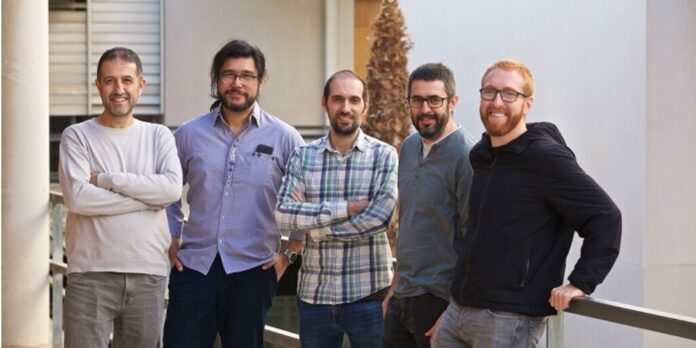
Researchers from the UA Transducens research group, from left to right: Juan Antonio Pérez Ortiz, Andrés Lou Ríos, Víctor Sánchez Cartagena, Felipe Sánchez Martínez and Miquel Esplà Gomis.

University of Alicante (UA) reserach group Transducens and MasterWord (specifically its Mayan Languages Preservation Project) have partnered to bridge the digital divide for the Mayan language Q’anjob’al. Despite having a negligible online presence, the language is spoken by more than 170,000 people in the Guatemalan department of Huehuetenango, and several thousand more in Chiapas.

The UA Transducens group recently coordinated an in-person technical workshop in Antigua, Guatemala, supervised by UA researcher Andrés Lou. The workshop focused on translating the well-known FLORES+ evaluation dataset into four Mayan languages: K’iche’, Kaqchikel, Q’eqchi’, and Mam. The team has now announced that a fifth language, Q’anjob’al, will be added thanks to the alliance with MasterWord.

Under this collaborative partnership, the MasterWord Foundation is ‘directly funding and remunerating native Q’anjob’al translators and reviewers under fair working conditions, whilst the UA provides its technical and methodological infrastructure, as well as its expertise in artificial intelligence technologies for low-resource languages.’

Complementing this alliance is Guatemala’s Fundación Proyecto Lingüístico Francisco Marroquín (Francisco Marroquín language project foundation), acting as a third pillar collaborating with both entities to recruit and supervise the native Q’anjob’al linguists who will carry out the translation work.

FLORES+ currently covers more than 200 languages worldwide. The four translated Mayan languages will soon be integrated into this multilingual dataset, with Q’anjob’al following shortly after. By integrating Q’anjob’al into FLORES+, the project ensures that developers and researchers worldwide can incorporate this Mayan language into future artificial intelligence models.

The translation work is scheduled to begin in July 2026 and will last for four months. To comply with the open-source spirit of the FLORES+ dataset and UNESCO recommendations, all resulting Q’anjob’al translations will be published under an open licence (Creative Commons) and hosted in public, open repositories.

According to MasterWord’s CEO Ludmila Golovine, linguistic rights are human rights, and technology must be a bridge, not a barrier, to preserving indigenous heritage. She added that by aligning their active on-the-ground network and funding with the machine translation expertise of the University of Alicante, they are ensuring that the benefits of digital innovation flow directly back to the communities keeping these languages alive.

Reflecting on the social impact of the project, Juan Antonio Pérez Ortiz, one of the two principal investigators from the University of Alicante, added: “Working alongside MasterWord, the Mayan Languages Preservation Project, and the Fundación Proyecto Lingüístico Francisco Marroquín allows our research to achieve its true social purpose. This is not just about training algorithms; we are building an open digital foundation validated by the communities themselves.”

“These efforts will pave the way for machine translation systems that make access to essential health, education, and justice services easier for thousands of Q’anjob’al speakers,” explained Víctor Sánchez Cartagena, co-principal investigator for the project at the UA. The University of Alicante research team involved in this project also includes Felipe Sánchez-Martínez, director of the Transducens research group, and researchers Andrés Lou Ríos and Miquel Esplà Gomis.

About UA’s Transducens

Transducens is a research group at the University of Alicante in Spain focused on machine translation, digital libraries, and computer‑assisted education. With over 25 years of academic expertise, the team develops technologies for low‑resource languages, leads major EU‑funded MT projects, and contributes open‑source tools such as Apertium while advancing multilingual AI research and cultural preservation.

About MasterWord

MasterWord is a global language‑access company providing interpreting, translation, multimedia, training, staffing, and AI‑driven solutions. Based in Houston, it supports organizations across healthcare, government, energy, and enterprise sectors, helping clients connect across languages and cultures through comprehensive services, supported languages, and professional development resources. Operating under the mandate of the UNESCO International Decade of Indigenous Languages (2022–2032), it actively leads the Mayan Languages Preservation Project through its MasterWord Foundation.

Boostlingo Named to Inc.’s 2026 Best Workplaces List for Fourth Consecutive Year

0
Boostlingo awarded named to Inc.'s Best Workplaces list 2026

Boostlingo, a leading language access technology and services provider, has announced it has been named to Inc.’s 2026 Best Workplaces list for the fourth year in a row. The annual list honors American companies that have built exceptional workplaces and vibrant cultures that support their teams and businesses, whether in-person, remote, or hybrid.

The award is the result of a comprehensive measurement and evaluation of hundreds of applicants. The process included a detailed employee survey conducted by Quantum Workplace that covered critical elements such as management effectiveness, perks, professional development, and overall company culture. Each company’s benefits were also audited to determine the overall score. Boostlingo is honored to be included among the 507 companies recognized this year.

“Being named an Inc. Best Workplace for four consecutive years is an incredible honor because it reflects the people who make Boostlingo what it is,” said Bryan Forrester, CEO of Boostlingo. “We hire people who believe deeply in our mission to expand language access and who bring that purpose into their work every day. When people are trusted to lead, take calculated risks, and bring their creativity to the workplace, it creates a culture where innovation is not limited to a role or title. That is what our employees feel, and that is what makes this recognition meaningful.”

Boostlingo’s workplace culture is rooted in its mission to expand language access and help organizations communicate across language barriers. The company supports interpreters, customers, and communities through technology that makes language services more accessible, efficient, and scalable.

“Culture is not something you set once and walk away from. It is a daily practice,” said Nina Daugherty, Chief People Officer at Boostlingo. “Our Boosties do not just sustain this culture. They are this culture. Language access is fundamentally about dignity, and we cannot build products rooted in empathy, curiosity, and respect for differences unless our internal culture reflects those same values. When our team feels heard, included, and empowered, that energy flows outward into every interpreter relationship, every customer interaction, and every barrier we help break down.”

“This year’s Best Workplaces list goes beyond great company culture. It highlights companies making meaningful and sustained investment in their employees,” says Bonny Ghosh, editorial director at Inc. “Even in a labor market that favors employers, these companies understand that an intentional and authentic commitment to their teams drives stronger employee retention, engagement, and ultimately, a stronger business overall.”

To view the full list of winners, visit Inc.com.

About Boostlingo

Boostlingo is an Austin-based language access technology company that helps organizations communicate without barriers. Its platform brings together video, phone, and AI interpreting, translation, interpreter management and scheduling, and multilingual meeting and event solutions to help customers expand access to interpretation and multilingual communication.

About Inc.

Inc. is the leading media brand and playbook for entrepreneurs and business. Through its journalism, Inc. aims to inform, educate, and elevate the profile of its community: the risk-takers, the innovators, and the ultra-driven go-getters who are creating the future of business. Inc. is published by Mansueto Ventures LLC, along with fellow leading business publication Fast Company.

About Quantum Workplace

Quantum Workplace, based in Omaha, Nebraska, is an HR technology company that serves organizations through employee-engagement surveys, action-planning tools, exit surveys, peer-to-peer recognition, performance evaluations, goal tracking, and leadership assessment.

Guildhawk Launches New Gai Labs Website to Advance Next‑Generation Trustworthy AI for Global Industries

0
Guildhawk launches GAI Labs website

Guildhawk has announced the launch of its new Gai Labs website, now live at GAI Labs official site, marking a significant milestone in the evolution of its research and development arm dedicated to building trustworthy, regulated AI systems.

Gai Labs brings together Guildhawk’s in‑house team of coders, AI engineers, data scientists and linguistics experts, alongside specialists in multilingual workflows, health and safety, fraud prevention and regulatory compliance. It unites expertise across business, academia, government, entrepreneurship, cyber security and OSINT to develop AI solutions that address real‑world safety risks.

The newly launched platform articulates Gai Labs’ founding thesis: that language is a system of trust, where meaning, authority and risk are inseparable – and where current AI systems often produce fluent outputs faster than they can be trusted.

Building AI that can be trusted in regulated environments

Gai Labs focuses on developing AI systems with traceability, auditability and human oversight built in from the start, supporting compliance with emerging global frameworks such as the EU AI Act.

Unlike general-purpose AI models prone to hallucinations and unverifiable outputs, GAI Labs takes a disciplined approach grounded in:

  • Human‑verified data
  • Domain‑specific models (Small Language Models)
  • Audit trails and compliance controls
  • Expert-in-the-loop validation

Its research and testing programs are built around real-world failure modes observed in regulated industries, with the focus on guaranteeing AI outputs are reliable in sectors where errors can have legal, clinical or financial consequences.

Backed by academic research and Innovate UK

Gai Labs builds on Guildhawk’s long-standing collaboration with Sheffield Hallam University through Innovate UK–backed Knowledge Transfer Partnerships (KTPs), recognized among the top 50 in UK history. These partnerships have delivered:

  • The development of Gai Translate, with the world’s first secure 1-click human verification
  • New methodologies for automating the labelling of multilingual datasets for fine-tuning models
  • Advancements in trustworthy AI built on high‑quality domain specific data verified by experts

Professor Alex Shenfield, Professor of Machine Learning at Sheffield Hallam University, said: “High-quality data is the foundation of trustworthy AI. Our work with Guildhawk is helping to solve a critical bottleneck in the development of intelligent systems.”

Award-winning secure AI solutions

The Gai Labs team has already produced a suite of secure AI technologies, including Gai Translate, which won the Market Disruptor of the Year Award at the 2025 Security & Safety Entrepreneur Awards (SSEA).

Developed through extensive R&D in Sheffield, UK and backed by Innovate UK, the Gai Suite of products combines AI automation with expert human review, delivering secure and accurate multilingual communication for regulated industries.

A response to rising AI risk

The launch comes at a time when malicious actors are increasingly using AI, such as deepfakes and automated deception, to exploit individuals and organizations.

David Clarke, Counter-fraud expert at Guildhawk and Founder of Gai Labs, said: We are at a tipping point. Bad actors are already using AI to deceive, defraud and harm. At Gai Labs, we are using AI to fight back. We are building systems that protect people, expose risk, and make the world safer.” He added: “Trust must be engineered into AI from day one. Without traceability, auditability and human oversight, AI creates risk. With them, it becomes a powerful tool for public good.”

Human oversight at the core of AI

Jurga Žilinskienė MBE, Founder and CEO of Guildhawk, emphasized the importance of retaining human accountability: “We have no method of relying on AI output alone. To be able to rely on it, human decision must remain central.” She added: “Our mission is clear: to make the world safer with AI. We are building systems where humans remain accountable, where every decision can be verified, and where technology enhances, not replaces, expert judgement.”

A new category: language intelligence

The Gai Labs website highlights how Guildhawk is leveraging its 25 years’ experience in linguistics and multilingual data to what it defines as “language intelligence”, a discipline focused on managing risk, meaning and compliance in both monolingual and multilingual communication.

Its flagship research, includes the development of new agentic tool to prevent fraud that has the potential to open a new category of protective controls, showing how AI is set to become a gamechanger for the world.

About Guildhawk

Guildhawk, a UK‑based language intelligence company, blends 25 years of human linguistic expertise with proprietary AI developed in its GAI Labs. It delivers secure, ISO‑certified translation, multilingual data services, and multi‑language media production for global organizations needing high‑volume, high‑accuracy, compliance‑ready content.

ModelFront Announces Outcome-Based Pricing

0
ModelFront

ModelFront, an AI‑driven machine translation quality prediction company, has announced outcome-based pricing, a win-win structure that aligns the cost of AI with the value it creates, to better provide a more secure return on investment.

ModelFront is AI to check and fix AI translations. It automatically verifies segments that humans would verify unedited, and triggers human intervention for those that need it. Enterprise translation buyers use ModelFront to automate and scale while keeping human quality. Under the outcome-based pricing structure, customers only pay for saved words — words in segments that were verified by AI. There is no AI cost for the bits of content that AI sends to manual services.

Outcome-based pricing fits naturally into ModelFront’s workflow. ModelFront checks each AI translation. If ModelFront confirms it, the customer pays ModelFront for it — and skips manual services. If not, it still goes to manual services, and the customer pays ModelFront nothing.

Under this structure, automatic post-editing is effectively included, because it applies to both the original AI translation and AI translations edited by AI. Both customers and ModelFront benefit from every improvement in AI, whether the AI that generates the translation, or the automatic post-editing provided by ModelFront. Outcome-based pricing makes it straightforward to shift budget from manual post-editing to AI. Companies translating millions of words per year now get direct net cost savings and faster turnaround times because ModelFront keeps human quality.

“AI ROI has been hard to measure, let alone predict. With ModelFront, you see exactly how many words AI automated, and with savings-based pricing, you pay for those only. As AI improves, you can shift more and more from manual services to AI. We invest in improving AI, you get safe ROI. This aligned structure is key to scaling translation while keeping human quality,” said Adam Bittlingmayer, CEO and technical co-founder, ModelFront.

The exact price per saved word depends on specifics, like volume, content types, languages, integrations and deployment requirements, just like with manual post-editing. To maintain full transparency, ModelFront provides a savings dashboard, for customers to monitor precisely how many words are being automated in their workflow. The dashboard tracks absolute word savings and percentage savings, provides totals and graphs over time, slices data by language and content type, and supports Excel report downloads to calculate ROI.

ModelFront is used by translation teams inside large enterprises, primarily Fortune 500 companies, across industries like software, law, fashion, travel and pharma. It is available across all ModelFront integrations, including Phrase (The Carlyle Group (NASDAQ: CG)), XTM (K1 Investment Management), memoQ, WorldServer and Trados Enterprise (RWS (LSE: RWS)) and GlobalLink and Wordbee (TransPerfect), and via the ModelFront API.

ModelFront works with AI-generated translation from any source, including Google Translate and Gemini (Alphabet (NASDAQ: GOOGL)), DeepL, Microsoft Custom Translator (Microsoft (NASDAQ: MSFT)), OpenAI, Claude (Anthropic) and Systran (ChapsVision).

Outcome-based pricing is establishing itself as a standard among leading vertical-AI companies like ModelFront and Sierra. These products are autopilots, not co-pilots – they actually successfully automate much of the core work, at company scale, for a specific high-value task like translation or customer support. ModelFront and its customers started shifting to outcome-based pricing in 2024.

Outcome-based pricing has also been announced for AI features launched by traditional SaaS companies like GitHub (Microsoft (NASDAQ: MSFT)), Salesforce (NYSE: CRM), Zendesk (private), Adobe (NASDAQ: ADBE) and Intercom (private).

About ModelFront

ModelFront provides AI that verifies machine translation quality and triggers human review only when needed, enabling enterprises to scale translation while maintaining human‑level accuracy. Trusted for hundreds of millions of words of high‑value content, the Palo Alto–based Gartner Cool Vendor specializes in translation quality prediction and automated post‑editing.