Acolad and Gradium Partner to Advance Enterprise-Ready AI Interpreting

0
Acolad and Gradium

Acolad, a global leader in language and content solutions, announced a strategic partnership with Gradium, a leading voice AI startup specializing in real-time voice AI technologies, including Text-To-Speech and Speech-To-Text models. The partnership reflects Acolad’s commitment to delivering secure, scalable, and governed AI-powered interpreting solutions, designed for enterprise and public-sector environments.

As organizations accelerate AI adoption, many face obstacles moving from experimentation to real-world deployment. Challenges such as data quality, multilingual coverage, real-time performance, voice quality and cultural nuance remain major barriers. Through this partnership, Acolad and Gradium are combining their complementary strengths to overcome these challenges and deliver AI-powered interpreting solutions that are ready for operational use.

Backed by decades of global experience delivering language services at scale, Acolad ensures AI voice technologies are trained, deployed, and governed with the accuracy, cultural insight, and reliability required for enterprise and public-sector use. This includes quality safeguards, operational resilience, and the integration of human expertise where needed to ensure accuracy and trust.

Gradium brings cutting-edge voice AI technology, enabling real-time voice synthesis and transcription, across multiple languages. Integrated into Acolad’s broader linguistic, data and operational ecosystem, these capabilities make real-time multilingual communication that’s both scalable and reliable.

“Acolad and Gradium are building the interpreting tools of tomorrow, powered by best-in-class AI voice solutions,” said Bertrand Gstalder, Acolad’s CEO. “By combining our deep linguistic expertise and global operational scale with Gradium’s groundbreaking voice models, we are redefining what real-time multilingual communication can achieve.”

The collaboration builds on an additional relationship in which Gradium is also a customer of Acolad’s data services, leveraging Acolad’s multilingual datasets, annotation capabilities, and language expertise to train and evaluate its voice models. Both companies are enthusiastic to expand their collaboration into a strategic partnership to develop AI-powered interpreting solutions.

“We’re proud that Acolad has chosen our voice models for production-grade deployment, proving that our research excellence translates directly into real-world impact.” said Neil Zeghidour, CEO of Gradium. “Acolad’s linguistic expertise, data capabilities, and international reach make them the ideal partner to deliver real-time, multilingual voice interactions at scale to global markets.”

Together, Acolad and Gradium are setting a new standard for AI-powered multilingual communication: one that is trusted and ready for real-world complexity.

About Acolad

Acolad is a global leader in content and language solutions. Its mission is to support companies in every industry to scale across markets and enable growth through cutting-edge technology and localization expertise. Established in 1995, the group is present in 22 countries across Europe, North America, and Asia, with over 1,600 employees supported by a network of +10.000 linguists around the world.

About Gradium

Gradium builds the AI models and infrastructure to power natural, expressive, real-time voice interactions at scale. Founded by a team from Meta, Google Brain, Google DeepMind, Jane Street and Kyutai, Gradium builds on a decade of research in AI and voice to capture rhythm, register, and cultural nuance across multiple languages.
SOSi Secures $875M Department of Justice Contract for Court Interpretation Services

0
SOSi

SOSi has been awarded a prime contract valued at up to $875 million by the Department of Justice (DoJ) to deliver comprehensive language interpretation services to the Executive Office for Immigration Review (EOIR) and other DoJ entities.

The indefinite-delivery/indefinite-quantity contract includes a one-year base period and six one-year option periods, reinforcing SOSi’s decade-long role as EOIR’s primary language services partner. The award ensures continuity of mission-critical operations and solidifies SOSi’s position as one of the nation’s leading providers of language services and technology solutions to federal and state agencies.

“This award reaffirms the Justice Department’s confidence in SOSi’s expertise and proven ability to scale and manage complex operations supporting essential language access requirements,” said Charles O’Brien, SOSi Senior Vice President for Civil Solutions. “It represents not only a contract renewal, but a strong endorsement of SOSi’s performance, reliability, and commitment to operational excellence.”

Under the new agreement, SOSi will continue delivering a full spectrum of interpretation and translation services, including On-Site Interpretation (OSI), scheduled Over-the-Phone Interpretation (OPI), Video Remote Interpretation (VRI), written translation, Computer Aided Real-Time Transcription (CART), and transcription/translation of recordings across EOIR hearing locations nationwide.

Since 2015, SOSi has fulfilled more than one million orders under two consecutive prime contracts, maintaining a 99.8% quality rating. To support these operations, SOSi developed a proprietary, web-based workflow management system that provides real-time visibility into work order status and interpreter utilization.

“Our work on the EOIR program exemplifies how SOSi combines deep domain expertise with advanced technology to accelerate mission success,” said SOSi CEO Julian Setian. “In 2026, we plan to scale our WordBridge platform for on-demand interpretation, enabling government and commercial customers to access faster, more cost-effective, and more reliable language solutions.”

For more than 36 years, SOSi has delivered specialized foreign language support for critical law enforcement, national security, intelligence, healthcare, and humanitarian missions. The company maintains a robust network of thousands of vetted interpreters covering 300+ languages and dialects, complemented by innovative technologies that enhance performance and reduce costs.

About SOSi

Founded in 1989 and headquartered in Reston, Virginia, SOSi is a private defense and government services firm specializing in advanced technology systems and mission support. Its capabilities include data science, software development, network engineering, intelligence, surveillance, and reconnaissance (ISR), and logistics.

Nimdzi Insights Launches 2026 Language Industry Survey, Expanding to Include LTPs and Mid-Market Players

0
Nimdzi 2026 Survey for size and state of the industry now open

Nimdzi Insights, a leading market research and international consulting company, announced the launch of its 2026 annual language industry survey. This year’s initiative marks a significant evolution in research methodology, reflecting the rapidly transforming landscape driven by artificial intelligence (AI) and the convergence of services and technology.

The survey serves as the primary data collection vehicle for the highly anticipated Size and State of the Language Industry report and the Nimdzi 100—the definitive global ranking of the industry’s largest players. Since 2018, Nimdzi’s annual flagship report has been accessed more than 65,000 times, underscoring its role as a cornerstone of industry intelligence.

Recognizing the “blurring lines” within the sector, Nimdzi has expanded its ranking qualifiers for 2026. The new, more inclusive format will list traditional Language Service Providers (LSPs) and interpreting companies alongside organizations offering pure technology solutions.

“AI is reshaping everything from workflows to business models,” Nimdzi 100 program lead Marjolein Groot Nibbelink stated. “Our 2026 survey is designed to capture these deeper insights, ensuring our benchmarking remains the most comprehensive resource for buyers, investors, and industry professionals alike.”

In a commitment to representing the full spectrum of the market, Nimdzi emphasized that “size doesn’t matter” for participation. In addition to the Nimdzi 100, the data collected will power a dedicated mid-market report and a specialized spotlight on women-led companies. To facilitate the data-gathering process for complex organizations, Nimdzi has provided a downloadable PDF workbook, allowing teams to collaborate on answers before final submission.

Language industry stakeholders — including LSPs, Language Technology Providers (LTPs), and interpreting firms — are invited to contribute to this essential research. The deadline for submission is February 20, 2026.

For more information, or to participate in the survey, please visit nimdzi.com or contact the research team at Nimdzi-100@nimdzi.com.

About Nimdzi Insights

Nimdzi Insights is a market research and international consulting company. Nimdzi publishes revenue figures in its annual rankings. All other company data collected during the annual survey is treated with the highest level of security and confidentiality.

Beyond the Marketing: Examining the Translation Capabilities of GPT-Translate and Gemini 3 Pro

0
Man with concerned look uses tablet

AI translation has entered a new phase of self‑promotion. Within months of each other, OpenAI and Google unveiled new translation offerings — GPT‑Translate and Gemini 3 Pro, respectively — each promising breakthroughs in nuance, tone, and cultural meaning. The message seems to be: The era of “good enough” machine translation (MT) is over, and these systems have finally cracked the hardest problems in language. However, when marketing becomes this confident, transparency becomes more than a virtue — it becomes a necessity.

Both OpenAI and Google frame their newest translation products as leaps forward, yet neither provides the kind of evidence that would allow the language industry to verify those claims. Terms like “professional‑grade,” “state‑of‑the‑art,” and “true meaning” appear frequently in product announcements, but they’re rarely accompanied by public evaluation data, low‑resource language disclosures, or clear explanations of failure modes. This opacity matters, as translation is never a low‑risk task; it carries cultural, legal, and interpersonal consequences. When companies claim to have solved nuance, the burden of proof should be higher than a marketing paragraph.

OpenAI has positioned GPT‑Translate as a direct competitor to Google Translate, while Google has rebuilt its MT engine around Gemini 3 Pro, its most powerful multimodal large language model (LLM) yet. These products are shaping expectations for what AI translation means in 2026, and that’s why they deserve a closer look — if the language industry is going to take performance claims seriously.

GPT-Translate

OpenAI promises “accuracy, tone, and cultural nuance,” supported by style presets and multimodal translation. However, research on large language models shows they often generalize beyond their official language lists — with strong performance in high‑resource languages and weaker, less predictable results in low‑resource ones.

While the dedicated GPT-Translate interface currently supports 47 languages, some outlets reference higher numbers based on the broader multilingual capabilities of the underlying GPT‑4.1 model. Early user tests and tech‑outlet reviews describe GPT‑Translate as noticeably faster than translating through the general ChatGPT interface, however, OpenAI has not disclosed which model powers the feature — a contrast to Google, which publicly identifies Gemini 3 Pro as the engine behind its translation system.

This creates a subtle transparency gap where the system appears potentially capable of more than it officially claims, yet OpenAI provides no public evaluation data to clarify where its strengths or limits actually lie.

Gemini 3 Pro

Google’s messaging centers on naturalness, idioms, and real‑time speech translation. Independent reviewers do report that Gemini 3 Pro handles English‑centric idioms more naturally than earlier models, but it still hesitates in ambiguous cases and occasionally misinterprets tone in more formal contexts. Its speech‑to‑speech translation features remain limited, with several components still labeled as experimental. Unlike OpenAI, Google has not released an official list of supported translation pairs for Gemini 3 Pro, leaving users to infer coverage from scattered documentation and third‑party evaluations.

Those evaluations show that Gemini 3 Pro performs strongly in several non‑English target languages — even outperforming GPT‑3.5 in some cases — yet the absence of a clear language‑support disclosure makes it difficult to assess how broadly those strengths apply. The result is a model that feels powerful but opaque, with impressive capabilities wrapped in limited visibility.

Where This Leaves Us

While these new products are impressive, their limitations are sometimes unclear in the marketing narratives. Until transparency becomes standard practice — with public benchmarks, clear disclosures, and honest communication about weaknesses — the industry will keep working with an incomplete view of how these systems truly perform across languages.

Lionbridge Announces Strategic Ownership Transition to KKR

0
Lionbridge

Lionbridge (or the “Company”), a global leader in language services, video games, and over-the-phone interpretation (OPI), announced a transition of ownership of the Company to funds and accounts managed by KKR, a leading global investment firm. As a result of this consensual change of control, H.I.G. Capital Management, Lionbridge’s former majority equity holder, will no longer have an ownership interest in the Company.

Lionbridge has established itself as a trusted partner to the world’s largest brands, providing critical services that enable global communication and engagement. With the support of KKR, Lionbridge is well-positioned to strengthen its capabilities across language, games, and AI solutions.

“We are pleased to continue working with KKR in this new capacity,” said John Fennelly, Chief Executive Officer at Lionbridge. “As a long-time lender to Lionbridge, KKR deeply understands our business. We look forward to leveraging KKR’s expertise, resources, and global footprint to advance our strategic priorities as we continue to serve our global client base with excellence while pushing the boundaries of technology and localization.”

In connection with the ownership transition, Lionbridge has appointed two new independent directors to its Board:

  • Jonathan Gear will serve as Chairman of the Board, bringing more than two decades of leadership experience in technology-enabled and information services businesses, including in prior roles as Chief Executive Officer of Clarivate and Chief Financial Officer of IHS Markit.
  • Nataly Kelly, Chief Marketing Officer at Zappi and former HubSpot executive, joins as a member of the Board, bringing extensive experience in global marketing, localization, and customer-side procurement decisions across language and interpretation services.

The Lionbridge management team will continue to lead the Company, and all existing client commitments and security protocols are expected to continue without interruption.

About Lionbridge

Lionbridge partners with brands to break barriers and build bridges all over the world. Since its founding, it has helped companies connect with their global customers and employees by delivering translation and localization solutions in 350+ languages. Through its world-class platform, it orchestrates a network of passionate experts across the globe who partner with brands to create culturally rich experiences. Relentless in our love of linguistics, we use the best of human and machine intelligence to forge understanding that resonates with our customers’ clients. Based in Waltham, Massachusetts, Lionbridge maintains solution centers in 24 countries.

About KKR

KKR is a leading global investment firm that offers alternative asset management as well as capital markets and insurance solutions. It aims to generate attractive investment returns by following a patient and disciplined investment approach, employing world-class people, and supporting growth in its portfolio companies and communities. KKR sponsors investment funds that invest in private equity, credit and real assets and has strategic partners that manage hedge funds. KKR’s insurance subsidiaries offer retirement, life and reinsurance products under the management of Global Atlantic Financial Group. References to KKR’s investments may include the activities of its sponsored funds and insurance subsidiaries.

Project Manager Versus Vendor: When the Human Layer Shapes the Workflow

0
PM vs. Vendor podcast

In every localization project, workflows, tools, and deadlines are visible. What often remains invisible is the human layer: the voices that are not always heard, the unspoken assumptions, the time-zone realities, and the way feedback can either build trust or quietly damage it.

Episodes 13 through 16 of the Project Manager (PM) vs. Vendor: Team Play for Success podcast focus precisely on this hidden layer. Rather than discussing tools or metrics alone, these conversations explore what happens when project management and vendor work collide with reality: people, pressure, context, and communication.

Episode 13: The Voice

This episode centers on who gets heard, and when, as well as the fundamental question: Do vendors truly have a voice in localization projects?

Vendor’s perspective (Gabriela):
Vendors are often the last step before delivery, yet their input is not always requested or considered. When context, audience, tone, or constraints are missing, vendors are expected to “just translate,” even though they are the ones responsible for the final output seen by end users. The frustration is not about a problem with authority; it is about responsibility without visibility.

PM’s perspective (Lucía):
In an ideal workflow, every role should be heard. In reality, time pressure, layered decision-making, and client constraints can silence voices unintentionally. This does not mean vendors’ insights are unimportant; it means that systems are not always designed to surface them effectively.

Shared message:
Giving vendors a voice is about improving quality and reducing risk. When vendors can ask questions and share concerns early, the entire chain benefits.

Episode 14: Pass or Passé

Translation tests are one of the most debated topics in the industry, and this episode approaches them from both sides without idealizing the process.

Vendor’s perspective (Gabriela):
Not all translation tests are equal. Some are reasonable, well-scoped, and clearly explained. Others feel outdated or disconnected from real project conditions. For vendors, tests can feel like a gatekeeping exercise rather than a genuine assessment of skills.

PM’s perspective (Lucía):
From a project or vendor management standpoint, tests are often used to mitigate risk, especially when onboarding new linguists or responding to client requirements. They are not always designed to undervalue vendors, but they are sometimes inherited from legacy processes that have not evolved.

Shared message:
When expectations, evaluation criteria, and purpose are transparent, translation tests can support trust. When they are not, they damage it.

Episode 15: The Time Zone Tango

Time zones are often treated as a logistical detail. This episode shows why they are anything but, and why “just one hour” is never just one hour.

Vendor’s perspective (Gabriela):
Even a one-hour difference can affect urgent projects, feedback loops, and delivery windows. Vendors sometimes hesitate to share their actual location due to perceived bias, even though transparency would help planning and communication.

PM’s perspective (Lucía):
Project managers juggle multiple regions, deadlines, and stakeholders. Knowing where vendors are based helps manage expectations, escalation paths, and realistic turnaround times. 

Shared message:
Time zones should be acknowledged, not ignored. Honest communication about availability protects both sides from burnout, missed expectations, and unnecessary tension.

Episode 16: Critique Me Softly

This episode addresses one of the most sensitive areas of collaboration — feedback — and explains the need to shift from reaction to skill.

PM’s perspective (Lucía):
Feedback requires intention, clarity, and diplomacy. Avoiding feedback creates frustration, but delivering it poorly creates defensiveness. PMs must learn not only what to say, but also how and when to say it.

Vendor’s perspective (Gabriela):
Vendors want feedback. What they struggle with is vague, delayed, or emotionally charged criticism. Constructive feedback helps vendors grow and align. Silence or harsh tone does the opposite.

Shared message:
Feedback is not optional in professional collaboration. It is a skill that must be practiced on both sides. Transparency, kindness, and specificity turn feedback into a tool for improvement rather than conflict.

What These Episodes Reveal Together

Across these four episodes, a consistent pattern emerges. Most friction is not caused by incompetence or bad faith. Rather, it is caused by missing context, unspoken assumptions, and asymmetrical communication. PMs and vendors operate under different constraints, but neither operates without pressure. When these realities are acknowledged openly, collaboration becomes more human, efficient, and sustainable.

How to Tune In

PM vs. Vendor: Team Play for Success continues to open conversations the localization industry rarely has out loud. If your work involves people, language, deadlines, and decisions, these episodes offer insight worth hearing.

🎧 Listen on YouTube:
https://www.youtube.com/@PMvsVendorTeamPlayforSuccess

🎧 Listen on Spotify:
https://open.spotify.com/show/4hUIbwM6IEV8PhzMG0Vtlx

Voiseed Launches Its New Studio Experience: Faster, Smarter, Built to Scale AI Dubbing and Production

0
Voiseed Studio

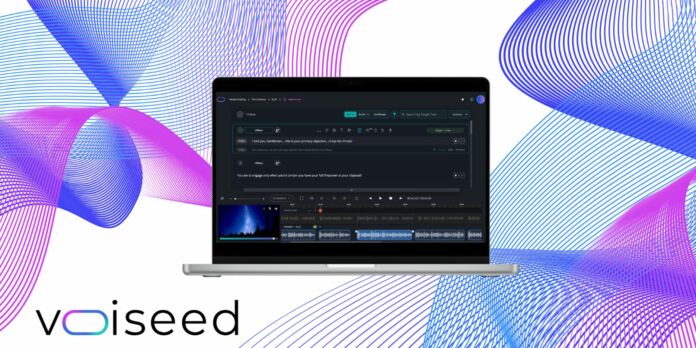
Voiseed has announced the launch of its new Voiseed Studio, redesigned to make AI dubbing and production smoother and ready to scale. With a redesigned UX/UI, an enhanced workflow, and a brand-new credit system, Voiseed Studio offers a more intuitive experience for teams working on AI dubbing, localization, and voice production.

At its core, the new Voiseed Studio is designed around the real needs of AI speech editors, localization teams, and content producers who work at scale. Every interaction has been refined to reduce friction, speed up production, and give creators full control, without slowing them down.

Made for localization and AI dubbing

Voiseed Studio is designed to support multilingual AI dubbing and production workflows, helping teams adapt content across languages in a consistent and streamlined way. The platform enables faster turnaround times and smoother collaboration, making it easier to scale voice content for international audiences.

A clearer, more flexible credit system

Alongside the new interface and workflow, Voiseed has implemented a new credit system designed to be transparent and adaptable, aligning better with modern content production. This allows clients to manage projects with greater control while scaling their output over time.

“Voiseed Studio is where technology meets creative freedom, so we re-thought how people actually produce voice content with AI” said Andrea Ballista, CEO of Voiseed. “We’re giving AI speech editors and companies the perfect environment to produce, localize, and scale voice content globally, staying true to our mission of Voicing the Unvoiced.”

Built to grow with your content

The new Voiseed Studio reflects Voiseed’s ongoing focus on user experience, localization, and scalable AI voice production, offering a smoother workflow for teams creating content for a global audience.

The new Voiseed Studio is now available for use.

About Voiseed

Voiseed, headquartered in Milan with a growing global footprint, delivers patented AI technology for expressive, multilingual speech, empowering creators, brands, and localization teams with natural, emotion‑rich voice production. Its mission is to help advance the next generation of controllable, human‑centric voice AI through its research‑driven approach.

How Multilingualism Rewires Your Mind and Makes You a Better Leader

0
Woman speaking

You know the feeling: that subtle shift in posture when you switch languages, the different laugh that emerges, or the way a problem seems more or less daunting. For those of us who live between languages, multilingualism is more than a skill — it becomes a way of seeing and relating to the world.

Science confirms the cognitive benefits of multilingualism: greater mental flexibility, sharper focus, and even long-term brain health advantages. But the deeper effect is emotional. Multilingual people learn humility from searching for words, patience from listening more than speaking, and empathy from realizing that ideas like respect, friendship, or authority shift meaning across cultures. The mind becomes a negotiation table, mediating differences and promoting understanding.

In my own experience living, studying, and working across languages, navigating multilingual communication has meant building trust, easing tension, and helping people cooperate across cultural divides. Leadership, I learned, often begins with listening across languages.

In professional settings, this becomes an advantage. Monolingual leaders often miss nuance and context embedded in language. Conversely, multilingual leaders understand instinctively that messages can inspire or alienate depending on how they are framed culturally. Multilingual leaders don’t expect others to adapt to them — they meet people where they are, often preventing misunderstandings before they grow into conflict.

In our current global moment, multilingual minds are urgently needed. Challenges like climate change, migration, and public health do not respect borders. Solving them requires people capable of navigating differences rather than fearing them. Multilingual individuals are natural connectors, translating not just words but also intentions and values across communities.

Ultimately, multilingualism teaches one essential lesson: Humanity does not speak with a single voice. Understanding emerges when we learn to navigate differences rather than erase them. Speaking multiple languages reminds us there is always more than one way to see a problem and more than one way to build solutions together.

So the next time you switch languages, recognize what is happening. You are not merely changing vocabulary, but also shifting perspective. And in a world that urgently needs bridge-builders, that ability may be one of the most powerful leadership skills we possess.

The Week in Review: Language Industry News January 27 – February 2

0
Week in Review Jan 27 - Feb 2

This week’s stories highlight support for indie game creators, emerging standards for artificial intelligence (AI) interpreting, recognition for research‑driven tooling, innovation in live‑event captioning, and a sustainability milestone for an established language service provider. Together, they show an industry refining its frameworks while expanding the ways multilingual communication is delivered and measured. Here are the top five moments from the week.

Achievements

Alpha Games has announced VORON, a Norse‑inspired open‑world adventure by Merk Games, as the winner of its first Carmello Loves Indies localization grant. The program provides £5,000 in professional localization services to help indie developers reach global audiences. Alpha Games praised VORON for its emotive storytelling, accessible gameplay, and meditative, exploration‑driven design.

Nimdzi Insights has recognized ELAN Languages as its latest “Tech of the Week,” for ELAN AI Bridge, a model‑agnostic platform that integrates AI into localization workflows while remaining fully compatible with major translation management systems. The platform’s innovative ability to bypass traditional translation‑memory segmentation helps improve consistency and post‑editing productivity. Nimdzi highlighted the platform’s broader capabilities as evidence of its impact on practical, production‑ready AI adoption in enterprise localization.

CPSL Language Services was awarded an EcoVadis sustainability rating recognizing its environmental, social, and governance efforts. The company emphasized that the rating aligns with its long‑term commitment to responsible business practices. The achievement reinforces CPSL’s focus on integrating ethical and sustainable principles into its operations.

Artificial Intelligence

Boostlingo has released a study to help establish clear industry standards for evaluating AI interpreting performance. The initiative focuses on identifying which dimensions, such as accuracy, latency, and user experience, matter most in real‑world interpreting contexts — in this case, healthcare. The findings are intended to guide both technology developers and organizations adopting AI‑based interpreting tools.

Events.Studio introduced a caption bookmarking feature that lets attendees save specific moments from live captions during conferences, panels, and training sessions. Bookmarked segments are automatically compiled and emailed to the attendee after the event, turning live captions into reusable reference material. Organizers also gain aggregated insights into which sessions, speakers, and topics captured the most attention.

________________________________________________________________________________________________________________________________________________

This week’s stories highlight how the industry is supporting creators, refining standards, and expanding the tools that shape multilingual communication. From indie‑game localization to sustainability benchmarks, the sector continues to balance innovation with responsibility. The throughline is an industry sharpening its frameworks while widening its impact.

For more stories like these, visit our News section.