Replica Studios Is Shutting Down. What Does That Say About the Future of Voice AI?

0
Replica Studios

The startup known for ethical synthetic voices is closing its doors—leaving behind a cautionary tale in an overcrowded AI market.

An early voice in AI ethics

Replica Studios, the Australian startup that once promised a new standard in AI-generated voice technology, is closing down. The company, based in Brisbane and founded in 2018, will discontinue service on June 30, 2025.

Replica built tools that allowed creators to generate human-like voiceovers for games, e-learning content, films, and animations. But it wasn’t just another AI voice platform. In 2023, Replica signed a landmark agreement with SAG-AFTRA to license voices ethically and compensate actors fairly—an unprecedented move at the time. For a moment, it appeared Replica might help reshape how synthetic voices are integrated into creative industries.

A market that rewards scale

Despite positive coverage and adoption from indie studios and developers, Replica struggled to secure funding. In a brief blog post, the company cited a competitive startup environment and an inability to reach profitability. The platform will shut down completely by the end of June, and users have been advised to download their data before then. Refunds are being offered for recent purchases, but no long-term continuity plan has been announced.

Replica is now seeking acquisition partners. Whether its technology will continue under new ownership remains uncertain.

The AI voice boom has winners and casualties

The timing of the closure coincides with rapid growth in the AI voice sector. Major players like ElevenLabs, OpenAI, and Microsoft are investing heavily in speech synthesis. In this fast-moving landscape, smaller companies face significant challenges—even those with clear market positions or a focus on ethical practices.

A disrupted option for indie creators

Replica’s closure, despite its defined niche and loyal user base, highlights broader industry dynamics. As larger companies expand, questions persist about how issues like transparency and consent will be handled at scale.

Independent developers, content creators, and educators who relied on Replica’s tools may experience disruptions in their workflows and access to voice synthesis resources.

The platform will officially cease operations on June 30. After that date, its services and voice library will no longer be available.

Selling Is Still the King of All Skills: What the Localization Industry Can Learn from an Honest Conversation

0
Beninatto Sales in Localization

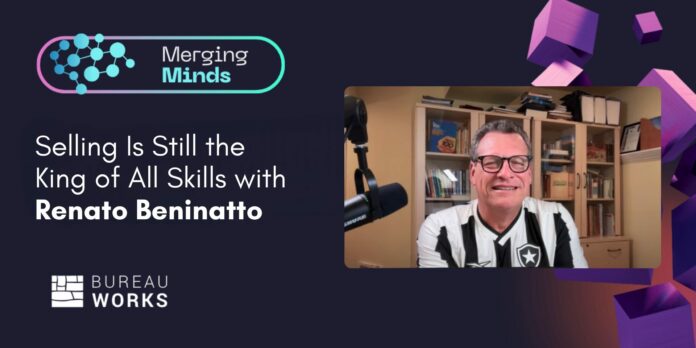
In one of the latest episodes of Merging Minds, Renato Beninatto joins Javi Diaz to revisit a career defined by translation, entrepreneurship, and one essential principle: selling remains the most powerful skill in business. Titled Selling Is Still the King of All Skills, the episode blends personal stories with practical advice for professionals in localization, technology, and client-focused industries. Amid recollections of typewritten subtitles and global M&A deals, one message holds steady: human connection still outperforms any form of disruption.

Sales Is Not a Role—It’s a Requirement

Everyone knows how to sell. We just lack confidence and training,” Renato Beninatto reminds listeners, emphasizing that in practice, everyone participates in commercial processes—whether presenting a project, defending a proposal, or justifying a decision. Within localization, technical accuracy, linguistic precision, and on-time delivery often claim center stage. Yet, sustainable growth depends on the ability to communicate value—responsibility that can’t be confined to a single department.

In many cases, the obstacle is cultural more than operational. Many professionals view sales as a separate responsibility from their daily work, one better left to others. In reality, shaping projects, influencing stakeholders, and aligning priorities all require commercial acumen. Recognizing that reality, rather than avoiding it, makes all the difference.

Beninatto reframes selling not as persuasion but as translation: understanding a client’s needs, offering clarity, and delivering relevance. “Selling is not convincing. It’s translating needs, offering clarity, and delivering relevance,” he says. In an industry built on nuance, ignoring this layer only widens the gap between what’s produced and what’s truly understood. When a client asks whether it’s feasible to launch a mobile app in four languages, an effective approach doesn’t wait for the final content; Anticipating necessary workflows and proposing a roadmap before any files exist shows that the localization team is thinking ahead, not merely reacting.

Reframing Rejection as Part of the Process

The worst thing that can happen is you get a no,” Beninatto observes, pointing out that hearing “no” is not failure but early feedback. In environments that prize accuracy, a negative response can feel uncomfortable. But within any strategic commercial effort, encountering rejection quickly is essential. The real test lies in how fast that refusal is acknowledged and turned into insight.

Hesitation can stall teams: decisions become paralyzed, momentum falters, and visibility shrinks. While some wait for permission to proceed, others move forward with a clear proposal and the confidence to back it up. By offering support before a formal request arrives, professionals shift from being mere vendors to becoming strategic partners. “It’s not about insisting for the sake of insisting; it’s about showing up, listening carefully, and staying ready when it really matters,” Beninatto adds.

This reframing transforms “no” into constructive feedback, freeing teams to refine their approach and pursue the right opportunities without delay.

AI Hasn’t Replaced the Human Element—It’s Amplified It

AI enhances the value of human connection—it doesn’t empathize,” Beninatto states, addressing the impact of artificial intelligence on localization. While automation has redefined production models—offering unprecedented speed, scale, and cost efficiency—its limitations are becoming more apparent. Automation can handle bulk tasks, but it cannot replicate trust, empathy, or contextual judgment.

When projects involve regulatory complexity, legal risk, or dozens of target languages, clients still seek real people to guide them. “When processes are complex, people look for more than data; they seek reliable advice,” he explains. Increasingly, buyers want someone who understands their context, not just someone who can process words.

In short, competing against technology is the wrong battle; instead, focus on leveraging distinctly human skills: listening, adapting, and guiding through uncertainty. That’s where genuine value emerges.

Visibility as a Strategic Practice

If people don’t know you, they can’t buy from you,” Beninatto notes, stressing that success no longer belongs to the loudest voices but to those who appear at the right place and time. Today’s market measures commercial effectiveness by presence and timing, not by sheer volume.

Visibility isn’t about making noise; it’s about precision. Sharing a relevant case study, attending a carefully chosen conference, or posing a thoughtful question in the right forum can be far more impactful than broad promotional efforts. Anticipation is key: communicating a solution often begins before the client even articulates the problem.

In localization, this kind of foresight frequently means understanding market dynamics, knowing who to approach, and recognizing when a conversation is ready to shift from curiosity to commitment. Selling becomes the art of anticipating that moment and guiding it forward smoothly, rather than interrupting it.

Ready to rethink your sales approach? Listen to the episode of Merging Minds—“Selling Is Still the King of All Skills with Renato Beninatto”—on YouTube. For more episodes, show notes, and resources, visit the Merging Minds hub, part of Bureau Works.


About Renato Beninatto

Renato Beninatto is the Chairman and Co-founder of Nimdzi Insights, a market research and consulting company focused on the language services industry. With over three decades of experience spanning translation, localization, and global business strategy, Beninatto is recognized as one of the most influential voices in the field. His career has included leadership roles at major LSPs, keynote speeches at international conferences, and a deep commitment to bridging business and language through actionable insights.


About Merging Minds

Merging Minds is a podcast by Bureau Works that explores the intersection of language, technology, and business through conversations with industry leaders, innovators, and practitioners. Each episode dives into real-world challenges and opportunities shaping the future of multilingual content, offering practical takeaways for professionals navigating the evolving localization landscape.

Phrase Unveils New Multimedia Content Capabilities with Phrase Studio

0
Phrase Studio multimedia localization

New multimedia localization capabilities have been added to the Phrase Platform, providing a wide range of intelligent audio and visual editing tools for global content teams.

Boston, MA – June 2, 2025Phrase, a world leader in AI-led translation technology, announced the launch of Phrase Studio, a new suite of multimedia localization capabilities now available on the Phrase Platform. With Phrase Studio, organizations can localize video and audio content—including subtitling, AI-generated voice, dubbing, transcription, and content analysis—without leaving the platform.

This launch reinforces Phrase’s platform-based approach and ongoing commitment to innovation, supporting both enterprises and Language Solutions Integrators with robust, scalable infrastructure. By managing all multilingual content types in a single system, teams can reduce complexity, streamline workflows, and accelerate global content delivery across every channel.

“Video and audio are essential formats for modern business communication and brand engagement, with usage projected to grow significantly in the coming years,” said Georg Ell, CEO at Phrase.
“As the demand for multilingual content continues to rise, the Phrase Platform is evolving to meet a broader set of customer needs. With this release, we’ve enabled organizations to create and deliver high-impact multimedia content in any language—at speed and scale—within a unified platform. From subtitling and dubbing to AI-generated summaries, we’re helping teams work smarter, move faster, and connect with global audiences more effectively.”


What Phrase Studio Offers

Phrase Studio helps teams launch multilingual video and audio content efficiently, reduce manual effort, and improve collaboration across departments. By centralizing content workflows, it enhances consistency, lowers localization costs, and removes the need for disconnected tools.

Key capabilities include:

  • Subtitling and captions in 100+ languages

  • AI voice synthesis and dubbing in 17+ language pairs, with natural tone

  • Transcription of live and recorded content, with speaker attribution

  • AI-generated summaries, topic extraction, highlights, and SEO metadata

  • PII detection for compliance and redaction

  • Integrated quality checks

All multimedia content benefits from the same automation, glossary management, quality control, and analytics already built into the Phrase Platform—enabling efficiency and governance at scale.


One Platform for All Multilingual Content

Phrase Studio expands Phrase’s role as the central system of record for multilingual content across departments and content types. Teams can now manage web, product, marketing, and multimedia localization through one intelligent platform, powered by AI automation and advanced quality assurance.


Availability

Phrase Studio is now available to Phrase Platform customers and partners. Visit phrase.com to learn more.


About Phrase

Phrase is a world leader in AI-led translation technology, helping organizations unlock global business opportunities by connecting with more people, building stronger relationships, and accelerating growth across languages and cultures.

The cloud-based Phrase Localization Platform offers all the capabilities needed to support a comprehensive localization strategy. From AI-powered machine translation and industry-leading translation management to software localization, automated workflows, quality evaluation, and analytics—Phrase provides the infrastructure to streamline, manage, and scale multilingual content across the enterprise.

That’s why brands like Uber, Shopify, and Volkswagen—as well as leading LSPs and global SI partners—trust Phrase to help them build meaningful connections with millions around the world. For more information, visit phrase.com.


Connect with Phrase:
LinkedIn | YouTube 

MEDIA CONTACT
Pamela Ghosal
E: pr@phrase.com
T: +44 20 7150 6886

Wordly’s 2025 Report Highlights AI’s Role in Language Access—and the Budget and Logistics Barriers Governments Face

0
Wordly Language Access Report

Los Altos, CA – June 2, 2025Wordly, the leader in live AI translation, has released its 2025 State of Language Access in Government report, revealing that while government agencies recognize the importance of inclusive communication, budgetary and logistical hurdles continue to hinder widespread adoption of effective solutions.

With over 94% of municipalities serving multilingual communities—but only 11% describing their public meetings as “very inclusive”—the gap is clear. Half of respondents cited budget constraints, while 39% pointed to logistical barriers as the main obstacles to improving language access.

Despite these challenges, the demand for inclusive communication is rising, with 61% of municipalities reporting an increase in non-native English speakers. As government budgets tighten, the public sector is turning to real-time AI tools to meet multilingual communication needs more efficiently.

“This is not just a communications upgrade; it’s a digital transformation,” said Lakshman Rathnam, Founder and CEO of Wordly. “AI translation is now a critical tool for communities navigating demographic shifts and rising service demands. Cities no longer need to choose between doing nothing or spending thousands of dollars per day on live interpreters. With real-time AI solutions, residents can simply scan a QR code to follow public meetings or access services in their preferred language—no special equipment, no scheduling, just instant access. It’s easy, scalable, and budget-friendly.”


Priorities: Access to Services, Civic Participation, Public Safety

Governments identified the following as top priorities for improving language access:

  • 81% – Access to essential public services (e.g., permits, passports)

  • 67% – Civic participation (e.g., city council meetings)

  • 61% – Public safety alerts and communication


Beyond DEI: Language Access as a Strategic Advantage

Language access isn’t just about inclusion—it’s a smart investment in stronger, more connected communities.

  • 83% believe inclusive communication strengthens resident collaboration

  • 79% say it helps meet legal and regulatory requirements

  • 70% view it as a tool for attracting and retaining a diverse, skilled workforce


Civic Engagement & AI Trends

  • 66% rely on bilingual staff—a model that doesn’t scale in multilingual communities

  • Only 31% currently use AI tools, signaling significant growth potential

  • Early adopters (e.g., San José, CA and LA County) report high ROI, including major cost savings and improved access to real-time information during emergencies like wildfires


Population Drives Tech Readiness

  • 56% of large cities (300,000+) are actively evaluating AI solutions

  • 74% of mid-sized cities (50,000–299,999) consider language access “very important,” but face budget and logistics challenges

  • 76% of small cities (under 50,000) report their public meetings are not inclusive


Regional Trends: Red and Blue States Align

Blue states report higher linguistic diversity, while red states are experiencing faster growth in non-native English-speaking populations. Still, both regions agree: over 80% cite improved community collaboration as a key benefit of inclusive communication.


A Call to CIOs, CTOs, and GovTech Leaders

This report is a wake-up call for government IT leaders: the next frontier in modernizing public communication is multilingual and AI-powered. Real-time translation has evolved from a “nice-to-have” to a mission-critical capability for inclusive governance.


Access the Report

The full report is available for public download at:
https://offers.wordly.ai/wordly-2025-state-of-language-access-report


Research Methodology

Wordly partnered with SmartBrief and ICMA to survey 117 local government employees in March 2025. Respondents represented municipalities of all sizes—from small towns to large cities—with nearly half (47%) serving populations between 50,000 and 300,000.

The study focused on language access, multilingual communication, and the role of AI translation in enhancing accessibility and civic engagement. Over 94% of respondents serve multilingual communities, and 22% reported more than 10 languages spoken locally. Participants included professionals from communications, community engagement, IT, and public safety departments.


About Wordly

Wordly is the pioneer and leader in AI translation, offering a high-quality, secure, easy-to-use, and affordable live translation and captioning solution for multilingual communication. Wordly’s platform translates dozens of languages in real time, making in-person and virtual events more inclusive and accessible. It meets enterprise-grade security and privacy standards and eliminates the need for human interpreters or special equipment. Trusted by millions across corporate, nonprofit, government, education, and religious sectors. Learn more at www.wordly.ai.

About SmartBrief

A subsidiary of Future Plc, SmartBrief is the leading digital media publisher of targeted business news by industry. With a combination of editorial expertise and technology, SmartBrief delivers curated daily news to nearly 7 million senior executives, thought leaders, and professionals in partnership with leading associations and corporations.

About ICMA

ICMA is the leading organization of local government professionals committed to building thriving communities. With over 13,000 members worldwide, ICMA accelerates the adoption of best practices through research, professional development, data, and training for local government leaders and their teams.

5 Movies About Translation: Where Language Meets Drama, Intrigue, and Humanity

0
Movies About Translation The Interpreter.

From decoding ancient tongues to navigating the fragile tensions of war zones, translation has never been just about words. It’s about people, power, connection—and sometimes, survival. While translators and interpreters rarely get the Hollywood spotlight, a few standout films and series have brilliantly captured their role in shaping history, diplomacy, and personal transformation. Here’s a look at five must-watch screen stories where translation takes center stage.

1. Arrival (2016)

Directed by: Denis Villeneuve

Arrival

In Arrival, language isn’t just a tool—it’s a lifeline. When twelve mysterious alien spacecraft land around the globe, renowned linguist Louise Banks (Amy Adams) is recruited by the U.S. military to decipher their language and determine whether they come in peace. The film masterfully explores how translation shapes not just understanding but reality itself. With its non-linear narrative and philosophical undertones, Arrival pushes the boundaries of what it means to communicate—and how translation can transcend time, perception, and even grief.

2. The Interpreter (2005)

Directed by: Sydney Pollack

The Interpreter

This political thriller places a United Nations interpreter, Silvia Broome (Nicole Kidman), at the heart of an international conspiracy. After overhearing a potential assassination plot in a rare African language, Silvia becomes both a key witness and a target. The Interpreter is notable for being the first film ever shot inside the actual UN headquarters. Beyond the suspense, it offers a tense and thoughtful look at the ethical tightrope interpreters walk in highly sensitive diplomatic contexts.

3. Lost in Translation (2003)

Directed by: Sofia Coppola

Lost in Translation

This cult classic doesn’t focus on translation as a profession, but rather as a metaphor for cultural and emotional disconnection. Set in Tokyo, the film follows actor Bob Harris (Bill Murray) and young newlywed Charlotte (Scarlett Johansson), both adrift in a city where the language barrier mirrors their personal isolation. Through sparse dialogue and loaded silences, Lost in Translation highlights the quiet, often untranslatable nuances of human connection.

4. The Translator (2020)

Directed by: Rana Kazkaz & Anas Khalaf

The Translator

Set against the backdrop of the Syrian uprising, this gripping drama tells the story of Sami, a former Olympic team translator who fled Syria years earlier. Now living in Australia, he returns to his homeland when his brother is arrested for protesting. Through Sami’s journey, the film captures the personal cost of exile and the fragile hope of reclaiming one’s voice—literally and politically. The Translator is a powerful reminder of how language can both protect and expose in times of conflict.

5. Derrida: The Documentary (2002)

Directed by: Kirby Dick and Amy Ziering

Derrida: The Documentary

While technically a documentary and not a narrative film, this intimate portrait of French-Algerian philosopher Jacques Derrida dives deep into the politics and philosophy of language. Derrida, the father of deconstruction, often spoke about translation as both an impossible and essential act. The film doesn’t just subtitle his thoughts—it interrogates them, raising questions about authorship, fidelity, and interpretation. It’s a must-watch for anyone interested in the intellectual side of translation.

Why It Matters

These five screen gems show that translation isn’t just background noise or plot decoration. It’s a central force driving characters to understand each other—or fail to. Whether it’s aliens or estranged lovers, war zones or philosophical debates, the act of translating reveals what we value, what we fear, and how much we’re willing to bridge the gap between “us” and “them.”

In a world more globally connected—and linguistically complex—than ever, these stories offer a powerful reminder: sometimes, a word well-chosen (or misinterpreted) can change everything.

Not Just a Tool—A Strategy: How AI Translation Powers Bilingual Media

0
Greenland: AI translation for minority languages

Greenland’s biggest newspaper cracked the code: use AI, protect a language, and grow your business.

What do you do when your entire country runs on two languages, and tech giants couldn’t care less about one of them? If you’re Sermitsiaq, Greenland’s leading news publisher, you build your own AI.

In 2023, Danish startup MediaCatch trained an AI translation tool capable of translating Danish into Kalaallisut (Greenlandic) and vice versa. Powered by more than 15 years’ worth of professionally translated news content, the tool transformed what used to be a time-consuming, manual process into a nearly instant one. For a country where law mandates bilingual content, this change was game-changing.

From Translation Bottlenecks to Business Strategy

Before the AI rollout, translating a single article from Danish to Kalaallisut took hours—and that was only if a human translator was available. With the AI in place, the same task now takes minutes. Human editors step in only for final proofreading, cutting costs and saving precious time—especially when reporting breaking news.

But the most compelling twist? Sermitsiaq turned the tool into a subscription driver. Businesses that want access to the translation tool must subscribe to the newspaper. The model works because it reflects Greenland’s bilingual reality: the tool solves a problem everyone in the country has, and the paper owns both the tech and the data.

Local Data, Local Profit

Unlike most AI tools that rely on third-party corpora and serve big tech’s agendas, this tool belongs to Greenland. MediaCatch didn’t scrape the internet—they used the newspaper’s own legacy of bilingual publishing. Instead of handing over data to companies like Google or Microsoft, Sermitsiaq built a sustainable business around it, fueling journalism and civic engagement in the process.

A Replicable Model?

Yes, but with caveats. To build something similar, you need high-quality training data—and lots of it. That’s feasible in places like Greenland, where institutional translation has been ongoing for decades, but far harder in communities without that infrastructure.

Still, this case shows the enormous potential of AI when it’s developed locally and ethically. For minority languages—often left behind in the digital world—this is more than just a tech story. It’s about ownership, representation, and survival.


Samsung vs. Apple: Who’s Winning the AI Language Translation Race?

0
AI language translation tools

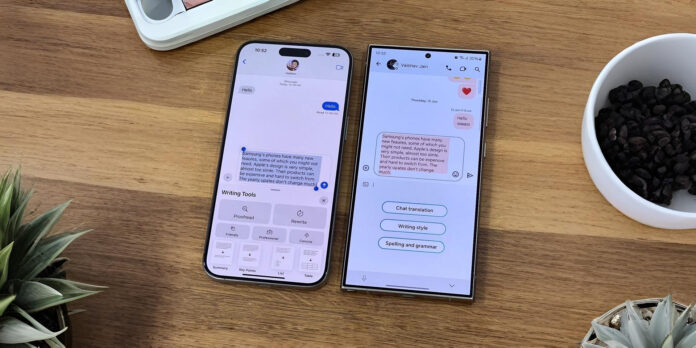
When tech giants compete, users win—especially when it comes to breaking language barriers. With the rise of on-device AI, both Samsung and Apple are now offering sophisticated language translation tools. But while Apple’s latest announcement of “Apple Intelligence” made waves at its recent keynote, Samsung has quietly been leading the race with a suite of real-time, multilingual tools already in action.

Samsung Galaxy AI: Practical, Powerful, and Multilingual

Samsung Galaxy AI

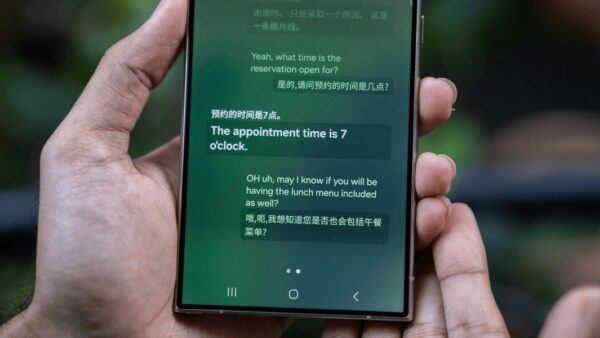
Samsung’s Galaxy AI has been quietly setting a high bar in the mobile translation space. The standout feature? Live Translate, which enables real-time, bidirectional translation during phone calls—a game-changer for cross-lingual communication. Users simply make a call, speak in their own language, and see live on-screen translations. Better yet, this works offline, as long as language packs are downloaded in advance.

Galaxy AI also includes:

  • Interpreter Mode for in-person conversations with split-screen translations.

  • Chat Assist to translate and tone-check messages.

  • Transcript Assist converts voice recordings into multilingual summaries.

  • Circle to Search, which translates anything circled on-screen, even from images or videos.

All these tools are embedded in the Galaxy S24 series and newer, emphasizing offline functionality and accessibility across 13 languages (and counting).

Apple Intelligence: Seamless and Privacy-First

Apple AI

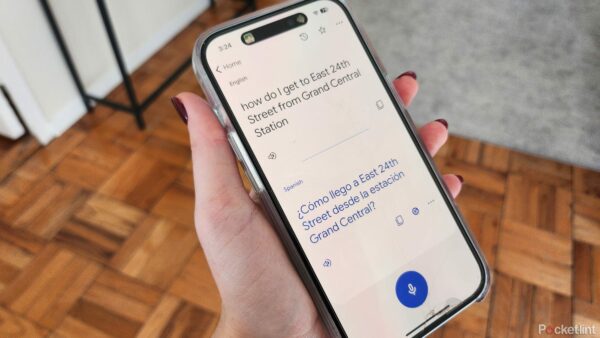
Apple’s new “Apple Intelligence” suite takes a different route. Instead of flashy features, it focuses on seamless integration and user privacy. The Translate app now supports real-time translation for both voice and text, featuring a conversation mode similar to Galaxy’s Interpreter.

More notably, Apple has embedded translation features directly into its operating system—allowing any visible text to be translated on-screen. This, combined with tight Siri integration and selective use of ChatGPT’s GPT-4o (with user consent), reinforces Apple’s privacy-first approach. Most of the processing happens on-device, and anything sent to the cloud is anonymized and encrypted.

What’s Missing? Apple still doesn’t offer real-time phone call translation or transcript tools. For now, those are uniquely Samsung advantages.

The Verdict: Use Case vs. Ecosystem

If your priority is real-time versatility—especially for travel, international calls, or multilingual work—Samsung Galaxy AI has the upper hand. But if you’re already deep in the Apple ecosystem and value privacy and ease of use, Apple Intelligence delivers a smooth, integrated experience.

As language access becomes a key differentiator in mobile AI, both companies are pushing the limits. The future of translation tech is no longer in the lab—it’s in your pocket.

Language Solutions Team LLC Earns 2025 Great Place To Work Certification™

0
LST Great Place Certification

May 29, 2025 – Bethel Park, PA — Language Solutions Team (LST) is proud to be Certified™ by Great Place To Work® for the first time. This prestigious recognition is based entirely on what current employees say about their experience working at LST. In 2025, 81% of employees said it’s a great place to work—24 points higher than the average U.S. company.

Great Place To Work® is the global authority on workplace culture, employee experience, and leadership behaviors that drive innovation, retention, and business success.

“Great Place To Work Certification is a highly coveted achievement that requires consistent and intentional dedication to the overall employee experience,” says Sarah Lewis-Kulin, Vice President of Global Recognition at Great Place To Work®. “By successfully earning this recognition, it’s clear that Language Solutions Team stands out as one of the top companies to work for.”

Hugo Rizzi, CEO of Language Solutions Team, reflected on the award:

“Sometimes we feel more like a group of friends than coworkers—but that culture has helped us grow and thrive together.”

Sofia Rueda, Customer Success Manager at Newtype (an LST brand), added:

“What stood out from the employee feedback is that the majority feel comfortable being themselves at work. That reflects our people-centered leadership, which encourages genuine connection beyond just job roles.”

According to Great Place To Work® research, job seekers are 4.5 times more likely to find a great boss at a certified workplace. Employees are also twice as likely to receive fair pay, share in profits, and feel excited to come to work.

Learn more about LST at www.languagest.com and visit Newtype at www.newtypeinc.com.


About Language Solutions Team

Founded over three decades ago in the Pittsburgh area, Language Solutions Team has always believed in breaking down barriers in communication—spoken, signed, or tactile. Today, LST offers a team of highly skilled Sign Language interpreters, including Certified Deaf Interpreters (CDI) and CART professionals, providing seamless access across settings. Its translation and localization department delivers high-quality multilingual content and graphic solutions with personalized, hands-on service.

Follow LST on:


About Great Place To Work Certification™

Great Place To Work® Certification™ is the most definitive employer-of-choice recognition that companies aspire to achieve. It’s the only certification entirely based on real-time feedback from employees about their workplace experience and the consistency of high-trust environments. Over 10,000 companies across 60+ countries apply every year.


About Great Place To Work®

Great Place To Work® is the global authority on workplace culture. Backed by 30 years of research and data, its proprietary For All™ Model helps companies evaluate every employee’s experience. Certified organizations may also be recognized in Best Workplaces™ lists worldwide.

Visit greatplacetowork.com for more information and follow them on LinkedIn, X (Twitter), Facebook, and Instagram.

Dubformer and OOONA Announce Strategic Partnership to Strengthen Media Localization

0
Dubformer and OOONA partnership

Amsterdam, May 29th, 2025 – Dubformer, a global leader in AI dubbing, and OOONA, the media localization sector’s language technology platform of choice, are pleased to announce a strategic partnership grounded in mutual trust and shared innovation goals.

This collaboration marks a significant step forward in uniting best-in-class technologies to simplify and enhance the localization process. The two companies will explore ways to integrate their core products, offering users a more seamless experience across workflows that include AI dubbing, subtitling, and voiceover. This synergy is designed to support localization teams worldwide with greater flexibility and speed.

In addition to technical integration, Dubformer and OOONA will work together on broader industry priorities. These include advancing ethical standards around the use of AI in media localization, promoting responsible innovation, and ensuring robust data security and intellectual property protection for all users.

“We’re excited to deepen our relationship with OOONA and work together on initiatives that will shape the future of localization,” said Elena Chernysheva, COO of Dubformer. “This partnership allows us to scale impact while staying true to our values of transparency and performance.”

“Partnering with Dubformer aligns perfectly with OOONA’s mission to provide top-tier solutions and uphold the highest standards in the industry,” added Wayne Garb, CEO and Founder of OOONA. “We look forward to collaborating on tools that support professionals across every stage of the localization pipeline.”

This partnership reinforces both companies’ commitments to driving innovation while maintaining the highest level of trust and professionalism in the media localization space.

About Dubformer

Dubformer delivers AI-powered dubbing in 130+ languages, tailored for entertainment content. Unique Emotion Transfer technology ensures expressive, controllable results. Products include a Professional Studio for localization teams and an API for live, video, and audio translation.

About OOONA

OOONA.Net Ltd is a globally recognized provider of professional management and production tools for the media localization industry. Renowned for its state-of-the-art software catering to subtitling, voiceover, dubbing and captioning needs, OOONA’s modular pay-as-you-go pricing model empowers users to tailor solutions to their specific requirements. The company is trusted by leading media localizers, broadcasters and a vast user base spanning over 160 countries. OOONA complements its offering with EDU, a virtual hub dedicated to continuous training in media localization, and The POOOL, an online directory for industry professionals. It is also the leading force behind AVTpro, the first-ever professional certification in media localization.

Contacts for further information

Dubformer: elon@dubformer.ai | www.dubformer.ai

OOONA: shlomi@ooona.net | www.ooona.net