Welocalize Awarded Patent for AIQE, its AI-Driven Translation Quality Estimation Technology

0
Welocalize AIQE patent

Welocalize, a leader in AI-enabled translation and multilingual content solutions, has been granted U.S. Patent No. 12,307,216 for its proprietary AI technology titled “Linguistic Content Evaluations to Predict Performances in Linguistic Translation Workflow Processes Based on Natural Language Processing.” The patent was officially confirmed on May 20, 2025, and protects the innovation behind AIQE (AI Quality Estimation)—Welocalize’s machine learning system for automating quality prediction in translation workflows.

AIQE supports the growing need to maintain linguistic quality as translation workflows scale with the rise of generative AI. Welocalize’s patented system automatically evaluates translation quality in multilingual workflows using natural language processing. AIQE assesses whether translated segments meet quality thresholds or require additional human editing—helping teams reduce costs, focus human effort where it’s most needed, and maintain quality across large volumes of content.

“Securing this patent is an important milestone for Welocalize and our ML R&D team, which is committed to developing GenAI technology to enhance the performance of language delivery,” said Konstantinos Karageorgos, AI/ML Engineering Lead at Welocalize. “AIQE shows how AI can reduce the need for manual review by accurately flagging which machine translations are good enough to go live—and which still require human input.”

Unlike traditional evaluation metrics that depend on human-generated references (e.g., BLEU), AIQE uses a reference-free approach based on predictive modeling. The system operates at sentence-level granularity, applying configurable quality thresholds tailored to language pairs, content types, and client needs. Integrated safety checks prevent overconfidence in low-resource or complex domains, ensuring only high-confidence segments are delivered without post-editing.

Chris Grebisz, CIO at Welocalize, added: “AIQE is a core part of our vision for scalable, human-in-the-loop AI workflows. It helps clients increase efficiency and confidence in MT output—without sacrificing quality. This patent is a testament to our ongoing investment in next-generation multilingual content solutions.”

AIQE is a cornerstone of Welocalize’s OPAL-Enable platform, which delivers intelligent automation for machine translation, quality estimation, post-editing, and quality assessment across multiple languages.

About Welocalize, Inc.

Welocalize is a leading technology-enabled provider of translation, localization, and AI-driven content solutions, helping businesses communicate, innovate, and grow globally. Specializing in complex and regulated industries, Welocalize delivers precise, scalable multilingual content through a powerful combination of advanced AI technologies and expert human talent. At the core is Welocalize’s AI-enabled OPAL platform, which transforms translation workflows by integrating machine translation (MT) and large language models (LLMs) to provide fast, accurate, and culturally relevant content in over 300 languages. With a commitment to excellence, Welocalize holds 7 ISO certifications. Welocalize is headquartered in New York with offices all over the globe. welocalize.com

Google Meet Unveils Real-Time Speech Translation—A Leap Toward Seamless Global Communication

0
Google Meet speech translation

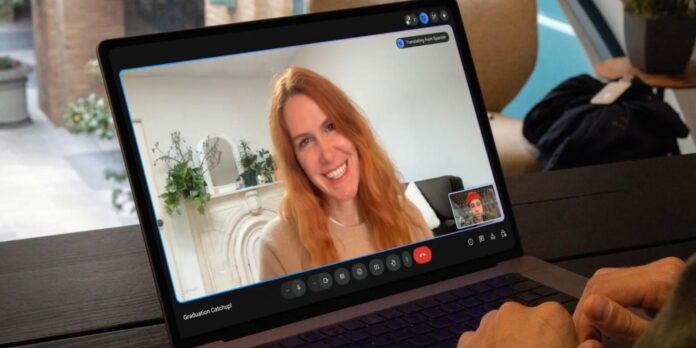
If you’ve ever wished you could join a meeting in another language without missing a beat, Google Meet’s latest update might feel like science fiction. Announced at Google I/O 2025, the platform now offers real-time speech translation powered by Gemini AI, first rolling out in beta for Google One AI Pro and Ultra subscribers. The debut languages? English and Spanish—with more on the way.

More Than Just Subtitles: AI-Powered Voice Translation

For years, Google Meet has offered live captions and translated subtitles, but this new feature is a game changer. Instead of displaying text, Google Meet translates your spoken words and then replays them in the target language—using a synthetic voice that closely matches your own tone, rhythm, and intonation. According to Google, this helps preserve the authenticity of each speaker, making cross-language conversations feel more natural and less robotic.

How It Works

Once enabled, the translation tool runs automatically in supported meetings. As soon as you speak in English, participants who select Spanish (and vice versa) will hear your translated speech almost instantly, with your voice’s cadence and emphasis intact. There’s no need to install third-party apps or deal with clunky integrations; it’s all native to Google Meet.

Who Can Use It?

For now, the feature is available to Google One AI Pro and Ultra subscribers as part of a beta program. Google has confirmed plans to expand language support soon, with Italian, German, and Portuguese expected to be added in upcoming updates. The ultimate goal is to make seamless multilingual communication available to everyone on Google Meet, from global enterprises to classrooms and families.

Use Cases: From Business to Education

This innovation has major implications for remote work, international business, and global education. Teams can collaborate more effectively without language barriers, educators can teach diverse classrooms, and families separated by language can connect in ways that were previously out of reach.

Still a Beta—But the Future Looks Promising

While the technology is still in beta and may encounter occasional hiccups, the real-time voice translation feature marks a significant step forward in breaking down language barriers. Google says feedback from early users will guide improvements and help refine the experience as it rolls out to a wider audience.

In an increasingly interconnected world, Google Meet’s AI-powered speech translation could soon become a standard tool for anyone who wants to communicate—authentically—across languages.

XTM International Unveils Groundbreaking AI Suite to Transform Enterprise Localization

0
XTM AI suite

LONDON, UK – [May 2025] – XTM International, a global leader in enterprise localization technology, today announced its most transformative AI innovation to date: a new suite of AI capabilities designed to radically enhance how global enterprises and Language Service Providers (LSPs) manage multilingual content at scale. Launching this summer, this AI suite marks a fundamental shift from basic automation to intelligent orchestration—helping enterprises scale faster with less manual intervention.

These new capabilities go far beyond simply improving speed and quality. Together, they introduce a layer of intelligence into every step of the localization process: advising, guiding, scoring, and flagging issues before they become blockers.

While each feature is powerful on its own, the real impact comes from their combined strength. Every capability is designed to work as part of a fully integrated, intelligent ecosystem—where insights are shared across tools, actions are synchronized, and decisions are guided intelligently by context.

It’s a new era of localization—one that enables smarter, more inclusive, and more autonomous global content delivery.

The XTM AI suite release includes:

XTM Advanced AI Pack – A powerful set of features that includes:

  • Language Guard: Detects offensive or discriminatory language and recommends corrections.

  • Intelligent Score: Provides real-time quality scores based on linguistic confidence.

  • Intelligent Workflow: Automatically routes files based on confidence levels to streamline processes.

This pack captures the nuance of your messaging in 90+ languages, flags offensive and discriminatory language (and recommends corrections), provides real-time quality scoring, and automatically routes files based on confidence scores.

XAIA – A conversational, agentic AI available in XTM Cloud and XTRF that enables localization project managers and other stakeholders to delegate tasks, uncover insights, and make smarter decisions across projects. Unlike standalone AI assistants, it’s deeply embedded, context-aware, and role-specific—proactively supporting every stakeholder in the process.

XERA – An AI-driven orchestration engine that fully automates the localization lifecycle—from source string extraction and asset preparation to translation, quality assurance, and publishing. xera runs each step autonomously, leveraging Transifex’s Translation Quality Index (TQI), significantly reducing manual work and turnaround time.

A Defining Moment in Localization

“This is a defining moment for our industry,” said Ian Evans, CEO of XTM International. “With the launch of Agentic AI and our full AI suite, we’re not just adding automation. We’re giving teams an intelligent co-pilot for the entire localization lifecycle. It’s the difference between AI that reacts and AI that leads. Our customers are under pressure to deliver faster, with human quality, and at scale—and this is the breakthrough they’ve been waiting for. From theory to real-world AI projects.”

Maria Psaltaki, Chief Product Officer at XTM International, added: “These new capabilities mark a fundamental shift in what AI can do for localization. These tools don’t just translate; they detect, advise, guide, and lead. We’ve built an integrated, end-to-end system that delivers real, measurable value—because that’s what our customers need.”

XTM International supports more than 1,000 enterprise customers worldwide, including global brands like Sony Interactive Entertainment, Indeed, and Crown Equipment Corporation, as well as Fortune 500 leaders in life sciences, medical devices, manufacturing, and software. These companies rely on XTM to streamline their localization operations, accelerate time to market, and drive ROI from global content.

About XTM International

XTM International empowers enterprises to expand into global markets faster by streamlining and fully automating localization processes through its suite of AI-powered solutions: XTM Cloud TMS, XTRF Translation Business Management, Rigi Software Localization and Visual Preview, and TransifexTMS. The combination of these solutions provides a fully integrated and comprehensive Translation Platform, enabling global businesses to reach customers more quickly and effectively while boosting the bottom line. Powered by cutting-edge technology, supporting 585 languages, and offering 50+ integrations, the XTM Translation Platform delivers the future of localization to 20,000 unique active users worldwide.

ELIA Focus on Executives 2025: Leadership, Strategy & Connection in Limassol

0

On 15-16 May 2025, ELIA’s Focus on Executives returned for another edition, this time set along the coastline of Limassol, Cyprus in the St Raphael Resort & Marina. Created exclusively for language industry leaders, this event offered attendees a space for reflection, strategy, strong connections and intimate discussions, at an executive level. 

“What makes Focus on Executives truly valuable is the way it addresses today’s most relevant and urgent topics: openly, honestly, and with exceptional expertise. The sessions offer clarity, structure, and perspective, thanks to the outstanding quality of the speakers and the thought that goes into curating each discussion. The event offers something rare: a place to stop, reflect, and think better. Which is exactly what this industry needs now.” 

-Tony D’Angelo, CMT 

Day one featured a full-day workshop led by Andrzej Nedoma, CEO of Nedoma.io Business Advisory. Through four sessions: Reality Check, New Positioning, Adapt, and Win Again, participants assessed their current businesses, refined their company positioning, and developed actionable roadmaps for sustainable growth. Andrzej led his session with real questions, such as ‘Who are you becoming as a leader?’ and ‘What does your team really need from you?’ guiding participants through honest thinking and strategising. Day one acted as a wake-up call and set the perfect foundations for day two. 

On day two, Roberto Ganzerli, Owner of LSP Growth, explored opportunities to prepare your business for the changing market. AI is undeniably changing the industry, setting new trends and expectations. His message was clear: don’t chase trends—know your strengths, choose your direction, grow with purpose and focus on what truly sets your business apart.

Roberto took the stage for round two, and got into the intricacies of mergers and acquisitions for small to mid-sized LSPs, guiding attendees on when and how to sell or make big company changes. 

Finally, Riia Carnegie, Founder Coach and Small Business Consultant, led the final session on strategic branding, guiding executives through practical exercises to challenge the effectiveness of their branding, and refine their value proposition and positioning. It wasn’t about generic marketing strategies, but about re-aligning your LSP through strong branding that speaks to your audience, communicates its value, and elevates your messaging. 

The panel discussion: Shifting Client Expectations: Leading with Value-Driven Offerings, included Gaëtan Chrétiennot from Six Continents, Anikar Michael Haseloff from Across Systems, and Mina Ilieva from Mitra. Moderated by Diego Cresceri, the discussion offered their perspectives into understanding evolving client needs and positioning offerings that go beyond translation. What does it mean to lead with a value-driven offering? How can LSPs pivot from service providers to strategic business partners? 

Beyond the sessions, the social events, including the Welcome Dinner at the Alakati Restaurant and Networking Dinner at the Marina Breeze Restaurant, provided attendees with plenty of opportunities to build lasting relationships through real discussions and 1-1 conversations. 

From refreshing business strategy and insights, hands-on sessions and group discussions, to plenty of networking in and out of sessions, ELIA Focus on Executives 2025 brought together a community of industry leaders to step back, learn, share and connect, and reposition their businesses for a stronger future. 

To everyone who joined us for #ELIAExecs 2025, thank you! Your participation and enthusiasm are what made this event truly special. Big thanks to our programme committee—Diego Cresceri and Dorothy Scerrifor creating a memorable event, and to our local partner, Translate.One, for a warm welcome to Limassol. 

With Focus on Executives 2025 now behind us, we look forward to continuing the conversations at Networking Days 2025 in Budapest, happening on 22-23 September 2025. Keep an eye out on ELIA’s events page for more information to come. This year’s edition will be even more special as we celebrate ELIA’s 20th anniversary: a milestone marking two decades of events, learning opportunities, and community in the language industry. See you there! 

https://elia-association.org/our-events/

Get Ready to Refine Your Craft at Game Quality Forum—Lisbon, June 24–26

0

Get ready to reunite and refine your craft, as Game Quality Forum is back in the new  location of Lisbon (24th – 26th June)! 

Join the GQF team for another unmissable event, dedicated to bringing QA, Loc,  Community and Support together. In recent years, we’ve seen a fundamental shift in  player behaviour -from players willing to evolve with a product as it grew, to the  immediate need for quality, authenticity and a community voice within a gaming  experience. This puts QA, Localization, Community, and Support professionals at the  centre of game success, ensuring every game resonates with its players and continues  to grow. You can find the full event agenda here. 

As expectations rise, so does the challenge of delivering more with less – whether that  means smaller teams, tighter budgets, or faster release cycles. But with challenge  comes opportunity. Now is the time to rethink how we work, innovate our approaches,  and build teams that thrive in this evolving industry.  

That’s what GQF is here to help you do. AI remains one of the biggest talking points in  the industry – some see it as the key to unlocking new efficiencies, while others have  concerns about its impact on authenticity. Rather than letting AI dominate the  conversation, we’re focusing on real-world applications— where it enhances our roles  and where the human touch remains irreplaceable. 

Join GQF for discussions on: 

  • Elevating our roles – defining clear career progression and proving our value to the  wider studio  
  • Building stronger relationships – both within studios and with external partners 
  • Leading through challenges – navigating team management and advocating for quality  in uncertain times 
  • Gaming accessibility – creating inclusive communities and ensuring every player feels  represented 
  • Adapting to a changing industry – meeting new player expectations, navigating live  service models, and evolving with test automation & user-generated content  
  • Trust & Safety in player communities – ensuring safe, thriving spaces amid increasing  regulation  

GQF has always been more than just an event – it’s a community of professionals  passionate about delivering the best possible gaming experiences. We hope to see you  there!

Papua New Guinea or Indonesia: Which Country Is the Most Linguistically Diverse in the World?

0
Indonesia

Due to geographical, historical, and cultural influences, Papua New Guinea and Indonesia are the two most linguistically diverse countries in the world today, according to the World Economic Forum. While Papua New Guinea is currently ranked number one in both nations, the creation of new languages and the extinction of others leads to a constantly changing linguistic landscape.

In both Papua New Guinea and Indonesia, most of the indigenous languages belong to the Papuan or Austronesian language families. The Austronesian language family — which covers over 1,200 languages across Maritime Southeast Asia, the Pacific Islands, Madagascar, and mainland Southeast Asia — is one of the largest to ever exist. With advanced seafaring skills for their time, Austronesian people migrated east from their original post in Taiwan and now account for an overwhelming linguistic majority in the Southeastern Hemisphere. By comparing the two countries’ linguistic landscapes, we can see how language evolves differently depending on history, contact with other cultures, and migration patterns that stem from the same aboriginal people (Austronesian diaspora).

Papua New Guinea

With a population of only 7.2 million people, Papua New Guinea is made up of an incredible 600 islands in varying sizes that cover a total of 462,840 square kilometers. Despite legally designating English, Tok Pisin, Hiri Motu, and Papua New Guinean Sign Language as official languages, the country communicates through an astounding 850 languages.

As multilingualism runs deep in the culture, the average citizen fluently speaks three languages. However, the decision to carry multilingual skills through generations is not a choice, but a necessity: Local communities often use their own indigenous language for everyday conversations, while English serves as an educational medium, and Tok Pisin is used as a bridge for intergroup communication between islands. This allows the nation to keep its historical linguistic roots all while maintaining its ability to stay connected with the rest of the world.

Indonesia

Indonesia has a unique geographical circumstance that affects its linguistic landscape like no other place on Earth. With a population of over 280 million, the country is made up of the world’s largest archipelago that spans over 17,000 islands — stretching from the Malay Peninsula all the way to Australia. The nation actively communicates in over 700 languages. However, due to volcanic activity, the number of islands regularly changes, gradually changing the linguistic landscape along with it.

Unlike Papua New Guinea, Indonesia has only one official language: Indonesian (Bahasa Indonesia). However, multiple regional languages such as Javanese, Sundanese, and Madurese are all spoken in informal settings with equal popularity. It’s important to note that Indonesian was intentionally developed as a unifying language after the country gained independence to ensure that no single ethnic group could linguistically dominate the nation.

So, Who Wins?

While Papua New Guinea is currently in first place, both countries are actively competing for the global title of most spoken languages due to factors such as geographical barriers and a rapid decline of indigenous language speakers. Only time will tell which country is able to successfully preserve its massive linguistic diversity while still finding suitable ways to keep its citizens united with the modern world.

Welocalize Appoints Jennifer Beaupre to Advance Brand Strategy and Lead Marketing for the Next Phase of Growth

0
welocalize-ai-translation

Welocalize, a leader in AI-driven translation and global content solutions, announced today that Jennifer Beaupre has been appointed as Head of Marketing. Beaupre joins the executive leadership team with a mandate to elevate the brand and support the company’s next phase of growth and transition toward a more product- and solutions – focused business model.

Beaupre brings more than two decades of marketing leadership experience across high-growth technology and SaaS companies. Prior to joining Welocalize full time, she served in a fractional capacity as Head of Marketing beginning in late 2024. During that time, she led key strategic initiatives, including decentralizing the marketing organization across service lines, onboarding marketing execution partners, and guiding the launch of Welocalize’s newly redesigned website.

“Jennifer has made a significant impact since day one,” said Welocalize CEO Paul Carr. “She understands where we’re going as a company and brings the experience to help us get there. As we focus more on delivering measurable business value through language, technology, and data, Jennifer’s leadership is already reshaping how we position Welocalize in the market.”

The company’s new website, launched in tandem with Beaupre’s official appointment, reflects Welocalize’s broader transformation and bold new voice.

“Language services isn’t evolving—it’s undergoing a seismic shift,” said Carr. “AI, automation, and content acceleration are reshaping the industry, and many are still clinging to old solutions. We’re not. Jennifer has been instrumental in helping us rethink how we communicate that shift—internally, with customers, and in the market.”

Beaupre’s previous roles include senior marketing positions at B2B technology companies where she led global go-to-market strategies, brand positioning, and demand generation. Her approach is grounded in aligning marketing with growth priorities and building high-performing teams.

“Welocalize is uniquely positioned at the intersection of language, technology, and data,” said Beaupre. “What drew me to Welocalize was the clarity of the vision and the willingness to challenge conventions. The redesigned website reflects that mindset—and it’s just the start of how we’ll continue to show up for the market.”

About Welocalize

Welocalize is a leading technology-enabled provider of translation, localization, and AI-driven content solutions, helping businesses communicate, innovate, and grow globally. Specializing in complex and regulated industries, Welocalize delivers precise, scalable multilingual content through a powerful combination of advanced AI technologies and expert human talent. At the core is Welocalize’s AI-enabled OPAL platform, which transforms translation workflows by integrating machine translation (MT) and large language models (LLMs) to provide fast, accurate, and culturally relevant content in over 300 languages. With a commitment to excellence, Welocalize holds 7 ISO certifications. Welocalize is headquartered in New York with offices all over the globe. welocalize.com

How a Passion for Mentorship Has Fueled Virginia Katsimpiri’s Linguistic Career

0
Virginia Katsimpiri

As a certified translator and business owner with a passion for mentorship, Virginia Katsimpiri has helped hundreds of freelance linguists worldwide attract high-quality, international clients. Here, she describes her 15-year career and her goals for the decade to come.

Why do you enjoy reading MultiLingual magazine?

It’s the best and most comprehensive language-related magazine nowadays. I love the fact that it always includes a variety of topics and covers areas from all over the world, including the latest trends and tech developments in our industry. The section I always look for and read is the Buyer’s Guide, as it is a great guide to associations, conferences, language service providers (LSPs), and payment automation and recruitment experts. As a beginner, it was a great source of LSPs to apply to as a freelance translator and later as a list with the best LSPs to look up to while growing a boutique agency.

How did you get involved in the translation business?

I studied foreign languages, translation, and interpreting at the Ionian University and graduated as a certified translator in 2007. I was hired before I even graduated as an in-house translator. When the financial crisis hit Greece, I left the in-house position and started working as a freelance translator from home. In 2014, I initiated my own business at the center of Athens with the brand name “VTranslations | Certified Business Translation Specialists,” which I still grow as a CEO.

In 2016, I got certified as a life coach and created the first voluntary mentorship programs for the Panhellenic Association of Graduate Professional Translators of the Ionian University (PEEMPIP). In 2020, I founded vmentoring.com, the first business mentorship platform for freelance language professionals. It helps colleagues and agencies from all over the world to build and grow their profitable businesses and reach five-figure months and beyond. I’m also the proud creator of the Fully Booked Translator Formula: a 12-week business mentoring program for language professionals. 

Since you entered the translation industry, how has the business landscape changed?

It is very sad to see that early-career translators still face the same difficulties that we did 17 years ago entering the market. Even though there are so many online resources nowadays, they still don’t know how to write a proper CV or how to attract high-quality clients. Rates are still the same here in Greece, at least.

Regarding artificial intelligence (AI) and technology developments, the situation is widely known, though I still remember when I announced to my family that I would like to study translation and they told me, “Why study something that will soon be replaced by Google Translate?” I’m still waiting for Google Translate to take my work… LOL.

Could you share your experience working with your first client or on your first project?

My first client as a freelancer was my last employer, as I started out as an in-house translator; so, it was a smooth collaboration due to the past employment. I won’t forget though the first time I was assigned a project earning in a week my monthly income and of course my first five-figure project.

Do you believe it’s a good time to enter the translation business?

If I were starting out now, I probably wouldn’t choose the same direction — something more tech-related would be more promising now given AI. So, I cannot answer if there is a wrong or right time to enter a business. The translation industry is among those that are seeing a rise during a crisis, which means there is work for all of us still. Though it is not a profession someone would choose to study for its profitability, I would advise someone to choose it only if they have the required linguistic skills and passion.

Where do you see yourself professionally in the next 10 years?

Growing my two businesses — vtranslations.gr and vmentoring.com — even more. Hiring more people to build a strong team while I work on projects I love and doing well having enough time to practice my mentoring sessions internationally as I already do. Completing my PhD and contributing to the international literature is also included on the list. 

What predictions do you have for the future of the translation industry?

I don’t really like to make predictions, but I would say it is obvious that AI is here to stay. New translators will need to have more tech-related skills in comparison to older generations, and as a result more and more freelance language professionals will turn to direct clients instead of LSPs. Thus, more marketing skills will be needed. We will be here to see it anyway.

KUDO Welcomes First Two of Several New Global Partners to Expand Multilingual Meeting Access Across Europe and Australasia

0

May 20, 2025, New York City, NY – KUDO, the leading multilingual speech platform combining professional interpreters and AI-powered translation, proudly welcomes two new partners to its expanding global network: PCS Professional Conference Systems (Germany)  and 2M Language Services (Australia).

This strategic expansion significantly strengthens KUDO’s presence across Europe and Australasia, enabling more organizations to access KUDO’s comprehensive suite of solutions ensuring every meeting and event, whether onsite, hybrid, or virtual, is accessible in real time, in every language.

“Language access is at the core of inclusive engagement,” said Fardad Zabetian, CEO of KUDO. “These new partners bring regional strength, technical excellence, and a shared commitment to removing language as a barrier. Together, we’re making it easier for organizations around the world to host multilingual meetings and events that reach, include, and respect everyone.”

These respected industry leaders join KUDO at a time of rapid growth in demand for inclusive, multilingual communication. Each partner brings deep regional expertise and a proven track record of delivering technology-forward solutions in audiovisual integration, digital event production, and language services.

PCS Professional Conference Systems GmbH, based in Germany, is a premier provider of conference and media technology. With decades of experience supporting high-stakes multilingual events across the DACH region, PCS enhances its portfolio with KUDO’s real-time interpretation and AI-powered translation solutions.

“We’re thrilled to join the KUDO partner network and bring AI-driven language access and live speech-to-text services to our clients across Germany and beyond,” said Christian Becker, Technical Operations Manager of PCS. “Our clients rely on precision in multilingual settings; KUDO helps us raise the bar.”

2M Language Services Australasia’s leading provider of Language AI and professional language services, has a strong presence across Europe, South America, and Asia. Renowned for its expertise in critical sectors including mining, defense, healthcare, government, community services, and enterprise, 2M is now integrating KUDO to deliver seamless, truly global multilingual experiences.

Tea Dietterich, CEO of 2M, commented: “We’re excited to partner with KUDO once again. With 2M’s ability to tailor AI to speak our clients’ specific language–both literally and culturally–we’re proud to offer an AI-powered speech platform that enhances communication across borders. It’s a vital tool for ensuring compliance, inclusion, and engagement in today’s multilingual world.”

KUDO’s platform uniquely combines human interpretation with cutting-edge AI speech translation, providing organizations with a flexible and scalable solution for overcoming language barriers. From enterprise boardrooms to government town halls, KUDO helps ensure that every participant can engage in their preferred language, confidently and in real time.

KUDO’s Partner Program empowers AV integrators and language service providers with a compelling commercial package, full onboarding and training, and co-marketing support. Partners gain access to KUDO’s continuously evolving technology, including recently introduced product updates such as enhanced post-meeting reports and the ground breaking AI Assist for Interpreters, enabling them to deliver innovative, turnkey solutions that address some of the most complex multilingual communication.

With these two new additions, KUDO begins a new phase of expanding its global ecosystem dedicated to advancing inclusive communication; one meeting, one event, and one voice at a time. Additional partnership announcements are forthcoming as KUDO continues its mission of breaking down language barriers worldwide.

To learn more about KUDO’s partner program or to request a demo, please visit our partner program page.

About KUDO
KUDO is the leading multilingual speech platform, powered by a global network of professional interpreters and advanced AI. Trusted by governments, international organizations, and enterprises worldwide, KUDO enables seamless real-time communication in over 200 spoken and signed languages; anywhere, anytime.

About PCS – Professional Conference Systems GmbH
PCS Professional Conference Systems GmbH, founded in 1995, is a leading provider of conference and media technology solutions in Germany. With offices in Düsseldorf, Berlin, and Munich, PCS specializes in the rental, sale, installation, and maintenance of interpreting systems, audio-visual equipment, and hybrid event technologies. Serving over 1,700 events annually, PCS caters to a diverse clientele, including government agencies, educational institutions, corporations and international organizations.

About 2M Language Services
2M Language Services is Australia’s leading provider of Language AI and professional language services in over 250 languages, including Australian First Nations Languages. With strong presence in Europe, South America, and Asia, 2M caters to diverse industries including resources, defense, health, and government. 2M supports timely access to culturally appropriate language support through scheduled and 24/7 on-demand interpreting services enabled through subject matter experts and Language AI. 2M is certified for Information Security Management (ISO 27001:2021), Interpreting Services (ISO 18841:2018), Translation Services (ISO 17100:2015), and Quality Assurance Management (ISO 9001:2015). 

Media Contact:
Chloe Walford-Delahaye
marketing@kudo.ai