VSL Global Expands AI Localization Platform With the Launch of VSL Nova

0
VSL Global brand logo

VSL Global, an AI‑driven voice and dubbing platform, has announced the launch of VSL Nova, a new product within its AI localization platform designed to improve the quality, reliability, and scalability of multilingual video production.

The expansion strengthens VSL’s existing workflow across AI dubbing, voice cloning, and lip-sync, giving production teams, media companies, agencies, and enterprise content owners a more complete way to localize video content for global audiences.

VSL Nova has been developed to address one of the biggest challenges in AI-powered video localization: maintaining natural performance quality when translating and dubbing real footage. While AI dubbing has become increasingly accessible, many workflows still struggle with visible artefacts, inconsistent mouth movement, loss of emotion, and reduced quality in more complex filming scenarios.

With Nova, VSL aims to reduce those limitations and support a wider range of professional use cases. It is designed to deliver cleaner outputs with fewer visual mistakes, particularly in scenarios that have traditionally been difficult for AI lip-sync systems. This includes close-ups, side profiles, obstructed faces, extreme angles, and lower-light footage. Nova also focuses on preserving the original speaker’s style, emotion, and expression, helping translated content feel more natural and less mechanically processed.

For VSL Global, the launch represents an important step in the company’s move toward a more enterprise-ready localization workflow.

Rather than treating dubbing, voice generation, and lip-sync as separate tools, VSL brings them together inside one platform. This allows customers to manage multilingual video production more efficiently, with a workflow built for scale, consistency, and faster turnaround times.

“VSL Nova is an important product expansion for us because it pushes the platform further toward what professional teams actually need,” said Jay Lohman, Founder and CEO of VSL Global. “The market is moving beyond basic AI dubbing. Customers now want quality, control, speed, and a workflow they can trust for real commercial content. Nova helps us deliver that.”

The launch also comes at a time when demand for multilingual video content continues to grow across entertainment, e-learning, corporate communications, creator media, advertising, and regional content distribution.

As audiences become increasingly global, companies are under pressure to make content available in more languages without relying on slow, fragmented, and expensive traditional localization workflows. AI is becoming an important part of that shift, but adoption depends heavily on output quality and operational reliability.

VSL Global believes the next stage of the market will be defined less by standalone AI tools and more by complete localization workflows that help companies move content across borders with greater speed and consistency.

VSL Nova has been built with that shift in mind.

The product expansion supports VSL’s broader mission to make global video localization work more of a scalable product workflow rather than a one-off production project. By combining dubbing, voice cloning, and lip-sync in one system, VSL Global is positioning itself to support companies that need to localize growing volumes of video content across multiple languages and markets.

VSL Nova is now available as part of the VSL Global platform.

About VSL Global

VSL Global is an AI localization platform helping companies translate, dub, voice, and lip-sync video content for global audiences. The platform supports enterprise clients, production teams, agencies, and content owners with an end-to-end workflow for multilingual video localization.

Language Proficiency Certification ‘Practical Japanese Communication Test Bridge’ Expands to 15 Countries

0
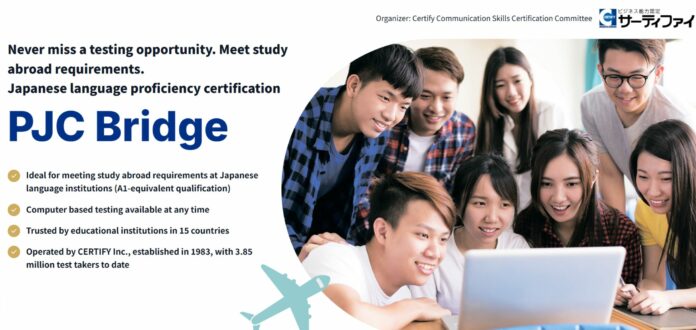
Practical Japanese Communication Bridge Test announcement

Certify Inc. has announced that the Japanese Language Proficiency Test “Practical Japanese Communication Test Bridge (PJC Bridge)” has expanded its implementation to 15 countries.

“Practical Japanese Communication Test Bridge” (PJC Bridge) is a Japanese language proficiency test for non-native Japanese speakers, measuring Japanese ability equivalent to CEFR A1–B1 (JLPT N5–N3 level).

The test is officially recognized by the Immigration Services Agency of Japan as a qualification certifying A1-level Japanese proficiency required for enrollment in Japanese language education institutions in Japan.

Immigration Services Agency of Japan Website

For those considering enrollment in Japanese language education institutions, please visit: https://www.moj.go.jp/isa/applications/resources/nyuukokukanri07_00159.html

Currently, PJC Bridge is conducted in 15 countries mainly across Asia, with increasing numbers of examinees particularly in China, Nepal, and Pakistan. Expansion to additional regions will continue in response to diverse needs of Japanese language learners.

Test Center Implementation at Japanese Language Education Institutions

PJC Bridge is a CBT (Computer Based Testing) format examination.

Certified Japanese language education institutions can serve as official test centers and conduct exams at flexible dates and times. This enables expanded access to Japanese language testing opportunities and allows learners to obtain certification required for studying in Japan more flexibly.

Test Results

PJC Bridge test results are typically issued within approximately 7–10 days after the test date. Successful candidates receive an official certification of Japanese language proficiency.

Rapid result notification supports smooth processing of procedures required for studying in Japan.

Benefits for Japanese Language Institutions

Authorized test center for PJC Bridge, institutions gain the following benefits:

  • Provision of Japanese language proficiency testing opportunities within their own institution
  • Support for obtaining qualifications required for study in Japan
  • Flexible test scheduling enabled by CBT format
  • Test results delivered in approximately one week
  • Social background and Future Development

In recent years, the importance of standardized Japanese language proficiency testing has increased alongside the expansion of acceptance of international students and foreign workers in Japan.

PJC Bridge assesses beginner to intermediate Japanese communication ability and responds to the needs of both learners and educational institutions. It also contributes to strengthening the foundation of Japanese language education and supporting smoother study and work environments in Japan.

For Japanese Language Education Institutions

Certify Inc. provides guidance on PJC Bridge test center certification and implementation for Japanese language education institutions.

Information, document requests, and inquiries regarding test center certification are available through the official website: https://www.sikaku.gr.jp/c/pjc/education-partners/en/

About Certify Inc.

Certify Inc., founded in 2001 and headquartered in Tokyo, develops practical, workplace‑oriented certification exams used across Japanese universities, vocational schools, and companies. Its portfolio spans IT, programming, communication, compliance, and software skills. Through the Practical Japanese Communication Test (PJC), Certify supports Japanese‑language proficiency assessment aligned with real‑world communication needs.

The Week in Review: Language Industry News April 28 – May 4

0
Week in Review April 28 - May 4

This week’s stories reveal a sector doubling down on trust, interoperability, and human‑centered innovation. From consensus‑driven MT and brand‑aware creative tooling to ecosystem validation programs and humanitarian language access, the industry continues to evolve toward systems that are not only more powerful — but more reliable, contextual, and equitable.

Product Expansion

MachineTranslation.com has expanded its SMART consensus engine to compare outputs from up to 24 AI models. The addition of Cohere’s Aya Expanse 32B and MiniMax M2.7 strengthens coverage in low‑resource languages and Asian language pairs where single‑model systems most often fail. Internal benchmarking shows that this multi‑model consensus approach reduces critical translation errors and hallucinations by up to 90%, with each new model acting as an additional independent check on accuracy. By diversifying the linguistic and reasoning strengths within the pool, the platform positions consensus‑based translation, supplemented by optional human verification, as a more reliable alternative to single‑model AI translation tools.

WE ARE VERY has introduced the Multilingual Editor, a unified workspace that merges creative copywriting and localization workflows through brand‑aware AI powered by a RAG pipeline. Automatically applying glossaries, style guides, and translation memories across languages, the platform replaces segmented CAT‑tool environments with a freestyle, Google‑Docs‑like editor that supports multilingual documents, inline AI suggestions, and real‑time collaboration, enabling both creatives and translators to work with full context rather than isolated segments. The tool aims to improve brand-consistent content creation by addressing long‑standing issues of voice drift, siloed teams, and generic AI outputs by making brand knowledge — not model choice — the core asset.

Phrase has launched its Verified Solutions program, validating partner-built technologies and services to ensure quality, compatibility, and reliable performance within its language intelligence platform. Designed to help enterprises navigate increasingly complex content systems, AI models, and service providers, the program gives customers confidence that integrations meet Phrase’s standards for scalability and customer value. For partners, verified status unlocks development resources, joint innovation opportunities, and expanded go‑to‑market support, helping to reinforce Phrase’s strategy of building an open, extensible ecosystem where organizations can assemble future‑ready multilingual infrastructure without vendor lock-in. 

Community

This week’s Localization Today episode examines the integration of CLEAR Global and Tarjimly, exploring how a combined network of 200,000 volunteer interpreters, community‑built datasets, and real‑time language technology can expand access for refugees and underserved communities. Guests Aimee Ansari and Chenge Maruziva illustrate why low‑resource languages remain a critical blind spot for commercial AI, and why humanitarian language services require both human expertise and mission‑driven technological infrastructure. The discussion underscores that equitable access to information depends on collaboration, community‑driven data, and tools designed for crisis‑level realities. 

_____________________________________________________________________________________________________________________________________________

Across the stories this week, a shared theme emerges: the industry is moving toward systems that are not only more technologically advanced, but more trustworthy, contextual, and human-aligned. Whether through consensus‑based MT, brand‑aware creative tooling, validated integration ecosystems, or humanitarian language access, the week underscores a sector building infrastructure that is both scalable and socially meaningful.

For more stories like these, visit our News section.

Lionbridge Names Sebastian Bretschneider Chief Executive Officer

0
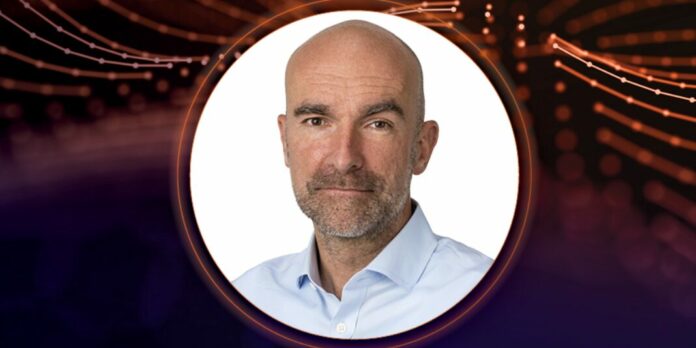
Sebastian Bretschneider

Lionbridge, a pioneer in translation, localization, AI data services, over-the-phone interpretation, and games globalization and testing, has announced that Sebastian Bretschneider has been appointed Chief Executive Officer, effective May 4, 2026.

Bretschneider brings 20+ years of experience leading businesses, with demonstrated success driving operational excellence, accelerating growth, and guiding global organizations through pivotal moments of transformation. Most recently, he served as a senior executive for various global enterprises, where he successfully implemented large-scale strategic initiatives that maximized organizational value and long-term sustainability. His extensive background in international strategy and operations, bolstered by a distinguished career spent across Europe, the Middle East, and the U.S., provides him with the unique global perspective necessary to lead Lionbridge’s expansive worldwide network.

“Lionbridge sits at the intersection of language and technology and has built impressive global scale while serving some of the world’s most respected companies,” said Sebastian Bretschneider. “The company’s global footprint, its depth of customer relationships, and the caliber of its people are extraordinary. I’m honored to join Lionbridge at this moment and look forward to partnering with the team during this phase to accelerate what’s being built here.”

“Sebastian is an exceptional leader with the operational depth and experience to guide Lionbridge into its next phase,” said Jonathan Gear, Chairman of the Board. “His background uniquely aligns with Lionbridge’s mission to empower leading brands to connect with global audiences. We also want to thank John Fennelly for his leadership and dedication to the company, and for his partnership during the transition.”

Lionbridge serves many of the world’s most demanding brands across the technology, games, life sciences, consumer products, manufacturing, automotive, and financial services industries. The company combines a global network of language experts with proprietary technology and AI capabilities to deliver content solutions at enterprise scale.

About Sebastian Bretschneider

Throughout his extensive career, Sebastian Bretschneider has served as a senior executive for global companies across a diverse range of industries. He has a strong track record of enabling leadership teams and global organizations to create sustainable growth, consistently driving companies toward their full potential and generating successful outcomes for customers.

Bretschneider has a rich background in international strategy, gained through professional experience across Europe, the Middle East, and the United States. A global citizen, he holds degrees in Economics and Islamic Sciences and has lived and worked across the U.S., Europe, and Asia.

About Lionbridge

Lionbridge partners with brands to break barriers and build bridges all over the world. Since its founding, it has helped companies connect with their global customers and employees by delivering translation and localization solutions in over 350 languages. Through its world-class platform, it orchestrates a network of passionate experts across the globe who partner with brands to create culturally rich experiences. It uses human and machine intelligence to forge understanding that resonates with its customers’ clients. Based in Waltham, Massachusetts, Lionbridge maintains offices in 24 countries.

Brajesh Jha Joins RWS as CEO of Transform Business Unit, Americas

0
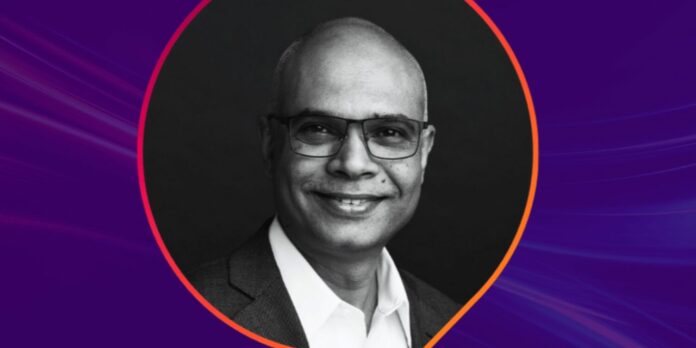
Brajesh Jha

RWS (AIM: RWS.L), a global AI solutions company, has announced that Brajesh Jha has joined its Executive Team as Chief Executive Officer (CEO) of its Transform Business Unit, Americas, effective 1 May 2026. In this role, he will drive strategic growth, operational excellence and cross-functional alignment across the region.

The appointment reflects RWS’s focus on accelerating growth across the Americas, a core market for the Group’s Transform business, which combines AI-powered localization technology with specialist services to help enterprises deliver content that is relevant, accurate and trusted in every market.

Brajesh brings extensive leadership experience across technology, services and global enterprise organizations. Most recently, he served as Senior Vice President and Global Leader at Genpact, where he built a high-growth business vertical through C-suite relationships across the media, entertainment, cable, advertising and publishing sectors, scaling to $200 million in annual revenue within three years, before going on to lead Genpact’s AI Value Transformation practice.

Prior to this, Brajesh was Senior Vice President, Airline Solutions at Sabre Corporation, where he led global relationships with airline CIOs and delivered $11 million in savings within nine months through automation and improved customer journeys. Earlier in his career at Oracle, he was a founding member of the customer support services organization, building a $300 million North American business unit and achieving record profitability.

“Brajesh has a strong track record of building and scaling high-growth, market-leading businesses. He brings a clear focus on operational excellence and a deep understanding of how to build strategic client relationships, which will be critical as we continue to strengthen and expand our presence in North America,” commented Ben Faes, Group CEO of RWS.

Brajesh will report to Ben Faes, Group CEO, and play a key role in advancing RWS’s ambitions across the Americas. He will work closely with Amanda Newton who will continue in her role as CEO of the Transform Business Units in EMEA & APAC.

“I’m excited to be joining RWS at a pivotal moment. The opportunity to bring RWS’s Cultural Intelligence Layer to enterprises navigating AI transformation across the Americas is a compelling one. Cultural fluency is foundational to AI deployment, and I look forward to working with the team to accelerate growth and deepen our relationships with clients who are doing some of the most consequential technology work of this decade,” said Brajesh Jha.

Through three business segments RWS delivers intelligent content, enterprise knowledge, large-scale localization and IP protection for enterprise growth. Generate focuses on content technology and the TrainAI data platform to power intelligent content creation; Transform combines AI-powered localization technology with specialist services to deliver content that resonates in every market; and Protect provides mission-critical IP services designed to safeguard and maximize the value of innovation.

About RWS

RWS is a global AI solutions company headquartered in the UK who empowers the world’s most trusted enterprise AI. Its proprietary Cultural Intelligence Layer, powered by 250,000 data specialists, cultural and language experts and deep domain professionals, backed by 45+ patents, makes enterprise AI culturally fluent, contextually accurate and secure, ensuring every interaction reflects a brand’s tone, context and customer values.

Through its Generate, Transform and Protect segments, it delivers intelligent content, enterprise knowledge, large-scale localization and IP protection for global growth. Trusted by 80+ of the world’s top 100 brands, RWS provides the confidence, governance and expertise organizations need to deploy AI safely, responsibly and at scale.

Haas Automation Selects TransPerfect’s GlobalLink Connector for HubSpot

0
TRANSPERFECT

TransPerfect, one of the world’s largest providers of language and AI solutions for global business, has announced that Haas Automation has implemented TransPerfect’s GlobalLink® connector for HubSpot, automating multilingual email translation and production workflows. The integration supports more than 65 million messages annually across seven languages, including daily e-commerce campaigns. 

Previously, Haas relied on manual translation and assembly steps across languages, increasing production time and the risk of human error. With GlobalLink integrated into HubSpot, translated emails are automatically returned to the HubSpot platform, enabling more efficient campaign execution. Consistent terminology and brand voice are maintained through translation memory and in-context review. 

This has reduced campaign build time by 50% while enabling Haas to scale production across high-volume, multilingual campaigns. 

Chereen Swank, Digital Content Specialist II, Haas Automation, commented, “TransPerfect’s GlobalLink technology doubled our production capacity. We would not go back to manual translation.” 

Phil Shawe, President and Co-CEO of TransPerfect, remarked, “By integrating GlobalLink into HubSpot, we’re helping Haas drive record time and cost efficiencies in multilingual content.” 

About Haas Automation 

Haas Automation is one of the largest machine tool builders in the United States, supplying a wide range of quality, high-value products to machine shops and manufacturers around the world, including CNC machines, tooling, work holding, and shop support equipment. Haas products are sold, serviced, and supported through a network of more than 170 locally owned and operated Haas Factory Outlets, in more than 60 countries. Haas Factory Outlets (HFOs) provide the best sales, service, and support in the machine tool industry.

About TransPerfect

TransPerfect is one of the world’s largest providers of language services and AI solutions for global business. From offices in over 140 cities on six continents, TransPerfect offers a full range of services in 200+ languages to clients worldwide. More than 6,000 global organizations employ TransPerfect’s GlobalLink® technology to simplify the management of multilingual content. With an unparalleled commitment to quality and client service, TransPerfect is fully ISO 9001 and ISO 17100 certified. TransPerfect has global headquarters in New York, with regional headquarters in London and Hong Kong.

Reps. Chu, Meng, Vargas, and Sen. Padilla Introduce Language Access Board Act

0
Judy Chu California logo

Rep. Judy Chu (CA-28), Chair Emerita of the Congressional Asian Pacific American Caucus (CAPAC), has introduced the Language Access Board Act of 2026 with Rep. Grace Meng (NY-06), Chair of CAPAC, and Rep. Juan Vargas (CA-52). This bill would establish an independent board of community leaders and federal agency officials to research, develop, implement, and enforce language access standards across the federal government. Senator Padilla will be leading the Senate companion. 

In 2025, President Trump declared English the official language of the United States by signing Executive Order (EO) 14224, revoking a 25-year-old mandate, renewed under Republican and Democratic administrations, that required federal agencies and recipients of federal funding to provide critical language access services to individuals with limited English proficiency (LEP). The Trump Administration’s Department of Justice also issued guidance minimizing multilingual services and redirecting resources towards English-language education and assimilation. 

This decision is already making it harder for the 25.7 million individuals with LEP in the United States to access basic services. In 2025, HUD announced its going “English-only”, the IRS began considering rollbacks to multilingual taxpayer services, the SBA removed non-English webpages from its website, and LEP.gov was removed. 

The Language Access Board Act of 2026 will help ensure that all Americans have access to the services and resources their tax dollars pay for, without barriers based on English proficiency. The bill would:

  • Establish an independent Board of community experts and federal agency officials to enforce language access guidance and regulations across federal agencies and departments.
  • Require the Board to establish, maintain, and provide technical assistance and training on language access standards for public-facing resources and materials for federally conducted programs.
  • Ensure individual complaints related to federal agencies’ or departments’ failure to adhere to language access requirements are processed and investigated.
  • Conduct a study on existing language access laws and best practices that help individuals with limited English proficiency access federal resources and programs.

“Being able to access federal services, regardless of the language you speak, is a civil right,” said Rep. Judy Chu, Chair Emerita of CAPAC. “Millions of Americans, especially in our immigrant communities, depend on translation support to apply for a loan, enroll in Medicare, or even access disaster relief resources. Trump’s English-only policies are a direct attack on immigrant families and an attempt to shut people out of the very services their tax dollars fund. I am proud to lead the Language Access Board Act to fight back against these hateful policies, ensure impacted communities have a seat at the table, and guarantee that language access protections are enforced.”

“Every American should be able to access federal services and programs in a language they can understand. Yet President Trump is determined to make life harder for millions of immigrants by declaring English as the official language of the United States and rolling back multilingual resources,” said Rep. Grace Meng, Chair of CAPAC. “CAPAC will not stand for this. The Language Access Board Act of 2026 will help combat these discriminatory policies and protect translation services for individuals with limited English proficiency, including millions of Asian Americans, Native Hawaiians, and Pacific Islanders.”

“For decades, federal language access services have helped millions of people file taxes, get emergency alerts, apply for loans, and access health care. Trump’s decision to designate English as our country’s official language and attempt to scrap these critical services is absolutely wrong,” said Rep. Juan Vargas. “No one should be locked out of federal programs because of the language they speak. This legislation is critical to keeping in place the services our communities rely on, without barriers based on English proficiency.”

“This Administration’s effort to illegally and unilaterally declare English the national language of the United States is fundamentally un-American and will disenfranchise tens of millions of hardworking citizens and immigrants with limited English proficiency,” said Senator Padilla. “Access to critical government programs and services must never be dependent on your ability to speak a language. The Language Access Board Act would ensure language accessibility standards across federal agencies and federally administered programs to serve all Americans.”

Asian Americans have among the highest language access needs of any racial group, with 32 percent having LEP. Twelve percent of Native Hawaiians and Pacific Islanders also have significant language access needs, and nearly 40 percent of Spanish-language speakers report speaking English “less than very well,” according to the most recent U.S. Census. 

This bill builds upon Congressmember Chu’s longstanding commitment to ensuring language accessibility, beginning with her work as a City Councilmember fighting against an ugly “English-only” movement in her hometown of Monterey Park. In 2025, Rep. Chu led more than 50 House Democrats in multiple oversight letters to the Administration opposing the implementation of EO 14224. Earlier this month, Reps. Chu, Meng, Espaillat, and Sen. Padilla introduced a resolution recognizing April as “National Language Access Month”, to bring attention to the millions of individuals in the U.S. with LEP and the importance of language access services.

The bill is also cosponsored by Reps. Dan Goldman, Frederica Wilson, Eleanor Holmes Norton, Ted Lieu, Rashida Tlaib, Al Green, Darren Soto, Tim Kennedy, and Lou Correa.

The Language Access Board Act of 2026 is endorsed by a total of 38 distinct organizations.

“AANHPI communities often face substantial obstacles to obtaining meaningful language access. Our community is diverse, spanning across 50 ethnicities with more than 100 languages and dialects, and language access services should reflect that. When language access services fall short, individuals and families are unable to obtain vital services. Ensuring culturally appropriate resources in people’s primary languages is necessary for meaningful participation in key programs. We applaud Representative Chu’s introduction of the Language Access Board Act to establish an independent board that will lean on the experience and expertise of community leaders to inform and determine critical language access guidance and regulations.” said Jo Ann Paanio, Policy Director, National Council of Asian Pacific Americans (NCAPA).

Priya Purandare, Executive Director of NAPABA said, “The National Asian Pacific American Bar Association (NAPABA) is grateful for the leadership of Rep. Judy Chu, Rep. Grace Meng, Rep. Juan Vargas, and the sponsors of the Language Access Board Act of 2026.  This bill, along with the Language Access for All Act of 2026, are important steps to ensuring that every federal agency meet the needs of individuals with limited English proficiency.  Language access is particularly important for the Asian American, Native Hawaiian, and Pacific Islander (AANHPI) community, where most are immigrants. Nearly 32% of the community is limited English proficient and speaks over 100 different languages. NAPABA has long championed linguistic access for AANHPI communities in the legal system. We look forward to working with the bill’s sponsors and stakeholders to ensure that every individual can access critical, federally funded services.”

Language Services Associates Named a Top Workplace by USA TODAY for the Third Time

0
Language Services Associates Top Workplaces Award

Language Services Associates (LSA), a leader in innovative interpretation, translation, and AI language solutions, has announced it has received the prestigious USA TODAY Top Workplaces award for a third time and counting. 

The USA TODAY Top Workplaces award honors organizations with 150+ employees that create exceptional, people-first cultures. The winners are recognized for their commitment to fostering a workplace environment that values employee listening and engagement.  

Additionally, LSA took home Top Workplaces Cultural Excellence awards for: 

  • Compensation & Benefits
  • Employee Well-Being
  • Innovation
  • Leadership
  • Professional Development
  • Purpose & Values
  • Work-Life Flexibility
  • Top Workplaces for Appreciation

This recognition reflects how consistently its employees experience LSA as a collaborative, supportive, and inclusive workplace. The feedback behind these awards highlights the values they work hard to live by — open communication, innovation, compassion, and teamwork. Performing well across all these categories reinforces that its culture is not defined by one strength alone, but by a shared commitment to supporting one another and continuously improving how we work together.

Scott Cooper, CEO, Language Services Associates said, “earning a USA TODAY Top Workplaces award is a testament to an organization’s credibility and commitment to a people-first culture. This award, driven by real employee feedback, is more than just a recognition — it’s proof that your employees believe in the organization and its leadership. Job seekers and customers look for this trusted badge of credibility and excellence. It signals a company that values its people, and that kind of culture resonates in today’s competitive market.”

Eric Rubino, CEO of Energage commented, “the winners are determined by authentic employee feedback captured through a confidential survey conducted by Energage, the HR research and technology company behind the Top Workplaces program for two decades.”

The winners are determined by authentic employee feedback captured through a confidential survey conducted by Energagethe HR research and technology company behind the Top Workplaces program for two decades. 

About Language Services Associates  

Language Services Associates (LSA) is a leading full-service language service provider (LSP) offering in interpretation, translation, and AI-powered language solutions in over 300 languages. Since 1991, LSA has partnered with organizations in healthcare, government, legal, education, finance, sports, and more to deliver high-quality, compliant, and scalable language access services. Backed by a network of 7,000+ vetted linguists, LSA provides accuracy, cultural competence, and 24/7/365 availability with over 99.9% uptime reliability.  

As one of the largest privately owned language service providers in the U.S., LSA combines human expertise with secure, integrated technology to help organizations improve outcomes, meet compliance requirements, and build inclusive multilingual experiences. 

About Energage 

Energage is a purpose-driven company that helps organizations turn employee feedback into useful business intelligence and credible employer recognition through Top Workplaces. Built on 20 years of culture research and the results from 30 million employees surveyed across more than 80,000 organizations, Energage delivers one of the most accurate competitive benchmarks available. With access to a unique combination of patented analytic tools and expert guidance, Energage customers lead the competition with an engaged workforce and an opportunity to gain recognition for their people-first approach to culture. For more information or to nominate your organization, visit energage.com or topworkplaces.com.

PDFs Need Not Be an Accessibility Nightmare

0
person wearing headphones, frustrated at computer

PDFs are critical in enabling smooth reading experiences for everyone, but especially for multilingual readers or people using assistive technologies. The problem is, basic technical issues can limit the value of this vital tool if not properly handled. So what are the details to watch out for, and what can be done to fix existing issues? How can you ensure your PDFs are an accessibility dream, not a nightmare?

Portable document formats, or PDFs, efficiently carry and display content, irrespective of the program used to create them. They retain the structural integrity of the document and enable print-ready documents to be shared. 

However, PDFs do pose occasional accessibility challenges that stem from file creation. 

First, let’s see what makes a PDF not accessible: 

  • If it is not searchable. PDFs with scanned images in place of text are not readable by search engines. As a result, it will not show up in search results and discovery opportunities are lost. A PDF can perform poorly in search for other reasons, too, as discussed later. 
  • If it is not formatted well. If the title, subheads, tables, and other metadata are not formatted or tagged appropriately, people with disabilities often have trouble reading them with screen readers. 
  • If it has junk characters. This poses problems at the very first, visual level where users have trouble reading the content. It may happen when text from other languages has not been imported well from other document formats. 

However, if your company or organization wishes to reach wider audiences — which may include people with disabilities or multilingual readers — it would be a good idea to look at PDF remediation or the process of making PDFs accessible. This is also required by laws such as the German Accessibility Improvement Act (Barrierefreiheitsstärkungsgesetz – BFSG), the European Accessibility Act (2025), and ADA updates (2026) that stipulate that digital products and services must be made accessible to people with disabilities. 

The PDF/UA (Universal Accessibility) ISO Standard provides guidelines for creating accessible PDFs. These guidelines help make the file accessible to the “widest possible audience, including those with disabilities.” 

Remember that accessibility enablers make life easier for people with disabilities, but they are also convenient to everyone else. When PDFs can be used without any glitches, web users and your customers meet their objectives faster, are more satisfied, and are also more likely to share the PDFs. 

What does PDF remediation entail?

With a few simple steps, creating user-friendly and accessible PDFs is a simple process.

Tagging documents properly so they’re usable by screen readers. To do this, all metadata must be marked and labeled appropriately. Metadata includes document title, author, subject, keywords, language settings, and creation or modification dates. 

  • The title helps people using screen readers to know the purpose of the document accurately and quickly. 
  • Specifying the language helps screen readers punctuate and modulate appropriately. 
  • Even tables need to be tagged to allow for assistive technology to interpret them. 

Tags are not visual elements. Neither are they the only elements of an accessible PDF, but without tags, a PDF is not considered accessible. 

Increasing the searchability of the document by providing keywords, subject, and alt tags. This helps search engines index the document and list it in search results. Embedding alternative or alt text for images and charts provides the context for these non-text elements. If you use an image and do not provide the alt text for it, the screen reader will simply announce the file name of the image. Often, this may not make sense and disrupts the reading experience. Well-written alt tags, on the other hand, can add meaning by clarifying what the image or chart is about. 

Improving the semantic structure by tagging different elements of the text correctly. For example, marking the headings and subheads with H1, H2 levels, lists, and paragraphs. This provides a clear and meaningful structure to the document. 

Making PDF forms accessible. People often need to use PDF forms to access a service, file their returns, and even vote. Hard-to-use PDF forms can seriously affect civic rights at the worst and provide an unsatisfactory user experience at the least. Best practices to make PDF forms accessible are:

  • Add tool tips to fields. When hovered over, they quickly explain what the field is for. 
  • Tag all form fields. 
  • Set the correct read order. Sometimes the regular left-to-right reading order may not make sense. It would benefit the reader more if the read order prioritizes the flow of the document. It may be necessary to arrange the content logically to follow the intended flow. 

These are only a few of the steps for PDF remediation. Several more may be necessary, depending on the PDF content and what purpose it intends to serve. 

Once the PDF has been remediated, it will have to be validated and undergo quality checks. A PDF Accessibility Checker (PAC) report can be generated to comprehensively evaluate compliance with international accessibility standards, specifically PDF/UA and WCAG 2.2.

Takeaway: An accessible PDF is not merely a nice-to-have, but a must-have if you intend to create an inclusive, friction-free document. By making it easy to find, read, use, and share, you avoid broken user experiences and reduce back-and-forth emails and calls to customer care. It will also scale your reach to a much larger audience.