Welocalize Expands Enterprise Access to OPAL Enable Through Blackbird Integration

0
Welocalize and Blackbird.io

Welocalize has announced it is expanding enterprise access to OPAL Enable, its multilingual AI workflow platform already operating in production environments. The company is enabling this expanded access through a new collaboration with Blackbird, the integration platform as a service (iPaaS) designed for the language and content technology ecosystem.

The collaboration allows organizations using Blackbird to utilize OPAL Enable within their existing orchestration infrastructure, enabling enterprises to design, deploy, and scale multilingual AI workflows without requiring separate platform implementation or architectural reconfiguration.

OPAL Enable is a configurable product that helps organizations run multilingual content workflows end to end. It connects automation and AI with optional human oversight, so teams can choose the right balance of speed, quality, and control. Already proven in enterprise production environments for more than a year, OPAL Enable is designed to support secure, scalable global content execution.

Through Blackbird, customers gain streamlined access to OPAL Enable capabilities, allowing content, product, and digital teams to integrate multilingual AI workflows into existing enterprise technology stacks while maintaining control over orchestration logic, automation pathways, and data governance requirements.

“Enterprises are increasingly looking for ways to operationalize AI within existing infrastructure rather than introducing isolated point solutions,” said Darin Goble, Head of AI Platforms at Welocalize. “OPAL Enable was designed to serve as a multilingual workflow layer that organizations can use to maximize the benefit of AI in their localization process. The Blackbird collaboration allows customers to activate those capabilities directly within orchestration environments they already rely on.”

The collaboration enables Blackbird customers to deploy multilingual AI workflows that support global product launches, customer experience localization, regulated content workflows, and high-volume digital content operations.

“Enterprises are moving from AI experimentation to production deployment through solutions that align with commercial outcomes and existing operating environments,” said Paul Danter, General Manager at Welocalize.

“Providing seamless access to OPAL Enable through platforms like Blackbird helps organizations operationalize multilingual AI workflows faster, at scale and with oversight, while giving teams the flexibility to scale global content without adding complexity. This approach reflects Welocalize’s broader strategy to deliver productized AI workflow infrastructure that accelerates ROI.”

OPAL Enable within Blackbird is available immediately and supports a wide range of multilingual content, AI automation, and global digital experience use cases for enterprise organizations.

About Welocalize, Inc.

Welocalize serves localization teams through AI-enabled multilingual content solutions that enable enterprises to operate and scale globally. Headquartered in New York with offices worldwide, Welocalize combines AI, automation, and human expertise to support enterprises in more than 300 languages, enabling accurate, culturally aligned, and compliant multilingual content at scale. At the core of Welocalize’s offering is the OPAL Platform, a product-led operating layer designed for straight-through processing of multilingual content. These solutions operate within a secure and compliant environment supported by seven ISO certifications.

Peter Filkins Announced as the Winner of the Inaugural Freudenheim Translation Prize

0
Jewish Literary Foundation 2026 Winner, The Book Against Death, translated by Peter Filkins

The Jewish Literary Foundation has announced Peter Filkins as the recipient of the inaugural Freudenheim Translation Prize for his translation of The Book Against Death by 1981 Nobel Laureate Elias Canetti – a collection of aphorisms and commentaries that reflect on – and rage against – death and destruction. The new prize recognizes outstanding translations of books on Jewish life, culture and ideas.

Described by chair of the judges Boyd Tonkin as “an intoxicating blend of memoir, vision and philosophy”, The Book Against Death – complied over more than four decades – is “a posthumous masterwork from one of the 20th century’s most powerful literary minds”.

Peter Filkins, translator of Ingeborg Bachmann’s collected poems, Darkness Spoken, as well as three novels by H. G. Adler, The Journey, Panorama and The Wall, was announced as the winner of the £3,000 award during a prize ceremony on 12 February. The event featured readings from the shortlisted translators and a panel with Tonkin and fellow judges Hephzibah Anderson and Shoshana Boyd Gelfand on the importance of the award and translation.

The prize – run in partnership with the Times Literary Supplement (TLS) and named after the Freudenheim family – is the most ambitious award in the Jewish Literary Foundation’s 75-year history, celebrating excellence in translated fiction and non-fiction into English. Its goal is to raise the visibility of international Jewish writing and provide English-speaking audiences with access to important and frequently underrepresented texts from around the world.

As Tom and Leslie Freudenheim, sponsors of the prize said, “In this inaugural year of the Freudenheim Translation Prize – a distinction our family was proud to initiate – we are thrilled to honour our son, Adam, for his longstanding commitment to bringing outstanding foreign-language literature to an English-reading public. His work has not only expanded the reach of international writers but has also reflected an ongoing engagement with Jewish intellectual life, values that lie at the heart of this prize.”

Narrowing the winner from a shortlist of six titles, the judges were unanimous in their decision to award the prize to Filkins, stating that “Elias Canetti’s lyrical, erudite and passionate reflections on the deepest questions of life and death find their home in English thanks to Peter Filkins’s masterly translation”.

Open to translators worldwide, the shortlist ranged from novels, short stories, memoir and philosophy. Covering translations from Yiddish, Hebrew, Slovak, French and German, the chosen titles brought together literary rediscoveries and urgent contemporary voices. The Postcard, translated by Tina Kover, was highly commended by the judges, with other shortlisted titles including: How to Love Your Daughter, translated by Daniella Zamir; Sons and Daughters, translated by Rose Waldman; Living with Our Dead, translated by Lisa Appignanesi; and The Last Thing, translated by Julia & Peter Sherwood.

As chair of the judges, Tonkin commented: “The shortlisted works span many aspects of Jewish experience past and present, the dramas and tragedies of the 20th century, and the deepest questions of life and death, faith and doubt. We warmly recommend all our chosen titles.”

The partnership of the Jewish Literary Foundation with the TLS builds on a shared commitment to literature in translation, opening a window onto global writing for English-language readers and celebrating voices that deserve wider recognition. As part of the partnership, Peter Filkins will be speaking at the Jewish Literary Foundation’s flagship annual festival Jewish Book Week 2026 in a wider event on translation, joined by judges of the prize and chaired by Toby Lichtig, Fiction and Politics Editor of the TLS. The event, Translation: An Unfolding Dialogue, will explore the art of translation and its vital role in carrying stories, ideas and cultures across languages and borders.

Details and tickets for the Translation: An Unfolding Dialogue event at Jewish Book Week 2026 can be found here.

More details about the Freudenheim Translation Prize can be found here.

ABOUT THE JEWISH LITERARY FOUNDATION

The Jewish Literary Foundation presents the best in Jewish literature and ideas through live events and cultural experiences, inspiring readership and a lifelong engagement with Jewish culture for wide audiences. Their year-round activities include the flagship annual Jewish Book Week (JBW) festival, translation prizes, an emerging writers’ programme, schools programme, regular events and their JLF Player – a free and accessible video player presenting the best of JBW and beyond.

ABOUT JEWISH BOOK WEEK

Jewish Book Week is London’s longest running literary festival, taking place annually since its inception in 1952. The festival is hosted by the Jewish Literary Foundation, whose mission is to encourage active engagement with Jewish books and ideas, and cultivate a passion for the Jewish literary tradition. From its flagship annual festival to its JLF Video Player, creative opportunities and live cultural experiences, the JLF connects, inspires and entertains year-round.

St. Peter’s Basilica Delivers Holy Mass in 60 Languages Through Lara Interpreter

0
Translated's Lara Interpreter implemented at the Basilica Di San Pietro

In the context of the celebrations marking the Fourth Centenary of the Dedication of Saint Peter’s Basilica (18 November 1626–2026), the Papal Basilica of Saint Peter in the Vatican, through the Fabric of Saint Peter, has announced the introduction of an AI-assisted live translation service that will enable the attendees to follow the celebration of the Holy Mass in 60 languages, using their own smartphones. 

This initiative — developed in collaboration with Translated and its advanced translation AI, Lara, with the scientific support of Professor Alexander Waibel — represents the first large scale application of simultaneous AI interpretation within a sacred space at the Vatican, intended to foster attentive participation and deeper understanding among the many peoples who gather at the Tomb of the Apostle. 

The service is expected to be implemented during the main celebrations at St. Peter’s Basilica and will be progressively introduced starting next week. 

His Eminence Cardinal Mauro Gambetti, O.F.M. Conv., Archpriest of the Papal Basilica of Saint Peter in the Vatican, Vicar General of His Holiness for Vatican City and President of the Fabric of Saint Peter, stated: “Saint Peter’s Basilica has, for centuries, welcomed the faithful from every nation and tongue. In making available a tool that helps many to understand the words of the liturgy, we wish to serve the mission that defines the centre of the Catholic Church, universal by its very vocation. I am very happy with the collaboration with Translated. In this centenary year, we look to the future with prudence and discernment, confident that human ingenuity, when guided by faith, may become an instrument of communion.” 

Marco Trombetti, CEO and co-founder of Translated, remarked: “Language enables meaningful encounters. Offering this service within Saint Peter’s Basilica is a concrete way to place artificial intelligence at the service of listening, participation, and understanding. We are honored to contribute, with Lara, to an experience that helps people overcome linguistic barriers and feel truly included in the shared prayer of the Church.” 

How the service works 

At the entrances and designated points within the Basilica, attendees will be able to scan a QR code to access a dedicated web page providing real-time audio and text translations of the liturgy.

The service functions directly in a web browser, requiring no app download and no special equipment beyond a personal device. 

The translation system draws upon Lara’s live interpretation capability, developed by Translated, a global leader in AI-powered language solutions, and Carnegie-AI LLC, a leader in simultaneous interpreting technologies. The implementation builds upon previous participation by Marco Trombetti and Alexander Waibel at the Third World Meeting on Human Fraternity in September 2025, where they joined other prominent AI scientists and leaders from across the world to draft a declaration to uphold key principles and boundaries to guide dialogue on how AI can best serve humanity.

Professor Alexander Waibel, a world-leading pioneer of AI-powered speech translation and scientific adviser to the project, said: “Today, we see the possibility to break language barriers in real time, realized in one of the most meaningful settings imaginable. At the Third World Meeting on Human Fraternity, we recognized mutual human understanding as one of the most significant contributions AI can make to humanity. Bringing live translation to St. Peter’s Basilica is a profound expression of that conviction.” 

ABOUT TRANSLATED

Translated is a leading language services provider and pioneer in utilizing artificial intelligence (AI) to assist professional translators. Founded in 1999 by linguist Isabelle Andrieu and computer scientist Marco Trombetti, its mission is to allow everyone to understand and be understood in their own language. Translated’s work is trusted by the some of the largest translation buyers in the world and has been recognized as leading in AI-powered translation technology by IDC Marketscape, CSA Research, and Gartner.

In 2024, Translated launched Lara, a breakthrough translation AI that outperforms leading machine translation and approaches the quality of top-tier professional translators. With Lara, Translated combines the sensitivity of over 500,000 native-speaking professional translators with the speed and capability of machines, making it possible to tackle localization projects once thought unimaginable. Today, Translated delivers fast, consistent, high-quality translations to over 300,000 customers in 200 languages and over 40 subject areas.

Translated Introduces TranslationOS, an Adaptive AI Service Delivery Platform

0
Introduction of TranslationOS by Translated

Translated has announced the launch of TranslationOS, an adaptive AI service delivery platform that helps enterprises manage the growing complexity of localization workflows and unlock latent demand for translation at scale. 

Many organizations that have adopted AI in production struggle to make it work within TMS-based workflows and achieve measurable results. Traditional localization workflows were not designed around the data and context AI needs to perform effectively. 

TranslationOS enables enterprises to move from a TM-centric to a context-centric approach by operating on full context and coordinating AI and language professionals. In doing so, it turns complex, multi-step operational coordination into a single, transparent process. 

“The next phase of localization is not about better models, but better systems. Enterprises don’t need more tools. They need a reliable way to run AI-driven localization with transparency, control, and confidence,” said Marco Trombetti, founder and CEO of Translated. 

TranslationOS orchestrates Translated’s proprietary translation AI, Lara, and language professional within one system, applying the appropriate level of human review based on business context and delivery requirements. Everything is automated, from translator availability to data collection for the daily improvement of customer-specific AI models. Teams gain a direct connection with translators, along with real-time visibility into progress, quality, and spend, from request to approved delivery. TranslationOS’ context-centric approach enables unprecedented in-brand translations and a clear understanding of each contribution impact, leading to faster, more cost-effective workflows with increased control. 

Enterprises can integrate TranslationOS into their workflows directly via API as a standalone solution, as well as through Translated’s suite of connectors for major content and translation management systems (CMS and TMS), martech, design, and engineering tools. 

With TranslationOS, operational overhead goes down, and localization stops being a bottleneck and becomes a growth lever. Teams ship faster, protect brand quality across markets and expand into more languages with confidence. The entire process becomes transparent, predictable, and clearly valuable, which is exactly what enterprises require from their localization programs. 

About Translated 

Translated is a leading language services provider and pioneer in utilizing artificial intelligence (AI) to assist professional translators. Founded in 1999 by linguist Isabelle Andrieu and computer scientist Marco Trombetti, its mission is to allow everyone to understand and be understood in their own language. Translated’s work is trusted by the some of the largest translation buyers in the world and has been recognized as leading in AI-powered translation technology by IDC Marketscape, CSA Research, and Gartner. 

In 2024, Translated launched Lara, a breakthrough translation AI that outperforms leading machine translation and approaches the quality of top-tier professional translators. With Lara, Translated combines the sensitivity of over 500,000 native-speaking professional translators with the speed and capability of machines, making it possible to tackle localization projects once thought unimaginable. Today, Translated delivers fast, consistent, high-quality translations to over 300,000 customers in 200 languages and over 40 subject areas. 

The Week in Review: Language Industry News February 10-16

0
Week in Review Feb. 10-16

This week’s top stories highlight how the language industry continues to evolve across clinical research, higher‑education pipelines, artificial intelligence (AI)‑driven document workflows, localization strategy, and real‑time meeting technology. Together, they show a sector expanding its technical capabilities while strengthening the human and institutional connections that keep multilingual communication moving.

Product and Service Launches

RWS has introduced a new central nervous system (CNS)‑focused rater training and certification service aimed at reducing variability in clinician assessments — one of the biggest risks to data quality in neurological clinical trials. The program supports global, long‑running studies by standardizing rater onboarding, monitoring, and retraining across regions, languages, and electronic Clinical Outcome Assessment (eCOA) platforms. With structured digital delivery and CNS‑specific expertise, RWS positions the service as a way for sponsors and clinical research organizations to protect scientific integrity without adding operational complexity.

Wordly has launched Workspaces, a new environment that centralizes meeting translation, captioning, and content management for enterprise teams. The platform allows users to organize events, manage assets, and collaborate across departments while leveraging Wordly’s AI‑driven real‑time translation engine. By consolidating workflows into a single hub, Workspaces aims to simplify multilingual meeting operations and support organizations scaling global communication.

Translayte has released Cipher, an AI‑powered platform that translates PDFs and images while preserving original layouts, significantly reducing the need for post‑translation desktop publishing work. The tool is designed for language service providers and teams handling high‑volume, document‑heavy workflows, offering features like side‑by‑side review, reusable translation notes, role‑based access, and secure collaboration. By combining instant layout retention with enterprise‑grade security and flexible team controls, Cipher streamlines complex document translation and reduces the operational overhead traditionally tied to optical character recognition and formatting cleanup.

Community

Utah Valley University will host its fourth annual Language Industry Day on February 25, bringing students, educators, and language services professionals together to explore careers at the intersection of language, culture, and technology. The event features a keynote from Disney’s Jeff Beatty and a networking fair where companies, nonprofits, and associations share internship and career pathways. Positioned as a key workforce development initiative in Utah, the event strengthens ties between higher education and the state’s growing language services sector.

The latest Global Minds event in Los Angeles, hosted by Argos Multilingual and Lokalise, brought together localization professionals to discuss how enterprise localization strategies are shifting in an era defined by AI, automation, and global content velocity. Speakers emphasized the growing need for scalable workflows, cross‑functional collaboration, and tooling that supports rapid iteration without sacrificing quality. The event underscored how localization teams are adapting to new expectations around speed, integration, and continuous delivery across global markets.

___________________________________________________________________________________________________________________________________________

From clinical research to campus career pipelines, and document automation to enterprise‑grade meeting tech, this week’s stories show an industry investing in both precision and accessibility. As multilingual communication becomes more embedded in global operations, organizations are building tools and programs that reduce friction, strengthen quality, and expand opportunity. The result is a sector that continues to grow not just in scale, but in sophistication.

For more stories like these, visit our News section.

The Advantages of Niche Language Work: Why Scarcity Is a Strategy

0
Trilateral interpreting between three different parties and language pairs.

Most of the world’s language work today happens in conditions defined by scarcity, such as scarce data, tooling, or professional capacity. While this is often framed as a technological challenge, it also reflects something deeper about the value of niche language work. When only a handful of people are certified to work on a niche language pair or industry domain, those linguists become the go-to professionals who organizations actively seek out in a world awash with artificial intelligence (AI)

High‑resource language pairs benefit from abundant data, established neural machine translation (NMT) systems, and large talent pools, but niche pairs normally fall outside that infrastructure. For example, a study on Monégasque — a language spoken by roughly 5,000 people — found that it is not supported by any NMT engine due to extremely limited corpus availability, keeping human linguists as the primary source for translation and interpretation.

This is the dividing line: A language pair becomes niche when the available data, tools, and professional capacity fall below the threshold needed for scalable automation or broad competition. It is the unique expertise of linguists with niche skills that becomes the scarce resource the industry depends on.

The Economics of Scarcity

Rare language pairs are often treated as peripheral, but the economics tell a different story. The American Translators Association (ATA) notes that translation is not a single unified market, but a collection of micro‑markets shaped by supply and demand, where scarcity of qualified professionals increases the value of their work. In other words, niche may mean small — but it’s structurally significant.

Scarcity of one’s language pairs has measurable effects on pricing and demand. Translation rates vary because of language availability and the number of qualified linguists within a given pair — with less common pairs commanding higher prices due to limited supply. More specifically, high‑resource pairs like English–Spanish have lower rates due to competition, while rarer pairs such as Icelandic or Norwegian–Portuguese cost more because fewer qualified professionals exist. These are classic supply‑and‑demand dynamics applied directly to language work.

Scarcity compounds when rare language pairs intersect with specialized domains. Industry‑specific expertise (such as legal, medical, and technical) further increases pricing because the overlap between language ability and domain knowledge becomes even smaller. Niche linguists become indispensable when both linguistic and subject‑matter scarcity converge.

Why This Matters

Industry analyses show that service markets for high‑resource language pairs are saturated — which depresses rates and increases competition — while rare pairs benefit from lower supply and higher demand. This aligns with broader research showing that generalist translation work is the most vulnerable to automation, while niche language work remains more stable. In a market shaped by saturation and technological pressure, specialization — both linguistic and domain — becomes one of the strongest predictors of long‑term professional stability.

The Monégasque NMT study underscores that some languages simply cannot be automated, making human expertise the only infrastructure. For these languages, niche linguists hold stable, irreplaceable roles in language services.

The message for linguists is this: Niche language work is not marginal — it remains essential. The work of niche linguists may be overlooked in industry narratives, but in practice, it is a critical, structurally necessary element of the field. As scarcity shapes entire micro‑markets, niche language work is where the industry’s deepest needs converge.

GTE Localize Launches LocReset Episode 1: Cutting Through AI Hype in Localization

0
GTE Localize LocReset Episode 1 guest speakers

GTE Localize, a global localization service provider, announced the production of the inaugural episode of LocReset, the company’s new flagship thought‑leadership podcast series dedicated to cutting through AI hype and reframing localization as a measurable growth engine. Designed for localization leaders, product teams, and global‑market strategists, LocReset explores what’s actually working in AI‑enabled workflows — and what isn’t.

To build anticipation, GTE Localize will release short “LocBites” snippets throughout the month of February, offering listeners early insights from the first episode. The full 50–60 minute episode will debut March 10, 2026 @ 4:00 pm CET | 10:00 am EST.

Episode highlights

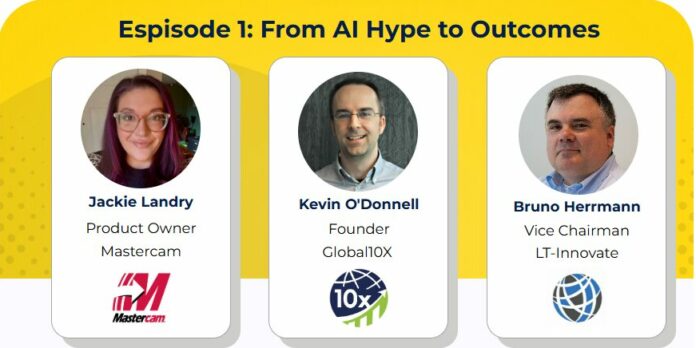
Hosted by Matt Grotenstein, VP of North America at GTE Localize, the premiere episode — “From AI Hype to Outcomes: Implementing AI in Production Workflows and Measuring Real Results” — brings together three respected industry voices:

  • Kevin O’Donnell, GTM Advisor and former VP of International Growth at Microsoft and Dropbox
  • Bruno Herrmann, Global Content Operations Leader
  • Jackie Landry, Product Owner, Localization at Mastercam

Across the episode, the panel examines:

  • What “production‑grade” AI stacks actually look like.
  • How teams can implement AI responsibly with strong data governance.
  • Where ROI is real — and where expectations need recalibration.
  • How to scale from single‑market localization to global programs without sacrificing quality.

Manifesto

“LocReset seeks to demystify AI trends in localization – what works vs. what doesn’t – and vindicate localization as a global growth engine rather than a cost center. We help cut through the hype and refocus on measurable outcomes.” 

About LocReset

LocReset Podcast is GTE Localize’s flagship thought leadership series, hosted by its VP of North America and industry veteran Matt Grotenstein. LocReset seeks to demystify AI trends in localization – what works vs what doesn’t – and vindicates localization as a global growth engine rather than a cost center.

The series is driven by GTE Localize and its speakers’ insights accumulated over decades of experience in Localization operations and technology. It aims to offer Localization leaders along with Marketing, Product and Content professionals with practical and applicable know-how insights into the industry.

For more information or to watch Episode 1, visit LocReset.com or follow us on LinkedIn at https://tinyurl.com/locresetgroup

About GTE Localize

Founded in 2017, GTE Localize is a global localization provider headquartered in Hanoi and backed by international offices in the US, Singapore, and the UK. Its ISO certifications and proprietary quality playbook help enterprises modernize multilingual workflows with human-AI hybrid solutions. Its mission is to help global businesses, international organizations, and government agencies with multilingual communication, tailoring its services to match client needs worldwide.

Boostlingo Publishes 2026 Language Access Compliance Guide

0
Boostlingo

Boostlingo has announced its release of the US Language Access & 2026 Compliance Guide, a practical resource for language access and compliance teams developing their language access strategies for 2026. The guide includes on-the-ground insights, a practical compliance toolkit, and a timeline of language access laws affecting healthcare, government, and other regulated sectors. 

Language access obligations under Title VI, the ADA, and related civil rights laws have existed for decades, but shifting federal guidance and rapid AI adoption have made compliance harder to operationalize. Organizations across regulated environments often struggle to determine what has changed and what hasn’t. Boostlingo’s new eBook was developed to address that uncertainty. 

“One of the biggest challenges our customers face is knowing whether their language access plan will hold up over time,” shared Ashley Sanders, Manager of Customer Operations at Boostlingo. “This eBook helps teams move from guesswork to more consistent, defensible planning.” 

The guide outlines the legal foundations of language access under Title VI and the ADA, explains how those obligations are applied through guidance and highlights common areas where organizations face compliance risk, particularly during periods of policy transition. 

In addition, the guide examines how AI-powered interpreting and translation tools intersect with existing language access requirements. While AI adoption is accelerating, the guide emphasizes that organizations retain legal responsibility for ensuring these technologies meet compliance requirements. 

“As AI becomes embedded in workflows at regulated organizations, it’s critical to understand when its use is appropriate and how it should be evaluated,” said Bryan Forrester, CEO and co-founder of Boostlingo. “This guide gives compliance teams a practical framework for adopting AI in ways that align with regulatory expectations.” 

The guide also addresses a common but underreported issue: most language access failures are operational, not intentional. Drawing on poll responses and industry trends, it highlights how unclear workflows, inconsistent practices, and lack of staff training create compliance risk even when formal policies exist. 

“Frontline staff are doing their best, but without clear escalation paths and training, even well-designed language access strategies can fail when it matters most,” said Katharine Allen, Director of Language Industry Learning at Boostlingo. “Our new guide focuses on those operational realities, not just high-level policy.” 

Boostlingo views the US Language Access & 2026 Compliance Guide as a practical reference for language access coordinators, compliance and operations leaders, and legal teams navigating an increasingly complex landscape. By consolidating legal requirements, implementation guidance, and AI considerations into a single resource, the company aims to support defensible language access strategies.  

About Boostlingo 

Boostlingo builds technology that helps businesses connect across languages. Based in Austin, TX, it serves over 3,000 organizations through on‑demand interpreting, intelligent routing, and integrated workflow tools. its AI-powered platform helps every organization reach the right language professional or service when they need it.

Inside Global Minds Los Angeles, Hosted by Argos Multilingual and Lokalise

0
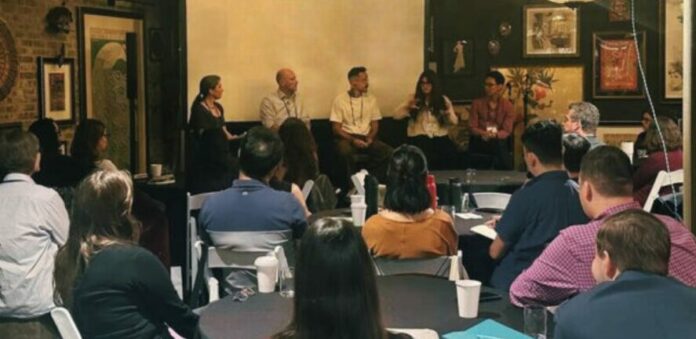
Global Minds Los Angeles panel session speakers and attendees

On February 4, Argos Multilingual and Lokalise hosted Global Minds Los Angeles, bringing together a lively mix of localization leaders, practitioners, and partners for an afternoon of real talk about where localization is headed and how AI is actually showing up in day-to-day work. With strong attendance and a packed room, the energy was high right from the start and the conversations felt refreshingly practical.

The panel session on “AI in Localization: The Good, The Bad, and The Ugly” was a standout, featuring Pablo Lloreda (Roku), Alejandra Gutiérrez (Fetch Rewards), Antoine Rey (Argos Multilingual), and Jacob Wheeler (Lokalise). The discussion focused on what localization managers are really doing with AI right now.

Panelists shared how their teams are testing different levels of automation, rethinking post-editing, and making more intentional decisions about where human expertise matters most. One clear takeaway was that there’s no single “right” AI setup. Successful teams are adapting their workflows based on content type, risk, and business goals, not forcing everything through the same process.

The keynote session, led by Renato Beninatto of Nimdzi Insights, challenged attendees to stop asking how fast AI can translate and start asking who controls value in an AI-driven content stack. Noting that as AI makes translation more abundant, the real work shifts toward coordination, decision-making, and managing risk across markets. He emphasized that localization teams that focus only on speed and cost risk becoming just another service layer, while teams that influence outcomes gain long-term relevance.

Real-world examples from companies like Adidas, Airbnb, and Spotify helped bring the point home. Whether it was moving cultural input earlier in campaign planning or measuring success through retention and conversion instead of word counts, the message was clear: localization creates the most value when it’s involved upstream. Another theme that resonated strongly was the shift in metrics. Operational stats still matter, but leadership pays attention to results, not just delivery.

By the end of the afternoon, after workshop sessions and a rooftop dinner to close out the evening, Global Minds Los Angeles left attendees with a shared sense of momentum. Localization is changing, AI is part of that change, and the teams that will thrive are the ones using AI thoughtfully, staying flexible, and focusing on outcomes over efficiency alone.