What Will Happen to the Language Industry if the AI Bubble Bursts?

0
Popping a bubble

For several years now, the language industry has lived under the reign of artificial intelligence (AI). No conference, trade report, or investor briefing seems complete without invoking its transformative power. Language industry analysts such as Nimdzi Insights and Slator dedicate entire issues to it; entrepreneurs promise AI-first solutions; and academics reinvent their research agendas around it. Whether by conviction or by necessity, everyone has become an AI expert, commentator, or even influencer.

This situation is certainly not unique to our field, but for language professions it runs particularly deep. The current AI wave is, after all, a language revolution. Large language models (LLMs) have placed linguistic competence at the core of technological progress. For translators and interpreters — who were once confident that machines would never master their art — the past two years have been a sobering revelation: Fluent machine translation (MT), constantly improving automated interpreting, and real-time dubbing and subtitling are all now part of everyday reality. Billions in investment have produced results once thought impossible. Businesses have quickly followed suit, seeking to leverage AI for a myriad of applications — sometimes with limited success, other times with impressive market penetration.

The language industry still seems dazzled by the momentum of AI, and understandably so, given the breathtaking pace of new breakthroughs. Impressive announcements keep coming, such as Meta’s ASR Omniscient and Translated’s Lara 200, which push speech recognition and multilingual LLMs to unprecedented coverage across low-resource languages — the true Achilles’ heel of the AI language revolution. So it is not surprising that hardly anyone in the field is asking, at least publicly, “What will happen if the AI bubble bursts?”

Lessons From the Last Bubble

The signs of a bubble are unmistakable, as many commentators are increasingly pointing at vast investments chasing limited (short-term) returns, speculative excitement masking the absence of clear business models, valuations untethered from revenue, and even financial tactics to artificially boost earnings. This is not the first time we’ve seen such exuberance. The dot-com era followed a clear trajectory: first, a frenzy of innovation and capital, then a spectacular crash, and, eventually, the steady, practical rebuilding that gave us the modern internet. With AI, we are now in the first phase, probably heading to the second.

Image: marketsentiment.co

While many might expect the bursting of the AI bubble to usher in another so-called “AI winter,” the reality could turn out quite different. What is important to remember is that the internet that rose from the wreckage of the dot-com crash became one of the great success stories of the early 21st century. For more than two decades, it reshaped commerce, media, communication, and business. Almost everything we rely on today depends, in one way or another, on the internet. We buy our vacations, refrigerators, and clothes online. Across much of the Western world, we depend on it for countless bureaucratic interactions with the state. We receive part of our education and information through podcasts, online courses, and scientific publications. Some even find love online.

The internet has, in practice, become what philosopher Luciano Floridi called the Onlife: our second digital life, intertwined with the material and analog one we have always known. The Onlife we are all part of happened after the dot-com crash. In some way, the bursting of the first technological bubble has made possible this digital revolution. Interestingly, the new reality that emerged was not much different from what the very dot-com companies that had once caused the crash had imagined.

The Language Industry’s Moment of Reckoning

If the AI bubble were to burst, the repercussions for the global economy could be far-reaching, and certainly not positive. The same holds true for the language industry, which has become deeply entangled in the AI narrative. When the bubble bursts, venture capital will dry up, projects will stall, and the generous ecosystem of “AI innovation funding” may shrink overnight. Startups will disappear, and mid-sized providers will struggle to compete with the few tech giants that manage to endure. We have seen this before.

Contrary to some overly optimistic predictions, and despite the temptation to welcome a market correction, such a collapse would not necessarily benefit the traditional language professions. Freelancers — the backbone of classic translation and interpreting — as well as academia, could face a second setback, compounding the challenges already introduced by automation and the rapid adoption of AI-driven tools.

And yet, it would be a mistake to view this as the end of opportunities in the language space, both for individual professionals as for companies, just as the dot-com crash was not the end of the internet or the industry it created. In fact, it marked the beginning of a new era where sustainable success was finally possible.

The Seeds Beneath the Ashes

As with the dot-com crash, what survives the collapse will matter more than what disappears. The technology is real. Its potential is enormous. Even without another paradigm shift, the applications of AI in language are only partially explored, and so are the business opportunities. More crucially, the infrastructure — data centers, foundational models, and the cultural familiarity with AI itself — will remain.

After the speculative froth evaporates, the industry will have a chance to rebuild on steadier ground. Companies that endure will be those that learn to integrate AI meaningfully rather than worship it.

Let’s be clear: Many will not survive; consolidation is likely; power will concentrate in the hands of a few large technology providers; and smaller players will depend on their platforms, data, and pricing. If the industry is not careful, the very diversity that makes human language vibrant could narrow into a few standardized pipelines controlled by corporate gatekeepers.

Space for a Fragile Optimism

It is difficult to make predictions, but we know that the bursting of the AI bubble will not mark the end of AI progress. Maybe it will mark the end of illusion. And consequently, the years ahead will be less euphoric, more pragmatic. That is not necessarily bad. Every technological revolution, once stripped of its hype, needs to find its social and economic equilibrium. And this is the time where market-fit and sustainable growth will take the place of bold initiatives and skyrocketing capital evaluation.This is the time for the makers.

For the language industry, the task is to prepare now for the bursting of the bubble — to understand how to thrive in an AI-first world without surrendering to it entirely. That means diversifying services, investing in human expertise where it still counts, and building new forms of collaboration between professionals, technology, and clients. And of course, build products that people really want to use.

We may not emerge unscathed, but we can emerge wiser. The dot-com collapse cleared the path for a more mature internet. The AI correction — whenever it comes — could do the same for our industry. The question is not whether it will happen, but whether we will be ready to build something lasting when it does.

KONBIT25: Celebrating Haitian Creole in the Global Dialogue

0

Held virtually on October 22–23, KONBIT25 brought together language professionals, technologists, educators, and cultural advocates to explore the power of Haitian Creole across education, healthcare, technology, and the arts. Hosted by Creole Solutions in honor of Creole Heritage Month, and streamed worldwide by MultiLingual Media, the two-day event featured keynote addresses, panel discussions, and live performances — all centered on the theme of Haitian Creole as a bridge to understanding.

Opening Remarks and Artistic Tribute

MultiLingual Media’s CEO, Eddie Arrieta, opened the event by welcoming attendees from across Haiti, the United States, Canada, France, Colombia, and the Dominican Republic. He framed KONBIT25 as a combit — a Haitian tradition of collective labor — reimagined as a global collaboration to uplift language and community.

The event began with a performance by Metis Cacao, blending music, rhythm, and movement to honor the cultural soul of Haiti. The performance underscored the inseparable bond between language, art, and identity. 

Opening Keynote: The Unexplored Power of Haitian Creole

Marleen Julien, founder and Chief Creolist of Creole Solutions, delivered the opening keynote titled “The Unexplored Power of Haitian Creole in Global Dialogue.” Drawing on her experience as a community interpreter during the 2010 Haiti earthquake, Julien described language as a lifeline — a source of calm, dignity, and connection.

She traced the evolution of Haitian Creole from its origins on the plantations of Saint-Domingue to its modern-day presence in digital platforms like Google, Facebook, and OpenAI.

Julien highlighted Creole Solutions’ work in education, healthcare, safety, and justice — from developing Creole-based learning materials to translating medical and legal documents. She emphasized that Haitian Creole is not broken French, but a complete, poetic, and living language.

Panel: The Essential Role of LSPs in an AI Era

The first panel of the event explored the intersection of artificial intelligence (AI) and language services. Moderated by Arrieta, the discussion featured:

  • Constance Leys, founder of CreolePro and CreoleMT
  • Jean-Marc Julien, software engineer and educator
  • Fritz Gerald Zephirin, CEO of Defilex LS

Panelists addressed the challenges of translating underrepresented languages like Haitian Creole using AI. Lais emphasized the need for human oversight, citing the lack of online data and the difficulty of translating idioms and cultural expressions. Zephirin explained that AI systems rely on probabilistic modeling and lack semantic understanding, stressing that human translators are essential for ensuring accuracy, especially in fields like law and medicine.

Panel: Language Inclusion in TPS Workforces

Day two of KONBIT25 opened with a panel on workplace inclusion, featuring:

  • Lorraine Sanchez, Benefits Specialist
  • Evelyn Marte, HR Director at John Knox Village of Florida

The panel highlighted the importance of multilingual orientation and Creole translation in improving employee engagement and safety. Sanchez and Marte shared how their HR team implemented Creole-based onboarding materials, grievance procedures, and benefits communication to support Haitian employees.

Lessons Learned: Best Practices in Haitian Language Work

This session featured insights from three seasoned professionals:

  • Jean Louis J Mc Neil, translator and interpreter
  • Edlens Ulysse, Language Services Specialist
  • Marc-kensen Curvinglines, translator and educator

Panelists discussed terminology management, quality assurance, and the ethical responsibilities of translators. Curvinglines shared his experience translating Alice in Wonderland into Haitian Creole, highlighting the creative decisions required to preserve meaning while honoring cultural context.

Closing Keynote: Technology, Youth, and the Future of Haitian Creole

William Lesly Balan-Gaubert a Haitian-born historian and public intellectual, called for a revolutionary approach to education, inspired by Paulo Freire’s pedagogy of the oppressed. Gobert envisioned a future where Haitian children learn science and history in their mother tongue, supported by digital tools and culturally relevant pedagogy.

He emphasized that Haitian Creole must be embraced not only in songs and jokes, but also in science, policy, and diplomacy. “The limitation is not the language,” he said. “The limitation is us.”

Beyond Celebration: A Call to Action

KONBIT25 was a powerful affirmation of Haitian Creole’s role in global dialogue. From AI ethics to HR inclusion, from translation workflows to revolutionary pedagogy, the event showcased Haitian Creole as a language of dignity, opportunity, and transformation. As Julien concluded, “When we free the language, we enrich the world.”

Watch the Recordings

Watch the first day of KONBIT25 here: https://www.youtube.com/live/ndbLrnFgLwg?si=MIq9uT_HyrEHJ2m1
Watch the second day of KONBIT25 here: https://www.youtube.com/live/VHHIKuBqdmA?si=yqXbWa7y97U-xR5G

Prime Focus Technologies and Metaphysic Unite as BRAHMA AI: The Future of Enterprise Media and Content

0
BRAHMA AI

Prime Focus Technologies and Metaphysic have completed their transformation as BRAHMA AI, bringing together proven enterprise systems and next-generation AI tools into a single platform built for the future of media and content. Established in June 2024, BRAHMA AI was later joined by Metaphysic through a merger in early 2025, and the integration of technology and teams is now complete.

BRAHMA AI combines CLEAR and CLEAR AI from PFT with Atman (Digital Humans) and Vaani (Voice Localisation) from Metaphysic, forming a unified ecosystem that delivers creative excellence, operational efficiency, and measurable ROI through automation, governance, and intelligence.

“BRAHMA AI is about more than technology; it brings together our proven solutions into one unified system that expands what enterprises can achieve with AI-enabled content. By combining management, intelligence, and creation within one ecosystem, we’re elevating both the scale and the impact of enterprise storytelling,” said Prabhu Narasimhan, CEO, BRAHMA AI.

At its core, BRAHMA AI is powered by its Machine Wisdom Orchestration Brain, a patented engine that connects trusted data, multimodal intelligence, and creative tools, including high-fidelity Atman digital humans, Vaani multilingual voice localisation, and curated third-party AI models, into one seamless and auditable content supply chain.

Building on more than 17 years of leadership in media asset management, BRAHMA AI extends CLEAR’s enterprise foundation into a new generation of capabilities that integrate management, creation, distribution, and security within one orchestrated environment.

Foundational Layers of BRAHMA AI Creator Platform:

  • Manage – Centralises and contextualises enterprise media, data, and workflows across the end-to-end content supply chain, enabling smarter, more efficient operations.
  • Create – Empowers AI-driven content creation through BRAHMA AI Studio, which curates the world’s best AI models, digital humans via Atman, and localisation through Vaani, proven in film production for unmatched creative quality and efficiency.
  • Distribute – Packages and securely delivers authentic, compliant content using C2PA-certified workflows.
  • Secure – Embeds enterprise-grade data protection, governance, and compliance across the entire content lifecycle.

Proven and Enterprise-Tested

BRAHMA AI serves a broad spectrum of sectors including Media and Entertainment, Retail and Consumer Brands, Sports, Healthcare, Education, and Enterprise Communications, enabling organisations to scale content creation with precision, compliance, and measurable business impact.

About BRAHMA AI

BRAHMA AI is the next generation of enterprise media technology formed through the integration of Prime Focus Technologies and Metaphysic. By combining CLEAR, CLEAR AI, Atman, and Vaani into one ecosystem, BRAHMA AI enables enterprises to manage, create, and distribute content with intelligence, security, and efficiency. Proven, scalable, and enterprise-tested, BRAHMA AI helps global organisations accelerate growth, efficiency, and creative impact in the AI-powered era.

200 Languages and a New Reasoning Model: Translated Redefines Translation AI Quality With Lara

0

Translated, a leader in AI-powered language solutions, announced that Lara, its translation AI, now supports 200 languages and introduced a new reasoning model, Lara Think. The latter improves translation quality by achieving an average human evaluation grade 40% higher than the baseline model, approaching single-pass human translation quality in the most widely spoken languages for user-generated content.

This milestone paves the way toward universal understanding, empowering enterprises and language professionals to deliver fluent, accurate translations to 99.7% of the world’s population by supporting the official languages of the countries where they live. With this release, Translated is unlocking the world’s latent demand for translation. 

Launched one year ago in 11 languages, Lara now supports contextual understanding, custom instructions, adaptation, and glossaries across a broad global set of languages. By extending this capability to low-resource languages, Lara strengthens organizations’ ability to operate in underrepresented yet fast-growing markets. New languages include:

  • Africa: Hausa, Shona, Swahili, Xhosa, Zulu 
  • India: Gujarati, Hindi, Telugu 
  • Asia: Azerbaijani, Georgian, Kurdish, Tagalog 

Building on initial tests where Lara outperformed popular MT systems and LLMs, this update delivers further gains in performance, significantly outperforming previous, most recent state-of-the-art commercial systems across the most spoken languages. Internal tests show an average 25% improvement in translation quality and up to 76% for low-resource and underrepresented languages. 

The new reasoning model, Lara Think, allows enterprises to increase go-to-market speed by 50%. It reduces errors by 50–60%, achieving an average grade in human evaluations that is 40% higher than the baseline mode. Lara Think delivers translations in under 10 seconds and at a cost similar to professional translations, providing a viable solution for contexts with a latent demand for high-quality content delivered at a pace that exceeds human capabilities.

Commenting on the announcement, Marco Trombetti, CEO of Translated, said: “This expansion marks a major step toward our goal of building the universal translator. To get there, we need to support all languages to an incredible quality across all modalities. With 200 languages and Lara Think, we are taking a significant step in this direction. By fostering understanding and collaboration across cultures, we’re helping people work seamlessly together to solve wicked problems for a better future.

Available Today 

The updated version of Lara is now available across the platforms and tools used daily by enterprises and language professionals and can also be accessed through the online translator at laratranslate.com.

For Small and Large Enterprises 

Lara is available to enterprises through Translated’s TranslationOS platform, for both AI translations and AI-assisted professional translations, and through Lara Translate’s Team plan, which allows employees to rely on the company’s custom model curated by their localization team. The latest update also introduces Lara DEV, a new tool that makes it easier for companies to manage multilingual content directly within their existing workflows—as easily as publishing a web page. Lara integrates with widely used localization and content platforms, including Blackbird.io, Locize, Crowdin, Drupal, and CustomMT, ensuring seamless deployment within existing workflows. Lara Think is available today in beta for Translated’s customers and will be available to everyone on December 15. 

For Language Professionals and Pro Users 

For language professionals and pro users, Lara is available through Lara Translate’s Pro plan and is natively integrated into the Matecat CAT tool, as well as into Matesub and Matedub for multimedia translations and via plugins in a growing number of software solutions for translators and language service providers, including Trados Studio, Wordfast, and soon memoQ. The new languages are also available in the Lara Translate app on the App Store. 

About Translated 

Translated is a leading language services provider and a pioneer in using artificial intelligence (AI) to assist professional translators. The company was founded in 1999 by linguist Isabelle Andrieu and computer scientist Marco Trombetti with the mission to allow everyone to understand and be understood in their own language. In pursuit of its mission, Translated invented context-adaptive machine translation (MT) in 2012. Translated’s work is trusted by the largest translation buyers in the world and has been recognized as leading in AI-powered translation technology by IDC Marketscape, CSA Research, and Gartner.

In 2024, Translated launched Lara, a breakthrough translation AI that outperforms leading machine translation and approaches the quality of top-tier professional translators. With Lara, Translated combines the sensitivity of over 500,000 native-speaking professional translators with the speed and capability of machines, making it possible to tackle once unimaginable localization projects. Today, Translated delivers fast, consistent, high-quality translations to over 300,000 customers in 200 languages and over 40 subject areas.

CAMB.AI Collaborates with Broadcom to Power Home Entertainment with Edge AI Localization

0
CAMB.AI and Broadcom

CAMB.AI, the world’s most advanced AI Localization platform startup, and Broadcom Inc., a global leader in semiconductor and infrastructure software solutions, are collaborating in the implementation of CAMB.AI’s voice emulation AI models optimized for Broadcom’s System-on-Chip (SoC) platforms. 

CAMB.AI has taken the first step in this cooperation by introducing a new “Text To Speech” capability running on the neural processing unit (NPU) integrated into Broadcom SoC’s, and this capability is now demonstrable. This feature allows written text in multiple languages to be converted into natural, human-like speech, making digital interactions more accessible and engaging. For customers, the benefits are immediate: improved accessibility for visually impaired users, faster and more intuitive communications across platforms, and enhanced user experiences in applications such as customer services, e-learning, and smart devices. By enabling more technology, this capability lays the foundation for richer and more inclusive digital solutions. 

By running on Broadcom’s SoC-integrated NPU, this feature would become available without reliance on cloud connectivity. This unique on-device approach would ensure ultra-low latency performance, enhance privacy by keeping all processing local to the user’s device, and reduce bandwidth, connectivity and electrical power costs.

“Our mission at CAMB.AI has always been to break down language barriers for 8 billion people around the world and make communication truly universal,” said Akshat Prakash, Co-Founder & CTO of CAMB.AI. “By partnering with Broadcom, we can deliver this capability to consumers globally in a way that is faster, more private, and more integrated into everyday devices than ever before.”

The next phase of collaboration is to study the feasibility of porting CAMB.AI’s real-time language translation model to Broadcom’s on-device NPU. Such an implementation would enable on-device translation in over 150 languages, enabling seamless and natural communication between consumers worldwide, unlocking content localization at scale for billions of content consumers around the world.  

Broadcom is a leading player in the home entertainment and connectivity segments with its flagship products powering some of the most advanced set-top-boxes and broadband gateways. CAMB.AI’s text-to-speech models are now available on these devices to unlock several use cases including transforming content into accessibility friendly formats on-the-fly.  

Key Highlights:

  • On-Device AI Processing – All AI inference runs locally on Broadcom’s edge NPU-integrated SoC, eliminating the need to send sensitive data to external servers.
  • Enhanced Privacy & Security – By managing all data on the device, the solution addresses growing global concerns over data privacy and compliance with local regulations.
  • Optimized Performance – Leveraging Broadcom’s high-efficiency silicon architecture and CAMB.AI’s lightweight yet powerful AI models to deliver industry-leading performance per watt.

“This collaboration showcases the power of bringing together CAMB.AI’s expertise in real-time multilingual AI and Broadcom’s advanced SoC technology,” said Rich Nelson, Senior Vice President and General Manager, Broadband Video Group at Broadcom. “We are enabling next-generation user experiences that are both highly intelligent and privacy-first.” 

About CAMB.AI

CAMB.AI is building a global content localization infrastructure driven by AI-powered multilingual translation. With the world’s most advanced speech and translation AI capabilities, CAMB.AI enables seamless multilingual communication via video, audio and text, and across 150+ languages – including one spoken by less than 650 indigenous people in Costa Rica – preserving cultures, retaining authenticity, and making stories accessible to new audiences. Its philosophy remains: “the Internet was made for English-speakers. It’s time to re-design it for the world.”

memoQ and Voiseed Announce Integration to Enhance Text-to-Voice Workflows

0
Revoiceit & MemoQ Integration

memoQ TMS and Revoiceit by Voiseed are now fully integrated, connecting professional translation with AI voice production in a seamless workflow. This partnership enables studios, publishers, and localization teams to deliver immersive, multilingual content efficiently.

How It Works:

  1. Asset Upload in Revoiceit: After the asset ingestion and the source review, scripts with metadata (like character, voice, audio length, etc.) are sent to memoQ for translations.
  2. Translation in memoQ: Linguists handle the multilingual script using memoQ’s translation workflow.
  3. AI Voice Generation: Completed translations are automatically sent back to Revoiceit via API for AI voice generation.
  4. Audio Production: Scripts are processed and transformed into audio, preserving emotion, nuance, and multilingual pronunciation.

Why It Matters

This integration streamlines the path from text to voice, enabling authentic, scalable, and creative localization, especially for gaming. It respects human performance while leveraging AI to speed up production responsibly.

“The integration between memoQ TMS and Revoiceit opens new possibilities in game localization, bringing text and voice together in a single, efficient, and creative workflow. We’re excited to partner with Voiseed to accelerate high-quality game localization around the world.” — Peter Reynolds, CEO of memoQ

Text and voice are the two key elements needed to produce high-quality speech content, with humans remaining in control to ensure the best user experience. This partnership is naturally evolving to give written text a voice.” — Andrea Ballista, CEO of Voiseed

The integration is now live. Studios, publishers, and localization teams can now experience the workflow firsthand and see how translation and AI dubbing work together to create engaging, multilingual content.

TransPerfect Launches Operations in Saudi Arabia

0
TRANSPERFECT

TransPerfect, the world’s largest provider of language and AI solutions for global business, announced the opening of a new office in Riyadh, Kingdom of Saudi Arabia (KSA).

The Riyadh office is TransPerfect’s first location in Saudi Arabia and reflects the company’s continued investment in the Middle East, one of the fastest-growing regions for digital innovation. The new location will support clients across KSA and the broader Gulf Cooperation Council (GCC), providing regional support for language, AI, e-learning, and legal technology solutions.

TransPerfect’s expansion into KSA aligns with the country’s Vision 2030 initiative, which is driving large-scale investment in technology, digital infrastructure, and workforce development. The Middle East represents a USD 1.85 trillion “tri-core” economy—spanning Saudi Arabia, the United Arab Emirates, and Qatar—with sustained GDP growth and a strong focus on diversification and innovation.

TransPerfect President and Co-CEO Phil Shawe commented, “KSA and the wider Gulf region are making major investments in technology and innovation. Establishing our presence in Riyadh enables us to support clients driving that change and to provide services closer to where their businesses operate.”

To celebrate the opening, TransPerfect will host a client reception at the British Ambassador’s Residence in Riyadh on November 25.

About TransPerfect

TransPerfect is the world’s largest provider of language and AI solutions for global business. From offices in over 150 cities on six continents, TransPerfect offers a full range of services in 200+ languages to clients worldwide. More than 6,000 global organizations employ TransPerfect’s GlobalLink® technology to simplify the management of multilingual content. With an unparalleled commitment to quality and client service, TransPerfect is fully ISO 9001 and ISO 17100 certified. TransPerfect has global headquarters in New York, with regional headquarters in London and Hong Kong.

Centific Named “Tech of the Week” by Nimdzi

0
Centific named Tech of the Week.

Centific, a leader in AI-driven solutions for enterprises, has been named Tech of the Week by Nimdzi Insights. This recognition highlights Centific’s innovation in multilingual AI, powered by the Centific Flow application and the company’s frontier AI data foundry platform, which together help organizations scale smarter adaptive multilingual AI globally.

Flow is a multilingual AI application that enables content and globalization teams to automate translation, manage linguistic quality, and maintain brand voice across every market. Flow includes several notable modules and features, including:

  • AI translation and model integration: businesses can select from various AI models (including custom/trained models) to re-translate source text, adapt translations, and optimize for specific brand or domain needs.
  • Quality review and evaluation automation: Flow automates translation quality evaluation combining traditional metrics (error detection, terminology consistency) with AI-driven scoring.
  • Terminology mining and management: it extracts and manages terms and glossaries, supporting consistent use of terminology across languages/locales.
  • Content review/compliance: the application includes tools to analyze source or translated content for sensitive/forbidden terms, geopolitics, compliance issue and more.
  • Multimedia support (audio/video): Flow supports audio and video localization workflows, like subtitles, voice-overs and multilingual video content.
  • Integration flexibility: Flow can integrate with enterprise content systems (CMS) and translation management systems (TMS) or operate standalone.

Flow and the frontier AI data foundry platform work hand in hand with oversight from Centific’s Multilingual AI team. The frontier AI data foundry platform provides the structured, compliant, and multilingual data foundation that powers Flow’s adaptive automation. It unifies data operations across text, audio, and other formats. As a result, organizations can prepare, annotate and standardize data for AI training while maintaining integrity and governance.

We’re honored that Nimdzi has recognized Centific as Tech of the Week,” said Jonas Ryberg, Senior Vice President, Multilingual AI, at Centific. “This acknowledgment reflects our commitment to advancing multilingual AI through the combined power of our Flow application and frontier AI data foundry platform. We’re helping global businesses accelerate their AI journeys with solutions that are powerful, culturally aware and built to scale.

The Tech of the Week distinction underscores Centific’s achievements in delivering operational, domain-specific generative AI applications that drive measurable value.

Learn more:

About Nimdzi Insights

Nimdzi Insights is an international market research and consulting company. Nimdzi advises on international trade & development, language services, language technology, and localization programs. Nimdzi guides companies through investment and M&A activities. Nimdzi consultants are committed to providing opportunities for continuous professional development and resources for business professionals worldwide.

LocWorld54: “What’s Next” for the Localization Industry?

0
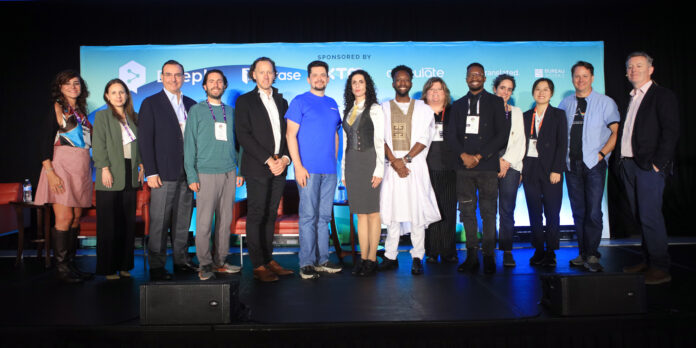
LocWorld54 PIC contestants

With a theme of “What’s Next?,” LocWorld returned to Monterey, California, for its 54th conference on October 14-16. Artificial intelligence (AI) and its impact took center stage, with the conference exploring where the technology is taking us — and where we are taking it. Over 500 people were on hand to engage in this discussion.

Keynote speaker Rika Nakazawa, who is Chief Commercial Innovation Officer at NTT, described the organic intelligence we find in the world around us and how it can be used in AI. She invited attendees to consider whether life’s oldest code may hold humanity’s boldest answers.

Next, the 19th Process Innovation Challenge (PIC) saw six competitors vie for the title of “Innovator of the Year, North America.” Sheriff Issaka of African Languages Lab won first prize for his project to build a model for large language models (LLMs) in Africa. The runner-up was Gabriel Fairman of Bureau Works, for his “Articulated Suggestions” presentation, followed by Klaus Fleischmann of Kaleidoscope GmbH, for “Model Context Protocol for Terminology Augmented Generation.” In addition to the PIC, LocWorld54 featured a Client Side Innovation Program (CLIP) and a Sneak PIC with student presentations. 

Among the session leaders in multiple tracks were representatives from Adobe, Airbnb, Amazon, Autodesk, Automation Anywhere, AWS, Block, Canva, Ciena, Cisco, Coupa, Crown Equipment, Dell Technologies, Expedia, Forrester, GitLab, Google, Guidewire, Klaviyo, KnowBe4, LastPass, LinkedIn, Meta, Microsoft, Pinterest, RingCentral, ServiceNow, Strava, SurveyMonkey, TED Conferences, Uber, Vimeo, Yaraku, and Zappi.

Networking is always encouraged at LocWorld. This began with a LocWalk & Talk on the day before any conference activities. The intrepid walkers forged their way through the rain to see what Monterey has to offer. Additionally, the Newbie Event allowed folks to mingle and make introductions in a smaller setting. 

And of course, fun is always on tap at LocWorld. The conference dinner was kicked off by a conga line to the dinner hall, and the after-dinner party included dancing to live music from local band SambaDá.

The next LocWorld will be in Dublin, Ireland, on June 9-11, 2026. The call for papers is open now.