DeepL CEO Joins German Federal Chancellor’s Strategy Group for Technology and Innovation

0
DeepL's Jarek Kutylowski is appointed to German Federal Chancellor's Strategy Group

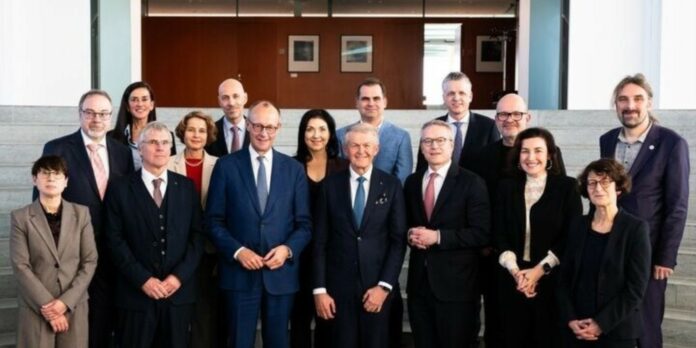
DeepL, a global AI product and research company, announced the appointment of its CEO, Jarek Kutylowski, in the German Federal Chancellor’s Strategy Group for Technology and Innovation. This strategy group is the highest advisory body on technology and innovation to the Chancellery.

Jarek Kutylowski, CEO and Founder of DeepL, commented: “I’m excited to join the Strategiekreis für Technologie und Innovation des Bundeskanzlers representing the AI industry perspective at historically pivotal times for our society. The anticipated productivity gains from AI are expected to surpass those seen in previous innovation waves, such as the internet and cloud computing and we must act now as a nation if we want to benefit from these opportunities.”

“While Germany has a strong industrial and scientific foundation, there are challenges in the implementation and scaling of AI technologies. However, it is not too late for Germany to assume a global leadership role in this area. It is encouraging to see that technology, particularly AI, is becoming a matter of national priority to ensure long-term economic resilience.”

The Strategy Group, which includes high-ranking representatives from science and industry, aims to strengthen Germany’s research and innovation system to better compete globally. Discussions at the inaugural meeting highlighted the rapid global development of AI and its potential to enhance productivity across various sectors, including science, business, and public administration.

Kutylowski continued: “It is crucial to view AI not just as an isolated industry but as a transformative force that impacts all levels of the economy and society, while acting for the benefit of all in society. The German ecosystem needs to be strengthened by fostering growth, competitiveness, sustainability, resilience, and technological sovereignty. To achieve this, we must act to harness our innovation potential and successfully translate these advancements into practice. I look forward to working with my peers in the Strategic Group to make this vision a reality.”

About DeepL

Founded in 2017 by CEO Jarek Kutylowski, DeepL is a global AI product and research company focused on building secure, intelligent solutions to complex business problems. Over 200,000 customers and millions of individuals across 228 global markets today trust DeepL’s Language AI platform for human-like translation, improved writing and real-time voice translation. Building on a history of innovation, quality and security, DeepL continues to expand its offerings beyond the field of Language and now has over 1,000 passionate employees and is supported by world-renowned investors including Benchmark, IVP, and Index Ventures.
The Week In Review: Language Industry News November 3–10

0
Week In Review November 3 - 10

This week’s stories highlight innovation across AI, product accessibility, and multilingual engagement — from award-winning machine translation (MT) engines to new leadership in South Africa’s language board. As global events and IP workflows evolve, the language industry continues to push for smarter tools and more inclusive experiences. Here are six standout moments from November 3–10.

AI and Innovation

TOPPAN Digital IP has launched STREAM IP, a platform designed to streamline international patent filing, translation, and renewals. It centralizes workflows and automates key steps to reduce complexity in global IP operations. STREAM IP aims to support law firms and corporations managing multilingual patent processes. The launch reflects TOPPAN’s focus on innovation in IP lifecycle management.

VOX Group introduced VOX AURA at WTM 2025, an artificial intelligence (AI)-powered multilingual live translation solution for tourism and cultural heritage. The tool delivers real-time personalized audio experiences in multiple languages through voice synthesis and AI. It adapts content to user preferences and context by using voice synthesis and on-demand personalization to enhance accessibility and engagement in guided environments. VOX AURA reflects the company’s push toward smarter, more inclusive tourism tech.

DeepL has unveiled two new AI tools, including a productivity-focused agentic solution. The updates aim to improve translation quality, workflow integration, and user control. DeepL continues to invest in large language models and enterprise-grade functionality. The new tools are positioned as a leap forward in AI-assisted communication.

Language and Community

Globalese by memoQ has won the 2025 CODiE Award for Best Machine Translation. The platform enables organizations to build custom MT engines using their own data, combining traditional MT techniques with large language models. It supports both cloud and on-premises deployment. memoQ emphasized the award as recognition of Globalese’s adaptability and enterprise value.

The Pan South African Language Board (PanSALB) has appointed Julius Jabavu Dantile as Acting CEO, effective November 1, 2025. Dantile has served the organization for 15 years and currently leads its language division. His appointment reflects a commitment to continuity and multilingual advocacy across South Africa’s official languages. The Board expressed confidence in his leadership during this transitional period.

In his article, From Promises to Practice: Making global events truly multilingual, Oddmund Braaten explores the current gap between multilingual promises and real-world implementation within global events to meet accessibility needs. He highlights challenges such as inconsistent interpretation, limited language coverage, and lack of inclusive planning. The piece calls for more intentional design and investment in language access from event organizers as common practice, and argues that truly multilingual events require structural commitment, not mere symbolic gestures.

______________________________________________________________________________________________________________________________________________

From tourism tech to advancements in translation infrastructure, this week’s stories show how language services are scaling across global sectors. As AI tools evolve and public institutions shift leadership, the industry is being asked to deliver not just innovation — but accountability. Multilingual access is no longer a feature, but the new standard.

For more stories like these, visit our News section.

Hera AI – The Future of Automated Post-Editing, LQA and QE

0
HERA AI Localization Tool

AI is transforming the localization industry. In response, language service providers (LSPs), linguists, and enterprises are seeking workflows that balance efficiency, cost, and quality all without losing human oversight. Hera AI, InText’s LLM-based tool for automated post-editing, LQA, and QE, offers a practical way forward.

What Hera AI Does

Hera AI improves machine translation quality and reduces localization costs by combining the speed and scalability of machine translation with the contextual intelligence of LLMs.

By automatically post-editing and leaving LQA and QE review for machine-translated bilingual CAT files (.sdlxliff, .mqxliff, .mxliff) based on reference materials — including translation memories, glossaries, and style guides — Hera AI ensures consistent, high-quality output.

Who Benefits From Hera AI?

  • Language service providers (LSPs): Speed up post-editing, LQA and QE, reduce costs on linguists’ work, and handle even low-budget requests profitably without sacrificing quality.
  • Linguists: Improve the quality of MT output before editing, get instant QE and LQA feedback in order to work faster, reduce repetitive fixes, and take on more projects.
  • Enterprises: Optimize the localization team’s productivity while cutting costs and without compromising on quality.

How Hera AI is Unique:

  • Designed specifically for localization workflows.
  • Integrates reference materials.
  • Customizable via prompt and assistant setup.
  • Applies context across multiple segments.
  • Supports bilingual file formats (Trados, memoQ, Phrase).
  • Built for human-in-the-loop post-editing.

Early results and feedback

Adopters of Hera AI Report:

  • Increases in post-editing productivity up to 700 words per hour.
  • Improvements in edit distance (up to 90%), resulting in minimal edits.
  • Preservation of tagging and formatting, reducing the need for manual corrections.
  • 70% consistency in applying terminology through glossary and translation memory reuse.
  • Reviewer efficiency increased by 30% thanks to automated LQA reports.

Very good, the time per segment reduced by half. Overall, a very positive experience. With this kind of text preparation and non-technical subject matter it took me on average 40 minutes for every 1000 words. I think it’s awesome.”— Anhelina Skrypnyk, Senior Editor.

Future Updates

Right now, we are actively developing new features for Hera AI. Upcoming releases will include:

  • Support for different LLM providers (Claude, Gemini)
  • Built-in machine translation – use MT directly in the app

We welcome your suggestions for features or improvements that could make Hera AI more useful in your work.

Let’s Get Started

Shape the future of localization with Hera AI. Start your 30-day free trial today on the InText website, or contact the InText team at hera.AI@intext.com for a personalized demo.

From Promises to Practice: Making global events truly multilingual

0
Female Speaker

Making inclusion pledges is easy. Delivering on them at live events in multiple languages, in real time? That’s a lot trickier.

Every year, global organizations publish glossy diversity reports or make bold statements about inclusion. However, when the spotlight is shone on how they engage with their own audience during internal meetings, conferences, or customer events, those well-intended promises are rarely seen in practice. Most “global” events are still conducted in a single language, which instantly reduces the chances of real audience participation for a large proportion of attendees. 

If companies want to be seen as inclusive by the people they interact with, they must start where it’s most visible: at live events. Companies need to ensure that their live events are accessible in real time to people of every language and ability. Artificial intelligence (AI)-powered speech translation and captioning make this kind of audience inclusion possible at scale, making the old common excuses redundant. 

Accurate, real-time multilingual and multimodal translation is fast becoming a baseline expectation. With regulations such as the European Accessibility Act raising standards for digital inclusion, organizations that invest now will not only meet their operational needs, but also demonstrate to audiences — and regulators — that their inclusion commitments are genuine.

What Truly Inclusive Events Look Like

When a conference grows beyond one market, event organizers need to make sure every participant can follow — and benefit from — every session, live and in their own language. That applies to not only keynotes in a conference hall, but also small breakout rooms and even one-to-one virtual chats. Inclusion means giving every attendee the same opportunity to listen, learn, and contribute as the conversation unfolds.

Moreover, real inclusion extends beyond spoken language; live multilingual text captions and sign-language interpretation open events to people who may be hard of hearing, neurodiverse, or connecting from different regions. Combining audio and visual support keeps audience engagement high and ensures no one is excluded.

Common Barriers to Inclusive Events

Delivering that level of access takes expert planning and resources. For purely in-person events or conferences, having interpreter booths and headsets for the audience will serve this need. However, when audiences can move freely between conference rooms and screens, and with budgets under pressure, forward-thinking event organizers are searching for translation and interpretation solutions that meet the hybrid reality, without sacrificing audience inclusion.

No doubt, event organizers will encounter genuine challenges: venues without built-in multilingual support, suppliers offering expensive or limited options, or terminology gaps that can trip up interpreters and attendees alike. Tackling these issues early, rather than letting them become excuses for running “one-language events,” is part of true leadership.

Improving Audience Engagement

Event organizers who build real-time AI speech translation and live multilingual text captions into their events make it possible for everyone to follow and participate. This isn’t an experiment anymore; it’s a practical way to involve international and hybrid audiences on equal terms.

Reliance on interpreter booths and headsets made sense for traditional, in-person conferences. But those methods are costly and hard to scale, especially if part of the audience is joining online. A single platform that supports in-room and virtual attendees gives organizers a simpler, more consistent way to include everyone.

Top Tips for Achieving Inclusivity

There are several steps that businesses running conferences and workshops can take to foster a truly inclusive environment:

  • Audit languages spoken across your workforce or audience base. Factoring in the locations from where people are attending or streaming events in advance can allow you to proactively facilitate the accurate conveying of insights and messages from the start.
  • Check understanding of individual attendees, including whether they fully grasp the context behind the words being spoken. Consider whether live captions, sign language interpretation, or real-time AI-powered speech translations are being used to bridge accessibility gaps.
  • Offer real-time support during events. Providing recordings, transcripts, and other materials post-event only risks making attendees feel like an afterthought.
  • Involve regional teams or representatives when designing communications or events. This will help to find cultural or linguistic gaps that may otherwise be missed, ensuring more authentic engagement.
  • Look beyond overall attendance or feedback. Tracking overall satisfaction scores after an event can show whether people enjoyed the experience, but it doesn’t reveal who felt included. Break behavioral data down by language or region to understand where participation or satisfaction may be lagging; this will help uncover unmet needs and guide improvement.

A New Standard for Live Events

At global conferences and meetings, real-time translation and captioning in each participant’s preferred language reduces confusion and missed context — and it signals respect. People are more willing to ask questions, share ideas, and take part in sessions when they know they’re being understood.

Live translation and multilingual text captioning should no longer be treated as a novelty or a “special feature.” In a world where we, as event goers, expect to be able to engage and interact at the touch of a button — and where events are often subject to strict accessibility standards — live translation and multilingual text captioning are the baseline for inclusion and credibility. Organizations that build real-time, multilingual access into every event demonstrate to their audiences that they have kept their inclusion promises; those that don’t risk losing audience engagement, participation, and trust.

The Future of Localization Depends on Community

0
Professionals at a table

Fueled by new artificial intelligence (AI) and automation tools, the rate at which the localization industry is evolving has dramatically accelerated in recent years. What began as a function rooted in linguistics and translation has transformed into a business-critical capability that drives growth, customer experience, and global expansion.

Today’s localization professionals are no longer just managing translations or coordinating vendors. They’re overseeing technical workflows, optimizing content operations, and engaging directly with business leaders on strategy and return on investment (ROI). In many ways, localization has become one of the most complex, multifaceted roles within a global business.

With that complexity comes new pressure and, often, isolation. Localization leaders are navigating uncharted territory, balancing the demands of technology, data, and business alignment, often without a roadmap or a peer network inside their organizations. That’s why strong, independent communities like Loc Leaders are more important than ever.

The Shifting Role of Localization Professionals

The traditional path into localization, often starting in linguistics or literature, is giving way to a more diverse range of backgrounds. Backgrounds in engineering, data analysis, and business operations are especially desired in localization, yet leadership from these areas is still limited. The common thread is an ability to work at the intersection of content, technology, and strategy.

With AI and automation reshaping workflows, translators are stepping into content management roles, ensuring localized content not only reflects linguistic accuracy, but also serves the broader goals of customer engagement and market growth.

Similarly, localization project managers are moving beyond coordination tasks. They’re becoming localization engineers, owning tooling, automation, and scalable workflows that drive efficiency across global operations. This shift demands new skills, from technical fluency to data management to business awareness.

Leading AI Adoption and Business Conversations

One of the most exciting aspects of this evolution is localization’s early exposure to AI. While many business functions are only now grappling with AI’s impact, localization teams have been experimenting with machine translation, AI-driven content tools, and automated workflows for years.

This experience positions localization professionals as natural leaders in AI adoption within their organizations. They’ve been among the first to figure out what works, what doesn’t, and how to balance automation with human expertise. This leadership opportunity also extends to the business itself, as localization professionals must advocate for their teams to be viewed as strategic assets rather than basic service lines.

Stepping into these conversations with confidence requires more than technical know-how. It demands the ability to frame localization’s value in business terms by linking content strategies to ROI, growth, and customer impact — even when the direct revenue connection isn’t always obvious.

The Power of Community in a Time of Change

As localization professionals take on broader responsibilities, the need for connection and shared experience has never been greater. Many localization leaders operate in small teams, or as solo practitioners, without peers inside their own organizations who truly understand the challenges they face.

That’s where communities like Loc Leaders come in. By creating spaces for in-house localization leaders to connect, share ideas, and solve real-world challenges together, these communities provide critical support for professionals navigating this evolution. In Loc Leaders, the conversations go beyond tools and tactics. They cover everything from upskilling teams and advocating for budgets, to redefining localization’s role within the enterprise. 

Localization is changing fast, and no one should have to face that change alone. By building strong peer networks and learning from one another, localization professionals not only strengthen their own skills, but also help shape the future of the industry itself.

MarketFully Strengthens Global Position in InContent Marketing With Further Brand Consolidation and Launch of MarketFully.AI

0
MarketFully Incontent Marketing

MarketFully announced a strategic brand consolidation to further position itself as the global leader in InContent Marketing, bringing Key Content and MotionPoint under one roof and introducing MarketFully.AI as its multilingual content marketing platform.

The new structure establishes MarketFully as the master brand, with Key Content and MotionPoint operating as InContent Marketing Agencies by MarketFully. The company’s former technology brand, GetGloby, will be fully absorbed into MarketFully, and its technology integrated into MarketFully.AI, which now serves as the company’s unified platform for adaptive translation, transcreation, and content creation.

The MarketFully solution will combine:

  • Key Content: Delivering managed multilingual content marketing services.
  • MotionPoint: Providing translation and transcreation for marketing.
  • MarketFully.AI (MF.AI): Proprietary AI-powered technology platform, purpose-built for multilingual content marketing.

“This move illustrates the next iteration of our multilingual content marketing, delivered through a comprehensive MarketFully solution, designed to deliver measurable marketing outcomes to multilingual content marketing for global brands,” said Evan Kramer, CEO. “Considering this new age of AI discoverability, there’s an urgent need for global brands to not only optimize content for online search but also AI engines across markets and languages as well.”

The comprehensive MarketFully solution now includes the MarketFully.AI platform as well as multilingual content marketing services offered through Key Content and MotionPoint, which enable multilingual content marketing strategy and post-editing services for AI-generated multilingual content. Although the MarketFully solution has been intentionally designed to be fully managed for customers, there are partially managed options as well for clients who prefer it.

The MarketFully.AI platform is purpose-built for multilingual content marketing and will consist of both Adaptive Content AI and InContent AI. The former will leverage AI across all levels of content adaptation—from translation and transcreation to creation—while the latter, InContent AI, will incorporate content intelligence, adaptive content workflows and content distribution to optimize performance. 

“This managed solution brings together AI-powered technology with culture-powered intelligence to combine advanced automation with human insight and cultural expertise,” said Kaj Malinowski, VP of Product Management. “It’s purpose-built for multilingual content marketing with the added support of what we refer to as human-in-the-loop services, meaning real people remain at the core of what we do.”

Taken together, these capabilities enable brands to deliver truly localized marketing strategies and multilingual content across all levels of adaptation. “What’s more, they’re the reason MarketFully has been able to define a new category—multicultural marketing delivered on a global scale. This new approach represents the next evolution of inbound marketing for multilingual and multicultural audiences,” Kramer said.

To learn more, head to: https://www.marketfully.com/?utm_source=press-release&utm_medium=wire&utm_campaign=marketfully-release&utm_content=mf-release

About MarketFully:

MarketFully is the global leader delivering InContent Marketing™—helping brands create digital experiences that resonate InLanguage, InCulture, and InMarket. As the first purpose-built multilingual content marketing solution at scale, MarketFully brings together AI-powered technology and human-in-the-loop expertise to help global marketing teams craft content that’s efficient, authentic, and measurable. Through its agency brands MotionPoint and Key Content, MarketFully enables marketers to move beyond translation to create relevance that connects, empowering brands to scale storytelling and engagement across borders, cultures, and channels.

Pan South African Language Board (PanSALB) Appoints Julius Dantile as Acting CEO

0
JULIUS DANTILE Acting CEO

The Board of the Pan South African Language Board (PanSALB) is pleased to announce the appointment of Mr. Julius Jabavu Dantile, Executive Head: Languages, as the PanSALB Acting Chief Executive Officer (CEO) effective from 1 November 2025.

Mr. Dantile brings into the role extensive experience and a deep understanding of the language sector, having served PanSALB in various capacities over a period of 15 years. Throughout his tenure, he has demonstrated exceptional leadership, commitment to multilingualism, and a passion for promoting and protecting South Africa’s linguistic diversity.

He has played an instrumental role in shaping the organisation’s core language programmes, strengthening collaboration with key strategic stakeholders, and promoting the use of all official languages across all spheres of government and the education sector. His leadership in driving language policy implementation and advocacy initiatives has contributed significantly to PanSALB’s impact and visibility as a constitutional institution mandated to promote and protect linguistic rights.

The Board has full confidence that Mr. Dantile will continue to advance the organisation’s mandate and ensure stability and continuity during this transitional period. We hope that your support and cooperation will assist us at PanSALB to continue delivering in our language and related matters. 

We extend our warm congratulations and best wishes to him in this acting role. 

About PanSALB

PanSALB’s mission aims to promote multilingualism by creating conditions for the development and use of all South African official languages, including Khoi, Nama and San languages, in addition to South African Sign Language. Established in 1995, the Language Board works to advocate for the rights relating to language and status of language within the region in accordance with its mandate through scientifically tested and research-based consultation.

DeepL Unveils Next-Gen Language AI tools and Game-Changing Agentic Productivity Solution

0
DeepL

DeepL, a leading global AI product and research company, announced two major business innovations for knowledge workers – DeepL Agent and Customization Hub.

During its annual conference, DeepL Dialogues, the company unveiled the general availability of DeepL Agent, an autonomous AI coworker designed to streamline and automate a broad range of tasks for knowledge workers. DeepL also announced continued innovations in Language AI with the release of Customization Hub and the announcement of over 70 new languages to the platform.

Jarek Kutylowski, CEO and Founder of DeepL said, “As DeepL advances its broader mission, our vision is clear: to unlock human potential by transforming work across languages and beyond. Translation remains at our core, and with today’s announcements, we are proud to expand this foundation while pioneering agentic AI innovations.”

“Our customers face a common challenge: repetitive, inconsistent tasks that drain productivity. DeepL Agent and Customization Hub tackle this together. Our agentic solution liberates teams to focus on high-impact work by automating routine processes, while Customization Hub accelerates project completion by minimizing manual reviews. Together, they redefine efficiency, speed, and scale, empowering businesses to thrive amid the evolving demands of language and work,” he continued.

“By combining intelligent tools with human expertise in the loop, we’re not just enhancing individual productivity; we’re empowering entire organizations to achieve their most important goals.”

Introducing DeepL Agent

With the average knowledge worker toggling between different apps and websites nearly 1,200 times a day and losing 11 hours every week chasing data across systems, the need for better productivity tools has never been higher. Tools that centralize everything in one place, reducing context switching, are the future of business solutions. After extensive beta testing of over 1,000 internal and external users, as well as completing over 20,000 tasks, DeepL Agent is now generally available.

DeepL Agent is an AI coworker designed to enhance productivity by reasoning, planning, and acting on users’ behalf, while incorporating human-in-the-loop oversight to ensure precision, control, and seamless collaboration. By streamlining these everyday tasks, DeepL Agent allows teams to focus more on strategic initiatives. It works seamlessly with existing systems and management tools for businesses and operates with enterprise-grade security and control.

Enabling brand language harmony globally

DeepL Dialogues also saw the introduction of Customization Hub, a powerful platform that combines glossaries, style rules and translation memories into one system. The Customization Hub builds on DeepL’s context-aware language quality by automatically enforcing language requirements during the translation process and minimizing errors at scale, allowing teams to spend less time on post-editing.

It helps companies keep their unique brand voice and terminology consistent while speeding up translations and improving quality. By streamlining workflows and addressing challenges of inconsistent messaging, this solution aims to improve efficiency and quality of translations. This supports businesses in achieving reliable translations at scale while managing costs and minimizing review cycles.

DeepL to add around 70 new languages

DeepL also announced a major expansion of its language offerings by growing to over 100 languages, adding around 70 in beta in response to enterprise customer requests, bringing nearly all the top twenty most spoken global languages to the platform.

DeepL Dialogues marks the culmination of a bumper 2025 for DeepL, which saw the roll out of several new products, including DeepL Voice for Zoom, DeepL Marketplace and now DeepL Agent. DeepL continues to deliver AI solutions that drive enterprise efficiency—from language translation to everyday workflows. Innovation and R&D remain at the core of DeepL’s strategy, powering smarter, deeply integrated AI that transforms how businesses operate globally.

About DeepL

DeepL is a global AI product and research company focused on building secure, intelligent solutions to complex business problems. Over 200,000 customers and millions of individuals across 228 global markets today trust DeepL’s Language AI platform for human-like translation, improved writing and real-time voice translation. Founded in 2017 by CEO Jaroslaw “Jarek” Kutylowski, DeepL now has over 1,000 passionate employees and is supported by world-renowned investors including Benchmark, IVP, and Index Ventures.

VOX Group unveils VOX AURA at WTM 2025: AI-Powered Multilingual Guiding That Speaks Your Language

0
VOX Group

VOX Group, the travel-tech pioneer with nearly 25 years of innovation in guiding solutions, will unveil VOX AURA, the world’s first AI-powered simultaneous translation device for group guiding, at WTM London 2025 on November 4th. With VOX AURA, groups of any size can listen to their guide in their own language, without smartphones, apps or roaming charges all in real time, faster than a live interpreter.

VOX AURA brings AI-powered live translation to over 50 languages, transforming tours, events and attractions with simplicity, and reliability. It’s the most effortless way to break language barriers and make every guest feel part of the story. AURA works across the VOX ecosystem, providing simultaneous live translation that connects directly with VOX devices, delivering the right story to every guest, every time.

When I launched our first VOX radio systems, we set out to make guides’ commentary clearer and more inclusive. As we approach our 25th year, VOX AURA shows how far that vision has come – a defining step forward in travel technology. It’s the world’s first AI-powered multilingual device for groups, fully integrated with VOX tour guide systems. Operators can now deliver guided experiences without phones, apps or roaming charges. It opens new opportunities for operational efficiencies and new source markets. We’re raising the bar for guided travel,” says VOX Founder, Elio Epifani.

“Small and lightweight, simple and ready to use, VOX AURA goes beyond standard voice translation tools by understanding speech in context before translating. Powered by our VOX-developed AI algorithm, it identifies and retains names, historical details and local references in real time, producing smooth, natural translations in over 50 languages. With clear, high-quality audio streamed directly to VOX radio devices, it’s the closest thing to having a live interpreter,” commented Fabio Primerano, CEO of VOX Group.

This launch underscores VOX’s position as a global market leader, backed by an operational footprint that spans 150+ countries and a network of more than 5,600 industry partners. With established offices and on-the-ground teams worldwide, VOX supports a broad range of partners, from DMCs, ground handlers, and shore-excursion specialists to tour operators, cultural institutions, and DMOs. With AURA, VOX sets a new benchmark, bringing real-time multilingual capability to its global partner network.

Meet the Vox team at WTM: Stand N8-428. Journalists and operators are invited to discuss VOX AURA, with Alka Carter-Manning (CCO).