Algebras.ai Named “Tech of the Week” by Nimdzi

0
Algebras.ai localization agent

Independent research organization Nimdzi Insights has recognized Algebras.ai as Tech of the Week, praising its approach to global content delivery with a Full-stack Localization Agent that combines quality, scale, and developer-friendly design.

At the core of Algebras’ localization agent is a QA-safe UI and an open-source CLI that can help automatically localize applications into more than 300 languages. Built on an API-first architecture, the platform integrates into existing workflows, enabling developers and enterprises to embed multilingual functionality.

Unlike many other “bolt-on” machine translation solutions, Algebras’ agent has outperformed state-of-the-art MT benchmarks in fluency, as demonstrated in its public benchmark results. The benchmark currently covers a limited set of language pairs, with fluency scored on a 10-point scale (evaluated automatically or by human experts), and will gradually expand to thousands of languages supported across ML systems. Algebras provides several solutions: Base (LLM orchestration), Agentic (multi-agent system), and Prompted (multi-agent system with dynamic prompting), enabling flexible optimization depending on context.​

Algebras.ai integrates with Translation Management Systems (TMS) such as Gridly, as well as developer environments including Unity, CI/CD pipeline, and tables, including Google Spreadsheets. It also supports i18n integration and the majority of web and mobile technologies. With plans for more partnerships in the near future, the platform has extended its capabilities to AI dubbing, bridging software and multimedia localization within a single ecosystem.

This recognition underscores Algebras.ai’s role in next-generation language technology, where automation, openness, and multimodal support are key drivers of adoption.

“Our benchmark starts with a handful of languages, but it is designed to expand to thousands supported across ML systems. Only by measuring fluency systematically can we understand where AI localization works — and where it still fails.” — Aira Mongush, CEO of Algebras.ai

With this “tech of the week” nomination, Nimdzi Insights resumes their initiative of recognizing developments in the language technology field.

About Nimdzi Insights

Nimdzi Insights is an international market research and consulting company. Nimdzi advises on international trade & development, language services, language technology, and localization programs. Nimdzi guides companies through investment and M&A activities. Nimdzi consultants are committed to providing opportunities for continuous professional development and resources for business professionals worldwide.

Blackbird Launches Shift Left Podcast to Rethink Multilingual Content

0
Shift Left

Blackbird.io today announced the launch of Shift Left, a new podcast exploring how artificial intelligence (AI), automation, and orchestration are transforming multilingual content strategies. Designed for localization professionals, global content leaders, and technology innovators, the podcast highlights the shift from reactive translation to proactive language infrastructure.

The first three episodes are now available, featuring in-depth conversations with industry experts: Diego Conca of Remote.com, Stevan Relic of Unbabel, and Peter Argondizzo of Argo Translation. Each episode offers practical insights into how organizations can integrate language operations earlier in the content lifecycle to streamline workflows, reduce costs, and deliver greater impact at scale. New episodes will be released biweekly.

Shift Left is hosted by Dan Milczarski, Vice President of Solutions at Blackbird.io, who brings years of experience in driving language technology adoption. “Shifting left isn’t just about earlier involvement,” said Milczarski. “It’s about flipping the logic: from source-to-target to concurrent creation, from translation as a checkbox to language as infrastructure.”

The podcast emphasizes the growing need for companies to embed localization teams within global content strategies from the outset. By doing so, businesses can adapt more quickly to market demands and leverage AI-driven solutions to create concurrent, scalable, and culturally relevant content.

Episodes of Shift Left are currently available on YouTube and at shiftleft.ai, with new installments planned throughout the year.

About Blackbird.io

Blackbird.io is the 3rd-wave Language Technology Platform, orchestrating multilingual content across 200+ enterprise integrations with AI, automation, and human-in-the-loop workflows. By combining cutting-edge technology with expert oversight, Blackbird enables global enterprises to manage content transformation seamlessly and at scale. The platform empowers organizations to accelerate time-to-market, improve consistency across languages, and adapt rapidly to evolving business needs, ensuring communication resonates with diverse audiences worldwide.

Lionbridge Wins Gold Stevie® Award in 2025 International Business Awards® for Branded Content Campaign of the Year

0
Lionbridge Aurora AI Wins Gold Stevie Award

Lionbridge, a global leader in translation and localization solutions, was named the winner of a Gold Stevie® Award in the 22nd Annual International Business Awards® for Branded Content Campaign of the Year. Its award-winning campaign, Global AI-Driven Solutions Empowered by Human Creativity: Lionbridge Aurora AI™, showcases Lionbridge’s AI-first global content platform that streamlines localization processes at scale by combining the latest generative AI technology with the smart allocation of human expertise.

The International Business Awards are the world’s premier business awards program. All individuals and organizations worldwide – public and private, for-profit and non-profit, large and small – are eligible to submit nominations. The 2025 IBAs received nominations from organizations and individuals in 78 nations and territories.

The Stevie® Award for Branded Content Campaign of the Year recognizes work that has used branded content to reach out to audiences to establish meaningful relationships, memorable, engaging experiences, and unique connections with their brands.

Lionbridge designed and executed “Global AI-Driven Solutions Empowered by Human Creativity: Lionbridge Aurora AI” to address the need for a new kind of multilingual content platform built for the AI era. Through a robust campaign comprised of thought leadership, videos, case studies, webinars, and other assets – translated into 10 languages and deployed through social media and email marketing – Lionbridge sought to bring its transformative content orchestration platform to global brands looking to keep pace with demand for dynamic, immediate, hyper-personalized content.

“We are thrilled to be recognized by the Stevie® Awards organization for our Aurora AI campaign,” said KC Lincoln, Chief Marketing Officer. “In an industry deeply impacted by AI, Lionbridge’s Aurora AI orchestration platform empowers companies to captivate and connect with their audiences globally. We are proud to lead the way in redefining content services in the age of AI.”

More than a Translation Management System (TMS), Aurora AI represents a move away from simple translation to content transformation. Aurora AI fits into content workflows seamlessly, automating and streamlining translation and localization processes with composable orchestration to deliver the right outcomes at the right speed and price, adapting as technology evolves. Aurora AI also enables brands to generate new content for different tones, languages, or target audiences based on customized input. Using pre-existing assets and task-specific generative prompts, the platform’s Content Remix App™ develops new, market-ready content in 70+ languages.

Discover how Lionbridge Aurora AI is transforming the content lifecycle for the AI era.

About Lionbridge

Lionbridge partners with brands to break barriers and build bridges all over the world. Since our founding, we have helped companies connect with their global customers and employees by delivering translation and localization solutions in 350+ languages. Through our world-class platform, we orchestrate a network of passionate experts across the globe who partner with brands to create culturally rich experiences. Relentless in our love of linguistics, we use the best of human and machine intelligence to forge understanding that resonates with our customers’ clients. Based in Waltham, Massachusetts, Lionbridge maintains solution centers in 24 countries. Learn more at www.lionbridge.com.

About the Stevie Awards

Stevie Awards are conferred in nine programs: the Asia-Pacific Stevie Awards, the German Stevie Awards, the Middle East & North Africa Stevie Awards, The American Business Awards®, The International Business Awards®, the Stevie Awards for Women in Business, the Stevie Awards for Great Employers, the Stevie Awards for Sales & Customer Service, and the Stevie Awards for Technology Excellence. Stevie Awards competitions receive more than 12,000 nominations each year from organizations in more than 70 nations. Honoring organizations of all types and sizes and the people behind them, the Stevies recognize outstanding performances in the workplace worldwide. Learn more about the Stevie Awards at www.StevieAwards.com.

Grammarly Expands Beyond English With AI Writing Assistance in 5 New Languages

0
Grammarly adds multilingual support

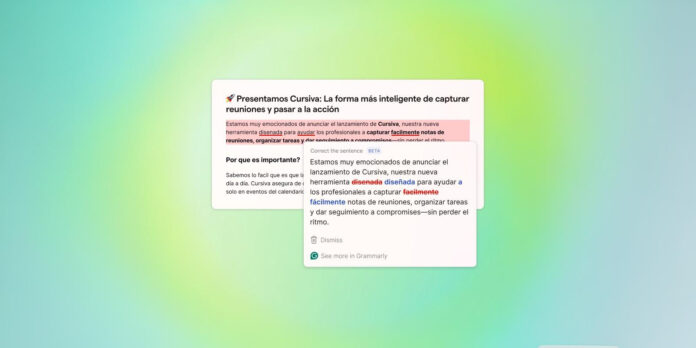
Grammarly, the trusted AI assistant for communication and productivity, today launched multilingual writing support across five additional languages beyond English. All Grammarly customers can now access grammar and spelling corrections, paragraph-level rewrites, and in-line translation capabilities in Spanish, French, Portuguese, German, and Italian.

The milestone marks Grammarly’s first expansion beyond English-only assistance, addressing long-standing customer demand and the growing need for effective multilingual communication in a global workplace.

Addressing the global communication challenge

With nearly 1 in 5 people in the U.S. alone speaking multiple languages and workplaces becoming increasingly global, seamless multilingual communication is essential to getting work done. Traditional approaches require people to context switch between multiple tools—writing in one app, copying text to and from translation services, and manually checking their text—creating inaccuracies and constant friction that slows them down. With multilingual support in Grammarly, customers can write clearly and confidently in the language that best serves them and their audience, all without leaving where they’re working or switching between tools.

“Even as we work toward our broader vision to become an AI productivity platform for apps and agents, we’re still deeply committed to enhancing the core Grammarly writing experience that users rely on,” said Ailian Gan, Director of Product Management at Grammarly. “Our customers have been asking for multilingual support, and we’re meeting them where they are, not just in the 500,000 apps and websites where Grammarly already works, but also in the languages that they think, learn, and communicate in daily.”

Delivering multilingual support through three key features

This launch specifically delivers three new features for multilingual customers:

  • Grammar and spelling correction: Users writing in the five new languages will now see Grammarly’s signature red underlines for grammar and spelling corrections, providing the same assistance that English-language users have trusted for well over a decade.
  • Multilingual rewrites: Users can access paragraph-level rewrites in all five new languages that help them refine their tone, style, and flow (for example, by adjusting their communication from formal to friendly) with a single click.
  • In-line translation: Users writing in English and the five new languages can instantly translate their text into 19 different languages directly from where they’re writing, eliminating the need to copy and paste content into separate translation tools.

The new features are already seeing strong engagement among customers. Early trials with over 1 million Grammarly users who had access to the features showed immediate, high adoption across key markets, validating the demand for multilingual writing assistance. Whether supporting professionals whose primary language is not English, students learning English and studying in international environments, or global organizations communicating across markets, the features address critical needs across Grammarly’s diverse customer base.

Setting the standard on context, security, and availability

Grammarly’s multilingual features tap into its deep expertise in delivering the most comprehensive real-time AI writing assistance on the market. Unlike many other AI tools, Grammarly was specifically built to enhance writing, using AI from the start to deliver relevant suggestions tailored to users’ specific contexts and goals. As with all of Grammarly, the new features work across all of the places that users do, while upholding its long-standing commitment to user trust and enterprise-grade security standards.

The new features are Grammarly’s first step toward more comprehensive multilingual writing assistance. In the coming year, the company plans to launch more advanced clarity suggestions in the supported languages, similar to what it offers in English. Over time, it will also add multilingual capabilities to the AI agents it recently launched in docs, its new AI-native writing surface.

Learn more:

  • The multilingual features are available today in beta on Grammarly for Windows and Mac and Grammarly for Chrome for all customers on all plans: Free (with some feature limitations), ProEnterprise, and Education. Existing users have immediate access; simply begin writing in any of the five new languages to see real-time suggestions.
  • Read our blog post: Now Available: Write Confidently in 5 New Languages

About Grammarly

Grammarly is the trusted AI assistant for communication and productivity, helping over 40 million people, 50,000 organizations, and 3,000 educational institutions do their best work. Companies like Atlassian, Databricks, and Zoom rely on Grammarly to brainstorm, compose, and enhance communication that moves work forward. Grammarly works where you work, integrating seamlessly with over 500,000 applications and websites. Coda, the maker of powerful AI productivity tools, and Superhuman, the AI-native email app, are now a part of Grammarly. Together, they are redefining collaboration and transforming how we get work done.

Step Into the Agora: ELIA’s 10th Focus on Project Management Comes to Athens

0
ELIA

As we start counting down until our next Focus on Project Management edition, held on 3-5 December 2025, ELIA is excited to share the final line-up of sessions that await us, delivering invaluable insights and practical skills for project and production managers in the language services industry.

Under the theme “The Agora of Project Management: Where Process Meets Purpose,” PM25 includes a dynamic blend of keynote sessions, workshops and hands-on discussions.

Attendees will hear from industry leaders and peers, including our opening keynote by Stavroula Sokoli, who will explore how PMs can preserve and sharpen their people-first skills: communication, critical thinking, judgement, especially in an AI-enhanced landscape.

In addition to the opening keynote, participants can expect to attend and engage in discussions such as:

  • Owning Change, Leading with Style, and Staying Human by Justin Murphy 

Reflect on how to stay adaptable, lead with authenticity, and bring human connection into every project.

  • Clarify Your Chaos: From Messy Roles to Scalable Growth by Tony D’Angelo

Explore blurred roles, unclear scopes, and rising expectations; use business cases and tools (including AI) to build cleaner, more strategic role structures.

  • Still Human: Why PMs Lead in an AI World by Vasso Pouli

Uncover how human insight is needed to condition and guide execution.

  • Closing Keynote: Atrophy is Not a Trophy: Sharpening Skills, Finding Human Value by Stavroula Sokoli

Sharp insights and practical ways to keep your human toolkit in shape.


To start your event experience, attendees are also invited to the pre-conference Focus on Technology Day on Wednesday 3 December, featuring specialised training and workshops. Spaces are limited!

Here’s what to expect:

  • Project Management Fundamentals & In Practice by Gokhan Dogru

A two-part workshop providing a comprehensive introduction to translation project management, tailored for current and aspiring project managers.

  • From Philosopher to Practitioner: AI Tools in the Translation Agora by Alp Dilgen

Focus on practical AI applications for project workflows, from document analysis and style guides to automating quality corrections.

  • Fit for Purpose: Exploring your PM Toolkit by Marina Orešković

Hands-on exploration of different localisation technologies, applied to real project challenges to identify what works best for you.

Besides the sessions, PM offers plenty of moments for conversations and reflections: rooftop welcome drinks, a Greek-style networking dinner, and an evening guided tour of Athens.

The venue, Wyndham Grand Athens Hotel, offers contemporary comfort in the heart of the city, with views of the Acropolis and easy access to Athens’ historic landmarks. 

ELIA’s Focus on PM is more than just a conference; it’s a milestone gathering that empowers PMs to sharpen their skills, build meaningful relationships, and exchange ideas. Attendees will leave with practical tools, fresh perspectives, and renewed clarity to drive success and strengthen their organisations.

For more information and to register, visit Focus on Project Management 2025 or contact us via email. Early Bird is open, take advantage of this special limited time offer.

Let’s connect, collaborate, and bring your project management skills to the next levels at #ELIAPM in Athens!

Creative Words and Voiseed Join Forces to Transform Multilingual Content

0
Creative Words

Creative Words, an innovator at the intersection of language and technology, and Voiseed, a pioneer in expressive AI voice technology, are excited to announce a new strategic partnership aimed at transforming dubbing and voice solutions across industries including media, e-learning, marketing, and entertainment.

“We are proud to join forces with Voiseed as our technology partner of choice for AI dubbing,” said Diego Cresceri, CEO of Creative Words. “Our clients demand fast, consistent, and high-quality voice solutions, and Voiseed’s technology allows us to meet and exceed those expectations.”

“Really glad to partner with Creative Words,” added Andrea Ballista, CEO of Voiseed. “They truly embrace new AI tools to expand their service offering while keeping human expertise at the center. By combining innovation with deep linguistic expertise, they’re opening new possibilities for expressive, high-quality multilingual content — and we’re excited to power that journey.”

What this means for clients

Through this collaboration, Creative Words and Voiseed will deliver dubbing services that combine linguistic excellence with cutting-edge AI capabilities, enabling:

  • Faster turnaround for dubbed content without sacrificing quality
  • Greater consistency across languages and voice styles
  • Enhanced expressiveness that captures tone, emotion, and nuance
  • Secure handling of voice assets and source materials

Over the coming months, the two companies will roll out AI dubbing across training modules, video content, podcasts, and more. Clients and partners will also gain access to case studies and behind-the-scenes insights into how the technology works in practice.

About Creative Words

Creative Words is an Italy-based language services company where human creativity meets technological innovation. With a team of linguists, technologists, and creatives, Creative Words helps organizations communicate across cultures by combining deep linguistic expertise with forward-looking solutions. From translation and localization to AI-powered content services, Creative Words ensures that every message is accurate, expressive, and impactful.

About Voiseed

Voiseed is a pioneer in expressive AI voice technology, driven by the belief that synthetic voices should sound as authentic and emotionally rich as human ones. Combining cutting-edge research with a commitment to ethics and creativity, Voiseed develops solutions that empower industries to bring stories, learning, and messages to life in multiple languages. With innovation at its core, Voiseed is shaping the future of voice experiences across media, entertainment, and beyond.

For more information, visit: www.creative-words.comwww.voiseed.com

The Power of Codemods: Big Tech’s Secret to Efficient Localization

0
Woman looking at software code

For software companies, expanding into global markets often requires more than just translation. Behind every product lies a codebase that must be ready to support different languages, formats, and cultural nuances. For many teams, this preparation — known as internationalization (i18n) — is one of the most time-consuming and error-prone steps in the localization journey.

But leading Silicon Valley tech companies like Meta and Shopify have figured out a way to make software i18n less painful. Instead of leaving localization to last-minute quality assurance (QA) cycles or rushed engineering sprints, they rely on a class of tools called codemods. These scriptable programs — think of them as “micro-agents” — automate repetitive code transformations and infuse engineering expertise directly into the codebase, reducing manual effort and ensuring consistency at scale. Originally popularized in open-source communities, codemods have become indispensable for large organizations that need to apply sweeping, mechanical changes to massive codebases.

Codemods for Better Localization

Applied to localization, codemods can:

  • Detect and replace hard-coded strings,
  • Enforce formatting and style rules across multiple locales,
  • Automate migration to a translation management system (TMS),
  • Update user interface (UI) components for right-to-left (RTL) support, and
  • Integrate i18n frameworks and software development kits (SDKs).

This automation not only catches issues early, but also allows localization teams to build engineering-aware dashboards such as:

  • i18n readiness scores,
  • Anti-pattern heat maps,
  • TMS migration trackers, and
  • Placeholder consistency monitors.

At a high level, codemods lead to:

  • Efficiency at Scale. Internationalization typically requires thousands of small changes: replacing strings, wiring application programming interfaces (APIs), or tweaking components for locale-specific formatting. Codemods break these changes into atomic steps and apply them consistently across the entire codebase, freeing developers from mechanical tasks.
  • Early Detection and Automation. Instead of relying on overstretched i18n engineers, codemods surface issues early in the development lifecycle and automate fixes where possible. This reduces the chance of costly last-minute blockers.
  • Faster Time to Market. By automating large portions of i18n preparation, codemods shorten the path from codebase readiness to global launch. Teams can enter new markets faster and with more confidence.
  • Better Collaboration. With codemods handling the heavy lifting, localization managers gain more visibility into engineering dependencies. They can focus on strategy and quality rather than firefighting technical bottlenecks.

The Future of i18n With Codemods

As software continues to scale across regions and devices, codemods provide a foundation for making localization both reliable and repeatable. By treating i18n as a set of codifiable patterns, teams can transform what was once a manual bottleneck into an automated, strategic advantage.

Codemods may have started as developer utilities, but in the world of localization, they are becoming essential infrastructure. They ensure that codebases are prepared for seamless translation, help teams avoid repetitive errors, and ultimately make global product launches faster, cheaper, and less stressful.

All About Interpreter Certification and Registries in the United States

0
Online registration with a laptop

In the interpreting profession, certification isn’t just a formality — it’s the foundation of legitimacy. The goal of certification is to not only open doors and protect rights, but also equip interpreters for the complexity and responsibility of their role.

In the United States (US), civil rights and language access laws* require federally funded institutions to provide interpreting services from qualified interpreters, encouraging strict standards and rigorous vetting processes — without which many operations would drastically stall or become legally noncompliant. The US Department of Health and Human Services’ Office for Civil Rights and the National Center for State Courts both emphasize that “qualified” means trained, tested, and vetted — not just fluent. Agencies can face legal consequences if they use unqualified interpreters. 

Registries of certified interpreters are used to ensure that interpreters meet minimum standards and to maintain public safety and the legal rights of customers. Additionally, they help agencies and individuals find qualified interpreters who are already licensed and vetted, saving valuable time and resources for the consumer. 

Registry History and Structure

In 1964, Ball State College in Muncie, Indiana, was the first to formalize interpreter qualifications in the US when it established the Registry of Interpreters for the Deaf (RID). Lou Fant, who is widely known for turning American Sign Language (ASL) interpreting into a certified profession, and the National Association of the Deaf (NAD) were key figures in the development of the RID. Upon the success of the RID Pilot Program, states began developing their own systems for interpreter certification based on factors like demographic needs and legal statutes.

Unlike countries such as Slovakia, Canada, and Australia, the US does not have a national interpreter registry and instead relies upon each state to set its own standards and regulations. Every state is responsible for designating its own regulatory body or agency to oversee interpreter licensure, registration, and compliance. Therefore, each state’s requirements are different, especially for interpreting in legal, medical, and educational settings. 

Despite differences in each state, generally, the following structure is true:

  • The state judiciary or administrative office of the courts oversees court interpreters,
  • The state health departments or hospital credentialing boards oversee medical interpreters,
  • The state education agencies (SEAs) and similar licensing boards are responsible for educational interpreters, and
  • The state Commission for the Deaf and Hard of Hearing oversees ASL interpreters.

Becoming a Certified Interpreter in the US

The steps toward becoming a state-certified interpreter generally look like this:

  1. Understand the legal framework for your specific state of residence.
  2. Check state-specific credentials that are required based on your specific target sector.
  3. Get certified or registered. 
  4. Apply to be a vendor or contractor.
  5. Maintain compliance.

The general timeline for acquiring state-level interpreting credentials can take anywhere from a few months to several years depending on one’s starting point in education and language proficiency. Overall costs can range anywhere from a few hundred dollars to a few thousand depending on the desired state and specialized industry. The majority of state interpreting certifications are valid for four years, paired with ongoing continuous education requirements (CEUs).


*Such as Title VI of the Civil Rights Act of 1964, Title II of the Americans with Disabilities Act (ADA), The Vocational Rehabilitation Act of 1965, and section 504 of the 1973 Rehabilitation Act

The Week in Review: Language Industry News September 8–14

0
News september

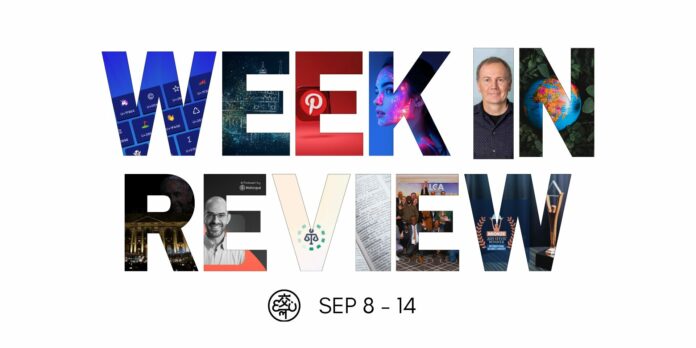
Every great recap feels like a fast-paced tour through the week’s most important stories. This edition of The Week in Review highlights global standards, regional growth, and the intersections of AI and culture in the language industry. Here’s what stood out between September 8–14.

Standards, AI, and Global Events

The Unicode Consortium released Unicode Standard Version 17.0, a milestone update that adds 4,803 new characters, including four new scripts, eight new emoji, and thousands of CJK ideographs—bringing the total to nearly 160,000 encoded characters. With this release, Unicode further cements its role as the foundation of digital communication worldwide.

In the Middle East, new research from Interprefy revealed that limited language support continues to hold back business events. The study shows that insufficient interpretation and captioning options restrict attendee engagement and highlight a pressing opportunity for multilingual solutions.

Meanwhile, Pacific AI expanded its Governance Policy Suite to cover more than 30 countries, including all EU member states. The update provides organizations with a unified framework for responsible AI deployment in key global markets.

Recognition, Regions, and Industry Influence

At ALCA 2025, held in Cape Town, Africa’s language industry staked its claim as a vital player in the global localization ecosystem—no longer waiting for inclusion but driving its own place in the conversation.

Acolad was recognized with a Bronze Stevie Award at the International Business Awards for its rebranding campaign This is Us. This is Acolad., unifying its global identity under a cohesive vision.

And in Rome, language industry leaders Marco Trombetti and Alex Waibel advised Pope Leo XIV at the World Meeting on Human Fraternity, bringing insights on AI and communication to one of the world’s most influential gatherings.

Innovation and Podcasts

On the innovation front, Translated unveiled Beyond Text, a multimodal AI initiative called DVPS that merges speech, video, and real-world data, pushing language technology into new territory where context and communication converge.

And in the latest episodes of Localization Today Live, the conversation turned to cultural nuance and AI:

  • Pinterest and RWS shared how collaboration and cultural awareness shape global localization strategy.

  • Translated showcased Beyond Text, exploring how multimodality is redefining the future of communication.


Want more updates like this? Explore The Week in Review every Monday on MultiLingual.com, and stay connected to the stories shaping the future of language, AI, and localization.