Announcing The Unicode® Standard, Version 17.0

0
Unicode
The Unicode Standard is the foundation for all global digital communications, providing the encoding for text content used in all devices. The latest version of the standard, Version 17.0, is now available! This is a major update that includes new characters and code charts, updated data files, an updated Core Specification, and updated annexes and synchronized standards that cover implementation details for important aspects of text processing.
      
This version adds 4,803 new characters, including four new scripts, eight new emoji characters, as well as many other characters and symbols, bringing the  total of encoded characters to 159,801.
One of the newly encoded symbols is SAUDI RIYAL SIGN. Addition of this in Unicode 17.0 will allow interoperable support for the new symbol announced earlier this year by the Saudi Central Bank to represent their riyal currency.
The new additions also include 4,298 additional CJK unified ideographs in a new block, CJK Unified Ideographs Extension J, as well as 18 other CJK ideographs added to the existing Extension C and Extension E blocks. This increases the number of encoded CJK ideographs to over 100,000! Also, nearly 2,500 already-encoded CJK ideographs are horizontally extended by the addition of source references and glyphs reflecting use of those ideographs in China and Korea.
The following four new scripts increase the total number of supported scripts in the Unicode Standard to 172:
  • Beria Erfe is a modern-use script used by Zaghawa communities in central Africa.
  • Tolong Siki is a modern-use script used by Kurukh communities in northeast India.
  • Tai Yo is the traditional script of Tai Yo communities in northern Vietnam.
  • Sidetic is an historic script used in ancient Anatolia.
Support for these in Unicode is the key initial step in bridging the digital divide for users of these scripts.
See the delta code charts for details on all the new scripts and characters. For additional details regarding new emoji, see Emoji Recently Added, v17.0. For complete details on Unicode Version 17.0, see  https://www.unicode.org/versions/Unicode17.0.0/.
Localization Today Live: Inside Pinterest and RWS’s Global Localization Strategy

0
Localization Today Live: Global Localization Strategy Insights

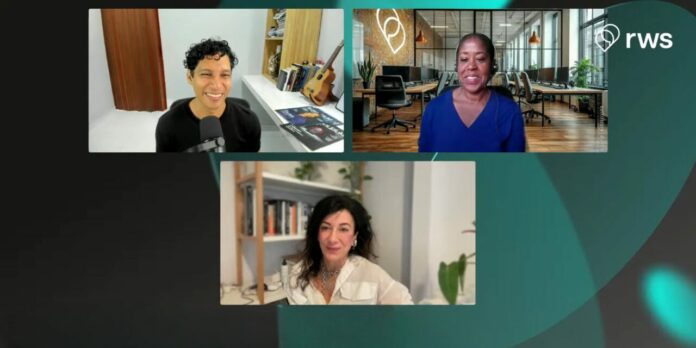
The latest Localization Today Live webinar, hosted by MultiLingual Media and sponsored by RWS, explored how cultural integration, collaboration, and technology shape global localization strategies. Moderated by MultiLingual CEO Eddie Arrieta, the panel featured Francesca Di Marco (Head of Internationalization, Pinterest) and Maureen Lalaymia-Phillips (Program Director, RWS Group).

👉 Missed the session? Watch the full recording now on YouTube.

Highlights from the session

Francesca Di Marco explained how Pinterest moved from a U.S.-centric content calendar to more culturally attuned campaigns, citing India’s Diwali as a turning point. Instead of treating it as an add-on, Pinterest built a full seasonal strategy with local influencers and creative resources.

Maureen Lalaymia-Phillips shared how RWS safeguards cultural nuance in product content, where errors in short UI strings or placeholders can erode user trust. Context checks, query management, and transcreation, she noted, are central to maintaining both consistency and authenticity.

Together, the panelists emphasized the value of collaboration. From early involvement of linguists in product design to shared KPIs and regular planning sessions, both agreed that client-partner alignment is key to making localization a true business driver.

Balancing speed and quality

On technology, Francesca stressed that speed and quality should not be seen as opposing goals. With dedicated linguist teams covering 40 languages and real-time API workflows connecting Pinterest and RWS, the company can iterate products quickly without sacrificing nuance. Both panelists agreed that AI has its role in scaling content, but human oversight remains essential to avoid cultural bias and ensure authenticity.

Measuring what matters

For Pinterest, retention emerged as the clearest sign of localization success, while conversion metrics link cultural adaptation directly to revenue. From RWS’s perspective, operational KPIs such as 97% on-time delivery and 96% quality scores underscore reliability and scale.

Conclusion

The session confirmed that effective localization is built at the intersection of cultural nuance, collaboration, and technology. For Pinterest and RWS, this alignment has transformed localization from a support function into a strategic engine of growth and trust.

👉 Watch the full episode and follow MultiLingual Media on LinkedIn, X, and YouTube to stay updated on upcoming panels and industry insights.

Language Industry Experts to Advise Pope Leo XIV on AI Issues

0
World Meeting on Human Fraternity

They say an audience with the pope is the mark of a professional who has reached the top of his or her career. If that’s the case, then Marco Trombetti and Alex Waibel must be wearing their laurels proudly. 

Trombetti — co-founder of Italian language service provider Translated — and Waibel — a professor at Carnegie Mellon University and Karlsruhe Institute of Technology specializing in automatic speech translation — are slated to advise Pope Leo XIV on artificial intelligence (AI) and its related social and economic concerns at the 2025 World Meeting on Human Fraternity on Friday, September 12. Their participation brings expertise and perspectives from the language industry to an influential global event.

The meeting will include 15 “thematic roundtables,” one of which will focus on AI. According to the event’s press release, each roundtable aims to “explore the meaning of being human today, collect best practices, and identify concrete actions” related to the field.

“The goal is to help guide public policies, educational pathways, knowledgeable decisions, and strategic choices to face the complex challenges of our time,” the press release says.

Elected to the papacy on May 8, Leo XIV — the first American pope, previously known as Robert Francis Prevost — has spoken before about AI’s impact on humanity, so it’s no surprise that the technology is a centerpiece of the upcoming meeting.  

“AI, especially generative AI, has opened new horizons on many different levels, including enhancing research in healthcare and scientific discovery, but also raises troubling questions on its possible repercussions on humanity’s openness to truth and beauty, on our distinctive ability to grasp and process reality,” Leo XIV said at the Second Annual Rome Conference on AI in June.

Given the thorny issues and still-uncertain future surrounding AI, it’s no wonder the pope is seeking advice from representatives of diverse industries. At Friday’s meeting, Trombetti and Waibel will offer their deep knowledge of AI’s use in translation, interpretation, speech recognition, and language-related topics. Together, the two share an insider’s perspective on the evolution of machine translation and large language models over the past several decades. 

Expertise from the language industry will undoubtedly be an asset to Leo XIV as he continues to explore pathways toward a harmonious relationship between humankind and its technology.   

“Fraternity, the root of humanity that dwells in institutions and marginal communities, schools and businesses, hospitals and sports centers — even across digital networks and AI — becomes visible when it generates new forms of social charity, alliances of knowledge, and solidarity between generations,” the press release says. “We must look towards the one true horizon: that of humanity nourished by fraternity.”

This is us. This is Acolad.: Acolad Gets Bronze at Stevie’s International Business Awards

0
Acolad earns Bronze Stevie
  • The recognition highlights Acolad’s This is Us. This is Acolad. campaign, launched in 2024 to unite its global workforce across 22 countries under a single, cohesive brand identity. 
  • Selected from among nominations spanning 78 countries and territories, winners were chosen by more than 250 global executives serving as judges 

Acolad, the global leader in language and content solutions, has been awarded a Bronze Stevie® Award for Re-Branding / Brand Renovation of the Year in the 22nd Annual International Business Awards®. 

The accolade recognizes Acolad’s This is Us. This is Acolad. campaign, launched in early 2024 to unify the group’s global workforce across 22 countries. The initiative consolidated brand identities acquired throughout its growth journey into one powerful narrative – honoring Acolad’s shared history while charting a common path forward. This new sense of unity has not only strengthened internal culture but also positioned Acolad as a standout among peers, with a stronger, more cohesive presence in the global market. 

The International Business Awards are the world’s premier business awards program. All individuals and organizations worldwide – public and private, for-profit and non-profit, large and small – are eligible to submit nominations. The 2025 IBAs received nominations from organizations and individuals in 78 nations and territories. 

Stevie Award winners were determined by the average scores of more than 250 executives worldwide, who participated in the judging process in May – July. 

The campaign introduced a refreshed brand identity anchored in Acolad’s core values – Forward-Thinking, Open, and Reliable. A new corporate video and tagline, “Content that empowers, anywhere”, served as the cornerstone of the campaign, alongside its internal rallying call, “This is us. This is Acolad.” 

“This achievement truly showcases our commitment to fostering a strong, cohesive culture that translates not only internally but also externally,” stated Gráinne Maycock, Acolad’s Chief Revenue Officer. “Our people now feel more connected with the Acolad brand and its unified mission and shared purpose. This cultural cohesion has empowered teams to better collaborate across borders and represent Acolad with confidence and pride – and that reflects in how we connect to customers and deliver solutions that best respond to their needs.” 

“The 2025 International Business Awards have set a new benchmark for excellence,” said Stevie Awards President Maggie Miller. “Our winners have demonstrated remarkable ambition and achievement in reaching their goals. We congratulate them on their well-earned recognition and look forward to honoring them on stage in Lisbon on 10 October.” 

 Details about The International Business Awards and the lists of Stevie Award winners are available at www.StevieAwards.com/IBA. For more information on Acolad’s mission, vision and values please visit https://www.acolad.com/en/about. 

About Acolad  

Acolad is the global leader in content and language solutions. Its mission is to support companies in every industry to scale across markets and enable growth through cutting-edge technology and localization expertise. Established in 1995, the group is present in 22 countries across Europe, North America, and Asia, with over 1.600 employees supported by a network of +10.000 linguists around the world. www.acolad.com  

About the Stevie Awards

Stevie Awards are conferred in nine programs: the Asia-Pacific Stevie Awards, the German Stevie Awards, the Middle East & North Africa Stevie Awards, The American Business Awards®, The International Business Awards®, the Stevie Awards for Women in Business, the Stevie Awards for Great Employers, the Stevie Awards for Sales & Customer Service, and the Stevie Awards for Technology Excellence. Stevie Awards competitions receive more than 12,000 nominations each year from organizations in more than 70 nations. Honoring organizations of all types and sizes and the people behind them, the Stevies recognize outstanding performances in the workplace worldwide. Learn more about the Stevie Awards at www.StevieAwards.com. 

ALCA 2025: Africa’s Role in the Global Language Services Industry

0
ALCA 2025 attendees

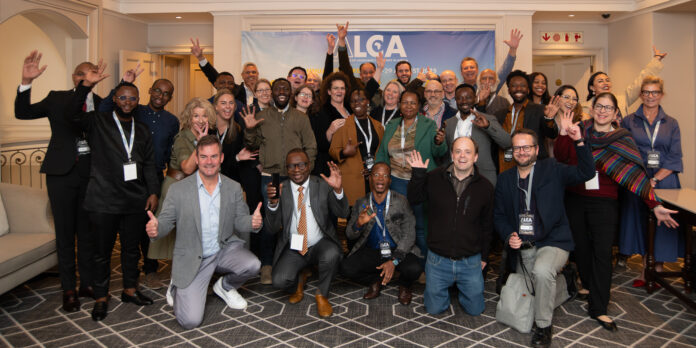
This year’s Association of Language Companies in Africa (ALCA)’s Annual Conference took place in Cape Town, South Africa, at The Cullinan Hotel on August 28th and 29th, with an additional workshop day on the 30th. Against the backdrop of Table Mountain, the event brought together industry leaders, linguists, academics, and technology providers to explore the theme, “Navigating the Global Market: Africa’s Role in the Language Services Industry.”

The choice of Cape Town as conference host was symbolic and practical. As one of Africa’s most connected cities, it served as the perfect venue to highlight how African language service providers (LSPs) are stepping onto the global stage with confidence and ambition.

The event was supported by RWS Group, Translated, Bolingo Consult, Folio Online, the Globalization and Localization Association (GALA), Acorn West Growth Strategies, Kabod Group, Tamarind Language Services, and Logrus Global’s Catmint platform. Media partners MultiLingual Media, Slator, and ProZ.com amplified the conversation globally.

Highlights From Day 1

The first day opened with Alderman James Vos, Mayoral Committee Member for Economic Growth, who welcomed delegates and underlined language as an economic driver. Renato Beninatto delivered the keynote, offering a global perspective on growth, resilience, and innovation.

The ALCA Excellence Awards, sponsored by GALA and Bolingo Consult, were presented by Jose Palomares, Chair of GALA’s Board. The awards celebrated the following outstanding contributions:

  • Outstanding Contribution to African Languages: Nkanda
  • Language Access and Inclusion Award: Lelapa AI 
  • Rising Star Award: African Languages Lab 

A panel on the ALCA 2025 Research Survey — moderated by Johan Botha with contributions from Christian Elongue, Ady Namaran Coulibaly, and Oumi K. Elkindiy-Ferguson — provided a first continent-wide snapshot of the African localization industry. Afternoon sessions explored topics like artificial intelligence (AI), language technology, associations, and adaptability, with insights from Kirti Vashee, Sheriff Issaka, Charl van Heerden, Grant Bridgman, Johan Botha, Charles Campbell, Paola Andrea Diaz Uribe, and Sophie Solomon.

Highlights From Day 2

The second day began with Dr. Laura Gonzales on the rhetorics and technologies of translation. Helga Walker spoke on partnerships for global market entry, while Johan Botha’s talk, “Leapfrogging the Legacy,” argued that African professionals can bypass outdated workflows and embrace Industry 5.0.

Further sessions included a Trados workshop with Edwin de Klerk, insights from Salomé van Niekerk on quality and professional review, Matthias Kavuttih on East Africa’s linguistic opportunities, Luke Liebzie on due diligence in official translations, Brenda Baquerizo Lopez on mentoring and AI, and Louise Callcott-Stevens on mother tongue content for children’s television.

Saturday Workshop

On Saturday, Renato Beninatto led “Reframing and Thinking Differently: Growing Against All Odds.” The workshop gave attendees practical tools to reframe challenges like pricing and client acquisition into opportunities, leaving them energized and optimistic.

Conclusion

The ALCA 2025 conference confirmed that Africa’s language industry is not waiting to be invited into the global conversation — it is already here, driving innovation, setting new standards, and claiming its place as an essential player in the localization ecosystem.

Pacific AI Expands Policy Suite to Cover International Laws Across 30+ Countries

0
Pacific AI

Pacific AI, the healthcare AI governance company, today announced a major expansion of its Governance Policy Suite to include international laws and standards across 30+ countries and all EU member states, covering all of the world’s top 30 economies, with the exception of China and Russia. The update gives legal, risk, and engineering teams a single, centralized set of actionable controls to deploy and operate AI systems lawfully across jurisdictions. 

As governments sharpen rules for AI systems, enterprises need a quick and intuitive way to move from theory to practice without reinventing the wheel for every location in which they operate. Pacific AI’s Governance Policy Suite eliminates duplicate obligations, keeps pace with new laws, and provides a unified control set that legal teams can sign off on and technical teams can build.

The International Law update is available now as part of the Pacific AI Governance Policy Suite. Existing users will receive the new content as an update and new users can onboard immediately at pacific.ai. Several key benefits of the new release include: 

  • Global coverage at scale: Policies now span 30+ countries in addition to the US (including the EU, UK, Japan, Brazil, Australia, Israel, Mexico, Argentina, Canada, and others), consolidating 250+ laws, regulations, and standards into one suite, so teams don’t have to reconcile conflicting rules country by country.
  • EU readiness built in: Alignment to the EU’s new General-Purpose AI Code of Practice’s three chapters, providing concrete implementation guidance for transparency, copyright, and safety/security controls.
  • Domestic and international standards in one place: Pacific AI’s suite integrates NIST AI RMF, ISO/IEC 42001, and other widely adopted frameworks to reduce duplication and close gaps as businesses expand outside the US.
  • Credible and actionable next steps: Each legal requirement is translated into specific controls, implementation steps, and evidence, helping engineering teams execute, while legal and compliance teams can review and attest.
  • Compliance everywhere: Many regimes track or echo EU-style obligations, and organizations that already align to NIST, ISO, CHAI or similar leading standards can leverage the suite to accelerate and evidence compliance.

“Despite the lack of federal AI guidance in the US, enterprises already face a complicated web of state, regulatory, international, contractual, provider, and insurance controls. The real challenge we face as a global AI community is an easy way to track and ensure compliance with them all,” said David Talby, CEO, Pacific AI. “Our Governance Policy Suite unifies those requirements so teams can build safe, responsible AI wherever they do business.” 

While organizations exist that track new AI legislation, Pacific AI has the only comprehensive policy suite that arms users with implementation guidance. The free resource leads to significant time- and cost-savings, and the assurance that AI systems are operating responsibly. Pacific AI also offers a paid AI Governance Certification service, in which the company will implement and validate controls across an organization.

To learn more or get started today, visit pacific.ai

About Pacific AI

Pacific AI is dedicated to helping organizations deliver AI systems that comply with the rapidly evolving regulatory landscape. Whatever your starting point, Pacific AI can help you reach the next level of AI governance, implement tools and controls for automated governance, testing, and monitoring, and audit and certify what you’ve already built. To learn more, visit: https://www.pacific.ai

Beyond Text: Translated’s Multimodal Tech

0
beyond-text-translateds-multimodal-tech

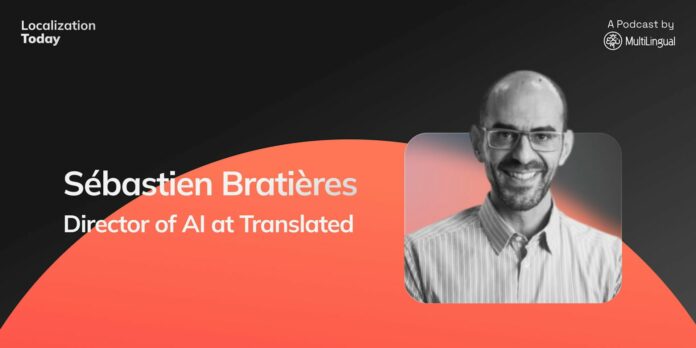
Every great interview makes the future feel close enough to touch. That’s the vibe in this episode of Localization Today, as Director of AI Sébastien Bratières (Translated) explains why language tech must move beyond text—into voice, video, handwriting, and even the physical world. Recorded on a bus in Rome during the July 3 kickoff of a new EU effort, Bratières lays out how Translated and a consortium of top labs are building the next generation of “physical AI.”

👉 Don’t just read about it—listen to Beyond Text: Translated’s Multimodal Tech right here.


Why language needs the world

Bratières introduces DVPS — Diversibus Vis Plurima Solvo, a four-year project to develop multimodal foundation models with partners including EPFL, Oxford, and ETH Zurich. The thesis is simple: language gets its meaning from context. Prosody, gaze, gesture, surroundings—these signals don’t show up in plain text, but they shape what we say and how we understand it.

DVPS treats modality broadly: not only speech and video, but handwriting dynamics (stylus traces), earth observation (satellite imagery), and cardiology (medical signals). The aim is to train models that can learn from—and reason about—real-world context, then apply that understanding to classic language tasks like transcription, translation, dubbing, and dialogue generation.

Training data is evolving, too. With web text plateauing and increasingly machine-generated, the team looks to responsibly licensed audio-video corpora that preserve the human cues text alone strips away.

What multimodality unlocks for professionals

For language pros, this isn’t “human vs. machine.” It’s human+AI vs. human. As tools span more modalities, the job surface expands: semi-automatic subtitling, AI-assisted dubbing, context-aware review, and content creation that blends text, timing, and tone. The boundaries between roles (translator, subtitler, VO director, localization PM) start to blur—and education will have to catch up, adding tool fluency and multimodal thinking to the curriculum.

Inside DVPS: a four-year plan (and moving target)

The roadmap mixes basic research and engineering: probing scaling laws for multimodal models, securing high-performance compute, and delivering 12 application use cases spanning language, environment, and medicine. The team expects to rewrite plans repeatedly—a feature, not a bug, of working at the edge where methods, benchmarks, and best practices shift fast. As Bratières notes, recent advances (and efficiency breakthroughs like those showcased by other ecosystems) are a reminder to combine ambition with agile, lightweight engineering.


Want more conversations like this? Find Localization Today on Spotify, Apple Podcasts, or at Localization Today online

New Research From Interprefy Reveals Opportunity to Improve Attendee Experience at Middle Eastern Business Events

0
Research finds many Middle East events lack language support

New research released highlights a growing need among event organisers in the Middle East to expand their use of real-time language support at business events. 

The data reveals that nearly half of surveyed business event organisers have never heard of live multilingual captions (45%), and almost a third are unaware of Remote Simultaneous Interpretation (RSI) (28%), despite increasing expectations from attendees.. 

Despite the region’s thriving international event scene, 40% still do not currently implement RSI at large-scale business events like trade shows or conferences. As global businesses look to invest more in the Middle East, the business environment will, by nature, become increasingly multilingual. The lack of inclusive communication tools could hold events back from reaching their full potential.

The research, commissioned by multilingual event technology provider, Interprefy, has highlighted a gap in awareness and adoption, which could pose a clear threat to accessibility, attendee engagement and brand reputation at major organisations in the Middle East. 

Commenting on the results of this research, Oddmund Braaten, CEO at Interprefy, said, “Whether you’re hosting a high-stakes business meeting or a large-scale industry conference, enabling participants to follow and contribute in their own language isn’t just a courtesy, it’s a driver of engagement and effectiveness. 

Event attendees expect seamless, native-language access to content, discussions and decisions in every event format. Our research highlights that the demand for real-time multilingual support in the Middle East is growing; therefore, event organisers need to tap into the latest technology to provide attendees with the experience they have come to expect.” 

Carried out in May 2025, the research surveyed the views of 387 Middle Eastern decision-makers working in events, marketing, project management and learning and development.

The full research results of Interprefy’s research are published in a report titled ‘Accelerating Global Communication, A Strategic Report for Organisers Delivering Events in APAC and the Middle East.

Understanding how best to deploy multilingual interpretation and live translation services – RSI, AI speech translation, live closed captions and live multilingual captions – to support attendees across a diverse range of events and professional meetings should become a priority as organisations look to meet a fast-growing demand from attendees for real-time multilingual engagement. 

Braaten concludes, “Organisations across the Middle East are navigating increasing complexity as the region becomes more deeply embedded in global business networks. As local and international businesses collaborate more closely, event organisers face new communication challenges – particularly when engaging diverse, multilingual audiences.” 

Research Methodology:

The research surveyed the views of 387 key decision makers in the Middle East working in events, marketing, project management and learning and development for multinational companies turning over $10m+ per year. Middle Eastern regions included the United Arab Emirates, Saudi Arabia, Qatar and Bahrain.


The Week in Review: Language Industry News September 1–7

0
News September

Every great recap feels like a fast-paced tour through the week’s most important stories. This edition of The Week in Review highlights webinars, AI adoption in specialized fields, and industry reports that shed light on the future of localization. Here’s what stood out between September 1–7.

Strategy, AI, and Research

Pinterest and RWS announced a free Localization Today Live webinar on September 11, where both companies will share their global localization strategy. The session promises insights on how cultural awareness, collaboration, and technology shape global user experiences.

Meanwhile, DeepL released new research on the adoption of AI in the U.S. legal sector. The findings reveal efficiency gains in workflows, balanced by compliance risks that law firms must carefully manage.

And in publishing, Argos Multilingual launched Global Ambitions 2025, featuring insights from 31 industry leaders on how GenAI is redefining workflows, strategy, and the future of language services.

Business, Recognition, and Standards

Acolad joined the UK Crown Commercial Service supplier framework, expanding access to multilingual and content solutions across the public sector.

Phrase was awarded AWS Retail Competency status and later recognized as a leader by an independent analyst firm—validating its growing role in scalable multilingual retail solutions.

At the same time, John Snow Labs unveiled keynote speakers and the full program for the Applied AI Summit 2025, happening online from October 14–16.

People, Culture, and Perspectives

In thought leadership, Gabriela Kouahla emphasized how localization vendors can embed accessibility from the very beginning of projects, making inclusivity a structural part of global content.

Sydnee Cooper profiled Kató Lomb, the Cold War–era interpreter who challenged institutional barriers and redefined professional language work.

And R. B. Castrioti reflected on translating suppressed literature, offering five principles for ethically navigating political context, fidelity, and accessibility when working with marginalized voices.

Looking Back

The week closed with The Monthly Review: Language Industry News August 2025, a recap of AI breakthroughs, acquisitions, and cultural milestones that shaped the previous month. The review ties together August’s biggest developments and sets the stage for the months ahead.


Want more updates like this? Explore The Week in Review every Monday on MultiLingual.com, and stay connected to the stories shaping the future of language, AI, and localization.