Inside Pinterest and RWS’s Global Localization Strategy

0
inside-pinterest-rws-global-localization-strategy

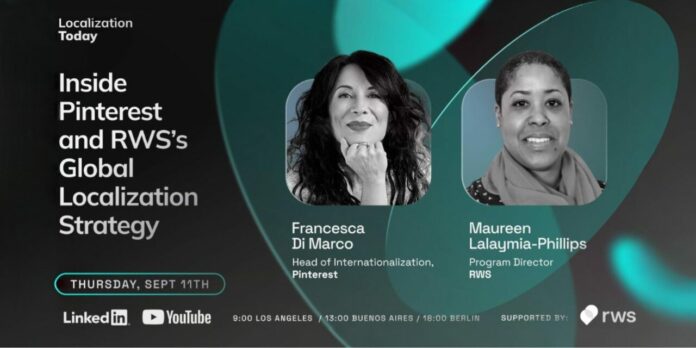
Some conversations open the door to how global user experiences are really built. That’s exactly what Localization Today Live will deliver on September 11, when Pinterest and RWS share how they collaborate to make content resonate across cultures, languages, and markets.

Moderated by Eddie Arrieta, CEO of MultiLingual Media, the panel brings together Francesca Di Marco (Head of Internationalization, Pinterest) and Maureen Lalaymia-Phillips (Program Director, RWS Group) for a Q&A-style discussion that promises practical insights and fresh perspectives.

👉 Don’t just read about it—join the session. Register now for Inside Pinterest and RWS’s Global Localization Strategy

What to expect

Global scale is nothing without local nuance. This panel explores how two industry leaders approach that challenge:

  • Cultural integration in localization: How history, culture, and empathy fuel user engagement.

  • Collaborative workflows: The client–vendor dynamics that make localization seamless.

  • Technology at scale: Where AI and machine learning can accelerate impact while keeping content authentic.

  • Measuring success: Proving the value of culturally tailored content through engagement and retention.

🗓️ Date: September 11, 2025
🕚 Time: 11:00 AM CDT
📍 Format: Live Q&A webinar

Meet the speakers

Francesca Di Marco – Head of Internationalization, Pinterest
Francesca leads the team ensuring Pinterest feels personal for its half a billion global users. With a background in Japanese history, translation, and years of experience in academia, gaming, and tech, she bridges culture and technology to shape global communities.

Maureen Lalaymia-Phillips – Program Director, RWS Group
Maureen oversees complex localization programs at RWS, building efficient, tech-enabled workflows that balance speed, scale, and quality. She is known for turning localization into a core driver of global business growth.

Eddie Arrieta – CEO, MultiLingual Media
As the moderator, Eddie brings his perspective as both CEO and host of Localization Today, where he highlights the strategies, people, and ideas transforming the language industry.

Ready to join?

This is your chance to hear directly from two leaders shaping the future of global UX.
👉 Save your spot today for Localization Today Live

The Monthly Review: Language Industry News August 2025

0
The Monthly Review Language Industry News August 2025

August was a month of acceleration in the language industry—where AI breakthroughs, market moves, and cultural milestones converged. From new datasets to acquisitions, from literary translation to indigenous language preservation, here are the stories that shaped the past four weeks.

AI, Data, and Open Innovation

The month began with Mistral’s Voxtral, an open-source suite for speech translation and transcription, paired with the company’s first environmental impact report on LLM development. NVIDIA released Granary, a dataset covering 25 European languages, while Welocalize and Duke University introduced LangMark for post-editing research. Meta launched AI dubbing for Instagram and Facebook reels, syncing lips in English–Spanish content, and Google Translate added live translation and new learning features.

Startups also surged: Palabra AI raised $6.2M, Bluente secured $1.5M, and Cohere launched Command A Translate, claiming to outperform GPT-5, DeepL, and Google Translate in enterprise contexts. CAMB.AI introduced what it calls the first real-time multilingual news translation system, debuting at IBC Amsterdam.

Leadership, Business, and Recognition

The Nimdzi 100 revealed the industry’s top players: TransPerfect held the No. 1 spot, followed by LanguageLine, Keywords Studios, RWS, and Sorenson. Lionbridge landed sixth and earned dual recognition—an AI Breakthrough Award for Aurora AI Studio and a Training Industry honor for its Content Remix App. Wordly passed 5 million users, ZOO Digital returned to profitability with 22% growth, and Avantpage was ranked among Sacramento’s fastest-growing companies.

In one of the biggest business moves of the year, TransPerfect acquired Unbabel, folding TowerLLM and COMET AI into its GlobalLink ecosystem. Smartling joined AWS Marketplace and was named one of Fast Company’s Most Innovative Companies. Propio secured SOC 2 Type II certification, underscoring its data security credentials.

Tools, Education, and Standards

Boostlingo launched its AI Interpreter in beta, enabling real-time, context-aware interpreting. Awtomated integrated Microsoft Translator into TBMS, Profuz Digital upgraded LAPIS for AI-orchestrated workflows, and Trados introduced Smart Insights to manage localization complexity. Reverso rolled out Reverso Define, an AI-powered learner’s dictionary, while Apple tested live in-person translation via AirPods.

On the education front, OpenAI launched ChatGPT Study Mode globally, and Global10x released its sixth Strategic Localization course. TAUS partnered with the Library of Business to provide datasets for training. Unicode opened its call for proposals for the 2025 Unicode Technology Workshop, reinforcing the importance of open standards.

Access, Culture, and Inclusion

Accessibility milestones defined the month: Los Angeles County marked 50 years of multilingual voting access, India expanded AI translation across 22 regional languages, and Kenya’s Signvrse unveiled an AI avatar for real-time sign language interpretation. Japan’s students translated a Hiroshima survivor’s story into over 100 languages.

Cultural highlights included the Sophie Castille Awards for comics translation, five North American organizations spotlighted for preserving indigenous languages, and Rachel Hawthorne’s reminder that cultural credibility requires human insight beyond AI.

On the policy front, a U.S. bill proposed limits on AI automation in multilingual customer service, while USCIS announced the end of free interpreter services for field office appointments starting September 28.

Looking Ahead

August confirmed that language and AI are no longer parallel paths—they are converging into an ecosystem that is faster, more open, and more collaborative, but also more accountable. As the industry balances innovation with sustainability and cultural responsibility, the coming months will test how these shifts play out in real-world adoption.

The Week in Review: Language Industry News August 25–31

0
the-week-in-review-language-industry-news-august-25-31

Every great recap feels like a fast-paced tour through the week’s most important stories. This edition of The Week in Review takes us from AI breakthroughs and certification milestones to cultural preservation and startup growth. Here’s what stood out between August 25–31.

AI, Media, and Real-Time Translation

The week began with CAMB.AI unveiling what it calls the world’s first real-time multilingual translation system for live news. The tool will debut at IBC 2025 in Amsterdam and signals how media could reach broader audiences instantly.

Google Translate added live translation and new language-learning features, designed to make conversations more fluid and lessons more personal. At the same time, Palabra AI secured USD 8.4M in pre-seed funding to expand its speech translation platform, while Singapore-based Bluente raised USD 1.5M to scale its language technology infrastructure.

Adding to the momentum, Canadian startup Cohere launched Command A Translate, claiming it outperforms GPT‑5, DeepL, and Google Translate in enterprise-focused multilingual translation. The model supports 23 business languages and allows on-premise deployment for sensitive environments.

Certification, Access, and Standards

SAFE AI and CoSET released Part A of their AI Interpreting Solutions Evaluation Toolkit. The resource offers practical checklists to guide organizations in adopting AI ethically and equitably in interpreting.

Meanwhile, Lionbridge was named to Training Industry’s 2025 Top 20 for its Content Remix App, recognized as one of the year’s standout AI authoring and localization tools.

People, Culture, and Industry Perspectives

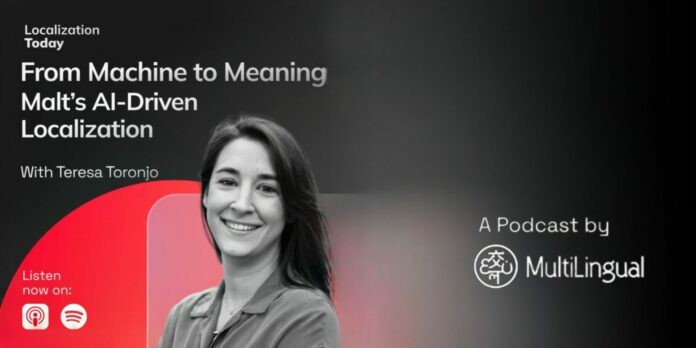
In Localization Today, Oxford Languages’ Alexandra Feeley described how her team is digitizing under-resourced languages, ensuring they remain part of the global conversation. Also on the podcast, Teresa Toronjo of Malt shared how combining automation with human expertise allows her team to deliver efficient and high-quality localization.

These conversations point toward a future where equity, preservation, and hybrid workflows guide the industry’s evolution.


Want more updates like this? Explore The Week in Review every Monday on MultiLingual, and stay connected to the stories shaping the future of language, AI, and localization.

From Machine to Meaning: Malt’s AI-Driven Localization

0
Teresa Toronjo on Malt’s AI-Driven Localization

Every great podcast conversation feels like a reality check wrapped in inspiration. That’s exactly what happens in Localization Today when host Eddie Arrieta sits down with Teresa Toronjo, Localization Manager at Malt. With over a decade of experience across Workday, KLOOK, and now Malt, Teresa brings a candid perspective on how lean teams can harness AI and automation without losing the human heart of localization.

👉 Don’t just read about it—listen to From Machine to Meaning: Malt’s AI-Driven Localization right here.


Lean Teams, Big Impact

At Malt, localization isn’t a large department—it’s Teresa. But her point is clear: “Lean doesn’t mean alone.” By collaborating directly with marketing, legal, compliance, and product teams, she’s turned a one-person function into a company-wide strategic driver.

Her approach relies on a hybrid workflow: instant machine translation to speed up time-to-market, followed by human review to ensure quality, nuance, and cultural resonance. For Malt’s marketing team, that shift has meant saying goodbye to endless copy-paste cycles and hello to streamlined automation. The result? Faster releases, fewer errors, and happier teams.

The Human Edge in AI

Teresa is quick to remind us that automation doesn’t erase the role of translators—it reshapes it. Machines can handle the repetitive work, but humans bring empathy, creativity, and cultural depth. “If you want to be the Michelin star of localization, you can’t cut corners,” she explains. “You still need humans to make the content feel alive.”

From setting KPIs like “error-free requests” and “time to market” to leading conversations on quality, Teresa shows how localization can move from cost center to strategic partner. Her message to translators and managers alike is simple: don’t fear AI, use it to elevate your work.

Want more stories like this? Discover other episodes of Localization Today on Spotify, Apple Podcasts, or directly at Localization Today online.

Lionbridge Selected for Training Industry’s 2025 Top 20 AI Content Creation and Authoring Tools Companies

0
lionbridge-content-remix-app

Lionbridge Content Remix App™ recognized as a leading tool for streamlining and enhancing the design, development, and delivery of multilingual learning content

Lionbridge, a global leader in AI services, content creation, and localization solutions, has been selected as a Top 20 company for AI Content Creation & Authoring Tools by Training Industry. This award focuses on solutions that are accelerating the development of training content through AI-driven authoring capabilities that empower organizations to produce scalable, personalized training experiences through intelligent automation.

The Lionbridge Content Remix App is an AI-powered tool that centralizes content requirements and ingests source data, such as product information, content briefs, or marketing materials. Then, task-specific generative templates create personalized, original content in the desired languages. A range of editing capabilities and an optional human-in-the-loop review by Lionbridge experts or client reviewers ensure the output is accurate, preserves brand voice, and will resonate with the intended audience. The solution enables training and development professionals, marketers, and other content owners to generate personalized, original material in 70+ languages for multiple channels simultaneously. Content Remix is an application within Lionbridge Aurora AI™, Lionbridge’s AI-first global content platform.

“Being named to Training Industry’s AI in Training Watchlist in 2024 was a significant milestone, and we are proud to advance to the Top 20 list in 2025,” said Phil Kennedy, Lionbridge Director of Global Content Solutions. “Today’s training and development professionals must keep pace with an increasingly dynamic, personalized digital landscape. The Content Remix App offers the chance to combine powerful, AI-fueled content creation with world-class translation and localization to accelerate the delivery of high-quality learning experiences and expand into new languages and markets.”

Lionbridge was selected based on the following criteria:

• Scope, quality, and extent of AI content creation and authoring tool capabilities.
• Market presence, brand visibility, innovation, and impact.
• Strength of client portfolio and customer relationships.
• Business performance and growth trajectory.

Watch Lionbridge’s on-demand webinar, Break Through Multilingual Content Barriers With AI Innovation, to hear first-hand perspectives on how AI and the Content Remix App help enterprises create content for global, multilingual audiences at scale.

By leveraging advanced AI, Lionbridge makes learning content accessible, culturally relevant, and engaging, helping organizations overcome language barriers and improve global communication. For more information about Lionbridge and its AI-powered eLearning and localization services, visit our Training and eLearning Services page.

About Lionbridge

Lionbridge partners with brands to break barriers and build bridges all over the world. Since our founding, we have helped companies connect with their global customers and employees by delivering translation and localization solutions in 350+ languages. Through our world-class platform, we orchestrate a network of passionate experts across the globe who partner with brands to create culturally rich experiences. Relentless in our love of linguistics, we use the best of human and machine intelligence to forge an understanding that resonates with our customers’ clients. Based in Waltham, Massachusetts, Lionbridge maintains solution centers in 24 countries. Learn more at lionbridge.com.

About Training Industry, Inc.

“We make connections.”™ Our company has a passion for making connections. We cultivate high-value conversations for select solution providers and with our highly engaged community of corporate learning and development leaders and decision-makers. These conversations benefit the entire training industry by surfacing challenges, sharing innovations and communicating rapidly evolving best practices.

Training Industry (https://trainingindustry.com) is the most trusted source of information on the business of learning. Our authority is built on deep ties with more than 450 expert contributors who share insights and actionable information with their peers. Training Industry’s courses, live events, articles, magazine, webinars, podcast, research and reports generate more than 10 million industry interactions each year, while the Top 20 Training Companies Lists help business leaders find the right training partners. For a complimentary referral, visit https://trainingindustry.com/rfp.

SAFE AI Task Force and CoSET Release “AI Interpreting Solutions Evaluation Toolkit – Part A”

0
SAFE AI Task Force

The SAFE AI Task Force, in partnership with the Coalition for Sign Language Equity in Technology (CoSET), today announced Part A of its new AI Interpreting Solutions Evaluation Toolkit: Organization, Implementation, and Management, a practical, step-by-step resource built for real-world decision makers. It is the first release in a three-part series that helps teams evaluate when and how to use AI and hybrid AI-human solutions, and when to reserve interactions for qualified human interpreters.

Who it’s for

Leaders responsible for language access, including language access directors, compliance and legal teams, accessibility services, CIO/CTOs, procurement, finance, and vendor-selection committees.

What’s inside (Part A)

A risk-informed framework and five practical checklist sets that you can use immediately:

  • Checklist 1. Organizational Readiness – 8 domains covering strategy, governance, infrastructure, privacy, training, QA, budget, and rollout.
  • Checklist 2. Setting-Specific Guidance – tailored considerations for healthcare, legal, education, and business environments.
  • Checklist 3. Risk Factor Assessment Framework – score use cases by risk level and define escalation to human interpreters.
  • Checklist 4. Vendor Assessment – 10 evaluation categories (usability & accessibility, technical fitness, security/privacy, ethics, customization, support, escalation, compliance, cost, and stability).
  • Checklist 5. RFP Guidance – template language and criteria for procuring AI interpreting tools, including mandatory pilots and human-backup requirements.

“As we navigate the future of communication, this toolkit provides a crucial compass in adopting AI interpreting. It ensures that as we embrace technological innovation, we do so SAFEly for all languages, both spoken and signed.” – Abraham Glasser, PhD, co-director of the Rehabilitation Engineering Research Center on Technology for the Deaf and Hard of Hearing (DHH RERC) at Gallaudet University.

“For those who believe in language access and the enduring power of the Civil Rights Act, it is an exciting time to consider what AI can do to support greater access for LEP communities. This toolkit is an essential roadmap for the responsible use of AI for language access across many sectors, especially those that relate to health, safety, and individual rights.” – Rebekah Tosado, former Language Access Director at the U.S. Department of Homeland Security.

Availability:AI Interpreting Solutions Evaluation Toolkit – Part A is available for public distribution through SAFE-AI and CoSET at https://safeaitf.org/toolkit/

What’s next:Part B – Technical Specifications will detail UX/UI controls, baseline model expectations, and performance metrics for AI and hybrid interpreting solutions. Part C – Legalities & Practical Considerations will translate the current legal environment into procurement criteria, policy language, and day-to-day procedures.

About SAFE-AI Task Force

The SAFE-AI in Interpreting Task Force is a collaborative group of industry stakeholders advocating for fair and ethical AI in interpreting. Visit safeaitf.org.

About CoSET

The Coalition for Sign Language Equity in Technology (CoSET) advances sign-language equity in AI by setting standards and amplifying Deaf expertise as an independent partner to the Task Force. Visit coset.org.

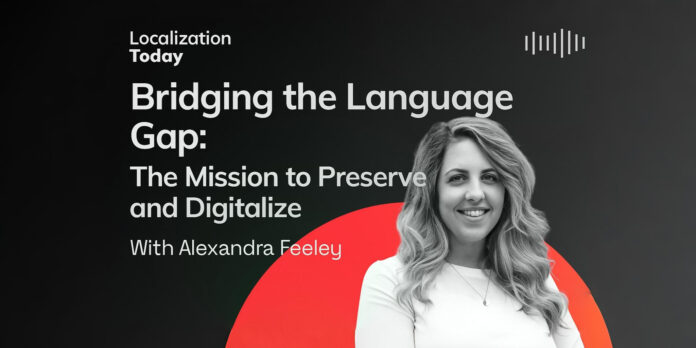
Bridging the Language Gap: The Mission to Preserve and Digitalize with Alexandra Feeley

0
Alexandra Thiele

Every great conversation pulls you into a world you thought you knew—then flips the perspective. That’s exactly what happens in this episode of Localization Today, where host Eddie Arrieta sits down with Alexandra Feeley, Director of Market Development at Oxford Languages, part of Oxford University Press. From her decade at TransPerfect to her current role shaping Oxford’s language data strategy, Alexandra shares how one of the world’s most trusted linguistic institutions is tackling some of the toughest challenges in NLP and localization.

👉 Don’t just read about it—listen to the full conversation with Alexandra Feeley right here.

From Translation to Language Data

Alexandra’s career started on the ground floor of translation project management at TransPerfect. Over ten years, she witnessed seismic shifts: the adoption of neural machine translation, the rise of AI-powered interpretation, and the challenge of balancing speed with quality. Those experiences gave her a unique perspective: technology evolves quickly, but the foundation—language data—remains essential.

That insight led her to Oxford Languages. Unlike most LSPs, which rely on translation memories or proprietary data, Oxford has spent centuries curating authoritative linguistic resources. Today, that means digitalizing under-resourced languages, from Assamese to Catalan, ensuring they’re not left out of the AI revolution.

As Alexandra explains, when users in India or Africa open their phones, they shouldn’t be forced into English-only interfaces. Predictive text, spell check, and autocorrect exist in English by default—but without digitalized resources, other languages are locked out of those everyday conveniences. Oxford’s mission is to close that gap.

Building for the Future

What makes Oxford’s work stand out is its mix of tradition and innovation. Hundreds of lexicographers maintain and update corpora, definitions, and word metadata, ensuring that language data reflects how people actually speak today. These resources power everything from translation models to voice assistants, giving developers the tools to build culturally relevant user experiences.

The initiatives go beyond dictionaries. Oxford is developing sensitivity datasets to help AI models recognize not just vulgar terms but also contextually sensitive words—crucial for education, healthcare, and marketing. They’re also advancing industry-specific dictionaries, such as medical pronunciation datasets, designed to make AI interpretation safer in high-risk environments.

And then there’s the concept of World Englishes. If a voice assistant can understand and respond in a Nigerian, Indian, or Caribbean accent, it doesn’t just improve UX—it makes the technology feel like it belongs to the user.

A Mission-Driven Path

For Alexandra, the transition from a tech-heavy role to business development has been about connecting mission with market. Oxford’s work may be rooted in preservation, but it also feeds directly into partnerships with tech companies, LSPs, and global brands eager to reach new markets.

The takeaway? Language data is future-proof. AI models will change, but without high-quality linguistic input, the outputs will never reach the standard global users deserve.

Want more conversations like this one? Discover other episodes of Localization Today on Spotify, Apple Podcasts, or directly at Localization Today online.

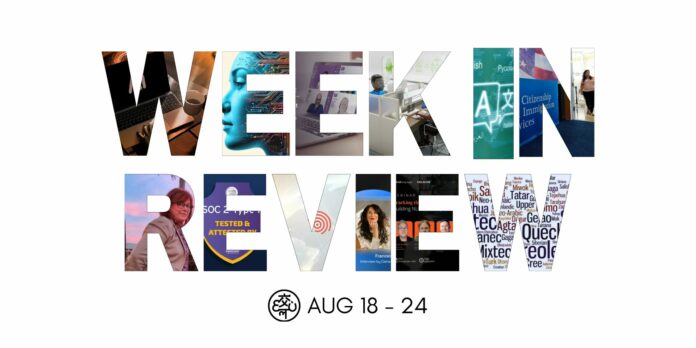
The Week in Review: Language Industry News from August 18–24

0
week-in-review-language-news-august-18-24

Every great recap feels like a fast-paced tour through the week’s most important stories. That’s what this edition of The Week in Review delivers: breakthroughs in AI, big moves from the world’s largest LSPs, and cultural initiatives reshaping the language industry. From acquisitions to indigenous language preservation, here’s what stood out between August 18–24.

AI, Data, and Innovation

The week began with NVIDIA launching Granary, an open-source dataset optimized for multilingual speech AI, covering 25 European languages and aiming to fill gaps for underrepresented speech technologies. At the same time, Welocalize and Duke University introduced LangMark, a multilingual dataset for automatic post-editing research.

Meta also drew attention with a new AI-powered translation tool for creators on Facebook and Instagram. The feature automatically dubs reels between English and Spanish and even syncs the translated audio with the speaker’s lip movements, making content feel more natural across languages. The rollout applies to public Instagram accounts and Facebook creators with over 1,000 followers.

Smartling made headlines twice: first by being named to Fast Company’s Most Innovative Companies of 2025, and later by unveiling its MCP Server, designed to embed AI-powered translation into developer workflows.

TransPerfect closed the week with one of the industry’s biggest announcements: its acquisition of Unbabel, bringing TowerLLM and COMET AI into its GlobalLink ecosystem. Meanwhile, Propio earned SOC 2 Type II certification from AICPA, reinforcing its security credentials for sensitive industries.

People, Culture, and Community

Beyond technology, the week highlighted the human side of the language industry. Francesca Di Marco of Pinterest shared her journey in an episode of Localization Today.

Oxford Languages, together with Finnish company Kielikone, announced a free webinar on NLP for complex languages, with a spotlight on Finnish.

Lionbridge secured sixth place in the Nimdzi 100, reflecting its hybrid strategy of people, scale, and AI.

In the U.S., USCIS announced it will end free interpreter services for field office appointments starting September 28, shifting responsibility to applicants.

Meanwhile, Virginia Virino Jódar shared insights on business development, and a feature on five North American organizations showcased efforts to preserve indigenous languages.

Finally, Rachel Hawthorne reminded us in her piece Beyond the Shine that while AI brings efficiency, human insight is still key to cultural credibility. And with LEO’s 12th International Virtual Conference calling for proposals, the stage is set for industry voices to continue shaping the conversation into late 2025.


Want more updates like this? Explore The Week in Review every Monday on MultiLingual, and stay connected to the stories driving the future of language, AI, and localization.

TransPerfect Solidifies Leadership Position in Language AI by Acquiring Unbabel

0
TransPerfect acquires Unbabel

Unbabel’s Industry-Leading TowerLLM and COMET AI Tools Join TransPerfect’s GlobalLink Tech Stack

TransPerfect, the world’s largest provider of language and AI solutions for global business, today announced that it has acquired Unbabel, a market leader in language AI. Financial terms of the transaction were not disclosed.

Founded in Lisbon in 2013, Unbabel is a pioneer in translation AI with a mission to use AI to break language barriers and build customer trust through consistent, high-quality multilingual experiences across marketing and customer service. The company is a graduate of Y Combinator, a US-based startup accelerator that counts Airbnb, Coinbase, Instacart, Reddit, Stripe, and Twitch among its alumni.

Unbabel’s flagship language model, TowerLLM, is the first LLM purpose-built for translation and trained on years of proprietary data. It delivers standout accuracy and adaptability, outperforming leading general-purpose models. Unbabel also developed COMET, the industry benchmark for evaluating machine translation quality.

By integrating Unbabel’s TowerLLM and COMET into its GlobalLink® technology portfolio, TransPerfect cements its status as the leader in AI-driven global content solutions.

TransPerfect President and Co-CEO Phil Shawe stated, “Unbabel is a pioneer in developing AI models for use in translation. We see combining tech stacks as a major win for our shared clients—and we will continue to drive efficiencies through innovation.”

The complementary nature of Unbabel’s technology and team further strengthens TransPerfect’s existing AI capabilities. TransPerfect has long been a leader in developing client- and industry-specialized custom models. The addition of Unbabel’s resources—from proprietary LLMs to world-class research talent—significantly expands the range and sophistication of AI solutions available to customers.

Unbabel Co-Founder and CEO Vasco Pedro, who will remain with the company to oversee integration, commented, “Over the past 12 years, Unbabel has redefined how the world communicates across languages through world-class research and pioneering AI. I want to thank the brilliant Unbabel team whose breakthroughs—including TowerLLM and COMET—have set new standards for multilingual communication. Now, within TransPerfect, these technologies and the people behind them will have an unparalleled platform to scale and deliver even greater impact.”

TransPerfect was advised on the transaction by Baker Botts and DLA Piper ABBC – Portugal. Unbabel was represented by Orrick.


About Unbabel

Unbabel is a pioneer in Language AI, eliminating language barriers so businesses can thrive across cultures and geographies. Its Language Operations platform combines advanced artificial intelligence—including proprietary large language models and AI-powered Quality Estimation—with human expertise to deliver fast, efficient, high-quality translations that get smarter over time.

Designed for enterprises managing multilingual content and communications, Unbabel empowers organizations to set performance parameters and create custom workflows for specific content types, markets, and risk profiles. This ensures precision, speed, and control across every channel at scale without forcing trade-offs between cost, speed, and quality. By helping enterprises expand into new global markets and build customer trust through consistent, high-quality multilingual experiences across marketing and customer service, Unbabel is redefining how the world communicates. To learn more, please visit www.unbabel.com.


About TransPerfect

TransPerfect is the world’s largest provider of language and AI solutions for global business. From offices in over 140 cities on six continents, TransPerfect offers a full range of services in 200+ languages to clients worldwide. More than 6,000 global organizations employ TransPerfect’s GlobalLink® technology to simplify the management of multilingual content.

With an unparalleled commitment to quality and client service, TransPerfect is fully ISO 9001 and ISO 17100 certified. TransPerfect has global headquarters in New York, with regional headquarters in London and Hong Kong. For more information, please visit www.transperfect.com.