RWS Wins “Machine Translation Solution of Year” Award for Third Consecutive Year

0
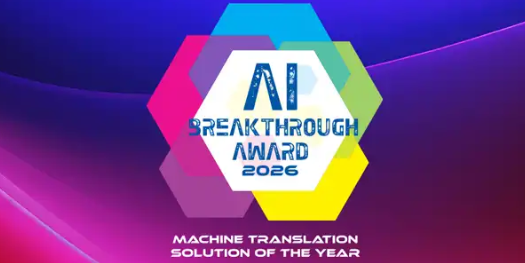
RWS Wins AI Breakthrough Award 2026

RWS (AIM: RWS.L), a global AI solutions company, has won “Machine Translation Solution of the Year” at the 9th annual AI Breakthrough Awards for Language Weaver Pro – the latest sign of its accelerating momentum in enterprise AI translation.

Language Weaver Pro is RWS’s most advanced AI translation solution. Built in partnership with Cohere, the 100+ billion parameter model is purpose-trained for translation and engineered to help enterprises and government organizations translate business-critical content with greater accuracy, fluency and security.

Launched in early 2026, Language Weaver Pro is purpose-built to handle context, ambiguity and complex content – including high-end marketing and creative copy. In both human-led and automated benchmarking, it outperformed competitors across sentence- and paragraph-level datasets spanning technical and marketing content.

“I couldn’t be prouder of what the team has achieved with Language Weaver Pro,” said Ben Faes, CEO of RWS. “Working with Cohere’s scientists and our own linguists, we’ve created our most advanced translation model yet – and embedded it into a product that enterprises can actually run at scale, without runaway costs or the hallucinations that come with general-purpose AI.”

Language Weaver Pro is also integrated across the Trados portfolio, putting advanced AI translation directly into the tools linguists and organizations already use throughout the localization process.

“Translation is one of the original AI applications, and yet it remains one of the few categories where the best consumer-grade output still falls short in the regulated, brand-sensitive environments that most enterprises actually operate in,” said Steve Johansson, Managing Director, AI Breakthrough. “RWS has built Language Weaver Pro to operate in exactly those environments, with a large language model purpose-built for translation, embedded linguistic expertise and the deployment flexibility that enterprises require.”

Language Weaver Pro sits at the heart of RWS’s Language Intelligence capability, combining multilingual AI models, RWS’s linguistic expertise and secure language technology – giving organizations the accuracy, adaptability and governance to act on multilingual content in the most complex global environments.

This year’s AI Breakthrough Awards attracted the strongest field in their near-decade history, with thousands of nominations from more than 20 countries across categories spanning Agentic AI, Generative AI, Computer Vision, AIOps, Robotics and Natural Language Processing – making RWS’s third consecutive win all the more significant.

Learn more about Language Weaver Pro.

About RWS

RWS, headquartered in the UK, is a global AI solutions company empowering one of the world’s most trusted enterprise AI. It’s proprietary Cultural Intelligence Layer, powered by 250,000 data specialists, cultural and language experts and deep domain professionals, backed by 45+ patents, makes enterprise AI culturally fluent, contextually accurate and secure, ensuring every interaction reflects a brand’s tone, context and customer values. Through its Generate, Transform and Protect segments, it delivers intelligent content, enterprise knowledge, large-scale localization and IP protection for global growth. RWS provides the confidence, governance and expertise organizations need to deploy AI safely, responsibly and at scale.
UNESCO and Unicode Strengthen Collaboration for Indigenous Languages Online

0
Both UNESCO and Unicode teams partner together

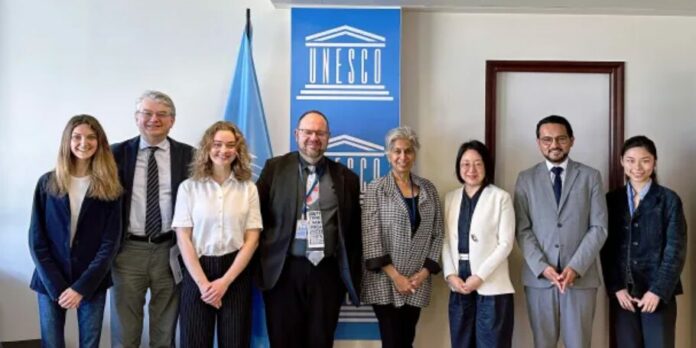
UNESCO and Unicode have announced that they are collaborating to highlight their shared commitment to ensuring that digitally disadvantaged communities, and especially Indigenous Peoples, can access digital environments and technologies to create, communicate, learn, and participate online in their own languages. 

The collaboration reflects the multistakeholder spirit of the Global Action Plan of IDIL2022-2032, which recognizes the growing importance of private organizations and civil society in advancing language preservation and revitalization efforts worldwide.

The Unicode Consortium, founded in 1988 as a public-benefit, nonprofit organization, develops open standards for software internationalization and digital services. Its work plays a key role in advancing digital inclusion, particularly by ensuring that the writing systems of the world’s languages are accurately represented across digital devices and platforms. Since its inception, Unicode has been integrated into all major operating systems and is now used on more than 20 billion devices worldwide. This enables billions of users to participate seamlessly in the digital environment, regardless of language, geography, or device.

“We at Unicode recognize that the ability for Indigenous communities to communicate, participate, and thrive online in their own languages is foundational to language preservation, revitalization, and community strength,” said Toral Cowieson, CEO of Unicode.

In the context of this collaboration, a set of activities will reflect the shared vision that both entities would like to implement. This effort will potentially result in the organization of webinars, fora, training and mentoring for Indigenous researchers, community-led cooperation with universities and institutions, and the development of knowledge products.

This collaboration will deliver mutual benefits by raising global awareness of Unicode Consortium’s work for low-resourced languages through UNESCO’s extensive partner networks, while creating new opportunities for collaboration. In turn, Unicode will support UNESCO’s inclusive digital initiatives with strategic expertise and policy guidance, advancing a more multilingual and equitable internet.

“We highly value the important work carried out by Unicode to ensure that all languages, including Indigenous languages, are represented and accessible in the digital world,” said Mariya Gabriel, Assistant Director-General for Communication and Information, UNESCO.

Unicode’s commitment to enable “everyone in the world to use their own language on phones and computers”, particularly Indigenous Peoples, whilst recognizing the importance of bridging the digital divide, aligns with UNESCO’s 2003 Recommendation concerning the Promotion and Use of Multilingualism and Universal Access to Cyberspace and the Global Roadmap on Multilingualism in the Digital Era. With this common ambition, UNESCO and Unicode are laying the foundation for transformative advances.

About Unicode

The Unicode Consortium is a nonprofit organization that develops and maintains the Unicode Standard, enabling consistent text representation across digital platforms worldwide. Its work includes character encoding, emoji standards, and internationalization data. Based in South San Francisco, it supports global language use through technical specifications, public reviews, and collaborative member-driven governance.

IntelAgree Launches Multi-Language Support and Custom Labels for Global Contract Teams

0
IntelAgree

IntelAgree, a leading AI-powered contract lifecycle management (CLM) platform, has announced the expansion of its multi-language support that lets globally distributed teams work together in IntelAgree, each in their preferred language. The update spans seven supported languages and pairs with IntelAgree’s recently released custom labels, which let customers rename fields and statuses to match their own business terminology. Custom labels are available now, and multi-language support will be available on Monday, June 29.

For global contract teams, going all-in on one CLM tool often comes with a catch. They either squeeze into one shared system in a language that isn’t theirs, or spin up regional instances that leave leadership without a single source of truth. IntelAgree’s upcoming language update provides both at once — the unity of a single system and the familiarity of each user’s own language.

An IntelAgree instance can run in seven languages covering the full interface, system notifications, workflow experiences, and AI-generated outputs from Saige Assist, IntelAgree’s generative AI assistant. Language is set per user, so a legal lead in Berlin can navigate IntelAgree in German while a contracts manager in Tampa uses the platform in English, in the same environment and on the same agreements.

Additionally, custom labels let an organization rename fields and statuses to match its own vocabulary, so “contract” can become “agreement” or “in negotiation” can become “redlining.” That spares teams from mapping the platform’s terminology to their own every time they work, and it keeps the data in reports consistent with how the business actually operates. Paired with multi-language support, those labels will also appear in each user’s preferred language.

“We invested heavily in this because running a global contract operation is one of the hardest things an enterprise can do, and we believe a CLM platform should adapt to the people using it, regardless of their location,” said Michael Schacter, Director of Product Management at IntelAgree. “What a customer gets out of it is one source of truth for the entire business, with every user working in their preferred language. ”

IntelAgree’s newest updates will let customers:

  • Run the platform in any of seven supported languages (more available upon request), with translation covering the full interface, system notifications, in-app workflows, and Saige Assist’s responses.
  • Customize up to 150 fields and statuses to match internal terminology — replacing IntelAgree defaults like “contract” with “agreement,” or “in negotiation” with “redlining”.
  • Pair custom labels with multi-language support, so the company’s own terminology appears in each user’s preferred language.
  • Set language preferences per user, allowing global teams to work side-by-side in the same IntelAgree instance.

Contracts already ask enough of the people working on them. With this release, every user on a global IntelAgree deployment can work in their own language and maintain the terminology their company already uses. Request a demo or read our multi-language support announcement blog to learn more.

About IntelAgree

IntelAgree is an AI-powered contract lifecycle management (CLM) platform that helps enterprise teams do impactful work, not busy work. The platform uses machine learning to identify, extract, and analyze text in agreements, making contract analytics more accessible. With tools like Saige Assist, IntelAgree’s generative AI-driven assistant, teams can automate complex tasks such as drafting, negotiation, and clause analysis. IntelAgree is trusted by leading companies, ranging from major league sports teams to Fortune 500 companies, to streamline the most painful, costly parts of the contracting process.

Mochi Health Launches Spanish-Language App Experience

0
Mochi Health

Mochi Health, a telehealth marketplace transforming how patients access affordable, transparent care, has announced the launch of a Spanish-language experience within the Mochi app.

Users whose phones are set to Spanish will automatically see the Mochi app in Spanish, with no configuration required. The update runs entirely in the background, leaving the English experience completely unchanged. It is a frictionless update that requires nothing from the user.

The Spanish-language experience covers the parts of the app patients interact with most: screen text, menus, navigation labels, buttons, forms, instructions, alerts, confirmations, error messages, and loading states. Specific medication names, dosages, and pharmacy names are displayed as written in medical and pharmacy records to preserve accuracy and patient safety.

“As a physician who cares for many Spanish-speaking patients, I’ve seen firsthand how language can become a barrier to healthcare,” said Dr. Roberto Valledor, a Spanish-speaking provider on Mochi’s platform. “Making the Mochi app available in Spanish is much more than a translation update; it’s an important step toward making evidence-based obesity care more accessible, inclusive, and effective for millions of people. When patients can engage with their care in the language they are most comfortable with, everyone benefits.”

The launch reflects Mochi’s broader commitment to building a healthcare marketplace that works for everyone. Mochi serves patients across all 50 states and 120+ conditions, including GLP-1 weight management, skincare, hair loss, mental health, and reproductive health. Spanish-speaking patients represent a meaningful and growing segment of the platform, and the company sees language accessibility as a core part of patient-first care.

“Healthcare has a long history of making access harder than it needs to be, and language is one of the most concrete barriers,” said Myra Ahmad, M.D., founder and CEO of Mochi Health. “This is a step toward building a platform that truly works for every patient we serve.”

While Spanish and English are the only two supported languages at this stage, Mochi is already planning to expand to additional languages in the future.

About Mochi Health

Mochi Health is a telehealth marketplace on a mission to build a world where healthcare actually works. Founded in 2022, Mochi connects patients, providers, and pharmacies across all 50 states through a three-sided marketplace that puts choice, transparency, and affordability at the center of every interaction. Patients choose their own doctor, pharmacy, and treatment plan while providers practice without interference. Pharmacies access a growing patient base without middlemen. Since founding, Mochi has served 500,000+ patients across 120+ conditions, from GLP-1 weight management to skincare, hair loss, mental health, and reproductive health.

ALCA’s First Industry Report Finds 85% AI Adoption Among African Language Service Providers

0
ALCA's 2026 African Language Services Industry Report

The Association of Language Companies in Africa (ALCA) has released the African Language Services Industry Report 2026, the first industry research report commissioned by the association. 

The study was undertaken to address a longstanding gap in global language industry research. While Africa is home to more than 2,000 languages and a rapidly growing language services sector, the continent has historically been underrepresented in major industry reports and market analyses. 

Drawing on insights from language professionals, language companies, academics, researchers, and industry practitioners across 18 African countries, the report provides a data-driven snapshot of the current state of the African language services market. 

The findings reveal a sector that is embracing technology, seeking growth opportunities, and expanding beyond national borders, while still facing challenges related to pricing pressure, client acquisition, infrastructure, funding, and professional development. 

Key findings: 

  • 85% use AI or AI-assisted technologies
  • 70% positive business impact from AI
  • 96% planning geographic expansion
  • 77% sole proprietors or owner-managed
  • 50% entered industry in the past five years

“The African language services industry is evolving far more rapidly than many observers realize. The findings suggest a sector that is embracing technology, exploring new markets, and seeking opportunities for growth. At the same time, businesses continue to face practical challenges around pricing, client acquisition, funding, infrastructure, and professional development,” said the Association.

Why this matters 

The report challenges several common assumptions about Africa’s language services sector. 

Rather than resisting technological change, most respondents reported that AI and automation are helping them improve productivity, expand service offerings, and strengthen business performance. 

At the same time, the findings highlight the entrepreneurial nature of the sector. Most respondents operate small, founder-led businesses while actively pursuing new markets and service opportunities. 

The report also identifies growing demand for African languages as one of the strongest drivers of future industry growth, particularly as governments, educational institutions, healthcare providers, technology companies, and multinational organizations seek to communicate more effectively with diverse language communities.

Key challenges identified:

  • Pricing pressure and downward rate competition
  • Client acquisition difficulties 
  • Late payments and cash-flow constraints
  • Growing competition in the market 
  • Concerns about long-term impact of automation
  • Limited access to funding and business support
  • Gaps in language technology for African languages 

Key opportunities identified:

  • Increasing demand for African language content
  • Expansion into neighboring and international markets
  • AI-assisted productivity improvements 
  • Growth in healthcare, education, tech, and digital commerce
  • Development of African language technologies
  • Greater professionalization through standards and collaboration 

The full report is available for download here.

Looking ahead 

The findings from the report will help inform discussions at the ALCA Annual Conference 2026 from 27-28 August n Accra, Ghana, under the theme: 

Turning change into growth in the age of automation 

The report also provides a foundation for future research into Africa’s language services sector and establishes a benchmark against which future industry developments can be measured. 

ABOUT ALCA 

The Association of Language Companies in Africa (ALCA) is a pan-African industry association dedicated to supporting the growth, sustainability, and professionalization of Africa’s language services sector. Through research, collaboration, advocacy, and professional development, ALCA works to strengthen Africa’s position within the global multilingual economy. 

Wordly Releases The 2026 State of AI Translation & Captions Report

0
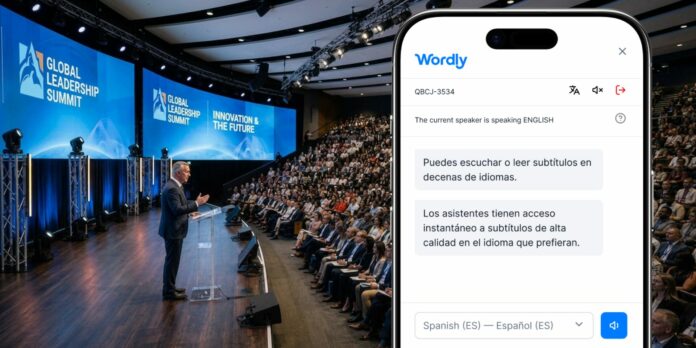
Wordly's technology of AI Translation and captions being used at the Global Leadership Summit

For years, human interpreters have been considered the gold standard for multilingual communication. New research from Wordly suggests the standard is changing with the release of the 2026 State of AI Translation and Captions Report.

The 2026 State of AI Translation and Captions report, conducted independently by Dimensional Research and commissioned by Wordly, finds that two-thirds (66%) of enterprise event planners now say AI translation and captions deliver better quality than human interpreters. That shift strengthens with AI usage. Among regular users, 79% say AI performs better, while just 12% prefer human interpreters.

“Much of the public conversation around AI still focuses on risk, uncertainty, and what the technology cannot do,” said Lakshman Rathnam, Wordly Founder & CEO. “But research shows that organizations that use AI translation are making decisions based on outcomes, not assumptions. They’re seeing measurable gains in quality, accessibility, and scale and that is reshaping what they expect from language technology.”

This is Wordly’s fourth annual study of multilingual meetings and events. The series began in 2022, six months before ChatGPT launched, when live AI translation was new to almost everyone. It expanded to live captioning in 2024, focused on the public sector in 2025, and this year focuses on the needs within businesses, covering both larger external conferences and the smaller everyday meetings across marketing, sales, HR, and learning and development.

For years, organizations treated live AI translation and captioning as a promising but uncertain bet, and multilingual audiences paid the price, left to rely on a bilingual colleague, a last-minute interpreter, or the assumption that English was probably fine. What changed is not just the technology but the consensus around it. This year’s data captures that shift in detail, from how many languages are now in the room to how buyers decide what to use.

Key Findings from the 2026 State of AI Translation and Captions Survey:

  • A New Quality Standard: 66% of enterprise event planners report that AI translation and captioning delivers higher quality than human interpreters (compared to 25% who still prefer traditional interpretation services).
  • High Satisfaction Across the Board: 79% of regular users say AI translation performs better than traditional options (with just 12% preferring human interpreters), while 61% of occasional users report a superior experience.
  • Rapid Technology Advances: 93% of respondents state that AI translation quality has noticeably improved over the past year.
  • Economics Driving Adoption: 95% of enterprise organizations find AI translation more affordable and easier to deploy than human interpretation, allowing them to expand language access within budget constraints.
  • Surging Multilingual Demand: 88% of respondents report an increase in non-English-speaking participants, up from 77% the previous year.
  • A Universal Corporate Priority: 96% of surveyed organizations state that providing comprehensive language access is now an official priority.

What’s Next: The Future Strategy for Enterprise Language Access

Despite near-universal adoption of AI interpretation (88%) and captioning (91%), 97% of respondents want capabilities beyond live translation, including:

  • 58% are interested in adding full multilingual transcripts
  • 53% would like to add subtitle and voice dubbing files
  • 51% are interested in creating meeting notes with action items
  • 50% would like to add marketing-ready summaries

Survey Methodology

The 2026 State of AI Translation and Captioning survey was commissioned by Wordly and conducted by Dimensional Research. The study surveyed 205 qualified meeting and event stakeholders from the United States and United Kingdom between May 11 and May 21, 2026. Participants were responsible for external events and/or internal meetings involving multilingual audiences at organizations with more than 1,000 employees.

A complete copy of the 2026 State of AI Translation and Captions is now available here. An infographic highlighting the biggest trends of the survey has also been made available for viewing.

About Dimension Research

Dimensional Research, headquartered in California, provides actionable market research to help innovative companies make smarter business decisions. Its research team brings expertise in enterprise technology markets, with a client roster that includes companies across work management, IT management, enterprise AI, security, manufacturing, data solutions, and beyond.

About Wordly

Wordly is a pioneer and leader in AI translation, providing real-time translation, live captions, transcripts, and AI-generated summaries for meetings and events. A 2025 Inc. 5000 company, Wordly is trusted by more than 5,000 organizations and 6 million users across 120+ countries. Since its founding, Wordly has delivered more than 1 billion minutes of live translation and captioning, helping organizations make global communication more inclusive, accessible, and actionable.

Join Direct Client Summit This June 30 to July 2: A Free Online Event for Translators and Interpreters

0
Direct Client Summit

The first Direct Client Summit, a free online conference for freelance translators and interpreters, takes place June 30 through July 2, 2026, with a Welcome Day on June 29. Co-hosted by Nora Díaz and Josh Goldsmith, the summit tackles one of the profession’s most practical questions: how to move beyond agency dependence and build a business around direct client relationships.

Over the course of three days, 28 sessions will cover the full arc of direct client work, from the mindset shift that turns a freelancer into a strategic partner to the concrete systems that help you find, pitch, and keep the right clients. Topics include prospecting and outreach, pricing, positioning, objection handling, referrals, social media, trade shows, video marketing, accessible communication, and the role of the language professional as a strategic partner.

Why attend

The summit is built for translators and interpreters at every stage, whether you want to find your first direct client or a stronger book of business. Join the summit to:

  • Learn how to position yourself so clients see you as a partner rather than a commodity.
  • Get practical playbooks for outreach, from cold email sequences to AI-assisted prospect research.
  • Hear how experienced colleagues set rates, handle objections, and turn one project into ongoing work.
  • Pick up tools you can use the same week, with sessions on home pages, LinkedIn, video, and trade shows.
  • Connect with a worldwide community of language professionals who share the same goals.

A standout lineup

Speakers include Corinne McKay, Renato Beninatto, Judy Jenner, Julia Poger, Verónica Pérez Guarnieri, Diego Cresceri, Michael Schubert, Adrian Probst, Ana Sofia Correia, Martina Russo, Joachim Lépine, Stefan Huyghe, and many more. Each day closes with a live Spotlight session on a core theme: Successful Direct Client Relationships on Day 1, The Long Game on Day 2, and Pricing on Day 3.

How it works

The summit is free to attend live. On-demand presentations open at 10 AM CEST each day and remain available for 24 hours, so you can watch on your own schedule. Daily live Spotlight and Speak Your Mind sessions add real-time discussion, and the summit wraps with a live closing session.

For those who want to keep the material and earn continuing education credit, the Power Pack adds early access with no 24-hour wait, at least 12 months of ongoing access, slides, worksheets, and transcripts for every session, a private podcast feed, and a certificate for 10 hours of ATA-approved CE credit. It also includes a ticket to the live Direct Client Outreach “Get it Done” Week (July 13 to 17), and more than 850€ in speaker bonuses. 

A word from the organizers

“Three days, real strategies, and speakers who have done the work. You leave with a plan you can put into practice right away.”

How to register

Registration is open now at directclientsummit.com. Join thousands of colleagues for three days of practical strategy, fresh ideas, and community.

The Week in Review: Language Industry News June 16-22

0
the Week in Review June 16-22

This week’s stories trace a clear arc: the industry is doubling down on hybrid intelligence, governance, and multilingual access at scale. From constitutional language rights to omnichannel interpreting platforms and AI‑operations portfolios, the field is moving toward systems that blend speed with accountability, automation with expertise, and innovation with inclusion. 

Expansion

Globibo has introduced a new Events.Studio capability that embeds live polling, weighted voting results, and multilingual captions directly into Microsoft PowerPoint, eliminating the fragmented workflows. The integration allows real‑time results, translated poll questions, and multilingual captions to appear inside the slide deck itself, creating a smoother, more transparent experience. By unifying audience engagement, multilingual communication, and real‑time decision support, Events.Studio transforms static slides into inclusive, interactive meeting experiences where every participant can understand and contribute with confidence.

Into23 has introduced a new AI Language Operations portfolio featuring three service lines — Verify+, Data+, and Voice+ — marking its evolution from a localization vendor into a multilingual AI‑operations partner for global enterprises. Combining AI‑enabled workflows with human verification, multilingual data services for AI training and evaluation, and AI‑powered voice and eLearning production, the services are governed by ISO‑aligned quality and cultural‑accuracy standards. The portfolio reflects Into23’s push to help organizations manage multilingual content, AI data, and global voice production at scale.

Acolad has launched Lia Live, the first omnichannel interpreting platform that unifies real‑time AI‑augmented interpreting with professional human interpreters in a single, secure environment. Offering the flexibility to choose AI‑first, human‑led, or blended models depending on risk and complexity, Lia Live provides AI interpreting in 50+ languages, live captions, AI voices, and seamless human escalation, all backed by ISO 27001, SOC 2 Type II, GDPR alignment, and controls built to meet emerging frameworks like the EU AI Act. The platform reflects Acolad’s broader vision of multilingual communication that scales with AI while preserving the trust, accountability, and human expertise required in sensitive, high‑stakes interactions. 

Community

LanguageLine has partnered with MultiLingual Media and XTM to publish AI in Translation: How Experts Are Rethinking Language and Quality, a new eBook gathering perspectives from leading voices across industries. The collection explores the sector’s most pressing questions on AI in translation, emphasizing that the future of translation will be shaped by diverse, sometimes conflicting viewpoints rather than a single doctrine. Featuring contributions from LanguageLine’s Antonio Tejada alongside experts from Adobe, TikTok, Uber, TED, RWS, TAUS, and more, the eBook offers a panoramic view of multilingual communication’s present and potential future. 

The Supreme Court of Canada has ruled that New Brunswick’s lieutenant‑governor must be able to perform all official duties in both English and French. Finding that appointing a monolingual representative violates the province’s constitutional language guarantees under section 16(2) of the charter, the majority held in a 6–3 decision that the occupants of the office must personally embody the equality of the province’s two official languages. The dissent warned that the ruling risks extending personal bilingualism requirements to other public officials, but New Brunswick’s government welcomed the decision as affirming the province’s bilingual character and longstanding expectations for the role. 

____________________________________________________________________________________________________________________________________________

This week’s stories reveal a quiet but powerful shift: organizations aren’t just deploying language technology, they’re defining who has the authority to speak, interpret, decide, and be understood. Whether through constitutional clarity, hybrid interpreting models, or AI‑operations frameworks, the industry is building infrastructures where legitimacy and comprehension matter as much as speed. 

For more stories like these, visit our News section.

Alconost Launches QACAT: QA That Gets Smarter Over Time

0
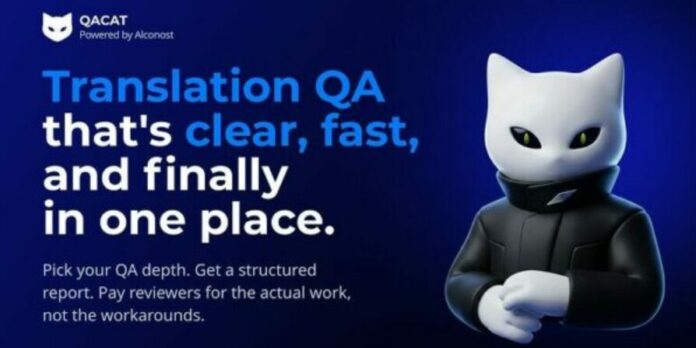
Translation QA description powered by Alconost

Alconost has launched QACAT, a translation quality platform that brings automated deterministic checks, AI analysis, and expert linguist review into one workflow. Teams upload their translations or screenshots and get clear reports back, showing what’s wrong, how serious each issue is, and how quality is trending across languages and linguists. Instead of quality signals scattered across separate tools and local machines, everything lives in one place.

“AI made translation cheap. It also made quality invisible. QACAT brings quality back into focus, with humans at the centre and automation around them,” said Dmitry Winicki, creator of QACAT and Head of Localization QA at Alconost.

QACAT lets teams pick the level of QA they need for each project, from a quick automated pass to a full linguist review. It supports a wide range of formats: JSON, XLIFF, MQXLIFF, XLSX, Trados packages, and many more. Teams upload their files or screenshots, then choose between automated, AI-driven, linguist review, or a mix. Reviewers can work directly on product screenshots, with built-in OCR reading the text from the interface automatically and auto-filling it into the correction field.

Every project ends with a structured report which includes:

  • Severity breakdowns, scored per language and per AI engine
  • An AI summary highlighting risk areas and what to fix
  • Performance trends across languages and linguists

Reports are exportable as XLSX.

The platform is built on a clear idea: automation handles the repetitive, rule-based checks, while humans focus on what only humans can do, like nuance, context, and cultural fit. Most layers keep the linguist central, while the AI-driven layer can run at scale with human validation as an option.

What sets QACAT apart is an engine designed not just to detect errors, but to improve. Each QA run follows a loop: detect, validate, improve, calibrate. When a reviewer accepts or rejects a finding, that decision feeds back into the deterministic rules, the AI prompts, and the model strategy, so quality feedback sharpens the system over time. QACAT also tracks linguist performance across projects and reports, bringing quality signals into one shared view.

QACAT offers four QA layers:

  • LQT (Linguist Quality Testing) — professional review inside the real product UI, using screenshots.
  • AQA (Automated QA) — rule-based checks, no AI involved, safe for NDA-bound content.
  • LQA (Language Quality Assurance) — full human evaluation based on MQM, the industry-standard quality framework.
  • AIQA (AI-driven QA) — AI evaluation as the primary QA pass, with optional human validation.

Two further options extend the platform:

  • MT Evaluation — compare different MT and LLM outputs to see which one fits your content best.
  • Custom Workflow — flexible setup for unique pipelines.

The platform is powered by leading AI models including Claude Sonnet 4.6, Claude Haiku 4.5, Gemini 3.1 Pro preview, GPT 5.2, Mistral Large 2512, DeepSeek V3.2, Qwen 3.7 Max, and Grok 4, with full model choice inside AIQA. The set of available models is updated continuously, so teams always have access to the latest versions.

Native TMS connectors are live, and a REST API connects QACAT to any CAT tool, CMS, or custom pipeline, with the option to trigger checks automatically when new content lands. Webhooks are on the roadmap.

QACAT is now available at qacat.alconost.com with a free one-month trial.

About Alconost

Founded in 2004, Alconost is a leading provider of localization services, offering professional translation, localization testing, and language quality assurance services. Headquartered in Virginia, the company serves clients across gaming, software, mobile apps, and digital content industries worldwide, with offices in multiple countries and a network of over 3,000 professional linguists.