The Monthly Review: Language Industry News – July 2025

0
The Monthly Review: Language Industry Recap – July 2025

Throughout July, the language industry confronted big questions—about fairness, functionality, and the future. Legal frameworks shifted. AI tools expanded. The ongoing tension between inclusion and innovation influenced both policy and product decisions. Here’s a look at the most relevant developments of the month.

Legal Shifts, Copyright Clarity, and Identity Protections

A key U.S. court ruling confirmed that using copyrighted books to train generative AI models such as Claude and Llama qualifies as fair use. The decision sets a precedent that could shape future lawsuits around data scraping and content ownership.

Meanwhile, Denmark proposed a copyright amendment that would allow individuals to request the removal of unauthorized AI-generated imitations of their identity. In the U.S., the Department of Justice revised its language access guidance, instructing agencies to prioritize English in public services—raising concern among LSPs and advocacy groups.

AI Momentum and Real-Time Innovation

Across July, major tech players pushed multilingual AI further into real-time environments. Walmart deployed a translation tool to assist over 1.5 million store associates. Zoom opened access to meeting data to improve captions and interpretation. Microsoft added voice conversion to Azure Speech. And Apple released privacy-centered multilingual models for on-device use.

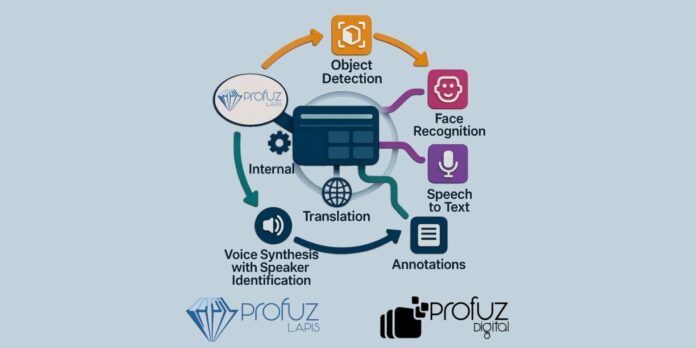
Smartling joined the AWS Marketplace to scale its enterprise offerings, while Awtomated integrated Microsoft Translator into its TBMS platform. Profuz Digital also introduced new AI-orchestrated workflows that synchronize multiple engines across layered media tasks.

Funding, Research, and Market Expansion

Translated awarded €100,000 through its Imminent program to support language AI research, while Alibaba released Qwen3—open-source models for translation, coding, and reasoning. MiniMax, a voice-based AI leader for Asian languages, filed for a $4 billion IPO in Hong Kong.

In Central Asia, Custom.MT and Tilmoch.ai partnered to integrate Uzbek, Kazakh, and Karakalpak into CAT tools. And in India, Amazon doubled down on dubbing for multilingual audiences through both Prime Video and MX Player.

Language Access, Education, and Cultural Gaps

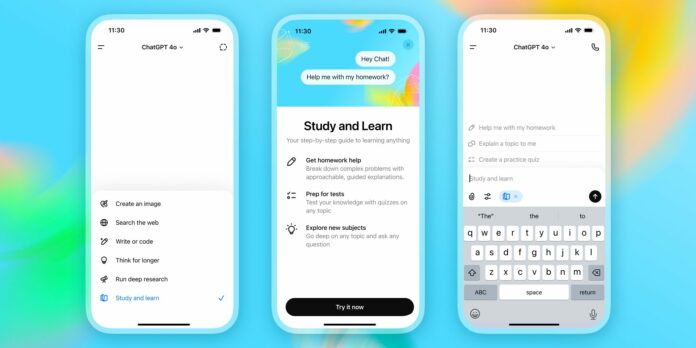
Multilingual access continued to expand across institutions. Ohio’s CODE Credit Union adopted Fire Lingo tablets for inclusive in-branch services. Kazakhstan, Monaco, and Samsung launched AI platforms for tourism and small businesses. In parallel, OpenAI rolled out ChatGPT Study Mode globally, including step-by-step tutoring in voice, image, and text formats.

Yet access gaps remained visible. A report on Africa’s underdeveloped language services market pointed to missed opportunities rooted in infrastructure and investment. In the U.S., a study revealed that many Americans struggle to interpret common internet acronyms—signaling generational divides in digital fluency.

Literature, Podcasts, and Recognition

Language and culture intersected in multiple formats. The first Catalan translation of Kant’s Critique of Pure Reason won Spain’s UNE Prize for university translation. DeepL reported that language barriers are costing U.S. companies millions—fueling renewed interest in scalable AI solutions.

Meanwhile, OOONA rebranded its podcast En Sincronía as InSync, adding English episodes and broadening its focus to global media localization. Author Mark Seligman announced AI and Ada, a new book on literary translation and machine creativity, to be released in October.

Looking Back

From policy updates to product rollouts, July illustrated the many ways language is being reshaped—by law, by code, and by culture. As tools grow more powerful and use cases more complex, the industry continues to navigate the balance between precision, equity, and scale.

For ongoing coverage, visit our News section.
Liberty Language Services Earns ISO and ASTM Certifications for Quality in Translation and Interpretation

0
Liberty

Liberty Language Services is proud to announce its recent achievement of four internationally recognized certifications that underscore its ongoing commitment to excellence, quality, and professionalism in the language services industry. The newly awarded certifications include: 

  • ISO 17100 – Translation Services – Requirements for Translation Services 
  • ISO 18587 – Post-Editing of Machine Translation Output 
  • ISO 18841 – Interpreting Services – General Requirements and Recommendations 
  • ASTM F3130 – Standard Practice for Language Service Companies 

These certifications reflect Liberty’s dedication to adhering to the highest global standards in translation, interpreting, and machine translation post-editing services. 

“These certifications mark a major milestone for Liberty and reaffirm our commitment to delivering language services that meet rigorous international benchmarks,” said Timothy Worster, CEO of Liberty Language Services. “As the demand for reliable, high-quality language services grows across industries, our clients can trust that we are operating with integrity, professionalism, and a deep respect for global best practices.” 

What These Certifications Mean 

  • ISO 17100 ensures that Liberty’s translation services meet strict requirements regarding quality assurance, translator qualifications, project management, and client communication, providing a consistent and professional standard across all projects. 
  • ISO 18587 reflects Liberty’s capabilities in post-editing machine translation (MT) output, an increasingly important service in the digital age. This certification confirms that Liberty follows a rigorous process to ensure that machine and AI-generated translations are accurate, human-reviewed, and appropriate for their intended use. 
  • ISO 18841 sets the global standard for interpreting services, outlining qualifications, ethics, and service delivery expectations for interpretation. This certification solidifies Liberty’s commitment to delivering ethical, culturally competent, and accurate interpretation in all settings. 
  • ASTM F3130, a U.S. standard specifically for Language Service Companies, establishes best practices for service delivery, client relations, staffing, and data management. It demonstrates Liberty’s operational excellence and reliability in both public and private sector partnerships. 

A Commitment to Raising the Bar in Language Access 

Liberty Language Services has long served clients in healthcare, legal, education, government, and business sectors with a focus on professionalism, responsiveness, and 

cultural sensitivity. These certifications not only affirm the company’s industry leadership but also provide clients with an added layer of assurance regarding service quality and compliance. 

“We are proud to demonstrate that our operations align with internationally recognized standards,” said Silvia Villacampa, Managing Director at Liberty. “These certifications validate the work we do every day to support our partners and their multilingual communities. It’s about delivering on the promise to remove barriers to communication and provide quality language solutions.” 

About Liberty Language Services 

Liberty Language Services is a leading provider of interpretation, translation, and language access solutions. Serving clients nationwide in over 300 languages, including American Sign Language (ASL), Liberty is known for its commitment to professionalism, innovation, and client satisfaction. The company also operates the Academy of Interpretation, offering nationally recognized interpreter training and credentialing programs. 

For more information about Liberty Language Services or its certified offerings, please visit www.libertylanguageservices.com

ChatGPT Study Mode Launches Globally, With a Multilingual Boost From India

0
OpenAI’s Study Mode

OpenAI’s new learning tool combines global ambition with local accessibility

OpenAI officially launched Study Mode in ChatGPT on July 29, 2025. Unlike traditional Q&A models, this new feature guides users through questions step by step, promoting active thinking instead of passive answer-seeking. The global rollout includes support for Free, Plus, Pro, and Team users, with availability for ChatGPT Edu coming soon.

But while the launch is worldwide, India played a key role in shaping how the tool works on the ground. The feature was beta-tested extensively by Indian students preparing for real-world academic challenges, including high-difficulty exams like those at IIT level. Their feedback helped OpenAI refine the tool’s scaffolding, personalization, and multimodal experience.

Multilingual from day one

Study Mode supports 11 Indian languages and combines voice, image, and text, making it especially valuable for multilingual and mobile-first populations. Its mobile-friendly interface ensures that students in both urban and rural areas can access learning tools without needing expensive equipment or high-speed internet.

Leah Belsky, OpenAI’s Vice President of Education, emphasized that the tool was developed with input from teachers and learning scientists. “Study Mode encourages students to reflect, engage, and build knowledge—not just memorize,” she said in the launch announcement. The tool provides personalized hints, knowledge checks, and organizes responses into clearly structured lessons tailored to the user’s level.

From inclusion to impact

OpenAI says this launch is just the beginning. The company plans to expand Study Mode with features like video responses, goal tracking, and deeper personalization based on uploaded files and past conversations. Additionally, it is working with Stanford’s SCALE Initiative to research the long-term impact of AI in K–12 education.

The feature also includes safety mechanisms to prevent misuse, particularly in academic settings. OpenAI assures that it follows the same safety protocols applied across its entire model lineup.

By combining a global release with local customization—especially in a linguistically diverse country like India—OpenAI’s Study Mode shows how AI can support inclusive, scalable education. It’s a clear step toward reimagining how students around the world learn in the age of AI.

Profuz Digital Unveils New AI-Orchestrated Features in Profuz LAPIS

0
Profuz LAPIS Unveils New AI Tools at IBC2025

Profuz Digital, the European developer behind the Profuz LAPIS platform, has announced a new set of features that expand the platform’s AI-driven orchestration capabilities. These updates reinforce LAPIS’s mission to transform digital asset management into a dynamic, intelligent workflow system for broadcast, production, and localization teams.

Unlike traditional MAM systems, Profuz LAPIS acts as a centralized brain that intelligently coordinates tasks across multiple AI engines. It integrates technologies like speech recognition and face detection into layered workflows, generating more precise metadata while reducing manual labor. With the latest release, the platform takes this a step further.

Now, a smart task distribution engine can evaluate each incoming job—whether transcription, translation, or content recognition—and assign it to the most appropriate AI processor based on language, genre, sensitivity, or output format. This allows organizations to route sensitive material to in-house servers while leveraging cloud-based engines for more routine tasks.

The update also introduces features like subtitle translation with improved time-slot alignment, speaker identification in speech-to-text workflows, and voice synthesis from timed text. Editing capabilities have been expanded through a timeline-based interface, volume metering, slow-motion playback, and dedicated file editors for audio, image, and text content. These tools give teams greater creative control while automating much of the technical overhead.


About Profuz Digital

Profuz Digital builds flexible, high-performance solutions for professionals working across broadcast, production, and post-production. The company focuses on fast deployment, customer-driven innovation, and scalable system integration.

Its product suite includes SubtitleNEXT, a real-time and offline captioning and subtitling platform, and Profuz LAPIS, a workflow and digital asset management system that centralizes processes and data. These technologies are combined in the hybrid platform NEXT-TT, which manages end-to-end localization services. NEXT-TT can be customized to coordinate teams of translators, subtitlers, AV professionals, and freelancers within a secure, collaborative workspace.

To learn more, visit www.SubtitleNEXT.com and www.profuzlapis.com.

LangOptima and Lead Semantics Announce Partnership

0
LangOptima and Lead Semantics Launch Semantic AI Tools

We’re thrilled to announce the partnership between LangOptima and Lead Semantics — two companies working to transform your data into multilingual Knowledge Graphs (KG) for AI.

Together, we are building solutions that don’t just process text, but structure it in meaningful connections to reveal hidden knowledge and to efficiently retrieve at scale making knowledge usable for a myriad of AI use cases.

Why This Partnership Matters

Both companies believe the future of intelligent systems lies in meaning-aware infrastructure: technology that doesn’t just generate outputs, but understands the context, intent, and domain in which it operates.

LangOptima brings expertise in growing companies through marketing and language operations. It helps manage the complexity of multilingual, multi-product communication systems.

Lead Semantics brings deep AI and Semantic Technology to the table: KG’s (since 2019), natural language interfaces, KG Retrieval-Augmented Generation (KnowledgeGraphRAG, a term Lead Semantics first discussed in 2023) and machine learning.

We’re now combining forces to offer three standout products:

Joint Product Lineup

1. Knowledge Graph Mediated Translation (KGMT)

Overcome the limitations of generic machine translation. KGMT uses advanced semantic knowledge graphs for domain-specific translation and Automatic Post-Editing (APE), improving fluency and accuracy for internal and external content.

2. Semantic Search and Analysis with Knowledge Graph RAG

Combining knowledge graphs with Retrieval-Augmented Generation (RAG), this product enables high-accuracy semantic search and contextual analysis. Ideal for organizations looking to extract meaning, insights, and signals from all modalities of unstructured content.

3. Natural Language Query Server (NLQS)

This software allows users to query SQL databases using natural language, effectively with zero training enabling teams to “chat” with their data — and get business-critical answers, instantly.

From the Founders

“LangOptima is about helping companies grow and reach their largest audience possible. Partnering with Lead Semantics is a major step forward—unlocking the true potential of domain-specific AI.” Edwin Trebels, Founder of LangOptima

“At Lead Semantics, our mission has always been to bring semantic computing to real-world enterprise problems. With LangOptima, we’ve found a partner that deeply understands the language and its operational layers. This partnership is not just synergistic — it’s both empowering and essential.” Prasad Yalamanchi, Founder of Lead Semantics

What’s Next?

We’re starting with a rollout of our three products and onboarding partners across sectors where semantic clarity drives scale.

For teams dealing with complex, multilingual data and fast-changing operations, this is your chance to build a language system that understands your world.

For general or sales inquiries, reach out to us here.

Join us at our Launch Event:

Tuesday, August 12, 10:00 Central Time (CT), 16:00 British Summer Time (BST) at the Linkedin Event found at LangOptima.

Smartling Joins AWS ISV Accelerate Program, Bringing AI-Powered Translation to Global Enterprises via AWS Marketplace

0
Smartling, the LanguageAI™

Smartling’s AWS Marketplace listing gives global enterprises easy access to its AI-powered platform that automates the translation process, integrates with leading content systems, and delivers faster time to market in over 450 languages and locales.

Smartling, the LanguageAI™ translation company, announced today that it has joined the Amazon Web Services (AWS) Independent Software Vendor (ISV) Accelerate Program, a co-sell program for AWS Partners that provides software solutions that run on or integrate with AWS. The program helps AWS Partners drive new business by directly connecting participating ISVs with the AWS Sales organization. This enables global enterprises to procure Smartling’s industry-leading localization platform directly through their AWS accounts with ease.

Smartling’s AWS Marketplace listing provides customers with easy access to its AI-powered platform, which automates the translation process, integrates with leading content systems, and delivers faster time to market in over 450 languages and locales. With Smartling, teams can localize websites, mobile apps, product content, and more—all while reducing cost and increasing translation quality.

“We built Smartling to help organizations go global faster, with less complexity and more measurable impact,” said Bryan Murphy, CEO of Smartling. “Joining the AWS ISV Accelerate Program allows us to reach more enterprises that are modernizing their tech stacks in the cloud—and gives them a frictionless path to adopt Smartling’s AI-powered platform through AWS Marketplace.”

The AWS ISV Accelerate Program provides Smartling with co-sell support and benefits to meet customer needs through collaboration with AWS field sellers globally. Co-selling provides better customer outcomes and assures mutual commitment from AWS and its partners.

AWS ISV Accelerate Program members are held to the industry’s highest standards and must undergo a comprehensive evaluation to gain acceptance into the program. Smartling participated in a thorough architectural and security review to ensure the quality and design of our solutions. Proof of customer excellence was also reviewed to validate the successes Smartling customers have achieved across industry verticals.

Smartling is leading the industry with applied AI that translates faster and more accurately than ever before—outperforming human translators in recent evaluations. Its platform is trusted by some of the world’s most recognized brands to accelerate global growth and deliver personalized experiences at scale.

Smartling’s solutions are available in the Americas, Europe, and APAC regions. To learn more, visit smartling.com.

About Smartling

Smartling’s LanguageAI™ platform is revolutionizing digital content translation and localization. Recognized as the top translation management system by CSA Research and G2 users, Smartling uses AI and machine learning to eliminate manual tasks, integrate with existing techstacks, and deliver translation quality at scale— all at a fraction of the cost and turnaround time of traditional translation.

Smartling is the platform of choice for hundreds of B2B and B2C brands, including IHG Hotels & Resorts, Shopify, Pinterest, State Farm, British Airways, and Lyft. Smartling is a global team headquartered in New York City with an office in Dublin.

Mistral Releases First Full Lifecycle Analysis of a Language Model

0
Imminent Research Report Explores AI, Language, and Culture

Voxtral creator leads call for environmental transparency in AI

Mistral AI, known for its open-source approach to generative models, has published the first full lifecycle analysis (LCA) of a large language model (LLM). In partnership with Carbone 4, ADEME, Resilio, and Hubblo, the study offers a detailed account of the environmental impact of developing and deploying its model, Mistral Large 2.

This move comes amid rising global interest in setting sustainability benchmarks for artificial intelligence. While initiatives like the Coalition for Sustainable AI signal progress, Mistral’s report pushes the conversation further by quantifying environmental impacts across three categories: greenhouse gas emissions, water consumption, and resource depletion.

Groundbreaking Metrics for Training and Inference

The study reveals that training Mistral Large 2 generated:

  • 20.4 kilotons of CO₂ equivalent (ktCO₂e)

  • 281,000 cubic meters of water

  • 660 kg of antimony equivalent (Sb eq)

In addition to these total training impacts, Mistral also disclosed the marginal costs of using its assistant Le Chat to generate a typical 400-token response:

  • 1.14 grams of CO₂

  • 45 mL of water

  • 0.16 milligrams of Sb eq

These figures, which include upstream impacts like hardware manufacturing, go beyond typical carbon-only disclosures and help contextualize the true cost of running AI at scale.

Towards a Standard for AI Accountability

According to Mistral, three key indicators should be considered industry standard:

  1. Absolute training impact

  2. Marginal inference impact

  3. Ratio of total inference to lifecycle impact

The company emphasizes that a model’s environmental footprint is strongly correlated with its size—raising the stakes for selecting the right model for the right task. Public institutions, the report suggests, could lead the way by incorporating model size and efficiency into their procurement criteria.

A Call for Transparency

Mistral’s LCA aligns with international standards such as ISO 14040/44 and the GHG Protocol Product Standard, and follows the Frugal AI methodology developed by AFNOR. While the company acknowledges current limitations—such as the lack of full lifecycle inventories for GPUs—it sees this as a starting point for building standardized, comparable benchmarks across the industry.

The ultimate goal: to enable governments, enterprises, and users to make informed, sustainability-conscious decisions when adopting AI tools.

What Comes Next

Mistral plans to update its environmental impact reports regularly and contribute its findings to ADEME’s Base Empreinte database. It also advocates for creating internationally recognized frameworks for model comparison, potentially leading to a scoring system for environmental performance in AI.

By making this report public, Mistral positions itself at the forefront of open-source sustainability in AI—setting a precedent for environmental responsibility in one of the most rapidly growing sectors of the tech industry.

Translated Presents the 2025 Imminent Annual Report on Language, Artificial Intelligence, and Human Evolution

0
Imminent Research Report Explores AI, Language, and Culture

The new publication is part of a two-year research initiative that will continue exploring the impact of the shift from large language models to multimodal AI systems on communication.

Translated, a leading provider of AI-powered language solutions, announced a two-year research initiative led by its research center, Imminent. The initiative begins with the release of the 2025 Annual Report, Evolution in Words: Beyond AI, which explores the intersection of language, artificial intelligence, and cultural diversity in a rapidly evolving technological landscape. In 2026, the research will continue with a new report examining how the shift from large language models (LLMs) to multimodal AI systems may reshape this intersection, along with their social, cultural, and technological implications.

The 2025 Imminent Research Report features insights from world-renowned thinkers, including Viktor Mayer-Schönberger (Professor of Internet Governance, Oxford University), Dennis Yi Tenen (associate professor of English and Comparative Literature at Columbia University), Gry Hasselbalch (author and co-founder of DataEthics.eu), and Jannis Kallinikos (professor of Information Systemns at Luiss University and professor emeritus at London School of Economics), along with original studies by Patrizia Boglione (Translated’s VP of Brand and Creative) and Kirti Vashee (Translated’s Tech Evangelist), and research contributions from a network of language and technology professionals working in this field. The report raises a pivotal question: How will the development of AI redefine the evolutionary path of human language and humanity itself?

At the heart of the report is a compelling argument: language is not merely a tool for communication, but a fundamental driver of human culture, identity, and power. As AI technologies increasingly produce, translate, and mediate our words, the implications stretch far beyond efficiency or convenience; they strike at the core of human expression.

Key highlights from the report include:

  • The geopolitical and ethical risks of English-dominant AI systems.
  • The cultural stakes of machine translation and linguistic homogenization.
  • Groundbreaking community-centered strategies to preserve low-resource and endangered languages using AI.
  • The creation of new words in the context of the younger generation.
  • A call to equip future AI systems with super-alignment, linking machine capabilities with human values.

Combining deep research, provocative essays, and practical frameworks, Imminent has not only published a report, but also begun to explore a roadmap for an inclusive, multilingual AI future. This will serve as the basis for examining the significant shift in AI’s socio-technical impact. Amid growing global attention on AI, a wave of new reports underscores the fundamental limitations of LLMs. These systems continue to struggle with hallucinations, exhibit a marked inability to handle complex reasoning, and show systemic bias toward highly documented languages. Yann LeCun, Chief AI Scientist at Meta and Turing Award winner (often referred to as the Nobel Prize of computing), has publicly warned that the current trajectory of LLM development, driven by enormous and unsustainable investments in computing power, is not a viable long-term strategy. According to LeCun, the next evolutionary leap in artificial intelligence will require a radical scientific breakthrough, not merely a scaled-up extension of today’s language models.

In the future, these topics will continue to be investigated as part of a new phase of research on artificial intelligence. This phase aims to move beyond large language models toward multimodal models capable of managing diverse data systems, situating AI in space, enabling it to learn from new data arising from environmental feedback, and allowing it to act through robotic systems or other devices. Imminent’s research in the coming year will focus on the consequences of this approach, supported by collaborations between Translated and leading European research centers at the forefront of the field, as part of the DVPS project funded by the European Commission.

Journalists and media professionals are invited to explore the full report and engage with its authors and contributors. Interviews, expert commentary, and press materials are available upon request.

Mistral Launches Voxtral, Open-Source Suite for AI Speech Translation and Transcription

0
Mistral Launches Voxtral Open-Source Speech Models

New models challenge Whisper and Gemini in multilingual voice tasks

French AI innovator Mistral has entered the speech tech arena with the release of Voxtral, its first family of open-source models for audio-based tasks. Designed for transcription, speech translation, summarization, and multilingual audio understanding, Voxtral positions Mistral as a serious new contender in the voice AI space — challenging players like OpenAI, Google, and ElevenLabs.

Three Models, Multiple Use Cases

The Voxtral family includes Voxtral Small, a 24.3B parameter model built for production-scale workloads, and Voxtral Mini, a 4.7B variant optimized for local and edge use. For lightweight needs, Voxtral Mini Transcribe offers a fast, cost-efficient alternative tailored exclusively for transcription.

What sets Voxtral apart is its capacity: Voxtral Small and Mini can handle audio files up to 40 minutes long, while Voxtral Mini Transcribe supports files up to 30 minutes. These extended limits open up new possibilities in areas like multilingual meeting transcription, voice-driven chat interfaces, and long-form audio summarization — tasks where most other models, open or closed, fall short.

Outperforming the Giants

In internal testing, Mistral reported that Voxtral Small and Voxtral Mini Transcribe delivered state-of-the-art transcription results, outperforming OpenAI’s Whisper, GPT-4o Mini Transcribe, and Google’s Gemini 2.5 Flash, and holding its own against ElevenLabs Scribe. In speech translation tasks, Voxtral Small beat both Gemini 2.5 Flash and GPT-4o Mini Audio across several language pairs, including English↔French, Spanish↔English, and German↔English.

Open Source, Benchmarked, and Ready to Use

Mistral has made the model weights for both Voxtral Small and Voxtral Mini available on Hugging Face, along with a free API and a live demo via its chatbot Le Chat.

In addition, the company introduced three new speech understanding benchmarks derived from well-known text evaluation datasets. These synthetic speech benchmarks, released under a permissive license, aim to promote more consistent and transparent evaluations across the industry. “We encourage their adoption as standard benchmarks for speech understanding,” the team stated.

A Strategic Expansion

Known for its rapid rise in the open-source LLM space, Mistral’s expansion into voice signals a strategic push to broaden its portfolio and compete in multimodal AI. With Voxtral, the company is not just adding speech capabilities — it’s setting a new bar for open, multilingual, and scalable audio AI.