AI Interpreter Beta Now Live in Boostlingo On-Demand

0
Boostlingo

Boostlingo has launched the beta version of its AI Interpreter, a new AI solution built to support a wide range of conversations with real-time machine interpreting. Fully integrated into the mobile version of Boostlingo On-Demand, this release marks a major step toward scalable, accessible interpreting without sacrificing quality. 

Recent reports from Boostlingo show that more than 50% of organizations in healthcare and education had to proceed without an interpreter when one was needed, underscoring ongoing access gaps that the AI Interpreter is designed to close. 

Unlike generic tools, AI Interpreter is tested and backed by the collective knowledge of Boostlingo’s network of professional interpreters. It’s designed to assist with most interactions, like scheduling or front-desk conversations, where interpreter availability can cause bottlenecks. 

“This is the first real step toward scalable, reliable, context-aware consecutive AI interpreting,” said Brian D’Agostino, Chief Product Officer at Boostlingo. “We’re not replacing interpreters. We’re expanding coverage in a way that’s never been done before. Our system knows when AI is enough and when it needs to step aside and bring in a human interpreter.” 

AI Interpreter is HIPAA compliant and combines speech recognition, translation, and voice synthesis in real time, allowing users to hold a natural back-and-forth conversation. While the beta already delivers value in general settings, the team is continuing to improve areas like speaker identification, handoff logic, PHI redaction, and support for more languages. 

“We’ve hit the sweet spot between accuracy and usability,” said D’Agostino. “Now we need real feedback from real users to refine edge cases and performance at scale.” 

The beta rollout is focused on use cases where speed and coverage are critical, especially for customers handling high call volumes across many languages. The AI Interpreter is the latest addition to Boostlingo’s growing suite of AI tools. It joins features like AI captions and translations in Boostlingo Events, which organizations like ACOLOP and Dansk IT use today for their meetings and events. 

“This is about helping our customers do more, faster,” said Merrie Wallace, Chief Revenue Officer at Boostlingo. “Our users want one solution that works for every kind of conversation. With this launch, we’re getting even closer to delivering that.” 

For organizations navigating when and how to use AI, Boostlingo also acts as an advisor, helping build strong hybrid models that combine AI and human interpreting to meet today’s language access needs. 

Customers interested in joining the beta program can contact their AM to learn more.  

About Boostlingo

Boostlingo is an interpreting technology company based in Austin, TX, dedicated to building innovative solutions that help its customers communicate without barriers and increase language access for all. The Boostlingo platform offers video, phone, and on-demand interpreting, industry-leading interpreter management and scheduling tools, remote simultaneous interpretation, video conferencing capabilities, and advanced AI captioning and transcription.   

For more information, visit https://boostlingo.com/ 
TAUS Offers Real-World Data for AI Training through Partnership with Library of Business

0
taus-library-of-business

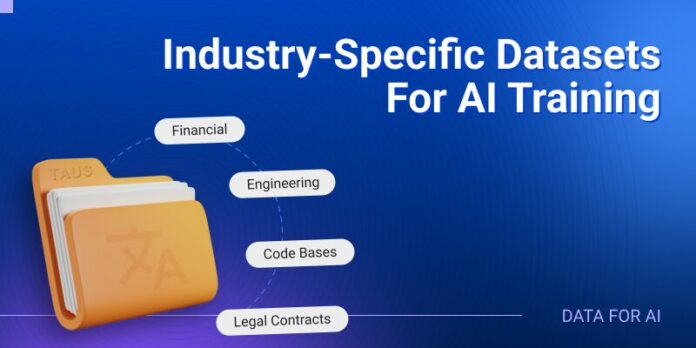
TAUS, the data-for-AI company and creator of EPIC, entered into a partnership with Library of Business to offer real-world data for AI training to its customer base of big-tech companies and AI Labs. Library of Business is an Amsterdam-based AI expert knowledge platform that curates industry-specific proprietary datasets to support AI companies in transforming generic AI into solutions that are ready for real-world business impact.

The partnership pairs TAUS brand authority in the data-for-MT marketplace, and its reputable NLP and human annotation services, with the industry network of Library of Business seasoned industry professionals. The first edition of the new TAUS Data Catalog contains dozens of unique datasets spanning the software, legal, finance, architecture, and media industries.

“Foundational Model Researchers and Product Owners are confirming that this is the exact type of ‘hard-to-find’ data needed to fine-tune advanced, industry specific, AI tasks,”  says Zachary Haynes, responsible for AI Licensing Partnerships at TAUS.

“This new partnership positions us to respond to the rapidly evolving training data needs from our long-term customers”, says Jaap van der Meer, CEO and founder of TAUS. “TAUS was early in the market for data with the launch of its Data Marketplace for translation data in 2008. Since then we have been providing MT training data to most of the big tech and MT development companies around the world. Since last year we have seen a big change in the requirements for data towards more context-aware and multi-modal data. We are very pleased to be able to keep serving our long-term customers thanks to our partnership with Library of Business.”

“We’re seeing huge interest from AI companies for expert-level datasets”, says Jelle Sijm, CEO and Co-founder of Library of Business. ”The market has shifted—from a world where compute was scarce and data was plentiful, to the exact opposite. Most public data has already been scraped. What’s left—the truly valuable insights—is locked inside human minds. If we want AI models to scale to economically valuable work and reason like humans, they first need to be trained on data generated by domain experts. That’s exactly what we’re building with this partnership: a fast-growing catalog of proprietary, curated datasets and network of experts to give AI the grounding it needs to deliver real business impact.”

Get in touch with TAUS for more information.

About TAUS

TAUS was founded in 2005 as a think tank with a mission to automate and innovate translation. We began by evangelizing the simple idea that machine translation is a useful tool for the translation industry and emphasized the need for innovation, open platforms and cross-industry cooperation. Ideas transformed into actions. We became the language data network offering the largest industry-shared repository of data, deep know-how in language engineering and a network of Human Language Project workers around the globe. TAUS also offers EPIC, an API for Quality Estimation (QE) and Automatic Post-Editing (APE).

About Library of Business

Library of Business is an Amsterdam-based expert knowledge platform that helps AI companies build domain-specific capabilities. The company was founded in 2024 by a team with extensive experience in coding, investment banking, and legal services. By curating proprietary datasets and matching Tier 1 experts with leading AI labs and data partners, it addresses performance gaps in complex, economically valuable tasks.

Charting the Nimdzi 100: Who’s Really Leading the Language Industry in 2025?

0
Nimdzi 100 Top 5: Who’s Leading the Language Industry?

The big five, bigger than ever

Every year, the Nimdzi 100 ranking offers a snapshot of the world’s top-performing language service providers (LSPs), based on verified and estimated revenues. For 2025, the top five companies have once again raised the bar—not just in scale, but in specialization.

Here’s how the leaderboard looks, based on 2024 revenues:

  • TransPerfect (USA) – $1,230 million

  • LanguageLine Solutions (USA) – $1,100 million

  • Keywords Studios (Ireland) – $903.2 million

  • RWS (UK) – $901.1 million

  • Sorenson Communications (USA) – $861.4 million

The takeaway? Three out of five are U.S.-based, and while translation remains a core service, interpreting, IP, life sciences, and gaming have carved out strongholds of their own.

Growth isn’t gone, but it’s different

The global language services market grew to $71.7 billion in 2024, up from $67.9 billion in 2023. While the 5.6% year-over-year increase may sound modest compared to earlier spikes, it signals a shift toward maturity and sustainable growth. Nimdzi forecasts a 5% CAGR through 2029, projecting the market to reach $92.3 billion.

Part of this deceleration comes from post-COVID stabilization. Another factor is generative AI. The rise of AI dubbing, machine interpreting, and synthetic voice technologies has added efficiency while forcing LSPs to rethink how they deliver value.

What’s driving the top players?

Each of the top five companies leans into a distinct blend of vertical expertise and scale:

  • TransPerfect: Strong in legal and life sciences, with tech-enabled workflows that span from TMS to AI data services.

  • LanguageLine Solutions: Global leader in interpreting, especially in healthcare and government.

  • Keywords Studios: The only top-five provider focused almost entirely on video games, highlighting entertainment as a growth area.

  • RWS: Known for patents, pharma, and enterprise localization, combining subject-matter expertise with machine learning.

  • Sorenson Communications: A leading provider for Deaf and hard-of-hearing communities, with a core focus on sign language interpreting.

More than rankings — an industry barometer

Beyond company names, the Nimdzi 100 provides insight into broader industry shifts:

  • Consolidation continues: M&A activity remains strong, particularly among mid-sized LSPs.

  • Interpreting gains visibility: Hybrid healthcare and multilingual support have renewed demand for real-time communication services.

  • Regional dynamics: While the top five are U.S.- and Europe-heavy, momentum from Asia and Latin America continues to build outside the top tier.

Why this matters now

As AI reshapes workflows, human expertise and specialization are becoming key differentiators. The top five companies are not only the biggest — they are also among the most adaptable. In a market driven by technology and scale, agility is becoming a form of currency.

Charting New Territory: AI Innovation in Language Services

0
charting-new-territory-in-language-services-with-ai

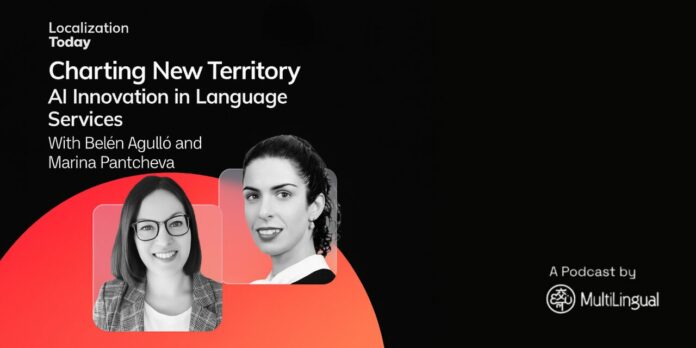
Imagine tuning in to your favorite radio show: the host’s voice sets the tone, the guests bring their energy, and suddenly you feel like you’re part of the conversation. That’s exactly what happens in the February 11, 2025 episode of Localization Today. Host Eddie Arrieta welcomes two guests who started out as translators and teachers but now stand at the forefront of AI in language services: Marina Pantcheva of RWS and Belén Agulló García of Terra Localizations. From the first exchange, their enthusiasm is contagious—curiosity, storytelling, and a dash of debate woven into a discussion that feels as personal as it is visionary.

👉 Don’t just read about it—tune in. You can listen to Charting New Territory: AI Innovation in Language Services right here.

From Translation to Transformation

The episode traces how both Marina and Belén made the leap from traditional translation into the fast-moving world of AI. Marina explains how her years teaching languages prepared her to lead RWS’s Linguistic AI Services, where she sees artificial intelligence not as a threat but as a puzzle—something that can simplify workflows, speed up delivery, and even make the process more enjoyable.

Belén’s journey is different but just as compelling: her career has always lived between academia and creativity, from video games to virtual reality to immersive storytelling. Today, she helps companies experiment with AI while making sure the human voice never gets lost.

The Human Edge in AI

What emerges is a candid reflection on how technology and people can work side by side. AI can take on the repetitive tasks, but only humans can bring the nuance, empathy, and storytelling that truly connect across languages. For both Marina and Belén, the message to translators is clear: this is not a time to retreat, but a moment to lead. Stay curious, stay creative, and remember that the real future of localization isn’t machines versus humans—it’s machines and humans, amplifying each other.

Want more conversations like this one? Discover other episodes of Localization Today on Spotify, Apple Podcasts, or directly at Localization Today online.

The 23rd ALC Annual Summit Set to Energize the Language Service Industry in New Orleans

0
ALC Annual Summit 2025 in New Orleans

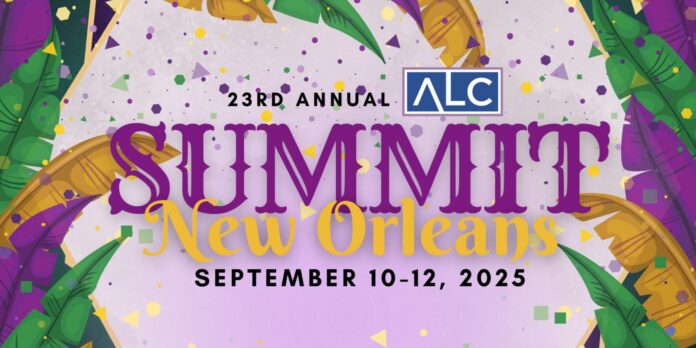
As the Voice of the Language Services Industry, the Association of Language Companies (ALC) is proud to host its 23rd Annual Summit, taking place September 10–12, 2025, at the Westin Hotel in vibrant New Orleans. Centered around the theme “Many Languages, One Voice,” the summit celebrates the diversity and unity within the language services industry, highlighting the shared purpose that inspires professionals across countless languages to advocate, collaborate, and innovate together. 

Summit Highlights: 

  • Panel Discussions: Expert-led sessions featuring notable speakers on advocacy, industry trends, and the transformative role of AI. 
  • Breakout Sessions: Practical workshops focusing on operational excellence, marketing innovation, and sales growth. 
  • Networking Events: Exclusive gatherings designed to foster collaboration and partnership opportunities. 
  • Exhibitor Showcase: A dedicated hall featuring the latest tools, technologies, and services from leading companies in the language industry. 

Featured Sessions and Speakers Include: 

  • Advocacy and Industry Leadership Panel 
  • AI’s Impact on Language Services 
  • Innovative Marketing Strategies for Language Companies 
  • Enhancing Sales and Client Relationships 

ALC President Karen Decker emphasized the importance of this year’s event: “Our Annual Summit not only celebrates the diversity and innovation of our industry but also strengthens our collective voice. At a time when our industry is facing significant headwinds—from rapid technological change to growing challenges to the very necessity of language access—it’s more important than ever that we come together with one voice. ‘Many Languages, One Voice’ underscores our mission to empower our members while elevating recognition of the essential role our industry plays in connecting people, protecting rights, and enabling critical services around the world. 

Language service companies, professionals, and advocates are encouraged to attend and participate in shaping the future of language services. 

For more information, you can visit the 23rd ALC Annua Summit website:  

https://web.cvent.com/event/5b217b92-2e77-4814-bf22-9433150977a0/summary  

About the ALC: The Association of Language Companies (ALC) is a national trade association representing businesses that provide translation, interpretation, localization, captioning, sign language, and language training services. The ALC is dedicated to promoting the professional interests of language companies and advocating for the value of language services.  

How AI Is Unlocking the Next Chapter for Global Fiction

0
Globe on book

The world of storytelling has always transcended borders, yet language has, for too long, remained a formidable barrier. As a lifelong admirer of diverse narratives and an advocate for accessible literature, I’ve spent years immersed in understanding how to bridge authors with readers. Today, we’re seeing a pivotal shift in how technology can help unlock that potential for global literary exchange.

My journey in publishing began in 2014 with the founding of Bloodhound Books. That experience was a masterclass in the realities of the book industry. I saw firsthand the passion of authors, the dedication of editorial teams, and the constant struggle to reach readers. Crucially, I also witnessed the immense logistical and financial hurdles that prevented countless stories from crossing linguistic boundaries. The painstaking process of identifying, securing, and then funding quality human translation often meant that only a select few titles — typically from established authors or those with proven international appeal — ever saw the light of day in another language. This left a vast ocean of untapped potential and unheard voices.

We’re now at a point where artificial intelligence (AI) can fundamentally change this equation. This isn’t about replacing the invaluable artistry of human translators, but about augmenting and accelerating the process so that high-quality, accessible translation becomes a reality for more stories than ever before.

From Machine Translation to Masterful AI

The term “AI translation” often conjures images of clunky, literal, and frequently inaccurate outputs from early machine translation (MT) tools. Those early iterations were simply not equipped to handle the subtleties, cultural references, emotional depth, and unique authorial voices that define great fiction.

But AI has evolved dramatically. The newest models are designed to understand context, identify tone, recognize narrative flow, and even interpret literary devices like metaphor and irony with a sophistication previously thought impossible for machines.

Unlocking New Opportunities for Stakeholders

The implications of this are profound:

  • For Authors: Imagine your novel, previously only accessible to readers of one language, suddenly available in dozens, opening new fan bases and revenue streams. Independent authors will find a powerful tool to expand their reach without prohibitive upfront costs.
  • For Publishers: The ability to rapidly and efficiently translate backlists or new titles into multiple languages means faster market entry, reduced financial risk, and the opportunity to capitalize on global trends with unprecedented agility. It allows for experimentation with new markets and a wider dissemination of diverse voices, enhancing the entire industry’s commercial vitality.
  • For Readers: The ultimate beneficiaries are readers worldwide. The sheer volume of high-quality translated fiction available will skyrocket, fostering a deeper understanding and appreciation of global cultures through shared stories.

Addressing the Conversation in the Industry

I understand, and indeed share, the vital conversations happening around AI’s role in creative industries. Concerns about intellectual property, fair compensation, and the value of human labor are paramount. Having built a publishing company from the ground up, I believe strongly that technology must serve human creativity and expand opportunity, not diminish it.

The model for AI-assisted translation is fundamentally additive. Here’s why I firmly believe it will be good for the industry and create more opportunities, not just take human jobs:

  1. Massive Untapped Market: Most books are never translated. The existing cost and time involved make it commercially unviable for countless titles. By dramatically reducing these barriers, AI can enable thousands, perhaps hundreds of thousands, of new titles to be translated. This isn’t about replacing the translation of the existing, small pool of internationally best-selling authors; it’s about opening a completely new market that was previously inaccessible.
  2. Increased Demand for Human Expertise: This explosion of new translated content will necessitate a corresponding increase in demand for the highly skilled human literary editors, proofreaders, and cultural consultants who will be critical in refining AI-generated drafts. The human touch remains essential for nuance, cultural accuracy, and artistic polish. This “human-in-the-loop” model means we are actively generating demand for skilled professionals to elevate these AI-generated first passes.
  3. Focus on Higher-Value Work: Instead of spending countless hours on initial draft creation, human translators can shift their focus to higher-value, more specialized tasks such as post-editing, cultural adaptation, transcreation, and translation of highly complex, deeply literary projects where only human artistry truly suffices.
  4. Global Literary Discovery: By making more stories available, we foster a healthier, more vibrant global literary ecosystem. This discovery of new voices and genres will stimulate interest in world literature, benefiting authors, publishers, and everyone involved in the appreciation of books.

The evolution of translation is more than just a technological advancement — it’s a testament to our belief in the universal power of stories. Authors, publishers, and readers should consider this an exciting new chapter in which language is no longer a barrier, but a bridge to an even richer, more interconnected world of literature.

The Week in Review: Language Industry News July 28–August 1

0
The Week in Review: Language Industry News July 28–August 1

This week, the language industry spotlighted open-source breakthroughs, sustainable AI practices, and the growing convergence between multilingual technology and global knowledge systems.

Speech, Sustainability, and AI Evolution

Mistral launched Voxtral, an open-source suite for multilingual speech translation and transcription. The release supports audio-based workflows across platforms and languages. In parallel, the company also published its first full lifecycle report, offering a detailed view of environmental costs related to LLM development, including emissions, water use, and hardware footprint.

Meanwhile, Translated released the 2025 edition of its Imminent Research Report, exploring how the shift from LLMs to multimodal AI systems is redefining communication, cultural identity, and human-machine interaction.

Tools, Integrations, and Marketplace Expansion

Smartling joined the AWS ISV Accelerate Program, making its AI-powered translation services available in the AWS Marketplace. The move aims to boost enterprise adoption of multilingual content tools at scale.

Awtomated announced the integration of Microsoft Translator into its TBMS platform, giving LSPs instant access to neural machine translation for faster turnaround and improved consistency. At the same time, Profuz Digital unveiled AI-orchestrated upgrades to Profuz LAPIS, optimizing layered media workflows through multi-engine coordination.

Partnerships and Language Structure

LangOptima and Lead Semantics formed a new alliance to develop language processing systems that structure—not just process—text. The goal is to create intelligent connections between concepts, enabling scalable AI applications in complex domains.

Education and Standards in Focus

OpenAI launched ChatGPT Study Mode globally, following successful pilots in India. The feature enables step-by-step learning through voice, image, and text, expanding AI-powered tutoring to new contexts and audiences.

On the standards side, Unicode opened its call for proposals for the 2025 Unicode Technology Workshop. The event will bring together global contributors to advance i18n, l10n, and open-source solutions that support international software infrastructure.

Looking Back

This week’s updates reflect a deeper shift in how language and AI interact—from operational tools to cultural frameworks and sustainability benchmarks. As the tech stack grows more open and more conscious, the industry’s evolution feels increasingly collaborative.

For a broader view of recent changes, revisit The Week in Review: Language Industry News July 21–25.

For more stories like these, visit our News section.

Four Under-the-Radar Market Solutions for Arabic Localization

0
Middle Eastern man at computer

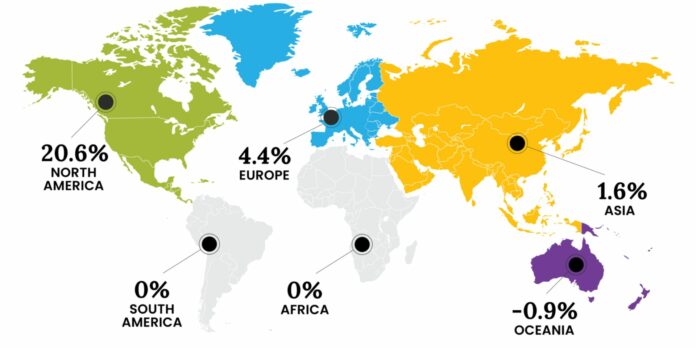
Despite being the fifth-most spoken language in the world, Arabic’s digital footprint is small, representing only 0.6% of online content. This lack of data from the internet — along with Arabic’s dialect diversity and lack of standardization — has thus far prevented the language industry from developing localization practices to adequately reach Arabic-speaking consumers and accommodate growing demand for Arabic content. 

However, many organizations are working to solve this problem through technology initiatives and new business strategies. Unfortunately, these promising solutions often go unnoticed by the broader industry — precluding their implementation to the detriment of Arabic consumers across the globe. 

This article presents four companies that are leading the way with viable Arabic localization solutions — innovations that could help close the content gap for hundreds of millions of people.

1. Hansem Global’s Conversion Tool for Technical Documents

Korean localization company Hansem Global has developed a proprietary tool called TransEZ that automates multilingual manual conversion from PDF format to HTML for web and mobile applications. Launched in 2024, the tool includes Arabic-specific formatting logic and can handle bidirectional script flow and embedded user interface (UI) elements without breaking layout integrity, which is especially useful for regulated industries like medical devices and semiconductors.

2. Lingo Systems’ Custom Translation Tool Integration

German technology and consulting firm Lingo Systems has built an intricate computer-assisted translation (CAT) tool ecosystem for language service providers (LSPs) working in Arabic. Unlike other companies, Lingo Systems has created freelancer portals and client dashboards that support Arabic script rendering, ISO 17100 standard compliance, and dialect tagging.

3. Sawatech’s Arabic Localization Suite

Headquartered in Cape Town, South Africa, Sawatech broadened its Arabic localization services in early 2025 for West Africa, where it operates with offices in Nigeria and Ghana. This LSP deploys in-country linguists, who are fluent in both Arabic and West African languages, when and where they’re needed. Additionally, the company offers localization for financial technology, legal, and e-learning platforms that specifically meets linguistic and cultural needs of Muslim communities that live in northern portions of Nigeria and Niger and speak Hausa — a language that is heavily influenced by Arabic. The localization suite also integrates ISO 17100-certified workflows along with cross-script desktop publishing (DTP) to support hybrid Arabic-French-English interfaces.

4. Arabize’s Dialectal Content Adapter Tool

To improve user experiences (UX) across Arabic dialects, Cairo-based LSP Arabize developed a tool for dialect-sensitive content adaptation for digital platforms. Called the Dialectal UX Accelerator, the solution tailors interfaces and messaging for Egyptian, Gulf, Levantine, and Maghrebi Arabic. Its UX heuristics focus on sociolinguistic research to help maintain regional phrasing and linguistic tone, as the goal is to move beyond Modern Standard Arabic (MSA)-only support.

MultiLingual Magazine Wins Second APEX Award of Excellence

0
APEX Award 2025

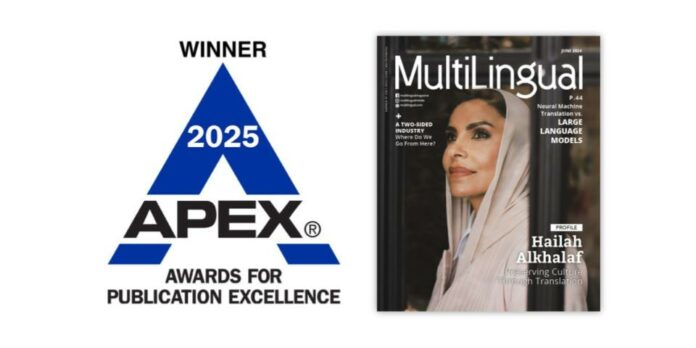
For the second year in a row, the APEX Awards has recognized MultiLingual magazine for its graphics design, editorial quality, and language-industry coverage in its 37th Annual Awards for Publication Excellence. 

A top awards program for corporate, nonprofit, and independent publishers recognizing “excellence in graphic design, editorial content, and the ability to achieve overall communications excellence,” the APEX Awards this year selected MultiLingual magazine for its Award of Excellence in “Magazines, Journals & Tabloids – Electronic.” The winning issue was June 2024, which ran with a cover story profiling Dr. Hailah Alkhalaf and her work in literary translation and cultural preservation. 

“Winning the APEX Award for a second year in a row is a testament to the strength of our editorial team and the relevance of our content in today’s global language industry,” said Eddie Arrieta, CEO of MultiLingual Media. “At MultiLingual, we’re committed to delivering insight, diversity, and excellence. This recognition affirms we’re on the right path.” 

MultiLingual magazine competed along with 1,007 other publications for recognition. Following evaluations, the panel of judges awarded 100 Grand Awards across 14 main categories and 422 Awards of Excellence across 100 subcategories. The APEX judging panel’s task was to evaluate publications for overall excellence despite their staggering variance in editorial focus.

“With a presidential election year, …the continuing sophistication and increased usage of AI, …international events, …wild stock market fluctuations, …and the ever-changing world of new technology, there was no shortage of topics that our entrants addressed in 2024,” said Ken Turtoro, Executive Editor of the APEX Awards. “The quality of all the entries continues to impress our judges year after year. In fact, each year, the judges find it harder and harder to select the winners because of the high caliber of so many entries, and 2025 was no exception.” 

The entire MultiLingual team is gratified to see our work recognized, and we extend our thanks to the global readership that keeps the magazine in print and online. We look forward to another year of delivering our best work for the language industry.