Awtomated Integrates Microsoft Translator to Boost Quality and Speed for LSPs

0
Awtomated Adds Microsoft Translator Integration for LSPs

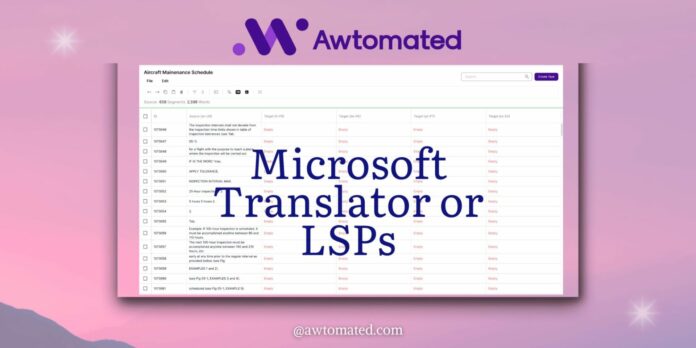
Awtomated, the smart Translation Business Management System (TBMS) built for modern Language Service Providers (LSPs), is proud to announce its latest integration with Microsoft Translator, enabling users to access high-quality machine translation directly within the platform instantly.

With this new feature, Awtomated users can easily bring their Microsoft Translator API key and start translating content using one of the world’s most powerful neural MT engines. This integration is designed to simplify workflows, reduce turnaround times, and provide LSPs with the flexibility to blend human and machine intelligence more efficiently.

Why This Matters for LSPs:

  • Faster Turnarounds: Save time on initial translations and focus on high-value post-editing.

  • Quality Translation Base: Microsoft’s neural MT engine delivers industry-relevant translation quality, even in complex domains.

  • Seamless Workflow: No more switching between tools—use MT directly in Awtomated’s in-built editor.

  • Full Control: Freelancers and companies alike can plug in their own API keys, allowing for scalable and secure MT usage.

“We built Awtomated to make life easier for translation businesses—and integrating Microsoft Translator is another step toward that mission,” says Rishi Anand, Founder & CEO of Awtomated. “This gives LSPs the ability to increase efficiency without compromising on quality.”

The Microsoft integration joins a growing list of smart tools within Awtomated, including Translation Memory, Vendor Management, Workflow Automation, and more—making it the most complete, user-friendly TBMS on the market.

To learn more about Awtomated and try out the Microsoft Translation integration, visit: awtomated.com

About Awtomated

Awtomated is a next-generation Translation Business Management System (TBMS) designed to streamline operations for Language Service Providers. Built by industry experts, it combines powerful features—like vendor management, workflow automation, and translation memory—into one intuitive platform. With a strong focus on usability, scalability, and smart integrations, Awtomated empowers LSPs to deliver faster, higher-quality services in an increasingly competitive global market.

About Unicode – Unicode (Em)Powers Our Digital World 

0
Unicode

Time zone conversion. Alphabetical sorting. Metric vs. imperial. Scientific notation. Bidirectional text. Currency exchange. Local calendar formats. Searching for the apple emoji 🍏 in your language.

What began in 1988 as a standard for character encoding has grown into a powerful portfolio of open source standards, code, tools, libraries, and products that ensure global language support, interoperability, and resiliency across billions of devices.

Behind what most take for granted on screens today is the Unicode Consortium, the non-profit open source, open standards body for the internationalization of software and services. Unicode is embedded in every major operating system and used on more than 20 billion devices worldwide. It may be the most widely deployed technology ever. 

For more information about Unicode that you can share with leadership, peers, and your network, visit and download this overview.

About the Unicode Technology Workshop

Expect workshops, seminars, free-form discussions, and lightning talks centered around i18n libraries, locale data frameworks, globalization tooling, localization pipelines, input methods, and text rendering. Network with the developers and users to help shape the future of Unicode technology.

You will come away with deeper knowledge on how to solve tough problems in the i18n and l10n space and how to engineer products that work better for global users. To encourage maximum collaboration amongst the attendees, this is an in-person-only event.

From Attendees at UTW 2023 and UTW 2024

“I have to say the emoji, bidi, and MessageFormat sessions, and the workshop on how to use the CLDR survey tool were all so valuable and fascinating to me!!”

“I appreciate the two tracks, one for people relatively new to Unicode, and one for deeper technical topics.”

“Sessions and discussions led to new content and ideas I hadn’t considered before, not just repeats of things I already knew.”

Event Dates

Join us at Microsoft’s Silicon Valley campus in Mountain View, California for one, two, or all three days of community building around the Unicode technology that makes software work for billions of people.

🗓️ November 11 – Tutorial Day on Unicode Technologies

🗓️ November 12-13 – Unicode Technology Workshop 2025

💲Industry & Media Partner Pricing

As a valued partner, we are extending the same rates available to our Organizational and Individual Members. Early bird registration code for a discounted price on your registration. The code is: UTW2025Early. ⏳ Early bird closes Aug 31. 

Learn more and complete your registration here.

📣 Call for Submissions Now Open! We Want to Hear from You!

In addition to leaving with valuable new connections, tools, and actionable next steps, we also welcome you to share your experiences and help us envision the future of Unicode technology. Program and product managers who work with engineering teams are also strongly encouraged to join and propose sessions

We are seeking proposals for workshops, seminars, case studies, and tutorials that center around Unicode i18n libraries, locale data frameworks, globalization tooling, localization pipelines, input methods, character encoding, text rendering and more! Tutorial topics might include: front design and Unicode properties, introduction to Software Internationalization (i18n), and how to best support Bidirectional text. 

The deadline for submissions is July 31st.  

Please visit https://www.unicode.org/events/utw/2025 for updates. You can also sign up for all of the latest Unicode news. If you have any questions, please contact us at UTW2025@unicode.org.  We look forward to seeing you in November!


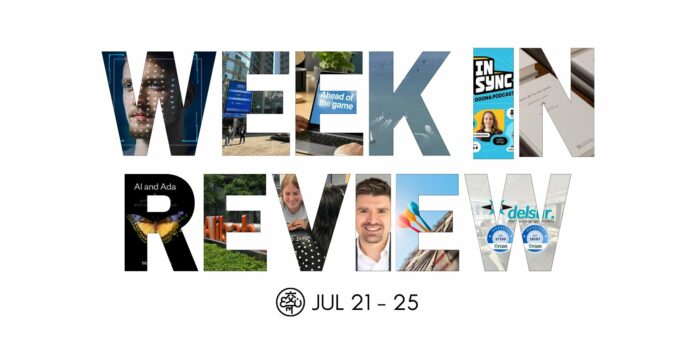
The Week in Review: Language Industry News July 21–25

0
The Week in Review: Language Industry News July 21–25

This week’s stories highlight how the language industry continues to evolve—pushing the boundaries of AI innovation, legal frameworks, and multilingual access. From IPO ambitions to podcast relaunches, the updates span both emerging tools and cultural recognition.

Language AI: Hesitation, Momentum, and Funding

A new report from RWS shows that 80% of intellectual property professionals feel pressure to adopt AI. Yet, most remain skeptical of its benefits. Concerns about accuracy and data security are slowing adoption.

In contrast, Translated awarded €100,000 through its Imminent program to fund new research in language AI. The next call for proposals is already open.

Meanwhile, Alibaba released its Qwen3 models. These open-source tools support agentic coding, multilingual translation, and reasoning. MiniMax also made headlines by filing for a $4 billion IPO in Hong Kong—boosted by the success of its voice-based AI for Asian languages.

Industry Updates and Identity Protection

Denmark proposed a copyright amendment aimed at protecting personal identity. The law would allow individuals to request the removal of unauthorized digital imitations, with exceptions for parody and satire.

At the same time, CODE Credit Union in Ohio became the first in the state to adopt an inclusive AI language service. It now offers real-time multilingual support through Fire Lingo tablets.

Toppan Digital Language named Alexandru Matusescu as Director of Product. He will lead the development of its STREAM AI platform. In parallel, delsur. secured ISO 17100 and 18587 certifications—reaffirming its commitment to quality in translation and post-editing.

Media, Podcasts, and Literary Recognition

ITV adopted OOONA Integrated to streamline localization and accessibility workflows. In a related update, OOONA rebranded its Spanish podcast En Sincronía as InSync. The show now features English episodes and a broader focus on global media localization.

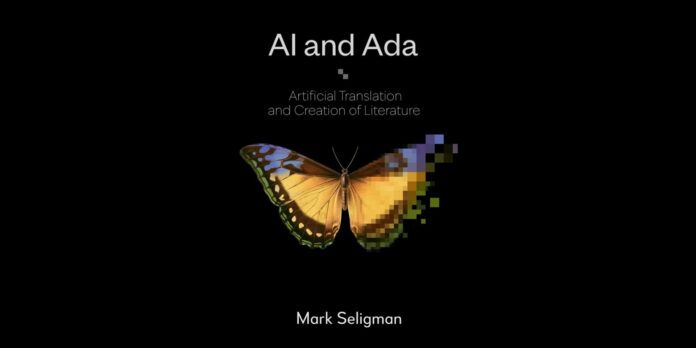
Elsewhere, the first Catalan translation of Kant’s Critique of Pure Reason won Spain’s UNE Prize for best university translation. And Mark Seligman announced his new book AI and Ada, which explores AI’s role in literary creation and translation. The book will be released this October.

Multilingual Events and Global Fan Engagement

Interprefy partnered with the 100th Rolex Fastnet Race to expand multilingual access for fans. Through AI captions and live interpretation, the event embraced inclusive audience engagement on a global scale.

Looking Back

Together, these developments show how the language industry is adapting—technologically, legally, and culturally. As innovation spreads, questions of quality, authorship, and inclusion stay firmly in focus.

For a broader view of recent changes, revisit The Week in Review: Language Industry News July 14–18.

For more updates, visit our News section.

Alibaba Releases Qwen3 Models for Open-Source AI in Coding, Reasoning, and Translation

0
Alibaba Launches New Qwen3 AI Models for Open Source

Alibaba has introduced a new suite of Qwen3 models aimed at advancing open-source AI in key areas such as agentic coding, complex reasoning, and multilingual machine translation.

Qwen3-Coder: New Tools for AI-Assisted Development

Among the highlights is Qwen3-Coder, Alibaba’s most advanced model for agentic AI coding to date. Designed to support software development tasks such as code generation, debugging, and tool interaction, Qwen3-Coder uses a Mixture-of-Experts (MoE) architecture with 480 billion total parameters, activating 35 billion per token. It supports a context window of 256,000 tokens, extendable to 1 million.

The model also incorporates reinforcement learning in its training process and is optimized for use in complex, multi-step development environments. In parallel, Alibaba has released Qwen Code, an open-source command-line interface (CLI) that allows developers to assign tasks to the model using natural language.

Qwen3-235B Targets High-Level Reasoning Tasks

Alibaba also introduced Qwen3-235B, an open-source large language model optimized for reasoning in disciplines such as logic, mathematics, science, and programming. The model supports long-context inputs and has shown strong performance on academic and technical benchmarks. A variant, Qwen3-235B-A22B-Instruct-2507-FP8, adds improvements in multilingual knowledge coverage and instruction alignment.

Qwen-MT Offers Translation in 92 Languages

The latest iteration of Alibaba’s machine translation system, Qwen-MT, supports 92 languages and dialects, aiming to improve translation accuracy and accessibility. The model is built on the Qwen3 architecture and trained on trillions of multilingual tokens. It incorporates reinforcement learning and a lightweight MoE structure to improve output quality while managing infrastructure costs. Prompt customization allows for domain-specific translation use.

According to Alibaba, the Qwen model family has generated over 140,000 derivative models, making it one of the most widely adopted open-source AI initiatives to date. The new releases aim to provide developers, researchers, and organizations with more tools for building multilingual and domain-adapted AI applications.

AI and Ada: Artificial Translation and Creation of Literature by Mark Seligman

0
AI and Ada Explores Artificial Literary Translation

Taking recent spectacular progress in AI fully into account, this book explores the prospects for artificial literary translation and composition, with frequent reference to the hyperconscious literary art of Vladimir Nabokov. The exploration balances reader-friendly explanation (“What are transformers?”) and original insights (“What is intelligence? What is language?”), with personal and playful notes, and culminates in an assortment of striking demos.

The book’s Preface places the current AI explosion in the context of other technological cataclysms and recounts the author’s personal (and not always deadly serious) AI journey.
Chapter One (“Extracting the Essence”) assesses the potential of machine translation of literature, using Nabokov’s literary style as a reference point.
Chapter Two (“Toward an Artificial Nabokov”) speculates on the possibilities of actual artificial literary creation.
Chapter Three (“Large Literary Models? Intelligence and Language in the LLM Era”) explains recent breakthroughs in Generative Artificial Intelligence (GenAI), as exemplified by Large Language Models like ChatGPT. Along the way, the chapter addresses perennial questions (“What is intelligence?” “What is language?”) and presents a series of compelling demos.
The volume’s Sendoff reflects on whether machines—while now arguably intelligent—can ever experience enough sensation and emotion to create literary art with more than borrowed depth. While acknowledging that this may happen sooner than expected, the author refuses to despair.

Key Selling Points

  • Bridges the still-gaping culture gap between the humanities and the sciences

  • Explains artificial intelligence concepts clearly and in depth, without technical jargon

  • Cites numerous literary references and explores their relevance to AI

  • Offers literate, humorous, and personalized narration

About the Author

Mark Seligman, PhD, is Founder, President, and CEO of Spoken Translation, Inc. In 1998, he organized the first speech translation system demonstrating broad coverage with acceptable quality. He also publishes on speech translation and cognitive science.

Publication Information

Publication Date: 7 Oct 2025
Price: £19.99 / $24.95
Publisher: Anthem Press
Distribution: Ingram Publisher Services
ISBN: 9781839994388
Format: Paperback
Pages: 200
Book Webpage: anthempress.com/ai-and-ada-pb

For media inquiries, interviews, or review copies, please contact: marketing@anthempress.com

Availability and Discount

A promotional code (AAA20) will be available from August 15 to December 31, 2025, offering a 20% discount for readers who purchase the book through the publisher’s website.

About Anthem Press

Anthem Press is a leading medium-sized independent academic, professional, and trade publisher in established and emerging fields of the social sciences, business/law, and humanities. It maintains a strong international and interdisciplinary focus.

Interprefy to deliver multilingual access for spectators of the 100th Rolex Fastnet Race

0
Rolex Fastnet Race Adds Multilingual Fan Engagement

As the world’s top sailors prepare to set off on the centenary edition of the world’s largest offshore yacht race, the organisers are charting a new course for fan inclusion through a partnership with multilingual event technology provider Interprefy.

On 26 July 2025, the 100th Rolex Fastnet Race will see thousands of competitors race from Cowes, Isle of Wight, to Cherbourg-en-Cotentin, France—navigating a gruelling 695-mile course. And for the first time in the event’s history, international fans will be able to engage with the race like never before.

Interprefy will provide professional interpretation, AI speech translation, closed captions, and multilingual subtitles across key moments of the race, including trophy ceremonies and masterclasses.

Commenting on the growing demand for language access in sports,
Johann Brégand, Global Head of Institutions at Interprefy, said:

“Events like the Rolex Fastnet Race are steeped in tradition, and this year, real-time fan engagement is at the helm. We’re seeing an increasing demand for our multilingual services at major sporting events as organisers look for improved ways to engage their fan base. Bringing our Remote Simultaneous Interpretation and AI speech translation services to this iconic race will ensure fans from all linguistic backgrounds can fully participate and celebrate together.”

Interprefy’s language support for the 100th Rolex Fastnet Race includes:

  • Two-way Remote Simultaneous Interpretation (RSI) between English and French

  • Live AI speech translation with support for additional languages

  • Live closed captions and subtitles in multiple formats

  • Captions displayed on giant screens for inclusivity and accessibility

  • Easy access via the Interprefy mobile app

This multilingual initiative follows Interprefy’s recent success at the Bastide Médical UTS Nîmes tournament, where the company provided its Interprefy AI solution. Fans at the event experienced real-time speech translation of live coaching, mid-match interviews, and post-match player interviews. AI-generated subtitles were displayed on giant screens, enabling over 12,000 fans to follow the action in their home language and feel closer to the players’ emotions.

Brégand concludes:

“As the intersection of sport, technology, and international culture continues to grow, organisers of large-scale sporting events are embracing language technology to expand their reach and accessibility.
With Interprefy, event planners can integrate human interpretation and AI-powered speech translation into any format—whether in person, virtual, or hybrid. We believe this is the future of fan engagement at live events.”

By equipping the 2025 Rolex Fastnet Race with real-time multilingual capabilities, the Royal Ocean Racing Club (RORC) not only celebrates 100 years of offshore racing but also sets a new benchmark for accessibility and inclusion in international sporting events.

CODE Credit Union Becomes the First in Ohio to Adopt AI-Powered, All-Inclusive Member Service Strategy

0
CODE Credit Union Adopts AI Language Access Tool

CODE Credit Union, a member-owned, not-for-profit financial institution serving over 12,000 members in the Dayton, Ohio area, is setting a new standard for inclusive banking by becoming the first credit union in the state to deploy Fire Lingo—an AI-powered platform for non-English member experiences developed by Bloomington, Indiana-based startup Traduality.

The Fire Lingo tablets, now available at all CODE branches, enable staff and members to engage in real-time, two-way conversations—without relying on bilingual family members or third-party phone interpreters. The system currently supports Spanish, Haitian Creole, Chinese, Korean, and French, with more languages on the way.

Through its partnership with Traduality, CODE aims to enhance the in-branch and contact center experience for non-English-speaking members, ultimately building stronger relationships with Dayton’s immigrant communities.

“This is more than a translation tool—it’s about creating genuine human connections and ensuring that every member, no matter their background, undergoes the same world-class customer experience we’re all used to receiving in the United States,” said Diego Achio, CEO of Traduality. “CODE is showing what’s possible when a credit union commits to meet members where they are.”

CODE’s leadership sees this initiative as a natural extension of its mission to passionately deliver a wide range of exceptional products and services to all members of the Dayton community.

“We are excited to offer this new technology in our branches as well as our call center,” said Scott Rutherford, President and CEO. “This will allow us to build trust with non-English-speaking members and greatly improve their experience in obtaining accounts and financial services here at CODE Credit Union.”

To learn more about Traduality, visit traduality.com.


About CODE Credit Union

Founded in 1940, CODE Credit Union is a full-service, not-for-profit financial institution headquartered in Dayton, Ohio. With a strong commitment to member service and community inclusion, CODE offers a wide range of financial products and services—from personal loans and checking accounts to digital banking and financial education. CODE continues to expand its impact by integrating innovative technologies that support equitable access for all members.

Translated Awards $100,000 in Imminent Research Grants to Pioneering Projects in Language AI

0
Imminent Opens 2025 Grants for Language and AI Research

A new call for applications to fund research at the intersection of language and AI is now open until October 15, 2025.

Translated, a global leader in AI-powered language solutions, has awarded €100,000 to five cutting-edge research projects through its research center, Imminent. The Imminent Research Grants support interdisciplinary efforts across three continents to advance the frontiers of language technology and services.

This year’s selected projects span a wide range of topics—including localizing multimodal content with generative AI, preserving low-resource languages, and developing Africa’s first unified multilingual dictionary—all within five domains:

  • Language Economics

  • Language Data

  • Machine Learning Algorithms for Translation

  • Human-Computer Interaction

  • Neuroscience of Language

Here are the grant winners and the projects they’ll be working on:

  • Philip Akoda – Nkanda Project (Nigeria)
    Creating the first unified multilingual dictionary for African languages.

  • Francesca Ferroni and Stefana Garello – University of Parma & Roma Tre (Italy)
    Studying how metaphorical language is processed in a second language using neuroscientific techniques.

  • Mirco Ravanelli – University of Montreal (Canada)
    Expanding SpeechBrain into a comprehensive open-source framework for state-of-the-art speech models.

  • Simran Khanuja – Carnegie Mellon University (USA)
    Localizing multimodal content using generative AI.

  • Barbara Plank – Ludwig Maximilian University Munich (Germany)
    Building the first multilingual, multi-annotator natural language inference benchmark with ecologically valid explanations.

The winning projects were presented during the kickoff event of the DVPS project—a major European Union-funded research initiative coordinated by Translated and promoted by 20 leading research and scientific partners from nine European countries. DVPS embodies broader interdisciplinary AI research in the area of Physical AI, aiming to create a new class of systems capable of acquiring grounded understanding through direct interaction with the physical world.

“With the Imminent Research Grants, we are proud to support the development of research projects around the world with both local and potentially global impact. It is a way of supporting some of the most innovative research in the fields of language, translation, and artificial intelligence, which, in many cases, can also have a significant social impact. For us, this is part of a significant research investment we have been making over the last twenty years—and one we now want to bring to the next level, beginning with the DVPS project,” said Marco Trombetti, CEO of Translated.

The open call for the fifth edition of the Imminent Research Grants is now live, with submissions due by October 15, 2025. Researchers and innovators are invited to apply with projects that align with Imminent’s mission: to make it easier for everyone in our multilingual world to understand and be understood by others in their own language.

More detailed information on the current winners and the 2025 Open Call can be found at imminent.translated.com.

About Translated

Translated is a leading language services provider and a pioneer in using artificial intelligence (AI) to assist professional translators. The company was founded in 1999 by linguist Isabelle Andrieu and computer scientist Marco Trombetti with the mission of allowing everyone to understand and be understood in their own language.

In pursuit of its mission, Translated invented context-adaptive machine translation (MT) in 2012. Its work is trusted by the largest translation buyers in the world and has been recognized as a leader in AI-powered translation technology by IDC MarketScape, CSA Research, and Gartner.

In 2024, Translated launched Lara, a breakthrough translation AI that outperforms leading machine translation systems and approaches the quality of top-tier professional translators. With Lara, Translated combines the sensitivity of over 500,000 native-speaking professional translators with the speed and power of machines—making it possible to tackle once-unimaginable localization projects.

Today, Translated delivers fast, consistent, high-quality translations to over 300,000 customers in 200 languages and across more than 40 subject areas. Through its research center, Imminent, Translated fosters the global conversation on language and AI. It supports companies in localization, funds language data research, and rewards the best initiatives advancing technology and creativity for international communication.

Five Organizations Paving the Way for New Language Industry Professionals

0
Career help

Finding the perfect career fit can be challenging for students and professionals looking to break into the language industry. For one thing, the field has hundreds of service sectors and multiple buyer verticals to choose from. Not only that, but the industry is constantly adapting to evolving technological innovations and cultural trends.

To navigate this complexity, getting help from professionals who are already in the business can be invaluable. One way to do this is through industry associations. This article highlights five of the most beneficial organizations for people looking to build their dream career in the language industry.

1. Linguistic Society of America

The Linguistic Society of America (LSA) is a non-profit organization with a scholarly focus. As a key player helping to advance the scientific study of language and dissemination of linguistic scholarship, the organization provides rising professionals with an abundance of resources and opportunities to succeed in an academic career.

LSA’s career page focuses on guiding students towards their ideal career path within the industry based on education level and desired skill sets. The organization also hosts the Linguistic Career Launch in the summers, connecting students to industry experts for insight, network building, and even job prospects. 

Additionally, LSA provides financial awards such as scholarships, grants, and fellowships. Through its First Generation Access and Equity Committee, first-generation students can access everything from mentoring and financial aid to workshops and networking opportunities. 

Finally, LSA offers students many chances to participate in its groups and events. Graduate students can serve as a Student Representative for two years with the Committee on Student Issues and Concerns. Students are also allowed to contribute multimedia work to its annual meeting in order to establish a portfolio with a reputable organization. 

2. Globalization and Localization Association

The Globalization and Localization Association (GALA) is one of the industry’s few non-profit trade organizations that focus on professional development through critical conversation and collaboration among key stakeholders and new professionals. GALA prioritizes a hands-on approach that can be seen through its many initiatives that help prepare rising professionals for a career in language. 

GALA provides professional development opportunities through its resource center, including special interest groups. Additionally, GALA’s Global Talent Initiative offers activities that aim to attract and support students pursuing localization careers.

GALA hosts numerous events throughout the year. The GALA Academy is a quarterly online event that helps new linguists develop localization skills and even offers certification. The GALA Roadshow, an annual in-person event, facilitates networking and skill enhancement for localization professionals, including recent graduates. And at the annual Language of Business Conference, student members can volunteer in exchange for free registration or apply for GALA’s Rising Star Scholarship for help with conference expenses.

3. Institute on Collaborative Language Research

The Institute on Collaborative Language Research (COLANG) is a biennial, four-week summer training program that travels to American universities on even-numbered years to discuss community-based language work. The event is evenly divided into workshops and practica, which are taught by experts from around the globe, and networking is highly encouraged among all levels and sectors of the industry — making it an invaluable opportunity for new professionals.

COLANG specifically prioritizes early-career experience among attendees. The organization provides multiple student seats with two-year terms on its governing Advisory Circle. It also offers semester-long internships on its Web Committee. (These opportunities can be found by signing up for COLANG’s General Updates.) Last but not least, every university that hosts COLANG provides its students the opportunity to get hands-on experience by volunteering to help organize the event.

4. Women in Localization

Women in Localization (WL) is a one-of-a-kind global community that promotes the advancement and development of women in the localization industry primarily through public service. The organization offers a mentorship program that pairs localization professionals with those seeking career guidance. It also hosts an exclusive job board for members and puts on free online events year-round that discuss current trends and encourage networking.

Additionally, WL offers numerous volunteer opportunities with its chapters across the globe, including chapter and marketing managers. Most notably, the organization encourages committed individuals to start their own local chapter — if a location is not already represented — using a provided step-by-step guide.

5. Association of Language Companies

The Association of Language Companies (ALC) is an advocacy group that strives to be the voice of the United States within the global language industry. ALC supports young professionals aiming to join the language community in myriad ways, including encouraging interested individuals (non-members included) to volunteer to serve on its nine committees that support language advocacy efforts.

One of ALC’s most notable initiatives is the Bridge Program, which is designed for employers seeking to fill positions from all levels of language talent and for educators looking to develop student talent through customized language courses. Another helpful resource is the Knowledge Bank, a crowdsourced library that demystifies industry jargon and complex processes by providing members with event recordings, best practices, and employee classification resources.