The Case for Multilingual Access as Global Infrastructure

0
Global infrastructure

What if you woke up ill in a place where you don’t understand the primary language? Imagine this: You’re in Tokyo on a business trip — jet-lagged, disoriented, and now violently allergic to something you just ate. You stumble into a healthcare clinic, trying to explain your condition. The doctor is kind, but there’s a problem: you don’t speak a common language. The doctor hands you a form… in Japanese. The instructions? Completely unreadable. Your health is, literally, lost in translation.

Now flip the script. Imagine the same scenario, but this time, the clinic’s electronic medical records system automatically translates your medical history into Japanese for the doctor — and your prescription into English for you. Everyone understands everyone. There’s no delay, no danger, and no stress.

That’s the power of multilingual access. And it’s time we treat it like what it is: a universal right that deserves a global infrastructure.

Language is more than words — it’s a lifeline. It’s the way we interact with bureaucracy, education, commerce, healthcare, and one another. And yet, in too many systems, language support is still treated like a “nice-to-have” feature.

How often have we heard the common excuses? “We’ll add translations later.” “Just use Google Translate.” “Most people speak English anyway.” These are the standard refrains that leave millions behind, especially in our increasingly digitized world.

We treat roads as infrastructure, so why not language? We’d never build a city and say, “Only people who drive Hondas can use the roads.” But that’s effectively what we do when platforms only cater to a single language. Want to apply for unemployment benefits, read a contract, or order medicine online — but only speak Wolof, Burmese, or Haitian Creole? Good luck.

I believe that language access is a right, not a perk — just like electricity, clean water, or internet access. Luckily, we don’t have to choose between what’s morally right and what’s good for business, as multilingualism is increasingly recognized as an investment rather than a sunk cost.

From Translation Cost to Strategic ROI

For much of the modern era, multilingualism has been seen through the lens of cost: an invoice, a deadline, or a translation ticket submitted late in a product cycle or buried in the “localization queue.” Necessary, perhaps — but rarely strategic. Even less often: celebrated.

But that thinking no longer fits the world we live in. In a truly global economy — where users expect frictionless experiences, instant clarity, and cultural respect — language isn’t a finishing touch. It’s foundational. When approached as such, language access becomes one of the most powerful investments an organization can make.

Historically, language operations sat on the outskirts of the enterprise — often embedded in marketing or customer service, under tight budgets, and tasked with “getting things translated” as cheaply as possible. It was seen as a box to check or a task to outsource. That model led to delays, quality issues, and fragmented customer experiences. It reinforced the idea that multilingual access was an obligation, not an advantage.

But like so many other “cost centers” — from information technology (IT) to cybersecurity to design — language is undergoing a reclassification. When done right, it doesn’t drain resources — it fuels growth and provides great return on investment (ROI).

The ROI: Measurable, Repeatable, Proven

When you bake multilingualism into your architecture — from user experience (UX) design to knowledge management to customer service flows — the conversation changes and the investment compounds. Suddenly, instead of seeing translation as a bottleneck, you begin to see multilingual access as scalable infrastructure. And infrastructure, unlike add-ons, delivers repeatable value.

When multilingual systems are implemented strategically:

  • Conversion rates go up, often dramatically. CSA Research studies show that localized product pages can lift conversions by up to 47 percent.
  • Support costs go down because users understand documentation, instructions, and onboarding in their native language.
  • Customer retention increases because trust grows when people feel seen, heard, and respected.
  • Time-to-market improves because multilingual workflows integrated into continuous integration (CI) and continuous delivery (CD) pipelines reduce lag and manual overhead.
  • Regulatory compliance becomes proactive instead of reactive, reducing risk and reputational exposure.

In short, the same content has more reach, the same systems are more relevant, and the same services garner more trust.

This shift mirrors what we’ve seen with other foundational capabilities:

  • Cloud computing went from expensive hosting to enabling global agility.
  • Design went from surface-level decoration to driving customer loyalty and product success.
  • Data privacy moved from a legal burden to a brand differentiator.

Multilingualism is next. In fact, it’s already happening.

Implementing Multilingual Access in Your Organization

Organizations already have all they need to implement language access in their products and services.

The Technology

Once upon a time, automated translation meant stilted, robotic gibberish. But today, we’re lightyears ahead. Thanks to recent technological advances, we can now deliver multilingual access at scale, faster and cheaper than ever.

The modern multilingual tech stack includes the following:

  • Large language models (LLMs) like GPT-4 and Claude get nuance, idiom, and tone across 200+ languages.
  • Neural machine translation (NMT) systems like DeepL and Google Translate are now context-aware and freakishly accurate.
  • Speech technology tools like Whisper make real-time voice-to-voice translation feel like magic.
  • Multilingual embeddings like mBERT map meaning between languages like a Rosetta Stone on steroids.
  • Semantic technologies like knowledge graphs and ontologies ensure consistent meaning, even across complex domains. 
  • Cloud application programming interfaces (APIs) like Amazon Web Services (AWS), Azure, and Google Cloud Platform (GCP) let you plug all this in with a few lines of code.
  • Community projects like Common Voice and Masakhane uplift underrepresented languages with open data and grassroots artificial intelligence (AI).

The LangOps Mindset

Think about DevOps: It transformed how companies build and deploy software by making it agile, automated, and collaborative. Now imagine that, but for languageLangOps is the operational integration of language across every part of a business or institution. LangOps puts language at the core of the organization, not the edges.

Here’s a truth that seasoned organizations have learned the hard way: Retroactive localization is expensive — in money, time, and reputation. You can always tell when language was added as an afterthought. The UX breaks, the tone feels off, or the support pages don’t match the app. And users, especially those outside the dominant language group, feel like second-class citizens.

Contrast that with organizations who design for language from day one:

  • Their content models are reusable across markets.
  • Their AI translation tools are trained on their own domain-specific data.
  • Their compliance needs are anticipated early, not patched late.
  • Their global expansion feels organic, not duct-taped.

This is what LangOps looks like in practice:

  • Real-time multilingual chatbots and voice assistants,
  • Human-in-the-loop and AI-backed quality assurance (QA) for precision and tone,
  • Compliance tools that flag when content misses language requirements,
  • Localized user interface (UI)/UX that adapts to cultural and linguistic norms, and
  • Content pipelines that create output in 15+ languages with a single push.

Examples to Follow

The following organizations are already implementing multilingual access:

Governments

  • Estonia is now piloting LLM-powered government portals in 8+ languages.
  • Canada bakes bilingualism into its digital infrastructure. 
  • New Zealand embraces Māori-first technology to preserve indigenous identity.

Private Companies

  • Airbnb features dynamic listings and support translations across 60+ languages.
  • Amazon localizes product descriptions, reviews, and search in real time.
  • Telemedicine platforms are now deploying instant voice translation during live consultations.

Global Organizations

  • UNESCO is leading the charge in AI ethics for language, with projects that bridge linguistic divides in education.
  • Wikimedia is empowering community translations at scale.

The Roadblocks (and How to Bulldoze Through Them)

Sure, it’s not all roses and rocket launches. There are real-world problems, such as those in the table below. But there are also solutions available to manage them.

Roadblock Reality Solution
Lack of data for minority languages True Community-driven open datasets are changing that.
Bias and mistranslations Also true Regular auditing, human-in-the-loop systems, and inclusive model training can catch and correct.
Resistance to change Very true Start with pilots, prove ROI, and create internal language champions.

Best Practice Tip: Always measure impact. Whether it’s customer support response time or government form completion rates, let your data make the case.

Conclusion

Envision these scenarios:

  • A Ukrainian refugee in Germany reads her rights clearly and confidently — no translator needed.
  • A student in Lagos accesses a course in Yoruba, and the e-learning platform seamlessly adapts.
  • A farmer in Peru speaks to his device in Quechua and gets real-time market prices.

This isn’t science fiction. It’s already happening. But it will only become a reality everywhere if we treat language access not as a patch, but as a principle that’s built into the infrastructure of digital life.

What You Can Do Today

Whether you’re a policymaker, a company executive, a product manager, or an educator, you have a role to play in reshaping language access. Here’s how to start:

  • Audit your services for language inclusivity.
  • Build AI + human translation pipelines into your core operations.
  • Invest in open-source multilingual data and tech.
  • Set language access as a performance metric.
  • Advocate for systemic support at the organizational and policy levels.

Let’s Build It Together

Without multilingual access, there’s no digital equity. Without equity, there’s no inclusive future. So, what are we waiting for? Multilingual management isn’t the future — it’s the present. If your organization isn’t multilingual by design, you’re already behind.

The tools exist. The roadmaps are written. The future is multilingual. So, let’s build the infrastructure — not one language at a time, but all languages, all at once.

A Call for Inclusion: Why Linguists Deserve to Choose Their Target Language(s)

0
Target, dart board

Many people assume that all non-native speakers of a language have a lower proficiency level in that language than all native speakers. However, this is not always true. In fact, myriad factors influence language proficiency levels in both native and non-native speakers.

Native speakers’ education and knowledge of their own culture and language may affect their reading, writing, listening, and speaking abilities. Meanwhile, non-native speakers who are dedicated to learning a foreign language and culture may reach the same ability level as native speakers.

Despite these realities, in the localization industry, the myth of the native speaker always being superior persists. Some language service providers (LSPs) assume that interpreters and translators perform better when their native language is the target language. Accordingly, many professional associations and organizations advise that linguists interpret or translate into their mother tongue only.

I believe this is misguided. There are many linguists who grew up bilingual or even trilingual, and it is not fair that they must choose only one “Language A” (the language into which they interpret or translate). A non-native speaker may also reach a proficiency level equal to that of a native speaker through professional training and education.

In addition, when it comes to smooth communication, I argue that listening and reading are of equal importance to speaking and writing. Only when linguists understand the source content well can they effectively interpret or translate it into the target language.

I suggest that we no longer blindly rely on native speakers only for interpreting and translating into a target language. Instead, we should take into account linguists’ actual level of expertise and professional experience, and LSPs should amend their requirements for Language A, B, C, etc. By doing so, we end discrimination against non-native speakers, expand flexibility for linguists, and ultimately deliver even higher-quality language services.

ITV adopts OOONA Integrated for its localization and accessibility needs

0
OOONA Integrated ITV

OOONA, a global leader in professional management and production tools for the media localization industry, announced today that ITV has adopted its flagship platform, OOONA Integrated, to streamline its localization and accessibility workflows. The platform is currently being deployed across ITV’s Access Services operations.

ITV is one of the world’s most prominent content creators and distributors. It is the largest commercial distributor and streamer in the UK and has an international footprint across 13 countries, supported by a global distribution network. With a commitment to creating immersive entertainment experiences that resonate with audiences everywhere, ITV relies on its localization and access services to reach millions of viewers around the world.

The adoption of OOONA Integrated marks a significant step in upgrading ITV’s access and localization infrastructure. The platform provides a secure and scalable environment for managing translation and accessibility services, enables real-time workflow monitoring, and streamlines user authentication with SSO. It also allows the ITV team to benefit from advanced collaboration features such as split tasks, integrated watch-folders, and the latest features of the OOONA toolkit—including automated quality checks and integration with a growing number of third-party AI solutions to enhance productivity.

“We chose OOONA because the team really understands our access services and localization workflows, and the platform supports these off the shelf,” says David Padmore, Director of Accessibility at ITV. “What’s more, the OOONA platform enables us to make good use of AI and automation developments within a secure environment as we seek to streamline our production processes.”

“We are proud to partner with ITV for their localization and accessibility needs,” adds Wayne Garb, OOONA co-founder and CEO. “Their decision to adopt OOONA Integrated strongly affirms the value our platform brings to major content producers striving for operational efficiency in quickly delivering world-class content at high quality standards, in any language or format.”


About ITV

ITV is a vertically integrated producer, broadcaster, and streamer, consisting of ITV Studios and Media & Entertainment. ITV Studios is a scaled and global creator, owner, and distributor of high-quality TV content. Operating in 13 countries across 60+ labels, it has a diversified global distribution network. Media & Entertainment is the largest commercial broadcaster and streamer in the UK, delivering unrivalled audience scale and reach via ITVX (its free, ad-supported streaming service) and free-to-air linear channels.

About OOONA

OOONA.Net Ltd is a globally recognized provider of professional management and production tools for the media localization industry. Its state-of-the-art software supports subtitling, voiceover, dubbing, and captioning through a modular, pay-as-you-go model that empowers users to tailor solutions to their specific needs. OOONA’s tools are trusted by leading media localizers and broadcasters in over 160 countries. The company also offers OOONA EDU, a virtual hub for training in media localization, and The POOOL, an online directory for industry professionals. OOONA is also the driving force behind AVTpro, the first-ever professional certification in media localization.

Denmark Moves to Protect Identity Rights in the Age of AI

0
Facial recognition scan on a human face

At the Intersection of Copyright, Deepfakes, and Personal Autonomy

Denmark is preparing to become the first country in Europe to legally recognize that people have copyright over their own face, voice, and body—a bold move aimed at countering the rapid spread of AI-generated deepfakes.

The proposed amendment to Danish copyright law, currently in public consultation, would grant individuals the right to demand the removal of unauthorized digital imitations and seek compensation for misuse. This includes hyper-realistic simulations of people’s appearance, voice, or performance—whether for commercial, political, or malicious purposes.

The initiative has already secured broad political backing and is expected to move through parliament later this year. According to Denmark’s culture minister, Jakob Engel-Schmidt, the goal is to send a clear message: human identity is not raw material for algorithmic manipulation.

Parody Protected, Exploitation Punished

While the law targets deepfake abuse, it draws a line to protect freedom of expression. Parody and satire will remain permitted, maintaining space for creative commentary. What it restricts is the unauthorized replication of a person’s likeness in ways that can cause harm or profit from deception.

“Human beings can be run through the digital copy machine and be misused for all sorts of purposes,” Engel-Schmidt has stated. “And I’m not willing to accept that.”

What This Means for Multilingual Content Creation

The proposal has far-reaching implications beyond politics and social media. For the language and localization industry, it touches on emerging practices such as synthetic dubbing, AI voiceovers, and the reuse of vocal data for multilingual content. As companies experiment with multilingual avatars and voice cloning, questions about consent, compensation, and originality become more urgent.

Could voice actors claim rights over AI-generated translations of their work? Can a local-language version of a deepfake be as damaging as the original? Denmark’s initiative doesn’t answer these directly—but it sets the stage for a wider European debate.

As AI continues to blur the boundaries of identity and authorship, Denmark’s approach may become a model for nations navigating the legal and ethical limits of voice and likeness in the age of generative content.

Catalan Kant Translation Wins Prestigious UNE Prize

0
Catalan Kant translation

A Milestone for Philosophy and Language Access

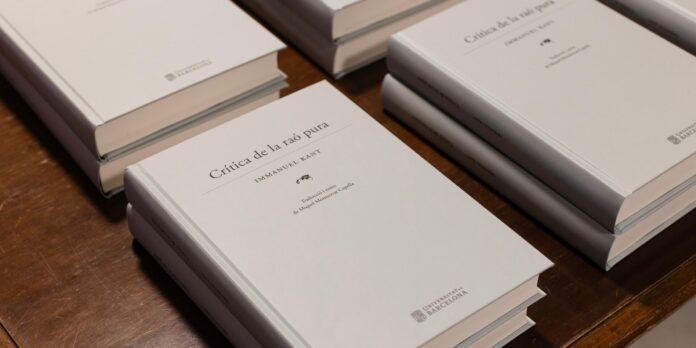
For the first time in history, Immanuel Kant’s seminal work, Critique of Pure Reason, is now available in Catalan. The translation, published by UB Editions and crafted by the late professor Miquel Montserrat Capella, has won the 2025 National University Publishing Award for Best Translation—an accolade that highlights both linguistic achievement and philosophical legacy.

Montserrat Capella, who passed away in 2024, spent six years translating and annotating the complex 18th-century text. This project, which marked the 300th anniversary of Kant’s birth, goes far beyond a linguistic exercise. It opens up Kantian philosophy—often regarded as one of the most challenging bodies of thought in Western philosophy—to a broader Catalan-speaking audience.

More Than Words: A Scholarly Contribution

The Catalan edition is part of the Magna Series of the Filosofia UB collection, edited by Salvi Turró and Josep Monserrat. It includes side-by-side notes comparing the original 1781 and revised 1787 versions of the text, providing rich context for scholars and readers. The Magna Series is dedicated to translating foundational philosophical texts into Catalan, with previous titles including Hobbes’ On Man and Husserl’s Cartesian Meditations.

The jury, composed of leading figures from Spain’s cultural and publishing sectors, praised the translation as “a first-of-its-kind contribution to Catalan intellectual life,” and celebrated Montserrat Capella’s expertise and commitment to cross-disciplinary understanding.

Language, Legacy, and Accessibility

Montserrat Capella’s career spanned teaching, research, and translation, with academic stops at Yale, the University of Barcelona, and the Universitat Oberta de Catalunya. His focus on the intersections of philosophy, science, and language shaped this final work—one that now stands as a cultural milestone.

By making Critique of Pure Reason accessible in Catalan, this edition does more than preserve a philosophical text. It affirms the role of translation in intellectual equity, language diversity, and the future of multilingual philosophy.

MiniMax Files for Hong Kong IPO as Its Voice AI Gains Momentum

0
HKEX building in Hong Kong, where MiniMax AI IPO is expected to take place later this year.

Chinese AI Startup Seeks $4 Billion Valuation

Chinese AI company MiniMax has confidentially filed for an initial public offering (IPO) in Hong Kong, according to a report by The Wall Street Journal. The company is targeting a valuation of over $4 billion, aiming to become one of the first major Chinese foundational AI firms to go public. The IPO could take place before the end of 2025, with the final size and valuation subject to market conditions.

Founded in early 2022 by former SenseTime executive Yan Junjie, MiniMax is one of China’s most prominent emerging players in generative AI. It has developed a suite of multimodal models capable of processing text, audio, video, images, and music. These include MiniMax M1, Hailuo‑02, Music‑01, and the voice model Speech‑02.

Multimodal AI with Global Reach

According to the company’s website, MiniMax’s models and products have reached over 157 million individual users in more than 200 countries and regions. Additionally, it reports over 50,000 enterprise and developer clients across 90 countries. Its technology is used in applications ranging from content generation and chat assistants to customer support and virtual avatars.

The company has raised more than $850 million since 2023, attracting investment from firms such as Alibaba, Tencent, Hongshan Capital Group, Hillhouse Investment, and Yunqi Capital.

Voice AI Surpasses Key Competitors

Among MiniMax’s offerings, the Speech‑02 model has received significant attention in the localization and text-to-speech (TTS) community. Technical reviews and benchmark results indicate that Speech‑02 outperforms ElevenLabs’ Multilingual V2 and OpenAI’s speech tools in several Asian languages, including Mandarin Chinese, Japanese, Cantonese, Thai, and Vietnamese.

The model supports real-time voice cloning and multilingual synthesis across 32 languages, positioning MiniMax as a strong contender in the global TTS space. On platforms like Hugging Face and Artificial Analysis, Speech‑02 ranks highly in speaker similarity and word error rate, especially in tonal languages.

Implications for the Language Industry

MiniMax’s rapid growth reflects a broader trend in AI: the rise of regionally optimized, linguistically nuanced models that can compete with, or outperform, global solutions. As demand grows for scalable, multilingual voice technology in media, gaming, and enterprise content, models like Speech‑02 could reshape the landscape of localization and AI-assisted communication.

delsur. Achieves Dual ISO Certifications for Translation and Post-Editing Services

0
delsur. Earns ISO Language Certification

delsur., a leading provider of language services, proudly announces it has achieved both ISO 17100 (Translation Services) and ISO 18587 (Post-Editing of Machine Translation Output) certifications. These certifications, granted by Orion Assessment Services, underscore delsur.’s unwavering commitment to delivering the highest quality and most reliable language solutions to its global clientele.

During the audit, delsur.’s robust approach to project tracking and monitoring was highlighted as a key strength. This meticulous attention to detail translates into enhanced visibility for clients, enabling faster issue resolution and real-time updates throughout the project lifecycle. Clients can expect a smoother, more predictable workflow, providing peace of mind as part of the service.

These certifications reinforce delsur.’s commitment to:

  • Stronger Quality Assurance: End-to-end checks that proactively identify and address issues before they reach the client.
  • Best Global Practices: Adherence to certified processes that empower clients to successfully expand into new markets.
  • Efficient, Transparent Workflows: Clear Service Level Agreements (SLAs) and real-time visibility across all projects.
  • AI + Human Synergy: Embracing the efficiencies of automation while ensuring the invaluable human touch as an integral part of every project.

This significant milestone is the culmination of a three-year journey during which delsur. refined its internal processes and cultivated a culture of continuous improvement. The achievement is a shared success that reflects the dedication and professionalism of the entire delsur. team, whose commitment to quality and conviction to do things right made this possible. It also acknowledges the trust and high standards of delsur.’s customers and partners, who have driven the company to consistently excel.

For delsur., these certifications are more than just a badge; they represent a shared achievement and a renewed promise to uphold core values: Commitment, Determination, and Integrity through Teamwork. This is not just certification; it’s a renewed commitment to excellence, as delsur. looks forward to what comes next.

TOPPAN Digital Language announces Alexandru Matusescu as Director of Product

0
Product Director Appointment

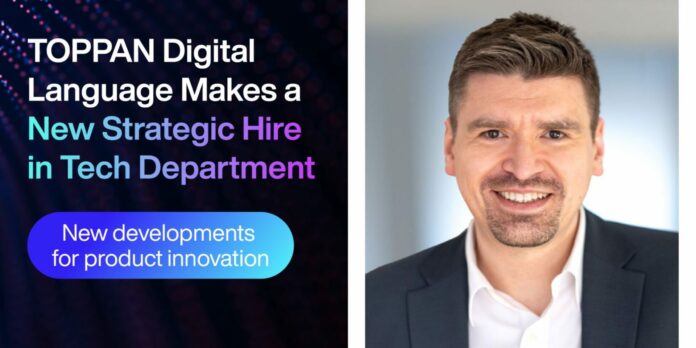
TOPPAN Digital Language, a leading technology-enabled language service provider, is excited to announce the appointment of Alexandru Matusescu as Director of Product, effective 14th July 2025. With over two decades of experience in technology and operations, Alexandru will lead TDL’s product strategy to enhance its next-generation language technology platform, STREAM AI.

Alex joins TDL from XTRF Management System, where he served as General Manager overseeing the development of XTRF. His expertise in innovation, language technology and user-centric product design aligns with TDL’s mission to deliver next-generation technology that leverages AI for smart, agile, scalable and secure language solutions.

We are excited to welcome Alex to the TDL team,” said Nicolas Bosovsky, Chief Operating Officer of TOPPAN Digital Language. “His deep expertise in language technology and solutions and his passion for transforming ways of working make him the perfect fit to lead our product vision. Alex’s leadership role will accelerate our efforts to empower clients with agile, smart language solutions.

In his new role, Alexandru will spearhead initiatives to enhance the STREAM AI platform, focusing on unblocking traditional restrictions and bottlenecks in the language services workflow. His appointment comes at a pivotal time as TDL expands its solutions offerings to meet the demand for AI-powered language services and solutions in industries such as eCommerce, healthcare and life sciences, financial services and technology.

I was already familiar with the ambition behind the scenes at TDL, the genuine customer-centric approach, and the quality of the team. When the leadership team approached me about joining and leading the product team, it immediately felt like the right fit. It’s a unique opportunity to build something significant alongside people truly committed to making a positive difference.” – Alexandru Matusescu, Director of Product.

TOPPAN Digital Language is a leading provider of tech-enabled, language solutions for high-risk content. Specializing in advanced translation, localization, and multilingual workflow solutions, TDL supports industries including financial services, life sciences, market research and retail, empowering global businesses to communicate securely, effectively, and confidently in any market.

Introducing InSync, the OOONA Podcast

0
InSync OOONA Podcast

Partnership expands global reach and marks new chapter for popular audiovisual localization podcast

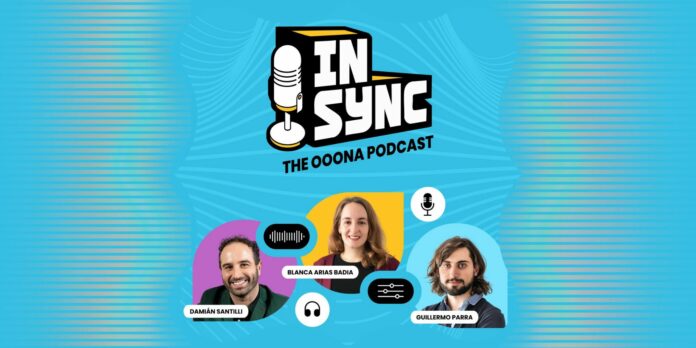
OOONA, a leading provider of professional management and production tools for the media localization industry, announced today its partnership with the creators of En Sincronía, the popular Spanish-language podcast on audiovisual translation. The podcast will relaunch as InSync, the OOONA Podcast, reinforcing OOONA’s commitment to knowledge sharing and community engagement in the localization and media services space.

Initiated in July 2020, En Sincronía is hosted by Damián Santilli, Blanca Arias Bardia, and Guillermo Parra López. The show has gained a strong following among the Spanish-speaking localization community thanks to its in-depth and authentic conversations with professionals and academics across the audiovisual localization sector.

To date, En Sincronía has produced 57 episodes, featuring interviews with translators, subtitlers, dubbing actors and adapters, video game experts, renowned university professors, union representatives, and industry consultants. The podcast has surpassed 38,000 downloads, reached over 3,500 unique listeners in 100+ countries, and gathered a social reach of 4,000+ followers—excluding the additional 13,000+ followers of its main host.

With its rebranding as InSync, the podcast retains the wide breadth of content and high editorial quality that listeners have come to expect, while expanding its visibility through OOONA’s global network. The transition strengthens the podcast’s mission:

  • To amplify information about the diverse fields within the media localization sector and highlight pioneering research;

  • To serve as a bridge between academia and industry, especially during a period of rapid evolution.

“We launched En Sincronía to share knowledge and empower the Spanish community as their trusted source of insights into the world of media access and localization, but people from all over the world started following us,” says Damián Santilli. “Through this partnership with OOONA we hope to take the podcast to a whole new level, especially as the market is moving so fast these days. We will also be switching to English, reflected in our rebrand as InSync, making the podcast more accessible to the global media localization community.”

“This podcast has always been about putting people and processes at the center of the localization conversation,” adds Wayne Garb, OOONA co-founder and CEO. “We are very pleased to welcome Damián, Blanca and Guillermo to the OOONA team and build on their impressive achievements. Our goal is to provide a platform where our users, partners and the broader industry can stay informed, connected and inspired.”


ABOUT OOONA

OOONA.Net Ltd is a globally recognized provider of professional management and production tools for the media localization industry. Renowned for its state-of-the-art software supporting subtitling, voiceover, dubbing, and captioning workflows, OOONA’s modular pay-as-you-go pricing model allows users to tailor solutions to their specific needs.

Trusted by leading media localizers, broadcasters, and a vast user base in over 160 countries, OOONA also offers:

  • OOONA EDU, a virtual hub for ongoing training in media localization;

  • The POOOL, an online directory of verified industry professionals;

  • And AVTpro, the first-ever professional certification in media localization.