AI hesitation in IP: 80% of professionals under pressure, but most still not convinced by AI’s transformative power

0
RWS Report: AI in IP Faces Key Barriers

A new research report from RWS reveals that while 80% of IP professionals face mounting pressure to boost revenues and reduce costs, few are leveraging AI’s potential to transform their future.

According to 79% of respondents in RWS’s report ‘Why it’s time for IP to think bigger with AI,’ concerns around accuracy and reliability remain the biggest barrier to adoption. Additionally, 62% cite security and data protection as the second-biggest barrier.

The report, which involved in-depth interviews with 312 global IP professionals across legal firms and corporations in 33 countries, investigates industry attitudes and expectations around AI and how professionals are embracing AI as part of their strategies.

“The IP sector has adopted a cautious approach to embracing AI,” said James Lacey, SVP at RWS. “However, several IP professionals have identified that, when AI is combined with human expertise, it can reshape how IP teams operate, scale, and deliver value.”

While only 34% of IP professionals have actively moved into operational or regular use of AI, several use cases have emerged from their adoption. These include using AI for ‘filing ready’ patent translations, patent drafting, patent database optimization, and patent/trademark prosecution.

Interestingly, almost one in ten (8%) of those questioned describe themselves as having no interest in or plans for AI. When asked the expected benefits of AI, efficiencies, better automation, and productivity were singled out by IP professionals.

As the IP landscape grows more complex, the report underscores the importance of strategic AI integration. Rather than replacing human expertise, AI is positioned as a complementary force—streamlining repetitive tasks while allowing professionals to focus on higher-value work. For many, embracing AI thoughtfully may be the key to staying competitive in a rapidly evolving global market.

Read the full report: Why it’s time for IP to think bigger with AI.

The Week in Review: Language Industry News July 14–18

0
the-week-in-review-language-industry-news-july-14-18

This week, the language industry witnessed a wave of high-impact moves—from federal language policy shifts to major product updates in AI translation. While governments debated multilingual access, tech giants doubled down on real-time translation, and new voices emerged in the race for global linguistic innovation.

Policy and Access

In the United States, the Department of Justice issued new guidance on an English-only policy, rescinding previous language access rules and instructing agencies to prioritize English under Executive Order 14224. The decision has sparked concern among advocacy groups and language service providers who see it as a setback for multilingual inclusion.

Meanwhile, Nevada courts opened interpreter exam registration in an effort to address bilingual staffing shortages, particularly for Spanish, Tagalog, and Cantonese.

Real-Time Translation and AI Expansion

Zoom made headlines by opening up real-time meeting data to boost its AI translation capabilities. The move enables more accurate live captions, interpretation, and subtitles—positioning Zoom as a serious player in enterprise localization.

Other tech leaders followed suit. Google launched Gemini Embedding-001, a multilingual vector model now available via API, while Apple introduced new multilingual models designed to prioritize privacy and on-device performance.

Microsoft added voice conversion to Azure Speech, enhancing AI dubbing capabilities with consistent tone and identity across languages. At the same time, Meta faced backlash after a translation glitch on Instagram falsely announced the death of an Indian minister.

Industry Shifts and New Leadership

AGCO partnered with RWS to scale multilingual support using Evolve, a linguistic AI platform tailored to global communication. Meanwhile, Terra Translations rebranded to Simply Terra, signaling a shift toward broader cultural intelligence offerings.

XTM appointed Wilfred Mathanaraj as its new Chief Technology Officer to lead AI innovation in localization. Elsewhere, SubtitleNEXT unveiled version 5.16 ahead of IBC2025, showcasing new subtitling features for film and TV.

Innovation, Inclusion, and Human Impact

Multilingual access was also the focus of several social impact initiatives. A multilingual AI assistant is helping Ukrainian refugees access services using AWS technology. Kazakhstan, Monaco, and Samsung all launched multilingual platforms to support tourism and small businesses in international markets.

In publishing, the Jewish Literary Foundation introduced a new translation prize, while DeepL reported that language barriers are costing U.S. companies millions—prompting more executives to invest in language AI.

Looking Back

These developments show a language industry in motion—caught between expanding global access and the challenges of automation, accuracy, and ethics.

For more context, revisit The Week in Review: Language Industry News July 7–11.

For ongoing coverage, visit our News section.

Why We Still Need Localization and Gaming Events Focused on Women

0
Woman presenting

Statistics show that there is still a tremendous gender gap when it comes to leadership positions in the localization and gaming industries. Events and conferences that focus on women’s participation in these sectors aim to change this by uplifting female perspectives, encouraging entry into the fields, and facilitating networking opportunities and diversity initiatives.

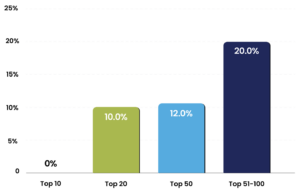
According to Nimdzi Insights — a language industry research firm — only 16 language service providers (LSPs) out of the 100 listed in the 2025 Nimdzi 100 report are woman-owned or woman-led. “Keeping in mind that women are overrepresented in our industry, accounting for nearly 70 percent of the workforce, the 16 percent in top-100 leadership positions reminds us that a lot of room remains for more equal representation,” Nimdzi researchers pointed out in their flagship report. 

Woman-Led LSPs by Segment

Sadly, the outlook isn’t much better on the gaming side. Women in Games (WG) — a nonprofit organization advocating for increased participation of women and girls in video games — shared the results of the Game Developers Conference (GDC) 2024 Survey, which shows a clear picture of where the industry sits today. According to WG, “Things simply aren’t getting any better.” Only 23 percent of the 3,000 people surveyed were women. The report shows that 87 percent of game developers with over 21 years of experience (meaning they are most likely decision-makers) are men — 92 percent of whom are white men. 

These statistics concern those of us who deeply care about creating a diverse and inclusive industry that welcomes everyone — but they should not discourage us; on the contrary, these numbers should fuel our motivation to keep fighting and supporting initiatives like the ones promoted by Women in Localization (WL) and WG.

Marina Ilari — CEO of Terra, WL Los Angeles Chapter Manager, and WG Ambassador — commented, “Representation matters at all levels, especially among decision-makers who shape the culture, content, and opportunities in gaming. At Terra and through my work with WL and WG, we’re committed to driving that change by amplifying underrepresented voices, creating mentorship opportunities, and advocating for inclusive hiring practices. We need to keep supporting women and marginalized groups in getting in the door, staying in the industry, and rising to leadership. Only then will we start to see meaningful progress.”

It is up to us to build the future that we want to see for the next generation of girls who are dreaming about becoming part of this industry. If you have the opportunity to support or uplift a woman working or attempting to work in games, just do it! Every little action matters.

Women in Game Localization: A new event from Women in Localization’s Madrid chapter

0
Women in Game Localization Madrid

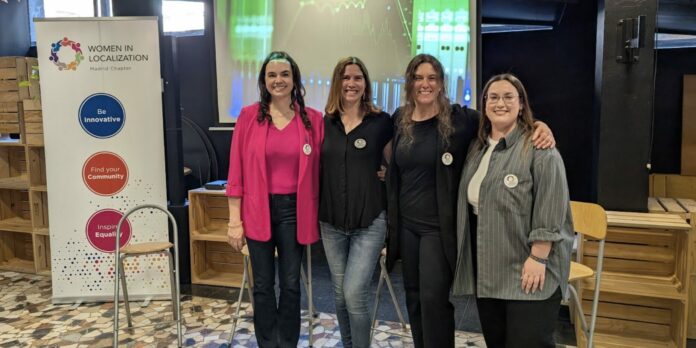
On May 22, 2025, Women in Localization (WL)’s newly formed Madrid chapter turned the spotlight on the video game localization sector, an area historically dominated by men in high-value, technical roles. The Spanish-language, in-person event — titled “Mujeres en la localización de videojuegos: Experiencia, liderazgo, y futuro” (Women in Game Localization: Experiences, leadership, and future) — featured a panel and networking session, which was sponsored by Terra, Perfect Sound, and Loc & Capture. The main goal of the event was to uplift women working in the game localization industry, as well as to create an inviting atmosphere for community building.

The event brought together approximately 40 attendees, including both women and men, highlighting the association’s commitment to inclusivity. Attendees engaged enthusiastically throughout the entire program and described the event as a highly enriching experience. Participants emphasized the quality of the discussions, strong sense of community, and valuable networking opportunities.

The event started with a warm welcome by the WL leadership team, including WL Madrid’s Chapter Manager Paola Manca. Next, Marina Ilari (CEO of Terra and WL Los Angeles Chapter Manager) moderated the panel comprising Rosane Thuaudet (Senior Localization Specialist at Game Strategies and WL Membership Manager), Cris García (Project Manager at Perfect Sound), and Esther Gómez (Localization Business Solutions Manager at Electronic Arts (EA)). The panelists brought a perfect combination of localization experience, representing both the vendor and client sides, as well as different levels of seniority.

During the panel, Marina asked questions about career trajectories, the value of localization work, the importance of diversity and inclusion in the gaming industry, the impact of motherhood and caregiving responsibilities in professional careers, and the future of gender equality in localization and the broader game industry. The session focused on the importance of supporting and amplifying women’s voices in gaming, ensuring that their experiences, insights, and leadership continue to shape a more inclusive and supportive industry.

What We Learned

From Esther, we learned that you can shape your career if you are curious and open to embracing new opportunities. Beginning as a project manager, Esther eventually pioneered technological implementation within EA, even amid maternity leaves and a male-dominated tech environment. Esther emphasized that gender diversity in the gaming audience must be mirrored in the industry workforce. 

“I see more women in leadership positions, and that really encourages me,” she said. “I see that different ways of thinking, problem-solving, and reconciling viewpoints are being increasingly recognized. I see that work-life balance, especially between work and family, is becoming much more normalized. All of this is evolving, and it’s in our hands to ensure it keeps moving forward.”

From Rosane, we learned that working on both the vendor and client sides gives you a unique perspective and a better understanding of how to localize a game. Rosane reflected on how limited she felt while on the vendor side, and emphasized the greater impact she now has within a game development company where she collaborates with writers, designers, engineers, and other stakeholders. This shift allows her to advocate for localization decisions from the outset. 

Rosane also shared her experience of prioritizing family during a difficult economic moment in Spain, something that is not unusual for female leaders. Despite temporarily stepping back, Rosane eventually returned and reclaimed a leadership role, highlighting the importance of recognizing motherhood not as a barrier but as a source of transferable professional skills. “Being a mother is not an impediment,” she said. “On the contrary, companies should see it as an added value to any organization that is committed to talent, co-responsibility, and diversity.” 

From Cris, we learned how you can grow as a young professional within the industry, as she reflected on her move from managing text localization to audio. She also reminded us of our social responsibility to make players feel seen and represented, highlighting the importance of diversity, equity, and inclusion initiatives. 

Finally, Cris reflected on how clients are increasingly not only showing interest in inclusivity, but also taking action in that direction. For example, she mentioned that clients increasingly request that transgender or non-binary characters be voiced by actors with matching identities, a demand that brings both opportunity and complexity.

Closing Remarks

In closing, the panel addressed the elephant in the room: artificial intelligence (AI). All speakers agreed: AI is here to stay, but it’s not here to replace. Instead, it should be a tool guided by human oversight. They emphasized that creativity, empathy, and cultural intuition remain irreplaceable. Rosane reminded the audience that the localization industry has always been disrupted by technology, and Esther encouraged women to be more involved in technology projects. The panel’s message was clear: Responsible innovation must go hand-in-hand with ethical practice.

The session ended with encouragement for future professionals to enter the localization field. As Cris put it, “If you love games and language, go for it. There’s nothing more gratifying than seeing your work resonate with players around the world.”

Localization Leader Julio Leal Encourages Linguists to Follow Their Passion

0
Julio Leal

Experienced localization manager Julio Leal believes that, when choosing a career path, following your passions will inevitably lead to success and fulfillment. As Head of Localization at pet care company Rover, he’s excited about the future of a growing and changing industry.  

Why do you enjoy reading MultiLingual magazine?

I enjoy it because the magazine serves as a comprehensive platform that brings together diverse perspectives from across the translation and localization industry. The magazine delves into both well-known and niche topics, shedding light on areas that might otherwise go unnoticed. This breadth of content allows me to gain insights into various facets of the industry that I might not encounter in my daily work.

Moreover, the magazine is instrumental in keeping me updated on the latest advancements, trends, and technologies. For anyone responsible for a localization program, staying informed is absolutely crucial. It enables me to make strategic decisions and adapt to the ever-evolving landscape of our field. Each issue offers valuable learnings that I can apply directly to my work.

How did you get involved in the translation business?

My journey into the translation business began with my academic pursuits. I majored in Translation and Interpretation Studies at university, driven by a deep passion for languages and cross-cultural communication. From those early days, I was certain that this was the industry where I wanted to build my career.

After graduating, I started working as a project manager at a small translation agency. Those early days were pivotal — they allowed me to immerse myself in the multifaceted world of localization. I was involved in various aspects of the process, from coordinating with translators and clients to managing timelines and quality control. The more I learned about the intricacies of localization, the more my enthusiasm grew. Each new project reinforced my decision to stay in the industry, and I became increasingly convinced that I was on the right path.

Since you entered the translation industry, how has the business landscape changed?

While the core roles within the translation industry — translators, project managers, engineers, buyers, and language service providers — remain largely the same, the dynamics among these players have evolved significantly. The advent of new technologies, particularly machine translation (MT) and artificial intelligence (AI), has been a major disruptor. These innovations have transformed not just how we work, but also how we collaborate and communicate with one another.

Processes that were once manual are now automated, increasing efficiency but also requiring us to adapt to new tools and workflows. Despite the uncertainties that such rapid technological advancements can bring, I view these changes as exciting opportunities for growth and innovation. I believe it’s essential for all of us in the industry to adapt, expand our skill sets, and find new ways to add value in an evolving landscape. Embracing change allows us to stay relevant and continue contributing meaningfully to the field.

Could you share your experience working with your first client or on your first project?

During the final year of my university studies, I had the opportunity to intern at a small translation agency. One of the most exciting moments was being assigned to work on projects for Oracle, a major client of the agency. My role involved translating the user interface of Oracle’s software products for the Spanish market.

This was a significant responsibility, especially for someone just starting out. It provided me with hands-on experience in dealing with complex technical content and taught me the importance of accuracy and cultural adaptation in localization. Collaborating with seasoned translators and project managers, I gained invaluable insights into industry best practices. This first project not only honed my translation skills, but also solidified my interest in specializing in technical localization.

Do you believe it’s a good time to enter the translation business?

Absolutely! If you have a passion for languages and communication, now is a great time to enter the translation business. I firmly believe in following one’s passions — when you do what you love, success and fulfillment naturally follow. The industry is evolving rapidly due to technological advancements like AI and MT, which may seem daunting but also present new opportunities for innovation and specialization.

Challenges are inevitable in any field, but waiting for the “perfect moment” often means missing out on valuable experiences. The best time to start is always now. Embracing the current landscape allows you to be part of shaping the future of the industry while doing work that you find meaningful and rewarding.

Where do you see yourself professionally in the next 10 years?

Envisioning a decade ahead is indeed challenging, but what I can say is that I’m thoroughly enjoying my current role at Rover. The company is on an exciting trajectory, and I’m enthusiastic about contributing to its growth and success. My focus is on leveraging my skills to make a meaningful impact here.

Over the next few years, I aim to deepen my expertise in localization and perhaps take on more leadership responsibilities within the company. While it’s hard to predict the exact path, I see myself continuing to grow professionally alongside Rover, embracing new challenges and opportunities as they arise. Being part of Rover’s bright future is something I’m genuinely looking forward to.

What predictions do you have for the future of the translation industry?

As we move towards a future increasingly influenced by automation, I predict that the human element in translation will become even more valuable. While AI and MT will handle more of the routine, high-volume tasks, the need for human expertise in nuanced, context-rich translations will grow.

Cultural understanding, emotional intelligence, and the ability to capture subtle meanings are areas where human translators excel and machines struggle. I believe we’ll see a shift towards a more collaborative model, where technology aids human translators rather than replaces them. This will open up new roles and specializations within the industry, such as focusing on transcreation and localization strategies that require deep cultural insight.

Podcasting in Localization: Gear, Grit & Growing an Audience

0
Podcasting in Localization Today

From makeshift setups to multilingual platforms

What does it take to launch a podcast in the localization industry—and more importantly, to keep it going? That’s the question four podcasters tackled during a special roundtable episode of Localization Today. Recorded in Mexico City ahead of the Vamos Juntos event, Dieter J. Runge, Stephane Huyghe, Jan Hinrichs, and Eddie Arrieta brought together years of experience in content creation, technology, and community building to reflect on their podcasting journeys. What emerged was not just a how-to guide, but a portrait of passion-driven storytelling in an industry that rarely gets to hear its own voice.

The setup struggles are real

Every podcaster starts somewhere—usually with bad lighting, a single mic, and a lot of improvisation. For these four, that meant Amazon starter kits, neon sign experiments, and plenty of trial and error. Some relied on music gear they already owned, while others received unexpected help from those who knew more about streaming than they did.

Stephane Huyghe joked that his most complicated purchase was a neon sign, while Jan Hinrichs learned the hard way that Zoom doesn’t offer multitrack audio. Eventually, most upgraded to better tools, such as the Rodecaster Pro or Riverside.fm. But no matter the gear, everyone agreed: podcasting starts with the decision to hit record, not with the perfect setup.

It’s not about tech—it’s about voice

In localization, podcasting isn’t just a content format—it’s a way to build community. Each of these shows—Boostcast, Agile Localization, Lang Talent, and the upcoming Echoes of Meaning—reflects a different angle of the industry, from software workflows to the human stories behind the scenes.

Instead of chasing polish, these podcasters focus on relevance. Who’s talking? What are they experiencing? What are we missing? In a field shaped by nuance, tone, and timing, podcasts create space for conversations that often get left out of project briefs and product demos. And that space, they argue, is just as essential as the tech.

Advice for aspiring podcasters? Start now.

“Just record it,” said Eddie Arrieta, echoing advice from Unilingo’s CEO. Don’t overthink it. Every conversation is a chance to learn, document, and connect. Whether you’re publishing short videos on LinkedIn or crafting a full production, consistency beats perfection.

As the industry reshapes itself with AI, community remains essential—and podcasts are proving to be one of its most dynamic forms of expression.

🎧 Tune in on Spotify or Apple Podcasts to hear the full conversation.

About Localization Today

Localization Today is the official podcast of MultiLingual, hosted by its CEO Eddie Arrieta. With each episode, the show dives into the real-world intersections of language, technology, and business. Through candid conversations with industry leaders, innovators, and practitioners, Localization Today sheds light on how multilingual content is shaping global communication—and what it means for the future of work.

The Need for More Inclusive Japanese Language Services

0
Japanese flag

The Japanese language extends beyond Japan’s shores through diaspora communities and cultural institutions across the globe, making it the 13th-most spoken language as of 2025 (according to the International Center for Language Studies). However, the current language services market doesn’t always take into account the vast diversity of Japanese.

Where Japanese Is Spoken Today

Brazil is home to the world’s largest diaspora of Japanese speakers: 2 million, according to both the Brazilian and Japanese governments. This diaspora stems from historical migration and long-standing cultural ties. The United States is also home to a very large ethnic enclave of Japanese speakers: approximately 1.6 million as of this year. Additionally, the Pacific island of Palau uses Japanese as a co-official language. These are only a few of the largest hot spots for Japanese consumers, as the language has other significant communities in 12 other countries and territories around the world.

Through contact with local languages in these areas, we see the natural development of Japanese-based creoles, pidgins, and local variants that should be taken into consideration when providing professional Japanese language services. For example, Hawaii’s Creole English — which is spoken today by over 600,000 people — developed from Nihon-go Creole, which retains heavy Japanese vocabulary, syntax, and phonetic influences, especially in older generations and rural communities. In Taiwan, Yilan Creole Japanese, while currently endangered, still plays a role as a means of communication in older generations. Additionally, while not strictly a creole or pidgin, Japanese has undergone significant sociolinguistic adaptations within Brazil’s Japanese communities such as code-switching, loanwords, and even interlanguage features. These have allowed for hybrid expressions to emerge, preserving Japanese fluency all while adapting to local contexts. 

The Current Language Services Market

Most language service providers (LSPs) don’t distinguish between dialects or registers in their Japanese service labels; they typically use broad, standardized forms. For example, the two most common Japanese services currently offered on the market are Japanese Language (ISO 639-1: ja & ISO 639-2/3: jpn) and Standard Japanese (Hyōjungo), which is based solely on the Tokyo dialect. Neither of these account for the dozens of dialects, regional variants, or pidgin-based creoles used around the world among the many international community groups. 

It’s important to understand the linguistic and geographic background of consumers when providing Japanese language services, as it can considerably change how effective either of these two generalized services are. To provide better service to the Japanese-speaking community worldwide, LSPs should include regional variants alongside standardized Japanese services based on business needs and primary variants used within the region(s) they preside. This helps to ensure that international Japanese consumer bases, such as those in Brazil, have equal access to the same language services as those in Japan.

Meta Apologizes After Faulty Translation Falsely Announces Indian Minister’s Death

0
Siddaramaiah responds to Meta translation mistake

Kannada-English translation error sparks concerns over automated multilingual tools in public communications

Meta has issued an apology after a mistranslation by its auto-translation tool on Instagram incorrectly announced the death of Siddaramaiah, the Chief Minister of Karnataka, a southern Indian state. The incident has raised serious concerns about the reliability of automated translation in high-stakes political communication, especially for under-resourced languages like Kannada.

The erroneous translation stemmed from a post Siddaramaiah made in Kannada on Instagram, paying tribute to the late Indian actress B. Saroja Devi. However, the platform’s English translation read as if Siddaramaiah himself had passed away. The distorted version was reported by local media, reading: “Chief Minister Siddaramaiah passed away yesterday… took darshan of Sarojadevi’s earthly body and paid his last respects.”

Meta responded by confirming that the issue had been fixed and offered an apology. “We fixed an issue that briefly caused this inaccurate Kannada translation. We apologize that this happened,” a Meta spokesperson told Press Trust of India.

A Call for Caution and Accountability

Siddaramaiah condemned the incident as “dangerous,” calling out Meta for negligence that “can harm public understanding and trust.” His office sent an official email to Meta, urging the company to temporarily suspend its Kannada auto-translation tool until its accuracy improves significantly. The email described Meta’s system as “frequently inaccurate and, in some cases, grossly misleading.”

The message further stressed that such errors are especially problematic when dealing with public-facing communications from government officials. “Given the sensitivity of public communication, especially from a constitutional functionary like the Chief Minister, such misrepresentations due to flawed translation mechanisms are unacceptable,” the statement read.

His office also urged Meta to collaborate with Kannada language experts to refine the tool and prevent future errors.

A Broader Issue for AI Translation

Kannada, spoken by over 60 million people, remains underrepresented in many AI training datasets. This incident highlights the challenges of automated translation in lower-resourced languages, where nuance, grammar, and cultural context are often lost in current models.

As of Friday, the auto-translation on Instagram still appeared inaccurate, suggesting persistent issues with the tool’s handling of Kannada.

This is not the first time Meta has faced backlash over technical errors involving sensitive content. In recent months, the platform was also criticized for showing graphic videos to users due to a separate malfunction.

The case underscores the pressing need for transparency, linguistic diversity, and human oversight in the development and deployment of multilingual AI systems, especially when the stakes involve public officials and national discourse.

Apple Expands AI Multilingual Access with New Models

0
AI multilingual access on Apple devices

Apple has released new technical details on the foundation models powering Apple Intelligence, its suite of generative AI features introduced across iOS, macOS, and other platforms. The report outlines the development of two core language models: a ∼3B-parameter on-device model optimized for Apple silicon, and a server-side model utilizing a novel Parallel-Track Mixture-of-Experts (PT-MoE) architecture, which runs on Apple’s Private Cloud Compute infrastructure.

Both models support multilingual and multimodal input and are designed to strike a balance between performance, efficiency, and privacy. According to the report, the models were trained using responsibly sourced web data, licensed corpora, and synthetic datasets, then fine-tuned with supervised learning and reinforcement learning from human feedback (RLHF). The on-device model supports 16 languages, while broader multilingual support is being phased in.

Privacy-Preserving AI at Scale

Apple’s architectural choices emphasize efficiency and user privacy. The on-device model features include KV-cache sharing and 2-bit quantization-aware training, enabling smooth operation on Apple chips. Meanwhile, the server model uses a track-parallel transformer design combined with MoE layers to reduce synchronization overhead while maintaining accuracy. Both models have been compressed using advanced techniques to reduce memory usage without significantly compromising performance.

Apple’s Private Cloud Compute allows the server-side model to process requests securely, with guarantees that user data remains protected. No personal data or user interactions are used to train the models.

Multilingual Focus and Tool Use

With increased domain-specific data and enhanced sampling strategies, the models now support expanded multilingual understanding, including OCR and text-rich image interpretation across 15 languages. During evaluation, the on-device model performed well against comparably sized models like Qwen-2.5 and Gemma-3, while the server model showed competitive results against LLaMA 4 Scout, albeit behind massive proprietary systems like GPT-4o.

The models also enable structured tool-calling and guided generation. Through Apple’s new Foundation Models framework, developers can build AI-powered features directly into their apps with minimal code, benefiting from structured decoding and safety-focused defaults.

Built with Responsible AI Principles

The report reinforces Apple’s Responsible AI commitment, outlining safety guardrails, locale-specific evaluation, and content moderation protocols. As Apple expands support to new regions and languages, it continues to tailor risk mitigation strategies and evaluation metrics to local norms and user expectations.

This update marks a significant step in Apple’s AI roadmap, positioning its models not only as privacy-conscious but increasingly capable in complex multilingual, multimodal contexts.