Translated Announces API Access to Lara Through TranslationOS

0
Translated integrates Lara AI into TranslationOS

Enterprise customers can now rely on a single platform to deliver accurate, brand-consistent translations in over 200 languages, combining the most reliable translation AI with professional services.

Translated, a leading provider of AI-powered language solutions, announced that its next-generation translation AI, Lara, is now available via API in TranslationOS, the company’s enterprise translation management platform. This integration enables organizations to deliver multilingual content more efficiently and consistently by combining Lara’s advanced AI capabilities with professional translation services, all within a single centralized platform. With Lara, enterprises can finally leverage the fluency and adaptability of large language models without compromising accuracy or speed to market.

This integration offers real-time, synchronous translation capabilities, supporting the use of translation memories, glossaries, context, and custom instructions to deliver consistent, brand-aligned content at scale.

Lara currently supports over 200 languages and locales via its API, with Tier 3 languages set to receive support for context, instructions, and glossaries in an upcoming update.

We built TranslationOS to give enterprises a single, intelligent hub to manage their global content. Today, we’ve gone beyond the limitations of traditional translation memories by enabling full document-level context through Lara,” said Marco Trombetti, CEO of Translated. “Localization managers are no longer forced to choose between AI and professional translation. They can design custom workflows with the right level of human review based on the relevance and purpose of each content type.

Introduced in November 2024, Lara surpasses traditional machine translation by combining reasoning with contextual understanding. Trained on a unique dataset of professional translations, including revisions and discussions between translators and revisers, it can explain its translation choices, making it the most reliable translation AI for complex content. To further improve its translation quality, Lara utilizes Trust Attention, a novel technique developed by Translated, which helps the model prioritize learning from verified professional translations over unverified web content. This comprehensive approach enhances translation accuracy in ways that leading systems have not yet achieved, as confirmed by double-blind evaluations with professional translators.

As part of its ongoing product expansion, Translated will continue to introduce more advanced analytics dashboards in TranslationOS, allowing enterprise users to track even more granular project data and gain greater visibility and control. The platform will also provide guidelines for routing automated service types, helping customers clearly distinguish between AI and human translation workflows.

About Translated

Translated is a leading language services provider and a pioneer in using artificial intelligence (AI) to assist professional translators. The company was founded in 1999 by linguist Isabelle Andrieu and computer scientist Marco Trombetti with the mission to allow everyone to understand and be understood in their own language. In pursuit of its mission, Translated invented context-adaptive machine translation (MT) in 2012.

The largest translation buyers trust translated’s work in the world and have been recognized as leading in AI-powered translation technology by IDC Marketscape, CSA Research, and Gartner. In 2024, Translated launched Lara, a breakthrough translation AI that outperforms leading machine translation and approaches the quality of top-tier professional translators. With Lara, Translated combines the sensitivity of over 500,000 native-speaking professional translators with the speed and capability of machines, making it possible to tackle once unimaginable localisation projects. Today, Translated delivers fast, consistent, high-quality translations to over 300,000 customers in 200 languages and over 40 subject areas.


How an AI Assistant Is Helping Refugees — One Language at a Time

0
Ukrainian refugees interact with a multilingual AI assistant designed to provide accessible support using AWS technologies.

AWS and Bevar Ukraine build a multilingual support system for displaced people

In the wake of humanitarian crises, timely and accurate information can be as vital as food or shelter. But for refugees navigating an unfamiliar country, that information is often locked behind language barriers, bureaucratic complexity, or simply a lack of available personnel. Now, a collaborative effort between Danish NGO Bevar Ukraine and Amazon Web Services (AWS) is showing how generative AI can offer multilingual support at scale—and with empathy.

The project centers around Victor, a virtual assistant designed to help Ukrainian refugees in Denmark access crucial services: from housing and legal advice to education and healthcare. What makes Victor stand out is not just its scalability, but its localization-driven architecture.

A Translation Layer Beyond Language

Built using Amazon Bedrock, the assistant uses Anthropic’s Claude 3.5 model for conversational fluency and Titan G1 embeddings to contextualize user queries. This combination enables Victor to understand multiple languages and retrieve relevant content from a knowledge base tailored to refugee needs.

AWS services like Amazon Translate, API Gateway, and DynamoDB handle real-time interactions, while compliance tools ensure that privacy and GDPR standards are met. The result is a scalable backend that supports multilingual, 24/7 conversations without over-relying on human volunteers.

But this isn’t just about speech recognition or auto-responders. What AWS and Bevar Ukraine have built resembles a localized AI agent—one that can switch languages, respect cultural nuance, and maintain functional parity across contexts. It’s the kind of automation the localization industry has long imagined but rarely seen fully realized.

Multilingual AI with a Mission

Victor is already handling hundreds of interactions per day, offering support in multiple languages. Because it’s powered by vector embeddings and trained on domain-specific content, its responses stay contextually accurate, even across different linguistic inputs.

More importantly, it’s a blueprint for how AI-powered localization can become a pillar of humanitarian tech. For developers, translators, and linguists alike, Victor represents a convergence point where ethical AI, machine translation, and user-centric design meet to serve real human needs.

As language access becomes a right, not a privilege, projects like this one show how the infrastructure of empathy can—and must—be multilingual by design.

Jewish Literary Foundation Launches Freudenheim Translation Prize

0
Jewish Literary Foundation Launches New Translation Prize

A Global Award Elevating Jewish Themes Through Literary Translation

The Jewish Literary Foundation (JLF), in partnership with the Times Literary Supplement (TLS), has announced the launch of the Freudenheim Translation Prize, an international award celebrating outstanding English translations of fiction and non-fiction works that engage with Jewish life, identity, and culture. This is the most ambitious initiative in the Foundation’s history and marks a major step forward in recognizing literary translation as a cornerstone of cross-cultural dialogue.

Open to translators worldwide, the prize will honor books published in English between June 2023 and June 2025, originally written in any language other than English. Works can be submitted by translators, publishers, or authors and must be of significant interest to both Jewish and broader global audiences.

The winning translator will receive a £3,000 award and be invited to speak at Jewish Book Week 2026, participating in a dedicated panel on translation. This component underscores the Foundation’s broader mission of using literary platforms to amplify the voices and values of Jewish heritage in a multicultural world.

A Prize With Heart—and History

Sponsored by Tom and Leslie Freudenheim in honor of Adam Freudenheim, the award carries both personal and cultural significance. Its goal is not only to celebrate excellent translation work but also to highlight the enduring relevance of Jewish literature in today’s literary landscape.

The judging panel includes:

  • Boyd Tonkin, chair – journalist and former literary editor at The Independent

  • Hephzibah Anderson, journalist and broadcaster

  • Rabbi Shoshana Boyd Gelfand, author, educator, and broadcaster

In Tonkin’s words:

“Translations have long afterlives across space and time… They deserve more than anonymity and invisibility. The Freudenheim Translation Prize will enrich the unfolding dialogue between peoples, cultures, ages and subjects that translation has always, crucially, helped to convene.”

More Than Just a Prize

What sets this award apart is its deep cultural intent: to ensure that stories shaped by Jewish history, ethics, humor, trauma, and joy continue to resonate across languages. It also reinforces the unique role that literary translators play—not merely as linguistic mediators but as cultural ambassadors.

This initiative comes at a time when literary translation is both expanding and evolving, balancing between AI-assisted tools and human-crafted nuance. The Freudenheim Translation Prize serves as a reminder that storytelling across languages remains a fundamentally human art.

Gemini Embedding-001: Google’s Multilingual Vector Leap Just Went Public

0
Gemini Embedding-001

Built for the Multilingual Age

After months of internal testing and top benchmark results, Google has released Gemini Embedding-001 — its first publicly available embedding model under the Gemini umbrella. Now accessible via the Gemini API and Vertex AI, the model brings high-performance, multilingual text embeddings to developers and researchers around the world.

Gemini Embedding-001 supports over 100 languages, making it a natural fit for translation workflows, semantic search, and any AI application that needs to “understand” meaning across cultures and scripts. It has consistently outperformed Google’s earlier embedding models (like text-embedding-004 and text-multilingual-002) and now ranks among the top performers in the Massive Text Embedding Benchmark (MTEB), especially in multilingual and cross-lingual tasks.

Dimensionality Meets Flexibility

The model outputs 3,072-dimensional vectors by default, but developers can trim that down to 1,536 or 768 dimensions using Matryoshka Representation Learning (MRL). This allows teams to balance performance and storage cost based on their specific needs — a valuable feature for real-time search or resource-limited deployments.

It also accepts up to 2,048 tokens per input, offering room for longer prompts or document-level embeddings.

Accessible and Cost-Efficient

At $0.15 per million tokens, Gemini Embedding-001 is competitively priced, with a free tier available for experimentation. Google has also announced the deprecation of its experimental embedding models (embedding-exp-03-07 ends August 14, 2025), encouraging migration to the new Gemini-based offering.

What Can You Do With It?

  • Multilingual Retrieval-Augmented Generation (RAG)

  • Cross-lingual search and classification

  • Text clustering for global markets

  • Multilingual content moderation and QA pipelines

Soon, developers will also be able to run large batches asynchronously through the Vertex AI Batch API, enabling scalable deployment of embeddings at lower cost.

A Clear Signal of Intent

With Gemini Embedding-001, Google is not just iterating — it’s doubling down on language diversity and developer accessibility. As the AI industry reorients toward open APIs and model versatility, embedding models like this one are becoming foundational. Not just for tech giants, but for localization teams, product developers, and AI researchers working across borders.

In the race for multilingual relevance, Google’s latest move brings a sharper tool — and a broader reach.

SubtitleNEXT Update Boosts Subtitling for Film and TV Ahead of IBC2025

0
SubtitleNEXT

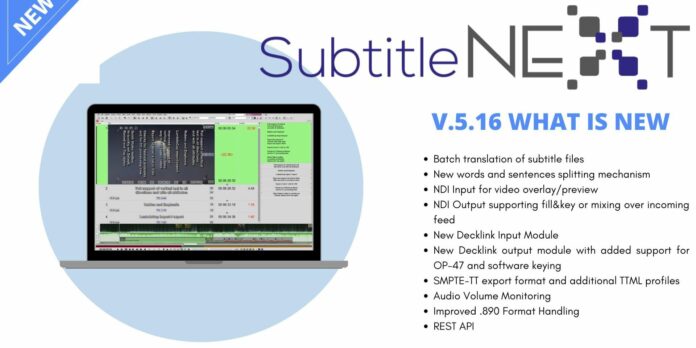
European developer Profuz Digital has unleashed the latest version of SubtitleNEXT (5.16) to be showcased at IBC2025 on Stand 8.A88.

SubtitleNEXT is a highly intuitive, timed-text software platform that effortlessly manages subtitles and audio description. The latest version comes packed with a vast array of impressive new features that include attractive and affordable licensing options.

Highlights include batch translation of subtitle files, allowing subtitlers to automatically translate multiple subtitle files in bulk.

Another significant addition is the new text splitting mechanism, enabling the correct translation of subtitles into all languages.

In addition, the Representational State Transfer Application Programming Interface (REST API) for integration with other platforms is now available too. REST API allows different systems to talk to each other over the web. It exposes multiple endpoints for interaction with SubtitleNEXT and allows control of the operations mode, speech recognition, subtitle files’ status, conversions and output, media source, and playback, and more.

A significant upgrade for broadcasters includes SubtitleNEXT’s support for SDI-based and NDI-based workflows. The new Decklink SDI input and output capability now makes it possible for SubtitleNEXT users to experience low latency high-quality graphics, teletext, and closed caption subtitles. Graphical subtitles can be transmitted as fill and key, burnt over pass-through video with hardware or software keying. Teletext (OP-47) or closed caption subtitles can now be inserted in the pass-through video signal.

NDI input for video preview and overlay, and output with fill and key or mixing over incoming feed, allows real-time video streaming with low latency using regular IT infrastructure, making it easier to integrate subtitles into live broadcasts without the need for additional hardware.

The new Volume Meter enables audio level monitoring of specified audio sources within the SubtitleNEXT application, implying cost savings with no need for separate monitoring applications. SubtitleNEXT offers improved .890 format handling and also supports TTML-based formats and profiles such as SMPTE-TT, IMSC 1/1.2, EBU-TT, and others.

Proximus Media House (PMH) has recently invested in SubtitleNEXT. The company delivers cutting-edge bilingual content for Proximus’s platforms and channels, including On Demand and Live Sports broadcasting productions such as the UEFA Champions League football in Belgium. Media Operation Team Leader at PMH Paul Briat said, “We chose SubtitleNEXT for its rich feature set and modular design. Its flexibility allows each subtitler to personalise the interface to suit their workflow. Additionally, the integration of AI-powered translation and transcription tools significantly streamline the subtitling process, enabling our team to work more efficiently and effectively.”

Ivanka Vassileva, CEO of Profuz Digital added, “Our main focus has always been on our much-valued customers and how SubtitleNEXT can adapt to each individual’s unique way of working. We understand how vital the subtitlers’ roles are in creating and adapting the required subtitles, whether it be for sports content, films and TV programs, and we aim to develop software features that ensure our customers are delivering accessible media to their audiences and enhancing the viewing experience for everyone to enjoy. SubtitleNEXT’s latest features will be demonstrated this IBC at our stand (8.A88) and we look forward to meeting up with people there again.”

SubtitleNEXT already has a proven track record of success with the likes of London’s Wilco Media, Euro Media Group (EMG) Belgium, Polsat, Bulgarian National Television, IT Pros Italy, Digitalmeister, Leinhäuser Language Services, University of Warsaw, Ghent and KU Leuven University in Belgium, Proximus Media House and others.

To see Profuz Digital technology in action at IBC2025 (Stand 8.A88), book a meeting via this link: https://lapis.pbteu.com/object-preview/685d1f06b93c81bcebd42572%401

View the comprehensive list of new features in SubtitleNEXT V 5.16 here: https://subtitlenext.com/

Monaco Launches Revamped Multilingual Platform for Global Travel Trade

0
Monaco Launches New Multilingual Travel Platform

A redesigned Visit Monaco website now offers 10 languages, custom itineraries, and downloadable resources to help professionals sell the Principality.

The Monaco Government Tourist and Convention Authority has officially launched its fully redesigned website, www.visitmonaco.com, aiming to better serve travel advisors, wholesalers, tour operators, and media partners worldwide.

Now available in 10 languages, the updated platform reflects Monaco’s international prestige and provides a fresh, streamlined digital experience. Its multilingual content, combined with practical marketing tools and immersive itineraries, helps industry professionals promote the Principality with greater impact.

This move follows Monaco’s recent recognition as Best European Destination 2025 by European Best Destinations, a non-profit partner of the European Commission. The ranking was determined by over one million global votes, placing Monaco ahead of cities like Madrid and Lisbon.

Built with the Trade in Mind

The new Trade section includes an all-in-one toolkit tailored for the travel and media sectors. Key features include:

  • Downloadable content packs focused on Monaco’s gastronomy, sustainability, and luxury offerings.

  • Curated press materials and image galleries.

  • Access to the latest advertising campaigns and updates.

This centralized hub allows professionals to build campaigns, pitch itineraries, and educate clients—all in one place.

A Better Experience for End Clients

On the public-facing side, Visit Monaco introduces an interactive, user-friendly design with several standout tools:

  • A custom itinerary builder for personalizing client travel.

  • An interactive map showcasing key attractions.

  • A dynamic events calendar, constantly updated by partners.

From first impressions to final bookings, the platform makes it easier for travel experts to bring Monaco to life.

As Monaco continues to lead with cultural prestige and luxury tourism, this digital revamp affirms the Principality’s global reach—and gives travel professionals a smarter way to connect with today’s multilingual travelers. By consolidating content, planning tools, and media resources in a single multilingual hub, the new platform supports more efficient workflows and strengthens Monaco’s appeal across global travel markets.

Samsung Supports South Korean Small Businesses With Multilingual Brand Videos

0
Samsung Multilingual SME Videos Boost Global Reach

Content-focused initiative helps small businesses increase visibility and trust in export markets

Samsung Electronics is helping small- and medium-sized enterprises in South Korea expand their international reach by producing multilingual promotional videos in partnership with Arirang TV. According to a recent article by Pulse, the initiative highlights the achievements of tech-driven, small companies and is showing measurable impact in boosting exports.

Since its launch in November 2018, the program has supported around 800 businesses. Each video is tailored to the company’s product characteristics and target markets, then distributed across more than 100 countries via global television networks and digital platforms.

The multilingual videos are being used not just as marketing assets, but as strategic tools in export development. Participating companies incorporate them into export proposals, social media campaigns, and trade show presentations. Many report that the content helps build trust during early-stage discussions with overseas buyers — resulting in higher conversion rates and more productive negotiations.

More companies join in 2025

In the first half of 2025 alone, 36 companies completed video production and broadcast. Another 39 are scheduled to participate in the second half of the year. Samsung has confirmed its commitment to continuing this support as part of a broader strategy to promote innovation and international competitiveness among South Korean small businesses.

“We will continue to support them with strong technologies to strengthen their competitiveness on the global stage through content-driven promotion,” said a Samsung Electronics official, according to Pulse.

As global competition intensifies, content localization and multilingual storytelling are becoming essential tools for small businesses seeking visibility beyond their home markets. Samsung’s program offers a model for how large corporations can support the growth of smaller companies not just through funding, but by enabling access to international audiences through tailored, accessible communication.

Language Barriers Disrupt Daily Operations for U.S. Executives

0
language barriers US executives

68% of business leaders say miscommunication between languages affects productivity and decision-making

A recent survey conducted by DeepL reveals that nearly 70% of U.S. executives face daily operational challenges due to language barriers in the workplace. The study, published on DeepL’s official blog, highlights how communication gaps between multilingual teams are impacting productivity, collaboration, and client relations in global businesses.

Based on a sample of 1,002 U.S. business decision-makers, the report shows that 63% of leaders rely on translation tools weekly, and 40% use them daily. These tools are often critical for handling internal communications, external partnerships, and cross-border documentation.

Miscommunication creates friction and missed opportunities

The study identifies key pain points caused by language challenges: misinterpreted emails, delayed project timelines, and confusion during meetings. DeepL found that these breakdowns contribute to a measurable loss of efficiency and create pressure on global teams to find faster, clearer communication workflows.

More than half of respondents (56%) admitted that they struggle to keep up with the volume of multilingual content across their organization, with many relying on ad hoc or manual translation methods that don’t scale effectively.

AI seen as essential to solving global communication gaps

Executives surveyed by DeepL are optimistic about the role of AI in addressing these challenges. The majority see AI translation tools not just as productivity enhancers, but as strategic infrastructure for international business operations. Nearly two-thirds plan to increase investment in AI-driven language tools over the next 12 months.

As cross-border collaboration intensifies, the findings reinforce the growing importance of high-quality machine translation in reducing friction and enabling faster decision-making. According to DeepL, “language is no longer just a support function — it’s a business-critical capability.”

The study suggests that organizations that fail to address language challenges risk falling behind in an increasingly global and multilingual economy.

Kazakhstan Expands Multilingual Safety Platform for Tourists

0
Kazakhstan Multilingual Tourism Safety System

New QR code system links travelers to real-time safety tips and local resources in multiple languages

Kazakhstan is enhancing its efforts to support foreign travelers with the rollout of a multilingual safety platform accessible via QR codes distributed at key entry points. According to a recent statement by the country’s Interior Ministry, arriving tourists at the international airports in Astana and Almaty, as well as at the Kaplanbek border checkpoint in the Turkistan Region, now receive cards with QR codes that direct them to SafeTravel.kz.

The platform provides safety guidance, emergency recommendations, and curated links to essential mobile apps. Available in multiple languages, the initiative is designed to offer tourists immediate access to trusted information and services—improving both orientation and security.

Language accessibility meets digital convenience

Kazakhstan’s approach combines multilingual content with QR-based access, making relevant information easily available without requiring prior internet navigation. According to officials, the system includes legal taxi services, hotel directories, eSIM options, and local tourist sites. These additions are part of a broader push to modernize the country’s tourism infrastructure while ensuring inclusivity for non-Kazakh and non-Russian speakers.

The SafeTravel.kz platform reflects growing recognition of the role that language access plays in public safety, particularly in regions where English and other global languages are not commonly spoken.

Connectivity and transport still in focus

In a related effort to boost connectivity, Minister of Tourism and Sports Yerbol Myrzabossynov recently proposed offering free SIM cards to incoming travelers. While airport-based QR codes improve digital access, the Ministry also acknowledged ongoing challenges—such as the lack of nighttime public transport from airports to city centers. A proposal to implement night express bus routes across international airports is currently under discussion.

These updates are part of Kazakhstan’s broader strategy to position itself as a safe and accessible destination for global visitors.