The Week in Review: Language Industry News November 24-30 

0
Week In Review November 24 - 30

This week’s stories highlight sector-specific innovation, community building, and candid industry dialogue. From mining-focused AI models to global rankings and partnerships, the language industry continues to expand its reach while reflecting on its internal dynamics. Here are five standout developments from November 24-30 you shouldn’t miss.

AI and Collaboration

Guildhawk announced the development of the world’s first small language models (SLMs) tailored specifically for the mining industry. The model is designed to improve safety, compliance, and multilingual communication in mining operations. By focusing on sector-specific terminology and workflows, Guildhawk aims to deliver more accurate and practical AI solutions. The initiative underscores the growing trend of domain-specific language models.

TRSB has joined the TAUS EPIC Partner Program to develop a French-Canadian Quality Estimation model, strengthening its collaboration within the global language technology ecosystem. The program connects language service providers with TAUS’s data and innovation resources. TRSB’s participation reflects its commitment to leveraging shared platforms for efficiency and scalability. The move highlights the role of partnerships in advancing industry-wide standards and practices.

GLOBO Language Solutions has been ranked on Deloitte’s Technology Fast 500 list for a second year in a row, illustrating its rapid growth and innovation within the past three years. The company’s focus on technology-driven language services contributed to its placement among North America’s fastest-growing firms. GLOBO highlighted its commitment to expanding multilingual access and scaling solutions for diverse industries such as healthcare. The recognition reflects the increasing value of language services in the tech sector.

Language and Community

The ongoing “Project Manager Versus Vendor” series continues to spotlight candid conversations within the language industry. This installment explores tensions, expectations, and collaboration challenges between project managers and vendors. The dialogue emphasizes transparency and the need for mutual understanding in project workflows. By surfacing these perspectives, the series aims to foster healthier industry relationships.

Samvād 2025 reaffirmed its commitment to continuous learning, community building, and innovation in the language industry. The event emphasized collaboration across stakeholders and highlighted the importance of adapting to evolving technologies. Sessions focused on leadership, inclusivity, and the role of language services in bridging global communities. Organizers positioned Samvād as a platform for both professional growth and collective progress.

_____________________________________________________________________________________________________________________________________________

From mining-specific AI models to candid PM–vendor dialogues, this week’s stories show an industry both expanding outward and reflecting inward. Guildhawk’s sector-focused innovation and GLOBO’s recognition on Deloitte’s Fast 500 highlight external growth, while TRSB’s partnership with TAUS and Samvād’s emphasis on community underscore collective progress. At the same time, the PM–vendor series reminds us that sustainable growth depends not only on technology and rankings, but on the relationships that hold the industry together.

For more stories like these, visit our News section.

TRSB Joins TAUS EPIC Partner Program

0
EPIC AI Quality Companion

TRSB, the leading global content service provider in Canada, partners with TAUS in developing and marketing a French-Canadian Quality Estimation (QE) model. Quality Estimation is the AI intelligence layer between raw MT output and human validation, enabling automated decisions on what to edit, approve, or escalate, significantly accelerating the delivery. Through this partnership TAUS and TRSB will be able to support all Canadian businesses and governments to produce much bigger volumes of multilingual content in shorter time without sacrificing quality.

TAUS is a language data and NLP software company, best known for the massive volume of multilingual data it has accumulated since 2008. Leveraging this collection of translation data TAUS developed and launched its Quality Estimation product in 2023 supporting more than hundred languages with its generic model.

“While the EPIC QE model is good at recognizing good quality European French translations at a universal level, we knew that it was not trained enough to do a proper job for Canadian French”, says Amir Kamran, TAUS Solution Architect. “Working with the TRSB team we can train a specialized Canadian French QE model that meets our high confidence standards. The partnership with TRSB allows us to further enhance EPIC for Canadian customers, making sure that we cover a wide scope of applications and industry sectors.”

The quality of translations is not universal and static. Terminology, style, and even grammar can vary in different domains and locales, and for different customers. “TRSB is well positioned to guard the quality and nuances of global content,” says Joe Grimaldi, Chief Revenue Officer at TRSB.

The Gartner Innovation Insight Report (Sept 2025) identifies QE as the next major AI application driving automation in multilingual content workflows. While enterprise interest is accelerating, adoption remains in its early stages, primarily due to limited awareness of QE’s broader impact.

“One of the biggest benefits of QE is that it transforms quality assurance (QA) in translation from a subjective and reactive function into an objective and proactive function.” says Jaap van der Meer, CEO and founder of TAUS. “We are looking forward to working closely together with TRSB to promote this new way of working in Canada.”

GLOBO Language Solutions Ranks Second Consecutive Year on Deloitte Technology Fast 500™

0
GLOBO

GLOBO Language Solutions announced that it has been named to the Deloitte Technology Fast 500™ list for the second consecutive year, placing the leading U.S.-based language services provider among the 500 fastest-growing technology, media, telecommunications, life sciences, fintech, and energy tech companies in North America. Previously ranked No. 455 on the 2024 list, GLOBO grew 200% during a three-year period and now ranks No. 365 on the Deloitte 2025 list.

GLOBO CEO Dipak Patel attributes the company’s sustained growth rate to one core strength: the quality of every interpretation. That level of review and visibility, paired with healthcare’s urgent need for clear, compassionate communication with Limited English Proficient (LEP) patients—a cornerstone of human-centered, equitable care—guides providers in identifying and reducing language barriers to deliver a higher professional experience. When cultural and linguistic needs are recognized, healthcare providers gain a deeper understanding and more complete picture of the patient’s health.

Rethinking Language Access for Value-Based Care 

Patel believes healthcare providers can address this prevalent challenge by elevating language access from a side initiative to an essential strategy within their value-based care programs.

“Value-based care holds providers financially accountable for improving outcomes across entire populations, and that includes limited-English-speaking patients, who comprise an estimated 26.3 million individuals or 8.4% of the U.S. population,” he said. “Yet accountability-driven care cannot achieve equity or cost savings without fully integrating access to language and interpreting services into healthcare policy, technology, data, and reimbursement structures.

“In practical terms, if LEP patients do poorly, value-based performance suffers. Investing in language services is not an add-on—it’s essential to doing value-based care well.”

First to Market for AI Interpreting and Quality Monitoring

To expand multilingual accessibility to LEP patients and advance health equity, GLOBO undertook a two-year artificial intelligence (AI) research initiative and 2025 pilot program that culminated with the first-to-market launch of two AI-powered solutions to 3000+ U.S. healthcare organizations: GLOBO KAI™, an on-demand AI interpreter delivering instant linguistic support in 20+ languages at key touchpoints in the patient’s journey in non-clinical interactions, and GLOBO Live Quality, which monitors all video and audio interpreting calls for quality and compliance.

Decades of overwhelming evidence demonstrate that culturally sensitive, accurate communication in everyday care is tied to better patient safety, improved outcomes, and lower costs.

“Our 2025 AI pilots at healthcare sites found GLOBO KAI proved to be a game-changer in mitigating breakdowns that can undermine care,” said Patel. “KAI expanded intake and patient flow capacity and boosted the efficiency of real-time patient-interpreter interactions beyond the front desk—turning over urgent care rooms faster, supporting patient wayfinding, identifying communications gaps across multiple encounters with ancillary services, and supporting HRSA compliance.”

GLOBO is redefining medical interpretation excellence with Live Quality, quickly assessing anything that might be disruptive during an interpreting session—from backgrounds and attire to lighting and image clarity.

“Leveraging AI to monitor and evaluate every interaction helps both healthcare organizations and the language solutions industry move closer to ensuring safer, more effective care for all patients, no matter what language they speak,” Patel continued. “The greater the insight into the quality of each interpretation, the more we can do to improve the patient experience and understand the issues before they impact care.”

“This year’s rankings highlight both enduring leadership and breakthrough momentum,” said Wolfe Tone, US Deloitte Private & Emerging Client Portfolio leader and partner, Deloitte Tax LLP. “More than half of the winners are prior honorees, yet the majority of the top 10 are first-time entrants — demonstrating the staying power of established leaders alongside the accelerating growth of new innovators across key sectors. As in previous years, private companies continue to dominate, underscoring the agility that private enterprises bring to competitive markets, enabling the exceptional triple and quadruple digit growth reflected in these rankings.”

Overall, 2025 Technology Fast 500 companies achieved revenue growth ranging from 122% to 29,738% over the three-year time frame, with an average growth rate of 1,079%.

About the 2025 Deloitte Technology Fast 500

Now in its 31st year, the Deloitte Technology Fast 500 provides a ranking of the fastest-growing technology, media, telecommunications, life sciences, fintech, and energy tech companies — both public and private — in North America. Technology Fast 500 award winners are selected based on percentage fiscal year revenue growth from 2021 to 2024.

About GLOBO

GLOBO Language Solutions (“GLOBO”), headquartered in Philadelphia, Pa., delivers on-demand interpreting and translation services powered by GLOBO HQ and GLOBO Connect, featuring AI technologies GLOBO KAI™ and GLOBO Live Quality. The company manages an independent global network of 10,000+ linguists with more than 430 languages and dialects. GLOBO supports diverse industries with 24/7 audio, video, on-site, and sign language interpreting and translation—all informed by actionable insights.

Most recently, GLOBO was named a 2025 Silver Stevie® Award winner in the Technology Breakthrough of the Year − Artificial Intelligence (AI) category and was recognized on Modern Healthcare’s 2025 Best Places to Work in Healthcare list. The company is also a 2024 Deloitte Technology Fast 500™ winner and a 2024 Vendors Division Semi-Finalist in Healthcare Innovation’s Innovator Awards.

Samvād 2025: Committed to Continuous Learning, Community Building, and Leading Innovation

0
Samvād 2025 conference

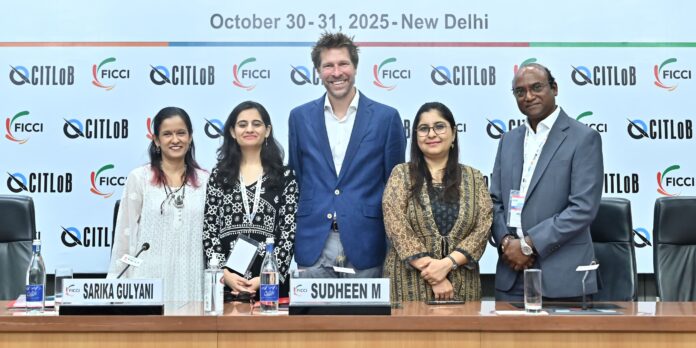
India‘s Confederation of Interpreting, Translation, and Localisation Businesses (CITLoB), together with the Federation of Indian Chambers of Commerce & Industry (FICCI), hosted Samvād 2025: Asia’s leading international conference for the language and localization industry. The two-day event, which took place October 30 and 31, celebrated innovation, collaboration, and resilience under the theme “New Horizons in Localization — Adapting, Innovating, Thriving.”

The conference opened with remarks from CITLoB and FICCI leaders, setting the tone for discussions on how artificial intelligence (AI) continues to reshape localization workflows, roles, and business models. Keynote speaker Jan Hinrichs, CEO of Beluga Linguistics and founder of LocLunch, shared insights on reinventing oneself in the age of AI.

Panels explored crucial topics such as “Linguistic Quality in the Age of AI,” “Building Resilience in Times of Disruption,” and “Platforms With Purpose.” Experts from Adobe, ServiceNow, RingCentral, and industry associations including the Globalization and Localization Association (GALA), Association of Translation Companies (ATC), European Union Association of Translation Companies (EUATC), and Women in Localization offered diverse perspectives. Special sessions by Bhashini and GALA showcased India’s advances in digital language initiatives and the global shift from translation to intelligent workflows.

Day 2 opened with a keynote by Professor Girish Nath Jha, which highlighted the bridge between Indic knowledge and modern language technologies. Sessions of the day also delved into AI dubbing, rare language inclusion, and the evolving role of industry associations in fostering collaboration. Discussions on “The Evolution of the Language Industry Beyond Buzzwords” emphasized how generative AI is redefining business structures and human-machine synergy.

The event concluded with an awards ceremony recognizing excellence in localization, the National Translation Contest, and a vote of thanks to all sponsors, partners, and participants. Through two days of engaging conversations and collaboration, Samvād 2025 reinforced the industry’s commitment to continuous learning, community building, and leading innovation in the global language ecosystem.

New Welo Data Research Finds LLM Safety Does Not Reliably Transfer Across Languages

0
Welo Data

Welo Data, a division of Welocalize and a leader in high-quality multilingual AI training data, has released new research showing that safety protections in leading large language models (LLMs) do not reliably transfer across languages.

The study evaluated 10 leading models using 210,000 model-prompt pairs across 79 languages and safety categories such as Hate and Discrimination, Self-harm and Suicide, Violence and Threats, and Misinformation and Disinformation. Unlike most existing safety evaluations, which are conducted primarily in English, this study measured cross-lingual safety gaps, exposing multilingual safety as a major challenge. The results reveal a consistent pattern: safety alignment is strongest in English but deteriorates across models in low-resource, or digitally under-represented, languages.

Even in areas where guardrails are effective in English, like Hate and Discrimination and Self-harm and Suicide, the same prompts in low-resource languages can “jailbreak” those protections. A safe response in English often becomes an unsafe response in another language, exposing how safety reduces as linguistic representation declines.

This erosion exposes a global security gap: even strong English guardrails can be bypassed simply by translating harmful prompts into another language using readily available translation tools. It also creates a safety blind spot for populations that primarily interact with LLMs in non-English languages, leaving them with weaker protection against harmful content. For global developers and organizations deploying LLMs across regions, this is not just a technical limitation, it’s a safety liability.

“As expected, LLM performance and safety robustness are greater in English given its dominance in the training data,” said Dr. David Harper, Data Scientist at Welo Data and lead author of the study.

“If policy enforcement and evaluation frameworks are anchored only in English, we risk deploying systems that behave safely in one environment while enabling harm in another. And because online tools can translate content across languages instantly, weaknesses in low-resource languages become entry points for unsafe outputs. Multilingual safety must be treated as a core requirement for responsible global deployment.”

Key observations from the study include:

  • Models vary in their safety behavior in English: Safety performance in English varies by model, indicating that alignment mechanisms operate differently across harm domains. In our sample, the categories of Hate and Discrimination and Self-harm and Suicide are the most consistently protected across models.
  • Prompting in low-resource languages can increase the likelihood of a harmful response by 4-5X: Even the categories with the strongest guardrails in English degrade sharply in low-resource languages. For instance, unsafe response rates in the Hate and Discrimination category climbed from below 10% in English to 40–50% in several low-resource languages.
  • Models vary in their multilingual safety: Some models maintain relatively consistent safety performance from English to low-resource languages, while others show sharper degradation. These differences suggest that safety mechanisms do not generalize equally well across models.
  • The gap is systematic, not incidental: Safety degradation correlates with language family. Languages from the Niger-Congo and Nilo-Saharan families, for example, exhibit the greatest increases in unsafe completions.

About Welo Data

Welo Data, a division of Welocalize, stands at the forefront of the AI training data industry, delivering exceptional data quality and security. With a global network of over 500,000 AI training professionals and domain experts, along with cutting-edge technological infrastructure, Welo Data fulfills the growing demand for dependable training data across diverse AI applications. Its technical expertise ensures that datasets are not only accurate but also culturally aligned, tackling significant AI development challenges. Its NIMO (Network Identity Management and Operations) framework guarantees the highest level of accuracy and quality in AI training data by leveraging advanced workforce assurance methods.

About Welocalize, Inc. 

Welocalize is a leading language service provider. Headquartered in New York, it bridges language and AI to power global success in complex and regulated environments. Welocalize’s expertise in translation, localization, and AI training data ensures precise, scalable, and compliant solutions for businesses worldwide, helping its clients communicate their businesses globally in over 300 languages. Its investment in AI innovation has produced patented, award-winning products that deliver multilingual content with unmatched efficiency, speed, scale, and accuracy. These solutions are delivered within a framework of data security, compliance, and safety, underpinned by its 7 ISO certifications.

Project Manager Versus Vendor: The Industry’s Most Candid Dialogue Continues

0
PM vs. Vendor podcast

In every localization project, two voices move the work forward: the project manager guiding the process and the vendor delivering the craft. Yet these two voices rarely speak to each other openly.

The Project Manager (PM) vs. Vendor: Team Play for Success podcast series aims to change that. In Episodes 9 through 12, the conversations deepen, revealing how human the workflow becomes when both sides finally share what they really think, feel, and need to succeed together.

Episode 9: Mad Max

Artificial intelligence (AI) is the most intense conversation happening in localization today. Everyone is talking about it, but few are talking about it from both sides. This episode does exactly that.

Vendor’s Voice (Gabriela):
My first reaction to generative AI was fear. Even in a tech-friendly household, I wondered if translators would disappear. My own mother told me that my job could vanish. But after the initial shock, I realized something important: ChatGPT is a tool, not a replacement. And when you treat it as an assistant, it can support creativity instead of replacing it. Today, I use AI selectively for brainstorming and productivity. I do not use it for client material where confidentiality or quality would be at risk. Responsible use matters.

PM’s Voice (Lucía):
AI feels like the next major transition after machine translation (MT). It is not only a translation tool — it touches workflow design, quality assurance, and project timelines. PMs must adapt to new expectations from clients who often ask if something can be done faster or cheaper because AI exists. This means PMs need to explain what AI can do and what it cannot. When vendors use AI for ideas, it is perfectly fine. When clients pay for human translation, true human work is expected.

Shared Message:
AI is not leaving our industry. The question is not whether you love it. The question is whether you understand how to use it. Responsible workflows, clear expectations, honest communication: These are the human parts that still matter most.

Episode 10: 10 Things I Hate About You

This episode is about the difficult moments vendors and PMs rarely discuss openly, such as the tasks that irritate us, the assumptions that create confusion, and the emotions no one wants to admit.

Vendor’s Voice (Gabriela):
There are days when expectations feel unrealistic, instructions arrive late, revisions come without explanation, or processes shift without warning. What frustrates vendors most is not the work itself, but the lack of context. I can adapt to a demanding task, but I struggle to guess what the PM already knows but did not share. When communication is clear, everything becomes manageable. When it is not, even simple projects feel heavy.

PM’s Voice (Lucía):
PMs feel the pressure from every direction. Deadlines, clients, internal coordination, budgets, and vendor availability. When instructions are not perfect, it is usually because things are moving fast behind the scenes. It is never done to make a vendor struggle. PMs also feel frustrated when vendors accept a job without knowing the platform or the workflow. It creates risk that we must mitigate. We want to trust vendors as much as vendors want to trust PMs.

Shared Message:
We all dislike something in this process. But most frustrations come from missing information, not bad intentions. When both sides clarify earlier and communicate honestly, resentment disappears and efficiency increases.

Episode 11: All the Gear and No Idea

Tools are supposed to make our work easier. Instead, they sometimes create tension between ability, preference, and expectation. This episode explores that reality from both sides.

Vendor’s Voice (Gabriela):
I love tools. But I also know many excellent translators who do not. Some colleagues refuse certain platforms. Some feel anxious when technology changes. And this affects workflow. PMs often assume vendors know every tool. But the truth is simpler. We can learn them, yes, but we need time and support. Tools help with productivity and quality, but they also require investment from freelancers who already manage their own business. My advice to colleagues is to keep learning; the industry moves fast, and staying still limits opportunities.

PM’s Voice (Lucía):
Tools are not always our choice either; clients impose platforms and expect everyone in the chain to use them. If a vendor refuses a tool, the PM simply cannot assign the person that specific project. It does not mean we doubt their skill. Sometimes, deadlines do not allow time for training; other times, we can give space to learn. And yes, some tools are difficult for PMs, too. Some slow down file preparation, some break imports, and some require long support chains. The burden does not fall on vendors alone.

Shared Message:
Tools are part of the job. They are not always perfect or fair, but adaptability protects opportunities, and transparency protects relationships. The more both sides understand the constraints, the smoother the collaboration becomes.

Episode 12: You and Me

Few topics generate as much confusion as the difference between PMs and vendor managers. This episode clarifies roles, expectations, and the behind-the-scenes reality that most freelancers never see.

Vendor’s Voice (Gabriela):
Freelancers often wonder why onboarding is done by a PM in one company and by a vendor manager in another. They question why rates are asked when the company already knows its target price, or why onboarding happens and then no projects appear. These situations create frustration. Sometimes, they make vendors feel invisible. We needed this episode because understanding the internal structure of language service providers (LSPs) helps vendors navigate the system with less stress.

PM’s Voice (Lucía):
Vendor managers and PMs have different responsibilities:

  • Vendor managers recruit, maintain the vendor database, negotiate rates, and support vendor relations.
  • PMs manage active projects, timelines, clients, risks, and deliveries.

Rates are influenced by sales decisions and profit expectations. Onboarding without immediate work happens because of timing, project cancellation, or client preference for existing vendors. None of this is personal — it is operational reality. And it affects vendor managers, too, because their work is often unused.

Shared Message:
Understanding roles reduces frustration. It is also important to understand that onboarding does not guarantee immediate work and that rates are not always controlled by one person. Vendor managers and PMs operate under constraints vendors rarely see. Transparency goes both ways, and building relationships takes time and context.

How to Tune In

Authentic collaboration still matters. Every episode of PM vs. Vendor: Team Play for Success opens a door to conversations the industry has avoided for years. If you work with people, deadlines, and language, these episodes are for you.

Listen on YouTube:
https://www.youtube.com/@PMvsVendorTeamPlayforSuccess

Listen on Spotify:
https://open.spotify.com/show/4hUIbwM6IEV8PhzMG0Vtlx?si=a42c5c1104484d3b 

Guildhawk Announces Development of World’s First Mining-Specific Small Language Model

0
GAI Translate, GIA SLM

At this week’s ABMEC Conference, Guildhawk is proud to announce the development of the world’s first domain-specific Small Language Model (SLM) for the mining industry, with the first two modules now in progress. When completed, this ground-breaking SLM, being created with the help of Sheffield Hallam University (SHU), will be available within GAI Translate™, Guildhawk’s secure AI platform built on the Microsoft enterprise stack.

The SLM for Mining is being created to overcome the problems associated with Large Language Models (LLMs) such as hallucinations and document size limits; empower mining clients to win more customers by translating more content for less cost; and improving productivity by removing the repetitive task of having to manually correct results generated by LLMs.

Why the new SLM for Mining Matters

Google CEO Sundar Pichai recently told the BBC, “The current state-of-the-art AI technology is prone to some errors.” Advising those who use AI models to, “not blindly trust everything they say”. Professionals in the mining industry require a level of precision in the translation of domain and task specific terminology that generic LLMs cannot achieve.

“When you use a general LLM to translate documents that contain terms specific to your sector, they often produce errors because they are trained on data that has been polluted.” says, Guildhawk CEO Jurga Zilinskiene MBE. She warns, “Generic LLMs can generate content that appears credible but is complete fiction and acting on this could result in harm.”

Training AI Models with High-Quality Data

Experts like Alex Shenfield, Professor of Machine Learning at SHU, know that data enrichment is the secret to improving the accuracy of AI results. He notes, “High-quality data is the foundation of trustworthy AI.” Speaking of the pioneering developments Guildhawk and SHU are doing with data as part of their second Government-backed Knowledge Transfer Partnership (KTP), Prof. Shenfield continued, “Our work is helping to solve a critical bottleneck in the development of intelligent systems.”

A Disciplined Approach to Training SLMs

Achieving accurate results from a SLM begins with adopting a disciplined approach to the management of multilingual datasets used to train models. At Guildhawk, this discipline commenced several years ago with the development of GAI’s proprietary Medium Language Model (MLM) and the vast human-verified multilingual datasets. These include domain specific vocabularies built over decades working with global clients.

Be Part of the Future, Today

Guildhawk invites innovators in the mining sector to learn more about this groundbreaking project and either become a development partner or sign-up for the priority waitlist ahead of launch.

Join us at ABMEC

Visit GAI Translate at Stand 21 for live demonstrations and insights into how domain-specific AI can transform multilingual communication in mining.

About ABMEC

ABMEC champions the British mining industry, driving a future where our members are globally acknowledged for their innovation, sustainability, and excellence in mining solutions.

About Guildhawk

Founded in 2001, Guildhawk is a pioneer in ISO-27001 certified secure AI technology trained on high-quality proprietary datasets verified by experts with a flagship platform called GAI Translate.

About Sheffield Hallam University

SHU is renowned for its practical approach to education, particularly in the fields of computer science and business.

The Week in Review: Language Industry News November 17-23 

0
Week In Review November 17-23

This week’s stories spotlight innovation in AI-driven tools, strategic collaborations, and the human vision shaping the language industry. From recognition of interpreting platforms to new conference agendas, the sector continues to balance technological breakthroughs with creative leadership. Here are six standout developments from November 17–23.

AI and Collaboration

YES Network and CAMB.AI have entered into an agreement to explore strategic artificial intelligence (AI) initiatives, marking the first time that CAMB.AI has teamed up with a US sports television network to explore business opportunities. The collaboration will focus on leveraging CAMB.AI’s multilingual speech-to-speech translation technology to enhance YES Network’s media offerings to global sports fans. The partnership aims to expand accessibility and audience engagement through AI-driven localization. Both organizations see this as a step toward redefining how sports and entertainment content is delivered on a global scale.

Wordly has introduced Voice Transcripts, a feature that bridges live translation with post-event video creation. The tool allows organizations to generate translated voice outputs that can be fed directly into video editors for dubbing and subtitles. Designed to simplify multilingual video production, it eliminates the need for studios or specialized equipment. Wordly positions this as a cost-effective solution for turning live meeting content into accessible, multilingual videos.

Creative Words and All-in Global have announced a joint publication detailing their hands-on experiences in localization. “The Innovation Handbook for Localization Teams: A Roadmap to Value-Driven Transformation” combines Creative Words’ expertise in language services with All-in Global’s specialization in sports and gaming content. Together, they aim to inspire companies to find tailored multilingual solutions that work for their teams’ specific contexts. The initiative reflects a growing trend of cross-sector partnerships in localization.

Language and Community

InterpretBank, a computer-assisted interpreting platform, was recognized by Nimdzi Insights as “Tech of the Week” for its release of ASR 3.0. The upgrade introduces advanced speech recognition, glossary integration, and real-time translation support designed to reduce cognitive load for interpreters. With two ASR engines — one unlimited and one General Data Protection Regulation–compliant — the tool offers flexibility for both freelance and enterprise users. Founder Claudio Fantinuoli emphasized its role as a customizable assistant built with interpreters’ input.

The GenAI in Localization 2025 Conference, organized by CustomMT, will take place online December 3–5. The event will feature sessions on AI integration in translation management systems, multilingual models, and leadership in language programs. Keynotes and panels include speakers from Google Cloud AI, AWS, Cohere, and major e-commerce companies like Walmart, Alibaba, and Allegro. Workshops and showcases will provide hands-on learning and demos of emerging GenAI tools.

_____________________________________________________________________________________________________________________________________________

From ASR-powered interpreting to AI-driven dubbing, this week’s stories highlight how technology is reshaping workflows while partnerships and leadership keep the human element at the center. They remind us of the sector’s boundless possibilities through collaboration and community, while keeping the message clear: The language industry thrives when ambition meets adaptability.

For more stories like these, visit our News section.

A New Collaboration Between Creative Words and All-in Global Brings a new Approach to Localization

0
The Innovation Handbook by All-in Global and Creative Words

Creative Words and All-in Global have jointly released “The Innovation Handbook for Localization teams: A Roadmap to Value-Driven Transformation”, a collaborative publication that documents their hands-on experience implementing innovation within busy localization environments.

Developed by Marta Castello, Innovation Manager at Creative Words, José Uribe, Head of Innovation, and Rodrigo Dias, Language Technology Manager at All-in Global, the handbook brings together frameworks that have been tried, adapted, and refined by the two European language service providers over recent years.

“Our aim was not to prescribe a one-size-fits-all method,” explains Jose Uribe. “We simply wanted to share what has worked (and what hasn’t) in our own contexts. Every localization team is different, but we believe some of our approaches may inspire others to experiment in their own way.”

The publication outlines practical ways to cultivate innovation while managing demanding operational workloads. It highlights that progress often comes from small, iterative steps, and that unsuccessful initiatives can also generate valuable insights.

“Some of our most important lessons came from projects that didn’t succeed as planned,” notes Marta Castello. “By being transparent about those experiences, we hope to make it easier for others to take similar risks without fear of failure.”

Among the resources shared are frameworks for evaluating when to introduce technology into production workflows and when to rely on human expertise instead. These tools are not offered as definitive solutions but as adaptable templates for informed decision-making.

“Innovation thrives when teams are empowered to adapt ideas rather than adopt them blindly,” adds Rodrigo Dias. “We want to encourage teams to define their own version of innovation, aligned with their challenges and opportunities.”

At its core, The Innovation Handbook for Localization Teams promotes innovation as a collective mindset rather than a top-down initiative. It invites localization professionals to see themselves as active participants in shaping how their teams create value, beyond traditional measures of speed or efficiency.

The handbook is available for download at no cost on the companies’ websites: