Guildhawk Achieves New ISO:27001 (2022) Certification for Secure Human and AI Translations  

0
Guildhawk logo

Guildhawk, formerly known as Today Translations, became the first tech-enabled language service provider (LSP) in the world to secure the ISO:27001 data security standard in 2013 and has now achieved the new ISO:27001 2022 standard. Serving global blue-chip clients that include Mitsubishi, Barclays, Amgen, and the United Nations, Guildhawk takes security very seriously, passing every ISO:27001 audit with zero non-conformities and receiving praise from inspectors.

The new 2022 standard has 93 controls compared to the 114 in the previous version from 2013. The new controls are organized into four themes (Organizational, People, Physical, and Technological) instead of the previous 14 domains. The current standard introduced 11 new controls to address modern security challenges, such as threat intelligence and cloud security. Holders of ISO:27001 certification must migrate to the 2022 standard by 31 October 2025. After this date, certifications to the previous 2013 version will become invalid. 

Maintaining ISO:27001 delivers tangible results for companies. The certification has contributed to Guildhawk winning major clients and global contracts that require the evidence of compliance that ISO:27001 provides. The controls have also been applied to the development of GAI Translate™, the secure AI translation software developed by Guildhawk for clients in high-risk sectors like law, mining, and pharmacy.

“Global organizations expect their suppliers to apply robust controls to protect data and to be able to evidence compliance. ISO:27001 certification and the audits that test controls gives the assurance that everything from linguist vetting to safe delivery of translations is secured by design,” says David Clarke, Chief Security Officer at Guildhawk and former Head of the City of London Police Fraud Squad.

“For global businesses, the simple question is no longer, ‘Is the translation accurate?’ but ‘Is my data safe during the translation process?’” says Jurga Zilinskiene MBE, Founder and CEO of Guildhawk.

All professional LSPs strive for the best quality translations. For Guildhawk, quality begins with security, since protection of data is non-negotiable for their clients primarily in regulated sectors.

Boostlingo Launches AI Interpreter – the First Hybrid Human and AI Solution for On-Demand Interpreting

0
Boostlingo AI Interpreter

Boostlingo, a leading interpreting technology company, announced the release of AI Interpreter today. This reinforces the company’s technology leadership in on-demand interpreting with one of the first hybrid human/AI solutions available at scale to businesses in the United States and Europe.

With Boostlingo AI Interpreter, organizations can access artificial intelligence–powered interpreting for every day, lower-risk conversations such as appointment scheduling or check-ins while maintaining instant rollover to Boostlingo’s massive network of 17,000 human interpreters at any time for any reason, including sensitive and high-stakes conversations. This hybrid approach expands access to interpretation, helps manage costs, and ensures critical conversations remain human-centered.

“Across the U.S., millions rely on a language other than English to access essential services,” said Bryan Forrester, CEO of Boostlingo. “AI Interpreter bridges that gap responsibly, delivering scalable access while preserving quality and empathy.”

Boostlingo’s AI Interpreter augments human capacity with high-performing AI that can handle high-volume, lower-risk interactions and automatically escalate when human nuance is required.

“AI interpreting should be safe and reliable,” said Brian D’Agostino, Chief Product Officer at Boostlingo. “We are training and releasing AI for new languages only after professional interpreters within our BHUB have rigorously tested them to ensure accuracy, safety, and real-world reliability.”

AI Interpreter supports 23 interpreted languages and 253 language pairs, achieving accuracy rates that surpass industry standards. Additionally, Boostlingo’s platform now includes automatic language detection across 56 languages. The company continues to expand the number of languages supported, focusing on delivering AI Interpretation for rarer languages.

Over 5,000 trial users have worked with AI Interpreter in 2025, representing a 30 percent increase in AI-only Remote Simultaneous Interpreting sessions compared to late 2024. Organizations such as the Association of Portuguese-Speaking Olympic Committees and Dansk IT have already seen transformative results: they have reduced travel costs for human interpreters, improved interpretation access, and expanded language support to thousands of participants in real time.

“I believe truly that we actually have started, if not a revolution, a movement towards finally an application of AI that makes sense,” said Hans Ravnkjær Larsen, Chief of Events at Dansk IT.

Boostlingo AI Interpreter enables organizations to meet language needs efficiently while aligning with evolving federal guidance on responsible AI adoption.

“We are not just building smarter tools,” added Forrester. “We are building a more inclusive interpreting solution for everyone.  This product release expands language access for our clients and helps them save money. We’re proud to be leading the way with AI in our industry. We think this will be a game-changer when paired with our extensive network of human interpreters.”

About Boostlingo

Boostlingo builds technology that helps businesses connect across languages. Based in Austin, TX, we serve more than 3,000 organizations with interpreting, translation, multilingual events, and interpreter management solutions. Our AI-powered platform helps every organization reach the right language professional or service when they need it.

For more information, please visit https://boostlingo.com.

10 Habits That Weaken a Brand’s Localization, and What to Do Instead

0
Cracked piggy bank

When it comes to localization processes, companies and organizations can get into bad habits that negatively affect their bottom line and reputation. Let’s look at the 10 most common bad habits many brands have, and how even small changes can make a big difference.

1. Sending files with no audience information

How It Plays Out
Vendors often receive content labeled only as “marketing” or “internal,” leaving them to guess the tone and purpose. 

What to Do Instead (and Why It Works)
Add one sentence about the goal, for example, “This campaign targets families looking for eco-friendly products.” That single line guides style and emotion.

The Bigger Lesson
Context saves time, and clarity is the foundation for efficiency. When brands give context upfront — even a single sentence about who the text is for — the entire process speeds up naturally. There are fewer questions, revisions, and misunderstandings. 

2. Treating vendors as interchangeable

How It Plays Out
Each project goes to a new team, and brand voice becomes inconsistent and disconnected.

What to Do Instead (and Why It Works)
Build a small pool of trusted collaborators. This familiarity builds continuity and saves onboarding time.

The Bigger Lesson
Relationships create consistency. When the same translators or reviewers handle your content, they remember phrasing choices, tone preferences, and even cultural sensitivities. That’s what gives localized materials their familiar feel. Constant turnover breaks that continuity.

3. Equating quality with zero typos

How It Plays Out
The review process focuses only on spelling and grammar, not effectiveness.

What to Do Instead (and Why It Works)
Evaluate quality by impact — in other words, whether the reader understands and trusts the message. That’s ultimately what’s most important.

The Bigger Lesson
Quality doesn’t necessarily mean perfection. Typos are easy to fix — mistrust is not. A message that’s technically correct but emotionally flat doesn’t create connection, and measuring quality only through error counts misses the point. Instead, the question should be, “Does this text feel right to the reader?”

4. Starting a project without onboarding

How It Plays Out
Work begins immediately to “save time,” but ends in confusion.

What to Do Instead (and Why It Works)
Spend 15 minutes clarifying terminology, tone, and purpose. You’ll save hours of revisions later.

The Bigger Lesson
Good onboarding prevents risk, because a brief is cheaper than a rewrite. Skipping onboarding is like giving someone directions with half the map missing. A clear brief takes only minutes, while correcting tone after delivery can take days.

5. Forgetting to follow up with vendors

How It Plays Out
After delivery, there’s silence. The next project starts from zero.

What to Do Instead (and Why It Works)
Send a short message after each launch, such as, “What worked well? What could we adjust?” Feedback keeps teams improving.

The Bigger Lesson
Feedback keeps growth alive, while silence after delivery kills progress. When brands share quick, structured feedback, teams learn, adapt, and align faster. Even two lines of appreciation or clarification go a long way toward building mutual respect.

6. Depending too heavily on AI output

How It Plays Out
Machine drafts look fluent but miss tone or nuance.

What to Do Instead (and Why It Works)
Keep human review at the center. AI helps with speed, but humans ensure relevance and empathy.

The Bigger Lesson
AI should be a helper, not a decision-maker. It can speed up processes, but it doesn’t replace intuition. Machine output can be fluent and still be wrong in meaning or tone. Keeping humans in control ensures that messages feel authentic and culturally safe.

7. Constantly changing vendors or agencies

How It Plays Out
Each new vendor has to relearn preferences, creating inconsistency.

What to Do Instead (and Why It Works)
Long-term collaboration builds trust and smoother communication. Stability equals better results.

The Bigger Lesson
Loyalty pays off. Long-term collaborations aren’t just nice — they’re efficient. When vendors know your brand voice, projects start faster, reviews shrink, and trust grows. Consistency in people is consistency in message.

8. Prioritizing speed over clarity

How It Plays Out
Teams rush to deliver, and errors slip through.

What to Do Instead (and Why It Works)
Plan deadlines with brief time built in for questions. Ten extra minutes of context can prevent rework.

The Bigger Lesson
Slow down to go fast. A few extra minutes of preparation can save hours of correction later. When timelines allow room for questions, quality improves naturally. Rushing localization rarely saves time in the end.

9. Keeping localization separate from marketing

How It Plays Out
Content is translated after campaigns are finalized, and cultural fit feels forced.

What to Do Instead (and Why It Works)
Involve linguists early in creative discussions. They can flag cultural risks before production.

The Bigger Lesson
Early involvement means fewer redesigns. When localization teams join marketing discussions early, they can point out language-length issues, cultural references, or color associations before they cause redesigns. It’s not about control; it’s about collaboration.

10. Treating accessibility as optional

How It Plays Out
Some audiences can’t use or relate to your content.

What to Do Instead (and Why It Works)
Integrate accessibility and inclusive language from the start. It expands reach and strengthens reputation.

The Bigger Lesson
Accessibility builds reputation. Inclusive language and readable design are no longer optional; they’re part of brand trust. When content welcomes everyone — regardless of ability, gender, or culture — it sends a strong message of respect. That’s good ethics and good business.

No content left behind: AI dubbing reshapes video localization

0
girl wearing headphones

For years, professional dubbing was a luxury. It belonged to Hollywood films and prestige TV shows with the budgets to match. For everyone else – corporate trainers, advertisers, documentary makers and digital creators – the price tag was simply out of reach. The result was vast libraries of video that stayed locked in one language, invisible to global audiences.

That’s starting to change. Advances in AI dubbing are rewriting the economics of video localization. The idea is simple but game-changing: no content has to be left behind, trapped behind a language barrier.

From niche to mainstream

The shift is clearest outside the entertainment industry. At SlatorCon Silicon Valley, Andrew Thomas of RWS called dubbing ‘an accessibility issue’ – a way to give people more options to engage with content.

The implications are wide-ranging:

  • Training at scale: companies can now deliver spoken, localized eLearning in multiple languages – going beyond subtitles to improve comprehension and engagement.
  • Creator and community reach: on platforms like YouTube and TikTok, dubbed content helps brands and creators build new international audiences and revenue streams.
  • Advertising impact: AI dubbing combined with lip-sync ensures ads feel native in every market, raising cultural relevance and boosting ROI.

And these are just a few examples – AI dubbing is opening doors across countless other industries and use cases still waiting to be explored.

Raising the quality bar

When it comes to ‘AI vs human’, the localization industry now works along a spectrum – from fully automated solutions for simple content to hybrid, human-guided workflows for more creative projects.

Here, human skill takes center stage. Dubbing directors become cultural ambassadors, using AI tools to refine emotion, nuance and delivery. This blend of expertise and technology reflects what content solutions company, RWS, calls ‘Genuine Intelligence’: the strengths of people and machines working together to create something better than the sum of their parts.

One example stood out at SlatorCon: a Spanish film re-dubbed into English using AI voices while retaining region-specific Spanish accents. Previously unachievable without dozens of regional voice actors, AI made it happen – while also creating a more authentic, local viewing experience.

But perfect audio alone isn’t enough. If lips and words don’t align, the illusion breaks. That’s why the next leap is multimodal: AI dubbing that integrates translation, synthetic voices and advanced lip-sync for a seamless, natural result.

The bigger picture

The economics of global content have flipped. For businesses, that means untapped markets and fresh revenue. For creators, it’s a chance to reach worldwide audiences. For viewers, it promises access to stories and knowledge without language as a barrier.

As Andrew Thomas reminded the industry in Silicon Valley, dubbing is about accessibility – making content available to more people, everywhere. The real opportunity lies in treating AI dubbing not as a shortcut but as a creative tool that ensures every story can travel, and no content is left behind. 

Villam Language Services Acquired to Form New Global Brand “InAnyLanguage”

0
Villam Language Services and InAnyLanguage

Our new international language services group today announced the acquisition of Villam Language Services, a respected European localization provider with a proven record of delivering high-quality, industry-specific translation services. The transaction marks the launch of InAnyLanguage, a new global B2B brand dedicated to providing enterprise clients with technology-enabled, scalable translation and localization solutions.

Villam Language Services has built a strong reputation for combining a unique software solution, with added value to linguistic expertise and a deep local understanding for helping businesses. Its service portfolio spans multiple industries, including technology, manufacturing, finance, and life sciences. By integrating Villam’s established European presence with expanded global delivery capabilities, InAnyLanguage aims to create a truly seamless multilingual communication experience for enterprise-level clients.

“With ‘InAnyLanguage,’ we’re creating a brand that reflects the needs of today’s global businesses – agile, culturally attuned, and ready to scale,” said Youngmin Jeong, appointed CEO, InAnyLanguage. “This acquisition brings together complementary strengths that will allow us to serve clients across more regions and more languages without compromising on quality.”

“Joining InAnyLanguage’ is a natural evolution for Villam Language Services,” said Tünde Gál-Berey, Interim CEO, Villam Language Services. “We share a commitment to excellence and innovation and now have the global reach to support our clients wherever they operate.”

About InAnyLanguage

InAnyLanguage is a global brand dedicated to helping enterprises communicate effectively across borders. With a new lean structure, agile localized brands for local market access and technology at the helm, the brand aims for a diverse portfolio of technology and expert-centric services with easy access for all businesses. The new brand and the acquisition became reality with the industry veteran Don Shin as the leading force behind it and the CEO that will lead InAnyLanguage is Youngmin Jeong.

About Villam Translations

Throughout the years, Villam Language Services has grown into a leading European provider of multilingual communication solutions. Known for its focus on quality, reliability, and client service, Villam has delivered projects for organizations in a wide range of sectors, ensuring messages resonate in every target market.

RWS Appoints Industry Trailblazer Michael Wayne as Head of Media and Entertainment

0
Ryan Wade

RWS, a content solutions company, powered by technology and human expertise, has named Michael Wayne as Head of Media and Entertainment, a move that underscores the company’s ambition to transform the future of AI-powered media localization.

Based in Los Angeles, Michael joins RWS today to lead the company’s fast-growing media localization business which includes AI dubbing, subtitling and end-to-end content adaptation. His appointment reflects RWS’s accelerated investment in video localization — an area that blends cutting-edge AI with human creativity to help global brands connect with audiences across languages and cultures.

“We’re truly excited to have such an industry pioneer and trailblazer join the team,” said Ben Faes, CEO of RWS. “His combination of creative vision and commercial acumen will supercharge our media localization capabilities and position RWS at the very forefront of this rapidly evolving industry.”

Before joining RWS, Michael served as Chief Commercial Officer at Papercup, whose groundbreaking AI dubbing technology and IP — renowned for accurately capturing a speaker’s tone, pace and emotion — was acquired by RWS earlier in 2025.

“I’m joining RWS at an exciting moment when demand for media localization services has never been higher,” said Michael Wayne. “And with RWS’s leading AI technology and unmatched human expertise, we have a real opportunity to shape the industry and help organizations reach global audiences faster, more efficiently and with even greater impact.”

Michael is also the Co-Founder of Kin Community, a lifestyle media platform serving diverse women’s audiences. He has also held senior leadership and strategic roles at Sony Pictures Entertainment, ABC Television and LAUNCH Media, a digital music media company acquired by Yahoo! in 2001. A recognized AI thought leader, Michael is also host of The AI Hero Show and board chair of the Artificial Intelligence Los Angeles Community, a nonprofit organization supporting the science, technology, engineering, arts and mathematics communities of Greater Los Angeles.

About RWS

Innovating since 1958, RWS is headquartered in the UK and publicly listed on AIM, the London Stock Exchange regulated market (RWS.L) as a content solutions company, powered by technology and human expertise with 60+ global locations across five continents. Our proprietary technology, 45+ AI patents and human experts help organizations bring ideas to market faster, build deeper relationships across borders and cultures, and enter new markets with confidence – growing their business and connecting them to a world of opportunities.

Finding Your Niche in the Language Industry: Insights From Entrepreneur Oleg Semerikov

0
Oleg Semerikov

Twenty years ago, Oleg Semerikov founded Translators Family, a language service provider (LSP) based in Ukraine and Poland. With two decades of experience managing translators, interpreters, editors, copywriters, and marketing professionals, he’s still passionate about the industry and believes the key to achieving success is loving what you do.

Why do you enjoy reading MultiLingual magazine? 

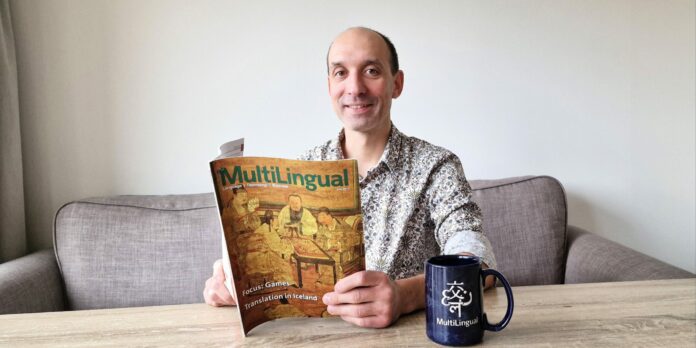
I started reading MultiLingual magazine in 2015, and it’s the only magazine I’ve subscribed to for so many years. It remains my go-to source for news and insights from the translation and localization industry. I was thrilled to have several of my articles published in the magazine a few years ago. I still cherish the MultiLingual mug I received as a Christmas present after my articles were published. It has been my favorite coffee cup for more than nine years.

Setting nostalgia aside, I particularly enjoy the educational articles, industry news, business insights, and event reviews. Staying up to date with industry trends is essential, and there’s no better resource for this than MultiLingual magazine.

How did you get involved in the translation business?

It all started with love. When I was nine years old, I fell in love with the English language (and probably my first English teacher). Back then, I realized I wanted to connect my life with languages, either through translation or teaching. My motivation came from my passion for music; I started learning English by translating song lyrics. From there, I read every book I could find in English and spent hours skimming through dictionaries.

It’s no surprise I chose translation for my education. By my fourth year at university, I already had international clients I found through translation job portals like ProZ.com. Some of them are LSPs that are still my clients to this day. Although I no longer translate myself, I continue to provide services to these clients as a regional language vendor.

In 2007, I started a team of translators, which eventually grew into my company, Translators Family. Since 2015, we’ve been operating successfully as a well-established vendor of translation and interpreting services in Poland, Ukraine, and the United Kingdom (UK). I’m still passionate about languages and translation. However, my role today includes managing my team, building strong and trustworthy relationships with vendors and clients, improving strategy, sales and marketing, creating content, and much more.

Since you entered the translation industry, how has the business landscape changed?

Dramatically. It has become a much more competitive industry. Back in 2006, when I started my first projects on ProZ, finding great projects and clients was relatively easy without convincing anyone of the value of human translation. Today, you must educate clients, explaining why human translation is essential for certain types of content while machine translation (MT) may suffice for others.

The competition is no longer just with professional linguists — it’s also with those equipped with technology. That’s why, now more than ever, it’s important to find your niche, focus on the areas you excel in, stand out with quality and expertise, and build your personal brand.

Could you share your experience working with your first client or on your first project?

My first significant project was a book about love and relationships. It was both a personal and professional milestone. I worked on it with my future wife, and this taught me the value of teamwork. This project also inspired the name Translators Family, reflecting my commitment to building strong, collaborative relationships in my business.

The book was my major turning point; it brought me my first $1,000 income, which was quite a sum in Ukraine at the time, especially for a student. That was the moment I realized translation could be a profitable business — especially when you love what you do.

Do you believe it’s a good time to enter the translation business?

There is always a good time to enter the translation business if you’re passionate about linguistics. Many career pathways are still available, though they may differ from those that existed 20 years ago when I started. The demand for professional translators and interpreters continues to grow.

However, don’t aim to be a “universal translator.” Find your area of expertise, discover your passion, and pursue it with dedication. This will bring success and growth. Embracing technology is also essential in today’s world. Make artificial intelligence (AI) and MT your companions, not your competitors.

It’s also important to understand how to market yourself, create a personal brand, and manage your services effectively. In my opinion, there’s still a great opportunity for human expertise in areas like transcreation, translation for regulated industries, conference interpreting, and sworn or certified translation.

Where do you see yourself professionally in the next 10 years?

In recent years, I’ve become passionate about marketing, both for my business and in providing translation services for marketing purposes. I started pursuing a second degree in business and marketing to prepare for this new direction.

In the next 10 years, I see myself as a multilingual marketing expert, helping businesses expand nationally or globally. I want to support them with not only excellent localized content, but also effective localized marketing strategies tailored to each target audience.

What predictions do you have for the future of the translation industry?

The industry will grow alongside the increasing volume of content, driven by the simplicity of generating content with AI tools. Translators will need to focus on creative tasks and providing expert advice as routine tasks become fully automated.

Specialization and soft skills will be even more valuable than they are today. The future looks bright for those who are passionate about their work and willing to adapt and embrace new technologies.

The Week in Review: Language Industry News October 13 – 19

0
Week In Review

This week’s stories explore the tension between human nuance and machine precision, the celebration of linguistic identity, and the evolving role of AI in localization workflows. From Budapest roundtables to Haitian Creole keynotes, the language industry continues to balance innovation with cultural depth. Key highlights for October 13-19 include: 

Michele Fariselli explores the limits of AI-generated language with his latest article Why AI Will Never Fully Speak Human, arguing that machines mimic patterns but lack intent, empathy, and contextual awareness. The piece calls for a balanced approach, where AI assists but never replaces human interpretation. Language, he reminds us, is not just data—it’s meaning.

Artificial Intelligence and Localization

Voiseed and Blackbird.io have joined forces to bring emotionally expressive AI voices into scalable localization workflows. Their partnership blends generative speech with production-ready pipelines, aiming to elevate voice quality in gaming, media, and eLearning. It’s a step toward making synthetic voices sound more human, and more global.

Custom.MT earned Nimdzi’s spotlight for its GenAI-powered translation platform and was named Tech of the Week, which integrates major CAT tools and supports prompt-based translation, post-editing, and quality estimation. The company also launched a Community QE Benchmark to align machine predictions with human judgment. Making it a push for transparency and trust within AI-assisted workflows.

Event Recap

Held in Budapest, ELIA’s Networking Days 2025 event gathered language professionals for candid conversations on AI disruption, business outcomes, and human expertise to celebrate the European Language Industry Association’s (ELIA) 20th anniversary. With roundtables, karaoke, and keynote insights from Renato Beninatto, the summit blended strategy with community. The message was clear: LSPs must speak the language of results, not just translation.

Creole Solutions announced KONBIT25, a virtual event dedicated to honoring Haitian Creole’s cultural and linguistic impact within global dialogue to celebrate Creole Heritage Month (October). The free event features keynotes, panels, and performances from language experts, highlighting Haitian Creole’s role in tech, education, and global discourse.

This week’s stories remind us that language is both infrastructure and intimacy—increasingly shaped by algorithms but defined by people. As AI tools grow more sophisticated, the industry is asking sharper questions about ethics, expressiveness, and cultural inclusion surrounding its usage. The future of language work lies in collaboration, not substitution.

For more stories like these, visit our News section.

Custom.MT Named “Tech of the Week” by Nimdzi Insights

0
Custom.MT Tech of the Week

Custom.MT, an AI translation platform for the localization industry, has been recognized as “Tech of the Week” by Nimdzi Insights.

Custom.MT’s platform plugs in the latest GenAI models into localization workflows in popular translation tools (Trados, memoQ, XTM, Smartcat, and Smartling). It covers use cases such as translation with custom prompts, automated post-editing, AI terminology with RAG systems and quality estimation. Custom.MT integrates OpenAI, Anthropic Claude, Gemini, Lara, Widn, and 25+ machine translation engine brands, including fine-tuned variants. The company’s services stack includes engineering, content generation with AI, translation memory cleanup, and technical documentation adaptation.

A month ago, Custom.MT launched a new initiative coordinating to the Community Quality Estimation (QE) Benchmark — a collective study run on real data, with participation of localization teams. The idea is to understand where QE aligns with human judgment, identify which content types and domains QE handles best, and provide independent results for the language industry to rely on.

The Localization industry is adding GenAI across the board for translation, multilingual content, and other use cases. Our mission is to facilitate technology adoption for professionals and help them build the most reliable and advanced workflows possible today“, says Konstantin Dranch, co-founder of Custom.MT.

The “Tech of the Week” nomination recognizes Custom.MT’s growing impact on the global language technology ecosystem as well as the language industry’s education and awareness.

About Nimdzi Insights

Nimdzi Insights is an international market research and consulting company. Nimdzi advises on international trade & development, language services, language technology, and localization programs. Nimdzi guides companies through investment and M&A activities. Nimdzi consultants are committed to providing opportunities for continuous professional development and resources for business professionals worldwide.