KONBIT25: Celebrating Haitian Creole in the Global Dialogue

0
KONBIT25

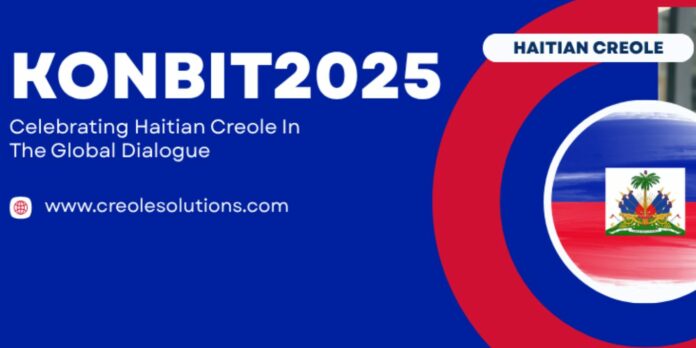
In honor of Creole Heritage Month, Creole Solutions will be hosting KONBIT25, a two-day virtual event celebrating the richness and impact of the Haitian Creole language and culture. Taking place October 22–23, the free program will feature keynote talks, panel discussions, lectures, and performances from voices that span key disciplines to highlight the power of Haitian Creole in today’s global dialogue, technology, and the arts.

Program Focus and Highlights

KONBIT25 Day 1: “The Unexplored Power of Haitian Creole in the Global Dialogue” keynote will be delivered by Marleen Julien, founder and CEO of Creole Solutions and a leading advocate for language access and education. KONBIT25 Day 2: “Technology, Youth, and the Future of Haitian Creole” keynote will be delivered by William Lesly Balan-Gaubert, a Haitian-born independent scholar, historian, and public intellectual. Experts will dive into how human expertise guides, trains, and corrects AI systems, ensuring that technology remains accurate, ethical, and inclusive of Haitian Creole and other underrepresented languages.

Panelists: 

  • Constance Leys: Founder and executive director, CreolePro
  • Jean-Marc Julien: Software engineer and educator (AI and automation)
  • Fritz Gerald Zephirin: CEO, Defrilex-LS
  • Lorraine Sanchez: Beneffits specialist
  • Evelyn Marte: Director, HR

Sessions:

  • The Unexplored Power of Haitian Creole in the Global Dialogue
  • The Essential Role of LSPs in an AI Era
  • Language Inclusion in TPS Workforces
  • Best Practices and Lessons Learned in Haitian Language Work
  • Technology, Youth, and the Future of Haitian Creole

Event Information

Streaming worldwide on MultiLingual Media’s platforms, KONBIT25 invites participants to join insightful conversations, experience cultural performances, and engage with change-makers dedicated to amplifying Haitian Creole voices. Register for free using the link below.

Date: October 22–23, 2025
Time: 10:15-12:00 EST
Registration Link: KONBIT25 

About Creole Solutions

Creole Solutions is an Illinois-based language service provider specializing in Haitian Creole language solutions who is dedicated to elevating the standing of Haitian Creole as a modern language within high-demand areas such as Haiti, the U.S, and Canada. It believes that language should never be a barrier to safety, healthcare, or opportunity and has therefore partnered nationwide over the last decade to facilitate communication and elevate Haitian Creole through its comprehensive suite of language solutions. 

Why AI Will Never Fully Speak Human

0
Head silhouettes

Language has always been more than a tool — it’s the essence of how people make sense of one another. Through words, we pass along stories, ideas, and emotions that define entire cultures. Every sentence carries a bit of who we are: our experiences, our moods, and even our assumptions about the world.

Artificial intelligence (AI), for all its brilliance, doesn’t share that human depth. It approaches language not as meaning, but as pattern. What seems like understanding is closer to mimicry — a statistical reflection of how words usually appear together. The results can sound convincing, sometimes even eloquent, yet the purpose behind the words is missing.

That difference may appear subtle, but it matters. A misplaced nuance in translation or an unintended tone in generated text can alter meaning in ways that ripple far beyond the page. In diplomacy, law, healthcare, and education, language doesn’t just convey information; it builds trust, authority, and empathy. Precision without comprehension, in these contexts, can be risky.

Humans bring to language something no algorithm can replicate: awareness of context. We sense when a phrase comforts or offends, when silence says more than speech, and when humor lightens tension or deepens rapport. These judgments come from empathy and experience — qualities that aren’t programmable. Machines can repeat what’s already been said, but they cannot decide what should be said.

This doesn’t mean AI has no place in the linguistic world — far from it. Used thoughtfully, it can streamline repetitive tasks, enhance consistency, and bridge communication barriers. The challenge — and opportunity — lies in balance. Technology should serve as an assistant, not an author. The human must remain the interpreter of meaning, not merely the editor of machine output.

Language has evolved with every leap in technology, from ink and type to screens and predictive text. Each innovation has reshaped how we write and share ideas, yet the motivation behind our words hasn’t changed. Intent can be authored only by humans. We still use language to connect, persuade, and be understood.

As AI becomes more deeply woven into our communication systems, we should remember that words are not just data points. They carry intent, emotion, and consequence. Machines can arrange them perfectly, but only humans can make them matter.

The Silent Revolution in AI Dubbing

0
Digital Content Creator

Something remarkable is happening on our screens, and almost nobody is talking about it. While the technology world has been dazzled by real-time speech translation — from the new Google Pixel 10’s uncanny Live Translate to Apple’s Live Translation AirPods — another, quieter revolution has already entered the homes of millions: automatic artificial intelligence (AI) dubbing. It has arrived without fanfare, tucked into an update of YouTube’s interface. No headlines, no splashy demos, no breathless product announcements. And yet, the results are astonishing.

When I first tested YouTube’s new dubbing feature a few weeks ago, I didn’t even realize it was on. I was watching what I thought was an Italian-language podcast when a disorienting thought struck me: Why are they speaking English? The program, it turned out, was originally Italian, but YouTube had automatically switched to a dubbed version without telling me (based on my account settings).

The video that made me discover the quality of YouTube AI dubbing.

I toggled back and forth between the original and the AI-generated track. The translation was fluid, idiomatic, and delivered in a voice that eerily resembled the speaker’s own. It wasn’t the robotic monotone of early speech synthesis. It was expressive, natural, almost intimate — the kind of performance that makes you forget you’re listening to a machine at all. Sure, you can hear imperfections here and there, but nobody is expecting the same quality as if it was produced in a studio with a high budget. This is exactly the point. Quality is astonishingly good. It does not cost any (or a small amount of) money, and it makes possible what was simply not possible before.

A New Kind of Dubbing

What YouTube offers isn’t “dubbing” in the cinematic sense. There’s no perfect lip sync, no elaborate studio process. It’s closer to voice-over with emotional fidelity: a hybrid form that borrows the immediacy of human speech while keeping production almost entirely automatic.

Technically, it seems plausible that the system builds on the same end-to-end translation models powering Google’s Pixel devices (watch here for a live test I did with Renato Beninatto): speech in, speech out, with only minimal intermediate text processing. Google has released no details, but the coherence of prosody and the low latency hint at such a direct architecture.

If that’s true, it marks a fundamental shift in how language technologies operate. Instead of passing through multiple layers — speech recognition, machine translation, text-to-speech — these new models appear to think in sound. They capture rhythm, emotion, and speaker identity in a single computational gesture.

Not for Hollywood’s Movies — Yet

For now, AI dubbing won’t replace the painstaking artistry of professional dubbing studios. In Europe, audiences are accustomed to near-perfect lip sync and carefully directed performances. For that tier of production, AI still lacks nuance and creative control.

But for the vast middle of audiovisual content — podcasts, interviews, explainer videos, documentaries — the technology is already transformative. YouTube is, after all, a global library of spoken content, much of it recorded in quiet rooms with disciplined pacing and clear voices. That is exactly the kind of material these systems handle best.

With one click, a creator can now multiply their reach, making a video instantly accessible in half a dozen languages. For the first time, global localization doesn’t require a studio, script, or budget.

Dubbing Meets Interpreting

What’s happening here is more than a technical milestone. I would call it a convergence of worlds. The boundary between dubbing, subtitling, and real-time interpreting is dissolving. The same algorithms that power simultaneous translation on a smartphone are, with smaller adaptations, now re-voicing entire video libraries.

In the near future, we may see these systems blend even further: adjusting lip movements in the videos for better synchronization, refining accents, and matching ambient acoustics. Human dubbing directors might one day supervise AI drafts, tweaking words or timing rather than starting from scratch. The model might be augmentation for the high end, and automation for the rest. And this technology will not be confined to classical videos. Think about the potential in the gaming industry, from carefully scripted storylines to live, real-time generative experiences shaped by AI.

For now, though, the silent revolution is already underway. Millions are hearing voices that sound familiar but speak in languages the original speakers never knew. It is subtle, seamless, and, in its quiet way, breathtaking. AI dubbing has crossed the line from curiosity to everyday utility. And I am sure people will soon take notice.

ELIA Networking Days 2025: Playing the AI Game in Budapest

0
ELIA Networking Days 2025

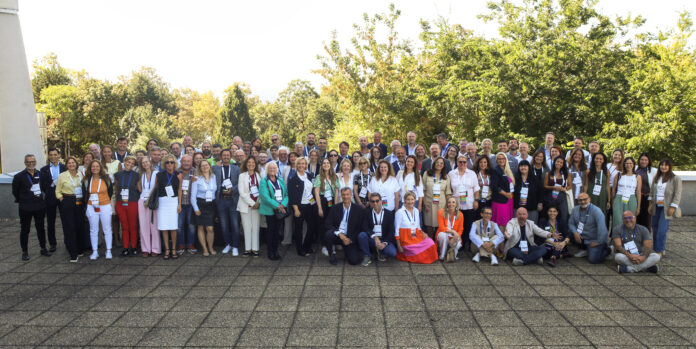
On 22–23 September 2025, language industry professionals from across Europe and beyond gathered in Budapest, Hungary, for Networking Days 2025 — a milestone edition marking 20 years of the European Language Industry Association (ELIA). The event brought together independent consultants and company owners and teams from across the language services sector for two days of open dialogue, fresh insight, and meaningful connection.

This year’s theme, “Opportunity Knocks: Playing the AI Game,” captured both the disruption and the opportunity that artificial intelligence (AI) brings to the language industry. Attendees explored what it means to evolve in this new landscape: how to adapt business models, reposition value, and ensure technology strengthens — rather than replaces — human expertise.

The program opened with a keynote from Renato Beninatto, who encouraged participants to look beyond tools and trends and focus instead on outcomes. His message — that language service providers (LSPs) must speak the language of business results, not just translation — set the tone for the discussions that followed.

Through Networking Days’ signature small-group, no-tables roundtable format, attendees rotated through guided sessions on shifting from services to solutions, navigating client expectations around AI, re-skilling for the new era, and planning for future transitions. The setting encouraged active participation, candid debate, and collective problem-solving — allowing every voice in the room to be heard.

Beyond the sessions, the event reflected the sense of community that defines ELIA. Long-time members reconnected, new participants were warmly welcomed, and conversations flowed easily. 

The event also served as the perfect occasion to celebrate ELIA’s 20th anniversary: two decades of collaboration, learning, and leadership within the language services community. The celebration came to life at a special anniversary dinner, featuring heartfelt speeches from past ELIA presidents that traced the association’s journey from its inception to today and that recognized the people and vision that have shaped its story. The evening concluded with shared moments of joy, from karaoke and cake to dancing, reflecting the community and connection that lie at the heart of ELIA’s spirit.

Participants left Budapest with more than new ideas; they carried home renewed clarity, practical strategies, and a sense of belonging to a community that continues to learn and grow together. The insights shared in Budapest will carry forward into boardrooms, teams, and strategies across the industry — and continue at ELIA’s upcoming Focus on Project Management 2025, which will take place this December.

Discover more about ELIA’s events and initiatives at elia-association.org/our-events.

memoQ Secures SOC 2 Type 1 Compliance

0
memoQ Achieves SOC 2 Type 1 Compliance

Raising the Bar for Enterprise-Grade Security in Translation Management

memoQ, a global leader in enterprise translation technology solutions, announced that it has achieved SOC 2 Type 1 compliance, a global standard for information security. This achievement underscores memoQ’s commitment to protecting customer data and meeting the most rigorous enterprise security expectations in industries where trust is non-negotiable.

Developed by the American Institute of Certified Public Accountants (AICPA), SOC 2 is the benchmark framework for evaluating controls around security, availability, and confidentiality. Passing the independent audit affirms that memoQ’s security practices meet the same standards demanded by Fortune 500 companies in finance, life sciences, banking, and technology.

“Enterprise clients, especially in the U.S., need more than translation technology. They need a partner they can trust with their most sensitive data,” said Peter Reynolds, CEO of memoQ. “SOC 2 Type 1 compliance proves that memoQ is enterprise-ready, battle-tested, and prepared to support organizations with the highest security requirements.”

memoQ already holds ISO 27001 certification, widely recognized across Europe and Asia. By adding SOC 2 Type 1, memoQ now meets the preferred standard for U.S. enterprises, giving global organizations confidence that their translation workflows are secure and compliant across regions.

The company is also advancing toward SOC 2 Type 2 compliance, which involves a months-long audit of security practices in operation. Completion is expected in the coming months.

As part of its security strategy, memoQ has launched a public Trust Center powered by Sprinto, providing customers and prospects with real-time visibility into compliance reports and security measures, far more transparent than what most competitors offer.

Peter Reynolds added, “This is just the beginning. SOC 2 Type 2 is underway, and we’re investing heavily to stay ahead of compliance requirements so our customers can focus on growth with total confidence in us.”

Adam Klar, Chief Information Security Officer at memoQ, commented,” Achieving SOC 2 Type 1 demonstrates that our controls are strong, and we’re building the foundation for continuous assurance with SOC 2 Type 2.”

For more information, visit the memoQ Trust Center memoQ – Trust Center – Security & Privacy

About memoQ 

memoQ is a leading collaborative translation environment and TMS delivering premium solutions to the translation industry since 2004. memoQ is dedicated to providing innovation through diverse developments and generative AI, empowering hundreds of thousands of enterprises, translation companies, and freelance translators worldwide.

Keeping in mind both simplicity and effective translation processes, memoQ leverages its ease of use, collaboration, and interoperability in one complex solution. Discover a new world with memoQ!

Voiseed and Blackbird.io Partner to Bring Expressive AI Voices into Scalable Localization Workflows

0
Blackbird.io Revoiceit

Voiseed, Italian startup specializing in expressive, emotion-driven AI voice production and dubbing, and Blackbird.io, the orchestration, automation, and AI enablement platform, today announced a strategic partnership that integrates Revoiceit API directly into Blackbird’s content orchestration ecosystem.

The integration allows localization and content teams to automate the generation of expressive, multilingual voiceovers within their existing Blackbird workflows. Revoiceit’s API brings a unique emotional compass for all the available synthetic voices and languages, while Blackbird’s orchestration ensures that voice generation, timing, and publishing happen seamlessly, all within one unified process.

Together, Voiseed and Blackbird.io empower localization providers, media content producers, and global brands to accelerate dubbing, e-learning narration, and marketing voiceovers while maintaining top-notch quality standards.

To reach a new level of scalability in localization, our Revoiceit integration with Blackbird.io gives content teams the ability to easily create expressive, emotionally resonant voices that adapt to their specific needs and workflows,” said Andrea Ballista, CEO of Voiseed. “This partnership merges emotion-aware speech technology with powerful content automation, a game-changer for anyone scaling multilingual expressive voice production.

“At Blackbird, we believe content creation should flow freely across languages and channels,” added Bruno Bitter, CEO of Blackbird.io. “Partnering with Voiseed adds another expressive layer to that vision – helping our customers transform text into emotionally authentic voice, all within the same automated workflows they already use.”

By combining Blackbird’s content automation and workflow management with Voiseed’s expressive TTS engine, the integration helps enterprises and LSPs deliver localized content faster, with consistent tone and quality across language. The integration is available now through Blackbird’s App Page.

Globalese by memoQ Named CODiE Awards Finalist

0
globalese by memoQ

memoQ, a leading provider of translation technology, is proud to announce that globalese by memoQ has been named a Finalist in the 2025 CODiE Awards for the Best Machine Translation category.

The CODiE Awards are among the technology sector’s most prestigious recognitions. They honor excellence and innovation, with winners selected through a rigorous peer-review process by industry experts.

“We are honored that we have been named a CODiE Awards finalist,” said Peter Reynolds, CEO of memoQ. “globalese by memoQ is designed to make AI-powered translation accessible, reliable, and customizable for enterprises worldwide. This recognition reinforces our commitment to delivering solutions that transform multilingual communication and empower organizations to succeed globally.”

With globalese, memoQ brings machine translation closer to enterprise workflows by combining AI, linguistic expertise, and advanced customization. The solution helps organizations achieve higher translation quality, faster turnaround times, and greater control over sensitive data while integrating seamlessly into existing localization processes.

“globalese by memoQ is driving growth across multiple sectors and strengthening enterprises worldwide. This nomination highlights our commitment to continuous advancement and demonstrates how our high-quality custom machine translation engines empower our customers’ localization efforts daily,” added Gabor Bessenyei, Senior Product Manager at memoQ

The winners of the 2025 CODiE Awards will be announced on October 22, 2025.


For more details about globalese by memoQ and the CODiE Awards, please visit: Finalists – CODiE Awards


The Week in Review: Language Industry News October 7 – 12

0
Week In Review

From AI breakthroughs to indie game grants, this week’s language industry news reveals a sector in motion—strategic, creative, and increasingly public-facing. From collaborative events to multimodal tech, the stories below reflect a growing awareness that language work is infrastructure, not afterthought. Here are five standout moments between October 7–12.

Artificial Intelligence and Localization

ELAN Languages announced it acquired C-Jay International, expanding its AI-driven translation capabilities and client portfolio. The move strengthens ELAN Languages’ position in multilingual tech and deepens its expertise in automated workflows, making it a strategic blend of scale and specialization.

ModelFront was recognized by Nimdzi Insights and named Nimdzi’s Tech of the Week for its AI-driven quality prediction and automatic post-editing system. Built on custom LLMs, the tech confirms and fixes machine translations at scale—without compromising human quality. It’s a breakthrough in making MTQE work in the real world.

Alpha Games unveiled the launch of their “Carmello Loves Indies” grant, offering up to $5,000 in localization services to one independent game developer. The initiative supports global reach for budget-conscious studios, emphasizing that play is a universal language. Applications remain open through December 7.

Event Recap

The 23rd Annual Summit of the Association of Language Companies (ALC) hosted hundreds of language professionals from September 10 to 12 with the theme: “Reframing Language Access.” The three-day event prioritized visibility, equity, and the evolving role of language professionals in an era defined by rapid technological advancements and shifting public policy. Making it a strategic pivot from translation as service to translation as civic infrastructure.

Gabriela Kouahla and Lucía Gutiérrez Franco discuss their podcast episodes 5–8 of the “PM vs. Vendor”, diving into project length, personal backstories, role titles, and cold outreach. With humor and honesty, both women unpack the human dynamics behind localization workflows, allowing listeners a unique look at collaboration from both sides of the screen.

A Week of AI and Collaboration

______________________________________________________________________________________________________________________________________________

As the industry continues to evolve, one thing is clear: visibility, equity, and innovation are no longer fringe concerns—they’re central to how language services are built, funded, and understood. Whether through grants or AI-powered quality control, this week’s stories remind us that the future of language is collaborative, cross-disciplinary, and unapologetically strategic.

For more stories like these, visit our News section.

Globibo introduces Speech Diarization in Events.Studio: Every Voice Now Has its Identity

0
Events.Studio Platform

Globibo, a leader in event technology and language solutions, has announced the launch of an advanced diarization feature within its Events.Studio platform, a breakthrough designed to enhance transcription accuracy and speaker clarity in multi-speaker conferences and multilingual events.

Already deployed successfully across major international conferences and corporate summits, the new diarization functionality enables real-time identification and separation of individual speakers, ensuring accurate tracking of who said what, when, and how often.

“Events are about conversations, and conversations are about voices,” says Globibo. “With our diarization update, every speaker’s voice is recognized, labeled, and preserved with precision. This allows event organizers, interpreters, and participants to revisit discussions with complete context and clarity.”

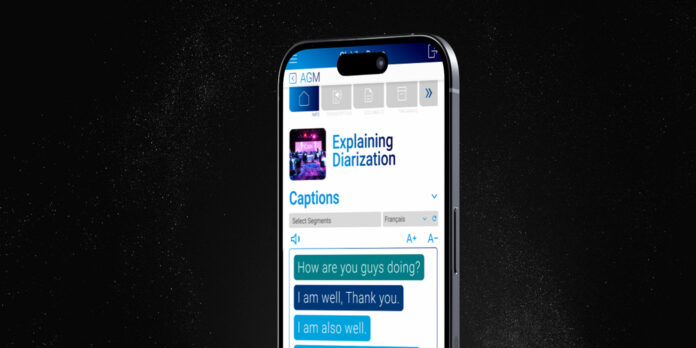
The new feature provides an intelligent, color-coded transcript interface that visually distinguishes speakers, making reviews, analytics, and reports more intuitive and actionable. It is particularly effective for panel discussions, arbitration hearings, training sessions, and multilingual roundtables, where multiple participants may speak simultaneously.

Key Highlights of Events.Studio’s Diarization Update:

  • Automatic Speaker Detection: Real-time identification of multiple speakers without manual tagging.

  • Continuous Language Identification: Detects and adapts to changing languages during discussions.

  • Optional Voice Sample Setup: Allows fine-tuned accuracy through pre-recorded voice profiles.

  • Multi-Microphone Compatibility: Distinguishes speakers even when several microphones are used — a unique capability unmatched in the event interpretation industry.

With this advancement, Events.Studio transcends traditional transcription tools. It not only converts speech to text but also captures the individuality of every voice, empowering event organizers, researchers, and interpreters with cleaner, structured, and speaker-attributed transcripts.

This launch reinforces Globibo’s commitment to integrating AI-driven innovation into event management and linguistic technology, helping global organizations communicate clearly and inclusively across languages and formats.