Pangeanic Awarded Prestigious “Innovative SME” Seal by Spain’s Ministry for Adaptive AI

0
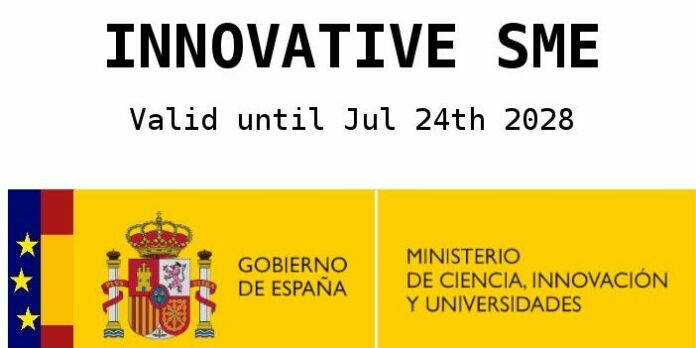
Innovative SME digital Seal

Pangeanic, a globally recognized provider of natural language processing (NLP) and machine translation solutions, announced that it has been awarded the coveted “Innovative SME” (Small and Medium-sized Enterprise) Seal by the Spanish Ministry of Science and Innovation. The prestigious designation recognizes the company’s sustained commitment to research and development, particularly its pioneering work in secure, privacy-focused Artificial Intelligence (AI) for the language industry.

The award specifically acknowledges Pangeanic’s advancements in developing high-quality, privacy-preserving language technologies, exemplified by its mixed approach to retrieval-augmented generative AI (RAG) frameworks to AI Translation and MTQE. This technology, recently deployed through the CDTI-supported project GenAI Augmented by Controlled Information Retrieval, integrates customized knowledge bases with advanced machine translation, ensuring context-aware output while keeping sensitive enterprise and public sector data secure and private.

Pangeanic’s Innovation Portfolio

• Deep Adaptive AI Translation: A breakthrough machine translation engine that dynamically leverages client-side translation memories (TMX, TSV, CSV) with proprietary RAG, achieving in-domain translation quality with up to 95% parity with human translation.

• ECOChat: A secure, multilingual enterprise chatbot ecosystem powered by RAG and agentic AI, designed to extract accurate insights from internal data privately.

• PECAT Platform: A proprietary AI datasets solution that facilitates the collection, ethical sourcing, annotation, and verification of high-quality multilingual training data, a critical asset for Silicon Valley firms and organizations developing large language models (LLMs).

• Masker: A multilingual AI-powered anonymization software developed as part of the European MAPA project, ensuring full compliance with GDPR and international data protection standards.

• EU Commitments: Key contributions to European initiatives like the Mosaic Project for multilingual public service broadcasting and the NTEU Project, which resulted in over 500 neural machine translation models for official EU languages.

Receiving the Innovative SME Seal is a profound validation of our decade-long investment in R&D and our commitment to pushing the boundaries of language technology securely,” said Manuel Herranz, CEO at Pangeanic. “In a landscape increasingly dominated by generic LLMs, this recognition highlights the value of our specialized, adaptive, and privacy-first approach. We are leading the charge in delivering solutions that not only achieve near-human fluency but also meet the stringent compliance and data control needs of global organizations.

The award reinforces Pangeanic’s position as a driving force in Spain’s and Europe’s technological innovation ecosystem, reaffirming its mission to lead the evolution of language intelligence worldwide.

About Pangeanic

Pangeanic is a leading provider of AI Language Technologies, specializing in Deep Adaptive Machine Translation, AI-powered data anonymization, and the creation of high-quality multilingual datasets for global enterprises and public administrations. Headquartered in Valencia, Spain, with offices in Tokyo, Pangeanic delivers secure, scalable, and ethically designed language intelligence to clients across numerous industries.
Phrase Named “Tech of the Week” by Nimdzi Insights 

0

Phrase, a global technology provider for multilingual content management, has been recognized as Tech of the Week by Nimdzi Insights following the release of upgrades to Phrase Studio, AI agent, and smarter workflows.

Phrase is among the first Translation Management Systems (TMS) to natively integrate multimedia localization capabilities. This shift addresses a growing demand for multilingual audiovisual content, which now plays a central role in global customer engagement.

Phrase Studio, released earlier this year, introduces capabilities for subtitling, dubbing workflows, and multimedia content adaptation directly within the TMS environment. This marks a step forward in unifying text, software, and media localization under one ecosystem, giving organizations a centralized solution to manage multilingual content at scale. In addition to capabilities such as subtitling and captions in 100+ languages (and translation of the same using translation memory), integrated quality checks, and AI-generated summaries, Phrase Studio offers AI voice synthesis and dubbing. For synthetic voices, Phrase partners with ElevenLabs. Next on the roadmap for Phrase Studio is building pronunciation rules for their AI dubbing capabilities.

In addition to adding Phrase Language AI directly in Phrase Studio, Phrase recently released AI Translation Agent, an enhancement for context-aware machine translation combined with Gen AI-powered post-editing, and smarter workflows.

The Tech of the Week recognition underscores Phrase’s commitment to innovation and its role in shaping the next generation of language technology.

About Nimdzi Insights

Nimdzi Insights is an international market research and consulting company. Nimdzi advises on international trade & development, language services, language technology, and localization programs. Nimdzi guides companies through investment and M&A activities. Nimdzi consultants are committed to providing opportunities for continuous professional development and resources for business professionals worldwide.

Linguist Education Online to Host 12th International Virtual Conference

0
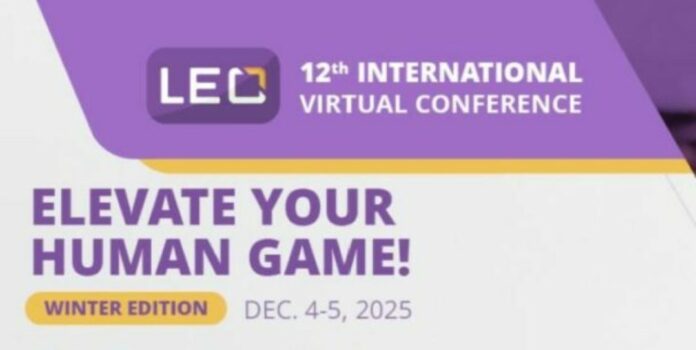
Linguist Education Online (LEO) virtual conference flyer

Linguist Education Online (LEO) has announced its upcoming 12th International Biannual Virtual Conference, scheduled for December 4–5, 2025. With the theme “Elevate Your Human Game! – Winter Edition,” the two-day virtual gathering will bring together professionals across the language services industry to discuss the evolving landscape of interpreting, translation, and language access.

LEO12 will feature 15+ live sessions, interactive panels, and CEU opportunities accredited by CCHI, RID, ATA, NBCMI, and a number of state courts. The program is designed to address pressing challenges and opportunities in the industry, ranging from compliance and policy shifts to AI-driven transformations and interpreter well-being.

Notable sessions include:

  • What the Future Holds – Renato Beninatto, Corinne McKay, Katharine Allen
  • Legal panel – Bruce Adelson, Esq., and Rosemary Ford
  • Skill-Building for the Future – Diego Cresceri
  • Practical Tips for Interpreters to Thrive in the AI Era – Miao (Maggie) Hong
  • Interpreter Well-being Panel – Jorge Mejia, Yuliya Speroff, Andy Benzo
  • Understanding Human Trafficking – What Every Interpreter Needs to Know – Ludmila Golovine & Kathy Givens

“Our industry is evolving rapidly, and with it the expectations placed on interpreters, translators, and language service companies,” said Jinny Bromberg, Executive Director of LEO. “LEO12 is designed not just to inform, but to equip professionals with skills they can apply immediately—whether that means thriving alongside AI, navigating compliance challenges, or strengthening mental health and personal resilience. LEO events are focused on bringing our industry together to support and elevate each attendee.”

More information, including the full program and registration details, is available here:
https://linguisteducationonline.com/leo-12th-conference/

About Linguist Education Online (LEO)

Founded in 2009 by court-certified interpreter Jinny Bromberg, LEO delivers training, testing, and CEU-accredited education for interpreters and translators. Many of its interpreter courses are offered in more than a dozen languages, supported by certified instructors. Known for high-quality courses, expert webinars, and biannual international conferences, LEO partners with individuals and organizations to raise professional standards and expand quality language access.

The Week in Review: Language Industry News September 29–October 6

0
Week In Review Sep 29 - Oct 6

Every week, the language industry delivers stories that bridge innovation, communication, and cultural connection. Between September 29 and October 6, new product launches and industry events highlighted a shared commitment to advancing multilingual technology, strategic globalization, and professional development. Key highlights include:

AI Tools and Localization

Hyperfusion and CAMB.AI announced a landmark partnership to deliver sovereign, real-time voice AI and agent infrastructure across the Middle East and North Africa. Hosted locally on UAE-based GPUs, the platform supports more than 100 languages — including Arabic dialect packs — and empowers organizations to build responsive, compliant voice agents and live translation tools. The collaboration marks a major step toward regionally grounded, multilingual AI innovation.

Phrase was recognized as Tech of the Week by Nimdzi Insights following updates to Phrase Studio, AI Translation Agent, and workflow enhancements. Phrase Studio now integrates subtitling, dubbing, and multimedia adaptation directly into its TMS, making it one of the first platforms to unify text, software, and media localization under one system — a move that reflects the growing importance of audiovisual content in global engagement.

Strategic Globalization Reimagined

Piedmont Global, formerly known as PGLS, unveiled a new brand identity as the world’s first Strategic Globalization Organization (SGO). The rebrand reflects a shift from traditional language solutions toward fully integrated cross-cultural operations – uniting strategy, culture, and technology under one model. The company’s new direction aims to make global operations “easier, smarter, and more human” for enterprises and public sector partners worldwide.

Education and Elevation in the Language Profession

Linguist Education Online (LEO) announced its upcoming 12th International Virtual Conference, LEO12: Elevate Your Human Game! – Winter Edition, set for December 4–5, 2025. The two-day event will feature expert panels, CEU-accredited sessions, and discussions focused on thriving in an AI-driven era while maintaining human connection and professional well-being across interpreting and translation.

_________________________________________________________________________________________________________________________________________________

From sovereign AI platforms and redefined globalization strategies to professional training and next-generation TMS capabilities, this week underscored how the language industry continues to evolve — not just in technology, but in purpose. Together, these stories reveal a shared drive to make multilingual communication more immediate, inclusive, and intelligent.

For more stories like these, visit our News section.

Reviver Global Launches Operations, Redefining Language Services With Human Expertise and AI Innovation

0
Reviver Global logo

Reviver Global has announced the official commencement of its operations, bringing a revitalized approach to global communication. Headquartered in Dubai with international reach, Reviver Global is set to deliver advanced translation, interpretation, and multilingual solutions that seamlessly combine human talent with integrated AI technologies.  

Reviver Global aims to transform how organizations interact with diverse audiences across borders. The company specializes in providing translation, localization, over-the-phone interpretation (OPI), video remote interpretation (VRI), onsite interpretation, and remote simultaneous interpretation (RSI), being offered as TAAF (Translation as a Feature) along with tailored AI-driven solutions that increase efficiency without sacrificing accuracy.  

“We believe that language is the foundation of connection,” said Bryan Montpetit, CEO of Reviver Global. “By combining the irreplaceable skill of human linguists with the power of AI, we’re helping businesses, governments, and healthcare organizations break barriers and communicate authentically at scale.”  

Reviver Global’s services are designed to meet the critical needs of industries where precision and trust are paramount — including healthcare, education, government, finance, energy, retail, hospitality, and medical tourism. The company’s hybrid model ensures that every project benefits from the cultural fluency and nuance of professional linguists, supported by the efficiency and scalability of advanced AI.  

With a commitment to precision, compassion and accessibility, Reviver Global is not only enhancing communication—it is setting a new standard for how language services support patient experience, global trade, and international collaboration.  

About Reviver Global  

Reviver Global Translation Services LLC provides comprehensive language solutions across 250+ languages, blending human expertise with AI-powered innovations. From translation and localization to on-demand and pre-scheduled interpretation, Reviver Global empowers organizations to succeed in today’s multilingual world.  

Five Best Practices for Localizing AI-Based Services

0
multilingual AI services

Many companies are rolling out artificial intelligence (AI)-first or AI-augmented services that directly or indirectly interact with users. These services rely on large language models (LLMs) that are trained on data that is overwhelmingly in English and a handful of other languages — and that therefore perform less than optimally in most languages. This presents some potentially thorny issues when it comes to localizing AI-based services.  

Secondary and low-resource languages pose especially difficult challenges due to their sparse training data. To make matters worse, a lot of the online content in these languages is machine-translated, which creates a “garbage in, garbage out” problem if that material was used to train the model. So while your product might perform like ChatGPT-4 in English, it could be a lot less reliable in Hindi.

In light of these shortcomings, the following five best practices can help companies improve their localized AI-based services and provide the best experience possible for their customers.

1. Leverage Native Speakers to Test User Experience

One of the reasons it is a good idea to hire bilingual staff when possible is they can evaluate the product and look for functional issues while running it in their language. Native speakers can spot when AI is generating language that sounds right but is actually incorrect — something  that may go unnoticed by other testers (and you really don’t want to turn a broken experience loose on your users).

This is also something a transcreation agency can help with. These agencies hire copywriters who are native speakers of the target language. They can assess the quality of translations, style, and accuracy of responses in their respective languages.

2. Release New Languages Cautiously

It is generally not a good idea to “shotgun release” new languages without doing thorough testing first. Even then, you should label the release as “beta” and also compare user metrics versus English. Users are generally pretty tolerant of minor translation errors in the user interface (UI), so those won’t hurt usage much; but if they are using your service to do research and getting nonsensical results in their language, they may leave and not come back.

3. Use English as a Bridge Language

Companies can use a translation AI like DeepL or Google Translate LLM to translate to and from English. In this approach, the prompt is translated from a secondary language to English, and the response is translated back to the input language. Some AI providers may already be doing this behind the scenes, so it is worth investigating that before you add your own translation layer, which could just get in the way. 

This approach comes with some risks, as there will typically be a loss of information in each direction. The best models deliver accurate translations 80-90% of the time, which can make the difference between a good prompt and one that will produce garbled results. Specialist translation AIs generally outperform generalist AIs like ChatGPT for translation. So if you choose to do this, it’s probably a good idea to make it clear to users, so they can use that instead if they speak a better-resourced language.

Secondary and low-resource languages are often underserved or not served at all by translation engines. Sometimes you can find specialist translation platforms that target specific languages. What you’ll typically see is that translation accuracy is not as good for secondary languages, which will cause information loss in both directions. The good news is many people understand one or more of the other top international languages where AI platforms perform well. For example, French is widely spoken in parts of Africa, so users there might find the platforms work best in French versus local languages and dialects.

Overall, this approach may be the least-bad option for low-resource languages, but it is not ideal for most.

4. Collate Results of Multiple Queries

Information is often siloed by language. Consider a situation in which a user asks an AI about Japanese baseball players. While information about top players may be available in English, there is likely much more complete information in Japanese. In this situation, the best approach may be to do multiple queries in different languages and then collate the results to be presented to the user. 

Savvy users may already be aware of this issue and know how to prompt systems in a way that surfaces siloed information. But the average user will probably not be aware of this, so collating results is something AI providers can do behind the scenes to improve responses. 

5. If Possible, Utilize a Native Multilingual LLM

One encouraging development is that countries are developing their own AI models that are trained in relevant languages to build natively multilingual services. For example, in Switzerland, leading universities are developing an open-source, multilingual LLM that others can build on. I expect to see more developments like this to create AI models to serve other regions. However, while this is the best long-term solution, it is also an expensive one due to the cost required to train LLMs.

Conclusion

It doesn’t matter how good your UI and website look in Thai if the underlying AI service is dysfunctional in that language. For now, the five best practices presented above are the best strategies for companies that want to create better AI services for their users around the world.

However, there is no easy shortcut to localize language models without training them in other languages. Native multilingual LLMs may be the only way for AI providers to attain native proficiency in other languages. That’s why I hope that open-source models will win out in the long run, because they will enable countries that might otherwise be underserved to build their own models.

The Revival of Nüshu: A Hidden Script for Women Reclaims Its Influence in China

0
Nüshu writers

A once-secret channel of communication among women resisting societal norms in feudal China has recently garnered the attention of Gen Z in the country’s Hunan province thanks to revitalization efforts from local organizers. The endangered Nüshu script — the world’s only writing system exclusively used by women — is now being taught in workshops and education courses in an attempt to preserve cultural heritage within the region.

What Is Nüshu?

The 400-year-old script was used for communication among women who lived in the Xiao River Valley, comprising 18 villages and four towns, between around 1050–256 BCE. The secret writing system was spread by generational inheritance as a way to work around girls being excluded from education. The word nüshu literally translates to “women’s writing.” 

The script features slender, curved, and leaf-shaped characters — altered versions of standard Chinese characters adapted to the local dialect, Chengguan Tuhua. The script contains approximately 700 syllabic characters, but the exact number is hard to determine, as authentic work was often not preserved. 

Revitalization Efforts

A week-long revival seminar held in August 2025 in China’s Jiangyong county drew nearly a hundred participants, many of whom were young women eager to reconnect with a linguistic tradition that once defied patriarchal norms. According to reporting from France24 and DW, the workshop has become more frequent in the past few years and now hosts three or four sessions a year. The Jiangyong County Tourism Development Service Center is currently working with the Women’s Script Ecological Museum to put on more of these interactive calligraphy workshops and cultural tours in the near future. 

This workshop is not the first time action has been taken to bring the script back to life. The early 2000s marked the beginning of revitalization efforts, including legislation and standardization, across both local and national governments: Nüshu was added to the Chinese National Register of Documentary Heritage in 2002; Nüshu workshops were introduced in Jiangyong county in 2003; the State Council listed Nüshu as a national cultural heritage in 2006; and the Nüshu Ecological Museum was opened in Puwei Island, Jiangyong county, in 2007. 

Then in 2015, Jiangyong county was designated as a pilot area for an ecolinguistics project, in addition to 397 Nüshu characters being admitted by the International Organization for Standardization (ISO). China’s proposal to include Nüshu characters in the Universal Coded Character Set was approved in 2017. Currently, Nüshu specialists are being commissioned to create linguistic manuals that will be used in elective courses for primary and secondary schools in an attempt to help grow its popularity among younger generations.

Memoir by Linda Murphy Marshall Recounts Globe-Spanning Journey Through Language and Resilience

0
Linda-Murphy-Marshall-Immersion

She Writes Press has released Immersion: A Linguist’s Memoir by Linda Murphy Marshall, an international story that follows a linguist’s emotional and physical journey to find her place in the world — across more than a dozen languages and multiple continents.

In Immersion, Murphy Marshall traces her path from early Spanish studies to Washington, DC, where she trained and worked as a multi-linguist. Her assignments took her to remote regions of Northeast Brazil and across Africa, including Zambia during an attempted coup, the Democratic Republic of Congo during wartime, Kenya following the Al-Qaeda bombing of the United States (US) Embassy, South Africa shortly after apartheid, and Tanzania on a protection team with President George W Bush. Along the way, she studied Xhosa, Sotho, Shona, Swahili, Amharic, and Somali.

Blending coming-of-age narrative, cultural and political history, and high-stakes fieldwork, the memoir shows how linguistic mastery and persuasion can reshape a life’s trajectory.

Immersion reads like an international thriller… a page-turner from beginning to end,” notes one reviewer, highlighting the author’s journey from humble beginnings to global impact.

Immersion is distributed by Simon & Schuster and can be purchased at Barnes & Noble, The Ivy Bookshop in Baltimore, Amazon, Curious Iguana in Frederick, Maryland, and numerous independent bookstores.

About the Author

Linda Murphy Marshall is a linguist and writer whose government service and language studies span the Americas and Africa. She has worked with the Maryland Center for Advanced Study of Language, US Department of Defense, US State Department, CIA, FBI, and Lutheran Church. She speaks 15 languages at varying levels of proficiency.

GlobeScribe and Book Brush Announce Strategic Affiliate Partnership

0
GlobeScribe and Book Brush

Collaboration helps authors expand their reach into global markets

GlobeScribe, a leading provider of book translation services and Book Brush, the all-in-one platform for creating professional book marketing images, today announced a new co-branded affiliate partnership. This collaboration is designed to empower authors and publishers by providing a seamless pathway to expand their reach into global markets.

“This relationship is a great fit, as we both share a commitment to helping authors succeed,” said Fred Freeman, co-founder at GlobeScribe. “Our goal is to make the process of expanding into new markets as simple and affordable as possible, and this partnership with Book Brush will allow us to reach a community of authors who are already invested in professional book marketing.”

As part of the partnership, GlobeScribe has created a dedicated co-branded page on its website, prominently featuring both the Book Brush and GlobeScribe logos. This page will serve as a resource for Book Brush users seeking high-quality translation services to make their books accessible to a wider, international audience.

“Book Brush is dedicated to providing authors with the best tools to promote their work,” said Josh Wiley, CEO and Founder at Book Brush. “Our partnership with GlobeScribe offers our users a fantastic opportunity to take their marketing efforts to the next level by reaching readers around the globe. We believe this will be a valuable resource for our community, and we are excited to see the impact of this collaboration.”

Any customer referred to GlobeScribe through the co-branded page will receive an exclusive 10% lifetime discount on all GlobeScribe translation orders. This special offer is designed to provide authors and publishers with an immediate and long-term benefit for their translation needs.

For more information: www.globescribe.ai/Bookbrush

About GlobeScribe

GlobeScribe is a technology company providing AI-powered book translation services. Founded by publishing veterans, GlobeScribe offers fast, affordable and high-quality translations, making international publishing accessible to every writer and publisher.

About Book Brush

Book Brush is the leading all-in-one design platform for authors and publishers, trusted by over 150,000 authors worldwide. With easy-to-use tools and customizable templates, Book Brush helps authors create professional book marketing images, 3D mockups, video trailers, and Amazon A+ content in minutes—no design experience required. From indie authors to publishing teams, Book Brush makes it simple to market books and reach readers.