ModelFront Announces General Availability of Automatic Post-Editing

0
ModelFront

ModelFront has announced the general availability of automatic post-editing (APE), an additional private custom large language model. First rolled out in 2024, APE is now rolled out to all ModelFront customers in production and included by default from day one.

ModelFront’s quality prediction (QP) is AI to check and fix AI translations. It automatically verifies segments that humans would verify unedited, and triggers human intervention for those that need it. Enterprise translation buyers use QP to automate and scale while keeping human quality.

While QP alone successfully automated segments that professional human translators were verifying totally unedited, many segments still sent to humans required only repetitive, mechanical edits. APE generates these edits, to grow what is automated, while still keeping human quality. Human intervention is still triggered for those segments that require human intelligence, research or decisions.

“This was a logical next step, that customers pushed for,” said Adam Bittlingmayer, CEO and technical co-founder of ModelFront.

“This was a logical next step, that customers pushed for. In theory, these are fixes that could be made by custom machine translation models, like Google or Microsoft. But in reality, it never happened. Enterprise translation teams can’t train thousands of models to cover all combinations of language, content type and workflow step. ModelFront models are built to learn the workflows and built to work together.”

APE was first deployed in production in 2024 and was successfully rolled out across ModelFront’s customer base — primarily Fortune 500 companies and their content — by the start of 2026. Advanced buyer teams shared results publicly at top industry events, like LocWorld 2024 in Monterey. To date, ModelFront APE has resulted in hundreds of millions of additional automated words for enterprise translation buyers.

“You can get a very substantial increase in your MT auto approval rates without sacrificing quality” said Conchita Laguardia, the specialist running AI and Tech for Localisation inside Farfetch (Coupang (NYSE: CPNG)), one of the first enterprises to adopt quality prediction and automatic post-editing.

“Ever since I implemented MTQE in production and saw it worked; I thought that automatic post-editing was the natural evolution step after it. If the model can detect a bad translation, surely it can also attempt a fix and re-evaluate the fixed output?

While it won’t fix everything, APE makes sure that systematic errors are no more, by embedding those recurring human fixes into a closed-loop optimization cycle that first detects, then corrects, then self-evaluates the correction. Depending on the language pair, you can get a very substantial increase in your MT autoapproval rates without sacrificing quality.”

ModelFront APE is available across all ModelFront integrations, including Phrase (The Carlyle Group (NASDAQ: CG)), XTM (K1 Investment Management), memoQ, WorldServer and Trados Enterprise (RWS (LSE: RWS)) and GlobalLink and Wordbee (TransPerfect), and via the ModelFront API.

ModelFront APE works with AI-generated translation from any source, including Google Translate and Gemini (Alphabet (NASDAQ: GOOGL)), DeepL, Microsoft Custom Translator (Microsoft (NASDAQ: MSFT)), OpenAI, Claude (Anthropic) and Systran (ChapsVision).

As part of ModelFront’s system, APE is an additional private custom LLM built with the same strict data privacy guarantees. Customer data is never sent to generic shared LLMs or any third-party AI.

With ModelFront, APE always works together with quality prediction (QP), a separate LLM that maintains human quality. QP verifies translations, APE generates edits. Edits generated by APE are always resent to QP for verification, just like the original untrusted raw AI translations are. APE that QP cannot verify is sent to professional human translators. APE only creates significant value together with QP.

ModelFront APE is used by translation teams inside large enterprises across industries like software, law, fashion, travel and pharma.

Availability: Automatic post-editing is now included in ModelFront by default for all customers.

About ModelFront

ModelFront is AI to check and fix AI translations and trigger human intervention as needed, to scale translation while keeping human quality, with a vision of more content in more languages for more people. Companies use ModelFront to fully automate millions of words, while keeping the same human quality, right inside their existing setup. Unlike most AI providers, ModelFront provides verification (✓ or ✗), not just unverified generation, and take responsibility for keeping human quality. Hundreds of millions of words of high-value Fortune 500 content have been trusted to ModelFront.

ModelFront does not provide manual human translation services. ModelFront is a Gartner Cool Vendor and recognized by translation industry publications like Nimdzi, Multilingual Magazine, Slator, CSA Research. ModelFront Inc. is based in Palo Alto, California.
XTM Unveils XTM Agent to Bring Agentic AI into Enterprise Localization Workflows

0
XTM

XTM International has announced the launch of XTM Agent, a conversational, context-aware AI agent embedded directly into XTM Cloud. Built to help project managers, localization teams move faster and with far less friction by turning scattered project information into simple, guided next steps that anyone can act on.

This launch is a significant step forward in XTM’s AI roadmap, strengthening its position as one of the leading AI globalisation platforms for enterprises that want to automate low-value work, speed up delivery, and maintain control across every stage of the localization process.

Bringing intelligence and focus to high-volume operations

Teams managing global content operations today aren’t dealing with a few big projects anymore. They’re handling hundreds or even thousands of small ones at the same time. 

With so much happening in parallel, it becomes hard to know what to focus on, which tasks are at risk, or which vendor is the right fit. Additionally, users lose time jumping between screens or searching through help pages just to find simple answers or troubleshooting steps. XTM Agent solves these everyday problems by acting as a smart assistant inside XTM Cloud.

XTM Agent understands what’s happening across your projects and gives clear, timely guidance so teams can move faster and avoid unnecessary admin. Instead of digging for information, users get direct answers and recommendations right when they need them.

With XTM Agent, teams can:

  • Get answers instantly without searching through manuals or help articles.
  • Fix issues faster with step-by-step guidance and links to the right resources.
  • See what to prioritise next, based on deadlines, workload, and potential risks.
  • Find the right vendor for the job, with suggestions based on skills, availability, and timing.
  • Receive helpful recommendations on settings, configurations, and best practices.

Use agentic AI to maximise operational efficiency

“Localization teams are under pressure to deliver more, faster, and with fewer resources,” said Lorcan Malone, CEO of XTM International. “XTM Agent takes away the constant juggling act, so teams can focus less on admin and firefighting, and more on quality, strategy, and delivery.”

“Our goal is to empower every user with XTM Agent, which is why we’re making its core capabilities available for free across all XTM Cloud plans.”

“So much of a project manager’s day is eaten up by small questions, manual checks, and trying to piece together what’s going on,” said Andreas Ljungström, Head of Product at XTM. “XTM Agent gives that time back. It’s like having a teammate who already knows the context, understands your priorities, and helps you make the right call without slowing you down.”

XTM Agent builds on XTM’s continued investment in AI, following the introduction of its Advanced AI capabilities last year and most recently, Intelligent Post-EditingThe launch reinforces XTM’s mission to make global content delivery faster, easier, and more scalable by giving enterprises an AI platform that removes friction from every stage of localization.

To explore XTM Agent and see how it works inside XTM Cloud, take our interactive product tour.

About XTM International

XTM International is an AI globalisation platform headquartered in the U.K. that transforms language from a barrier into an opportunity. It brings translation management, business management, software localization, and video creation together into a composable system, giving enterprises the flexibility to adopt the AI solutions they need, when they need them. Trusted by over 1,300 leading global companies, supporting more than 880 languages and with over 80 ready-to-go integrations, teams rely on XTM to scale globally with absolute trust by producing content that feels genuinely local in every market.

The Week in Review: Language Industry News February 17-23

0
Week in Review Feb. 17-23

This week’s stories highlight how the language industry continues to evolve across IP services, literary translation, regional consolidation, artificial intelligence (AI)‑centered discourse, and enterprise workflow infrastructure. Together, they show a sector balancing tradition and innovation — honoring excellence, expanding capabilities, and interrogating the human stakes of AI while building the systems that will carry multilingual content into the next decade.

Expansion

Sopoltrad has acquired TextPartner, consolidating both companies under a single operational hub in Kraków and strengthening their combined presence in Central and Eastern Europe. The merger expands ISO‑certified processes, technology infrastructure, and linguistic coverage, offering clients a more comprehensive suite of services in Central and Eastern European languages. Leadership emphasized shared values around quality and long‑term client relationships as the foundation for the integration.

Welocalize has expanded enterprise access to OPAL Enable by integrating the multilingual AI workflow platform directly into Blackbird’s integration platform as a service (iPaaS) ecosystem, allowing organizations to directly deploy AI‑driven localization workflows without re‑architecting existing systems. The collaboration gives content, product, and digital teams streamlined access to OPAL Enable’s configurable automation layer, balancing speed, quality, and oversight within established environments. By enabling multilingual AI workflows to run natively inside enterprise tech stacks, Welocalize positions OPAL Enable as scalable infrastructure for global product launches, regulated content, and high‑volume digital operations.

Community and Awards

The AI Localization Think Tank has announced AI ThoughtCon 2026, a three‑day online conference exploring the human, ethical, and cultural implications of AI. With 12 speakers including historians, educators, developers, and localization professionals, the event examines themes like trust, bias, meaning, and the evolving human role in an AI‑first world. Designed as a free and accessible forum, ThoughtCon aims to spark deeper interdisciplinary dialogue about how AI is reshaping global communication and collective decision‑making.

RWS has been recognized as the Outstanding IP Service Team in China for the fourth year in a row, reflecting sustained excellence in professional capability, research expertise, and client‑focused service delivery. The award highlights the company’s continued leadership in China’s fast‑evolving intellectual property (IP) landscape, where quality, consistency, and localized expertise remain critical. This recognition reinforces RWS’s long‑term commitment to supporting global IP protection with culturally and technically aligned services.

Translator Peter Filkins has received the inaugural Freudenheim Translation Prize for his English translation of Elias Canetti’s The Book Against Death, praised by judges as a masterful translation of a posthumous philosophical work. The prize aims to elevate translated Jewish literature and broaden access to international voices that often remain underrepresented. Filkins’ win underscores the enduring importance of literary translation in bringing complex, historically significant texts to new audiences.

_____________________________________________________________________________________________________________________________________________

From award‑winning IP services to literary recognition, AI discourse and regional consolidation, this week’s stories capture a sector in motion. Language work is expanding in scope and sophistication, demanding both human insight and robust technical infrastructure. As organizations rethink how they operate globally, the industry continues to build the intellectual, cultural, and technological foundations that make multilingual communication possible.

For more stories like these, visit our News section.

A Better Way to Use Debate in Language Classrooms

0
Students and teacher in classroom

Debate occupies a central position in many modern language classrooms, where it is frequently employed to foster extended speech, develop fluency, and encourage learners to engage with complex ideas. In these classroom debates, students are invited to discuss public policy, higher education, environmental responsibility, or social inequality. They are expected to justify positions, respond to counterarguments, and sustain structured interaction over time.

In principle, debate appears ideally suited to communicative language teaching — as it promotes interaction, spontaneity, and intellectual engagement. Yet in practice, classroom debate often yields more limited linguistic development than anticipated. Exchanges may become rapid and oppositional, with learners relying on formulaic opinion markers. For example, a student may assert, « Je pense que l’université devrait être gratuite. » (“I think university should be free.”) Another responds, « Je ne suis pas d’accord, ce serait trop coûteux. » (“I disagree, it would be too expensive.”) The interaction is active, but the linguistic range narrow.

Such exchanges are not inherently problematic. However, they frequently privilege immediate rebuttal over interpretive engagement. Learners rely predominantly on present-tense assertions and simple modal constructions. Listening functions as preparation for counterargument rather than as a discursive obligation.

This tendency reflects the adversarial structure that characterizes much of Eurocentric rhetorical tradition. In many Western academic contexts, argumentation is organized as opposition. Persuasive force and speed of response are highly valued. These norms are often presented as universal models of critical thinking, yet they are historically situated and culturally specific. When adopted uncritically in the language classroom, they shape both interactional dynamics and the grammatical forms that are most likely to emerge.

However, this Western rhetorical tradition is not the only debate model available. Alternative traditions have developed equally rigorous approaches to structured disagreement. One such approach comes from classical Indian philosophy.

Within systems such as Vedānta and Nyāya, debate was governed by disciplined procedural methods. One of these methods is known as Purvapaksha. In this framework, a thinker was required to present the opponent’s position accurately and comprehensively before offering critique. The reconstruction had to be sufficiently precise that the opponent would recognize it as fair. Only after validation could systematic refutation proceed.

This structure is visible in classical commentarial traditions, including those associated with Śakarācārya. In these works, critique depends upon prior interpretive integrity. Understanding is not rhetorical courtesy, but epistemic discipline, and representation precedes refutation.

When adapted for the language classroom, this principle produces measurable linguistic and pedagogical effects. The following examples are drawn from discussions produced by students in my own university French classes, where learners debated whether higher education should be free.

In a conventional format, a student may state:

« L’université devrait être gratuite parce que l’éducation est un droit fondamental. » (“University should be free because education is a fundamental right.”)

In a Purvapaksha-inspired format, another student must first reconstruct that argument:

« Si je comprends bien, vous estimez que l’éducation est un droit fondamental et que l’État devrait donc prendre en charge les frais universitaires. » (“If I understand correctly, you believe that education is a fundamental right and that the state should therefore cover university fees.”)

This reformulation produces significant linguistic shifts. The original statement relies on direct assertion in the present tense. The reconstructed version requires reported perspective, clause embedding, and lexical reframing. When referring back to an earlier intervention, a student might say:

« Vous avez expliqué que l’université devrait être gratuite parce que l’éducation était un droit fondamental. » (“You explained that university should be free because education was a fundamental right.”)

Here, the present tense « est » shifts to the imperfect « était » within reported speech, reflecting sequence of tense. The reporting verb « vous avez expliqué » requires accurate use of the compound past. Such morphosyntactic adjustments rarely emerge in rapid adversarial exchange. They arise because the task requires faithful reconstruction before critique.

After reconstruction, the original speaker may confirm:

« Oui, c’est cela, mais j’ai aussi souligné que cela permettrait de réduire les inégalités sociales. » (“Yes, that is correct, but I also emphasized that it would help reduce social inequalities.”)

Only once validation is achieved does critique proceed:

« Bien que vous affirmiez que la gratuité réduirait les inégalités, on pourrait se demander si cette mesure serait viable à long terme. » (“Although you argue that free tuition would reduce inequalities, one might question whether this measure would be viable in the long term.”)

The task now requires concessive clauses, modal expressions, conditional forms, and evaluative framing. Grammar becomes functionally necessary rather than formulaic.

The contrast with traditional classroom debate can be summarized as follows:

Feature Traditional/Western Debate Purvapaksha-Inspired Debate
Primary Discursive Move Express personal opinion Reconstruct opponent’s position before critique
Tense Usage Predominantly present tense Frequent shifts in reported speech (imperfect, conditional, compound past)
Clause Structure Mainly independent main clauses Embedded clauses, subordination, concessive structures
Listening Function Preparatory for rebuttal Structurally required for accurate reconstruction
Modal and Evaluative Language Limited use Frequent use of modality and analytical framing
Nature of Critique Immediate and oppositional Delayed, validated, analytically grounded

Because reconstruction must be validated, oversimplification becomes difficult. Learners attend closely to lexical precision, tense concordance, and logical coherence. Moreover, listening acquires structural centrality.

By widening the intellectual genealogy of debate to include Indian philosophical traditions such as those exemplified by Śakarācārya, educators expand the repertoire of epistemic practices available in the classroom. This pluralization does not displace Eurocentric rhetoric, but rather situates it within a broader global history of disciplined reasoning. Applied in contemporary language classrooms, the Purvapaksha-inspired method reframes debate as disciplined inquiry rather than competitive exchange, enriching linguistic development in the process.

RWS Secures US Patent for AI That Predicts Translation Effort at the Point of Authoring

0
RWS

RWS (RWS.L), a global AI solutions company, has been awarded US Patent No. 12,505,297 for an AI-powered system that enables organizations to understand the translation potential of their content as it is being authored – long before a translation project is scoped or commissioned.

Coming to Trados customers in 2026, the patented technology – Document Translation Feasibility Analysis Systems and Methods – analyzes a source document to identify how much content can be reused from previous translations, including cases where the wording has changed but the meaning remains the same.

By operating at the authoring stage rather than within the translation workflow, the system gives content authors and project managers early visibility into expected effort, cost and reuse – shifting feasibility decisions upstream where they have the greatest impact.

“This patent addresses a critical gap in how enterprises manage multilingual content. By surfacing translation intelligence at the point of creation, teams can make informed decisions about cost, effort and reuse before a single translation request is raised – not after,” said Rares Vasilescu, VP of Product Development at RWS.

Moving beyond sentence-level matching

Traditional translation tools rely heavily on exact or near-exact text matches. RWS’s new technology goes further by using AI to generate semantic signatures – meaning-based representations of text – and comparing them against large repositories of previously translated content.

In practice, this allows enterprises to see which parts of a document are already covered by existing linguistic assets and where genuinely new translation work is required – before projects are scoped or budgets are committed.

The patented approach is designed for enterprises managing complex content estates across multiple languages, markets and regulatory environments. By surfacing reuse potential and feasibility insights at an early stage, it enables organizations to make faster localization decisions and identify content that could benefit from translation – including content that would have been overlooked or deemed impractical to assess within traditional localization workflows. Combined with human oversight, this AI-driven analysis supports more predictable planning, better reuse of existing linguistic assets and consistent quality at scale.

About RWS

RWS is a global AI solutions company headquartered in the UK who empowers the world’s most trusted enterprise AI. Its proprietary Cultural Intelligence Layer, powered by 250,000 data specialists, cultural and language experts and deep domain professionals, backed by 45+ patents, makes enterprise AI culturally fluent, contextually accurate and secure, ensuring every interaction reflects a brand’s tone, context and customer values.

Through its Generate, Transform and Protect segments, it delivers intelligent content, enterprise knowledge, large-scale localization and IP protection for global growth. Trusted by 80+ of the world’s top 100 brands, RWS provides the confidence, governance and expertise organizations need to deploy AI safely, responsibly and at scale.

How Strava Built an AI-Driven Globalization Stack in Under Six Weeks Using Crowdin

0
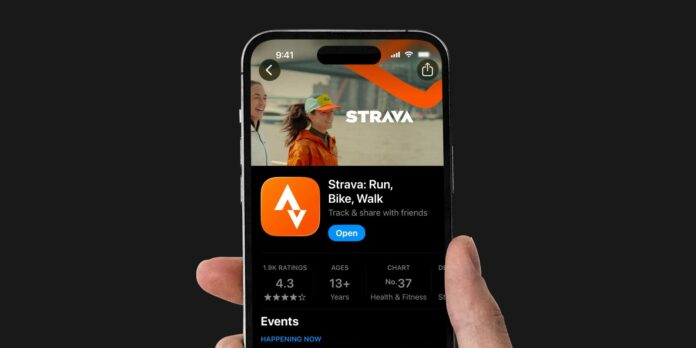
Multilingual Strava App available for download on mobile devices

With over 150 million users across 185 countries, Strava is one of the world’s largest digital communities for active people. It is the place where professional cyclists and weekend joggers alike go to hunt for Kudos, battle for King of the Mountain titles, and share their latest Strava Art.

In 2025, Strava reached a valuation of $2.2 billion in a funding round led by Sequoia Capital. With nearly $500 million in annual recurring revenue, Strava is the top unicorn of the fitness world.

Creating a Localization Strategy for 2 Products: Strava and Runna

When Eduardo D’Antonio, Globalization Director at Strava, set out to build a modern globalization tech stack, the stakes were high. Strava had just acquired Runna, a UK-based personalized coaching app. The mission was clear: localize Runna into seven key markets (including Dutch, French, German, Italian, Japanese, Portuguese, and Spanish) in under six weeks.

Traditional translation management systems often require months of implementation. For a high-growth unicorn like Strava, waiting six to nine months for a setup was not an option. They needed a solution that offered deep automation, a vast library of integrations, and a pricing model that scaled with their 35-million-word volume.

Why did Strava Choose Crowdin?

Eduardo evaluated the leading TMS platforms on the market but found many were too expensive, too slow to implement, or lacked the technical flexibility Strava required.

Strava chose Crowdin as the center of their localization architecture because it offered:

  1. Integrations (The #1 Priority): Strava needed to connect over 25 different content repositories across their ecosystem.
  2. Implementation Speed: While competitors quoted 6-9 months for setup, Strava didn’t have that time.
  3. Cost: Strava needed an affordable, scalable solution.
  4. Customization & Support: They needed a partner, not just a vendor, someone who would listen to feature requests and adapt as quickly as Strava does.

To meet the aggressive six-week deadline, Strava implemented an AI-driven strategy. By combining NMT and LLMs via Crowdin, the team managed to maintain quality while reducing time-to-market.

Results

Beyond the technical setup, the strategy of using Crowdin as the central hub and connectors to FigmaGitHubContentfulIntercomIterableKevelStrapi, and Intento + DeepL for MT translation allowed Runna to go global in record time. It was successfully localized into Dutch, French, German, Italian, Japanese, Portuguese, and Spanish. By using NMT and LLMs via Crowdin, Strava can now translate faster, better, and cheaper.

As Dom Maskel, CEO of Runna, noted in Forbes, “Strava’s experience in localization helped us bring this all to life and their support has been instrumental in bringing this update to market at pace and at scale.”

“This means millions more runners worldwide can fully experience what we’ve built. This is about more than translation: it’s about inclusivity, accessibility and global ambition to make running more accessible, effective and enjoyable for everyone,” he continued.

“None of this would have happened without Crowdin,” says Eduardo, Globalization Director at Strava. “I think that’s the most powerful sentence I could tell you.”

Key Takeaways

  1. If your TMS does not integrate with your tech stack, you are not truly automating.
  2. Speed is a competitive advantage. In the tech world, being first to a new market can define brand loyalty for years.
  3. Customization and support are the silent pillars of a six-week launch. Strava required a partner willing to listen to feature requests and adapt as quickly as their own engineering team.

Interpreters Unlimited Launches Online Portal for Certified Human Translation of High-Stakes Documents

0
Interpreters Unlimited Group

As Artificial Intelligence (AI) tools gain popularity in document translation, legal and immigration professionals are warning of the growing risk that automated translations are being used for high stakes filings where even minor errors can lead to costly delays, rejected applications, or legal consequences.

In response to the rising demand for accountable certified human translation, Interpreters Unlimited (IU), a national language service provider, is doubling down on humans. IU has announced the launch of Certified Translation by Interpreters Unlimited™, a secure online portal, developed in partnership with AcudocX, designed to streamline access to legally accepted document translation services across the United States.

Through the platform, individuals and organizations can securely upload files, receive clear rapid pricing and turnaround details, approve projects, and track progress from start to finish entirely online. The service is designed primarily for individuals who need translations for immigration paperwork, birth and marriage certificates, asylum materials, medical records, academic transcripts, and legal filings. It also supports professionals working in healthcare, law, education, government, and corporate environments.

While AI-based translation tools offer speed and convenience, they cannot provide certification, legal accountability, or guaranteed acceptance by courts and federal agencies, such as U.S. Citizenship and Immigration Services (USCIS). Translations handled through Certified Translation by Interpreters Unlimited™ do just that, meeting strict quality standards and including certified documentation that is accepted by courts, government agencies, school systems, and other official entities.

Immigration attorneys and legal aid organizations have increasingly reported cases where applicants submitted documents translated through automated tools, only to see their filings delayed or rejected because of critical errors. In several documented instances, mistranslated dates, locations, and medical histories triggered Requests for Evidence (RFEs) or denials, forcing families to restart the process and wait months longer than expected to reunite.

“A mistranslated date, medical term, or legal phrase can change the outcome of any immigration case or court proceeding,” said Shamus Sayed, CEO of Interpreters Unlimited. “Technology can assist with efficiency, but when someone’s legal status, health records, or professional future are on the line, human expertise and accountability are essential.”

For many users, this portal is more than a convenience during this time in our country, in the age of ICE and stricter immigration policies it is a lifeline, helping families reunite, students pursue opportunity, and immigrants move forward with confidence instead of confusion.

Certified Translation by Interpreters Unlimited™ pairs qualified professional linguists with translation management technology to deliver faster certified translations in more than 70 languages. This approach eliminates the delays and minimizes the back-and-forth communication of the traditional translation process, allowing customers to move forward faster with confidence. Each project is assigned to a linguist based on the language pair, ensuring cultural and contextual accuracy alongside linguistic precision, and all certified translations meet acceptance standards for courts, government agencies, schools, and official institutions.

The launch reflects a broader industry shift as AI tools become more widespread, where demand is simultaneously increasing for verified, accountable human translation in high-risk settings. “AI can summarize or approximate meaning,” Sayed added. “But it cannot assume responsibility for the accuracy of a sworn translation. When families are applying for visas, students are submitting credentials, or patients are providing medical histories, precision matters, and that’s where we come in.”

Individuals and organizations can access the new portal at www.interpreters.com/certified-translation-portal.

About Interpreters Unlimited, Inc.

The IU Group of companies include: Interpreters Unlimited, Accessible Communication for the Deaf, Albors & Alnet, Arkansas Spanish Interpreters and Translators, and IU GlobeLink, LLC, and are headquartered in San Diego, California as a minority-owned company. The IU Group is committed to providing equal opportunity in the work environment with its diverse team to aid in supplying linguistic and cultural interpretation services to clients. A combined 70 years in the industry has demonstrated a surplus of leadership and best practices, which has helped establish its respected role in the language services community. Its services include interpretation, document translation and non-emergency medical transportation.

New Roles, New Skills: Gabriella de Stefano’s Approach to Success in the Localization Industry

0
Gabriella de Stefano

Senior localization project manager at Altagram Group, Gabriella de Stefano, believes that success in the localization industry requires adaptability and an understanding of new trends and concepts, as artificial intelligence (AI) continues its integration into myriad localization tasks.

What is your favorite thing about MultiLingual Magazine?
I enjoy it because it gives a comprehensive insight into our industry. Whether you are a translator, a project manager, or a business developer, you always find interesting topics that help you grow your knowledge. It covers both mainstream and niche topics, so you can get insights into areas that you wouldn’t necessarily find in your daily work.

How did you get involved in the translation business?
Languages have been my passion since I was a little girl. My parents used to travel abroad a lot, and my house was full of souvenirs from all over the world. Over the years, knowing people from different cultures sparked my interest in deepening my knowledge even more in this field so I could communicate better with them and understand their traditions.

It was quite a smooth and natural path from university to my very first job as a translator in the localization industry, already 10 years ago, and into my current position as a senior localization project manager and AI integration consultant. I’m a very curious person, and I enjoy gaining new knowledge in different fields, including programming, search engine optimization (SEO), and product management, among others; it’s interesting how all this knowledge becomes useful in the localization industry in one way or another.

Since you entered the translation business, how has the business landscape changed?
Ten years is a lot of time, especially for an industry so connected to technologies. When I started, we used to work a lot with neural machine translation, which now has large language models (LLMs) as a valid ally. Nowadays, AI can be embedded in pretty much every task of the localization chain. There are so many new roles in localization right now that didn’t exist before: data collector, data annotators, prompt engineer, AI localization consultant … and new roles will probably be created in the near future. It’s a landscape where AI is getting stronger and stronger but human oversight is still essential.

Could you share your experience working with your first client or on your first project?
One of the clients I hold closest to my heart has been developing a video game for several years now, and we worked hand in hand to set up an AI localization workflow from scratch, aimed at boosting translation speed and cutting costs while keeping quality under control.

In the beginning, as you can imagine, we found a lot of resistance from all sides: We wanted to keep the same linguistic team, but some translators were very suspicious of AI and reluctant to use it — as were a few marketing stakeholders on the client’s end and project coordinators on our end — since gaming can include a lot of content that is tricky for LLMs.

Our solution was to create an impeccable workflow in which assets were carefully analyzed and prepared. Quality was to be checked before, during, and after localization; these continuous quality checks and strategies ensured consistency over time. Another key factor was doing it gradually. We started small, with specific content in only one language, before migrating all the languages of the project and increasing diversity. All languages have now been onboarded, and with the savings generated, the client is exploring more markets, which will be a new and exciting adventure.

The beauty is that we can always find and experiment with new ways to improve, and the close collaboration with our client makes everything easier.

Do you believe it’s a good time to enter the translation business?
I think that entering the translation business today is more challenging than it once was, but if the passion is there, it’s still worth it. One skill is essential: being able to adapt and reinvent yourself. With new tools and technologies being launched on a weekly basis, it’s important to be aware of the latest trends at all times. Most major language service providers now actively work with AI and are no longer just looking for professionals who can translate or manage projects. Today, you’re also expected to understand prompts, LLMs, hallucinations, and other AI-related concepts. It’s clear that succeeding in this industry now requires much more than just a degree in translation or business.

Where do you see yourself professionally in the next 10 years?
I like seeing myself still in the localization industry, leading complex localization programs with the implementation of cutting-edge technologies and a strong focus on process optimization. I see myself working closely with cross-functional teams (product, engineering, design, marketing, etc.) to embed localization earlier and more efficiently in development cycles. By continuously refining processes and embracing innovation, I want to help global organizations deliver culturally resonant, high-impact content faster and more efficiently.

What predictions do you have for the future of the translation business?
I think the trend of extensive AI use will continue in many different ways. From audio to quality assurance, transcreation, and localization, LLMs will become a key asset. Therefore, it will be important to work with professionals who are passionate and who believe in AI without seeing it as the final boss to defeat in order to keep their own career. AI is not killing the industry; it’s creating even more opportunities — we just need to know how to make the most out of it.

Smartling Earns No. 2 Spot on G2’s 2026 Best Software Awards for Content Management Systems Products

0
Smartling voted #2 for Best Software 2026

Smartling, a LanguageAI™ translation company, announced it has been named to G2’s 2026 Best Software Awards, placing No. 2 on the Content Management Systems (CMS) Products list. As one of the world’s largest and most trusted software marketplace, G2 reaches over 100 million buyers annually. Its annual Best Software Awards rank the world’s best software companies and products based on authentic, timely reviews from real users.

The recognition in G2’s 2026 Best Software Awards reflects Smartling’s continued momentum as enterprises increasingly turn to AI-powered translation infrastructure to scale global content faster and at lower cost.

“Being recognized on G2’s Best Software Awards — ranked by real users — is a meaningful validation of what our customers experience every day,” said Bryan Murphy, CEO of Smartling. “Our mission is to help global brands break down language barriers at scale, and this recognition reflects the trust our customers place in LanguageAI™ to deliver quality, speed, and results across their entire content operation.”

“As buyers increasingly shift to AI-driven research to discover software solutions, being recommended in the ‘answer moment’ must be earned with credible proof,” said Godard Abel, co-founder and CEO at G2. “Our Best Software Awards are grounded in trusted data from authentic customer reviews. They not only give buyers an objective, reliable guide to the products that help teams do their best work, but they’re also the proof AI search platforms rely on when sourcing answers. Congratulations to this year’s winners, including Smartling. Earning a spot on these lists signals real customer impact.”

About Smartling

Smartling’s LanguageAI™ platform is revolutionizing digital content translation and localization. Recognized as the top translation management system by CSA Research and G2 users, Smartling uses AI and machine learning to eliminate manual tasks, integrate with existing techstacks, and deliver translation quality at scale — all at a fraction of the cost and turnaround time of traditional translation.

About G2’s Best Software Awards

G2’s 2026 Best Software Awards feature dozens of award lists, ranking software vendors and products using G2’s proprietary algorithm. The results are based on G2’s verified user reviews and publicly available market presence data. To be eligible for the Best Software Awards, a software company or product must have received at least 10 approved reviews during the 2025 calendar year. Scores reflect only data from reviews submitted during this evaluation period.

To learn more, view G2’s 2026 Best Software Awards and read more about G2’s methodology.

About G2

G2 is one of the world’s largest and most trusted software marketplace. More than 100 million people annually — including employees at all Fortune 500 companies — use G2 to make smarter software decisions based on authentic peer reviews. Thousands of software and services companies of all sizes partner with G2 to build their reputation and grow their business — including Salesforce, HubSpot, Zoom, and Adobe.